#cannabisaficionado

Culture

Ayahuasca Residue Found in 1,000-Year-Old Drug Pouch

An archeological researcher has discovered Ayahuasca residue in a 1,000-year-old pouch pulled from a cave in the Bolivian Andes mountains.

Published

on

Ayahuasca
PHOTO | artinlumine
Advertisement Overdrive

An archeological researcher from U.C. Berkley has stumbled upon a stash of really old drugs. Well, to be fair, “stash” might be a bit of an exaggeration. Rather, ayahuasca residue was found in a 1,000-year-old pouch pulled from a cave in the Bolivian Andes mountains.

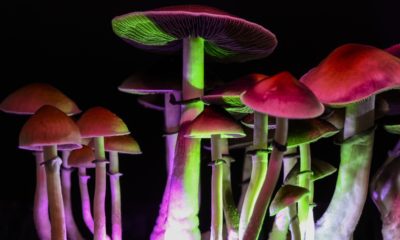
The finding comes at an interesting time — Denver voters have just decriminalized the possession of psychoactive mushrooms. Not to mention, decades after the illustrious Timothy Leary made a “mockery” of Harvard, scientific interest in hallucinogenic substances is re-emerging with a vengeance.

1,000-Year-Old Ayahuasca Found in Bolivian Cave

A team led by Melanie Miller, an archeologist with an interest in chemical analysis, found an interesting pouch inside a cliff-faced cave in the mountains of Bolivia. The pouch, which consisted of three fox snouts sewn together, turned out the be the ancient equivalent of a drug bag. After swabbing and testing the inside of the pouch, the researchers discovered chemical traces from at least five different psychoactive plants.

Yes, that’s right. Five different psychoactive plants.

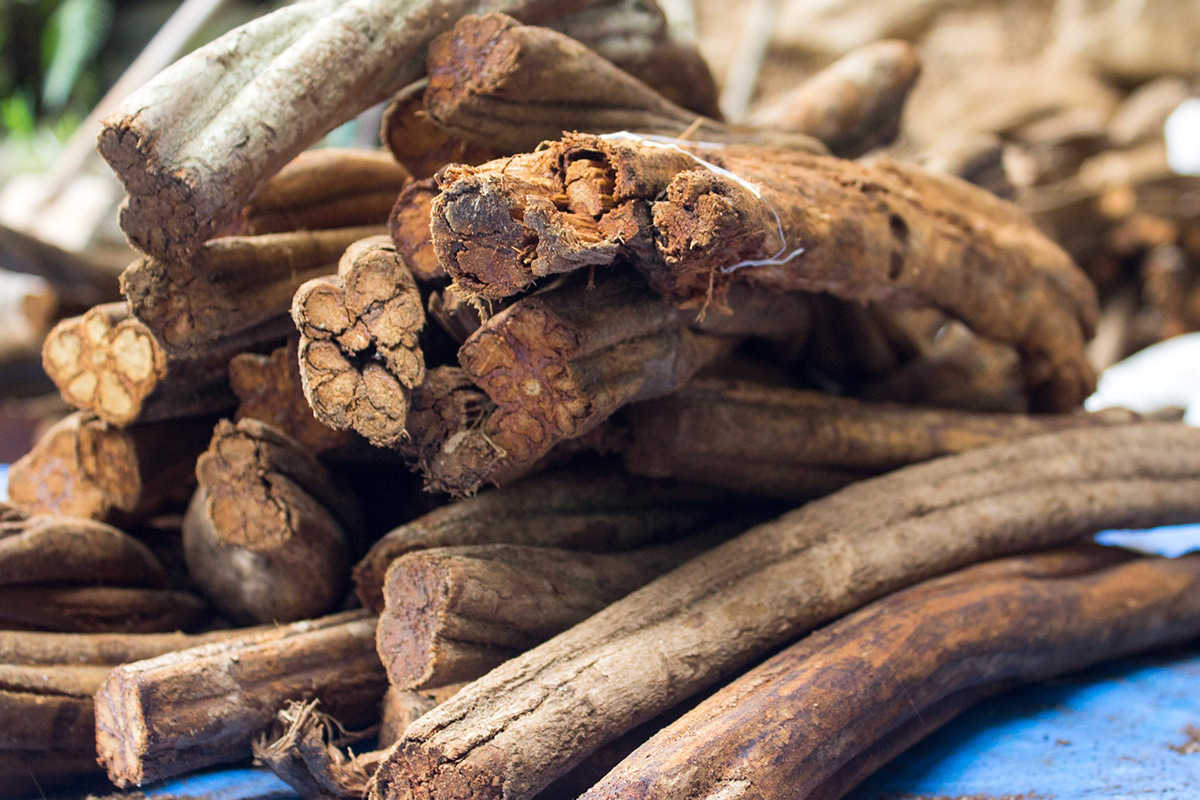
The plant residue featured traces of dimethyltryptamine (DMT), which is thought to be the active chemical constituent of ayahuasca. These days, ayahuasca is a popular substance of choice among adventure travelers hoping to get a taste of the spirit world. Traditionally, it is an Amazonian brew made from the Banisteriopsis caapi vine and other synergistic plants.

While many people travel to experience the profound experience of an ayahuasca journey, the hallucinogenic drink does far more than provide an unforgettable high. For many, the ayahuasca experience is a healing and deeply spiritual one. Considered an entheogen, the herbal concoction was traditionally used by some Amazonian peoples as a tool for cleansing and as a sacrament during traditional religious rituals.

In the Western world, respectable nonprofit organizations like the Multidisciplinary Association for Psychedelic Studies supports research into ayahuasca-assisted therapies for individuals battling drug addiction and post-traumatic stress. While interest in the substance has only increased among Westerners over the past two decades, the sacred mixture is still used traditionally in cleansing and other shamanic ceremonies along the Amazon basin.

The residue found in the Bolivian pouch, however, was a little different. While Amazonian Ayahuasca is commonly made from a vine and a few other native plants, the Bolivian version tested positive for traces of cocaine, harmine, and benzoylecgonine. Of the latter two, harmine is one of the active constituents of ayahuasca and benzoylecgonine is a cocaine derivative.

“This is the first evidence of ancient South Americans potentially combining different medicinal plants to produce a powerful substance like ayahuasca,” Miller explained. Although, references to the use of psychoactive plants can be found in textile weavings that date prior to the Spanish and Portuguese colonization in the 1400s.

An Old-School Tradition of Psychoactive Therapy

The use of psychedelic and mind-altering substances is a long-held human pastime. More and more, archeological evidence points to just how long these substances have been enjoyed and used by the human species. Take, for example, the belongings of the excavated Siberian Ice Princess, which lead to the discovery of psychoactive cannabis resin dated to be over 2,500 years old. Or, in Mesoamerica, archeologists have dated evidence for ritualistic peyote use back 5,000 years.

In the case of the new Bolivian finding, archeologists speculate that the fox nose pouch is pre-Inca, belonging to a member of the Tiwanaku civilization which existed between 550 to 950 AD.

“Our findings support the idea that people have been using these powerful plants for at least 1,000 years, combining them to go on a psychedelic journey, and that ayahuasca use may have roots in antiquity,” Miller said.

Hallucinogens may have a longstanding relationship with humankind, but it is only recently that psychoactive substances have caught the eye of the scientific community. Back in the 1960s and 70s, psychedelics got their first taste of mass consumer culture. Popularized perhaps in part by to the wild experiments from Dr. Timothy Leary and Walter Pahnke, who dosed half of the attendees at a chapel service with psilocybin mushrooms, hallucinogenic substances played a leading role in the cultural renaissance of the hippie era.

After a lull of disinterest, however, psychedelics have once again inspired curiosity in the minds of scientists and medical professionals. Indeed, prior to Colorado’s decriminalization of hallucinogenic mushrooms, multiple studies have demonstrated that psilocybin, the active chemical constituent in the fungi, has produced profoundly beneficial effects in the lives of cancer patients.

One study, led by experts from John Hopkins University and published in the Journal of Psychopharmacology, found that psilocybin treatment produced “substantial and sustained” improvements in depression and anxiety scores in individuals with terminal cancer. In another study, researchers found that even one single treatment with the compound was able to produce lasting personality changes.

While Tiwanaku civilization may not have used their ayahuasca concoction to manage post-traumatic stress or ease the fears of life-threating cancer patients — who knows exactly where the Tiwanaku went on their journeys — it’s safe to say that these millennia-old medicines are once again finding their place in the spiritual hearts of many.

Culture

No Super Bowl for Brock Ollie

Published

on

Brock Ollie

With medicinal marijuana being legal in 37 states and recreational cannabis allowed in 18, we should be seeing commercials for companies, products, and services almost as frequently as commercials for sports betting, which is permitted in 30 states in some form.

However, mainstream cannabis advertising continues to be non-existent, as demonstrated in the recent news that NBC has rejected an ad by cannabis e-commerce and advertising platform Weedmaps from being shown during the Super Bowl LVI event his coming Sunday.

Weedmaps reportedly approached the network late last year about airing a Super Bowl commercial that would be “similar to a PSA,” according to reports. Execs volunteered to present some of their earlier educational-based programming, assuring NBC executives that it would not contain any direct-sell messages, which are still forbidden under federal law.

“The answer was a hard no — they wouldn’t even entertain the conversation,” Weedmaps Chief Operating Officer Juanjo Feijoo told Adweek. “We see ourselves as trying to be trailblazers in the industry and making new inroads where others haven’t gone before in cannabis advertising. So it was disappointing.”

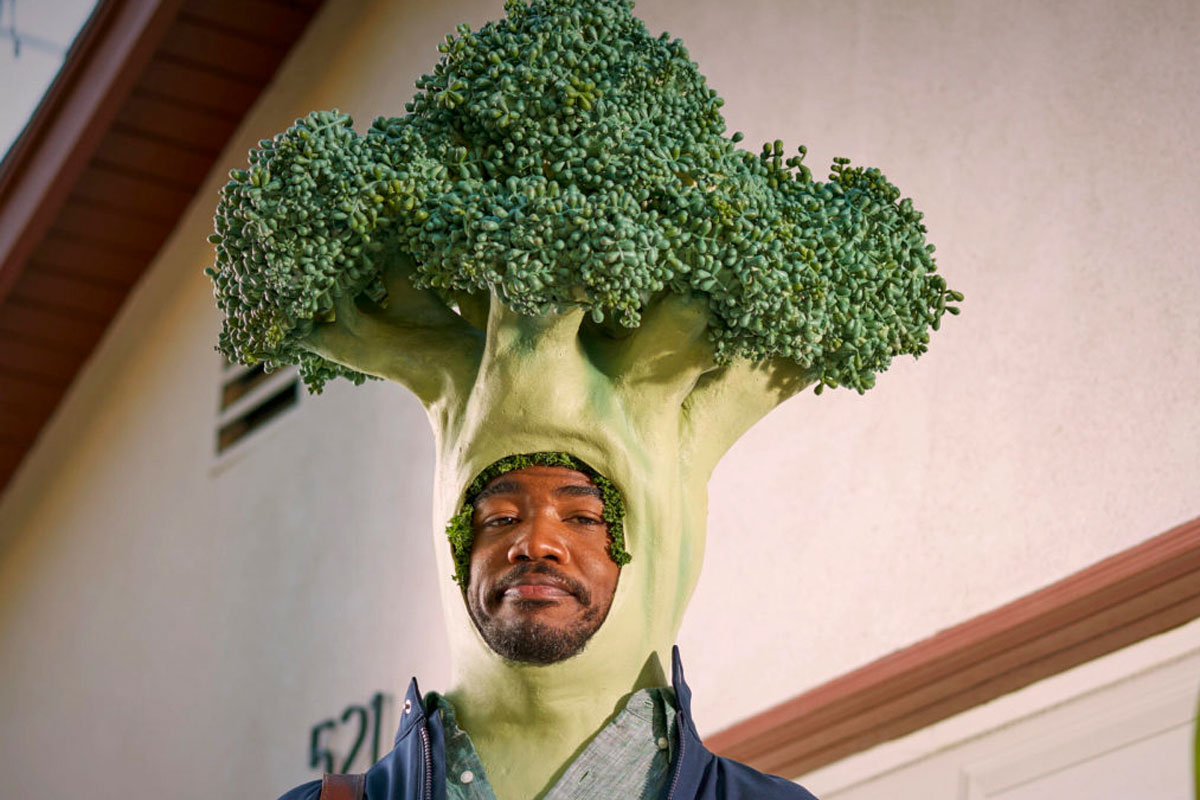
The contentious ad personifies cannabis as Brock Ollie, a head of broccoli, the veggie emoji commonly used as a visual representation of cannabis in marketing. The 30-second ad takes viewers through a day in the life of Brock Ollie, whose superfood identity is in jeopardy as he is repeatedly misidentified as cannabis. The ad offers a lighthearted take on the industry’s issues, such as social media censorship and a lack of clear advertising standards, which limit cannabis-related commercials during nationally televised events like the Super Bowl.

“Despite three quarters of the country having legalized cannabis and the bipartisan enthusiasm we continue to see in support for change at the federal level, the industry continues to face roadblocks that inhibit competition in the legal market and stifle opportunities to educate,” Chris Beals, CEO of Weedmaps said. “There’s an irony in the fact that the biggest night for advertising will feature an array of consumer brands in regulated industries, from beverage alcohol to sports betting, yet legal cannabis retailers, brands and businesses have been boxed out.”

The game between the Cincinnati Bengals and Los Angeles Rams will be played Sunday in L.A.

Continue Reading

Culture

VIBES X Kaya Herb House Collab Launches in Jamaica

Published

on

VIBES x Kaya Herb House
PHOTO | Chris Lewinson/BUZZ

Vibes, the rolling paper brand co-founded by entrepreneur and rapper Berner in collaboration with Gnln, announces a collaboration with the Kaya Herb House for the holidays. Featuring lifestyle goods and premium rolling papers, VIBES x Kaya Herb House furthers both brands’ missions to create the ultimate experience for connoisseurs.

VIBES x Kaya Herb House marks the first common project between the two brands, which have a shared goal of educating consumers on a premium smoking experience and creating meaningful experiences around the cannabis lifestyle.

The collection’s retro graphic pays homage to the Caribbean’s smuggler planes

The Kaya Herb House franchise was founded in Jamaica by “Bali” Vaswani, who had established Marley’s Estate coffee brand in the United States. VIBES x Kaya will be available at the Herb House in Kingston, Jamaica, which features the first medicinal Ganja herb house in the Caribbean and offers locally grown herbs and straight-from-the-farm extracts line as well as a taste of world-renowned cuisine and juices at the cafe and pizza restaurant.

“This marks another milestone for the VIBES brand. We are thrilled to partner with such an industry legend, together introducing an authentic experience to Jamaica and bringing attention to the history of the industry in the Caribbean,” says Vanessa Vanjari, Brand Manager of Vibes.

The collaboration features rolling papers, apparel, and accessories for the global wellness traveller, including co-branded hemp king size skinny booklets, tee shirts, and a pizza cutter. The slogan “Build a Vibe” is stamped on the VIBES x Kaya rolling papers, a play on both a popular Jamaican catchphrase and VIBES’ signature “Catch a Vibe.”

Each piece in the collection contains a retro graphic style of a plane that pays homage to the history of cannabis in the Caribbean when smugglers flew cannabis for the black market over the coasts of Jamaica and Florida. Smuggler planes would drop packages into the water, gaining the name “Square Grouper.”

VIBES x Kaya is a month-long collaboration that launches on December 17, 2021 at the Kaya Herb House in Kingston, Jamaica.

Continue Reading

Culture

Kate Hudson Gets High for the Holidaze In Cannabis Cocktail Commercial

Kate Hudson stars in an ad for Cann beverages—the first time an A-lister has been the face of a weed brand in a mainstream commercial.

Published

on

Kate Hudson Gets High

Cann, a California-based cannabis-infused beverage firm, has partnered up with actress Kate Hudson and her King St. Vodka brand for the holiday season. To coincide with the debut of their special bundle offering – Cann Unspiked and King St. Vodka, the trio just opened a holiday-themed campaign.

Hudson, an actor, producer, and investor in the THC-laced brand Cann, starring in a film that breaks new ground by including the popular “social tonic” as the main element in a joyful adult beverage. Hudson’s own brand, King St. Vodka, provides the alcohol in this cranberry sage-flavored cocktail. In the video, Hudson is joined by party guests Baron Davis, former NBA All-Star-turned-TNT commentator, and Darren Criss, Emmy-winning actor and singer.

Hudson and Davis play an unusual couple preparing for a sophisticated house party in the ad, which could be the first time a Hollywood A-lister has stepped up as the face of a cannabis brand in a mainstream commercial. In fact, the two have been friends for a long time and are both financial backers of Cann, as is Criss, who met Hudson on the set of Glee.

Hannah Lux Davis, known for her work with Ariana Grande, Doja Cat, Kacey Musgraves, and others, directed the star-studded holiday campaign and features music from Criss’ latest Christmas album.

According to Cann’s founder Luke Anderson, the goal of the collaborations and campaign is to show that cannabis has become mainstream enough that a celebrity like Hudson is happy to use and promote it.

“We’re equating cannabis with alcohol because at these 2-milligram levels it’s as mild as a light beer or a glass of wine,” Anderson told Adweek. “We’re saying they deserve to be on equal footing. And people have been DIY-ing this for a long time anyway.”

Continue Reading

Trending

Join The Cannabis Aficionado Community!
Join the Cannabis Aficionado community and receive all of the most relevant news geared towards our sophisticated enthusiast community.
Loading

Copyright ©️ 2026 Cannabis Aficionado. Cannabis Aficionado is a registered trademark of CNM Inc. All rights reserved. Registration on or use of this site constitutes acceptance of our Terms of Service, Privacy Policy and Cookies Policy. People may receive compensation for some links to products and services. Offers may be subject to change without notice.