#cannabisaficionado

Culture

Kate Hudson Gets High for the Holidaze In Cannabis Cocktail Commercial

Kate Hudson stars in an ad for Cann beverages—the first time an A-lister has been the face of a weed brand in a mainstream commercial.

Published

on

Kate Hudson Gets High
Advertisement Back2Grow Advertisement

Cann, a California-based cannabis-infused beverage firm, has partnered up with actress Kate Hudson and her King St. Vodka brand for the holiday season. To coincide with the debut of their special bundle offering – Cann Unspiked and King St. Vodka, the trio just opened a holiday-themed campaign.

Hudson, an actor, producer, and investor in the THC-laced brand Cann, starring in a film that breaks new ground by including the popular “social tonic” as the main element in a joyful adult beverage. Hudson’s own brand, King St. Vodka, provides the alcohol in this cranberry sage-flavored cocktail. In the video, Hudson is joined by party guests Baron Davis, former NBA All-Star-turned-TNT commentator, and Darren Criss, Emmy-winning actor and singer.

Hudson and Davis play an unusual couple preparing for a sophisticated house party in the ad, which could be the first time a Hollywood A-lister has stepped up as the face of a cannabis brand in a mainstream commercial. In fact, the two have been friends for a long time and are both financial backers of Cann, as is Criss, who met Hudson on the set of Glee.

Hannah Lux Davis, known for her work with Ariana Grande, Doja Cat, Kacey Musgraves, and others, directed the star-studded holiday campaign and features music from Criss’ latest Christmas album.

According to Cann’s founder Luke Anderson, the goal of the collaborations and campaign is to show that cannabis has become mainstream enough that a celebrity like Hudson is happy to use and promote it.

“We’re equating cannabis with alcohol because at these 2-milligram levels it’s as mild as a light beer or a glass of wine,” Anderson told Adweek. “We’re saying they deserve to be on equal footing. And people have been DIY-ing this for a long time anyway.”

Culture

Four Museum Programs to Put on Your November 1 Calendar

From an ofrenda in Los Angeles to art-making on the Bowery, these November 1 museum programs offer a creative start to the month.

Published

on

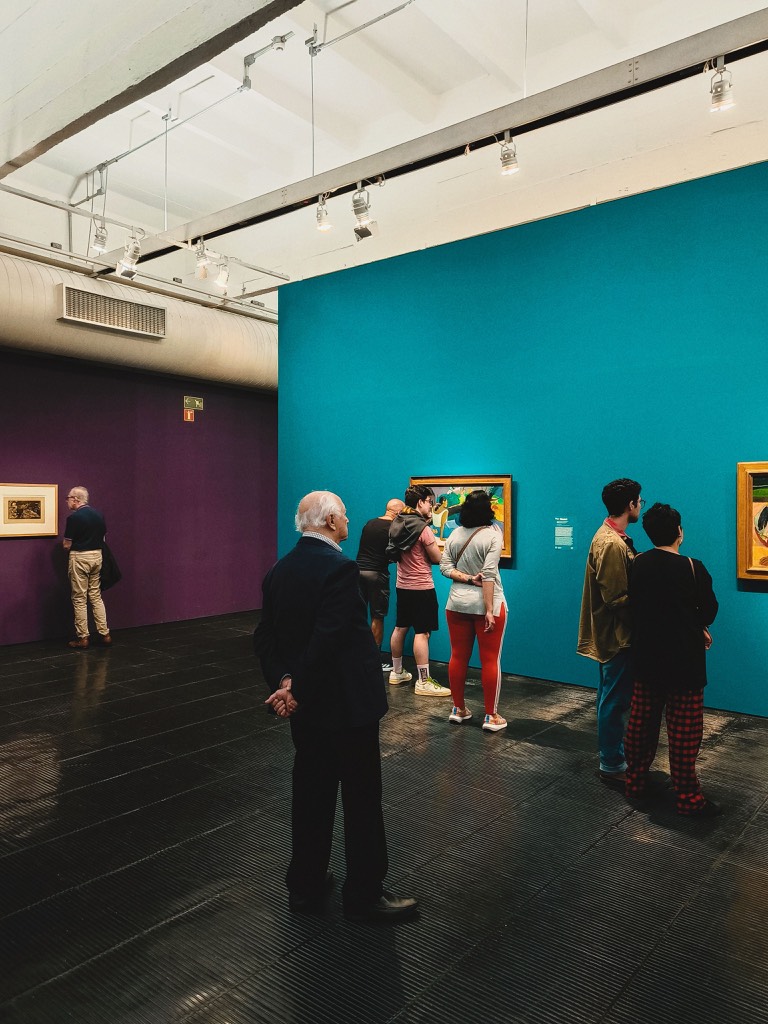
Visitors viewing paintings in a gallery with turquoise and purple walls in São Paulo

The morning after Halloween does not have to mean putting creativity away. On Sunday, November 1, 2026, museum programs in New York, Philadelphia and Los Angeles offer ways to keep looking, listening and making. Some are geared toward families, some welcome all ages, and each offers a different point of entry into art and cultural traditions.

These are upcoming programs drawn from the institutions’ own calendars, not reports from events that have already happened. The dates are close enough to start planning now, but admission conditions differ. A free activity can still sit inside a museum that charges admission, and a festival’s hours do not necessarily match the building’s full opening day.

New York: make something on the Bowery

The New Museum’s fall program announcement lists Family Day for November 1, from 11 a.m. to 3 p.m., in its Sky Rooms North and South. The program offers free admission for families with children, gallery exploration using a Kids’ Guide and opportunities to make art together. Its stated audience is families with children ages 4–12.

The museum also lists another Family Day for December 6, making the November event one option in a continuing series. Storytime takes place on selected Sundays, but the announcement directs visitors to check the current schedule. It would be a mistake to assume that every activity mentioned across the fall calendar happens during this particular visit.

For a family outing, the useful feature is the combination of looking and doing. Rather than asking children to move quietly through an entire building, the program gives them a reason to make choices and create something themselves. Check the museum’s event calendar before leaving for any updated entry instructions.

Philadelphia: light, color and movement

At the Philadelphia Museum of Art’s Light the Way festival, November 1 programming runs from 10 a.m. to 3 p.m. in the Main Building. The museum describes it as a celebration of the Festival of Lights and Southeast Asian artworks, with participation included in Pay What You Wish admission.

The schedule provides several different ways to join in. Lantern-making and a sensory-friendly quiet zone run throughout the event. From 11 a.m. to 2 p.m., visitors can make light catchers and collaborate on rangoli patterns in the South Indian Temple Hall. Bollywood fusion dance performances by Philly Dance Fitness are scheduled for 2 p.m.

That timetable makes it possible to choose a shorter visit around a particular activity. It also gives a group options when people want different levels of stimulation: the quiet zone is a practical part of the program, rather than an afterthought. Confirm admission arrangements directly with the museum.

Los Angeles: remembrance through music and plants

The Natural History Museum of Los Angeles County has a Día de los Muertos celebration scheduled for November 1 from 11 a.m. to 3 p.m. The museum’s calendar specifies that the program is free with paid museum admission and for members. It includes live music, hands-on activities and an interpretive ofrenda honoring departed loved ones.

The ongoing program includes a floral display made with Latinx with Plants, where visitors can add a message for someone they wish to honor. The museum frames the day around remembrance and community, reflecting a tradition observed in Mexico and elsewhere in Latin America.

Approach that invitation with the meaning of the occasion in view. An ofrenda is not interchangeable with Halloween decoration. Reading the interpretation and following guidance from the organizers can make the visit more thoughtful, whether the tradition is part of your own family life or something you are learning about.

Los Angeles: design a different future at LACMA

LACMA’s Andell Family Sundays offers a November 1 drop-in workshop inspired by Home of the Future, 1925–1985: Designing Domestic Utopias. Artists Bianca Argueta and Karl Petion lead the all-ages activity outside the W.M. Keck Education Center, with the calendar listing W.M. Keck Plaza and a 12:30–3:30 p.m. window.

The workshop is listed as free. The same page separately describes family gallery tours that require museum admission, so visitors should distinguish the outdoor activity from a ticketed gallery visit. Related workshops return November 8 and 15, offering alternatives if this Sunday is already full.

LACMA’s page also flags a Metro D Line closure at Wilshire/Fairfax through November 1, with bus service available. Anyone relying on that station should use the linked transit information to check the day’s route before setting out.

Choose the program that fits your city and interests, then confirm its current listing. Together, these calendars offer a useful reminder that a museum visit can involve making, memory, sound and movement as well as looking at objects behind glass.

Illustrative stock gallery in São Paulo; not one of the museums or November 1 events described. Photo: Andre Moura / Pexels.

Continue Reading

Cannabis

Kansas Survey Finds Majority Support for Cannabis Reform, With Medical Access Ahead

The new Kansas Speaks survey finds 65% support for medical legalization and 58.3% for recreational use. Those are public attitudes, not a change in law.

Published

on

White ballot box marked Vote with an American flag design

A new Kansas Speaks survey finds majority support for legalizing both medical and recreational cannabis, with medical access attracting the larger share. The results offer a measure of public sentiment ahead of the next policy debate; they do not announce a legalization measure or establish when one might pass.

Fort Hays State University’s Docking Institute of Public Affairs released the survey on October 26. Its public-affairs panel included 603 Kansas residents aged 18 and older. Cannabis was one of several subjects, alongside taxation, economic conditions, health policy and other state issues.

Medical and recreational support are different findings

The full report records 65 percent support and 15.3 percent opposition to medical marijuana legalization in general. For recreational legalization, 58.3 percent supported and 21.3 percent opposed. Both support figures combine stronger and more moderate responses.

That distinction matters because medical access and an adult-use market are different policy questions. Support for one does not tell lawmakers how respondents would answer every detail of the other, including who could sell products, how purchases would be taxed or which products would qualify.

The report also found 59.3 percent highly or somewhat likely to vote for a Kansas legislative candidate who supports medical legalization. That is a stated inclination attached to one issue. It is not a forecast that any named candidate will win, and it does not show how respondents ultimately balance cannabis against other concerns.

Who was surveyed, and when?

Fieldwork ran from September 23 through October 16. The institute used a Qualtrics online panel with demographic quotas, then weighted responses by age, gender, education and party registration. The report retained people who were not registered voters.

Readers should therefore describe the findings as a survey of adults, rather than substitute “likely voters.” Those populations answer different questions: public attitudes include people who may not vote, while an election forecast tries to anticipate the electorate that actually turns out.

Weighting is a statistical adjustment to the influence of different responses. It does not mean the researchers interviewed additional people after collection ended. The original number of participants and the weighted analytical total should not be treated as competing headcounts.

The Roper Center’s guide to polling transparency explains why disclosures about recruitment, population, collection methods and timing help readers judge whether a poll fits a particular purpose. Publishing those details enables scrutiny; disclosure by itself does not guarantee accuracy.

A percentage is not the whole policy argument

For cannabis readers, the useful starting point is the exact question. “Medical marijuana legalization in general” leaves many implementation choices open. A proposal with a defined patient program, licensing structure and product restrictions would present respondents with more information than that broad phrase.

Likewise, opposition is not automatically the remainder after subtracting support from 100. Where a questionnaire permits a middle or uncertain response, treating everybody outside the supporting group as an opponent exaggerates the division. The published support and opposition figures should be reported separately.

AAPOR’s guidance on polling uncertainty also distinguishes conventional sampling margins from model-dependent credibility intervals used with some online polls. The terms cannot simply be exchanged. This article does not assign an unsupported margin of error to the Kansas results.

Those limits do not make the survey uninformative. They define its contribution: a documented set of responses about broad cannabis questions during a stated period, rather than a guarantee about a future vote or legislative outcome.

A comparison with another poll also needs matching definitions. A survey asking about medical access for specified conditions is not asking precisely the same thing as general legalization. Differences in wording, field dates and the population sampled can matter before any apparent movement is interpreted as a change of mind. The safest comparison begins with the questionnaires, rather than two percentages taken out of their reports.

Public support and lawmaking follow separate paths

The Kansas Legislature’s explanation of its process shows the institutional steps a bill normally faces. Committee consideration and chamber votes precede agreement on identical language in both houses, followed by the governor’s role. A proposal’s effective date is another separate matter.

That means a poll release is not a substitute for checking a bill’s text, amendments and official status. An introduced measure, a committee recommendation and a signed law describe different stages, even if advocates cite the same public-support figures at each one.

The strongest reading of this survey is also the most specific. Medical legalization leads recreational legalization in the reported responses, and both have majority support among surveyed Kansas adults. Whether that support becomes an enacted program depends on decisions this survey did not make: the legislation’s contents, the votes and the implementation timetable.

Illustrative stock voting display; not a Kansas polling place or a cannabis ballot measure. Photo: Sora Shimazaki / Pexels.


Continue Reading

Cannabis

Windsor Cannabis Seizure Highlights Canada’s Separate Border Rules

An October 21 tunnel seizure reported this week illustrates why legal domestic purchases, CBD labels and medical documents do not automatically permit border travel.

Published

on

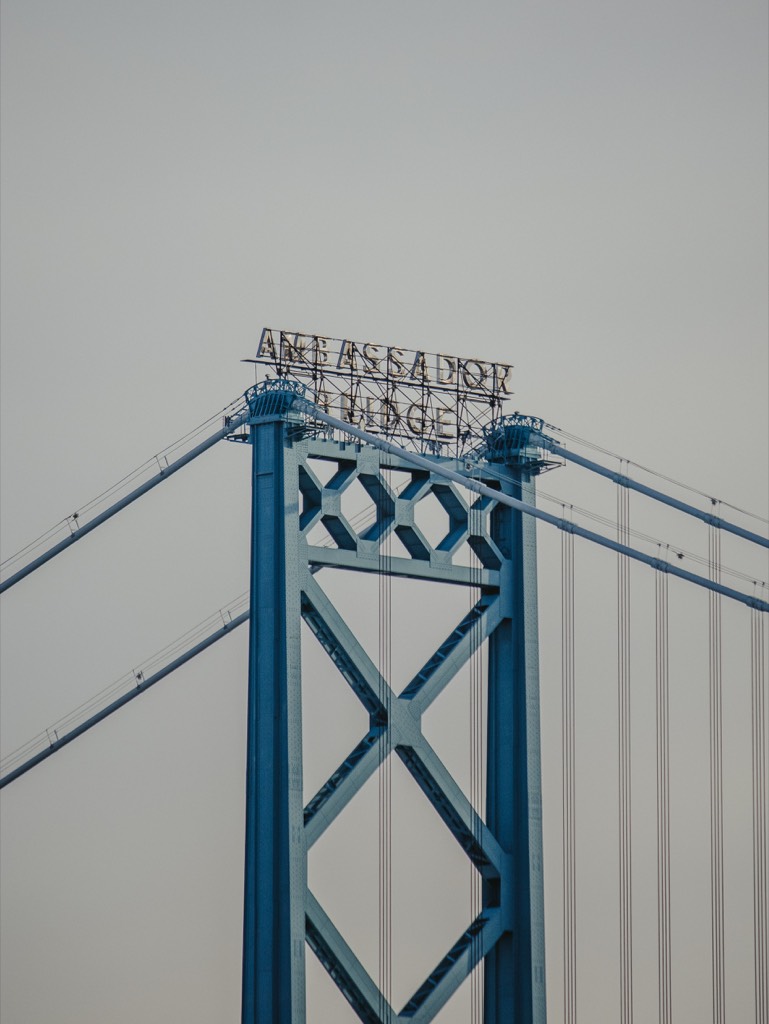
Blue steel structure of the Ambassador Bridge viewed from below

A reported cannabis seizure at the Windsor–Detroit Tunnel is a reminder that buying legally on either side of the border does not authorize carrying the purchase between countries. The distinction applies to ordinary travellers as well as to much larger quantities, and includes products marketed as CBD.

In reporting published October 27, Windsor News Today’s Mark Brown described an October 21 secondary inspection involving a U.S. traveller. The report said officers seized 13 kilograms of cannabis and 49 THC vapes, and that the traveller received a $56,100 penalty and was returned to Detroit without criminal charges being filed.

Those case details come from the local report, which attributes the information to the Canada Border Services Agency. They describe a particular enforcement outcome, not a standard penalty schedule or a prediction of what would happen to another traveller.

A legal market does not create a travel exception

The CBSA’s current cannabis border guidance says taking cannabis across Canada’s border is illegal without a Health Canada permit or exemption. The rule applies when entering and leaving Canada, including travel to or from jurisdictions where cannabis is legal.

The guidance includes edible cannabis, extracts, topicals and products containing cannabidiol. It also says the restriction applies regardless of quantity. A small personal-use package therefore raises the same underlying authorization question as a larger shipment, even though the circumstances and enforcement outcome may differ.

That is the key distinction for a visitor planning a weekend trip. Domestic permission to possess or purchase cannabis answers a question about the place where it was bought. It does not establish permission to export it, import it or carry it through another country.

Medical paperwork is not automatically border authorization

Canada’s international travel guidance also separates a prescription from the permission needed to cross with cannabis. A medical document alone does not create that authorization, and permission from Canada does not guarantee acceptance by the destination or a transit country.

It distinguishes market-approved prescription drugs containing cannabis from other medical cannabis. Certain prescription drugs may be carried under specific regulatory requirements, while other medical cannabis requires an individual Health Canada exemption issued only in rare and exceptional circumstances. Travellers should check the exact product and applicable official requirements rather than generalize from another person’s prescription.

This distinction makes the medicine’s identity important. A prescription product, a dispensary extract and an online CBD purchase should not be treated as interchangeable merely because they all involve cannabinoids. Nor does keeping an item in its original package establish an import authorization.

CBD is covered too

Health Canada’s CBD guidance explains that CBD is regulated under the Cannabis Act. The rules apply whether CBD comes from industrial hemp or other cannabis varieties. A hemp-derived label does not, by itself, remove the product from that framework.

The agency describes import and export of CBD products as tightly limited activities. Its commercial framework involves an appropriately licensed holder, a shipment-specific permit and a legitimate medical or scientific purpose. That is a different process from an ordinary traveller deciding that a product is acceptable because it is sold over the counter at home.

For someone packing a bag, the practical implication is to examine what the item contains rather than rely on terms such as hemp, wellness or non-intoxicating. The border question concerns the product and the applicable permission, not just whether the user expects to feel high.

Declaring an item and being allowed to import it are different

The CBSA’s May 2022 border reminder states that personal, mail, courier and commercial shipments can be examined for prohibited goods. It warns that undeclared cannabis can lead to seizure, monetary penalties, arrest or prosecution, depending on the circumstances.

The agency’s message covers gifts and personal-use products as well as larger movements. Posting a purchase across the border is therefore not an ordinary alternative to putting it in a vehicle. The mode of travel or delivery does not erase the underlying restrictions. A purchase intended as a gift still needs to satisfy the applicable border rules before it can be transported.

The current CBSA guidance says cannabis must be declared to the CBSA when entering Canada. Declaration is a reporting obligation; it is not a substitute for the authorization required to bring the product in.

The Windsor report gives that distinction a timely local example. The broader preparation belongs before departure: check bags and vehicle storage, identify any cannabis-containing products and consult the official requirements for the full route. A legal purchase receipt and a lawful domestic market do not turn an international crossing into a domestic shopping trip.

Illustrative stock view of the Ambassador Bridge, a different Detroit–Windsor crossing from the tunnel in this report; not a seizure photograph. Photo: Hemz / Pexels.

Continue Reading

Trending

Join The Cannabis Aficionado Community!
Join the Cannabis Aficionado community and receive all of the most relevant news geared towards our sophisticated enthusiast community.
Loading

Copyright ©️ 2026 Cannabis Aficionado. Cannabis Aficionado is a registered trademark of CNM Inc. All rights reserved. Registration on or use of this site constitutes acceptance of our Terms of Service, Privacy Policy and Cookies Policy. People may receive compensation for some links to products and services. Offers may be subject to change without notice.