Cannabis names often borrow from food, music or geography. A new collaboration between Herbies Seeds and Blimburn Seeds takes a more bureaucratic route: Section 781. The line shares its name with a federal provision rewriting the definition of hemp, and its launch comes with a competition built around public grow diaries.
The announcement, published by Cannabis Business Times on October 23, was issued by the company on October 22. It describes three versions of the line and a challenge intended to follow participating plants from seed to harvest. This is a commercial launch with a political reference, rather than a new finding about how the genetics perform.
One name, three different records
The official project’s cultivar page lists Autoflower, Photoperiod and Fast Flowering entries. The records are not identical. They describe different growing timelines and different stated cannabinoid profiles, so a claim attached to one version should not automatically be applied to all three.
For example, the project lists 77–87 days from seed to harvest for the autoflowering version. Its photoperiod record instead lists a flowering period of 56–70 days. Those are different clocks: one begins at the seed stage, while the other describes a particular part of plant development. Putting the numbers beside each other without that distinction can make a comparison more confusing than useful.
The company’s announcement identifies OG Kush and Strawberry Diesel in the original version’s background. That is the breeder’s description of lineage. Cannabis Aficionado has not grown or independently tested these plants, and the announcement should not be read as our confirmation of a particular aroma, effect, yield or laboratory result.
For readers who follow genetics, the interesting part is the invitation to document variation. A diary can show what one grower observed in one setting. Several diaries may reveal a wider range of outcomes. Neither format automatically turns a branded launch into a controlled trial.
The competition is built around documentation
According to the challenge’s entry information, registration is open until December 30, 2026. Participants use the HarvestED platform to keep a diary, and only the Section 781 line is eligible. The published schedule gives different diary-completion dates for the three categories in spring 2027.
The project describes three principal categories, with three winners in each, plus a separate Best Looking Plant award. Its prize page identifies that additional award as limited to the United States and the photoperiod category. Prize availability and eligibility conditions deserve a direct reading; a promotional summary is not a substitute for the organizer’s current rules.
That matters because this is not simply a photo contest with an interchangeable plant in the frame. The challenge ties eligibility to a named commercial line and to records produced over time. Anyone considering it should distinguish the creative appeal of the project from its entry requirements and the laws applying where they live. This article does not establish anyone’s eligibility to purchase, cultivate or enter.
The posted completion schedule sets March 15, 2027 for Auto diaries, March 30 for Fast diaries and May 31 for Photoperiod diaries. Registration and diary completion are therefore separate deadlines. A reader following the project can watch whether entries document the full period promised, rather than judge the entire line from an attractive early photograph.
The distinction between observation and comparison is useful here. To evaluate two diaries, look for clearly identified versions, dates and conditions. A striking image alone does not tell a reader whether two plants were observed at comparable stages or whether their records answer the same question.
What the legal name actually refers to
Section 781 of Public Law 119-37 changes the statutory definition of hemp. Among its provisions is an exclusion concerning viable seeds from plants above a specified total-THC concentration, including THCA. The source plant is part of that wording, which makes the provision more specific than a general question about whether a seed itself contains much THC.
The statute’s name on a seed package does not certify that package’s legal status. Nor does a company’s reading of a provision resolve the separate questions of implementation, documentation, shipping or state law. The launch is best understood as a response to regulatory uncertainty, not a route around it.
That upstream focus also connects with New York’s new nursery licensing window, which addresses a different issue: how licensed businesses supply starting material inside a state-regulated market. Federal hemp definitions and state nursery permissions should not be treated as interchangeable authorizations.
A launch worth following through the diaries
Section 781 is an unusually literal example of cannabis branding absorbing the policy debate around the plant. The next useful evidence will be what the organizers publish, how the competition is administered and what the diaries actually document.
Until then, keep the categories separate: breeder claims, competition rules and legal requirements each answer a different question. The name may be memorable, but the records behind it will be more informative than the label alone.
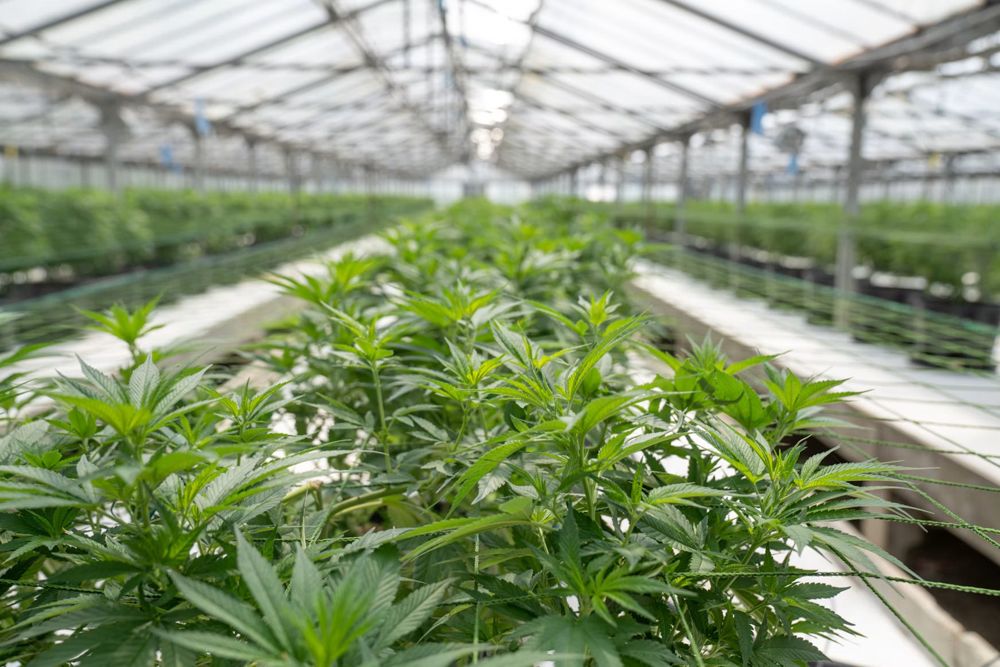
Illustrative stock cultivation photograph; these plants are not identified as Section 781. Photo: CRYSTALWEED cannabis / Unsplash.









 Cannabis4 days ago

 Cannabis4 days ago


 Cannabis3 days ago

 Cannabis3 days ago

 Products3 days ago

 Cannabis2 days ago

 Cannabis2 days ago