#cannabisaficionado

Cannabis

Tilray Brings Cannabis Quality Testing In-House in Portugal

Tilray says its Portugal laboratory can now conduct microbiological and chemical/physical testing, with faster batch release among its goals.

Published

on

Editorial illustration of a microscope, glass sample containers and cannabis specimens in a laboratory.
Advertisement Back2Grow Advertisement

The route from harvest to pharmacy includes more than cultivation. Tilray Medical says a new laboratory authorization in Portugal will let it handle more of its cannabis quality testing on-site.

In an October 13 announcement, the company said Portuguese regulator INFARMED had approved its Cantanhede laboratory for microbiological and chemical/physical testing. The laboratory sits within Tilray’s facility certified to European Union Good Manufacturing Practice standards.

The practical change is reduced reliance on outside laboratories for flower lots. Tilray expects that to shorten testing timelines and lower the cost of releasing batches for sale. The announcement provides no measured before-and-after results, so those benefits remain company expectations.

StratCann’s David Brown covered the development on October 14, placing it within Tilray’s wider international supply business.

This is an operational development, not evidence of a new treatment benefit. For readers following medical cannabis, the next useful measure will be whether the change translates into the more reliable supply Tilray anticipates.

Sources: Tilray’s announcement and StratCann’s coverage. The regulator’s authorization document was not independently reviewed.

Image: AI-generated editorial illustration created for Cannabis Aficionado; not a photograph of Tilray’s laboratory.

Science

UCLA’s Cannabis Trial Challenges a Simple Assumption About Sex and Sensitivity

A small UCLA trial finds cannabis responses depend on sex and consumption frequency, challenging a simple assumption about sensitivity.

Published

on

Laboratory pipette and glass vessels on a workbench

A new UCLA study challenges a familiar assumption about cannabis: that women necessarily experience stronger acute effects than men. In this small controlled trial, occasional male consumers reported several of the strongest reactions. How often someone used cannabis helped explain the pattern, making the findings more complicated than a simple comparison between sexes.

The research, published October 29 in Neuropsychopharmacology and highlighted by UCLA Health on November 5, examines short-term responses to smoked THC. It does not establish a safer consumption schedule or a dose that everyone in a demographic group can comfortably tolerate.

A study built around two questions

Researchers enrolled 44 healthy adults, evenly divided between males and females. Each sex included 12 frequent consumers and 10 occasional consumers. In this experiment, frequent meant more than four days of cannabis use per week; occasional meant four days or fewer. That second category should not be mistaken for people trying cannabis for the first time.

Participants attended three six-hour sessions, separated by at least 48 hours, receiving placebo cannabis or cannabis containing 4% or 10% THC. The randomized, double-blind crossover design allowed researchers to compare different sessions involving the same person. Blood measurements and assessments of drug effects helped distinguish exposure from the experience participants described.

That distinction matters when interpreting the results. A laboratory measurement and a person’s report of feeling impaired answer related questions, but neither automatically substitutes for the other. Comparing both creates a more informative picture than treating THC concentration in a sample as a complete account of what someone feels.

The strongest response was not universal

Occasional male consumers reported greater intoxication and several unpleasant effects than occasional female consumers, with differences particularly apparent at the lower active strength. Responses among frequent male and female consumers were more similar. Comparable peak THC exposure between the occasional groups did not explain away the contrast.

UCLA’s account also describes differences involving sedation, impairment and anxiety. Those are distinct experiences: reporting a stronger high is not interchangeable with enjoying it, and a less intense subjective response is not a declaration that a product is harmless. Headlines that collapse all of those outcomes into one score would miss much of the point.

The finding therefore asks a better research question rather than settling a competition over which sex is more sensitive. Which effect is being measured? Under what conditions? Among people with what consumption history? Those details are central to the result, not small print to discard after reading the headline.

What the experiment cannot tell a shopper

The sample was modest, and several analyses were exploratory. Female participants were regularly cycling and were not taking hormonal birth control; sessions were timed within a specified menstrual-cycle phase. The design makes comparisons more controlled, while also narrowing the population to which they can confidently be extended.

Smoking was the route tested. The results should not be translated into an edible timetable, a concentrate recommendation or an individualized treatment plan. A controlled session involving a defined product is a different setting from choosing among products with different ingredients, strengths and methods of consumption.

Nor does the contrast between frequent and occasional consumers show that increasing consumption improves health. The experiment measured acute responses, not the long-term benefits and costs of changing a person’s habits. Using a short-term comparison to recommend more frequent use would turn a limited finding into a claim the research did not test.

Better context for cannabis conversations

For a reader discussing an unexpected cannabis experience, the useful takeaway is specificity. The product, route, timing and person’s prior experience belong in the conversation alongside the effect itself. A label such as male, female, experienced or occasional cannot carry all of that information alone.

Our recent coverage of Oregon’s cannabis health update similarly emphasizes asking what product and evidence a claim concerns. Here, the question is especially concrete: these researchers studied short-term responses to smoked cannabis in selected adult volunteers, not every product or every consumer.

The study also supports including both sexes and different consumption histories in future research rather than assuming one average response represents everyone. For cannabis culture, that is a useful shift away from confident generalizations and toward descriptions that leave room for individual variation.

Read the result as a challenge to an oversimplified assumption. It is an invitation to ask more precise questions about cannabis effects, while keeping the limits of a small experiment visible.

There is a broader lesson for reading cannabis science, too. Notice whether a reported outcome comes from a person’s description, a biological measurement or the researchers’ interpretation. Ask whether the comparison concerns individuals, averages within groups or a change over time. Keeping those distinctions intact makes an interesting result more useful, without pretending it can predict a particular reader’s next experience.

Illustrative laboratory stock photo; not the UCLA study site or equipment. Photo: Nathan Rimoux / Unsplash.

Continue Reading

Cannabis

Illinois Hemp Businesses Ask a Federal Court to Pause November 12 Rules

Hemp businesses seek emergency court relief before Illinois’ November 12 rules, challenging THC limits and the move into cannabis licensing.

Published

on

Illinois hemp businesses are asking a federal court to interrupt a November 12 change that could move many THC products off ordinary retail shelves and into the state’s licensed cannabis system. Their emergency request puts a fast-approaching state deadline at the center of a dispute over who can make, distribute and sell hemp-derived products.

For cannabis consumers, the immediate issue is where a familiar drink or other product can be sold. For retailers, it is whether an existing inventory will still fit the rules. The lawsuit is a request for relief, not evidence that a judge has already suspended the law.

Hemp Law Watch reported the November 5 filing and linked the court papers. The underlying documents identify the case as Illinois Healthy Alternatives Association and others v. Raoul and others, number 1:26-cv-13799, in the Northern District of Illinois.

What the businesses want the court to stop

The emergency motion seeks a temporary restraining order followed by a preliminary injunction. It challenges the reclassification of federally lawful hemp products as cannabis, the 0.4-milligram total-THC limit per container, and restrictions affecting purchases and sales involving out-of-state businesses.

The plaintiffs also ask the court to prevent enforcement that would require hemp companies to obtain licenses under Illinois’ Cannabis Regulation and Tax Act for those transactions. Those are the requested remedies. The motion itself does not establish that any of them has been granted.

In their complaint, the association and business plaintiffs argue that the changes unlawfully interfere with interstate commerce. They describe economic harm to businesses operating in the existing hemp market. Those assertions are the plaintiffs’ case for intervention, rather than judicial findings that the statute is unconstitutional.

The state’s published plan

The Illinois Department of Revenue’s October bulletin says the state plans enforcement beginning November 12. It specifies that consumable or topical products containing more than 0.4 milligrams of total THC per container will no longer qualify as hemp under the new framework.

The unit matters: that is a container limit, not a percentage and not a per-serving allowance. The bulletin says products classified as cannabis must meet cannabis-system requirements and may be sold to consumers only through appropriately licensed dispensaries. Simply changing a product’s shelf label would not establish compliance.

The department separately says Illinois intends to proceed on its state timeline despite the federal delay described in the bulletin. Treating every hemp deadline as one national date would therefore miss the distinction at the heart of this week’s retail disruption.

How Illinois arrived here

Governor JB Pritzker’s June 12 signing announcement presented Senate Bill 3222 as a consumer-protection and cannabis-market reform package. The announcement described an immediate prohibition on intoxicating-hemp sales to people under 21, with additional classification changes taking effect in November.

The administration emphasized testing, detailed labels and packaging rules designed to prevent misleading marketing to children. The package also included medical-access and social-equity provisions. That wider scope helps explain why the debate is about an entire regulatory framework, even when shoppers encounter it as a disappearing beverage.

The business plaintiffs see that framework differently. Their filings focus on market access and the consequences of requiring existing hemp trade to operate through a separate licensing structure. Readers can recognize those competing positions without assuming that a public-safety objective settles the legal challenge or that a lawsuit disproves the state’s rationale.

What to watch before Thursday

The next consequential document would be a court order specifying whether enforcement is paused, which provisions it covers and for how long. A hearing announcement, a complaint and a granted injunction are different events. Any update should identify which one has actually occurred before describing the deadline as changed.

For businesses, the practical distinction is between preparing for the published rule and relying on an anticipated court victory. Inventory decisions need the current official requirements and any actual order, rather than a prediction about what a judge might do. Consumers should likewise confirm a seller’s current licensed status instead of assuming yesterday’s availability will continue.

This report describes the filings and the state’s stated plan as reviewed November 9. It does not report an injunction or a final decision. The legal status should be checked again before publication and before treating November 12 as either cancelled or certain to proceed unchanged.

Readers following an update should also look for the order’s scope. Relief for named parties can differ from a broader pause, and an interim decision can differ from a final ruling on the merits. Reporting the text and duration of an order would be more useful than treating every courtroom development as a permanent win or loss.

Illustrative stock beverage shelves; not THC products or an Illinois store. Photo: Michael Shu / Unsplash.

Continue Reading

Cannabis

Tribal Cannabis Leaders Bring Sovereignty and Commerce to Washington This Week

The November 9–11 ICIA policy summit connects Tribal cannabis economies, research, sovereign regulation and federal advocacy in Washington.

Published

on

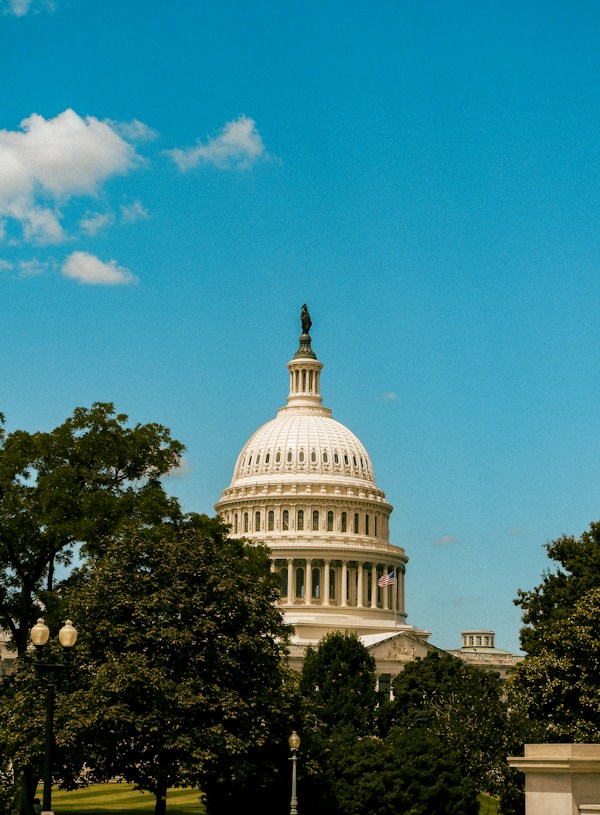
United States Capitol dome framed by trees beneath a blue sky

Tribal cannabis leaders have a Washington policy gathering on the calendar this week, with the Indigenous Cannabis Industry Association’s fifth annual summit scheduled November 9–11 at the Washington Plaza Hotel. The program puts cannabis and hemp commerce, community priorities and sovereign regulation in the same conversation.

This is cannabis news through the lens of who gets to shape an industry. The central question is not simply whether another market opens, but how Tribal Nations can determine the rules and economic purposes of cannabis enterprises within their communities.

The association’s published agenda starts with Tribal leadership and industry development, moves into federal policy and partnerships, and ends with planned Capitol Hill advocacy on Veterans Day. It is a schedule of intended discussions, not a record of agreements or policy victories already achieved.

From business development to federal advocacy

Cannabis Equipment News carried the association’s advance announcement September 30. Organizers described the gathering as a place for Tribal leaders, entrepreneurs, researchers and policymakers to connect economic development with federal cannabis and hemp policy.

That announcement outlined a progression from sharing operating experience to preparing for advocacy. It also identified research, access to plant medicine and protecting sovereign authority as priorities. Those are the organizers’ stated aims; attendance at a conference does not by itself resolve banking restrictions, change a federal classification or authorize a particular shipment.

For a business reader, the distinction matters. A productive discussion may identify a partner or a policy obstacle without removing that obstacle. Following this summit means watching for concrete next steps, responsible institutions and written commitments after the panels finish.

A map of distinct programs

The association’s Tribal Cannabis and Hemp Programs Map, developed with Vicente LLP, supplies useful background. ICIA says the project draws on research and interviews with Tribal leaders and distinguishes cannabis programs from hemp programs.

The map describes communities developing their own regulatory systems rather than one uniform Indigenous cannabis market. ICIA also notes clusters of enterprises working on supply chains and distribution. Those observations should be read as background from the map project, not as a fresh count of businesses attending this week’s event.

For readers accustomed to following cannabis state by state, this changes the starting point. A state market overview cannot automatically stand in for the rules of every sovereign Tribal program. The right questions begin with the particular government, its regulatory authority and the enterprise involved.

What meaningful economic development would look like

The summit’s emphasis on sustainable enterprises invites more specific measures than a large revenue headline. An operator or policymaker could ask how employment is created, what training remains in the community, how revenue is used and which institution oversees compliance. These are questions for assessing future outcomes, not claims about results this gathering has already produced.

Ownership also deserves attention. A commercial partnership can be described as an opportunity while leaving unanswered who controls decisions, owns equipment or carries financial risk. A useful follow-up would explain those arrangements in plain terms rather than using the existence of a partnership as proof of community benefit.

Our reporting on Cresco’s latest cannabis quarter shows why sales, cash flow and losses require separate attention. Tribal enterprises have their own structures and objectives, but the broader editorial lesson carries over: one favorable number rarely explains an entire business.

Research needs its own questions

Plant-medicine discussions also call for a different kind of accountability. Readers should ask what evidence is being discussed, whose knowledge is involved and whether a proposal describes research, patient access or a commercial product. Those categories can overlap, but they should not be collapsed into a blanket medical claim.

The association describes its mission as creating opportunities and equity through policy, programming and outreach. Keeping community priorities visible means listening for who defines success, rather than assuming that greater sales or a larger national footprint must be the only goal.

The planned advocacy day gives the gathering a clear point for follow-up. A report after the event could identify the priorities participants presented, the offices they met and any publicly documented response. Until those details are available, the accurate story is the agenda and the policy conversation it sets up.

For Cannabis Aficionado readers, the significance is a fuller view of cannabis governance. This week’s summit places Tribal Nations and Indigenous businesses at the center of that view, with the next test being what participants can document after Washington’s conversations become commitments, proposals or operating decisions.

The event’s stated theme, Indigenous Plant Medicine: Leading the Conversation, makes that emphasis explicit. The people setting priorities are part of the story.

U.S. Capitol stock photograph; not a photograph of the ICIA summit. Photo: Tomoki Iwata / Unsplash.


Continue Reading

Trending

Join The Cannabis Aficionado Community!
Join the Cannabis Aficionado community and receive all of the most relevant news geared towards our sophisticated enthusiast community.
Loading

Copyright ©️ 2026 Cannabis Aficionado. Cannabis Aficionado is a registered trademark of CNM Inc. All rights reserved. Registration on or use of this site constitutes acceptance of our Terms of Service, Privacy Policy and Cookies Policy. People may receive compensation for some links to products and services. Offers may be subject to change without notice.