#cannabisaficionado

Sports

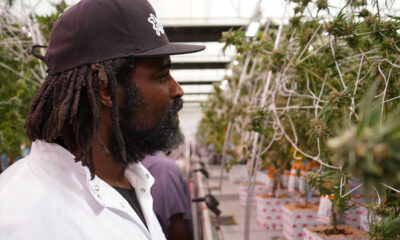
NFL Players Will No Longer Be Suspended for Cannabis Use

Published

on

Suspended for Cannabis
PHOTO | bondarchik
Advertisement Back2Grow Advertisement

In the midst of a global pandemic, canceled seasons for the NBA, NHL, international soccer leagues, the PGA and a handful of other sporting events, races and leagues, the NFL Player’s Association and the owners were hard at work negotiating a brand new collective bargaining agreement.

After weeks of negotiations, a deal was struck, the votes were cast and the final details of the deal were set in stone. The owners got one more regular-season game and the players got something arguable even more important; reduced penalties for failed cannabis tests.

That’s right, the famously stuffy and conservative National Football League has loosened their stringent rules when it comes to players enjoying cannabis. Following in the footsteps of Major League Baseball, NFL players can no longer be suspended for cannabis in positive tests. Gone are the days when a player testing positive could mean lost game checks, multi-game suspensions and even season-long bans for multiple-time offenders.

On top of that, the threshold for failing a test has now been bumped up to 150 nanograms of THC per milliliter of blood, way up from the previous standard of 35 nanograms.

If a player still manages to fail a test despite the newly heightened standards, their test will be reviewed by a board of medical professionals who will then determine if a player needs further treatment for potential drug abuse.

The testing window for players is also set to be shortened from four months to two weeks, meaning fewer players than before will get tested than in previous years.

On top of the new testing standards and smaller window, the new Collective Bargaining Agreement also states that “a neutral decision-maker” will be the one to officially make the disciplinary decisions that decreases commissioner Roger Goodell’s disciplinary power.

Working this perk into the new CBA, along with a slightly larger portion of overall revenue for a league worth nearly $3 billion, is a huge deal for pro athletes in a sport whose careers average only about three years.

NFL Players and Cannabis: A Long Forbidden Love Story

While this new CBA certainly opens the door for a new age of cannabis-loving NFL athletes, the love affair between the NFL’s players and cannabis is a long, storied and sensible one.

Former NFL running back Ricky Williams has long been a supporter and proponent of cannabis, even going as far as starting his own cannabis business in 2018. Former NFL tight end Martellus Bennett went on record in 2018 to say he thinks “about 89 percent” of the league’s players use cannabis. And, of course, who can forget Laremy Tunsil and his astounding draft day slide due to being hacked and tweeting a video of him hitting a gas-mask style bong?

Simply put, the new reduced risks around being suspended for cannabis use is a long-time coming for one of the most violent and physically taxing pro sports leagues in the world. We’ve already seen high-profile early retirements over the last few years like Andrew Luck and Rob Gronkowski, the latter of the two immediately signing on to advocate for CBD use for pain and recovery.

This new CBA is a massive step in the right direction for the future of players, allowing some of the richest athletes in the country access to a substance that nine of the 32 teams can legally use recreationally.

Keeping NFL players on the field AND removing their risk of being suspended for cannabis? Now that’s a brand new type of Super Bowl.

Sports

São Paulo’s Grand Prix Weekend Brings a Useful CBD Rules Check

Interlagos hosts a conventional three-practice Grand Prix weekend. For cannabis-aware sports followers, it is also a useful occasion to understand what CBD’s anti-doping exception actually means.

Published

on

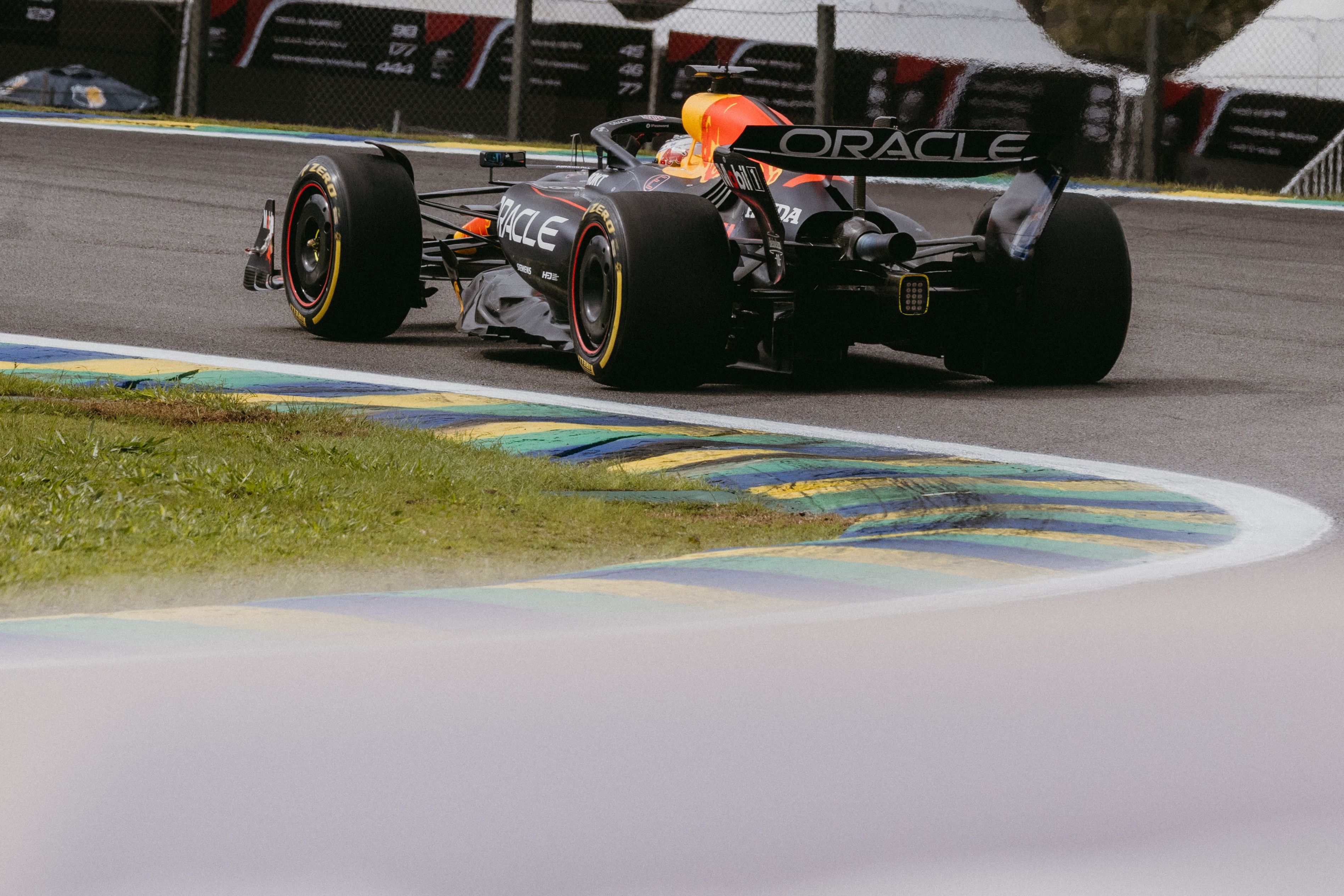
Formula 1 heads to Interlagos for the São Paulo Grand Prix on November 6–8, with three practice sessions, qualifying and a Sunday race. For cannabis-aware sports followers, the weekend also offers a useful rules distinction: CBD’s exception under the World Anti-Doping Agency’s prohibited list does not make every cannabis-derived product suitable for a competing athlete.

That is educational context for following elite sport, not a suggestion that any driver uses cannabis or that a CBD product improves performance. The racing preview and the cannabinoid rules answer different questions. Understanding both helps keep sports coverage from treating a familiar wellness label as a blanket assurance.

The weekend schedule at Interlagos

Formula 1’s official event page confirms the São Paulo race at the Autódromo José Carlos Pace, commonly called Interlagos. The circuit measures 4.309 kilometers, with a scheduled 71-lap race. The venue’s world championship history dates to 1973, giving the modern event a long connection to Brazilian racing.

The Mercedes team’s event guide lists Friday practice at 12:30 p.m. and 4 p.m. São Paulo time, Saturday practice at 11:30 a.m. and qualifying at 3 p.m., and Sunday’s race at 2 p.m. Those are local track times, which matter when a website also displays a personalized time-zone view.

São Paulo is four hours ahead of Phoenix for this weekend. That places the scheduled race start at 10 a.m. Sunday in Arizona, with Saturday qualifying at 11 a.m. Phoenix time. Schedules remain subject to change, so a final check against official timing is sensible before arranging a watch party.

The Mercedes guide also recalls Ayrton Senna’s home victories in 1991 and 1993. That history helps explain why the venue matters beyond its dimensions and lap count. A race can be followed as a current sporting contest while also carrying memories for spectators whose attachment to the circuit predates today’s teams and drivers.

A full practice program changes the rhythm

The published 2026 program is a conventional Grand Prix format rather than a Formula 1 Sprint weekend. Friday’s two practice sessions and Saturday’s final session give the event a different structure from a program that compresses practice around a Sprint. References to a sprint in a support series should not be mistaken for an F1 Sprint session.

For spectators, that makes the distinction between session names useful. Practice offers preparation, qualifying establishes the starting order under the applicable rules, and the Grand Prix supplies the main race result. A fast practice lap should not be reported as pole position, and the weekend’s outcome cannot be inferred from an advance timetable.

Our Mexico City weekend preview covered the previous event’s setting. São Paulo is a separate race with its own program. This guide focuses on confirmed logistics and cannabis-related sporting context rather than unverified predictions about the championship.

CBD’s exception is specific

Under the 2026 WADA Prohibited List, cannabinoids are prohibited in competition, with cannabidiol, or CBD, identified as the exception. THC is included among the prohibited substances in that category. The list distinguishes an ingredient’s status; it does not approve every product sold under that ingredient’s name.

This is the point where consumer language and sporting obligations can diverge. A label emphasizing CBD can coexist with other cannabinoids in a formulation. An athlete needs to understand the actual product and the rules applicable to their competition, rather than assuming that a prominent front-label term settles the issue.

These anti-doping distinctions also do not establish what a spectator may bring into Brazil or into a particular venue. Sporting eligibility, national law, border requirements and event admission conditions are separate questions. Nothing in the race schedule or CBD exception should be read as a permission to carry cannabis to the circuit.

Why the product warning matters

UK Anti-Doping’s CBD advisory warns that products can contain other cannabinoids that are prohibited in competition. Its guidance highlights the difficulty of relying on a CBD product’s presentation as assurance about its contents. The permitted status of CBD itself therefore does not eliminate an athlete’s risk from a mixed or contaminated product.

For readers who train and compete, that is a practical distinction worth taking to the relevant anti-doping organization before making assumptions about a supplement. It is not a claim that all cannabis products have identical contents or that the same rules govern every person watching a race.

Interlagos provides the sporting occasion; the cannabinoid guidance supplies a precise cannabis connection. Follow the official timetable for the action, and keep the ingredient exception separate from claims about a branded product. Both habits favor the same thing: knowing what has actually been established before drawing a broader conclusion.

Stock motorsport photograph taken in 2025; not the 2026 São Paulo Grand Prix. Photo: Jonathan Borba / Pexels.

Continue Reading

Sports

Sovereignty’s Classic Farewell Comes With a Separate CBD Rulebook

Sovereignty ended his racing career with a Keeneland Classic win. For cannabis-aware sports fans, racing’s CBD classification deserves a separate look.

Published

on

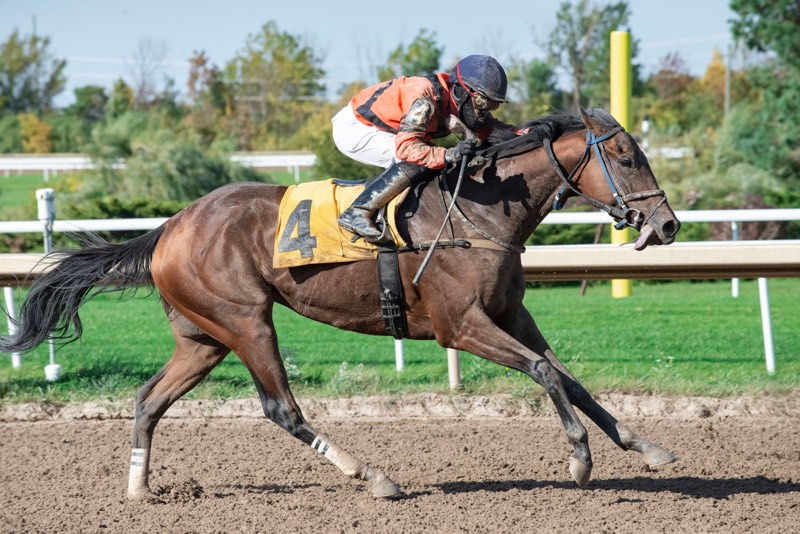
A jockey riding a dark horse on a racecourse.

Sovereignty ended his racing career with a victory in the October 31 Longines Breeders’ Cup Classic at Keeneland, beating The Puma and Knightsbridge in the championship’s closing race. The win gives sports fans a clear result to celebrate and a new chapter to follow as the colt moves toward the breeding shed.

For cannabis-minded readers, there is also a useful distinction behind the racing spectacle: CBD has its own classification under the sport’s medication rules. Familiarity with human wellness products does not establish what is permitted for a racehorse. Nothing in this report alleges cannabinoid use or a medication violation by any horse or participant named here.

A decisive finish at Keeneland

The Breeders’ Cup’s official recap records Sovereignty’s winning margin as one and three-quarter lengths in the $7 million Classic. Junior Alvarado rode the Godolphin-owned and bred four-year-old for trainer Bill Mott. The Puma finished second, with Knightsbridge third.

The winner completed the mile and a quarter in 2:00.36. The seven-horse field included defending champion Forever Young, who finished fifth. These are the October 31 race results, rather than a preview of a championship still to come. The distinction matters when older entries and pre-race assessments continue circulating after the event.

The race organizer’s account describes Sovereignty’s career as concluding with eight wins from 13 starts. It also marks Mott’s third Classic victory. The result supplies a sporting endpoint; it does not, by itself, establish anything about the medical management of the individual runners.

The next chapter is already identified

Darley’s October 31 announcement says Sovereignty is set to join its stallion roster at Jonabell Farm. It places the Classic alongside a record that includes the Kentucky Derby, Belmont Stakes, Travers and Whitney. The announcement also identifies Knightsbridge as joining Darley America’s stallion ranks in 2027.

That shift changes what followers should watch next. A racing retirement ends one kind of competition, while a stallion announcement concerns a different commercial and breeding role. Neither should be confused with an upcoming race entry or an assurance about the future performance of offspring.

Darley identifies Sovereignty as a son of Into Mischief. The pedigree is part of how a stallion prospect is described, but ancestry should not be mistaken for a prediction. The competitive record belongs to this horse; future offspring will have their own results.

Where CBD fits in racing

The Horseracing Integrity and Welfare Unit’s current substance lookup lists cannabidiol, or CBD, as a controlled substance with HISA status S7 B. That is a specific classification. It should not be casually rewritten as either an unrestricted supplement approval or a claim that CBD belongs to the separate banned-substance category.

The useful lesson is to consult the rulebook governing the animal and competition involved. A product’s availability in a store is a different fact from its status under an anti-doping and medication-control program. Marketing language such as natural or hemp-derived does not answer the regulatory question.

This classification also does not establish that a product is an effective treatment for a particular horse. Competition compliance, veterinary judgment and evidence of clinical benefit are separate questions. A consumer headline cannot provide an individualized medication plan or a safe withdrawal interval.

Labels are only the start of a supplement check

In a May 19 advisory, HIWU explains that it and HISA do not approve, certify or endorse dietary supplements as permitted products. Its lookup searches individual ingredients, rather than supplement brand names. The advisory concerns supplement due diligence generally, not a finding about the Classic field.

HIWU warns that an ingredient missing from the lookup is not automatically permitted, and that a label may not reveal every substance actually present. It directs questions about ingredients to its science team. Those limits make a self-issued clean label an insufficient basis for assuming compliance.

For owners and trainers, the practical step is to work with the appropriate veterinary and regulatory professionals using the current rules and the exact product involved. For fans, it is to avoid treating an unfamiliar substance category as a shortcut to a doping allegation.

Keep the result and the rules in perspective

Our marathon results and CBD coverage makes a related point about sport-specific guidance. The existence of one rule in a human competition does not decide the rules for horses, nor does an athlete’s result disclose what products they use.

Sovereignty’s farewell remains a racing story: a champion won his final start on October 31. The cannabis connection is a separate, factual look at CBD’s place in the sport’s regulatory framework. Following both subjects responsibly means celebrating the verified performance while keeping treatment claims, supplement marketing and compliance questions distinct.

Illustrative racing photograph; not Sovereignty, Alvarado or the 2026 Breeders’ Cup. Photo: @coldbeer / Pexels.

Continue Reading

Cannabis

New York Marathon Crowns Almgren and Chepkirui as Runners Face a Separate CBD Question

Sunday’s results delivered a debut victory, a returning champion and a close American podium finish. CBD’s place in sport remains a separate question.

Published

on

White lane markings on an empty red running track

Andreas Almgren won his marathon debut and Sheila Chepkirui reclaimed the women’s title at the November 1 TCS New York City Marathon. The World Athletics results list their winning times as 2:06:01 and 2:24:36, respectively, after a race weekend that brought the running world back to New York.

For cannabis-aware runners following the race, there is also a practical distinction worth keeping clear: enjoying running culture and shopping for a CBD product are different from complying with competition rules. Anti-doping guidance applies to substances, not a product’s wellness branding. Nothing in the race results establishes cannabis use by any of the athletes named here.

The men’s race rewarded a first attempt

Sweden’s Almgren finished 13 seconds ahead of Italy’s Yemaneberhan Crippa, who ran 2:06:14. Kamohelo Mofolo of Lesotho completed the podium in 2:06:26, just one second ahead of fourth-place Benson Kipruto. Those official times show how close the contest remained behind the winner.

The leading American was Zouhair Talbi, sixth in 2:06:43. Ahmed Muhumed placed eighth in 2:07:09, Ryan Ford tenth in 2:07:17 and Conner Mantz eleventh in 2:07:27. For readers scanning beyond the winner, that group gives a fuller picture of the American men’s presence near the front.

New York Road Runners’ post-race account describes Almgren staying with the lead group before making his decisive move with roughly a mile remaining. The organizer says he became the first Swede to win any division at the event. His debut therefore carried significance beyond simply adding another name to the results sheet.

Chepkirui returns to the top

Chepkirui’s 2:24:36 gave the Kenyan another New York victory after her 2024 title. American Jessica McClain finished second in 2:24:42, with Hellen Obiri third in 2:24:43. At the resolution of the published results, six seconds separated first from second and one second separated second from third.

NYRR describes McClain overtaking Obiri in the final meters. It also identifies her finish as the first open-division podium by an American woman at the race since Shalane Flanagan’s third place in 2018. That combination of a returning champion and a late change in podium order gave the women’s race its own distinct story.

In the wheelchair divisions, the organizer reports Swiss victories for Marcel Hug and Catherine Debrunner. Hug’s 1:28:14 extended his event record to eight wins; Debrunner finished in 1:40:02. These are separate competitive divisions, and their results belong alongside the open races in an account of the day.

Why CBD labels do not settle the rules

As runners move from race coverage back to training and product choices, the U.S. Anti-Doping Agency’s CBD guidance offers a relevant cannabis connection. CBD itself is permitted under World Anti-Doping Agency rules, while other cannabinoids remain prohibited in competition. USADA warns that a product sold as CBD can contain other cannabinoids, including THC.

The agency also emphasizes athlete responsibility for substances found in a sample. Third-party certification can reduce contamination risk, but does not eliminate it. A reassuring label is consequently not the same thing as a guarantee that a product is compatible with an athlete’s obligations.

This does not mean every recreational runner faces an identical testing program. It means runners subject to anti-doping requirements need to identify the rules that actually govern them. State retail availability, a friend’s recommendation and a manufacturer’s recovery language answer different questions from the competition’s substance policy.

There is a health question alongside the eligibility question. FDA’s consumer guidance warns that CBD can affect other medicines and cause adverse effects, including changes in alertness. The agency says most retail CBD products have not undergone its evaluation for effectiveness, dosage or interactions. A product clearing one sports-policy question would not resolve those separate issues. Runners should bring the exact product and their medication list to a qualified healthcare professional, rather than infer suitability from a race-weekend advertisement or an elite athlete’s finishing time.

A result is not a recovery study

The performances in New York are evidence of what happened in the race. They are not evidence that CBD improves recovery, that cannabis helps marathon performance or that a particular product is safe for an individual runner. Drawing those conclusions would require different evidence from a finishing table.

Our earlier New York marathon cannabis and CBD guide addressed the race-weekend context. Sunday’s newly available results now add the competitive outcome. The useful next step for fans is to read the newly published official standings; for athletes considering cannabinoid products, it is to check the applicable rules and seek qualified advice about personal health questions.

Illustrative stock running track; not the New York City Marathon road course or race. Photo: KoolShooters / Pexels.

Continue Reading

Trending

Join The Cannabis Aficionado Community!
Join the Cannabis Aficionado community and receive all of the most relevant news geared towards our sophisticated enthusiast community.
Loading

Copyright ©️ 2026 Cannabis Aficionado. Cannabis Aficionado is a registered trademark of CNM Inc. All rights reserved. Registration on or use of this site constitutes acceptance of our Terms of Service, Privacy Policy and Cookies Policy. People may receive compensation for some links to products and services. Offers may be subject to change without notice.