#cannabisaficionado

Culture

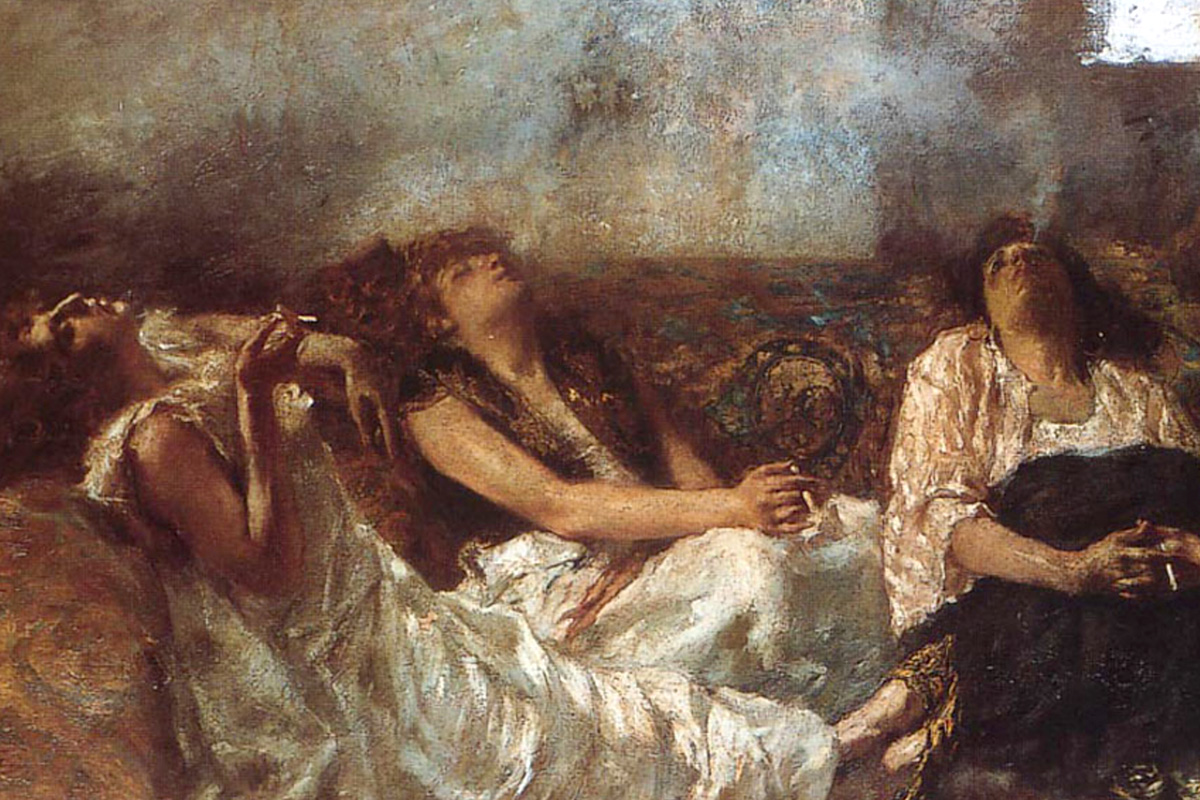
Le Club des Hashischins: How Hash & Hallucination Dazzled Western Culture

Published

on

Le Club des Hashischins
PHOTO | Le Club des Hachichins
Advertisement Overdrive

When Napoleon Bonaparte’s army arrived at the great pyramids in Egypt, they were met by a fleet of 10,000 soldiers on horseback. Sometimes described as a mad man, Bonaparte is famous for his exhaustive crusades into foreign lands with superior militaries and home advantage. In the mid-1790s, Bonaparte had already defeated Austrian armies against the odds on behalf of his country. After claiming new territory for the French government, Bonaparte set his sights on Egypt.

The goal of the French invasion in Egypt was to disrupt the trade routes of a dreaded rival, the British. While the French achieved a degree of success in their Egyptian military endeavors, the nation’s expansion into the East sparked a new, oft undiscussed cultural shift back home — Napoleon’s crusade introduced 19th-century France to psychedelic drugs.

A Forbidden Herb at Le Club des Hachichins

According to Robert Clarke and Mark Merlin, authors of Cannabis Evolution and Ethnobotany, archeological researchers estimate that the use of hashish in Egypt dates back to the 12 century C.E. In its early days, archeologists suggest that hashish was most often eaten, with its active chemicals absorbed underneath the tongue and digested when swallowed. If historical records prove accurate, the cannabis paste was cheaper than other substances and was unrestricted by Islamic religious authorities at the time.

As such, hashish consumption rose in popularity until the 20th century, inspiring feelings of euphoria, provoking a meditative state of mind, and promoting sociality. The herb was particularly popular among the lower classes, who arguably consumed it as a more economical alternative to alcohol or opium. When French soldiers arrived on the scene, they were quick to introduce themselves to such a pleasant and unique social custom, much to the dismay of Bonaparte. For the first time in the modern history of France, cannabis was banned.

In October of 1800, Bonaparte issued a decree to his troops:

“It is forbidden in all of Egypt to use certain Moslem beverages made with hashish or likewise to inhale the smoke from seeds of hashish. Habitual drinkers and smokers of this plant lose their reason and are victims of violent delirium which is the lot of those who give themselves full to excesses of all sorts.”

Unfortunately for the General, however, the ban was a lost cause. The march into Egypt opened the first doors to the cannabis drug trade in France, and it was the educated elite that warmly welcomed the intoxicating herb into their social and intellectual lives. The primary attraction? Hallucinations.

Hash Eating Hallucinations

Without television or the radio, Victorian-era elites resorted to more unusual forms of entertainment. For prominent French writers, artists, and scientists of the time, that entertainment came in the form of a hash-eating club. Attended by famous names like Alexandre Dumas, Victor Hugo, and Charles Baudelaire, Le Club des Hachichins was formed in 1844. Writers and artists attended out of creative curiosity, while at least one doctor attended to study mental illness and drug-induced mental alterations.

Inspired by new imports from Egypt, the group famously mixed hashish into coffee, along with pistachio, cinnamon, cloves, nutmeg, sugar, and other flavorful spices. The end result was, apparently, downright hallucinogenic. After consuming a lump of hashish rumored to be the size of an adult thumb, writer, journalist, and philosopher Théophile Gautier reports spiraling into a world filled with visionary creatures, ones which had only previously come to life in the visual arts.

“An enigmatic personage suddenly appeared before me,” writes Gautier in Le Club des Hachichins. “His nose was bent like the beak of a bird, his green eyes, which he wiped frequently with a large handkerchief, were encircled with three brown rings, and caught in the knot of a high white starched collar was a visiting card which read: Daucus-Carota, du Pot d’or….. (a reference to the fairytale writing of E.T.A. Hoffmann).”

“Little by little,” he continues, “the salon was filled with extraordinary figures, such as are found only in the etchings of Callot or the aquatints of Goya; a pêle-mêle of rags and tatters, bestial and human shapes.”

These visions, it seems, continued into Gautier’s dreams. According to a 1974 paper by Harry Cockerham, during the hash eater’s dreams, senses seem to blur into one another — a synesthesia that confuses taste, color, scent, and sound. Gautier writes in a local newspaper: “I had the most bizarre dreams: I heard flowers singing, I saw blue, green, and red musical phrases which smelled of vanilla.”

And yet, not all effects of hashish were frightening. In fact, Gautier articulated that the herbal concoction was far superior to alcohol. “I could no longer feel my body,” he writes in Le Club des Haschichins, “the bonds of mater and spirit were loosened […] I imagine this is how souls must be in the world of essences […] I understood, then, the pleasure felt by spirits and angels moving in the ethereal regions.”

Exploration Persists

After observing Le Club des Hachichins for several years, Dr. Jacques-Joseph Moreau, an influential figure in modern psychology, reported in his several-hundred-page investigation Hashish and Mental Illness, “I saw in [cannabis] a mean of effectively combatting the fixed ideas of depressives, disrupting the chain of their ideas, of unfocusing their attention on such and such a subject.”

They say history repeats itself. With cannabis, this common aphorism is proven true again and again. In 1800, cannabis products were banned by Bonaparte. Yet, the desire to explore the mind and test the boundaries of consciousness was too appealing for soldiers and civilians alike.

This same desire to explore persists today, despite decades of tension between policymakers hoping to control, and spirited wanders breaking laws to find freedom of mind.

Culture

No Super Bowl for Brock Ollie

Published

on

Brock Ollie

With medicinal marijuana being legal in 37 states and recreational cannabis allowed in 18, we should be seeing commercials for companies, products, and services almost as frequently as commercials for sports betting, which is permitted in 30 states in some form.

However, mainstream cannabis advertising continues to be non-existent, as demonstrated in the recent news that NBC has rejected an ad by cannabis e-commerce and advertising platform Weedmaps from being shown during the Super Bowl LVI event his coming Sunday.

Weedmaps reportedly approached the network late last year about airing a Super Bowl commercial that would be “similar to a PSA,” according to reports. Execs volunteered to present some of their earlier educational-based programming, assuring NBC executives that it would not contain any direct-sell messages, which are still forbidden under federal law.

“The answer was a hard no — they wouldn’t even entertain the conversation,” Weedmaps Chief Operating Officer Juanjo Feijoo told Adweek. “We see ourselves as trying to be trailblazers in the industry and making new inroads where others haven’t gone before in cannabis advertising. So it was disappointing.”

The contentious ad personifies cannabis as Brock Ollie, a head of broccoli, the veggie emoji commonly used as a visual representation of cannabis in marketing. The 30-second ad takes viewers through a day in the life of Brock Ollie, whose superfood identity is in jeopardy as he is repeatedly misidentified as cannabis. The ad offers a lighthearted take on the industry’s issues, such as social media censorship and a lack of clear advertising standards, which limit cannabis-related commercials during nationally televised events like the Super Bowl.

“Despite three quarters of the country having legalized cannabis and the bipartisan enthusiasm we continue to see in support for change at the federal level, the industry continues to face roadblocks that inhibit competition in the legal market and stifle opportunities to educate,” Chris Beals, CEO of Weedmaps said. “There’s an irony in the fact that the biggest night for advertising will feature an array of consumer brands in regulated industries, from beverage alcohol to sports betting, yet legal cannabis retailers, brands and businesses have been boxed out.”

The game between the Cincinnati Bengals and Los Angeles Rams will be played Sunday in L.A.

Continue Reading

Culture

VIBES X Kaya Herb House Collab Launches in Jamaica

Published

on

VIBES x Kaya Herb House
PHOTO | Chris Lewinson/BUZZ

Vibes, the rolling paper brand co-founded by entrepreneur and rapper Berner in collaboration with Gnln, announces a collaboration with the Kaya Herb House for the holidays. Featuring lifestyle goods and premium rolling papers, VIBES x Kaya Herb House furthers both brands’ missions to create the ultimate experience for connoisseurs.

VIBES x Kaya Herb House marks the first common project between the two brands, which have a shared goal of educating consumers on a premium smoking experience and creating meaningful experiences around the cannabis lifestyle.

The collection’s retro graphic pays homage to the Caribbean’s smuggler planes

The Kaya Herb House franchise was founded in Jamaica by “Bali” Vaswani, who had established Marley’s Estate coffee brand in the United States. VIBES x Kaya will be available at the Herb House in Kingston, Jamaica, which features the first medicinal Ganja herb house in the Caribbean and offers locally grown herbs and straight-from-the-farm extracts line as well as a taste of world-renowned cuisine and juices at the cafe and pizza restaurant.

“This marks another milestone for the VIBES brand. We are thrilled to partner with such an industry legend, together introducing an authentic experience to Jamaica and bringing attention to the history of the industry in the Caribbean,” says Vanessa Vanjari, Brand Manager of Vibes.

The collaboration features rolling papers, apparel, and accessories for the global wellness traveller, including co-branded hemp king size skinny booklets, tee shirts, and a pizza cutter. The slogan “Build a Vibe” is stamped on the VIBES x Kaya rolling papers, a play on both a popular Jamaican catchphrase and VIBES’ signature “Catch a Vibe.”

Each piece in the collection contains a retro graphic style of a plane that pays homage to the history of cannabis in the Caribbean when smugglers flew cannabis for the black market over the coasts of Jamaica and Florida. Smuggler planes would drop packages into the water, gaining the name “Square Grouper.”

VIBES x Kaya is a month-long collaboration that launches on December 17, 2021 at the Kaya Herb House in Kingston, Jamaica.

Continue Reading

Culture

Kate Hudson Gets High for the Holidaze In Cannabis Cocktail Commercial

Kate Hudson stars in an ad for Cann beverages—the first time an A-lister has been the face of a weed brand in a mainstream commercial.

Published

on

Kate Hudson Gets High

Cann, a California-based cannabis-infused beverage firm, has partnered up with actress Kate Hudson and her King St. Vodka brand for the holiday season. To coincide with the debut of their special bundle offering – Cann Unspiked and King St. Vodka, the trio just opened a holiday-themed campaign.

Hudson, an actor, producer, and investor in the THC-laced brand Cann, starring in a film that breaks new ground by including the popular “social tonic” as the main element in a joyful adult beverage. Hudson’s own brand, King St. Vodka, provides the alcohol in this cranberry sage-flavored cocktail. In the video, Hudson is joined by party guests Baron Davis, former NBA All-Star-turned-TNT commentator, and Darren Criss, Emmy-winning actor and singer.

Hudson and Davis play an unusual couple preparing for a sophisticated house party in the ad, which could be the first time a Hollywood A-lister has stepped up as the face of a cannabis brand in a mainstream commercial. In fact, the two have been friends for a long time and are both financial backers of Cann, as is Criss, who met Hudson on the set of Glee.

Hannah Lux Davis, known for her work with Ariana Grande, Doja Cat, Kacey Musgraves, and others, directed the star-studded holiday campaign and features music from Criss’ latest Christmas album.

According to Cann’s founder Luke Anderson, the goal of the collaborations and campaign is to show that cannabis has become mainstream enough that a celebrity like Hudson is happy to use and promote it.

“We’re equating cannabis with alcohol because at these 2-milligram levels it’s as mild as a light beer or a glass of wine,” Anderson told Adweek. “We’re saying they deserve to be on equal footing. And people have been DIY-ing this for a long time anyway.”

Continue Reading

Trending

Join The Cannabis Aficionado Community!
Join the Cannabis Aficionado community and receive all of the most relevant news geared towards our sophisticated enthusiast community.
Loading

Copyright ©️ 2026 Cannabis Aficionado. Cannabis Aficionado is a registered trademark of CNM Inc. All rights reserved. Registration on or use of this site constitutes acceptance of our Terms of Service, Privacy Policy and Cookies Policy. People may receive compensation for some links to products and services. Offers may be subject to change without notice.