#cannabisaficionado

Industry Innovators

Jason Washington: Creating a Global Cannabis Kulture
Published

on

Jason Washington
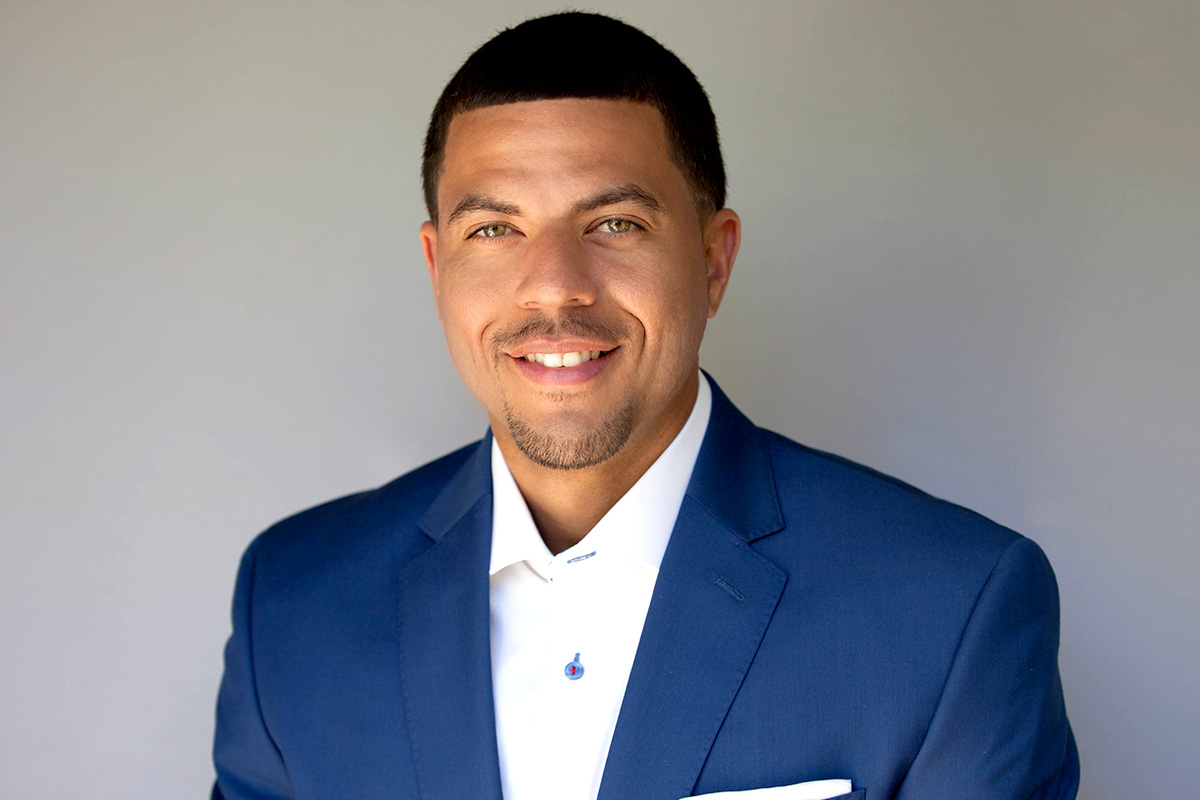
Jason Washington. PHOTOS | Supplied
Advertisement Back2Grow Advertisement

Jason Washington is a successful entrepreneur both in and out of the cannabis industry. He is also the second person in U.S. history to face a jury trial proceeding on a state-licensed medical marijuana case. His story is a powerful reminder that the most dangerous thing about the cannabis plant is the grey area that surrounds its legal status.

In 2011, Washington’s Big Sky Health dispensary was the largest legal operation in Montana. And despite medical marijuana being legal in the state since 2004, the Feds raided him. At trial, he was found guilty of conspiracy to manufacture and distribute cannabis and possession with intent to distribute. His judge deviated from the mandatory minimum sentence guidelines of 10 years, instead sentencing the former University of Montana Grizzly quarterback to two years in federal prison. In October 2014, his original sentence was reduced from 24 to 21 months, with the judge ordering Washington’s immediate release.

Washington returned to his home state of California where his natural aptitude for business saw him start several successful companies, including Ignite with Matthew Morgan and Dan Bilzerian.

Fueled by his desire to help those who had been wrongly incarcerated like himself, Washington went on to found Kulture, a full-service cannabis agency with a twist — you have to have a proven legacy with the plant to make the cut. The company has cultivation, extraction and manufacturing operations in five different states: Arizona, California, Oklahoma, Michigan and Missouri.

Cannabis Aficionado spoke to Washington about his loyalty to legacy operators, his advice to newcomers to the industry, and his plans for a global cannabis network.

CA: What sets Kulture apart from other cannabis agencies?

Jason Washington: One of the mandatory stipulations for being accepted or invited into the Kulture family is that you have to be a legacy operator. And a legacy operator suggests basically that you have a proven track record of 10 plus years in the cannabis space. You’re someone that was in this when it wasn’t just the latest “cool” business venture for Ivy League grads.

My directors of indoor cultivation are Bill and Jeff Levers aka the Beard Brothers, who are legacy operators. We’ve been running together for over two years — longer than Kulture has been established. Our philosophies and ideologies align. In fact, their commitment to helping veterans inspired the backpacks in our new clothing line; these are based on tactical gear as a salute to our veterans.

Jason with the Beard Bros Bill Levers (far left) and Jeff Levers (right) and Eric Brandstad at the Arizona facility.

Why is this so important to you?

The pioneers of this industry have not been able to participate in the new legal market. A lot of people have made a lot of money off the backs of those who are now deemed criminals. Guys like me — those with weed felonies or federal felonies — aren’t looking for handouts. To be honest, I don’t know how to solve the problem. I just know that the problem exists.

Tell me more about your new clothing line and how it’s helping to change the stigma around cannabis?

Some very successful brands started with clothing in emerging markets just for brand awareness. For me, it’s about establishing normalcy like any other brand. In California, Prop 64 means we have been able to normalize the use of cannabis as a recreational drug. And as a very beneficial medical alternative to pharmaceuticals and other forms of pain management. Cannabis is becoming more and more acceptable, and it’s one more facet of people’s lives.

I’ve been in the cannabis game for a long time, so for me, the clothing line is new and exciting. Normalizing cannabis is the main reason I’ve launched it. The style is influenced by what my cultivators wear when they’re in the facilities. It ties into the Kulture lifestyle and appeals to a lot of different demographics.

One of the backpacks from Kulture’s new apparel line.

What are your expansion plans for Kulture?

Here’s the thing, cannabis doesn’t only help people in America. There’s a whole world of people that need this plant and our help and expertise. We have to focus on more than just America and more than our little micro-environments. I see Kulture as a 300-person global agency with offices in America, South America and somewhere in Europe or Africa. I see it as a combination that brings together the best cannabis talent in the world. Where the brightest minds come together under one roof to provide the best cannabis for everybody to enjoy.

What’s the most important thing that needs to be addressed when people are talking about cannabis legalization?

The conversation around inclusion needs to be further expanded upon. There’s still a lot of people that are in jail for this plant.

Another problem is people riding social equity but did not serve a day in jail or have never been prosecuted or raided. People get pushed to the front because they say, “I grew up in this neighborhood or I grew up in that neighborhood.” But those who were affected or who served time are not able to obtain a license. For example, I live in California, but my charge is federal, is in the state of Montana. So I can’t get an equity license in California because my charges did not originate in California. I’d have to go back to the state of Montana to participate or to be a license holder.

Look, I understand why states have said that in order for you to be an equity applicant the crime or the charge has to have been committed in that state or jurisdiction. I totally get that. But it’s keeping guys that went to federal prison for cannabis-related crimes shut out. They’re kept from participating from a licensing standpoint because their charge originated in a different jurisdiction than where they reside. Most federal indictments are brought in different jurisdictions than your home state.   

Jason with son Jaxon taken at Taft Federal Correctional Institution.

How do you think the cannabis industry can be better?

The biggest thing is if all these new executives and people coming into the space entered with more knowledge. They can’t get the experience, I get it. But at least the knowledge and understanding of what so many people have sacrificed for so long and went through. Understand the culture. Don’t completely strip cannabis of everything it’s been for so long and turn it into spreadsheets and mass production. Because that’s not what it is.

I get bringing a more professional business environment to the space; more legitimacy, more scientific data and more research-based products to market. But at the same time, don’t forget those who have given you this opportunity. Don’t forget how you got here and the sacrifice that was made to allow you to participate in this industry.

What do you wish you knew when you first started out in cannabis?

The power of the federal government and what substitute asset forfeiture meant. Haha.

What are the three qualities you need to be a successful cannabis entrepreneur?

I think perseverance is one of the biggest. I’ve been in it for 12 years and I’ve seen people come and go who don’t have the character and the stamina to fight through all that you have to fight through — whether it’s local municipalities, competition, or failed crops. You’ve got to be an innovator. You’ve got to be someone who is a survivor and a fighter.

At Honeydew farms

Do you have a career highlight?

There’s one thing that really sticks out to me to this day and it was when we opened the first Montana dispensary. I’ll be honest, I wasn’t 100% sold on the medical benefits of cannabis at first until one particular firsthand account from a mother. I was her son’s caregiver; her son was 13 or 14 years old and was epileptic. She came in one day and broke down crying because she didn’t have to go to the streets for cannabis anymore. She said, “You have no idea how much I admire and respect your courage and how much you helped my son. You guys being here and taking care of us has been like God answering my prayers.” It was very heavy and very emotional.

Hearing those kinds of stories and testimonials gave me the strength to stand up for what I was doing and believed in at the time. It still does to this day.

Believe it or not, I don’t look at federal prison as the worst thing that ever happened to me. It gave me the opportunity to sit back, reflect and learn from the choices and decisions that I’ve made. Maybe mistakes, maybe not mistakes.

Any advice for anyone that’s thinking of getting into cannabis?

If you’re thinking about getting into it now, you need to position yourself and prepare yourself for the long haul. You’re only warming up after five years in the space. This is a daily education. Cannabis is unique in a sense, it’s not like any other businesses. You can apply past experiences from other businesses ventures. But the hands-on education that you get on a day to day basis is like no other. 

Cannabis

Israel’s Cannabis Trade Probe Moves Toward a Four-Producer Review

Israel’s latest procedural step puts four Canadian producers in focus, while the distinction between an investigation and an imposed trade duty remains essential.

Published

on

Shipping containers and cranes at a commercial port

Israel’s investigation of Canadian medical cannabis imports has reached another procedural stage, with four producers identified for closer examination, according to reporting on an October 22 notice. The development concerns how investigators will assess exporters. It does not, by itself, establish that dumping occurred or impose a new import duty.

Israel’s Cannabis Magazine reported that the trade-levies commissioner selected Koots Canna, 2323414 Alberta and Cielo Verde Quebec as a sample, with GrowCo to be examined separately. The outlet said it obtained the commissioner’s document. Cannabis Aficionado has reviewed the published reporting, rather than independently obtained that notice.

Why four producers are in focus

According to Cannabis Magazine, the three sampled growers represent about 22 percent of exports among the 16 indoor and hybrid growers that supplied data. GrowCo was singled out because of its greenhouse production and export volume. The report says the four together cover approximately 70 percent of Canadian cannabis imports into Israel during the relevant investigation period.

Those are descriptions of the proposed examination, not market-share figures that should automatically be applied to current retail sales. The reporting also describes a five-business-day response period for parties to comment. A reader should not mistake that opportunity to respond for a final ruling.

StratCann’s October 23 report adds that 22 Canadian companies supplied initial responses and 17 had exported during the investigation period. Its account says the commissioner considered individual calculations for every cooperating exporter impractical within the available time. Sampling is therefore central to this stage of the dispute.

What “dumping” means in this context

The World Trade Organization’s explanation of anti-dumping rules describes dumping as exports sold below their normal value, generally assessed against the exporting market. It is a trade-law pricing question. It is not an allegation that cannabis was contaminated, illegally cultivated or unsuitable for patients.

The comparison is more involved than placing two advertised prices side by side. The WTO describes adjustments that can be needed for differences in sale conditions, quantities, taxation and product characteristics. Its framework also requires consideration of material injury to a domestic industry and a causal link between that injury and dumped imports.

That makes production methods and comparable pricing relevant without making either conclusive. A greenhouse producer can have different costs from an indoor grower, but a cost difference alone does not settle all the questions required for an anti-dumping measure. The investigation has to establish the relevant facts through its process.

A dispute with several procedural turns

The latest review follows an earlier investigation that was closed in July. In a July 28 notice, Israel’s Ministry of Economy and Industry said the closure was for procedural reasons: advance notification had not been provided to the exporting country’s competent authority because of human error.

The ministry explicitly said that closure was not a substantive determination on the complaint. It also preserved the possibility of a further complaint or a new investigation. The distinction matters in both directions: closure did not establish that the allegations were correct, and it did not establish that they were disproven.

Cronos Group’s securities filing records a new complaint dated July 30, notification to Canada on August 2 and notice to the company on August 5 that a new investigation had begun. The company says it cannot predict the outcome or whether provisional or final duties will ultimately be imposed.

The filing also traces the earlier case to January 2024 and describes the finance minister’s opposition to the proposed duty in April 2025. It records subsequent court challenges as well. That history helps explain why earlier proposed tariff percentages should not be presented as the rate established by the October 2026 sample-selection step.

What changes for readers and businesses now

For businesses, the immediate development is a more specific picture of which exporters may receive detailed scrutiny. It is not enough information to calculate a new landed cost, predict a supplier’s future prices or announce an interruption to patient supply. Those claims would require additional evidence.

For patients and other readers, an investigation headline should remain separate from a product-safety headline. Nothing in this procedural selection establishes a health finding about a named producer’s cannabis. Nor does it establish a new prescription rule.

The next substantive items to watch are the commissioner’s treatment of responses to the sample, any published preliminary determination and any resulting measure. Reports available for this article describe sample selection, with no preliminary duty decision reported at that stage. Until a later document changes that position, the appropriate description is an unresolved trade investigation.

Illustrative stock trade photograph; not a documented cannabis shipment or an Israeli port. Photo: Andrea Musto / Pexels.

Continue Reading

Cannabis

Rubicon’s $3 Million Raise Puts Greenhouse Lighting at the Center of Expansion

The Canadian producer plans to expand output from existing facilities, with a lighting project bringing its combined capacity target forward to June 2027.
Published

on

Potted plants beneath the glass roof of a greenhouse

Rubicon Organics is putting new capital into the lights above an existing crop rather than announcing another cultivation site. The Canadian producer’s October 19 financing announcement outlines a roughly $3 million private placement intended to support lighting and related greenhouse infrastructure at its Pacifica facility in Delta, British Columbia.

The company expects the project to help bring combined annual capacity at Pacifica and its Cascadia facility to 20,000 kilograms by June 2027, about a year earlier than previously anticipated. That is a production target. Whether additional capacity becomes profitable, saleable flower will depend on execution, operating costs and demand.

What the financing is intended to fund

According to Rubicon’s announcement, Siwash Rock Investments subscribed for 6,666,667 common shares at $0.45 each. Proceeds are intended for the lighting project, with the balance going to working capital.

Rubicon says Pacifica’s annual capacity could reach 15,500 kilograms after the upgrade, a 40 percent increase at that facility. The 20,000-kilogram figure refers to both sites together. Those two numbers describe different scopes and should not be added together. Final TSX Venture Exchange acceptance remained outstanding in the announcement.

The operating background behind the project

Rubicon’s second-quarter results, released in August, provide context for the expansion. The company reported net revenue of C$18.5 million, up 23 percent year over year, while adjusted EBITDA fell 18 percent to C$1.1 million. Adjusted EBITDA is the company’s nonstandard earnings measure, not net profit.

Management attributed pressure on profitability to the ramp-up of Cascadia even as revenue grew. It also reported that Pacifica’s per-crop yield metrics had increased approximately 20 percent in the first half of 2026 compared with a year earlier.

Those disclosures show why output and earnings need to be examined separately. A business can sell more while still absorbing the expense of bringing a facility to its intended performance. The lighting investment adds another operational milestone to watch alongside the company’s reported financial results.

The August report put combined capacity at 15,500 kilograms before the planned lighting expansion. That earlier baseline helps clarify the October target: the same figure later describes Pacifica alone, while the combined target rises to 20,000 kilograms.

Why growers pay attention to lighting

There is a research basis for studying how additional light affects cannabis production. A 2022 study in Frontiers in Plant Science tested the THC-dominant cultivar Meridian under different light intensities in an indoor environment. Dry flower weight was higher under the strongest tested photosynthetically active light treatment than under the lowest.

However, the study found no corresponding effect of those intensity treatments on cannabinoid concentrations in the flower. Its ultraviolet treatments also provided no commercially relevant benefit under the tested conditions. More flower and stronger flower were separate questions.

The researchers cautioned that responses vary with genotype and production environment. Their findings explain why light is a serious cultivation variable; they do not independently verify Rubicon’s projected 40 percent increase. A controlled indoor experiment is not a performance test of Pacifica’s greenhouse or its proposed equipment.

The experiment also illustrates why a lighting announcement should identify what success means. In this case, increased dry flower weight did not demonstrate increased flower cannabinoid concentration, even though both measures could matter commercially.

The energy bill belongs in the calculation

A 2021 PLOS ONE study by Utah State University researchers makes another useful distinction. In experiments with medical hemp, the team compared lighting spectra and fixture efficiency. A tested white-and-red LED treatment produced slightly less flower per unit of growing area than a high-pressure sodium treatment, but more flower per dollar of electricity.

The authors concluded that fixture efficacy and upfront cost could matter more to investment returns than spectral distribution at high light levels. Their study also found no effect of spectral quality on CBD or THC concentration under its conditions.

For readers following a greenhouse upgrade, the practical implication is that kilograms alone cannot describe the result. Equipment cost, electricity use and the amount of usable production obtained from that energy all belong in the evaluation. Those research findings are background, not a specification for Rubicon’s project.

For broader demand context, our coverage of Canada’s August retail sales explains why national spending and an individual producer’s performance answer different questions. A market record does not validate a particular expansion forecast.

What will show whether the expansion works

The most useful follow-up will connect construction progress with actual operating results: whether the equipment is installed on time, whether yields improve consistently and whether the additional flower supports sales without eroding margins. Those are checkpoints, rather than outcomes established by the financing.

For cultivators, Rubicon’s plan offers a concrete example of pursuing more output within existing infrastructure. For consumers, the announcement does not guarantee a change in potency, availability or shelf price. The capital has been raised; the production and commercial results still have to follow.

Illustrative stock greenhouse photograph; not Rubicon’s Pacifica facility or a cannabis crop. Photo: Albina White / Pexels.

Continue Reading

Cannabis

Calyx Launches packOS With Label Quotes First and More Tools to Follow

Calyx’s new packOS platform starts with label quoting. Its launch raises practical questions about artwork, production scope and the compliance work that remains with brands.
Published

on

An industrial printing machine processing sheets of paper

Calyx has introduced packOS, a packaging procurement platform that begins with a practical task: turning existing artwork into a quote. The October 20 launch brings the company’s cannabis packaging experience into software, with an initial Quick Quote offering and additional approval and order-management tools on its roadmap.

For cannabis brands, the useful question is what can be ordered now. The current product page identifies label quoting as live and flexible packaging as coming soon. That makes the first release more specific than the phrase “operating system” might suggest, particularly for buyers expecting a complete replacement for their existing packaging workflow.

What Calyx announced

In its company release distributed by Cannabis Business Times, Calyx describes a platform intended to move procurement beyond email chains, spreadsheets and manual quotes. It says buyers can upload packaging artwork and compare production options, prices and corresponding lead times.

The release presents Quick Quote as the first major component, with Artwork Approval and Order Management to follow. It also describes artificial intelligence and automation in estimating, artwork preparation and prepress. Those are Calyx’s descriptions of its technology, rather than results from independent testing by Cannabis Aficionado.

The distinction matters when comparing a launch announcement with a purchasing decision. A platform may describe an ambitious direction while delivering a narrower first service. Buyers need a clear understanding of which steps are available today, which require additional coordination and which remain future capabilities.

The current scope starts with labels

The product homepage says users can submit a PDF or Adobe Illustrator file. It describes extracting specifications from that artwork, producing a visual proof and pricing quantities. Labels are listed as available, while pouch quoting is marked as a future addition. Artwork Intelligence and Order Management appear in preview on the current roadmap.

For a buyer preparing a launch, those labels are more useful than assuming everything mentioned in an announcement is fully available. A proof, a quotation and an accepted production order are separate milestones. Establishing which one the platform has delivered helps prevent a team from treating preliminary information as a finished manufacturing commitment.

Printing does not replace compliance review

The cannabis-specific product page covers several label uses, including jars, lids, pre-rolls, boxes and batch information. It also answers an essential question directly: state compliance review stays with the customer’s team and counsel. The software is not presented there as a service that approves labels against state cannabis rules.

That boundary is significant for a brand operating across markets. An artwork file can be ready to print while still needing a jurisdiction-specific review. The company says customers provide approved versions for each state; it also says label orders do not require buying containers from Calyx.

Its described workflow separates preprinted brand and strain information from batch details added by customers using their own thermal printers. That is a production option, not proof that a particular finished label contains every required disclosure. The final artwork and data still need attention before a product reaches a shelf.

Questions to settle before uploading artwork

Packaging files may contain unreleased product names or designs, making information handling part of vendor selection. Calyx’s published security page says files travel over encrypted connections, are held in private storage and can be deleted on request. It describes using submitted files for quotes, proofs and production.

These are the provider’s stated practices, not an independent security assessment. A brand considering the service should compare those commitments with its own approval process and any obligations attached to an unreleased design. A convenient upload workflow does not itself decide who within a business is authorized to share artwork.

Similarly, any sourcing comparison should identify what is included in the quoted job. Quantity, material, finish, delivery expectations and the approved artwork version are practical points to settle before authorizing production. A lower displayed number is only meaningful when the underlying specification matches the buyer’s needs.

The security page also says access links expire and that an unverified internal access check is denied. Buyers can ask the provider how these stated controls apply to their particular project and who can request deletion.

A software launch with a manufacturing context

The consumer-facing side of packaging is visible in 710 Labs’ new Close Friends presentation. The packOS announcement addresses an earlier stage: how packaging teams organize artwork, evaluate options and move toward production.

For now, the clearest takeaway is a new quoting tool with a stated initial scope. Brands can assess the label service on that basis while tracking whether the planned approval and order-management features become available. Adoption, actual time savings and customer outcomes will require evidence beyond the launch announcement.

Illustrative stock printing equipment; not a Calyx facility or packOS demonstration. Photo: Criiv India / Pexels.

Continue Reading

Trending

Join The Cannabis Aficionado Community!
Join the Cannabis Aficionado community and receive all of the most relevant news geared towards our sophisticated enthusiast community.
Loading

Copyright ©️ 2026 Cannabis Aficionado. Cannabis Aficionado is a registered trademark of CNM Inc. All rights reserved. Registration on or use of this site constitutes acceptance of our Terms of Service, Privacy Policy and Cookies Policy. People may receive compensation for some links to products and services. Offers may be subject to change without notice.