
Industry Innovators
Beard Bros Pharms: Taking Over the Cannabis World One Step at a Time
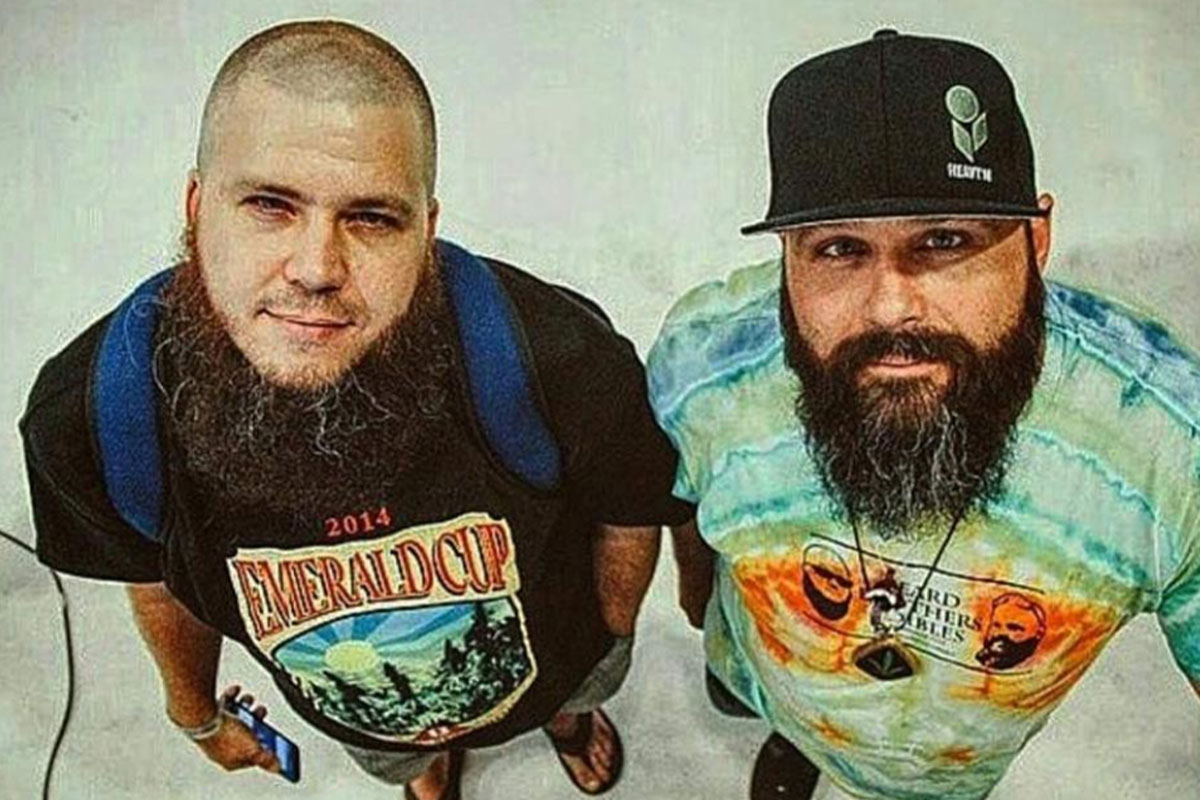

You could say that Bill and Jeff Levers aka Beard Bros Pharms have created their own cannabis standard. Not only are the brothers master cultivators, consulting for the likes of Kulture and other well-known brands, they are also fierce advocates for social reform, tireless cannabis prisoner campaigners, and savvy businessmen.
Cannabis Aficionado caught up with the Beard Bros to talk about their recent morphing into a full-blown media company, the social impact of legalization, the disruption of Prop 64, and the Small Farms Initiative they’ve been collaborating on with Tim Blake and the Emerald Cup.
CA: Tell me about your journey through entrepreneurship and how you found your way to cannabis?
Beard Bros Pharms: Both of us have been proponents of cannabis from a very young age. We never saw it the way the media portrayed it. Reefer Madness and prohibitionist talking points just never made much sense to either of us. We had always known it was medicinal, non-toxic, and non-lethal. We sometimes feel like we’ve been waiting for the “majority” of society to catch up.
Cultivation of the plant started for us in our teens and has carried through to this day. We have always had an entrepreneurial spirit and the cannabis industry, in general, is all about that. It’s always been a place where people could pursue their dreams and passions, even before it was legal and regulated like it is today. The people who have been in it for decades have had to adapt and improvise to keep up with the changing times as we have, as a community and industry, gone from the shadows to Main Street. To us, this adaptability and drive are some of the very definitions of being an entrepreneur.
What sets Beard Bros Pharms apart from other cultivators?
Initially, it was just our striving to produce the best and cleanest product possible for patients. It was about patients and consumers, not profits. This was no different than any other cultivators out there, but with the commercialization of this plant, it seems we are now among the few, not the many.
What has set us apart since then is our unique perspective and desire to see those less fortunate helped through cannabis and its culture. We’ve managed to stick to our roots and never compromise, even as that has made it harder to compete. We still have a lot of work to do, but we believe in this plant and the culture around it.
Something we realized early on was that this perspective wasn’t necessarily unique, but it wasn’t something people were talking about openly. What started as a way for us to build our product offerings has now morphed into a full-blown media company. A lot of media companies have moved into offering products, but as far as we know we are the only one to do it the other way around: move from products to media.

Tell me more about this product-to-press pivot?
Primarily it was the passing of Prop 64 here in California. We realized that Prop 64 made expanding our product offerings much more difficult than it had been previously, so like any good entrepreneur we pivoted.
We also realize that being known for good products in Southern California is certainly a good thing but being known worldwide as a leading source of cannabis news from within the industry is invaluable. We felt we had a good ear to the ground for what was happening in the cannabis world, and really wanted to give a voice to the voiceless by starting the conversations so many wanted to have but were afraid to get started.
So we dove headfirst into telling the story of the culture of cannabis and the people that brought it to fruition as what we see today. Over forty states with medical legislation and nearly twenty with adult-use legislation, each with their own unique challenges, provide us a lot of opportunities to spread our message and thoughts to the world.
Tell us about your product line?
Without getting into too much detail we have scaled our product line down currently. Prior to 2018, we had anywhere from sixty to eighty different products. Starting in 2018 with Prop 64’s over-regulation and over-taxation it has made it extremely difficult and risky to have a product line that is too expansive. So we have gone back to our roots as medical providers. We are currently carrying a high-THC full spectrum cannabis oil and a high-CBD full spectrum cannabis oil that is available throughout California. We also have a full host of low or no THC wellness-based products available nationwide.
We are also currently working on getting a new line of flower products to market under the Beard Bros name as well as under a new name that we aren’t quite ready to announce just yet.
Can you tell me more about the Small Farms Initiative that you’ve been collaborating on with the Emerald Cup?
We are honored to be working once again this year with the team over at the Emerald Cup as so many of our own ideals align with theirs. Among those is the need to support the small, craft cannabis farmers who were immediately and negatively impacted by the passage of Prop 64 here in Cali. These farmers were told that they would have a five-year head start, 2018-2023, before farms larger than one acre would be able to operate. That stipulation was smeared before the ink even dried on the new law and loopholes like license stacking has led to an influx of corporate cannabis operations that can afford to legally grow weed, they just don’t know how and don’t care to learn.
The legacy farmers from places like the infamous Emerald Triangle are quite literally at the root of cannabis culture, which we work every day to preserve and propagate. So, the organic relationship with the Emerald Cup is dear to our hearts at Beard Bros Pharms and we have been loudly promoting their Small Farms Initiative that they launched leading up to the Emerald Cup Harvest Ball in December. The Cup has invited all licensed farms who are under one acre and who use regenerative and responsible standards to apply for one of 27 free booths on the Marketplace floor at the Harvest Ball. These farms will also be promoted by the Cup at the event, along with other benefits that will help raise awareness of these legacy brands.
People look to us as honest purveyors of media and as, let’s just say, “above average” indoor growers from LA. This is another reason why we love the Emerald Cup. Their efforts in recent years, and ahead in 2022, to unify the California cannabis market are admirable and smart. The whole LA vs The Bay or NorCal vs SoCal memes are played out. Anyone in this game who is more worried about promoting their city or zip code instead of their brand and this culture will likely soon have plenty of time to do just that.

What do you see as the social impact of legalization?
That’s an interesting question. We see legalization as a double-edged sword. On one hand, people are not being prosecuted as highly as they were previously. On the other hand, the over-regulation, over-taxation, and the barriers to entry have left so many who have sacrificed so much out of the industry that they helped build. This is an industry built on advocacy and created through activism, and in many ways, it has lost its way.
Just like anything in life, it has its pros and cons. We would like to see the cons minimized as much as possible. We would like to see an industry that allows for the very heart of what we grew up understanding as to the American way: small businesses, craft producers, and the ability for anyone who wants to try to participate to have the ability to do so.
You are advocates of advocating for the freedom of cannabis prisoners. How can people reading this help get behind this movement?
Yes, we are. Let’s just call it like it is… no one should be in prison for weed. Period. At this point, we have been advocates for cannabis prisoners for nearly a decade. We supported it before that but got involved physically about a decade ago.
In our opinion, the best thing people can do is to continue to raise awareness that there are people who are spending tens of years (if not life sentences) for non-violent cannabis charges. It is certainly one of the most egregious errors in our current criminal justice system.
On a more local level find a group that advocates for cannabis prison reform and support them fully. Speak up at every opportunity. Make sure their stories are told. Make sure those still participating in the War on Drugs understand the impacts they are having on lives, families, and more.
What’s the most important thing that needs to be addressed when people are talking about legalization?
First and foremost the main thing to understand is that “legal” can mean different things. “Legal” in Florida is not the same thing in California or Colorado. The distinction isn’t just for consumers and patients either, it is also for businesses.
On the business side, it’s fairly straightforward. What are the barriers to entry? What’s the license structure? Some places, like Oklahoma, are as simple as filling out a form and paying $2500, whereas in others it’s an intense lottery process that can cost tens or hundreds of thousands of dollars just for the ability to try — and potentially fail. Other states fall on a pretty broad scale between these two extremes. Understanding how this impacts businesses, and in turn, consumers is paramount. At Beard Bros, we are against regulatory capture, forced vertical integration, and other protectionist rules that make participating in the market only available for well-funded corporate operations.
On the consumer and patient side the most important issue in our minds is home grow. To us, home growing of cannabis should be a fundamental right included in any legalization method. Home grow allows for those interested to take full control of their cannabis intake. It’s also the key to true entrepreneurship and equality. Home grow allows for experimentation, which leads to innovation, which is the backbone of any successful industry.

Time to give some props — who do you think deserves respect in the industry?
We’re always going to go back to being inspired by Mickey Martin, an activist and friend of ours that passed a few years ago. The word ‘mentor’ simply means “an experienced or trusted advisor”, and although Mickey certainly served that role for us when we arrived in California, he was so much more than that. A friend, a father, a husband, and without a doubt the most outspoken advocate for cannabis that we have ever met, Mickey was also as business-savvy as they come. We worked with him directly with his Compassion Edibles brand and saw firsthand how he would cut right through the BS that could bog down a good deal. But, in hindsight, our biggest takeaway from our time with Mickey was an appreciation for his razor-sharp truth-telling. When Mickey passed, a massive gap was left in grassroots cannabis journalism and we have been trying our best to honor his legacy and fill that gap ever since.
How do you think the cannabis industry can be better?
That’s a fairly loaded question. There are a ton of problems in our industry. Enough that it could probably be its own article. With that being said we will try to hit a few of the major pieces that we already touched on: Homegrow; lower barriers to entry; legal banking and insurance, and better and more thorough testing
What’s your favorite thing about your job?
Free weed! Ok, so that’s a bit of a joke, but also a very real fringe benefit.
On a more real note, the best part of our job are the messages of support and love from all of our followers, friends, clients, and more. We started cultivating to help people, and we continue to do what we do now for the people.
What do you wish you knew when you started out in cannabis?
Honestly? How hard but also rewarding it was going to be. Both of us have had an entrepreneurial streak for as long as we can remember, but nothing has been as simultaneously challenging and rewarding as the cannabis industry. If we were to go back in time and give ourselves then some advice from us now it would be simple: Focus on the plant and the people. You can’t and won’t ever be able to buy authenticity, but you sure as heck can build it.

What are the three qualities you need to be a successful entrepreneur?
Passion, adaptability, and grit.
Sometimes life in cannabis is hard, and the only thing that will get you through is a true passion for this plant and the community around it. Cannabis is fast-paced, and things change every day, so that’s where adaptability comes in. Grit to us is really a combination of the two, but with a slightly different spin. It’s the internal piece that ensures the first two are always top of mind.
Any advice for anyone that’s thinking about getting into cannabis?
Don’t do it unless you truly care. There are a ton of people here to make money, and it only goes one of two ways: They either sell out entirely, or they fail miserably. This isn’t an industry that many will get rich quick from, and it isn’t an industry where you can just become an overnight success. This is an industry built on the backs of advocates and activists. It’s an industry that has a culture that has been here decades longer than anyone had “weed” on their resume. If you’re not truly passionate about the plant and the people this industry will chew you up and spit you out. It all sort of goes back to the three qualities we listed above.
What’s next for Beard Bros Pharms?
So many things. On the product side of the house, we are going to continue to expand our current offerings throughout California with some exciting deals that we aren’t quite ready to announce yet. We are also working on a new flower brand that should turn some heads once it’s out in the open.
Additionally, we are also in the works of expanding our hemp-derived wellness products from coast to coast. On the media side, we are expanding our original content offerings, growing the team, and focusing heavily on partnerships and events where we are already partnered. Basically… we are setting ourselves up to take over the cannabis world, and doing it one step at a time.
Where can we follow you?
The best and most obvious place is Instagram. @beardbros_pharms is our main page, with a backup at @beardbrospharms just in case the IG police finally catch us. You can also find both of us on LinkedIn under our full names: Bill Levers and Jeff Levers. Signing up for our Friday Sesh Newsletter and checking out our upcoming news show on Social Club TV are also solid ways to keep up with all things Beard Bros Pharms.


Cannabis
Israel’s Cannabis Trade Probe Moves Toward a Four-Producer Review
Israel’s latest procedural step puts four Canadian producers in focus, while the distinction between an investigation and an imposed trade duty remains essential.

Cannabis
Rubicon’s $3 Million Raise Puts Greenhouse Lighting at the Center of Expansion
The Canadian producer plans to expand output from existing facilities, with a lighting project bringing its combined capacity target forward to June 2027.

Cannabis
Calyx Launches packOS With Label Quotes First and More Tools to Follow
Calyx’s new packOS platform starts with label quoting. Its launch raises practical questions about artwork, production scope and the compliance work that remains with brands.

-

 Cannabis6 days ago
Seed Junky’s Trulieve Deal Opens a New Chapter in Pennsylvania
-

 Cannabis6 days ago
Cronos Completes CanAdelaar Deal in the Dutch Cannabis Pilot
-
 Cannabis6 days ago
Tilray Brings Cannabis Quality Testing In-House in Portugal
-

 Cannabis6 days ago
SNDL Expands Its Indirect Stake in Parallel
-

 Cannabis5 days ago
New Jersey Hemp Drink Extension and Retail Penalties Advance
-

 Cannabis6 days ago
UMass Poll Finds Majority Opposed to Massachusetts Cannabis Repeal
-

 Products6 days ago
Dank Pack Makes Its Alberta Debut With Blueberry BBL
-

 Cannabis5 days ago
New York Opens Cannabis Nursery Applications November 5