#cannabisaficionado

Sports

MLB Officially Removes Cannabis From Banned Substances List

Published

on

Banned Substances List
PHOTO | Savannah1969
Advertisement Back2Grow Advertisement

America’s oldest past-time is chock full of unspoken rules, old-school traditions and players from nations all over the globe on some of the richest contracts in all sports. Now, thanks to some official changes to the rules, those baseball players will be able to spend some of that money they’re making on enjoying cannabis carefree. 

In a move that raised many eyebrows, Major League Baseball (MLB) and the players union announced they had reached an agreement to remove cannabis from the sport’s banned substances list. 

“Going forward, marijuana-related conduct will be treated the same as alcohol-related conduct under the Parties’ Joint Treatment Program for Alcohol-Related and Off-Field Violent Conduct, which provides for mandatory evaluation, voluntary treatment and the possibility of discipline by a Player’s Club or the Commissioner’s Office in response to certain conduct involving natural cannabinoids,” MLB said via an official press release. 

The league will now treat cannabis use the same way they treat alcohol abuse, separating cannabis from some of the harder black market drugs around like cocaine and opioids.

The new rules also dictate that substances like synthetic cannabinoids, cocaine and opioids like fentanyl will now be added to the banned substances list, reflecting the league’s new focus on stamping out opioid abuse. 

On top of the new testing and banned substance policy, the league will require players to take part in newly implemented programs covering “the dangers of opioid pain medications and practical approaches to marijuana” which will reportedly focus on “evidence-based and health-first approaches based on reputable science and sound principles of public health and safety.”

These new educational programs and the addition of opioids like fentanyl reflect the grim realities in much of Middle America at the moment. According to the Center for Disease Control and Prevention, overdose deaths due to opioids have increased by nearly 10 percent since 2016 and just like any other population, MLB athletes have been directly impacted. 

Tyler Skaggs, a 27-year-old pitcher for the Arizona Diamondbacks and Los Angelos Angels, died last July due to an opioid overdose. According to the L.A. Times, his autopsy revealed a mix of fentanyl, oxycodone and alcohol leading to his death by choking on his own vomit. 

While Skaggs’ death was ruled accidental after a brief investigation, reports did reveal a Los Angelos Angels employee admitted to providing oxycodone for him, which likely plays a major role in these new rules and educational programs.    

The changes are set to take effect at the start of 2020 spring training.

The move comes as more states ready for legalization in 2020, with states with MLB teams like the Philadelphia Phillies, Pittsburgh Pirates, Arizona Diamondbacks and Cleveland Indians all make a major push via state legislation or ballot measures.

With popular opinion among U.S. adults clearly on the side of legalization, experts projecting the global legal cannabis market to be worth as much as $66.3 billion by 2025 and the popularity, TV viewership and in-stadium attendance for the sport of baseball dipping to an all-time low, America’s pastime embracing cannabis might be the shot in the arm they need to get some younger viewers back.  

Sports

Mexico City Gives Formula 1 a Title Test in Thin Air

Antonelli arrives within reach of the title, Pérez approaches a home milestone, and Mexico City’s altitude puts every team’s preparation under scrutiny.

Published

on

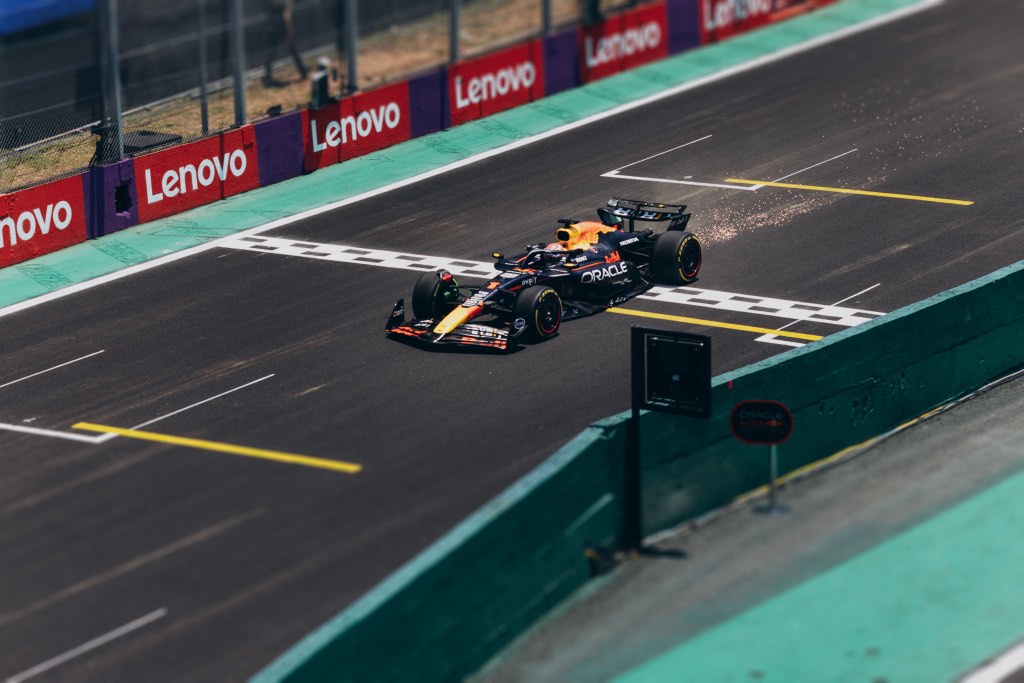
A Formula 1 car racing along a track with sparks behind it

Formula 1 arrives in Mexico City this weekend with a championship close to resolution and a circuit that makes even familiar cars behave differently. The November 1 Grand Prix gives Kimi Antonelli another chance to secure his first drivers’ title, while home favorite Sergio Pérez approaches a career milestone in front of his own supporters.

The 19th round begins with practice on Friday, October 30. Beyond the title arithmetic, the attraction is a race shaped by altitude, cooling and changing grip. For viewers planning a weekend around the action, there is plenty to follow before the lights go out on Sunday.

Antonelli’s opportunity, Pérez’s occasion

Formula 1’s October 29 preview puts Antonelli 123 points clear of Mercedes teammate George Russell after his ninth victory of the season in Austin. A ninth-place finish in Mexico City would supply the two points he needs to settle the championship. The outcome remains open until the race is run.

That creates an interesting viewing question: how does a driver balance the opportunity to win with a much larger objective? There is no need to assume Mercedes will adopt a conservative strategy. Instead, watch whether the team’s decisions prioritize track position, space in traffic or protection against an unexpected interruption.

In his weekend storylines report, Formula 1 contributor Chris Medland identifies another occasion: Pérez is set for his 300th Grand Prix start, driving for Cadillac at his home race. The milestone adds significance independently of his finishing position. It should not be mistaken for a prediction that Cadillac will suddenly compete at the front.

Medland also notes Red Bull and McLaren are level on 355 points in the teams’ standings, with Red Bull classified ahead on the relevant countback. That gives viewers a second contest to follow even if the drivers’ championship becomes less uncertain. A result further down the order can still matter to the season’s competitive picture.

Why the altitude changes the race

The Autódromo Hermanos Rodríguez sits about 2,250 meters above sea level. Formula 1’s technical preview and interviews explain how thinner air reduces both downforce and cooling. Large wings do not translate into the same grip they would provide closer to sea level, while brakes and power units still need sufficient airflow.

Williams strategy chief Charles-Antoine Florentin tells Formula 1 that cooling choices also depend on anticipated traffic. Opening the car to more air carries a performance cost, but insufficient cooling can force a driver to manage temperatures. The trade-off makes running behind another car more than a simple question of finding an overtaking opportunity.

Florentin also cautions against overreacting to Friday because grip changes as the circuit develops. For spectators, that is a reason to compare practice sessions rather than crown a favorite from one fast lap. A car that looks uncomfortable early may be working through a different program, and conditions can change the reference point.

The tyre picture adds another layer. Formula 1’s October 29 guide relays Pirelli’s view that the circuit’s relatively low demands could favor a one-stop strategy, while smoother new asphalt and sliding in the thin air make graining worth monitoring. That is a starting expectation, not a fixed script. Watch how long drivers can keep a useful pace on each compound and whether a team gains more by staying out or taking a fresh set. The quickest single lap and the strongest sustained run are different pieces of evidence.

The weekend in Phoenix time

The official timetable uses Mexico City local time, UTC−6. Phoenix is one hour behind. Friday’s first practice starts at 11:30 a.m. Phoenix, followed by second practice at 3 p.m. Saturday’s final practice begins at 10:30 a.m., with qualifying at 2 p.m. The Sunday race is scheduled for 1 p.m. Phoenix on November 1.

The Grand Prix is set for 71 laps of the 4.304-kilometer circuit. These are session start times, not a promise of when a broadcast’s opening coverage begins. Check the relevant broadcaster or streaming service separately, especially if watching outside Arizona. The organizer notes that the timetable can change.

What to watch as the weekend develops

Formula 1’s October 28 forecast points toward a largely dry weekend, with Sunday temperatures reaching about 27°C. That is an outlook rather than a guarantee. Updated weather and actual track conditions will be more useful than treating a midweek forecast as settled race-day evidence.

Keep three threads in view: Antonelli’s position relative to the points he needs, the teams’ ability to control temperatures in traffic, and whether practice assumptions survive qualifying. Pérez’s anticipated milestone adds the home crowd’s story. Together, they give Mexico City a compelling weekend without needing to pretend the championship has already been decided.

Archive stock motorsport photograph from 2024; not the 2026 Mexico City Grand Prix. Photo: Jonathan Borba / Pexels.

Continue Reading

Sports

Panthers–Packers Gives Thursday Night a Matchup Worth Watching Up Front

Two teams coming off divisional losses meet at Lambeau. The quarterbacks draw attention, but the work at the line of scrimmage may tell the more useful story.

Published

on

Brown Wilson football resting on green grass

Thursday’s Panthers–Packers game offers an easy headline about two teams trying to recover from disappointing losses. The more interesting viewing question is what happens before either quarterback gets a clean chance to throw.

Carolina visits Green Bay at Lambeau Field on October 29, with kickoff scheduled for 8:15 p.m. Eastern on Prime Video, according to the Panthers’ official viewing guide. That is 7:15 p.m. in Wisconsin and 5:15 p.m. in Phoenix and Los Angeles. This is a preview, not a report of a result already played.

Two records, two different kinds of frustration

Carolina enters at 3–3 and Green Bay at 4–3. Both lost divisional games in Week 7, leaving a condensed preparation window before this meeting. The short turnaround makes adjustment an immediate part of the story: there is less time between identifying a problem and facing an opponent willing to test it.

The Panthers’ opponent briefing by Kassidy Hill notes that Carolina won the teams’ most recent meeting 16–13 last season. That is background rather than a forecast. Different personnel combinations and this season’s form matter more than assuming that another close finish is owed.

For a viewer, the useful approach is to separate the emotional recovery narrative from observable football. A better opening drive would be encouraging for either team, but the more revealing test is whether an offense can keep functioning once the defense changes its approach.

Watch the rush count against Bryce Young

NFL.com’s Dan Parr, citing Next Gen Stats, reported that Bryce Young has faced pressure on 44.3 percent of his dropbacks against four or fewer rushers. Green Bay has generated pressure without blitzing on 38.5 percent of opposing dropbacks.

The numbers describe an important tactical problem. If a defense can hurry the quarterback with fewer players rushing, it can devote more of the remaining coverage to receivers. Simply counting a sack misses the earlier moment when a pass play loses its intended timing.

Try watching the first few Carolina passing plays with that question in mind. How many defenders rush? Does Young have room to complete his initial read? Does the ball leave quickly by design, or because the pocket has already changed? Those observations can explain a difficult possession more clearly than the final passing total.

Green Bay’s running game has something to prove

The same NFL preview puts the Packers at 2.9 yards per carry entering the game, while Carolina has allowed 5.2 yards per carry. That contrast sets up a genuine test rather than an automatic prediction that Green Bay will run successfully.

A season average combines many different situations. A defense protecting a lead may face a different selection of plays than one chasing a game. The relevant question tonight is whether the Packers can create repeatable gains on ordinary early downs, keeping later plays manageable rather than relying on one long run to improve an average.

Look for the relationship between the running and passing games. If an offense repeatedly reaches third down needing only a short gain, the play selection looks different from a series of obvious passing situations. That is where blocking and decision-making become part of the viewing experience, even when no highlight follows.

Jordan Love’s passing form adds another layer

Hill’s team briefing listed Jordan Love at 279.7 passing yards per game and noted that he had thrown for at least 274 yards in each of his previous three games. Those figures establish why Carolina has to respect the passing offense, even while Green Bay searches for more balance.

They do not guarantee efficiency on a particular drive. Watch the connection between time in the pocket, the route developing downfield and the placement of the eventual throw. A completed short pass and an incomplete long attempt can carry very different implications from the way a simple completion percentage presents them.

Keep the time attached to any invitation you send friends. An Eastern kickoff can look like a late evening appointment on a national graphic while still falling near the end of the workday in Arizona and California.

Set up the broadcast before kickoff

The national Prime Video call features Al Michaels, Kirk Herbstreit and Kaylee Hartung. Green Bay’s official game notice also lists local over-the-air coverage on NBC26 in the Green Bay market and FOX6 in Milwaukee.

Check the option available for your location and device in advance. Then settle in with the simplest useful question for this matchup: which team can make its quarterback’s job more manageable? It connects the protection, the rushing attempts and the passing decisions without needing to turn an October game into a season-defining verdict before it begins.

Illustrative football photograph; not tonight’s game or Lambeau Field. Photo: Jean-Daniel Francoeur / Pexels.

Continue Reading

Sports

Milwaukee’s First Brewers Title Sets Up a Friday Celebration

After Wednesday’s championship clincher, Milwaukee turns its attention to Friday’s parade and rally. The free festival grounds and ticketed amphitheater are separate experiences.

Published

on

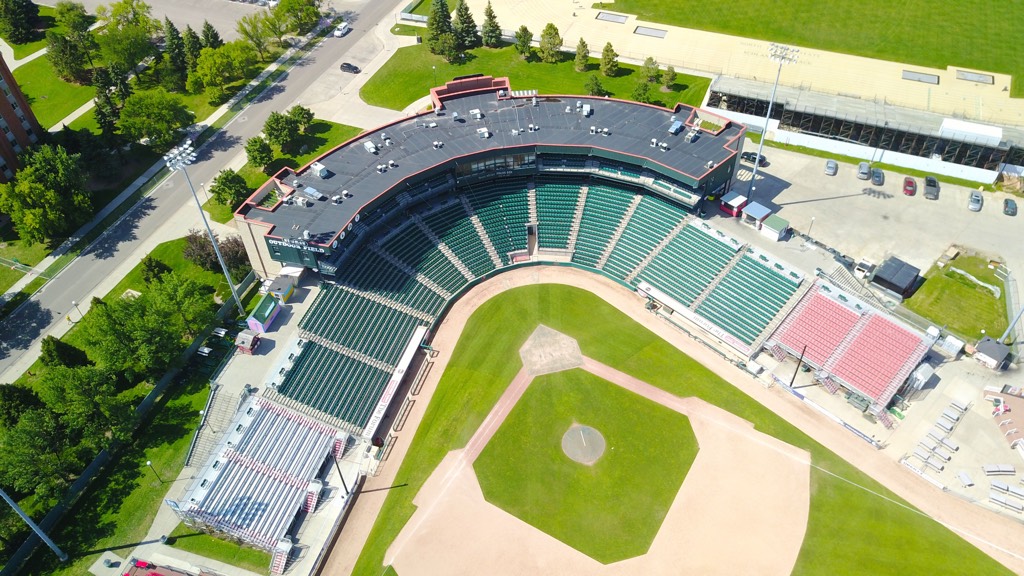
Aerial view of an empty baseball stadium surrounded by trees

Milwaukee has a championship to celebrate. The Brewers beat Tampa Bay 4–1 in Game 5 on Wednesday, October 28, securing the franchise’s first World Series title. Now the attention shifts from the final out to a gathering that will bring the team and its supporters together downtown.

The Brewers’ celebration announcement, published by WEAU, sets the parade and rally for Friday, October 30. For anyone considering the trip, the useful starting point is to distinguish the street parade, the festival grounds and the separately ticketed amphitheater program.

The result behind the celebration

According to the Associated Press game report, Jacob Misiorowski delivered 5⅔ scoreless innings before a calf cramp ended his outing. Rookie Cooper Pratt contributed two hits and two RBIs, while William Contreras earned World Series MVP honors.

It is a milestone for a franchise whose only previous World Series appearance came in 1982. Those game details explain the occasion; Friday’s event is the next chapter for supporters who want to experience the championship as a shared city moment.

Three ways to take part

The team’s announcement puts the parade start at 10 a.m. at North 4th Street and West Wisconsin Avenue, with the route ending at Henry Maier Festival Park. The park opens at 8 a.m., and general grounds admission is free until capacity is reached.

The American Family Insurance Amphitheater program is a separate ticketed event. The public ticket sale is scheduled for 2 p.m. Central on Thursday, October 29. Video screens elsewhere on the grounds will carry the speeches, so an amphitheater seat is not the only way to follow the rally.

Those distinctions should shape a visitor’s plan. Decide whether the priority is seeing the parade pass, spending time at the festival or having a seat for the stage program. Trying to combine everything without a realistic route between places can make a long day harder than it needs to be.

The organization also says live music and food and beverage options will be available on the grounds. The official celebration page is the place to check for subsequent changes before leaving home.

Readers following from Arizona or California should translate the schedule before setting a reminder. Friday’s 10 a.m. Milwaukee parade start corresponds to 8 a.m. in Phoenix and Los Angeles. Thursday’s 2 p.m. Central public ticket sale corresponds to noon in both cities. Keep the event’s local time attached to any plan you share with friends.

Pack for the venue, not just the photograph

The amphitheater’s published entry policies call for metal detection and inspection of bags and personal items. Larger permitted bags must be clear and no bigger than 12 by 12 by 6 inches; small non-clear bags are limited to 6 by 9 inches.

The venue is cashless. Its prohibited-item list includes backpacks, coolers, outside beverages and water bottles, with specified medical and family exceptions. It also lists lawn chairs among prohibited items. Check the current policy directly rather than assume that something accepted at another outdoor event will be accepted here.

A simple preparation step is to empty the bag you intend to bring, then rebuild it around the actual policy. That is easier than discovering an overlooked item at the entrance. Anyone with a medical or accessibility question should check the venue’s guidance before traveling, leaving time to resolve the details.

Plan the return journey as carefully as the arrival. Save the location where your group intends to meet, identify an alternative if that spot becomes inaccessible and keep essential ticket information available on your phone. A celebration is more enjoyable when the practical decisions have already been made.

Build a plan with room to change

Free admission and guaranteed entry are different things. A capacity limit means a late arrival can change the day’s options, even when no ticket is required for the general grounds. Avoid making a separate paid reservation depend on an assumption that everyone will enter together at a particular moment.

For families or friends traveling in a group, agree on what happens if people want different experiences. Someone who prefers a fixed viewing location may not want to move through a crowd between programs. Sharing that preference before arrival is more useful than negotiating it after the parade begins.

Friday’s gathering is also a reminder that sports culture extends beyond the scoreboard. The result belongs in the record book, but the day gives supporters a place to attach their own memories to it. Choose the experience that suits your group, confirm the latest official information and leave space to enjoy being there.

Illustrative baseball photograph; not the World Series or Milwaukee celebration. Photo: David McBee / Pexels.

Continue Reading

Trending

Join The Cannabis Aficionado Community!
Join the Cannabis Aficionado community and receive all of the most relevant news geared towards our sophisticated enthusiast community.
Loading

Copyright ©️ 2026 Cannabis Aficionado. Cannabis Aficionado is a registered trademark of CNM Inc. All rights reserved. Registration on or use of this site constitutes acceptance of our Terms of Service, Privacy Policy and Cookies Policy. People may receive compensation for some links to products and services. Offers may be subject to change without notice.