#cannabisaficionado

Sports

7 Pro MMA Fighters Who Openly Support Cannabis

Published

on

MMA
Advertisement Back2Grow Advertisement

It’s no secret that people both enjoy and benefit from using cannabis. Elite athletes are no different. Former pro athletes like Al Harrington and Ricky Williams who were once penalized for their cannabis use, are now starting their own cannabis companies and touting the numerous medical benefits of using cannabis for recovery and wellness.

In a recent article from Bleacher Report, a panel of eight retired former NBA and NFL players talked openly about the frequency of use among athletes.

However, the plant remains banned by sports like the NFL, NBA, MLB and the UFC.

The UFC does allow for its fighters to use CBD, however, making it one of the first major sports to allow their athletes to do so. Mixed martial arts (MMA) seems to be paving the way to mainstreaming cannabis use among elite athletes.

With that in mind, let’s have a look at seven MMA athletes who openly use cannabis and dominate at what they do.

Matt Riddle

Matt Riddle got off to a promising start in the UFC, winning his first two fighters before testing positive for cannabis twice and being released from the sport.

The athlete has been open about his cannabis use as a medical marijuana patient for physical aches and pains, along with personality issues.

He’s now a professional wrestler and his doing great at it, winning the Wrestling Observer Newsletter’s “Rookie of the Year” and “Most Improved Wrestler of the Year” for 2016.

Sean O’Malley

A lanky, lightweight fighter with a high work rate and a ton of personality, Sean “Suga” O’Malley has not been shy about his cannabis use.

Famously smoking with stoner legend Snoop Dogg after a big UFC victory, O’Malley doubles down on his stoner appeal by doing interviews in a robe adorned in pot leaves.

He even released his own strain last year, Suga Show OG, which is a cross between Lemonhead and OG 92. He’s the real deal when it comes to both fighting and weed.

Jon Jones

Undeniably one of the best pound for pound UFC fighters of all time, Jon Jones has been very open and public with his substance struggles.

While cocaine and PED’s have all done their part in derailing the career of one of the most promising fight games talents ever, Jones has been clear while he quit other substances he’ll still smoke cannabis and have a drink from time to time.

Jake Shields

Probably the most low-key entry on this list, former UFC Welterweight championship contender Jake Shields is a major cannabis advocate.

The Californian fighter spoke at the 2016 Cannathlere convention, “It is a big part of the training for a lot of people. I definitely don’t smoke every day, but sometimes it is a good way to go in there and smoke a little bit and be a little more creative — like sometimes when you are in a big training camp before a competition, it really makes training fun again.”

The Diaz Brothers

The undisputed cannabis kings of the fight game, the Diaz brothers are as open as they could possibly be about their cannabis use.

Nick Diaz talked publically about how he would pass drug tests despite smoking frequently and was even banned for five years when he was caught.

His brother Nate stepped the game up even more, actually smoking a CBD oil vape during a post-fight press conference.

The two have become big names in the cannabis industry, reportedly sustaining their income away from the fight game by launching Game Up, a CBD-infused, plant-based nutrition company.

Ronda Rousey

One of the most dominant female MMA fighters of all time and current WWE superstar, Ronda Rousey has been clear about her position on cannabis over the years.

After Nick Diaz was suspended for his cannabis use, Rousey expressed her support for him and cannabis use as a whole during multiple interviews over the years.

“It’s so not right for [Nick Diaz] to be suspended five years for marijuana. I’m against testing for weed at all. It’s not a performance-enhancing drug. And it has nothing to do with competition. It’s only tested for political reasons.” She said during one interview.

While Rousey has talked extensively about using cannabis when she was younger in her book My Fight/Your Fight, many have speculated that she’s still using since she’s spent so much time with the Diaz brothers. She’s even posted some photos where the eyes were… glassy, to say the least.

Whatever the case, we’re chalking this one up as Rousey being supportive of cannabis use.

Bas Rutten

Bas Rutten has an incredible story of the highest highs and the lowest lows you can achieve in the fight game. Due to the injuries he accrued over his long fighting career, Rutten developed a crippling addiction to painkillers.

After trying to kick his addiction by using drugs like Suboxone or even trying to go cold turkey, Rutten turned to CBD oil for pain relief and was able to kick his addiction.

“I was skeptical, but I had to try something else,” Rutten said of CBD oil. “I gave Receptra a shot and it changed my life. One of the best decisions I’ve ever made.”

Rutten even said the CBD use makes his training and pain management easier, his daughter use it to get rid of zits and he recommends it for anything trying to reduce muscle soreness and better control their pain.


Sports

UFC 334 Brings Two Title Fights to New York—and a Separate Cannabis Fitness Question

Two championship fights lead UFC 334 at Madison Square Garden tonight. For cannabis readers, ringside fitness guidance is a separate issue from the fight card.
Published

on

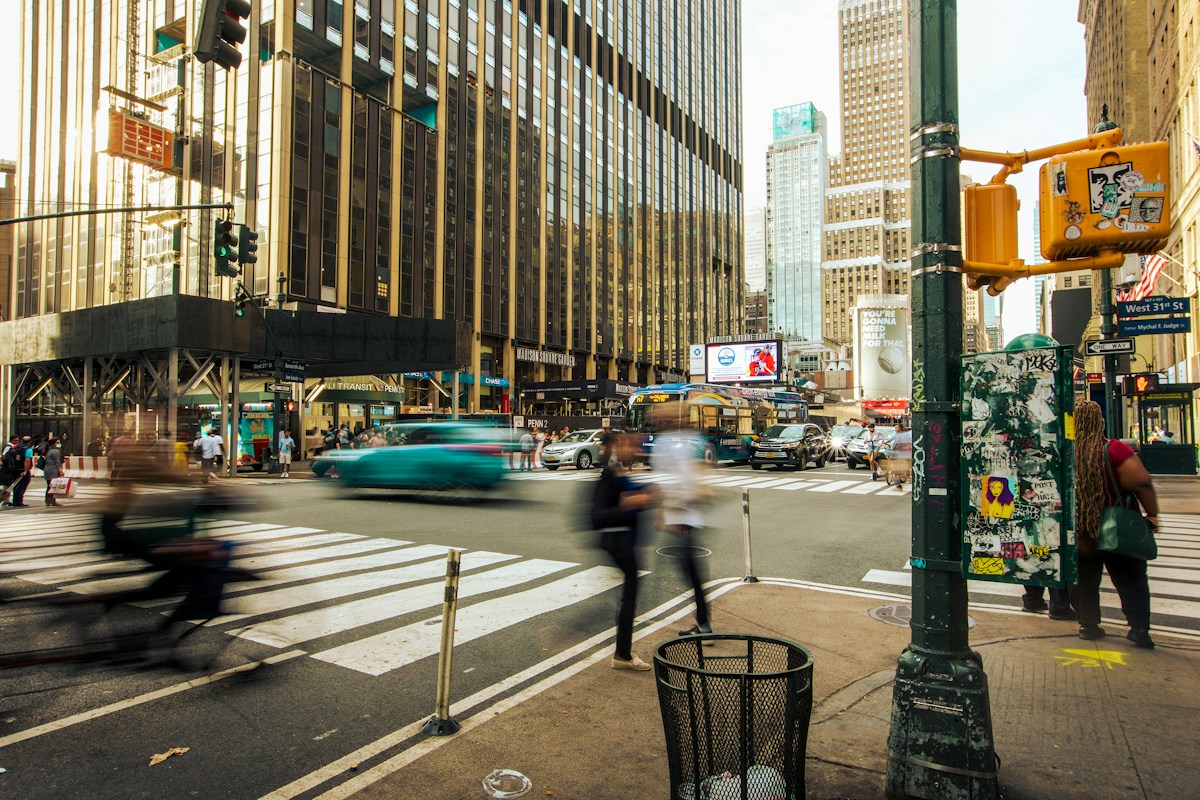
Traffic and pedestrians at a Manhattan intersection near Madison Square Garden

UFC 334 arrives at Madison Square Garden tonight, November 14, with Ciryl Gane defending the heavyweight title against Josh Hokit and Kayla Harrison meeting Amanda Nunes for the women’s bantamweight championship. The two title fights give New York’s card an immediate sporting hook.

For cannabis readers, there is another relevant distinction: being cleared by a competition’s drug rules and being clinically fit to fight are different questions. The Association of Ringside Physicians has addressed cannabis specifically, warning that suspected acute intoxication belongs in a ringside medical assessment. That guidance is context for combat sports, not an allegation about anyone on tonight’s card.

When the card begins

Paramount+’s November 13 viewing guide lists the main card for 9 p.m. Eastern, with preliminaries at 7 p.m. and early preliminaries at 5 p.m. For Arizona readers on Phoenix time, those starts are 7 p.m., 5 p.m. and 3 p.m., respectively.

The broadcaster says the U.S. stream is included with a Paramount+ subscription, without a separate pay-per-view charge, and that this event has no CBS simulcast. Those are U.S. viewing arrangements; readers elsewhere should check their own local rights holder rather than assume the same access applies.

The schedule describes three stages of the broadcast. It does not promise the precise minute either championship fight will begin. Earlier bouts can change the pace of an evening, so the listed main-card start is the useful time to have the broadcast ready.

Two championships, different matchups

Gane enters the heavyweight title fight with a listed 14–2 record. Hokit is unbeaten at 10–0. That puts an established champion opposite a challenger whose professional record has not yet included a defeat.

The women’s bantamweight championship brings Harrison and Nunes together after their planned UFC 324 meeting was postponed. Their listed records are 19–1 and 23–5. The rescheduled matchup supplies the second championship contest on a card that is built around two divisions rather than one title alone.

The official UFC event listing identifies Madison Square Garden as the setting. The venue is part of the occasion, but the results will turn on the competitors in the cage. A championship doubleheader does not guarantee a particular style of fight or an outcome.

UFC’s official Friday weigh-in report listed Gane at 242.6 pounds and Hokit at 231.4, with Harrison and Nunes each at 135. Those measurements establish what the athletes weighed at the official check. They should not be turned into predictions about who will win.

The rest of the evening matters

The main card also includes Caio Borralho against Yousri Belgaroui, Uros Medic against Kevin Holland and Bilal Hasan against Luis Gurule. That gives viewers three additional matchups before the championship portion of the evening.

Stephen Thompson and Charles Radtke feature among the preliminary pairings, alongside Drew Dober against Chris Duncan, Jim Miller against Terrance McKinney and Donte Johnson against Cesar Almeida. Four early preliminary fights complete the broadcaster’s 13-bout scheduled card.

As with any fight-night lineup, scheduled is the operative word. Viewers should use the latest official event information if a bout changes before the broadcast. Tonight’s preview is a guide to the announced card, rather than a guarantee that every listed contest will proceed unchanged.

What the ringside cannabis guidance actually says

The relevant Association of Ringside Physicians position statement was published in July 2024. Its presence in a 2026 website folder does not make it a newly issued rule for UFC 334. It is a medical position statement, separate from an event’s binding regulatory requirements.

The physicians discourage marijuana and synthetic cannabinoid use in combat sports and report no proven athletic performance benefit. They also emphasize that laboratory concentrations are poor indicators of the timing of use or the degree of clinical effect. A test result and an examination are therefore not interchangeable evidence.

That is particularly consequential in a sport where attention, judgment and an official’s assessment of fitness can affect participation. The statement places suspected acute intoxication within clinical judgment about whether an athlete should compete. It does not establish that any athlete appearing tonight uses cannabis.

Readers following our coverage of sport-specific cannabis rules will recognize the need to identify which authority is speaking. A medical association, an anti-doping program and an athletic regulator answer different questions. Tonight’s title fights are the spectacle; understanding those distinctions keeps cannabis discussion grounded in what the evidence actually supports.

The position statement also treats purified topical CBD separately, neither encouraging nor discouraging its use. That limited position is not a claim that a CBD product improves recovery, nor a finding that every product sold under the CBD name is equivalent. The formulation and the claim both matter.

Archival stock street view in the Madison Square Garden area, New York; not UFC 334. Photo: Wabi Sabi / Unsplash.

Continue Reading

Sports

Philadelphia Marathon Preparations Put Cannabis and CBD Rule Questions in Focus

Philadelphia expects its largest marathon weekend field November 20–22. Event preparation and anti-doping cannabinoid rules answer different questions.

Published

on

Benjamin Franklin Parkway, the Washington Monument fountain and Philadelphia skyline

Philadelphia Marathon Weekend is preparing for its largest anticipated field, with organizers expecting 40,000 participants across the marathon, half marathon and 8K on November 21–22. For cannabis-aware runners, that busy weekend also calls for separating ordinary event preparation from the distinct rules governing cannabinoids in tested sport.

A CBD label is not an anti-doping guarantee. The U.S. Anti-Doping Agency’s cannabinoid guidance says CBD itself is permitted, while other cannabinoids remain prohibited in competition under the World Anti-Doping Code framework. That distinction matters to athletes subject to those rules; it is not an assertion that every Philadelphia entrant will be drug-tested.

More runners, and changes before race morning

In its November 5 announcement, the event attributes the larger expected field to 3,000 additional marathon bibs. Its projections divide into 20,000 marathon participants, 15,000 half-marathon participants and 5,000 in the 8K. These are expectations before the event, not a count of finishers.

Organizers also describe a new Friday shakeout run, expanded expo hours and enhanced finish-line spectator viewing. The shakeout requires registration and is limited to people registered for a race that weekend. It should not be assumed to be an unrestricted public group run.

The official schedule places the expo on November 20–21, the half marathon and 8K on Saturday, and the full marathon on Sunday. Keeping those dates separate is useful for travelers arranging collection, transportation and family plans around more than one event.

Check the bag before joining the line

The organizer’s current FAQ introduces gear-check tents in Maja Park between 22nd and 24th Streets, just south of the start line. Participants are instructed to use the official event-day drawstring bag and attach the gear-check tab from their bib before arriving.

Collection lines will be organized by the final digit of a bib number. The FAQ also identifies a repacking station and says staff will scan tagged bags. These are operational details worth checking in advance rather than discovering while trying to reach a corral.

Its prohibited-item information includes alcohol, illegal drugs or illicit substances, glass and certain oversized containers or bags. Those published restrictions are not permission to bring a cannabis product simply because it appears in a familiar retail package. The event information should be consulted for the actual item and setting involved.

CBD and THC are not interchangeable rules questions

USADA warns that CBD products can contain other cannabinoids, including THC. Athletes subject to anti-doping requirements need to consider the product’s contents rather than equating the CBD exception with approval of every oil, gummy or supplement marketed under that name.

The agency also cautions that clearance varies with factors including strength, frequency of use, metabolism and health. There is no universal stop date that this race preview can responsibly give an athlete. USADA advises discussing clearance with a doctor, and an individualized question belongs with qualified medical and anti-doping resources.

These rules concern eligibility in regulated competition. They should not be confused with a claim that cannabis improves endurance, that a supplement speeds recovery or that an organizer endorses a product. None of those conclusions follows from CBD being outside a prohibited category.

Different permissions answer different questions

A useful way to prepare is to identify which question needs an answer. Event security concerns entry and belongings. Anti-doping rules concern an athlete’s eligibility and prohibited substances. A clinician addresses medical care. One answer cannot automatically stand in for the others.

Our MEDICA sports-pharmacy coverage similarly distinguishes cannabis counseling from a simple promise about athletic performance. Philadelphia’s approaching weekend makes that distinction practical: advice about a product needs to fit the person, the evidence and the rules that actually apply.

For spectators, the November 5 announcement describes two recommended finish-line viewing areas, north and south. Checking the current event information is more dependable than relying on a previous year’s entrances, especially when organizers say the footprint and viewing arrangements have changed.

The race remains the central attraction. Preparing accurately means knowing which event is on which day, what can be checked or carried, and whether a separate sporting rule applies. Cannabis-aware coverage can make those boundaries clear without suggesting that consumption is part of the official weekend program.

The event homepage says the marathon, half marathon, 8K and challenges are closed, while Kids Run registration remains open. It also warns that individual bib transfers are not allowed and identifies its listed charity partners as the only organizations authorized to distribute race bibs. A resale offer is therefore not equivalent to a valid entry. That is a separate preparation issue from what happens at the security gate, but it can matter just as much to someone making a late plan for the weekend.

Benjamin Franklin Parkway and the Philadelphia skyline in an illustrative city photograph; not race-day coverage. Photo: Jonathan Gong / Unsplash.

Continue Reading

Sports

MEDICA Puts Cannabis Counseling on the Sports Pharmacy Agenda

MEDICA’s November 16 sports pharmacy symposium includes a cannabis counseling workshop, alongside anti-doping and supplement discussions.
Published

on

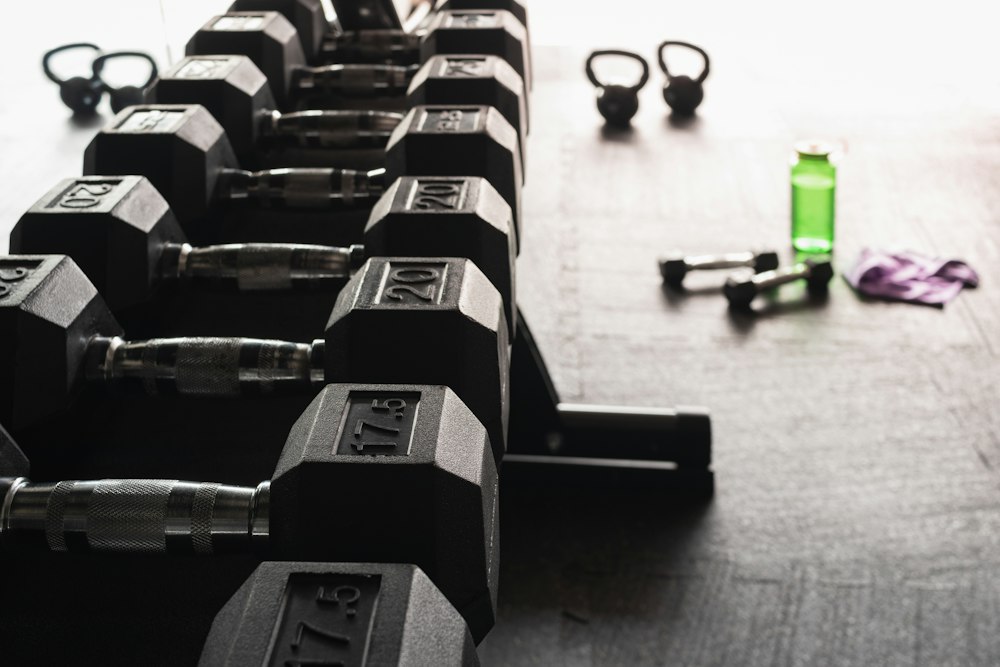
Rows of dumbbells with kettlebells on a gym floor

A cannabis workshop on MEDICA’s November 16 sports-pharmacy agenda puts a practical question at the center of athlete care: how do professionals turn information about cannabinoids into a useful conversation? The published session is about counseling, rather than a promise that cannabis improves performance or recovery.

The official conference brochure schedules the workshop for 2:45 p.m. local time in Düsseldorf, Germany, during the sixth International Sports Pharmacy Symposium. Jeff Konin and Kari Franson are listed as speakers. The setting places cannabis alongside medication management, supplements and the responsibilities of athlete-support professionals.

The conversation comes before the recommendation

For a player, runner or recreational gym member, a cannabis question may begin with an ordinary concern: a product label, a teammate’s suggestion or uncertainty about a competition rule. Those starting points require different answers. A discussion of regulations cannot establish a health benefit, while a discussion of someone’s health cannot by itself settle eligibility.

That is what makes counseling a useful focus. The goal should be to establish what the person is asking, which product is involved and which rules apply. An answer about CBD cannot automatically be transferred to a preparation containing THC, and an answer for one sporting organization should not be presented as universal.

The symposium’s wider agenda includes supplement contamination, anti-doping work and professional ethics. Together, these subjects frame cannabis as one part of medication-related decision-making in sport. They do not turn a scheduled conference discussion into a new clinical finding or an endorsement of any product.

CBD and other cannabinoids are different questions

The U.S. Anti-Doping Agency’s cannabis guidance explains that cannabinoids are prohibited in competition under the World Anti-Doping Agency framework, with an exception for cannabidiol, or CBD. USADA also warns that the exception does not remove the risks associated with products sold as CBD.

That distinction is easy to lose in a broad conversation about cannabis becoming more accepted. Permission for one substance does not establish that every ingredient in a finished preparation is permitted. Nor does a label describing a product as hemp answer a question about its complete composition.

USADA’s separate CBD explainer emphasizes the potential for additional cannabinoids in products and the limitations of relying on a label. Athletes need to distinguish the status of CBD itself from the characteristics of the bottle, gummy or topical they are considering.

These are reasons to bring specific information to a qualified professional rather than ask only whether cannabis is allowed. The product, the sport and the athlete’s circumstances all shape the question. This preview does not recommend a dose, a preparation or a timetable for use.

Sports pharmacy is a developing professional skill

Franson’s institution, the USC Mann School, describes its executive sports-pharmacy certificate as preparation for advising athletes about medicines and nutritional supplements while addressing sporting rules. Its curriculum combines sports pharmacy, supplements, physical assessments and a focused thesis or experiential component.

The school currently lists a November 27 application deadline. That is a separate opportunity from attending the Düsseldorf symposium, with its own eligibility, cost and admissions requirements. Neither participating in a workshop nor completing an application should be confused with earning the certificate.

The curriculum’s patient-care approach includes collecting information, assessing it, planning, implementing and following up. Applied to a cannabis conversation, that suggests a more careful process than treating a social-media testimonial as a complete answer. It also leaves room to identify questions that require another professional’s expertise.

For example, a useful consultation can begin with the actual packaging and a clear account of what the athlete wants to understand. The professional can then identify whether the issue concerns ingredients, sporting rules or an individual health question. Keeping those questions distinct makes it easier to recognize the limits of an answer and what further information is needed.

Keep the November dates separate

The pharmacy symposium is on November 16. MEDICA’s Medicine + Sports Conference is separately listed for November 18–19. Visitors should check the correct program and access arrangements rather than assume a ticket or timetable covers every related event.

Our report on athletes and the 2027 anti-doping rules examines another part of this landscape. The Düsseldorf session offers a different angle: the professional conversation that helps an athlete interpret information before making a decision.

A workshop cannot settle every question about cannabis and sport in an afternoon. Its significance is more specific: a published sports-pharmacy program is making room for cannabis counseling alongside established concerns about medicines, supplements and clean competition. The useful outcome to watch is clearer communication, not a blanket claim that the plant belongs in every training plan.

Illustrative training-equipment photograph; not the MEDICA venue or workshop. Photo: Greg Rosenke / Unsplash.

Continue Reading

Trending

Join The Cannabis Aficionado Community!
Join the Cannabis Aficionado community and receive all of the most relevant news geared towards our sophisticated enthusiast community.
Loading

Copyright ©️ 2026 Cannabis Aficionado. Cannabis Aficionado is a registered trademark of CNM Inc. All rights reserved. Registration on or use of this site constitutes acceptance of our Terms of Service, Privacy Policy and Cookies Policy. People may receive compensation for some links to products and services. Offers may be subject to change without notice.