#cannabisaficionado

Sports

CBD Sponsorship of Professional Motocross Takes Another Step Forward

Published

on

CBD Sponsorship
PHOTO | Garth Milan/Red Bull Content Pool
Advertisement Back2Grow Advertisement

CBD sponsorship is making moves in professional motocross and supercross, once again, after progress stalled in early 2019.

For those living under a rock, CBD aka cannabidiol is one of over a hundred cannabinoids found in cannabis plants. But, unlike tetrahydrocannabinol (THC), CBD doesn’t offer a high. The latter’s strengths are helping to treat serious conditions such as epilepsy, to controlling anxiety, helping manage pain, aid in muscle recovery, better sleep and overall wellness.

Certain attributes — such as recovery, sleep and overall wellness — has seen professional athletes add CBD to training programs. That has seen the rise of cannabis advocates in a wide scope of sports, whether stick-and-ball (like hockey, football and baseball), through to action sports that sit out of the mainstream (like MMA and motocross).

It has also seen an influx of cannabis advocates, like MMA’s Bas Rutten and motocross stars Carey Hart and Chad Reed, all using that ‘legend’ status in each sport to help educate fans and followers about the benefits of CBD.

While the likes of Hart and Reed continue to share their belief in CBD on social media, it only goes so far in motocross, with its use and marketing leading to controversy in the pro motocross racing scene.


View this post on Instagram


Fix yourself. #hartluckcbd #hartluck #cbd #cbdtincture #tincture #fixtourself

A post shared by Hartluck CBD (@hartluckcbd) on

There was no problem with racers being sponsored and supported by CBD companies until February 2019, which was when supported athletes were censored during broadcasts of Monster Energy AMA Supercross. The ban prohibited the logos of CBD companies, enforced by the American Motorcyclist Association (AMA) after it was brought to the attention of Feld Motor Sports, the promoter of the series.

The problem was not the use of CBD by the athletes, but the two logos of CBD brands — Ignite and cbdMD — visible on bikes and riders during broadcasts on NBC. The first to be censored was Dean Wilson, who was told to cover the Ignite logos, followed by Chad Reed being forced to censor the cbdMD logos on his helmet.

There were inconsistencies with the ban and censorship, depending on where the racing took place (such as Texas, where CBD is still not legal). To add more confusion, both the AMA and The Fédération Internationale de Motocyclisme (FIM) allows racers to use CBD since it is not on the prohibited list of the World Anti-Doping Agency (WADA).

But There Has Been Progress

The AMA posted a bulletin that outlines how CBD will be handled in 2020 and beyond.

Again, these steps are related to the displaying of logos at the races, whether in the pits, on the bike or the gear (especially if seen during television broadcasts).

Due to recent changes in state laws, limited hemp-based cannabidiol “CBD” product sponsorships at certain onsite event locations during the upcoming 2020 Supercross season will be allowed subject to the following requirements and restrictions contained herein.

But there are requirements to the eligibility, with the “CBD products must be derived from hemp and contain less than .3% THC,” and “any logos or signage that include or relate to cannabis are prohibited.” Of course, “CBD product sponsorships are void in whole or in part wherever prohibited by law.”

That means signage or promotional displays for CBD related products are to be permitted in the pit areas of the 2020 series. But the distribution or sale of any CBD related products or samples would be strictly prohibited.

The broadcast restrictions are still uncertain. For now, the AMA states that “no rider, team or sponsor should assume that any promotional displays of CBD product on the track that may be captured by the broadcast will be allowed until further notice.” That means riders will run the risk of the being censored or removed from competition.

These policies will remain in effect until further notice. But the AMA has stated the policies are “not intended to be all-inclusive and may be amended, appended, or rescinded in whole or in part at any time for any reason without advance notice.”

The real question is should professional athletes making more from sponsorship than purse money have further censorship due to prior restraint?

Sports

Athletes Face a More Specific Cannabis Rulebook in 2027

WADA’s 2027 list changes cannabinoid coverage from January 1. THC remains prohibited in competition, and product contamination still matters.

Published

on

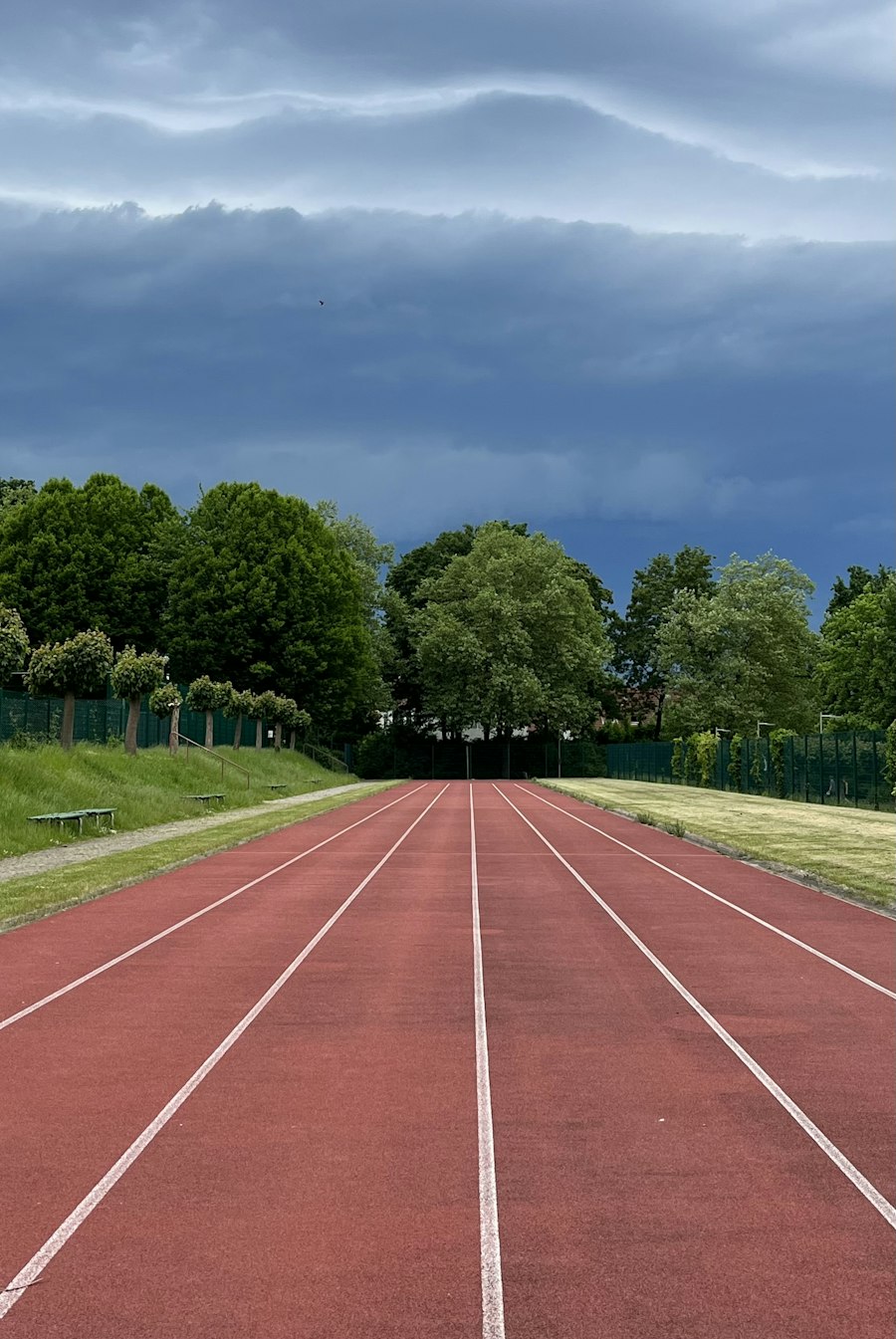
Empty red running track beneath a cloudy sky

Athletes have a cannabis rules change to prepare for in January, but the calendar matters as much as the ingredient. The World Anti-Doping Agency’s 2027 Prohibited List narrows its cannabinoid language while keeping THC and substances that mimic its effects prohibited in competition. The revision takes effect January 1, 2027; it is not permission to apply next year’s rules today.

For cannabis-aware sports readers, the important distinction is between a specific molecule’s status and a packaged product’s contents. A change involving CBN or CBG does not make every hemp extract, recovery supplement or bottle with a cannabis leaf on its label acceptable for an athlete subject to anti-doping rules.

A November 6 briefing from Ukraine’s National Anti-Doping Center highlights the cannabinoid revision among next year’s changes. Its guidance reinforces the distinction between THC-like substances and naturally occurring cannabinoids outside that description.

What changes in the new list

The 2027 list’s S8 section prohibits tetrahydrocannabinols and semi-synthetic or synthetic cannabinoids that mimic delta-9-THC’s effects in competition. Its examples include different THC forms and hexahydrocannabinol, commonly called HHC. Cannabidiol, or CBD, remains outside the prohibition.

UK Anti-Doping’s explanation specifically identifies cannabinol, or CBN, and cannabigerol, or CBG, as no longer prohibited under the 2027 revision. That is a meaningful change for people who follow the expanding vocabulary of cannabis ingredients. It is also narrower than announcing that cannabis itself has been removed from sport’s prohibited list.

WADA’s explanatory note ties the revision to scientific knowledge about cannabinoids with effects resembling delta-9-THC. The wording concerns the substances covered by the anti-doping category. It does not certify a manufacturer’s labeling or endorse a compound as a useful training aid.

November still belongs to the 2026 rules

Under the current framework, CBD is the cannabinoid exception; the broader cannabinoid prohibition still applies in competition. Athletes should not carry January’s revised ingredient treatment backward into a November event. A coach discussing next season and an athlete preparing for a competition this month may therefore need different editions of the list.

This is why a screenshot without a year can be misleading. Save the source, effective date and relevant section together. When asking a governing body about an ingredient, identify when the competition takes place and which rules govern it, rather than relying on an undated social post summarizing a future change.

Our coverage of Owen Trout’s rugby league case examined how THC rules can become consequential on match day. The new list offers another reason to distinguish an actual rule, its applicable period and an individual case rather than treating all sports cannabis stories as interchangeable.

A permitted ingredient is not a cleared product

The U.S. Anti-Doping Agency’s 2027 advisory stresses that athletes remain responsible for substances found in their samples. It also warns that CBD products may contain THC that is not clearly identified on a label. A permitted ingredient’s name on the front of a package cannot settle the contents of the entire mixture.

Think of the difference between asking whether CBG is prohibited and asking what is in a particular CBG product. The first is a rules question. The second involves the product itself. A correct answer to the first does not automatically resolve the second, especially when a formula combines multiple cannabis-derived ingredients.

Neither the revised list nor an ingredient exception establishes a medical benefit. Claims about sleep, recovery or performance require their own evidence. An athlete can misunderstand the update in two directions: by assuming every cannabinoid stays prohibited forever, or by interpreting a narrower prohibition as a broad wellness endorsement.

Use the update as a planning prompt

A useful next step for a competing athlete is to take the exact product and ingredient information to the appropriate anti-doping organization before making assumptions. USADA directs athletes to check medications through Global DRO and to recognize that prohibited lists are not exhaustive inventories of every possible substance name.

For coaches and support staff, the administrative task is straightforward: update educational materials with the January effective date, retain the current guidance for current competitions, and avoid advertising language that implies an entire product category has received approval. That communicates the change without exaggerating it.

The cannabis connection here is direct and practical. Sport is refining how it describes cannabinoids, while continuing to distinguish THC-related effects and competition restrictions. Understanding that refinement requires reading the year and the ingredient together, then keeping product claims separate from the rulebook.

Recreational spectators should also recognize the scope of the story. An anti-doping classification addresses eligibility and obligations within sport; it does not rewrite local cannabis law or a venue’s policies. An ingredient’s treatment in that system cannot establish where a person may purchase, carry or consume it. Keeping those questions separate helps a sports discussion remain accurate even when the same product appears in several different regulatory conversations.

The full official documents remain the reference point when abbreviated summaries leave an ingredient or a competition date unclear.

Illustrative stock photo of a track in Bielefeld, Germany; not a WADA event. Photo: Wilson K. / Unsplash.

Continue Reading

Sports

São Paulo’s Grand Prix Weekend Brings a Useful CBD Rules Check

Interlagos hosts a conventional three-practice Grand Prix weekend. For cannabis-aware sports followers, it is also a useful occasion to understand what CBD’s anti-doping exception actually means.

Published

on

Formula 1 heads to Interlagos for the São Paulo Grand Prix on November 6–8, with three practice sessions, qualifying and a Sunday race. For cannabis-aware sports followers, the weekend also offers a useful rules distinction: CBD’s exception under the World Anti-Doping Agency’s prohibited list does not make every cannabis-derived product suitable for a competing athlete.

That is educational context for following elite sport, not a suggestion that any driver uses cannabis or that a CBD product improves performance. The racing preview and the cannabinoid rules answer different questions. Understanding both helps keep sports coverage from treating a familiar wellness label as a blanket assurance.

The weekend schedule at Interlagos

Formula 1’s official event page confirms the São Paulo race at the Autódromo José Carlos Pace, commonly called Interlagos. The circuit measures 4.309 kilometers, with a scheduled 71-lap race. The venue’s world championship history dates to 1973, giving the modern event a long connection to Brazilian racing.

The Mercedes team’s event guide lists Friday practice at 12:30 p.m. and 4 p.m. São Paulo time, Saturday practice at 11:30 a.m. and qualifying at 3 p.m., and Sunday’s race at 2 p.m. Those are local track times, which matter when a website also displays a personalized time-zone view.

São Paulo is four hours ahead of Phoenix for this weekend. That places the scheduled race start at 10 a.m. Sunday in Arizona, with Saturday qualifying at 11 a.m. Phoenix time. Schedules remain subject to change, so a final check against official timing is sensible before arranging a watch party.

The Mercedes guide also recalls Ayrton Senna’s home victories in 1991 and 1993. That history helps explain why the venue matters beyond its dimensions and lap count. A race can be followed as a current sporting contest while also carrying memories for spectators whose attachment to the circuit predates today’s teams and drivers.

A full practice program changes the rhythm

The published 2026 program is a conventional Grand Prix format rather than a Formula 1 Sprint weekend. Friday’s two practice sessions and Saturday’s final session give the event a different structure from a program that compresses practice around a Sprint. References to a sprint in a support series should not be mistaken for an F1 Sprint session.

For spectators, that makes the distinction between session names useful. Practice offers preparation, qualifying establishes the starting order under the applicable rules, and the Grand Prix supplies the main race result. A fast practice lap should not be reported as pole position, and the weekend’s outcome cannot be inferred from an advance timetable.

Our Mexico City weekend preview covered the previous event’s setting. São Paulo is a separate race with its own program. This guide focuses on confirmed logistics and cannabis-related sporting context rather than unverified predictions about the championship.

CBD’s exception is specific

Under the 2026 WADA Prohibited List, cannabinoids are prohibited in competition, with cannabidiol, or CBD, identified as the exception. THC is included among the prohibited substances in that category. The list distinguishes an ingredient’s status; it does not approve every product sold under that ingredient’s name.

This is the point where consumer language and sporting obligations can diverge. A label emphasizing CBD can coexist with other cannabinoids in a formulation. An athlete needs to understand the actual product and the rules applicable to their competition, rather than assuming that a prominent front-label term settles the issue.

These anti-doping distinctions also do not establish what a spectator may bring into Brazil or into a particular venue. Sporting eligibility, national law, border requirements and event admission conditions are separate questions. Nothing in the race schedule or CBD exception should be read as a permission to carry cannabis to the circuit.

Why the product warning matters

UK Anti-Doping’s CBD advisory warns that products can contain other cannabinoids that are prohibited in competition. Its guidance highlights the difficulty of relying on a CBD product’s presentation as assurance about its contents. The permitted status of CBD itself therefore does not eliminate an athlete’s risk from a mixed or contaminated product.

For readers who train and compete, that is a practical distinction worth taking to the relevant anti-doping organization before making assumptions about a supplement. It is not a claim that all cannabis products have identical contents or that the same rules govern every person watching a race.

Interlagos provides the sporting occasion; the cannabinoid guidance supplies a precise cannabis connection. Follow the official timetable for the action, and keep the ingredient exception separate from claims about a branded product. Both habits favor the same thing: knowing what has actually been established before drawing a broader conclusion.

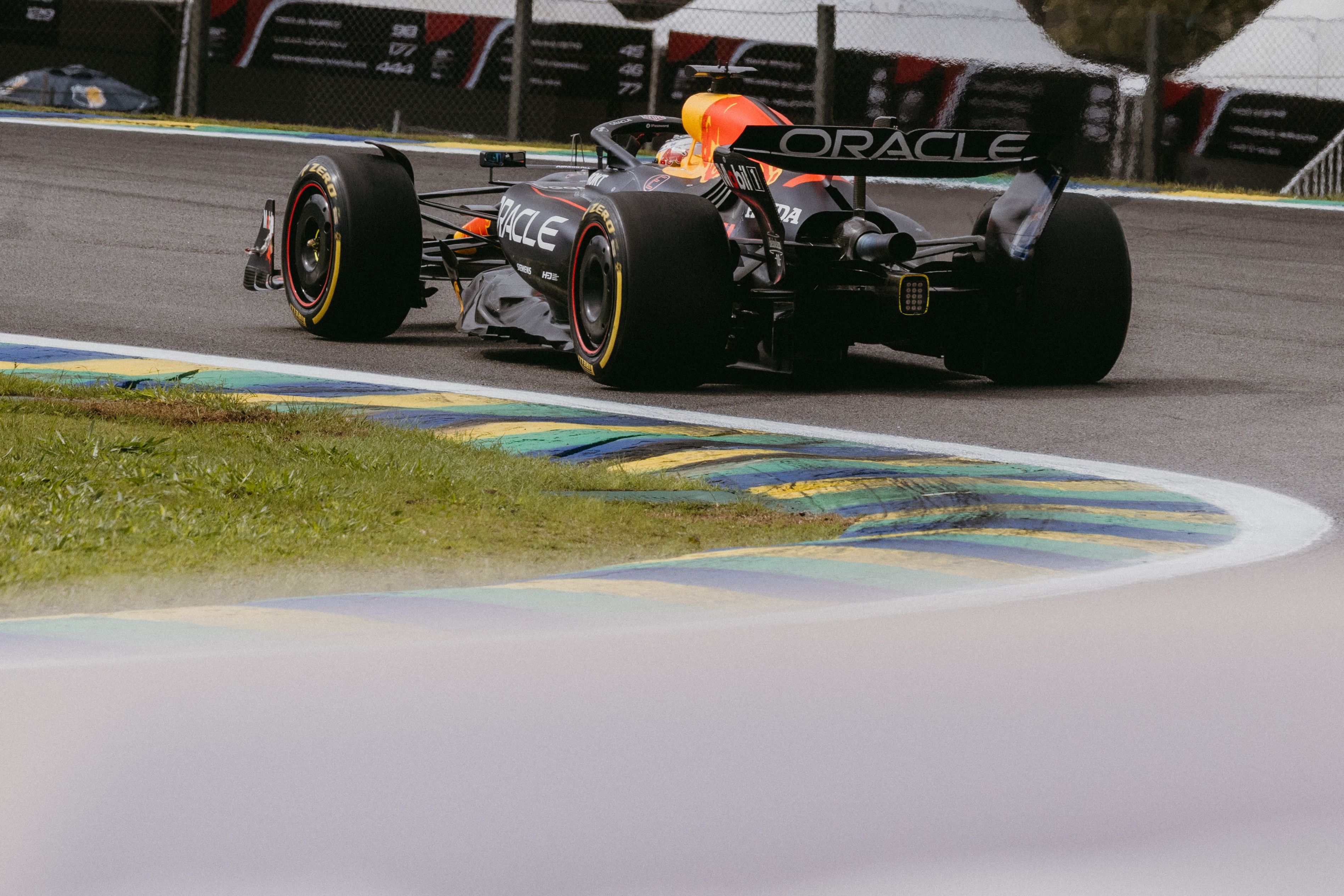
Stock motorsport photograph taken in 2025; not the 2026 São Paulo Grand Prix. Photo: Jonathan Borba / Pexels.

Continue Reading

Sports

Sovereignty’s Classic Farewell Comes With a Separate CBD Rulebook

Sovereignty ended his racing career with a Keeneland Classic win. For cannabis-aware sports fans, racing’s CBD classification deserves a separate look.

Published

on

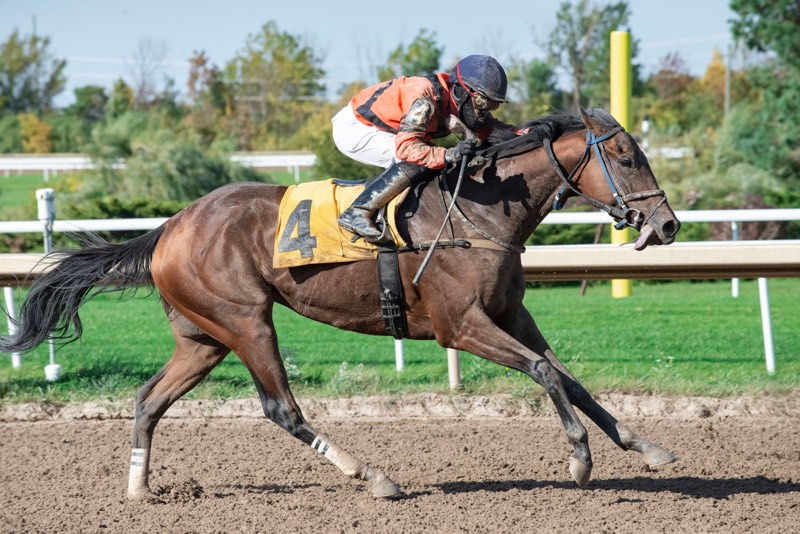
A jockey riding a dark horse on a racecourse.

Sovereignty ended his racing career with a victory in the October 31 Longines Breeders’ Cup Classic at Keeneland, beating The Puma and Knightsbridge in the championship’s closing race. The win gives sports fans a clear result to celebrate and a new chapter to follow as the colt moves toward the breeding shed.

For cannabis-minded readers, there is also a useful distinction behind the racing spectacle: CBD has its own classification under the sport’s medication rules. Familiarity with human wellness products does not establish what is permitted for a racehorse. Nothing in this report alleges cannabinoid use or a medication violation by any horse or participant named here.

A decisive finish at Keeneland

The Breeders’ Cup’s official recap records Sovereignty’s winning margin as one and three-quarter lengths in the $7 million Classic. Junior Alvarado rode the Godolphin-owned and bred four-year-old for trainer Bill Mott. The Puma finished second, with Knightsbridge third.

The winner completed the mile and a quarter in 2:00.36. The seven-horse field included defending champion Forever Young, who finished fifth. These are the October 31 race results, rather than a preview of a championship still to come. The distinction matters when older entries and pre-race assessments continue circulating after the event.

The race organizer’s account describes Sovereignty’s career as concluding with eight wins from 13 starts. It also marks Mott’s third Classic victory. The result supplies a sporting endpoint; it does not, by itself, establish anything about the medical management of the individual runners.

The next chapter is already identified

Darley’s October 31 announcement says Sovereignty is set to join its stallion roster at Jonabell Farm. It places the Classic alongside a record that includes the Kentucky Derby, Belmont Stakes, Travers and Whitney. The announcement also identifies Knightsbridge as joining Darley America’s stallion ranks in 2027.

That shift changes what followers should watch next. A racing retirement ends one kind of competition, while a stallion announcement concerns a different commercial and breeding role. Neither should be confused with an upcoming race entry or an assurance about the future performance of offspring.

Darley identifies Sovereignty as a son of Into Mischief. The pedigree is part of how a stallion prospect is described, but ancestry should not be mistaken for a prediction. The competitive record belongs to this horse; future offspring will have their own results.

Where CBD fits in racing

The Horseracing Integrity and Welfare Unit’s current substance lookup lists cannabidiol, or CBD, as a controlled substance with HISA status S7 B. That is a specific classification. It should not be casually rewritten as either an unrestricted supplement approval or a claim that CBD belongs to the separate banned-substance category.

The useful lesson is to consult the rulebook governing the animal and competition involved. A product’s availability in a store is a different fact from its status under an anti-doping and medication-control program. Marketing language such as natural or hemp-derived does not answer the regulatory question.

This classification also does not establish that a product is an effective treatment for a particular horse. Competition compliance, veterinary judgment and evidence of clinical benefit are separate questions. A consumer headline cannot provide an individualized medication plan or a safe withdrawal interval.

Labels are only the start of a supplement check

In a May 19 advisory, HIWU explains that it and HISA do not approve, certify or endorse dietary supplements as permitted products. Its lookup searches individual ingredients, rather than supplement brand names. The advisory concerns supplement due diligence generally, not a finding about the Classic field.

HIWU warns that an ingredient missing from the lookup is not automatically permitted, and that a label may not reveal every substance actually present. It directs questions about ingredients to its science team. Those limits make a self-issued clean label an insufficient basis for assuming compliance.

For owners and trainers, the practical step is to work with the appropriate veterinary and regulatory professionals using the current rules and the exact product involved. For fans, it is to avoid treating an unfamiliar substance category as a shortcut to a doping allegation.

Keep the result and the rules in perspective

Our marathon results and CBD coverage makes a related point about sport-specific guidance. The existence of one rule in a human competition does not decide the rules for horses, nor does an athlete’s result disclose what products they use.

Sovereignty’s farewell remains a racing story: a champion won his final start on October 31. The cannabis connection is a separate, factual look at CBD’s place in the sport’s regulatory framework. Following both subjects responsibly means celebrating the verified performance while keeping treatment claims, supplement marketing and compliance questions distinct.

Illustrative racing photograph; not Sovereignty, Alvarado or the 2026 Breeders’ Cup. Photo: @coldbeer / Pexels.

Continue Reading

Trending

Join The Cannabis Aficionado Community!
Join the Cannabis Aficionado community and receive all of the most relevant news geared towards our sophisticated enthusiast community.
Loading

Copyright ©️ 2026 Cannabis Aficionado. Cannabis Aficionado is a registered trademark of CNM Inc. All rights reserved. Registration on or use of this site constitutes acceptance of our Terms of Service, Privacy Policy and Cookies Policy. People may receive compensation for some links to products and services. Offers may be subject to change without notice.