#cannabisaficionado

Cannabis

THCV: The Cannabinoid That Can Help With Weight Loss

What sets THCV apart from the other cannabinoids is it has the ability to suppress appetite, as studies are demonstrating.

Published

on

THCV
PHOTO | Gracie Malley
Advertisement Back2Grow Advertisement

More than 113 cannabinoids have been discovered in the cannabis plant, including tetrahydrocannabivarin, or THCV. An obvious molecular cousin to the infamous euphoric tetrahydrocannabinol (THC), THCV offers distinct characteristics in the world of cannabinoids.

According to Raphael Mechoulam, the Israeli researcher who discovered THC in 1964, “Most of the cannabinoids in cannabis have not been fully evaluated for their pharmacological activity. Tetrahydrocannabivarin is a potent antagonist of anandamide, a major endogenous cannabinoid. It seems possible that many of the non‐psychoactive constituents of this plant will be of biological interest.”

The Details on THCV

Probably the most distinct — and distinctly marketable — aspect of THCV is its ability to suppress appetite. This characteristic of this molecule is the opposite of THC, which has a reputation for enhancing appetite to create what is sometimes dubbed “the munchies.” This cannabinoid should be avoided by those suffering from anorexia.  

The medical community finds obvious interest in the appetite suppressing qualities of molecules such as THCV. The efficacy of natural and non-addictive products, lacking the side effects of traditional pharmaceutical therapies, is of obvious benefit to consumers suffering from conditions like obesity and Type 2 diabetes.

THCV regulates blood sugar levels and reduces insulin resistance. It is believed to be helpful for osteoporosis and other bone-related conditions. For the same reasons that it is helpful for Alzheimer’s disease, this special cannabinoid shows promise for alleviating the symptoms of and delaying the neurodegeneration associated with Parkinson’s disease. THCV may also prevent and relieve panic attacks in PTSD patients.

Cannabis strains rich in THCV include Doug’s Varin, Durban Poison, Jack the Ripper, Pineapple Purps, Power Plant, Red Congolese, Skunk #1, and Willie Nelson. It is more common in sativa varieties of the herb.

The Research

Research into the medicinal efficacy of cannabinoids like THCV is increasing, although thwarted in the United States by the Schedule 1 status of cannabis. A number of studies have revealed the neuroprotective and blood sugar regulation qualities of THCV, spotlighting its efficacy for senior patients with diseases such as Alzheimer’s disease.

A 2011 study entitled “Symptom‐relieving and Neuroprotective Effects of the Phytocannabinoid Δ9‐THCV in Animal Models of Parkinson’s Disease” published in the British Journal of Pharmacology concluded that THCV can be a beneficial therapy for patients with diseases involving neurodegeneration, including Parkinson’s disease.

The study’s researchers concluded, “Given its antioxidant properties and its ability to activate CB2, but to block CB1, receptors, THCV has a promising pharmacological profile for delaying disease progression in Parkinson’s disease and also for ameliorating Parkinsonian symptoms.”

A review article published in 2012 in the journal Frontiers in Endocrinology entitled “Role of Cannabinoids in the Regulation of Bone Remodeling” demonstrated that the human endocannabinoid system—which features CB1 and CB2 receptors that bind with cannabinoids like THC and THCV—is present in not only the brain, central nervous system, and immune system, but also throughout the skeletal system.

Concluded the study, “The endocannabinoid system plays a key role in regulating a variety of physiological processes, such as appetite control, energy balance, pain perception, and immune responses. Recent studies have implicated the endocannabinoid system in the regulation of bone cell activity and bone remodeling.”

Cannabis

Israel’s Cannabis Trade Probe Moves Toward a Four-Producer Review

Israel’s latest procedural step puts four Canadian producers in focus, while the distinction between an investigation and an imposed trade duty remains essential.

Published

on

Shipping containers and cranes at a commercial port

Israel’s investigation of Canadian medical cannabis imports has reached another procedural stage, with four producers identified for closer examination, according to reporting on an October 22 notice. The development concerns how investigators will assess exporters. It does not, by itself, establish that dumping occurred or impose a new import duty.

Israel’s Cannabis Magazine reported that the trade-levies commissioner selected Koots Canna, 2323414 Alberta and Cielo Verde Quebec as a sample, with GrowCo to be examined separately. The outlet said it obtained the commissioner’s document. Cannabis Aficionado has reviewed the published reporting, rather than independently obtained that notice.

Why four producers are in focus

According to Cannabis Magazine, the three sampled growers represent about 22 percent of exports among the 16 indoor and hybrid growers that supplied data. GrowCo was singled out because of its greenhouse production and export volume. The report says the four together cover approximately 70 percent of Canadian cannabis imports into Israel during the relevant investigation period.

Those are descriptions of the proposed examination, not market-share figures that should automatically be applied to current retail sales. The reporting also describes a five-business-day response period for parties to comment. A reader should not mistake that opportunity to respond for a final ruling.

StratCann’s October 23 report adds that 22 Canadian companies supplied initial responses and 17 had exported during the investigation period. Its account says the commissioner considered individual calculations for every cooperating exporter impractical within the available time. Sampling is therefore central to this stage of the dispute.

What “dumping” means in this context

The World Trade Organization’s explanation of anti-dumping rules describes dumping as exports sold below their normal value, generally assessed against the exporting market. It is a trade-law pricing question. It is not an allegation that cannabis was contaminated, illegally cultivated or unsuitable for patients.

The comparison is more involved than placing two advertised prices side by side. The WTO describes adjustments that can be needed for differences in sale conditions, quantities, taxation and product characteristics. Its framework also requires consideration of material injury to a domestic industry and a causal link between that injury and dumped imports.

That makes production methods and comparable pricing relevant without making either conclusive. A greenhouse producer can have different costs from an indoor grower, but a cost difference alone does not settle all the questions required for an anti-dumping measure. The investigation has to establish the relevant facts through its process.

A dispute with several procedural turns

The latest review follows an earlier investigation that was closed in July. In a July 28 notice, Israel’s Ministry of Economy and Industry said the closure was for procedural reasons: advance notification had not been provided to the exporting country’s competent authority because of human error.

The ministry explicitly said that closure was not a substantive determination on the complaint. It also preserved the possibility of a further complaint or a new investigation. The distinction matters in both directions: closure did not establish that the allegations were correct, and it did not establish that they were disproven.

Cronos Group’s securities filing records a new complaint dated July 30, notification to Canada on August 2 and notice to the company on August 5 that a new investigation had begun. The company says it cannot predict the outcome or whether provisional or final duties will ultimately be imposed.

The filing also traces the earlier case to January 2024 and describes the finance minister’s opposition to the proposed duty in April 2025. It records subsequent court challenges as well. That history helps explain why earlier proposed tariff percentages should not be presented as the rate established by the October 2026 sample-selection step.

What changes for readers and businesses now

For businesses, the immediate development is a more specific picture of which exporters may receive detailed scrutiny. It is not enough information to calculate a new landed cost, predict a supplier’s future prices or announce an interruption to patient supply. Those claims would require additional evidence.

For patients and other readers, an investigation headline should remain separate from a product-safety headline. Nothing in this procedural selection establishes a health finding about a named producer’s cannabis. Nor does it establish a new prescription rule.

The next substantive items to watch are the commissioner’s treatment of responses to the sample, any published preliminary determination and any resulting measure. Reports available for this article describe sample selection, with no preliminary duty decision reported at that stage. Until a later document changes that position, the appropriate description is an unresolved trade investigation.

Illustrative stock trade photograph; not a documented cannabis shipment or an Israeli port. Photo: Andrea Musto / Pexels.

Continue Reading

Cannabis

New Zealand Cannabis Trial Takes a Longer Look at Sleep and Back Pain

A small University of Auckland study will compare a cannabis oil with placebo over months, separating an important research question from claims of proven benefit.

Published

on

Woman resting on a white pillow in a bedroom

Can a cannabis medicine improve sleep for people living with chronic back pain over several months? A University of Auckland study is examining that question, with a recent update from medicine supplier Helius drawing attention to an ongoing trial that has yet to report results.

The CPS trial is designed to compare a THC–CBD oil with placebo in approximately 20 adults. Its value lies in the comparison and the follow-up period: the research asks whether improvements hold up beyond an initial experience with a product, rather than treating a personal account of better sleep as proof.

An ongoing study, not a new treatment finding

In its October update, Helius describes a randomized, double-blind, placebo-controlled crossover trial. Participants are to receive the medicine for three months and placebo for three months, in a randomly assigned order. The company says it provides the study products but has no role in conducting the research, analyzing the data or reporting the findings.

Helius expects results in early 2028. That is a projected reporting window, not a completed result or a promise that the product will work. The announcement should also be distinguished from the trial’s start: the registry records a first participant enrollment date in October 2025.

What the researchers will measure

The Australian New Zealand Clinical Trials Registry entry identifies change in the Insomnia Severity Index as the primary outcome. Additional measures include pain scores and wrist-monitor estimates of total sleep time, time awake after falling asleep, sleep efficiency and the time taken to fall asleep.

Those measures address related but different experiences. Feeling that sleep has improved, spending longer asleep and reporting less pain are not interchangeable outcomes. Looking at them together can provide a more useful picture than a single headline about cannabis and sleep.

The registered design also includes a washout period between treatment phases. Because each participant receives both study products, the comparison follows the same person under different conditions. Randomizing the order helps reduce the risk that an improvement associated with time or treatment sequence is mistaken for a medicine effect.

What participation involves

The university’s recruitment page describes about seven months of participation, including questionnaires, urine testing and a wrist-worn sleep monitor. It seeks adults aged 25 or older with chronic back pain and sleep difficulties, subject to medical screening and approval from their general practitioner.

Eligibility is narrower than simply having a restless night. Other medicines and health conditions can affect suitability, and the researchers must assess those factors before enrollment. Readers interested in participating should use the university’s study contact to confirm current availability and requirements.

The public materials do not give a completely consistent visit schedule: the recruitment page mentions different visit totals in different sections. The registry was last updated in March 2026 and includes an anticipated recruitment endpoint that has passed. Those details make the study team the appropriate source for current logistics; they do not justify assuming that every advertised place remains available.

The registry lists the University of Auckland and the Australian and New Zealand College of Anaesthetists as funding sources. Identifying funding and product supply separately helps readers understand who supports the project and who is responsible for its scientific work.

Safety and consent remain part of the research

The participant information sheet names the University of Auckland as sponsor and Dr. Saad Anis as lead researcher. It describes the study oil as Helius THC10:CBD10 Full Spectrum and explains that the placebo does not contain THC or CBD.

The document emphasizes voluntary participation. Declining to join or withdrawing does not affect normal care, and participation may bring no direct benefit. Its screening requirements cover potentially interacting medicines and conditions that could increase side-effect risks, among other exclusions. This is supervised research, rather than a recommendation to copy a study regimen at home.

Quality standards do not answer the efficacy question

New Zealand’s Ministry of Health distinguishes medicinal cannabis quality verification from medicine approval. Meeting the minimum quality standard concerns product quality and consistency; it does not make a product an approved medicine or establish that it treats a particular condition.

That distinction explains why controlled research still matters even where cannabis products can be prescribed. A standardized product gives investigators something defined to test. It does not supply the answer in advance.

With a target of only 20 participants and a specific patient group, the CPS trial will need to be read within its limits. Any eventual findings will concern the tested formulation, population and study conditions. For now, the news is the effort to build that evidence carefully, with the clinical answer still ahead.

Illustrative stock sleep photograph; the model is not identified as a patient or trial participant. Photo: Los Muertos Crew / Pexels.

Continue Reading

Cannabis

Rubicon’s $3 Million Raise Puts Greenhouse Lighting at the Center of Expansion

The Canadian producer plans to expand output from existing facilities, with a lighting project bringing its combined capacity target forward to June 2027.

Published

on

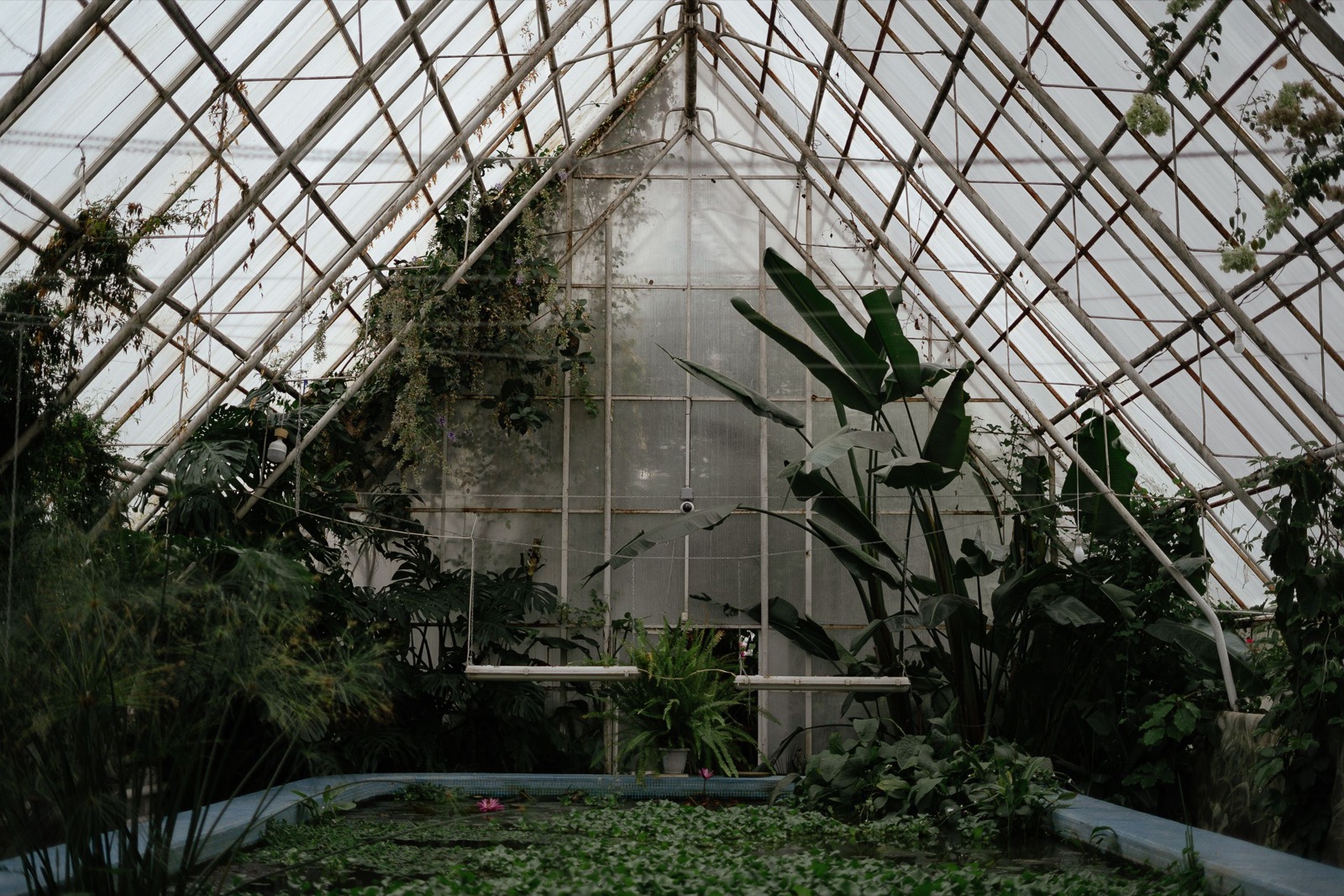
Potted plants beneath the glass roof of a greenhouse

Rubicon Organics is putting new capital into the lights above an existing crop rather than announcing another cultivation site. The Canadian producer’s October 19 financing announcement outlines a roughly $3 million private placement intended to support lighting and related greenhouse infrastructure at its Pacifica facility in Delta, British Columbia.

The company expects the project to help bring combined annual capacity at Pacifica and its Cascadia facility to 20,000 kilograms by June 2027, about a year earlier than previously anticipated. That is a production target. Whether additional capacity becomes profitable, saleable flower will depend on execution, operating costs and demand.

What the financing is intended to fund

According to Rubicon’s announcement, Siwash Rock Investments subscribed for 6,666,667 common shares at $0.45 each. Proceeds are intended for the lighting project, with the balance going to working capital.

Rubicon says Pacifica’s annual capacity could reach 15,500 kilograms after the upgrade, a 40 percent increase at that facility. The 20,000-kilogram figure refers to both sites together. Those two numbers describe different scopes and should not be added together. Final TSX Venture Exchange acceptance remained outstanding in the announcement.

The operating background behind the project

Rubicon’s second-quarter results, released in August, provide context for the expansion. The company reported net revenue of C$18.5 million, up 23 percent year over year, while adjusted EBITDA fell 18 percent to C$1.1 million. Adjusted EBITDA is the company’s nonstandard earnings measure, not net profit.

Management attributed pressure on profitability to the ramp-up of Cascadia even as revenue grew. It also reported that Pacifica’s per-crop yield metrics had increased approximately 20 percent in the first half of 2026 compared with a year earlier.

Those disclosures show why output and earnings need to be examined separately. A business can sell more while still absorbing the expense of bringing a facility to its intended performance. The lighting investment adds another operational milestone to watch alongside the company’s reported financial results.

The August report put combined capacity at 15,500 kilograms before the planned lighting expansion. That earlier baseline helps clarify the October target: the same figure later describes Pacifica alone, while the combined target rises to 20,000 kilograms.

Why growers pay attention to lighting

There is a research basis for studying how additional light affects cannabis production. A 2022 study in Frontiers in Plant Science tested the THC-dominant cultivar Meridian under different light intensities in an indoor environment. Dry flower weight was higher under the strongest tested photosynthetically active light treatment than under the lowest.

However, the study found no corresponding effect of those intensity treatments on cannabinoid concentrations in the flower. Its ultraviolet treatments also provided no commercially relevant benefit under the tested conditions. More flower and stronger flower were separate questions.

The researchers cautioned that responses vary with genotype and production environment. Their findings explain why light is a serious cultivation variable; they do not independently verify Rubicon’s projected 40 percent increase. A controlled indoor experiment is not a performance test of Pacifica’s greenhouse or its proposed equipment.

The experiment also illustrates why a lighting announcement should identify what success means. In this case, increased dry flower weight did not demonstrate increased flower cannabinoid concentration, even though both measures could matter commercially.

The energy bill belongs in the calculation

A 2021 PLOS ONE study by Utah State University researchers makes another useful distinction. In experiments with medical hemp, the team compared lighting spectra and fixture efficiency. A tested white-and-red LED treatment produced slightly less flower per unit of growing area than a high-pressure sodium treatment, but more flower per dollar of electricity.

The authors concluded that fixture efficacy and upfront cost could matter more to investment returns than spectral distribution at high light levels. Their study also found no effect of spectral quality on CBD or THC concentration under its conditions.

For readers following a greenhouse upgrade, the practical implication is that kilograms alone cannot describe the result. Equipment cost, electricity use and the amount of usable production obtained from that energy all belong in the evaluation. Those research findings are background, not a specification for Rubicon’s project.

For broader demand context, our coverage of Canada’s August retail sales explains why national spending and an individual producer’s performance answer different questions. A market record does not validate a particular expansion forecast.

What will show whether the expansion works

The most useful follow-up will connect construction progress with actual operating results: whether the equipment is installed on time, whether yields improve consistently and whether the additional flower supports sales without eroding margins. Those are checkpoints, rather than outcomes established by the financing.

For cultivators, Rubicon’s plan offers a concrete example of pursuing more output within existing infrastructure. For consumers, the announcement does not guarantee a change in potency, availability or shelf price. The capital has been raised; the production and commercial results still have to follow.

Illustrative stock greenhouse photograph; not Rubicon’s Pacifica facility or a cannabis crop. Photo: Albina White / Pexels.

Continue Reading

Trending

Join The Cannabis Aficionado Community!
Join the Cannabis Aficionado community and receive all of the most relevant news geared towards our sophisticated enthusiast community.
Loading

Copyright ©️ 2026 Cannabis Aficionado. Cannabis Aficionado is a registered trademark of CNM Inc. All rights reserved. Registration on or use of this site constitutes acceptance of our Terms of Service, Privacy Policy and Cookies Policy. People may receive compensation for some links to products and services. Offers may be subject to change without notice.