#cannabisaficionado

Industry Innovators

Bill Shevlin: Cultivating Carbon-Neutral Cannabis at 3 Bros Grow

Published

on

Bill Shevlin 3 Bros
Bill Shevlin | PHOTOS 3 Bros Grow
Advertisement Back2Grow Advertisement

It’s no secret that indoor cannabis cultivation techniques leave a substantial carbon footprint. The immense amounts of water and energy required will make the model unsustainable if it continues unchallenged. Fortunately, by implementing cutting-edge technology and the best production practices, it is possible to grow top-shelf cannabis in a way that’s sustainable for both businesses and the environment. That’s the vision of 3 Bros Grow, a vertically integrated cannabis company in Santa Cruz, California, dedicated to growing the very best cannabis using environmentally friendly processes.

Cannabis Aficionado spoke to CEO Bill Shevlin about the 3 Bros Grow mission, their revolutionary cultivation practices and the importance of giving back to the community.

Cannabis Aficionado: Tell us about your journey through entrepreneurship and how you found your way to cannabis.

Bill Shevlin: I grew up in the Santa Cruz area, and if you grew up in this part of the country, cannabis was always around. When I was in high school, I took an outdoor ed program and learned how to read topography maps. My friends and I picked some locations that were back in the woods, in the canyons, planted there and grew. After school, I ended up getting into real estate development and management. For the last 15 years, I have advised technology and vertical ag companies while working in large-scale commercial construction and renewable energy.

In 2017, I started looking at energy usage in the cannabis and hemp space, as I knew cannabis was super energy-intensive. I worked with a few different companies in the industry — some were small, some were large — and I saw all sorts of issues from the infrastructure requirements but also on the corporate side. Due to my background in vertical ag, I knew you could cultivate and deliver food crops into local markets sustainably.  I knew there was value in being able to do the same thing in cannabis.

I met the founders of 3 Bros Grow — Tyler Smith, ‘CEBrO’; Mark Taylor, COO, and Russell Smith, CMO — at the end of 2019, and formally joined them as CEO in January of 2020. They have a really cool mission to be a sustainable company from day one and had some interesting things they were doing.

Grease Monkey

Tell me more about the 3 Bros Grow mission.

We believe it is our responsibility to offer only the highest quality cannabis products at an approachable price and in a sustainable manner. Cannabis is medicine, but we plan to use it to heal more than just people. From climate-positive business practices to community care initiatives, we strive to assist in the healing of our planet.  Unfortunately, the cannabis industry is far from green. There is a lot of waste and a lot of pollution. 3 Bros is committed to leaving this planet more beautiful than when we arrived and vow to put forward our greatest effort in sustainable and community-centred operations. That’s where my background in renewable energy comes into play.

Why is creating a zero-carbon footprint cultivation model so important to 3 Bros Grow?

From day one, 3 Bros Grow has been about sustainability — the founders were pushing the sustainability message in cannabis even before I was around. They grew up in the surf industry and were professional surfers, so they’re very conscious of the environment. When I joined, it was really because we were having conversations around using renewable energy and sustainable energy for indoor cannabis, which is really energy-intensive. Sustainability has always been part of the core culture of 3 Bros Grow. We’re doing some really cutting-edge stuff around sustainability.

What are the sustainable ‘green’ initiatives at your new facility?

We’re creating a climate-positive impact at our revolutionary new vertically integrated facility in Santa Cruz. It allows us to offer truly green practices across cultivation, manufacturing, processing, and distribution.

Our COO, Mark, figured out a way to not use any outside water in his cultivation operations. The 3 Bros proprietary systems and technologies don’t use any outside water for cultivation, which creates a lower cost of operation, and it also has a positive impact on the environment. If you look at what the industry standards are, for water there is, unfortunately, a lot of waste. It’s a problem that needs to be fixed, and we are fixing it.

We’re also implementing a carbon-negative microgrid that generates power onsite, allowing us to lower the cost of operation, and create a climate-positive impact. Again, cannabis is an energy-intensive industry. So even though a lot of people associate it with being “natural” and “clean,” the reality is that there are a lot of fossil fuels that are used to grow most commercially available cannabis.

Thirdly, using our proprietary Direct Air Capture technology allows us to sequester CO2 in our cultivation and manufacturing processes, which we’ll inject back into our grow environment. So, we’re actually pulling CO2 out of the air at a larger scale than we normally would, because we’re not supplementing with standard C02. We’re just supplementing with CO2 that we’ve captured from the air.

Mark Taylor in the 3 Bros grow room

The facility is being brought online in phases and will have a cultivation capacity of 10,000 pounds of top-shelf indoor cannabis. The interesting thing is that our environmental impact is positive, costs of operations are lower and our efficiencies are higher. Lowering the cost of operations is critical but doing them in an environmentally friendly way is even more critical. It really is the best of both worlds.

I believe sustainability should be taking place across all aspects of cannabis. In California, the Bureau of Cannabis Control requires certified hauliers to remove any cannabis waste — like stems and miscellaneous biomass — in a locked drum or container. It’s fairly expensive and very wasteful. We want to be able to take our waste and turn it back into something useful, not just bury it in the ground because the BCC considers it a hazard. So, we’re in the processes of obtaining authorization from the local county government to be able to take our waste and send it to our nursery site. This zero-waste program essentially creates a circular economy, not to mention a healthier soil program for our own growing.

We work with a company who has a soils program, the founder used to be with the Rodale Institute.  They are creating a compost program and implementing regenerative agriculture practices, which has multiple benefits: the crops produce more; the soils are healthier; the local climate is healthier, and those products are typically consumed in the local market and can fetch a higher price point.

Sustainable cannabis growing is all about reducing the negative impact on the environment. 3 Bros Grow demonstrates that sustainability in vertical agriculture can be achieved, that is profitable, and it is good for the planet and good for people.

How does the packaging that’s required for the sale of regulated products work into your sustainability model?

All 3 Bros Grow products are packaged using the most sustainable and environmentally conscious packaging available, like soy-based inks, recycled ocean-based plastics and bio-based plastic or hemp-based plastics. We’re talking to companies that are emerging that are using hemp fibers in this space.

I hate plastic. The amount of excess plastic and packaging used in the cannabis industry is a nightmare. The world’s starting to realize that plastic is going to kill us, and we’ve got to be able to find alternative packaging materials to be able to do it.

I think that as an industry, we need to insure everyone uses sustainable solutions. Right now, it is a little bit more expensive to use sustainable packaging. But in our opinion, it’s worth it to not pollute the planet and delay that cost into some future generation. Plus, I think we should be supporting our own industry to help it evolve — even if it costs a little bit more in the packaging up front for hemp fiber and plastic to come to market. From my perspective, it’s the right thing to do. 

What are the benefits of sustainable growing techniques?

You create a healthier, cleaner and consistent product. You also lower or remove your carbon footprint. And you lower your costs of operation. All three of these are important from a business perspective. You always have to have the lowest cost of business operations possible, so you can have a margin and continue to grow, expand and do what you need to in the marketplace. But from an environmental perspective, you have to do what’s right up front and every day.  

Can you tell me about your community programs, like the compassionate program 3 Bros Grow started during the pandemic?

We want to support the community that’s supported us. Any company can make money, but it is important to give to the community that supports us. We take a portion of our proceeds during a month and give that to a local nonprofit.

When COVID-19 came around, we decided to start a compassion program for people who were struggling. We reached out to a lot of the vendors we work with and we had an overwhelming response; they donated products to us, and we donated it to our less-fortunate customers. Not just cannabis products — we donated large amounts of food to the community, too. We did the same thing when the fires came; we reached out to a lot of our vendors and created a compassion program.

3 Bros grow is committed to supporting the community.

We also support minority-owned companies and local brands that are trying to get in the market. We’ll bring their product in, give them some shelf space, get them some attention through our social media platforms and, most importantly, try to give them additional margin on their products. We truly believe that it’s not just about growing our business – it’s about supporting the industry. It’s about making the industry better.

In your opinion, what’s the most important thing that needs to be addressed when talking about cannabis?

Educating people that cannabis is not a harmful thing – it’s really a helpful thing. I have friends who are veterans who treat themselves for PTSD with cannabis. I have friends who are senior citizens that treat themselves with cannabis for pain. I have friends who treat themselves for anxiety. I have friends that have weaned themselves off major opiates and other addictions by using cannabis and other cannabinoid products.

Cannabis is a crop you can grow in a really sustainable manner and deliver it into local markets where it creates local jobs. It helps people. It’s a healthy product. That Reefer Madness type of mentality has really been politically driven in the past and comes from corporations and the government — they want to keep this plant out of the people’s hands, unfortunately.

How do you think the cannabis industry as a whole can be better?

One thing the industry doesn’t do very effectively as a collective group is get together to push legislation that actually supports our industry. As a united industry, we should be reaching out to the political parties, to demand the legislation that we need that will allow us to continue to thrive and scale. There are still too many people who are focused on their own operations and aren’t spending time thinking about the big picture.

Cities, Counties and States want the sales tax revenues, but they don’t want to create the banking and infrastructure support that’s required for the industry to evolve. You can’t bleed tax money from the cannabis industry but also not have the legislation that supports it. It’s counterintuitive and counterproductive.

The cannabis industry pays a lot in tax, and at the same time think about the job creation that it brings to the community. It’s huge. Somewhere between 250-350,000 jobs have been created in the last few years. The only other industry that’s been on par with that has been the renewable energy industry. But unlike other verticals, we’re not supported, and we don’t have a united voice from the political perspective that will push the legislation that should be in place.

The amount of compliance we have to go through on the banking side means spending several thousand dollars a month in banking fees, cash pickup fees, and everything else. We’re fortunate that we actually have a bank account. Just recently, we’ve been able to start taking electronic payments. But in order to do that, we get charged a 3.5 percent transaction fee that we have to pass on to the consumer. In any other industry, you’d have a normal credit card system that would be half a percent, or one percent — maybe 50 cents. But there’s hardly anyone in electronic payments that wants to deal with you. We’re in the middle of expansion, so we’re talking to multiple different finance groups and capital groups. If this were any other industry, we could go out and get a regular credit line, pay a couple of percent and get a credit line of a couple of million dollars, no problem. In this industry, that doesn’t exist.

What’s next for 3 Bros Grow?

We’re continuing to expand. We’re doing some collaborations with some large brands. We just signed an agreement with Sherbinski to cultivate and manufacture some product for them using our environmental approach.  We are working with a couple of their genetics and bringing them to the products to the market that shows the climate-positive impact. We’re also working with some other brands to make create new products that come into the market in a sustainable manner.

Finally, what are three things it takes to be a cannabis entrepreneur?

You have to be able to tolerate pain; you have to be able to jump through hoops, and you have to be compassionate and, in our opinion, serve the community.

If you’re in Santa Cruz, be sure to swing by the 3 Bros Grow dispensary.

Cannabis

Israel’s Cannabis Trade Probe Moves Toward a Four-Producer Review

Israel’s latest procedural step puts four Canadian producers in focus, while the distinction between an investigation and an imposed trade duty remains essential.
Published

on

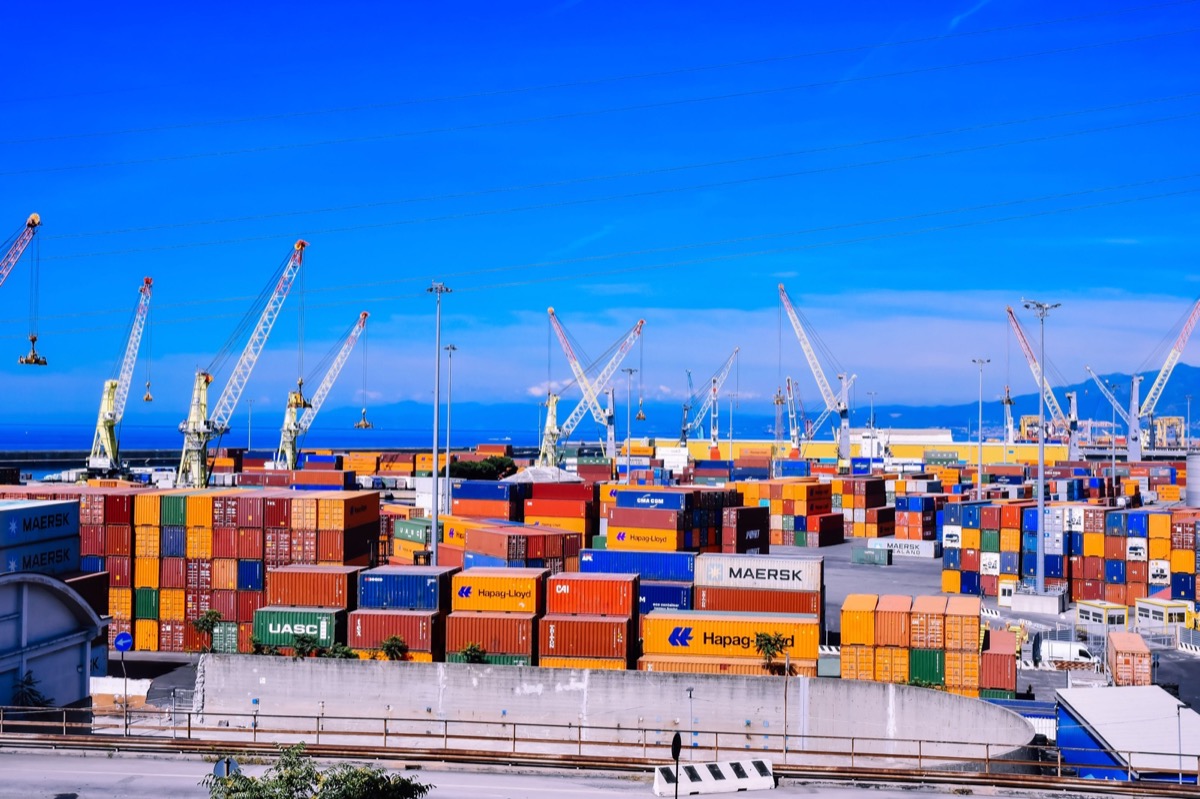
Shipping containers and cranes at a commercial port

Israel’s investigation of Canadian medical cannabis imports has reached another procedural stage, with four producers identified for closer examination, according to reporting on an October 22 notice. The development concerns how investigators will assess exporters. It does not, by itself, establish that dumping occurred or impose a new import duty.

Israel’s Cannabis Magazine reported that the trade-levies commissioner selected Koots Canna, 2323414 Alberta and Cielo Verde Quebec as a sample, with GrowCo to be examined separately. The outlet said it obtained the commissioner’s document. Cannabis Aficionado has reviewed the published reporting, rather than independently obtained that notice.

Why four producers are in focus

According to Cannabis Magazine, the three sampled growers represent about 22 percent of exports among the 16 indoor and hybrid growers that supplied data. GrowCo was singled out because of its greenhouse production and export volume. The report says the four together cover approximately 70 percent of Canadian cannabis imports into Israel during the relevant investigation period.

Those are descriptions of the proposed examination, not market-share figures that should automatically be applied to current retail sales. The reporting also describes a five-business-day response period for parties to comment. A reader should not mistake that opportunity to respond for a final ruling.

StratCann’s October 23 report adds that 22 Canadian companies supplied initial responses and 17 had exported during the investigation period. Its account says the commissioner considered individual calculations for every cooperating exporter impractical within the available time. Sampling is therefore central to this stage of the dispute.

What “dumping” means in this context

The World Trade Organization’s explanation of anti-dumping rules describes dumping as exports sold below their normal value, generally assessed against the exporting market. It is a trade-law pricing question. It is not an allegation that cannabis was contaminated, illegally cultivated or unsuitable for patients.

The comparison is more involved than placing two advertised prices side by side. The WTO describes adjustments that can be needed for differences in sale conditions, quantities, taxation and product characteristics. Its framework also requires consideration of material injury to a domestic industry and a causal link between that injury and dumped imports.

That makes production methods and comparable pricing relevant without making either conclusive. A greenhouse producer can have different costs from an indoor grower, but a cost difference alone does not settle all the questions required for an anti-dumping measure. The investigation has to establish the relevant facts through its process.

A dispute with several procedural turns

The latest review follows an earlier investigation that was closed in July. In a July 28 notice, Israel’s Ministry of Economy and Industry said the closure was for procedural reasons: advance notification had not been provided to the exporting country’s competent authority because of human error.

The ministry explicitly said that closure was not a substantive determination on the complaint. It also preserved the possibility of a further complaint or a new investigation. The distinction matters in both directions: closure did not establish that the allegations were correct, and it did not establish that they were disproven.

Cronos Group’s securities filing records a new complaint dated July 30, notification to Canada on August 2 and notice to the company on August 5 that a new investigation had begun. The company says it cannot predict the outcome or whether provisional or final duties will ultimately be imposed.

The filing also traces the earlier case to January 2024 and describes the finance minister’s opposition to the proposed duty in April 2025. It records subsequent court challenges as well. That history helps explain why earlier proposed tariff percentages should not be presented as the rate established by the October 2026 sample-selection step.

What changes for readers and businesses now

For businesses, the immediate development is a more specific picture of which exporters may receive detailed scrutiny. It is not enough information to calculate a new landed cost, predict a supplier’s future prices or announce an interruption to patient supply. Those claims would require additional evidence.

For patients and other readers, an investigation headline should remain separate from a product-safety headline. Nothing in this procedural selection establishes a health finding about a named producer’s cannabis. Nor does it establish a new prescription rule.

The next substantive items to watch are the commissioner’s treatment of responses to the sample, any published preliminary determination and any resulting measure. Reports available for this article describe sample selection, with no preliminary duty decision reported at that stage. Until a later document changes that position, the appropriate description is an unresolved trade investigation.

Illustrative stock trade photograph; not a documented cannabis shipment or an Israeli port. Photo: Andrea Musto / Pexels.

Continue Reading

Cannabis

Rubicon’s $3 Million Raise Puts Greenhouse Lighting at the Center of Expansion

The Canadian producer plans to expand output from existing facilities, with a lighting project bringing its combined capacity target forward to June 2027.
Published

on

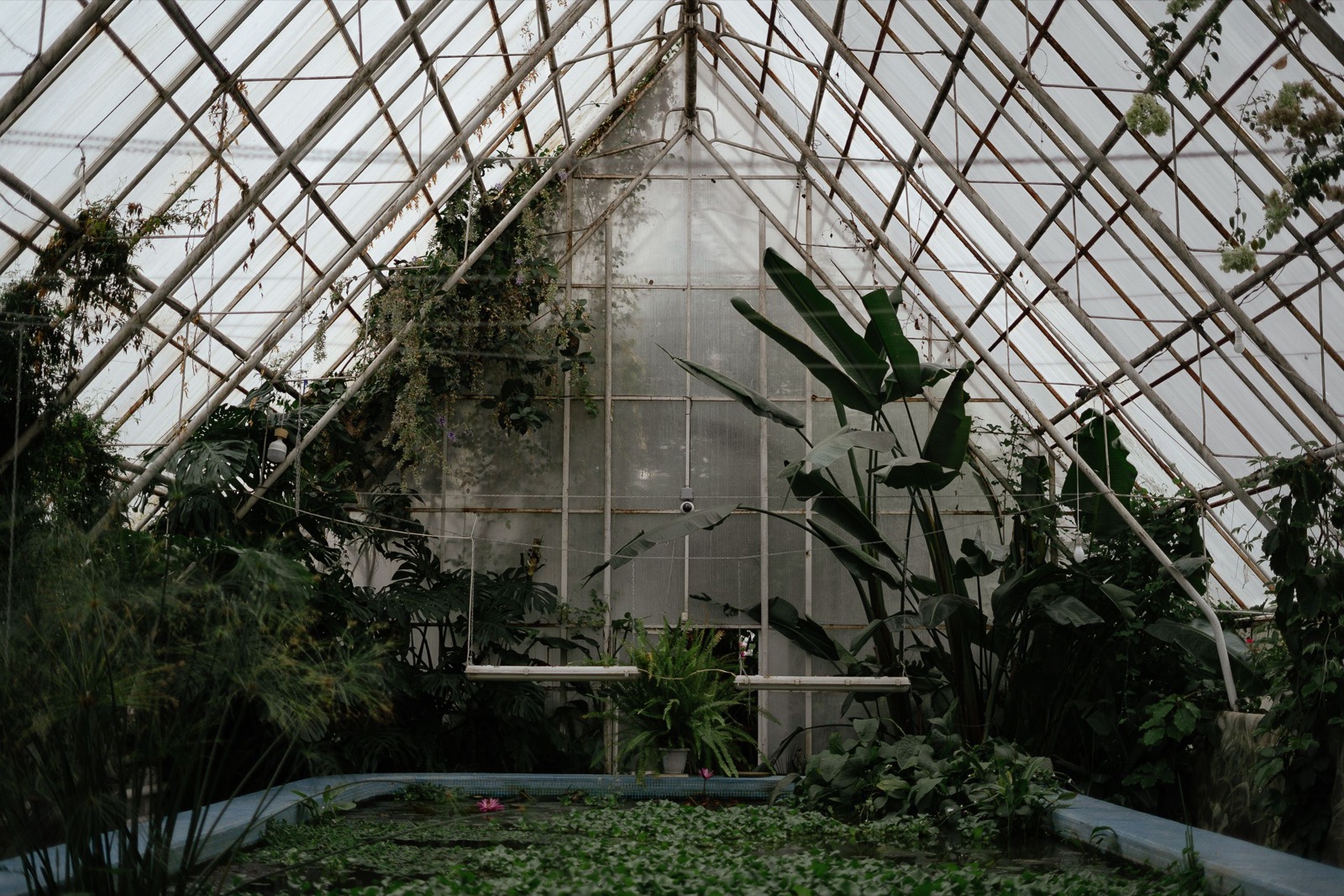
Potted plants beneath the glass roof of a greenhouse

Rubicon Organics is putting new capital into the lights above an existing crop rather than announcing another cultivation site. The Canadian producer’s October 19 financing announcement outlines a roughly $3 million private placement intended to support lighting and related greenhouse infrastructure at its Pacifica facility in Delta, British Columbia.

The company expects the project to help bring combined annual capacity at Pacifica and its Cascadia facility to 20,000 kilograms by June 2027, about a year earlier than previously anticipated. That is a production target. Whether additional capacity becomes profitable, saleable flower will depend on execution, operating costs and demand.

What the financing is intended to fund

According to Rubicon’s announcement, Siwash Rock Investments subscribed for 6,666,667 common shares at $0.45 each. Proceeds are intended for the lighting project, with the balance going to working capital.

Rubicon says Pacifica’s annual capacity could reach 15,500 kilograms after the upgrade, a 40 percent increase at that facility. The 20,000-kilogram figure refers to both sites together. Those two numbers describe different scopes and should not be added together. Final TSX Venture Exchange acceptance remained outstanding in the announcement.

The operating background behind the project

Rubicon’s second-quarter results, released in August, provide context for the expansion. The company reported net revenue of C$18.5 million, up 23 percent year over year, while adjusted EBITDA fell 18 percent to C$1.1 million. Adjusted EBITDA is the company’s nonstandard earnings measure, not net profit.

Management attributed pressure on profitability to the ramp-up of Cascadia even as revenue grew. It also reported that Pacifica’s per-crop yield metrics had increased approximately 20 percent in the first half of 2026 compared with a year earlier.

Those disclosures show why output and earnings need to be examined separately. A business can sell more while still absorbing the expense of bringing a facility to its intended performance. The lighting investment adds another operational milestone to watch alongside the company’s reported financial results.

The August report put combined capacity at 15,500 kilograms before the planned lighting expansion. That earlier baseline helps clarify the October target: the same figure later describes Pacifica alone, while the combined target rises to 20,000 kilograms.

Why growers pay attention to lighting

There is a research basis for studying how additional light affects cannabis production. A 2022 study in Frontiers in Plant Science tested the THC-dominant cultivar Meridian under different light intensities in an indoor environment. Dry flower weight was higher under the strongest tested photosynthetically active light treatment than under the lowest.

However, the study found no corresponding effect of those intensity treatments on cannabinoid concentrations in the flower. Its ultraviolet treatments also provided no commercially relevant benefit under the tested conditions. More flower and stronger flower were separate questions.

The researchers cautioned that responses vary with genotype and production environment. Their findings explain why light is a serious cultivation variable; they do not independently verify Rubicon’s projected 40 percent increase. A controlled indoor experiment is not a performance test of Pacifica’s greenhouse or its proposed equipment.

The experiment also illustrates why a lighting announcement should identify what success means. In this case, increased dry flower weight did not demonstrate increased flower cannabinoid concentration, even though both measures could matter commercially.

The energy bill belongs in the calculation

A 2021 PLOS ONE study by Utah State University researchers makes another useful distinction. In experiments with medical hemp, the team compared lighting spectra and fixture efficiency. A tested white-and-red LED treatment produced slightly less flower per unit of growing area than a high-pressure sodium treatment, but more flower per dollar of electricity.

The authors concluded that fixture efficacy and upfront cost could matter more to investment returns than spectral distribution at high light levels. Their study also found no effect of spectral quality on CBD or THC concentration under its conditions.

For readers following a greenhouse upgrade, the practical implication is that kilograms alone cannot describe the result. Equipment cost, electricity use and the amount of usable production obtained from that energy all belong in the evaluation. Those research findings are background, not a specification for Rubicon’s project.

For broader demand context, our coverage of Canada’s August retail sales explains why national spending and an individual producer’s performance answer different questions. A market record does not validate a particular expansion forecast.

What will show whether the expansion works

The most useful follow-up will connect construction progress with actual operating results: whether the equipment is installed on time, whether yields improve consistently and whether the additional flower supports sales without eroding margins. Those are checkpoints, rather than outcomes established by the financing.

For cultivators, Rubicon’s plan offers a concrete example of pursuing more output within existing infrastructure. For consumers, the announcement does not guarantee a change in potency, availability or shelf price. The capital has been raised; the production and commercial results still have to follow.

Illustrative stock greenhouse photograph; not Rubicon’s Pacifica facility or a cannabis crop. Photo: Albina White / Pexels.

Continue Reading

Cannabis

Calyx Launches packOS With Label Quotes First and More Tools to Follow

Calyx’s new packOS platform starts with label quoting. Its launch raises practical questions about artwork, production scope and the compliance work that remains with brands.
Published

on

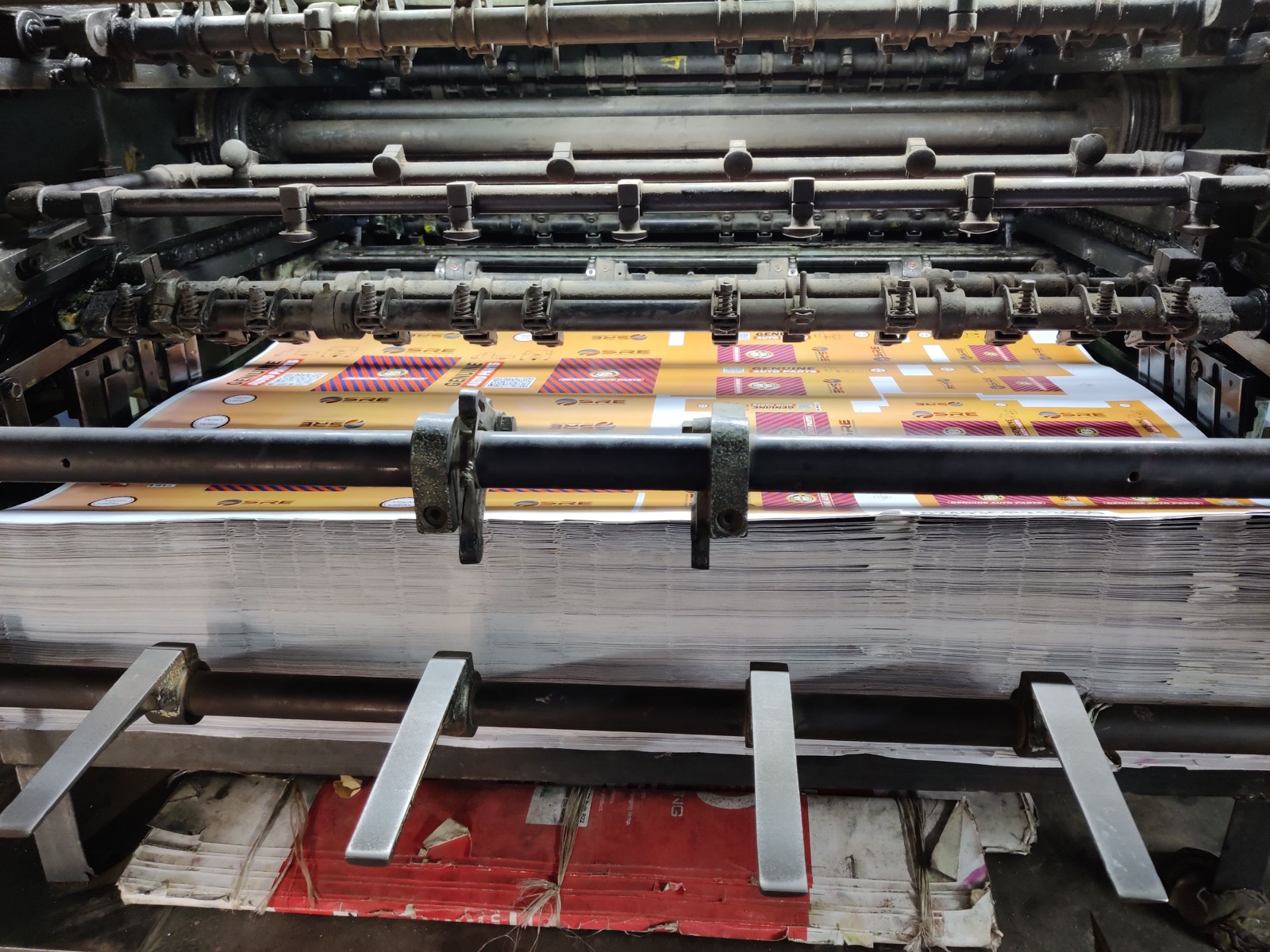
An industrial printing machine processing sheets of paper

Calyx has introduced packOS, a packaging procurement platform that begins with a practical task: turning existing artwork into a quote. The October 20 launch brings the company’s cannabis packaging experience into software, with an initial Quick Quote offering and additional approval and order-management tools on its roadmap.

For cannabis brands, the useful question is what can be ordered now. The current product page identifies label quoting as live and flexible packaging as coming soon. That makes the first release more specific than the phrase “operating system” might suggest, particularly for buyers expecting a complete replacement for their existing packaging workflow.

What Calyx announced

In its company release distributed by Cannabis Business Times, Calyx describes a platform intended to move procurement beyond email chains, spreadsheets and manual quotes. It says buyers can upload packaging artwork and compare production options, prices and corresponding lead times.

The release presents Quick Quote as the first major component, with Artwork Approval and Order Management to follow. It also describes artificial intelligence and automation in estimating, artwork preparation and prepress. Those are Calyx’s descriptions of its technology, rather than results from independent testing by Cannabis Aficionado.

The distinction matters when comparing a launch announcement with a purchasing decision. A platform may describe an ambitious direction while delivering a narrower first service. Buyers need a clear understanding of which steps are available today, which require additional coordination and which remain future capabilities.

The current scope starts with labels

The product homepage says users can submit a PDF or Adobe Illustrator file. It describes extracting specifications from that artwork, producing a visual proof and pricing quantities. Labels are listed as available, while pouch quoting is marked as a future addition. Artwork Intelligence and Order Management appear in preview on the current roadmap.

For a buyer preparing a launch, those labels are more useful than assuming everything mentioned in an announcement is fully available. A proof, a quotation and an accepted production order are separate milestones. Establishing which one the platform has delivered helps prevent a team from treating preliminary information as a finished manufacturing commitment.

Printing does not replace compliance review

The cannabis-specific product page covers several label uses, including jars, lids, pre-rolls, boxes and batch information. It also answers an essential question directly: state compliance review stays with the customer’s team and counsel. The software is not presented there as a service that approves labels against state cannabis rules.

That boundary is significant for a brand operating across markets. An artwork file can be ready to print while still needing a jurisdiction-specific review. The company says customers provide approved versions for each state; it also says label orders do not require buying containers from Calyx.

Its described workflow separates preprinted brand and strain information from batch details added by customers using their own thermal printers. That is a production option, not proof that a particular finished label contains every required disclosure. The final artwork and data still need attention before a product reaches a shelf.

Questions to settle before uploading artwork

Packaging files may contain unreleased product names or designs, making information handling part of vendor selection. Calyx’s published security page says files travel over encrypted connections, are held in private storage and can be deleted on request. It describes using submitted files for quotes, proofs and production.

These are the provider’s stated practices, not an independent security assessment. A brand considering the service should compare those commitments with its own approval process and any obligations attached to an unreleased design. A convenient upload workflow does not itself decide who within a business is authorized to share artwork.

Similarly, any sourcing comparison should identify what is included in the quoted job. Quantity, material, finish, delivery expectations and the approved artwork version are practical points to settle before authorizing production. A lower displayed number is only meaningful when the underlying specification matches the buyer’s needs.

The security page also says access links expire and that an unverified internal access check is denied. Buyers can ask the provider how these stated controls apply to their particular project and who can request deletion.

A software launch with a manufacturing context

The consumer-facing side of packaging is visible in 710 Labs’ new Close Friends presentation. The packOS announcement addresses an earlier stage: how packaging teams organize artwork, evaluate options and move toward production.

For now, the clearest takeaway is a new quoting tool with a stated initial scope. Brands can assess the label service on that basis while tracking whether the planned approval and order-management features become available. Adoption, actual time savings and customer outcomes will require evidence beyond the launch announcement.

Illustrative stock printing equipment; not a Calyx facility or packOS demonstration. Photo: Criiv India / Pexels.

Continue Reading

Trending

Join The Cannabis Aficionado Community!
Join the Cannabis Aficionado community and receive all of the most relevant news geared towards our sophisticated enthusiast community.
Loading

Copyright ©️ 2026 Cannabis Aficionado. Cannabis Aficionado is a registered trademark of CNM Inc. All rights reserved. Registration on or use of this site constitutes acceptance of our Terms of Service, Privacy Policy and Cookies Policy. People may receive compensation for some links to products and services. Offers may be subject to change without notice.