#cannabisaficionado

Cannabis

Discovering Cannabis Unicorns in a Phenotype Mega-Hunt

Nathaniel Pennington from Humboldt Seed Company explains his phenotype mega-hunt — the search for the best and brightest of the cannabis genome.


Published

on

Phenotype Mega-Hunt
PHOTO | Humboldt Seed Company
Advertisement Back2Grow Advertisement

The science of cannabis genetics has existed in a hazy realm of illegality and prohibition-derived stigma for nearly a century. Relegated by the first anti-pot laws in the United States that appeared in 1913 in states such as Indiana, Maine, and Wyoming, cannabis cultivators seeking connoisseur-grade examples of the art have traditionally worked in cloistered isolation, mired in the ignorance of pseudo-science and urban legend.

This generations-old underground culture of ultra-discreet operation has resulted in a nascent legal industry that suffers a gross lack of hard research and peer-reviewed science. Unfortunately, most cannabis breeders operate in a desperate state of self-reliance, employing guesswork and questionable genetic material.

Newly legal adult use markets across North America—including California, Canada, Massachusetts, and Nevada—are finally allowing researchers to seriously investigate cannabis genetics and breeding. This, in turn, is helping support the natural industry-wide desire to introduce novel products to market that address specific consumer preferences or patient medical needs.

Playing Catch Up

One example of the new generation of entrepreneurial researchers attempting to push the boundaries of cannabis genetics is Nathaniel Pennington, CEO and founder of Humboldt Seed Company (HSC).

As a biologist and geneticist focused on the development of premium cannabis genetics, Pennington has for years been obsessed with creating the best possible seeds and clones to support both commercial cultivators and self-sustaining gardeners.

Over the past almost two decades, the pioneering company he founded in 2001 has gathered a large volume of data regarding the science of superior cannabis genetics, with a focus on varieties that offer rare terpene and cannabinoid profiles. The company’s Blueberry Muffin strain, a decade in the making and increasingly popular in West Coast dispensaries, was described by Leafly as the most accurately named strain on the market.
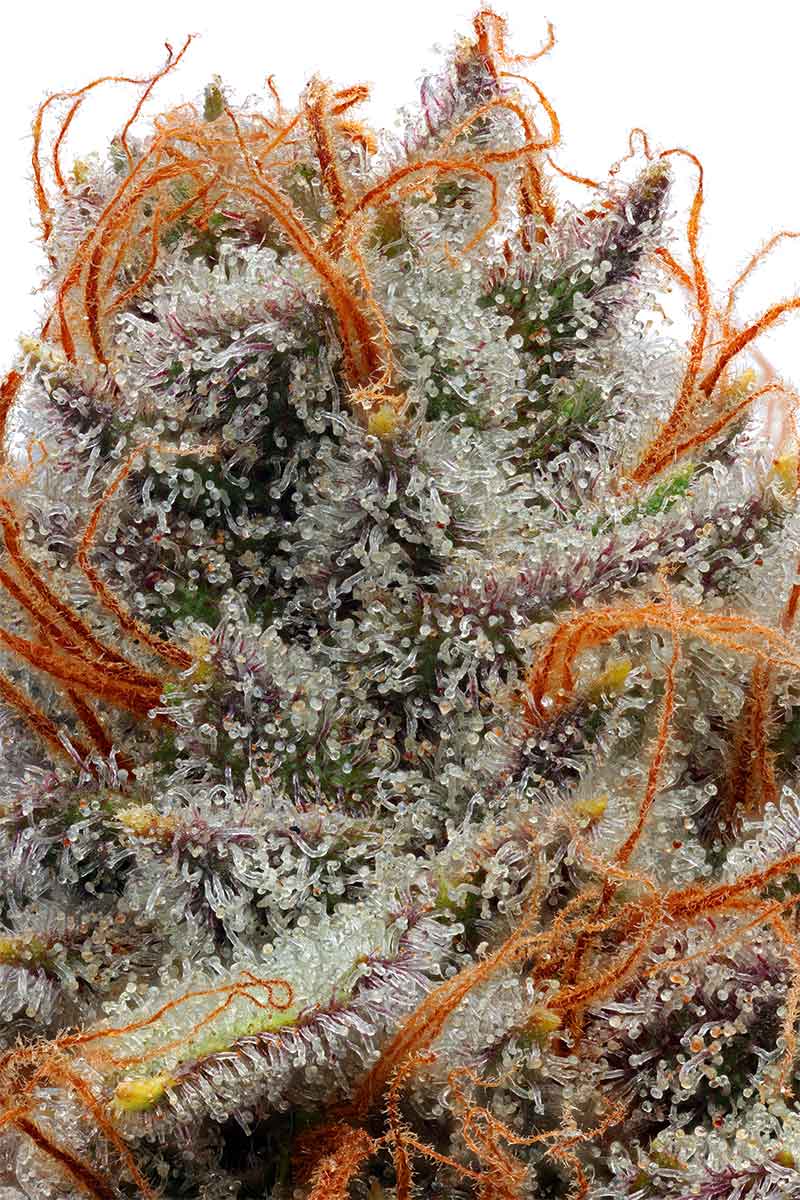
Blueberry Muffin PHOTO | Humboldt Seed Company

Despite these successes, Pennington employs a data-driven management style steeped in reality. “We have so much catch up work to do in cannabis breeding. In Humboldt, we’re starting over in a proper way,” he said during an exclusive interview with Cannabis Aficionado from his cannabis farm-come-genetics laboratory in Humboldt County, California.

Not satisfied with the state of cannabis genetics in the Golden State (the world’s sixth largest economy and one of the newest entrants to the legal adult use cannabis market), Pennington began investigating ways to bring together the brightest minds in cannabis cultivation and genetics research. His goal? To leverage his experience in genome annotation and DNA markers affecting plant behavior to push forward the science of commercial ganja genetics.

The Phenotype Mega-Hunt

Headquartered in the heart of Northern California’s fabled Emerald Triangle, Pennington’s response to California’s new cannabis legalization — and the threats and opportunities that it presents for small and mid-sized farmers in the region — has been to hunt and breed the best genetics in use for local farms and nurseries in the licensed marketplace.

He manifested his vision in the form of a phenotype mega-hunt, a type of biological scavenger hunt in which he and a team of subject matter experts, including scientists, cultivators, and breeders, launched a maniacally challenging and detailed search for the best and the brightest of the cannabis genome.

Thus was born the first phenotype mega-hunt in the heart of Humboldt County, widely recognized as the epicenter of outdoor cannabis cultivation in the United States (and home to an estimated 20,000 cannabis farms). This ambitious project began with 40,000 select cultivars, all unique seeds that were grown in a variety of environments for the special project, including open fields, greenhouses (some employing leading-edge light deprivation), and indoor gardens.

“Choosing the best out of 30 is different than choosing the best from 40,000,” said Pennington. He and his team narrowed their candidate field to 10,000 ideal females, from which they selected only the highest quality 0.5 percent of flowering plants. That involved he and his team carefully examining and disqualifying 200 plants for each they labeled a finalist. The group then systematically discarded 90 percent of the 500 to derive 50 top-shelf “winners.”

Phenotypic Variation

Cannabis breeders speak a language all their own. Their obsession with phenotypes, terpene profiles, and liquid chromatography testing knows no bounds. However, to appreciate the significance of a project such as Pennington’s phenotype mega-hunt, one need not possess a Ph.D. in molecular genetics.

Phenotypic variation is a topic near and dear to botanical geneticists and breeders seeking to create heartier and more robust plants of any type, including cannabis. Breeders and farmers naturally seek genetics in the form of seeds and clone plants that yield more cannabis resin or that feature larger volumes of particular molecules, such as cannabidiol (CBD) and tetrahydrocannabinol (THC).

However, modern legal cannabis breeders and craft cultivators desire many genetic characteristics other than large volumes of the infamously psychoactive molecule THC. These traits include resilience to disease, tolerance for harsh weather, and ample production of specific constituent chemicals, including non-psychoactive CBD and the more than 200 terpenes and 113 cannabinoids within the cannabis genome.
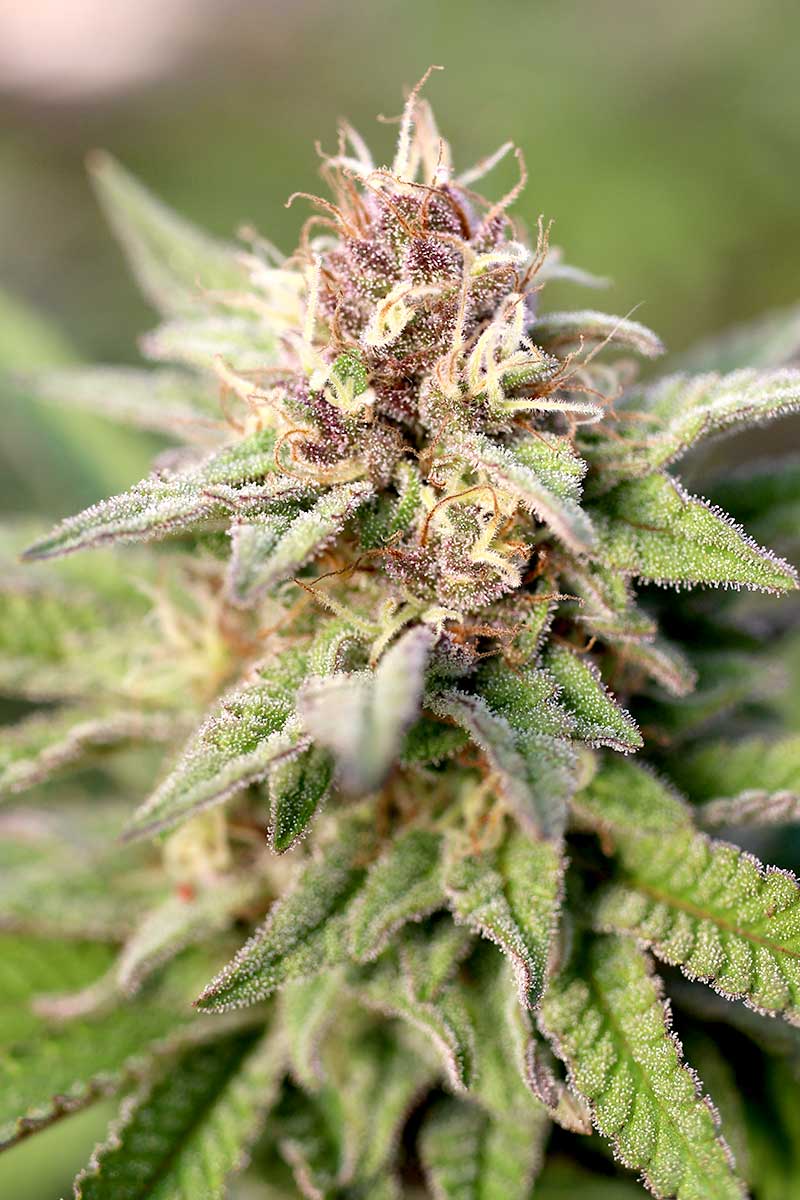
Tropical Paradise. PHOTO | Humboldt Seed Company

Data-Driven Genetics Research

Pennington emphasized the serious nature of the genetics research behind the phenotype mega-hunt and his personal mission to preserve and build upon the generations of cannabis breeding expertise that exists in the Emerald Triangle.

“Folks don’t come to us because we post cool videos of sports cars to YouTube or are mentioned by the latest rapper,” said Pennington. “Our customers seek us because we provide genetics that truly perform. Last year, we took the California clone community by storm with our Blueberry Muffin that we crossed in 2008, named in 2010, and have been stabilizing and fine-tuning ever since.”

Pennington emphasized the need for cultivators and the entire industry to recognize the relatively primitive state of the science of cannabis genetics knowledge in an effort to continually push the research envelope and improve breeding techniques.

HSC decided not to restrict access to the selected phenotypes that resulted from the 2018 phenotype mega-hunt. “If this project created 50 premium clone strains in 2018, why would we not do that again in 2019 and do an even better job?” said Pennington.

In the world of cannabis genetics, his ambitious vision aligns with the reality of science: The knowledge gained from the distinct population crosses of his first phenotype mega-hunt will serve to expedite future efforts. “Knowing that it’s a make or break situation for many of the state’s small farms, we felt a moral obligation not to restrict access to the best cannabis strains,” Pennington continued.

Phenotype Mega-Hunt and the Quest for Rare Strains

According to Pennington, the holy grail of cannabis breeding is the discovery and exploitation of rare genetic traits in an effort to develop new and stable cultivars. The overall goal is to develop strains capable of delivering to consumers novel medical efficacy, wellness benefits, or lifestyle enhancement.

When he began considering the state of the cannabis genome, Pennington knew that he needed to start fresh with a traditional breeding strategy to discover this plant’s true capabilities, outside the limits of prohibition and its disorganized underground markets. “We bring distinct, distant populations together in breeding to examine their ‘phenotypic array.’ Essentially, DNA reproduction loves new DNA! It loves DNA it hasn’t seen before…or for millennia,” he said.

Industrious organizations such as Humboldt Seed Company are discovering and combining rare cannabis genetics in the hope of producing traits and benefits that haven’t been seen. “As much as we’ll find things that are appealing, we’ll find things that are very unappealing,” said Pennington.

The pioneering cannabis genetics researcher completed our interview by offering some sage advice to those who might consider similar projects: “This isn’t for the weak-at-heart farmer. It’s a tremendous amount of work and diligence involving massive data collection and analysis. But it’s totally necessary to target and craft the most beneficial cultivars for the dual benefits of commercial viability and medicinal efficacy.”

When queried about the future of the Northern California’s legal adult use cannabis cultivation industry, Pennington assumed a pensive, yet optimistic, stance. “To survive, I think we must be as innovative as possible. Innovation is an area where the companies with the deep pockets don’t necessarily have an advantage.”

Cannabis

Israel’s Cannabis Trade Probe Moves Toward a Four-Producer Review

Israel’s latest procedural step puts four Canadian producers in focus, while the distinction between an investigation and an imposed trade duty remains essential.

Published

on

Shipping containers and cranes at a commercial port

Israel’s investigation of Canadian medical cannabis imports has reached another procedural stage, with four producers identified for closer examination, according to reporting on an October 22 notice. The development concerns how investigators will assess exporters. It does not, by itself, establish that dumping occurred or impose a new import duty.

Israel’s Cannabis Magazine reported that the trade-levies commissioner selected Koots Canna, 2323414 Alberta and Cielo Verde Quebec as a sample, with GrowCo to be examined separately. The outlet said it obtained the commissioner’s document. Cannabis Aficionado has reviewed the published reporting, rather than independently obtained that notice.

Why four producers are in focus

According to Cannabis Magazine, the three sampled growers represent about 22 percent of exports among the 16 indoor and hybrid growers that supplied data. GrowCo was singled out because of its greenhouse production and export volume. The report says the four together cover approximately 70 percent of Canadian cannabis imports into Israel during the relevant investigation period.

Those are descriptions of the proposed examination, not market-share figures that should automatically be applied to current retail sales. The reporting also describes a five-business-day response period for parties to comment. A reader should not mistake that opportunity to respond for a final ruling.

StratCann’s October 23 report adds that 22 Canadian companies supplied initial responses and 17 had exported during the investigation period. Its account says the commissioner considered individual calculations for every cooperating exporter impractical within the available time. Sampling is therefore central to this stage of the dispute.

What “dumping” means in this context

The World Trade Organization’s explanation of anti-dumping rules describes dumping as exports sold below their normal value, generally assessed against the exporting market. It is a trade-law pricing question. It is not an allegation that cannabis was contaminated, illegally cultivated or unsuitable for patients.

The comparison is more involved than placing two advertised prices side by side. The WTO describes adjustments that can be needed for differences in sale conditions, quantities, taxation and product characteristics. Its framework also requires consideration of material injury to a domestic industry and a causal link between that injury and dumped imports.

That makes production methods and comparable pricing relevant without making either conclusive. A greenhouse producer can have different costs from an indoor grower, but a cost difference alone does not settle all the questions required for an anti-dumping measure. The investigation has to establish the relevant facts through its process.

A dispute with several procedural turns

The latest review follows an earlier investigation that was closed in July. In a July 28 notice, Israel’s Ministry of Economy and Industry said the closure was for procedural reasons: advance notification had not been provided to the exporting country’s competent authority because of human error.

The ministry explicitly said that closure was not a substantive determination on the complaint. It also preserved the possibility of a further complaint or a new investigation. The distinction matters in both directions: closure did not establish that the allegations were correct, and it did not establish that they were disproven.

Cronos Group’s securities filing records a new complaint dated July 30, notification to Canada on August 2 and notice to the company on August 5 that a new investigation had begun. The company says it cannot predict the outcome or whether provisional or final duties will ultimately be imposed.

The filing also traces the earlier case to January 2024 and describes the finance minister’s opposition to the proposed duty in April 2025. It records subsequent court challenges as well. That history helps explain why earlier proposed tariff percentages should not be presented as the rate established by the October 2026 sample-selection step.

What changes for readers and businesses now

For businesses, the immediate development is a more specific picture of which exporters may receive detailed scrutiny. It is not enough information to calculate a new landed cost, predict a supplier’s future prices or announce an interruption to patient supply. Those claims would require additional evidence.

For patients and other readers, an investigation headline should remain separate from a product-safety headline. Nothing in this procedural selection establishes a health finding about a named producer’s cannabis. Nor does it establish a new prescription rule.

The next substantive items to watch are the commissioner’s treatment of responses to the sample, any published preliminary determination and any resulting measure. Reports available for this article describe sample selection, with no preliminary duty decision reported at that stage. Until a later document changes that position, the appropriate description is an unresolved trade investigation.

Illustrative stock trade photograph; not a documented cannabis shipment or an Israeli port. Photo: Andrea Musto / Pexels.

Continue Reading

Cannabis

New Zealand Cannabis Trial Takes a Longer Look at Sleep and Back Pain

A small University of Auckland study will compare a cannabis oil with placebo over months, separating an important research question from claims of proven benefit.

Published

on

Woman resting on a white pillow in a bedroom

Can a cannabis medicine improve sleep for people living with chronic back pain over several months? A University of Auckland study is examining that question, with a recent update from medicine supplier Helius drawing attention to an ongoing trial that has yet to report results.

The CPS trial is designed to compare a THC–CBD oil with placebo in approximately 20 adults. Its value lies in the comparison and the follow-up period: the research asks whether improvements hold up beyond an initial experience with a product, rather than treating a personal account of better sleep as proof.

An ongoing study, not a new treatment finding

In its October update, Helius describes a randomized, double-blind, placebo-controlled crossover trial. Participants are to receive the medicine for three months and placebo for three months, in a randomly assigned order. The company says it provides the study products but has no role in conducting the research, analyzing the data or reporting the findings.

Helius expects results in early 2028. That is a projected reporting window, not a completed result or a promise that the product will work. The announcement should also be distinguished from the trial’s start: the registry records a first participant enrollment date in October 2025.

What the researchers will measure

The Australian New Zealand Clinical Trials Registry entry identifies change in the Insomnia Severity Index as the primary outcome. Additional measures include pain scores and wrist-monitor estimates of total sleep time, time awake after falling asleep, sleep efficiency and the time taken to fall asleep.

Those measures address related but different experiences. Feeling that sleep has improved, spending longer asleep and reporting less pain are not interchangeable outcomes. Looking at them together can provide a more useful picture than a single headline about cannabis and sleep.

The registered design also includes a washout period between treatment phases. Because each participant receives both study products, the comparison follows the same person under different conditions. Randomizing the order helps reduce the risk that an improvement associated with time or treatment sequence is mistaken for a medicine effect.

What participation involves

The university’s recruitment page describes about seven months of participation, including questionnaires, urine testing and a wrist-worn sleep monitor. It seeks adults aged 25 or older with chronic back pain and sleep difficulties, subject to medical screening and approval from their general practitioner.

Eligibility is narrower than simply having a restless night. Other medicines and health conditions can affect suitability, and the researchers must assess those factors before enrollment. Readers interested in participating should use the university’s study contact to confirm current availability and requirements.

The public materials do not give a completely consistent visit schedule: the recruitment page mentions different visit totals in different sections. The registry was last updated in March 2026 and includes an anticipated recruitment endpoint that has passed. Those details make the study team the appropriate source for current logistics; they do not justify assuming that every advertised place remains available.

The registry lists the University of Auckland and the Australian and New Zealand College of Anaesthetists as funding sources. Identifying funding and product supply separately helps readers understand who supports the project and who is responsible for its scientific work.

Safety and consent remain part of the research

The participant information sheet names the University of Auckland as sponsor and Dr. Saad Anis as lead researcher. It describes the study oil as Helius THC10:CBD10 Full Spectrum and explains that the placebo does not contain THC or CBD.

The document emphasizes voluntary participation. Declining to join or withdrawing does not affect normal care, and participation may bring no direct benefit. Its screening requirements cover potentially interacting medicines and conditions that could increase side-effect risks, among other exclusions. This is supervised research, rather than a recommendation to copy a study regimen at home.

Quality standards do not answer the efficacy question

New Zealand’s Ministry of Health distinguishes medicinal cannabis quality verification from medicine approval. Meeting the minimum quality standard concerns product quality and consistency; it does not make a product an approved medicine or establish that it treats a particular condition.

That distinction explains why controlled research still matters even where cannabis products can be prescribed. A standardized product gives investigators something defined to test. It does not supply the answer in advance.

With a target of only 20 participants and a specific patient group, the CPS trial will need to be read within its limits. Any eventual findings will concern the tested formulation, population and study conditions. For now, the news is the effort to build that evidence carefully, with the clinical answer still ahead.

Illustrative stock sleep photograph; the model is not identified as a patient or trial participant. Photo: Los Muertos Crew / Pexels.

Continue Reading

Cannabis

Rubicon’s $3 Million Raise Puts Greenhouse Lighting at the Center of Expansion

The Canadian producer plans to expand output from existing facilities, with a lighting project bringing its combined capacity target forward to June 2027.

Published

on

Potted plants beneath the glass roof of a greenhouse

Rubicon Organics is putting new capital into the lights above an existing crop rather than announcing another cultivation site. The Canadian producer’s October 19 financing announcement outlines a roughly $3 million private placement intended to support lighting and related greenhouse infrastructure at its Pacifica facility in Delta, British Columbia.

The company expects the project to help bring combined annual capacity at Pacifica and its Cascadia facility to 20,000 kilograms by June 2027, about a year earlier than previously anticipated. That is a production target. Whether additional capacity becomes profitable, saleable flower will depend on execution, operating costs and demand.

What the financing is intended to fund

According to Rubicon’s announcement, Siwash Rock Investments subscribed for 6,666,667 common shares at $0.45 each. Proceeds are intended for the lighting project, with the balance going to working capital.

Rubicon says Pacifica’s annual capacity could reach 15,500 kilograms after the upgrade, a 40 percent increase at that facility. The 20,000-kilogram figure refers to both sites together. Those two numbers describe different scopes and should not be added together. Final TSX Venture Exchange acceptance remained outstanding in the announcement.

The operating background behind the project

Rubicon’s second-quarter results, released in August, provide context for the expansion. The company reported net revenue of C$18.5 million, up 23 percent year over year, while adjusted EBITDA fell 18 percent to C$1.1 million. Adjusted EBITDA is the company’s nonstandard earnings measure, not net profit.

Management attributed pressure on profitability to the ramp-up of Cascadia even as revenue grew. It also reported that Pacifica’s per-crop yield metrics had increased approximately 20 percent in the first half of 2026 compared with a year earlier.

Those disclosures show why output and earnings need to be examined separately. A business can sell more while still absorbing the expense of bringing a facility to its intended performance. The lighting investment adds another operational milestone to watch alongside the company’s reported financial results.

The August report put combined capacity at 15,500 kilograms before the planned lighting expansion. That earlier baseline helps clarify the October target: the same figure later describes Pacifica alone, while the combined target rises to 20,000 kilograms.

Why growers pay attention to lighting

There is a research basis for studying how additional light affects cannabis production. A 2022 study in Frontiers in Plant Science tested the THC-dominant cultivar Meridian under different light intensities in an indoor environment. Dry flower weight was higher under the strongest tested photosynthetically active light treatment than under the lowest.

However, the study found no corresponding effect of those intensity treatments on cannabinoid concentrations in the flower. Its ultraviolet treatments also provided no commercially relevant benefit under the tested conditions. More flower and stronger flower were separate questions.

The researchers cautioned that responses vary with genotype and production environment. Their findings explain why light is a serious cultivation variable; they do not independently verify Rubicon’s projected 40 percent increase. A controlled indoor experiment is not a performance test of Pacifica’s greenhouse or its proposed equipment.

The experiment also illustrates why a lighting announcement should identify what success means. In this case, increased dry flower weight did not demonstrate increased flower cannabinoid concentration, even though both measures could matter commercially.

The energy bill belongs in the calculation

A 2021 PLOS ONE study by Utah State University researchers makes another useful distinction. In experiments with medical hemp, the team compared lighting spectra and fixture efficiency. A tested white-and-red LED treatment produced slightly less flower per unit of growing area than a high-pressure sodium treatment, but more flower per dollar of electricity.

The authors concluded that fixture efficacy and upfront cost could matter more to investment returns than spectral distribution at high light levels. Their study also found no effect of spectral quality on CBD or THC concentration under its conditions.

For readers following a greenhouse upgrade, the practical implication is that kilograms alone cannot describe the result. Equipment cost, electricity use and the amount of usable production obtained from that energy all belong in the evaluation. Those research findings are background, not a specification for Rubicon’s project.

For broader demand context, our coverage of Canada’s August retail sales explains why national spending and an individual producer’s performance answer different questions. A market record does not validate a particular expansion forecast.

What will show whether the expansion works

The most useful follow-up will connect construction progress with actual operating results: whether the equipment is installed on time, whether yields improve consistently and whether the additional flower supports sales without eroding margins. Those are checkpoints, rather than outcomes established by the financing.

For cultivators, Rubicon’s plan offers a concrete example of pursuing more output within existing infrastructure. For consumers, the announcement does not guarantee a change in potency, availability or shelf price. The capital has been raised; the production and commercial results still have to follow.

Illustrative stock greenhouse photograph; not Rubicon’s Pacifica facility or a cannabis crop. Photo: Albina White / Pexels.

Continue Reading

Trending

Join The Cannabis Aficionado Community!
Join the Cannabis Aficionado community and receive all of the most relevant news geared towards our sophisticated enthusiast community.
Loading

Copyright ©️ 2026 Cannabis Aficionado. Cannabis Aficionado is a registered trademark of CNM Inc. All rights reserved. Registration on or use of this site constitutes acceptance of our Terms of Service, Privacy Policy and Cookies Policy. People may receive compensation for some links to products and services. Offers may be subject to change without notice.