#cannabisaficionado

Cannabis

New Zealand Cannabis Trial Takes a Longer Look at Sleep and Back Pain

A small University of Auckland study will compare a cannabis oil with placebo over months, separating an important research question from claims of proven benefit.

Published

on

Woman resting on a white pillow in a bedroom
Advertisement Back2Grow Advertisement

Can a cannabis medicine improve sleep for people living with chronic back pain over several months? A University of Auckland study is examining that question, with a recent update from medicine supplier Helius drawing attention to an ongoing trial that has yet to report results.

The CPS trial is designed to compare a THC–CBD oil with placebo in approximately 20 adults. Its value lies in the comparison and the follow-up period: the research asks whether improvements hold up beyond an initial experience with a product, rather than treating a personal account of better sleep as proof.

An ongoing study, not a new treatment finding

In its October update, Helius describes a randomized, double-blind, placebo-controlled crossover trial. Participants are to receive the medicine for three months and placebo for three months, in a randomly assigned order. The company says it provides the study products but has no role in conducting the research, analyzing the data or reporting the findings.

Helius expects results in early 2028. That is a projected reporting window, not a completed result or a promise that the product will work. The announcement should also be distinguished from the trial’s start: the registry records a first participant enrollment date in October 2025.

What the researchers will measure

The Australian New Zealand Clinical Trials Registry entry identifies change in the Insomnia Severity Index as the primary outcome. Additional measures include pain scores and wrist-monitor estimates of total sleep time, time awake after falling asleep, sleep efficiency and the time taken to fall asleep.

Those measures address related but different experiences. Feeling that sleep has improved, spending longer asleep and reporting less pain are not interchangeable outcomes. Looking at them together can provide a more useful picture than a single headline about cannabis and sleep.

The registered design also includes a washout period between treatment phases. Because each participant receives both study products, the comparison follows the same person under different conditions. Randomizing the order helps reduce the risk that an improvement associated with time or treatment sequence is mistaken for a medicine effect.

What participation involves

The university’s recruitment page describes about seven months of participation, including questionnaires, urine testing and a wrist-worn sleep monitor. It seeks adults aged 25 or older with chronic back pain and sleep difficulties, subject to medical screening and approval from their general practitioner.

Eligibility is narrower than simply having a restless night. Other medicines and health conditions can affect suitability, and the researchers must assess those factors before enrollment. Readers interested in participating should use the university’s study contact to confirm current availability and requirements.

The public materials do not give a completely consistent visit schedule: the recruitment page mentions different visit totals in different sections. The registry was last updated in March 2026 and includes an anticipated recruitment endpoint that has passed. Those details make the study team the appropriate source for current logistics; they do not justify assuming that every advertised place remains available.

The registry lists the University of Auckland and the Australian and New Zealand College of Anaesthetists as funding sources. Identifying funding and product supply separately helps readers understand who supports the project and who is responsible for its scientific work.

Safety and consent remain part of the research

The participant information sheet names the University of Auckland as sponsor and Dr. Saad Anis as lead researcher. It describes the study oil as Helius THC10:CBD10 Full Spectrum and explains that the placebo does not contain THC or CBD.

The document emphasizes voluntary participation. Declining to join or withdrawing does not affect normal care, and participation may bring no direct benefit. Its screening requirements cover potentially interacting medicines and conditions that could increase side-effect risks, among other exclusions. This is supervised research, rather than a recommendation to copy a study regimen at home.

Quality standards do not answer the efficacy question

New Zealand’s Ministry of Health distinguishes medicinal cannabis quality verification from medicine approval. Meeting the minimum quality standard concerns product quality and consistency; it does not make a product an approved medicine or establish that it treats a particular condition.

That distinction explains why controlled research still matters even where cannabis products can be prescribed. A standardized product gives investigators something defined to test. It does not supply the answer in advance.

With a target of only 20 participants and a specific patient group, the CPS trial will need to be read within its limits. Any eventual findings will concern the tested formulation, population and study conditions. For now, the news is the effort to build that evidence carefully, with the clinical answer still ahead.

Illustrative stock sleep photograph; the model is not identified as a patient or trial participant. Photo: Los Muertos Crew / Pexels.

Health

Iowa Medical Cannabis Board Backs Removing Patient Sales Tax

Iowa’s advisory board has backed seven medical cannabis recommendations, including ending patient sales tax. Legislative action would still be needed.

Published

on

Iowa State Capitol in Des Moines, with its gold central dome, smaller domes and green lawn

Iowa’s Medical Cannabidiol Board has backed removing sales tax from medical cannabis purchases, placing patient cost among its recommendations for the state’s next legislative discussion. The board voted November 6; the recommendation became the subject of new reporting November 13.

Patients should not read the vote as a tax exemption already available at the dispensary. The board advises policymakers. Its recommendation still needs to move through the process that changes Iowa law before it can alter what a customer owes.

The Marijuana Herald reported that Iowa Health and Human Services spokeswoman Danielle Sample confirmed seven unanimously approved recommendations in an email to that publication. Those proposals range from tax treatment and terminology to prescribing oversight and the products the program permits.

Patient cost moves onto the policy agenda

Removing sales tax would address one component of the amount a patient pays. It would not, by itself, set a product’s base price, lower the program’s registration fee or guarantee a particular amount of household savings.

That distinction is especially relevant in a medical program where participation has its own administrative costs. The state’s patient guidance currently lists a $100 application fee, with a $25 fee for eligible applicants. Cards expire after one year. Those are separate requirements from sales tax on purchases.

A patient comparing the proposal with today’s expenses therefore has several different numbers to consider: registration, the price of the product and tax. A recommendation about one should not be presented as a reform of all three.

The board’s November meeting presentation also put participation in context. It showed 17,974 active patients in January and 17,698 in September, a decline of about 1.5 percent. Those figures describe enrollment at two points; they do not establish why people joined, left or bought less cannabis.

Seven recommendations, with different consequences

The November 6 presentation, prepared by HHS cannabis regulation bureau chief Owen Parker and available in a copy hosted by an Iowa advocacy organization, lists the seven recommendations. Alongside eliminating patient sales tax, the board backed renaming Chapter 124E the Medical Cannabis Act.

The terminology proposal would align the law’s name more directly with the program’s subject. Renaming a statute, however, is distinct from expanding the products available under it. The board also reaffirmed its opposition to raw flower, so the package should not be mistaken for a recommendation to create a flower market.

Two further recommendations address tax equality for licensed businesses and a federal exemption related to potential rescheduling. Those concern the industry’s legal and financial environment. They are separate from the proposed exemption at the patient checkout, even though all involve the economics of medical cannabis.

The remaining recommendations concern prescribers’ access to patient purchase histories and oversight of telemedicine. Access to records and remote care can affect how a program operates, but the board’s vote does not itself supply a new prescribing procedure for patients to follow today.

What Iowa currently allows

The state’s patient guidance describes a program built around authorized preparations rather than raw cannabis flower. It lists vaporizable cartridges and concentrates, oral and sublingual forms such as tablets and tinctures, and topical preparations. It identifies raw flower for combustion or smoking and certain edible products as prohibited.

That existing framework helps explain why the board’s flower position matters. A tax recommendation can be significant for patients while leaving the range of authorized products unchanged. A lower checkout burden and broader product choice are different policy decisions.

Participation also requires certification and a state application. HHS identifies several eligible practitioner types, including physicians, physician assistants and advanced registered nurse practitioners. The recommendation package does not replace those current entry requirements or create automatic eligibility for anyone who wants to buy cannabis.

Where the proposal goes from here

HHS describes the board’s role as advisory and requires an annual report by January 1. Its membership includes eight physicians and one law enforcement representative. The department’s calendar independently confirms the November 6 meeting date.

The next meaningful development will be a legislative proposal or another formal action that translates a recommendation into enforceable language. Until then, the accurate description is that the board supports removing patient sales tax, rather than that Iowa has removed it.

For readers following our coverage of state cannabis rulemaking, the distinction is familiar: an official vote can move policy forward without opening a new service or changing a consumer’s rights immediately. Iowa patients have a concrete cost proposal to watch, with its practical effect still dependent on what lawmakers do next.

Stock view of the Iowa State Capitol in Des Moines; not the November 6 board meeting. Photo: Pixabay / Pexels.


Continue Reading

Science

Massachusetts Wants Cannabis Labels to Show When Flower Has Been Remediated

A proposed testing overhaul would make remediation more visible to Massachusetts cannabis shoppers. The rules still need public comment and final adoption.

Published

on

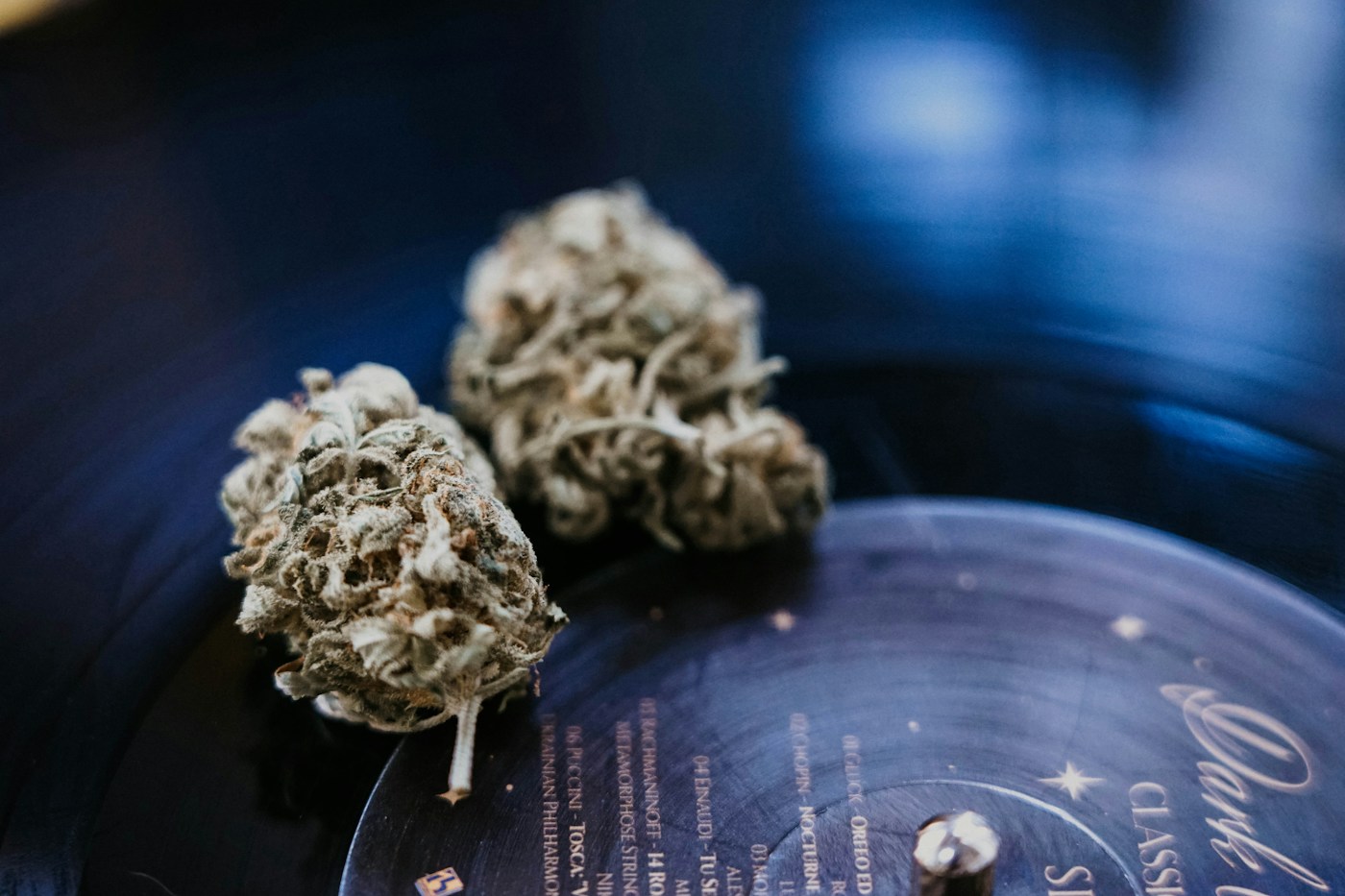
Two cannabis buds resting on a vinyl record

Massachusetts cannabis shoppers could eventually see a new distinction on product labels: whether the cannabis they are buying has been sanitized or remediated. It is one of the most consumer-facing elements of a testing overhaul that the Cannabis Control Commission advanced on November 12.

The decision moves draft regulations forward; it does not put a new label requirement into effect this weekend. The commission expects another draft approval in December, public comment in January and final promulgation in April 2027. Its proposed six-month implementation period would put the new testing framework into operation around October, if that timetable holds.

The Marijuana Herald covered the development November 13, following the commission’s announcement the previous day.

A processing history shoppers could actually see

In its November 12 announcement, the commission included labeling for products that have undergone sanitization or remediation. That would bring information about treatment closer to the point of purchase, where consumers already compare cannabinoid numbers, package sizes and prices.

Those details answer different questions. A potency figure describes cannabinoid concentration. A remediation disclosure describes part of a product’s processing history. Neither should be treated as a substitute for the other, and a disclosure alone would not establish that a particular product is unsafe.

The practical value is visibility. A customer could ask what treatment was used and why, rather than having to infer processing history from a brand name or a high THC percentage. The final wording, placement and implementation requirements will matter because a disclosure is useful only if buyers can recognize and understand it.

Failed tests would get an automatic second look

The commission also advanced a requirement for laboratories to automatically retest failures before issuing a certificate, with the stated aim of distinguishing an actual regulatory failure from a laboratory error. That is a proposed quality-control step, not permission for retailers to sell a failed batch while waiting for a better result.

The same package would require compliance testing before business-to-business as well as business-to-consumer sales. For shoppers, that is largely an upstream safeguard: testing obligations would attach before cannabis moves through commercial transactions, rather than being considered only at the final retail counter.

The draft further shifts microbial testing toward identifying specified organisms. The choice of what a laboratory measures is consequential. A test can be technically precise while still answering a narrower question than a consumer imagines when reading that a product has been tested.

These changes appear within a larger proposed testing framework, 935 CMR 503. The October meeting materials provide background on that work; the November announcement sets out the commission’s latest direction. The documents should be read as stages of rulemaking, rather than interchangeable descriptions of rules already in force.

Why the THC number is part of the background

Massachusetts has already confronted a separate question about how well potency labels match independent measurements. In an audit released August 13, the commission examined 63 flower products from 62 producers. Thirteen fell outside the state’s acceptable range of 75 to 125 percent of labeled potency.

That range is relative to the label claim, not a 75-percent THC minimum. For a product labeled 15 percent THC, the commission illustrated an acceptable range of 11.25 to 18.75 percent. Reading those numbers correctly matters before drawing conclusions about a package.

The audit was a defined sample, not proof that every Massachusetts product was inaccurately labeled. Nor is the November rulemaking announcement a new blanket recall. Together, however, the two developments show why laboratory reliability and the information reaching consumers are both on the commission’s agenda.

The next consequential step is public comment

The proposed overhaul would also eliminate the Standards Laboratory license type. Further work on sampling and pesticides is expected in 2027, which means this package should not be described as the final resolution of every testing issue in the market.

For now, consumers can follow the commission’s testing and analysis information and distinguish current requirements from proposed changes. Laboratories and licensees will need to examine the actual final text before treating the projected implementation date as a firm deadline.

The rulemaking is separate from the commission’s tentative timetable for cannabis lounge applications. Both concern the market’s next stage, but they regulate different activities. For the everyday shopper, the testing proposal’s clearest promise is more understandable information about the cannabis inside the package.

The January comment period would give patients, adult-use shoppers and businesses a chance to question those details before final adoption. Someone concerned about label clarity could focus on the disclosure language; a laboratory could address the retesting process. Those are concrete issues to evaluate when the next draft becomes available.

Stock photograph of cannabis flower; not a Massachusetts product or testing facility. Photo: Elsa Olofsson / Unsplash.

Continue Reading

Cannabis

Illinois’s Hemp Rules Take Effect With a Limited Enforcement Pause for Challengers

The November 12 change and a limited agreement in the federal lawsuit are different developments. Here is what the state’s guidance and the filing actually say.

Published

on

A calculator, receipt, glasses and stationery on a desk

Illinois’s new hemp framework reached its November 12, 2026 effective date, changing the legal treatment of many consumable and topical THC products. For cannabis shoppers and retailers, the central distinction is now the product’s statutory classification, rather than whether its packaging calls it hemp. A separate agreement in a federal lawsuit gives certain challengers a limited enforcement pause; it does not establish a statewide postponement.

The Illinois Department of Revenue’s October bulletin says products containing more than 0.4 milligrams of total THC per container no longer qualify as hemp under the new framework. Such products fall into the cannabis system, where both the seller and the product must satisfy the Cannabis Regulation and Tax Act. The department expressly distinguishes Illinois’s November date from the later federal timetable.

Why the federal delay is not a statewide extension

Section 65 of the Illinois act gives the federal provision priority only where the act conflicts with 7 U.S.C. 1639p as of November 13. That is a conflict rule, rather than an express extension of every Illinois deadline. Section 1639p governs hemp-production plans and preserves more stringent state production laws. Separately, Congressional Research Service explains that most federal definition changes were delayed until December 11, with certain non-naturally occurring cannabinoids excluded earlier. Reading these provisions together does not establish a blanket Illinois postponement. That distinction is consistent with Revenue’s stated enforcement position; an actual conflict or later judicial ruling requires separate analysis.

The lawsuit agreement is narrower than a general delay

Our earlier report covered the businesses asking a federal court to stop the law. A November 6 joint status report in case 26-cv-13799 adds a consequential detail: state defendants agreed not to take Hemp Act enforcement action against the named hemp-company plaintiffs, including the association’s members, through November 19. The document makes that agreement subject to terms reached by the parties and delivery of a membership list as of November 6.

The joint filing describes an arrangement between the litigants while briefing and a decision are pending. It should not be presented as a final ruling that the law is invalid, nor as permission for every Illinois retailer to continue its previous sales practices. Businesses cannot infer that they are covered simply because they sell a similar product.

The parties’ proposed schedule listed a state response on November 13, a plaintiffs’ reply on November 17 and argument on November 19. Those dates describe the filing’s requested process. They are not a prediction of how the judge will decide the emergency request. Further orders or agreements could change the position.

A container limit changes the shopping question

The state guidance uses a limit per container. That differs from a limit per serving, so a low-dose serving statement alone does not answer whether a bottle, bag or other package qualifies. Total THC also reaches beyond a label’s delta-9 number: the agriculture department identifies THCa and several other cannabinoids with similar effects in its explanation.

For a reader comparing products, the useful questions are therefore specific. What cannabinoid quantities apply to the entire container? Is the product being sold through the appropriate channel? Does its certificate of analysis identify the relevant batch? A familiar brand or a hemp-derived claim does not resolve those questions by itself.

The Department of Revenue says qualifying final consumer hemp cannabinoid products can still be sold under the Illinois Hemp Act. The distinction is not that every hemp product has become cannabis. It is that products must fit the new definition and meet the requirements for their category.

Qualifying hemp products still have obligations

The Department of Agriculture’s October update identifies conditions beyond the THC threshold. Final consumer hemp cannabinoid products cannot contain the prohibited synthetic cannabinoids, alcohol, tobacco or nicotine, and cannot be intended for smoking or vaping. They must be prepackaged rather than assembled with other consumables at the point of sale.

Testing, labeling and packaging requirements also matter. State guidance calls for batch testing, a certificate of analysis accessible through the label, required cannabinoid and serving information, and sealed child-resistant packaging. It bars health claims and misleading or child-oriented presentations. A product falling below the numerical threshold is not automatically compliant in every other respect.

For businesses, the transition also distinguishes activities. Agriculture guidance says existing industrial hemp processor registrations expire under the old framework, with different new licenses for non-cannabinoid processing and cannabinoid manufacturing. Existing hemp cultivation licensees retain their licenses and renewal dates; the department says cultivation rules are unchanged at this stage.

What deserves attention next

The immediate story has two tracks: implementation of the statutory framework and the challengers’ request for court relief. Readers should watch for an actual court order or a documented extension of the agreement, rather than treating the filing of a motion as a victory on the merits.

Meanwhile, the state’s published guidance remains a useful starting point for understanding why shelves and distribution arrangements may change. It is guidance, not a replacement for the governing statutes or a later court decision. The practical lesson is precision: the law’s effective date, a limited enforcement agreement and authorization to sell a particular product are three different things. Readers following the case should check the scope and dates of any later court document before drawing conclusions about its effect on a particular business.

Illustrative business-recordkeeping stock photograph; not an Illinois inspection or cannabis business. Photo: Cht Gsml / Unsplash.

Continue Reading

Trending

Join The Cannabis Aficionado Community!
Join the Cannabis Aficionado community and receive all of the most relevant news geared towards our sophisticated enthusiast community.
Loading

Copyright ©️ 2026 Cannabis Aficionado. Cannabis Aficionado is a registered trademark of CNM Inc. All rights reserved. Registration on or use of this site constitutes acceptance of our Terms of Service, Privacy Policy and Cookies Policy. People may receive compensation for some links to products and services. Offers may be subject to change without notice.