The cannabis retail landscape has changed. Once regarded as somewhat of a novelty, legalization has allowed cannabis dispensaries to evolve into modern and innovative retail storefronts more akin to an Apple Store than the dark, secretive spaces they used to be. Some, like Shiny Bud, are proving to be leaders in the space, setting an exemplary standard of a contemporary cannabis retail experience.
Shiny Bud is one of Canada’s most successful dispensary chains. They pride themselves on offering customers a premium experience from the moment they enter, from a contemporary and inviting store design to highly trained staff, and of course, premium products.
Co-founder Alex Ledesma joined the cannabis industry when the Canadian government passed the Cannabis Act in 2018. She comes from a forward-thinking family of entrepreneurs, so the move to cannabis was an obvious next step.
“I saw an opportunity to be part of something big in Canada’s history, so we started following the industry, and applied for an application,” said Ledesma.
Shiny Bud opened its first dispensary in Toronto on February 14. Fast forward only a few months, and the company has opened the doors to its fifth location in a small town called Orleans, just outside of Ottawa.
“We have a pretty aggressive rollout,” said Ledesma. “Coming from a quick-service industry, we’re quite comfortable with builds and finding locations. We took our expertise from that and put it into cannabis. And it’s all completely within the family.”
Shiny Bud was awarded 75 dispensary licenses by the Canadian government. The company’s expansion plans include two more Ontario store openings this year, bringing the total number of store openings to seven. And they have no plans to slow down.
“We should be hitting 30 stores by the end of 2021. And we’re planning on maxing out to 75 stores allocated. When we stop to think about it, it can take our breath away.”
The constant march forward of legalization has created an ever-growing interest in dispensary ownership. Below, Ledesma offers up five pieces of advice for those looking to enter the cannabis game.
1. Have a Well-Trained Team That’s Focused on Customer Experience
As the industry is still so young, formal education in cannabis is still relatively scarce amongst prospective employees. For Shiny Bud, this presents an opportunity to reinforce one of their most important business objectives: provide cannabis education and training for their budtenders to pass on to their customers.
“Education is everything because the industry’s so new,” Ledesma said. “We truly believe that we’re an industry where we need to listen to our guests. This is one of the first things we teach our budtenders, along with providing a safe and educational experience for our customers in-store.”
For many customers, the biggest value in going to a dispensary is learning which products are best suited for a specific condition or effect, whether they’re seasoned cannabis consumers or newly curious.
“The goal for budtenders at Shiny Bud is to ensure customers are choosing the right product for them to provide a safe experience both in-store and at home,” Ledesma said.
2. Create a Guest Centric Environment
This goes without saying, but customer service is critical to the success of any retail operation. Ledesma attributes Shiny Bud’s success to the brand’s core vision of providing a “fast and friendly cannabis retail destination.”
“We strive to offer our customers a unique and memorable experience — this has stayed with us since day one,” Ledesma said. “When you walk into any of our Shiny Bud cannabis dispensaries, they’re bright, they’re big, and there’s a lot of education. The budtenders are dressed uniformly, and there’s personality — it’s not what people expect.”
Watching the change in customer demographic has been encouraging to Ledesma, who notes the increase in the 60+ demographic looking to add cannabis to their health and wellness, whether it be recreational, or to aid with a specific ailment.
“As a disclaimer, we always have to tell them that we’re not doctors and we can’t give them medical advice, so to start low and go slow,” Ledesma said. “It’s nice to see people like my mom, my dad, and grandparents come through the door, because you also know you’re helping break down the stigma.”
Shiny Bud cannabis dispensaries are bright and clean, with plenty of quality products and customer education opportunities.
3. Stock the Best Inventory
With so many quality products now available, choosing which ones to bring to Shiny Bud is quite a lengthy process.
“We carry out a lot of research in terms of what’s new or trending, and what our customers are looking for in each location,” Ledesma said. “I wish I knew consumers’ buying preferences before our initial order was placed. We ended up buying too much!”
“We also use recommendations from our team members, our budtenders, and our customers. A lot of times we bring in representatives of the licensed producers to educate our budtenders about the products we’re selling.”
The three most popular purchases across three Shiny Bud locations are dried flower, vapes, and pre-rolls. “Our most frequently asked question is, ‘what is your highest THC or CBD?’” Ledesma said.
4. Have a Great Location
The age-old proverb of “location, location, location” rings true in the cannabis industry, too. Finding the right real estate is arguably the most important part of retail success. Plus, because of the industry’s prohibition history and the nature of the products being sold, it’s important to find understanding landlords.
“Initially, landlords have said to us, ‘absolutely not, we will not entertain the idea of having a cannabis retailer here,’ so I invite them to take a look at one of our dispensaries so they can see the vision of what and who we are as a company and as an industry.”
5. Ensure Your Cannabis Dispensaries Connect with the Community
Dispensaries are already major focal points in their communities. For Ledesma, giving back and helping break down old stigmas related to cannabis is a top priority.
Shiny Bud is in the process of launching a collaboration with Tsaichedelicto create a line of tie-dyed tees and other merchandise. The proceeds will go towards supporting Cannabis Amnesty projects, like providing legal counsel to get those with criminal records over minor cannabis charges expunged.
“Being a woman and a person of color in the cannabis space, I really believe in the fact that it needs to be the same playing fields for everybody,” Ledesma said. “Teaming up with Cannabis Amnesty just felt right.”
With the regulated cannabis market still so new, it’s important that business owners are able to adapt to changes and weather the ever-changing landscape of cannabis and the regulations.
“It’s ever-changing, so we’re constantly learning and growing from it,” Ledesma said. “Regulations are always changing, so being fluid helps a lot.”
Look for Shiny Bud cannabis dispensaries in Canada and keep an eye out for their expansion into America in 2021.
Massachusetts Maps a Tentative 2027 Start for Cannabis Lounge Applications
The latest implementation plan separates lounge applications from event-organizer licensing, with local opt-in and operating approvals still central to the process.
Massachusetts’s latest cannabis social-consumption implementation materials point to March 2027 for supplemental and hospitality license applications, followed by event-organizer applications in June. The timetable offers a clearer planning horizon for cannabis lounges and related businesses, but it is explicitly tentative. It is not an announcement that particular lounges will open in March or that current venues can begin allowing consumption.
The commission’s January announcement established the basic structure. Supplemental licenses are intended to let qualifying existing marijuana establishments add on-site consumption at their business locations. Hospitality licenses create a route for qualifying applicants, including businesses that are not currently cannabis establishments. Event-organizer licenses address temporary consumption events.
Those categories matter because a café, an existing dispensary and a temporary gathering face different practical questions. A business looking for a permanent designated area is not necessarily pursuing the same license or operating plan as an organizer arranging an event. A general reference to cannabis lounges can obscure those distinctions.
The November presentation places supplemental and hospitality applications on the same target launch month, while giving event-organizer work a later milestone. Readers should keep those dates attached to the appropriate category rather than treating June as the timetable for every venue or March as a promise about every event.
Regulations and available applications are separate milestones
The commission says its social-consumption regulations took effect January 2, 2026. Its implementation project then had to develop the machinery that supports licensing: application materials, IT changes, responsible vendor training, inspection requirements, public information and coordination with municipalities.
That sequence explains an apparent contradiction in the public discussion. The existence of regulations does not mean a business can already obtain every necessary license. Equally, the future launch of an application process would not mean all applicants are immediately authorized to open their doors.
The November meeting materials list work on architectural and structural-change forms, consumer information cards, hospitality application and inspection requirements, and event-organizer compliance planning. They also identify review of four responsible-vendor-training applications. Those are implementation steps, not four approved cannabis lounges.
Local permission remains a gate
The commission’s municipal guidance says communities must opt in to social consumption through lawful local action. Municipalities can decide which license classes and consumption-area types to permit. Local authorization is therefore a substantive part of the process, rather than a detail that follows automatically from the state’s timetable.
The meeting materials include a municipal zoning-tracker form intended to help applicants and the public understand local authorization. The form expressly says that submitting information does not constitute commission approval of a specific establishment. A town appearing in a tracker should not be mistaken for an announcement that a named venue is ready to operate.
Host community agreements and other local requirements may also apply. For a prospective operator, that makes the useful planning questions local as well as statewide: what has the municipality authorized, what site requirements apply, and which approvals would still be necessary for the proposed business?
An equity-focused opening period
The commission’s published framework reserves the initial licensing opportunity for qualifying equity participants and specified smaller cannabis business categories. Its January announcement identifies Social Equity Program participants, Certified Economic Empowerment Priority Applicants, microbusinesses and craft marijuana cooperatives.
The announced exclusivity period runs for 36 months beginning when at least one licensee in each social-consumption class has received authorization to commence operations. It should not be described as a period that simply began when the regulations took effect in January. The trigger affects how the initial opportunity is understood.
What the next update needs to show
The November presentation identifies staffing capacity, technology requirements, competing initiatives and project-management demands as risks. Its target dates are therefore best read as planning milestones that depend on completing the remaining work, not guaranteed opening dates.
For readers following our Harvest Cup coverage, the broader point is also useful: a cannabis-oriented event and an authorized consumption setting are different things. A festival’s theme does not establish its permissions. Massachusetts’s developing system is intended to create a defined route for particular licensed settings.
The next meaningful evidence will be finalized applications and guidance, clear local authorization, and later notices allowing individual operators to commence operations. Until then, March and June provide a tentative map of the licensing project—not an invitation to assume that consumption is permitted at an existing café, hotel or event.
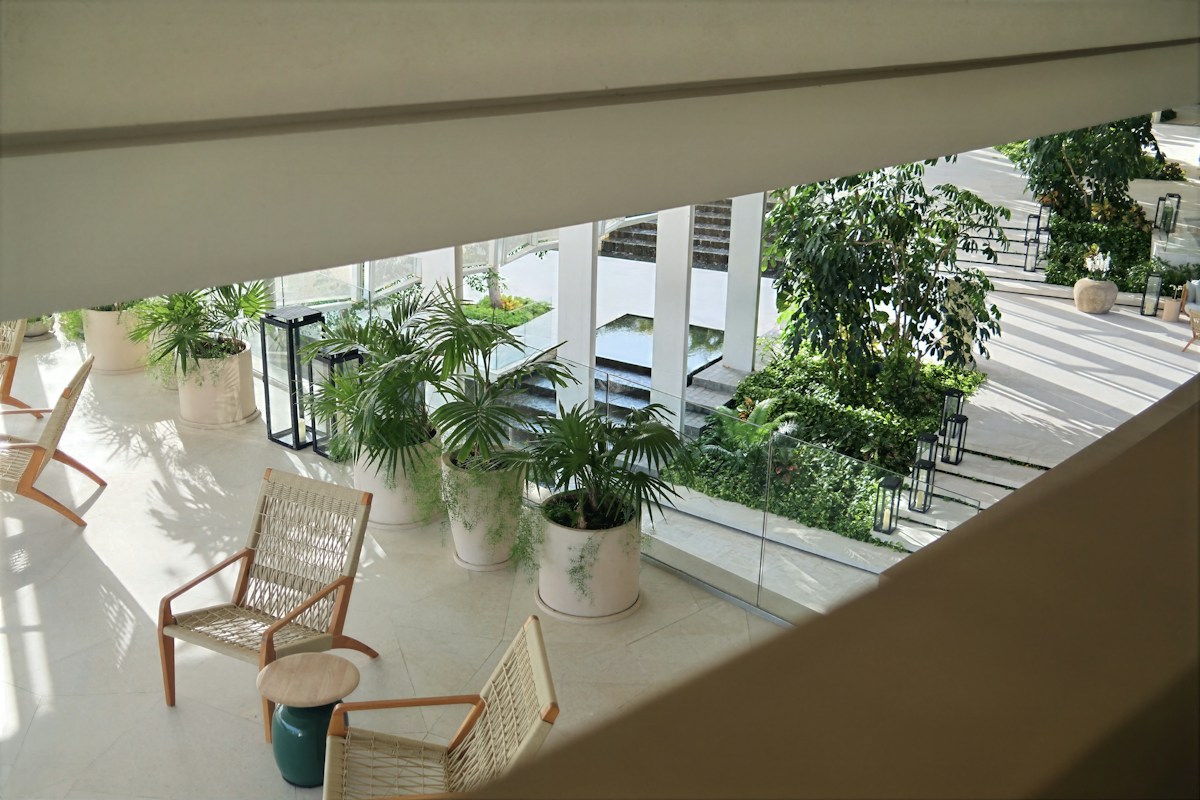
Illustrative hospitality-interior stock photograph; not a Massachusetts cannabis lounge or an approved consumption site. Photo: Tamara B / Unsplash.
The Cannabis Industry Council’s awards dinner is scheduled for tonight, November 11, at the Honourable Artillery Company in London. Its cannabis connection is direct: the evening recognizes people working across the UK’s medical cannabis sector, from patient support and pharmacy to research, environmental practice and leadership.
The organizer’s current event page confirms the Wednesday date and venue. This is a preview of the published program, not a report from inside the ceremony. No award recipient should be inferred from a shortlist before the council announces the results.
Nominations for this edition closed in September. An event page that still describes nomination opportunities should not be read as a new chance to enter tonight’s awards; the current timetable and ceremony information take precedence.
Recognition extends beyond a company’s name
The council’s original nominations announcement says the awards recognize individuals rather than companies. That gives the evening a different emphasis from a product competition or a ranking of cannabis brands. The subject is the work people contribute to the sector.
That distinction matters in an industry where consumers often encounter a clinic, product or retailer before learning who supports the service. An individual award can draw attention to work that sits behind a familiar business name without establishing that the entire company is superior to every alternative.
The format also creates room for contributions that are difficult to summarize through sales figures. Helping someone navigate a service, improving a professional process or explaining evidence can matter even when those activities do not produce a headline about a large commercial deal.
Eight categories describe a broad professional community
The published categories include Unsung Hero, the Hannah Deacon Doctor of the Year, Contribution to Social Impact, Pharmacist of the Year, Contribution to Science, the Green Award, Customer Service and Industry Leader of the Year. Together, they place clinical, scientific and operational work alongside advocacy and environmental concerns.
The award named for Hannah Deacon recognizes patient care, according to the council’s description. The science category concerns contributions to understanding cannabis, while the environmental category addresses sustainability. Those are distinct kinds of achievement, and an award in one category should not be read as proof of an unrelated claim.
For example, recognition for customer service would not constitute a clinical trial, just as a scientific contribution would not tell a prospective patient everything about a clinic’s appointment process. The category is part of the meaning of the recognition, not a detail to drop from the eventual winners list.
The judges describe evidence as part of the standard
In the council’s introduction to its judging panel, judges emphasize demonstrated contribution, professional standards and delivery rather than visibility alone. The listed panel includes Professor Mike Barnes, Jamie Bartley, Frances Crewdson, Tom Gray, Nick Pateras, Callie Seaman, Luisa Searle and Heidi Whitman.
These are the organizers’ stated criteria and their panel’s perspectives. They explain what the competition aims to recognize; they are not an independent audit of every nominee’s work. Readers can value professional recognition while still asking what specific contribution led to it.
The useful follow-up after an awards night is therefore more than the name of the winner. What did the person do? Who benefited? What evidence supports the achievement? Those questions turn an honor into a story readers can understand rather than simply repeat.
A formal evening with a practical focus
The event is presented as an awards dinner with entertainment and networking. The current page invites guests to dress for the occasion but says a formal black-tie dress code is not required. Attendees should use the organizer’s current listing for access and practical details rather than assume an older ticket offer remains available.
That presentation places cannabis professionals in a familiar cultural setting: a shared evening recognizing peers. The interest lies in how a developing sector chooses to describe good work and which kinds of contribution it brings into public view.
Our preview of MEDICA’s cannabis-counseling workshop follows another professional gathering, with a different purpose and audience. Training, research and recognition are separate activities, but each can reveal what a cannabis-related professional community considers important.
Wait for the results, then look at the work
The council’s published timetable places the ceremony after the nomination and judging periods. The current story is that the event is scheduled to take place, not that a particular person has won. A results report will require an actual announcement from the organizer.
For now, the evening’s structure offers a clear view of the subjects being celebrated: patient-facing work, scientific understanding, responsible operations and leadership. The most meaningful coverage after the ceremony will connect those category names to concrete achievements, keeping the contribution in focus alongside the celebration.
Vermont Opens Its Cannabis Event Lottery Window November 16
A regional lottery will select retailers for the next stage of Vermont’s event-sales pilot, with local approval and detailed operating plans still required.

Vermont cannabis retailers will soon be able to enter a lottery for a pilot program that could move regulated sales beyond the conventional dispensary. The Cannabis Control Board says the submission window opens November 16 and closes November 30, 2026, with a regional drawing planned for its December 16 meeting.
The cannabis connection is the substance of the program: selected retailers can seek permission to administer off-site events where registered cannabis products are displayed and sold. That is a more limited proposition than an open-consumption festival. The adopted procedure expressly preserves Vermont’s prohibition on public cannabis consumption.
The first step is a preliminary application from a qualified retail cannabis establishment. There is no fee to enter the lottery. The board nevertheless asks businesses to enter only after reviewing the requirements and deciding they have both the capacity and intention to host a compliant event.
The procedure divides the state into five regions and requires a retailer to apply within the region where it is located, for an event in that region. For each region, a final applicant is selected from qualified preliminary applicants by lottery. The procedure also allows first and second runners-up to be selected.
Selection leads to the full application stage, rather than automatically authorizing sales. That later application includes required documentation, standard-form municipal approval and a $500 application fee. Final approval is determined by a board vote. The procedure allows no more than ten event permits per year, a ceiling that should not be confused with a promise that ten events have already been approved.
Local approval and retail experience matter
An event can take place only in a municipality that has voted to authorize cannabis retail sales. The applicant must also obtain written approval for the planned event from the relevant municipal authority. That approval can include conditions addressing public protection, traffic and nuisance concerns.
Applicants must demonstrate good standing and tax compliance. The procedure’s definition includes at least six months of continuous, compliant operation, an appropriate compliance history and reliable recordkeeping. A newly imagined event concept, without the required retail credentials and operating capacity, is therefore not enough.
The operational burden also reaches the retailer’s existing shop. Except for the specified case of an event contiguous with the licensed retail location, a permit holder cannot conduct sales at its shop and the event simultaneously. Businesses weighing participation will need to consider staffing and the effect on normal operations.
Culture can be part of the setting
The procedure allows the board to authorize responsible integration with commercial and cultural offerings. It gives examples including musical artists and vendors serving food or nonalcoholic beverages. Vendors and their employees working at the event must be at least 21, and vendors must hold any other required permits or licenses.
Those possibilities do not remove the program’s boundaries. Settings that sell or furnish alcohol for on-premises consumption are unsuitable, as are settings that appeal to people under 21 or encourage the expectation that public cannabis consumption is authorized. The procedure also identifies activities requiring heightened coordination or judgment, such as the start of a sporting competition, as problematic contexts.
For readers following events such as The Harvest Cup in Massachusetts, the distinction is useful: a cannabis-oriented gathering and a government permit to sell cannabis are separate questions. Vermont’s pilot creates a specific approval route, not a general rule for every cultural event.
The practical plans behind a public event
Security and product-sale plans must explain how inventory, money, staff and access will be managed. The rules address preventing entry by intoxicated people and anyone under 21, protecting products from diversion, and keeping cannabis products out of general public view. They also require inventory tracking arrangements, including accurate records if connectivity is lost.
The product plan has a further market-access requirement: at least 40 percent must meet the procedure’s unaffiliated-product standard, applied by stock-keeping units within specified product categories. Medical cannabis products cannot be promoted or sold at an event. Liability insurance must cover the event location and activities.
For now, November’s deadline is a preparation milestone. No event date, location or participant list follows automatically from it. The next meaningful development will be the regional selection, followed by complete applications and board decisions that show what this tightly bounded experiment will look like in practice.
Stock landscape photograph of Stowe, Vermont; not a proposed or approved cannabis event site. Photo: Rafael Rodrigues / Unsplash.