Industry Innovators
Peter Barsoom: Engineering Edibles & Elevating Expectations
Published
3 days agoon
By
Melissa Reid
Continuing cannabis legalization has seen a boom in innovation and product development. One of the categories that has benefited the most is edibles. Gone are the days of freaking out from one too many weedy brownies. Modern edibles are healthier and more effective, in direct response to consumer demands. They are discreet, measured and the consumer experience and expectations can be precisely dialed in.
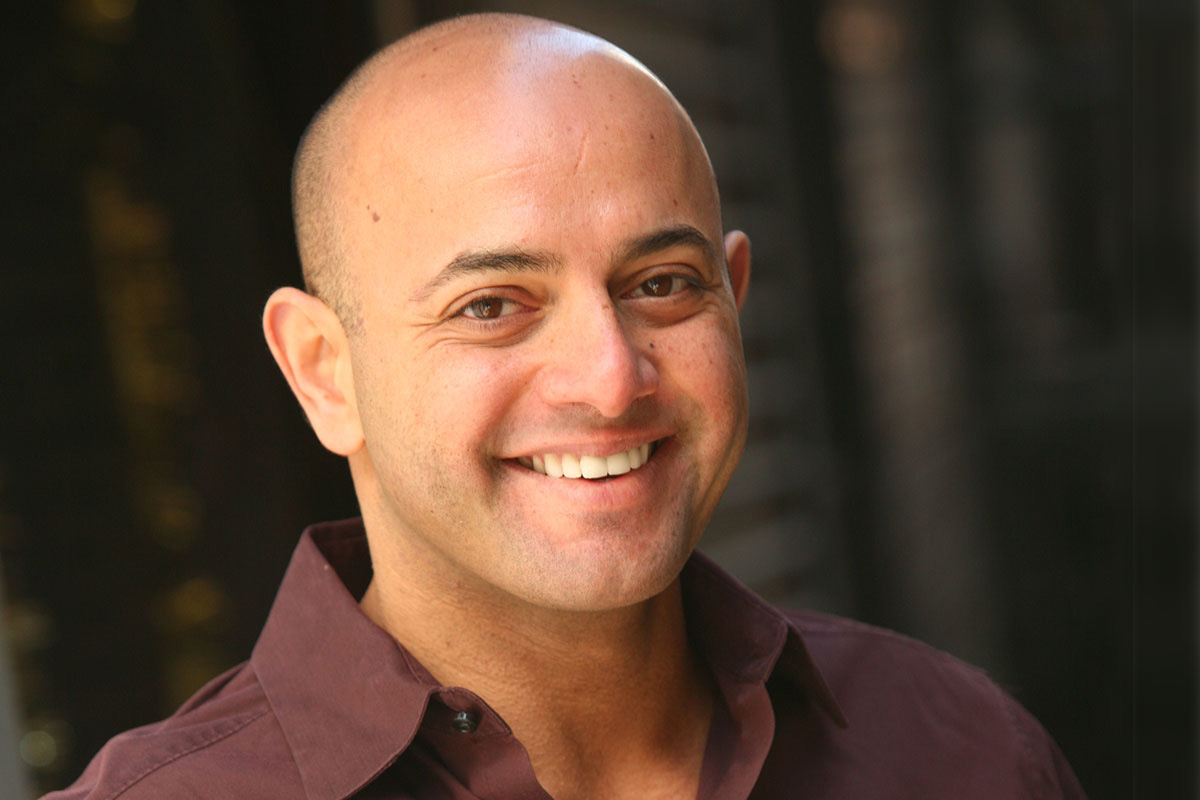
Peter Barsoom is the CEO of 1906, one of Colorado’s most successful and innovative edibles companies. 1906 has just released a groundbreaking product that marks a quantum leap for cannabis medicine: 1906 Drops that utilize pharma technology.
Cannabis Aficionado spoke to Barsoom about being first to market, his stance on social responsibility and cannabis entrepreneurialism.
Tell us about your journey through entrepreneurship and how you found your way to cannabis?
Prior to cannabis, I spent 20 years in finance in New York. The idea of getting into the cannabis market was really my wife’s idea. We came up to Colorado in mid-2014 and immediately realized how amazing the quality of the flower that was available to consumers. We wanted to create an edibles experience that was parallel to the amazing flower we had available to us — that’s when we started 1906.
Can you tell us a little about the name 1906?
1906 was the year the Wiley Act — also known as the Pure Food and Drug Act — was passed, which effectively started the prohibition of cannabis. Our mission is to do two things: bring awareness to the last 100 years of prohibition and also to bring cannabis back to its pre-prohibition status as a mainstream substance.
In your own words, what makes 1906 different from other edible companies on the market?
We focus on three things to attract a larger group of cannabis consumers for whom it could be an alternative for either alcohol or pharmaceuticals
Number one is great flavor. Because our product is food, it should taste like food and be healthy like the food we want to put in our bodies.
Two, it should deliver a specific effect. People use cannabis not just for getting high. People use it to help with sleep, give some relief from pain, help with anxiety, a boost of energy — there’s a specific reason why you or I use cannabis and it’s not just for “getting high.”
Third is that it’s fast-acting. Because I’m a New Yorker, I believe patience is a virtue and you shouldn’t have to wait for 60 minutes to 90 minutes for your edibles to kick in.
Can you go into detail on your patented ‘microencapsulation technology’ and the role it plays in your edibles?
Microencapsulation is the technology that we utilize that comes from the pharmaceutical world. Pharma knows how to make drugs get into your system faster. Or, in some cases, the extended release version.
We licensed the technology from a Canadian bioscience company, which is called a lipid microencapsulation. What that means is, by combining cannabis with the medium-chain fatty acid, it allows it to bypass or skip digestion, and get into your bloodstream faster.
Also, it avoids the degradation of the cannabinoids by your stomach acid, so you get more of the cannabinoids into your bloodstream. You could almost think of it is as like a bullet train, where the cannabinoids are passengers that get into your bloodstream much faster and are protected more than the normal digestion.
Tell us about your exciting new product, the first medical cannabis pills on the market?
Yup, that’s correct. It really is very simple. At one level, it’s revolutionary. Another level, it’s as normal as anything else.
As Americans, we have four and a half billion prescriptions annually. Most of those come in what format? Pills that we swallow. The predominant way that Americans take medicine is in a pill form. It could be your pill for your cholesterol, your pill for sleep, your pill for anxiety. It was always odd to me that as cannabis is medicine, why wasn’t it available in the traditional medicinal format?
The second thing came from our consumers, which is that our consumers were asking for a vegan, gluten-free, portable, discreet way to take 1906. Maybe it’s somebody who can’t take chocolate because they have hypoglycemia, or they’re somebody who’s going out on a hike and can’t take chocolate pretzel because those will melt. There were a whole bunch of cases and demands from consumers for different products.
Pills are the way that we Americans consume our medicine. So, Drops was born from that work, bringing to the market a discreet, portable, vegan, gluten-free, something-you-can-swallow format.
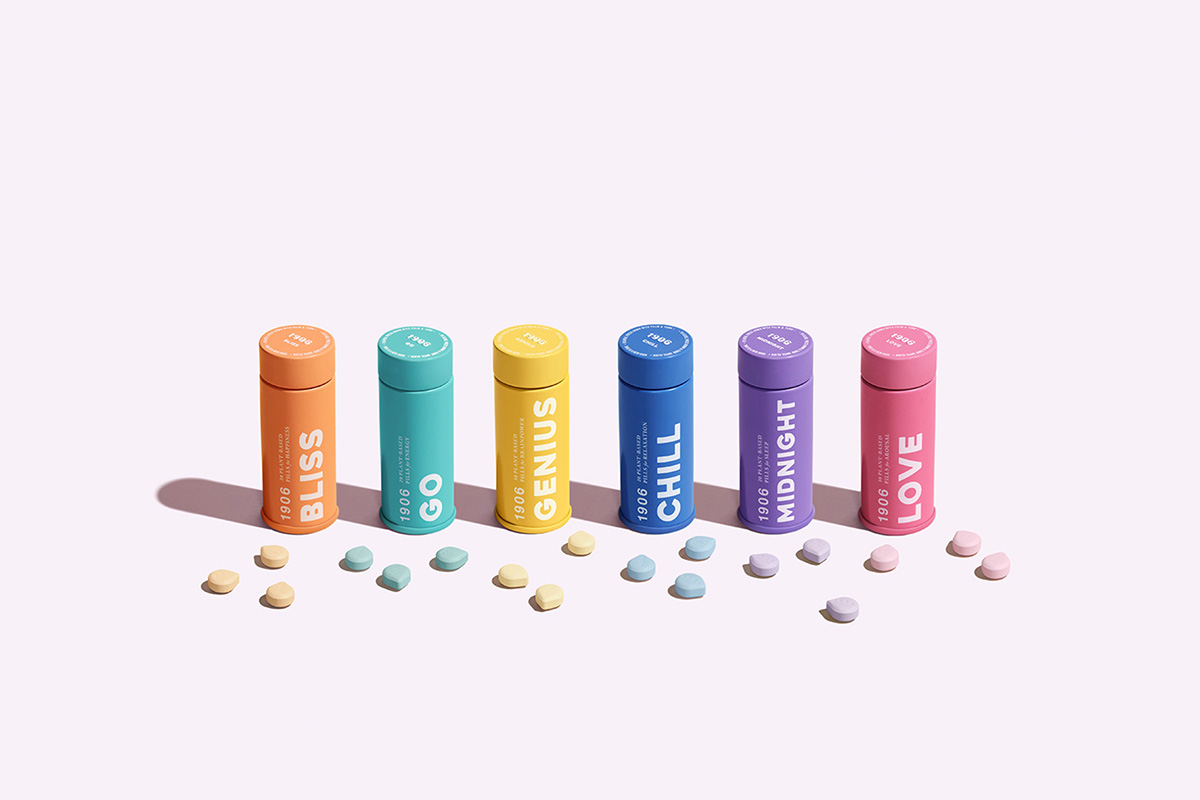
Drops are the first cannabis pills on the market.
So, you’re reaching a new audience that doesn’t necessarily buy edibles or smoke flower or vape. But they’ll happily take a cannabis pill.
So true. For a lot of people, it feels more accessible and acceptable in that format.
How’s the response been?
Phenomenal. We’ve had great, great feedback from the stores, and from our customers, so far. We have something that will resonate.
Where are they currently available?
Only in Colorado.
Any expansion plans?
Massachusetts, Michigan, Illinois and New Jersey will all be rolling out over 2020. Those are very exciting markets. There’s a great demand for these products in the new, young markets that are beginning to legalize. We can build the brand on the East Coast.
Can you tell us more about your GROW cannabis program?
We’ve developed a program called GROW Cannabis, which stands for Generate Real Opportunity for Working in Cannabis. This is for those individuals who’ve been negatively impacted by the War on Drugs. It was never a War on Drugs — it was a war on people. The people who’ve been negatively impacted, who are now out in society, their lives have been significantly damaged. The opportunities lost, the time that they spent in prison and so forth, is truly an injustice.
We think we have a responsibility to help those who’ve been incarcerated, to get back into society, through employment. This industry will create thousands of new jobs. Why not create a training program, so those people can gain real employment in this industry? So that’s what we’re doing. We’ll be launching next year in New Jersey, to get the program right and then we’ll be rolling it out in other areas.
As a New Yorker, what are your thoughts on the current situation in that state?
It’s hard. Every other state, besides Illinois, has done it through a ballot intuitive. It is very hard… it’s so political. I totally get it, the challenges they have. It takes a little while. It will happen. It takes like two years.
How can the cannabis industry, as a whole, be better?
I think it’s about remembering the community and how we got here. We got here because a lot of people were unfortunately incarcerated. That makes for a unique perspective. How we give back to the community? We’re creating a new industry, so we get to write new rules for it.
What trends do you predict for cannabis, going into the ‘Roaring Twenties’?
You know, I have… all I know is, it’s all being dictated by consumers. That’s where we’re seeing changes. The demand for legalizing, the demands for social use, the delivery, other options like that. If we’re looking into where consumers are, that’s what predicts what the future looks like.
With your experience, what do you see happening in the cannabis industry 1, 5 and 10 years from now?
I think in the next year, we’ll see something happen at a federal level — maybe not legalization, but maybe banking. In 10 years, we’ll start to see places where people can consume both cannabis and alcohol, in the same place. That will transform social use. It will transform how we gather… I think we will see beverages be a much larger way in which people consume cannabis.
What do you wish you knew when you started out cannabis entrepreneurship?
I wish knew how hard it was going to be. In retrospect, maybe I don’t wish? Maybe if I knew how hard it is, I might not have… but it is some of the most rewarding five years of my life.
Finally, what are three things people don’t know about what it takes to be a cannabis entrepreneur?
I think, number one, it will take more time and money than you can possibly predict. Number two: believe in what it is that you’re doing and listen to consumer demand. Keeping the consumer at the center of things, you’re more likely to be successful. Number three: I get a lot of advice from other folks in the business. This is one of the friendliest industries I’ve ever been a part of.

Featured
Brett Stevens: Lighting the Way for Indoor Cultivators
Brett Stevens of Fohse is on a mission to make his company’s name synonymous with hi-tech LED grow lights for the cannabis industry.
Published
3 days agoon
June 23, 2026
At Fohse, meeting the challenges faced by indoor cannabis cultivators with superior lighting solutions is the prime directive. It’s a niche that co-founder and CEO Brett Stevens says is rife with opportunity for those with the talent to innovate. A serial entrepreneur with several successful exits in new and emerging markets under his belt, Stevens is now firmly focused on the cannabis industry.
“I originally got into the farming side of it, and I could definitely see where at that time, five or six years ago, there were so many holes that needed to be filled. It was kind of like, pick a side and go with it,” Stevens told Cannabis Aficionado.
The sector he believed had the most potential to impact the cannabis industry was engineering, and Stevens had kept his ear to the ground for tech opportunities, specifically for cannabis. So, when an engineer friend shared his design for advanced LED lighting, he saw a chance to bring value to a nascent industry.
Unapologetically Pro-Cannabis
For Las Vegas-based Fohse, the vision is to continually expand the tech in the cannabis industry, and Stevens is proud and unapologetic about the company’s focus.
“We’ve pigeonholed ourselves into the cannabis industry. We didn’t create the light for any other plant,” he explained. “We are sold on the plant. We’re sold on the medical purposes of the plant, and we really want to be there as the plant is more readily explored.”
In order to be true innovators, Fohse doesn’t settle for the services of outside engineers. Instead, the company has its own in-house engineering team creating cannabis lighting solutions from the ground up. Stevens touched on SolidWorks, a 3D computer-aided design (CAD) program, that Fohse’s engineering team uses for their technical drawings.
“We do all our material science, and we do all of our material engineering to make sure that the materials we’re using to dissipate heat or to project that photon where it needs to go [are sound]. We’re doing all that in-house.” he explained.
A Company Driven by the Question, “What If?”
Stevens noted that he’s not one to micromanage his executive team though. Instead, he said that his leadership style is to assemble a solid corps of professionals and let them go to work. And as inspiration, he encourages his engineers to continuously ask, “What if?”
“What if we could do ten pounds a light?” he wondered aloud. “What if we could do four micromoles per joule? How would we do that?”
“We’re consistently thinking, ‘How can we be more efficient, and more powerful?’ And I think that’s what drives me,” he added.
According to Stevens, the combined talent and drive at Fohse are producing the most advanced LED lights available to cannabis cultivators. And that’s not just an assertion. It’s a claim that is backed by the company’s research.
“We are literally the most powerful and the most efficient light in the world right now,” Stevens said, adding that Fohse has done grow ops where they have bought and tested every single competitor’s light.
“There’s no question,” Stevens states confidently. “We will outgrow anything on the market.”
Creating an Industry Standard for Indoor Cannabis Cultivators
When his company entered the business, Stevens says the light manufacturing industry was racing to the bottom, with everyone trying to produce the cheapest lamps that would still grow cannabis. But Fohse took a different approach altogether.
“We looked at it more like, ‘What if we put massive power supplies and 5,000 diodes in a light?’ and ‘What if we could replicate indoor sunlight?’” he explained, adding that they focused closely on grams per square foot.
“Because in the end, that’s what it comes down to, right?” he asked. “If you have a finite amount of space, the more you can grow in that area, the more productive and the more successful you’ll be.”
Constantly striving to increase productivity and efficiency for indoor cannabis cultivators is what the team at Fohse is all about. And that drive, Stevens says, will become increasingly evident when the company’s products are known as the industry standard.
“I think that we’re hungry, that we’re always advancing. We will not stop until we will reach the absolute pinnacle,” he pledged.
Industry Innovators
Casey Georgeson: Setting a Higher Standard for Clean, Green Beauty
Published
3 days agoon
June 23, 2026
Casey Georgeson is the CEO and Founder of Saint Jane, a luxurious, 100% clean CBD beauty collection that has taken the CBD beauty category by storm since its launch in January 2019.
You could say entrepreneurialism is in her DNA. Coming from the Ernest and Julio Gallo wine family dynasty, Georgeson has spent her career developing beauty brands for Sephora, including Marc Jacobs, Disney for Sephora as well as the hugely successful wine brand, Cupcake Vineyards.
Georgeson is passionate about the powerful benefits of CBD and whole plant science. I spoke to her about her journey to becoming a cannabis entrepreneur, the importance of transparency and the story behind Saint Jane.
CA: Tell me about your journey through entrepreneurship and how you found your way to cannabis.
Casey Georgeson: My family has a history of entrepreneurship. My great-grandmother was a mail-order bride from Italy (yes that was a real thing!) who came over in the 1900s. She and my great-grandfather grew grapes in the San Joaquin Valley with their seven children. At the end of The Prohibition, still in the Great Depression, she saw an opportunity to use their vineyards for winemaking. She took out a $10,000 loan, using the farm as collateral. She gave $5,000 to her sons, the Franzia brothers, to start a winery; and $5,000 to her son-in-law, Ernest Gallo, to start a winery with his brother, Julio.
Essentially, a 4’10” mail-order bride started two of the largest wine companies out there. That story always resonated with me and even though I never had the chance to meet her — I’ve always admired the confidence it must have taken to do that as a woman in the 1930s. My uncle was also an entrepreneur and I learned a great deal from him throughout the years, watching him create a business.
I started my career as a producer for CNN and got into the wine industry as a brand creator where I developed a brand called Cupcake Vineyards. I went to business school at Stanford and interned at Sephora. It was there that I had this extraordinary training in the beauty industry and in product development and formulations. Once I graduated, I worked at Kendo, Sephora’s brand incubator. My role was to sit as the liaison between the brands we partnered with — Marc Jacobs, Elizabeth and James, Disney, Hello Kitty, Kat Von D— and articulate their vision in the world of beauty and that would ultimately lead to the building of their brands.
I had been creating brands for many years and thought I want to create my own brand at some point. It might be beauty. It might be wine. I just knew I wanted to do something on my own, but it had to be a really big idea.
When I discovered CBD in 2017, I first began really thinking about creating my own brand. It all started when I read a PopSugar article on CBD. The headline was, NATURE’S XANAX MEETS ADVIL. I was like, what is this natural miracle molecule? I immediately went to the dispensary and said to the budtender, “Show me everything you have that’s high CBD, low THC.” They showed me all these products that were really crunchy and hippie. Some formulated for the skin, some ingestible. This was in 2017.
Next to all these products that the budtender put out, was a list of all the things CBD was purported to do. You know that list, it’s very impressive and kind of shakes you to your core. Inflammation. Pain. Sleep. Anxiety. Gut health. Sleep. I thought, ‘If CBD does even one of these things, it is truly one of the most powerful skincare ingredients of our time.’ For topical use, most of the products dealt with pain management and were paired with MCT oil, because it was the easiest and it’s what was most commonly used for ingestibles. But, at the time, nobody was formulating with true skincare ingredients that would be at the level of something you would find at a luxury retailer.
That’s when I saw the opportunity. I would pair CBD with other really potent botanicals, that support the CBD mission for the skin, I knew it was an incredible idea. I went deep into learning about CBD and botanicals and Saint Jane was born.
What a journey! Can you tell me a little about the name Saint Jane?
Saint Jane has two meanings.
One, it’s the innocent side of Mary Jane, because CBD will not get you high.
Two, Saint Jane was an actual person in 1500s France. She was anointed into sainthood for healing people. Specifically, healing women, which society would otherwise never touch: the old, the very sick, unwed mothers. She dedicated her whole life to healing. Her story has been very inspiring to us because our products focus on nurturing, healing and we have a very authentic female empowerment story, as well. I have three daughters and the company is comprised of all women.
It’s truly a gift to have Saint Jane’s legacy as a foundation for the brand. Our approach is healing-centric and the way we’ve expressed that through the brand feels very authentic.

How amazing that you can pay homage to somebody who otherwise would’ve been forgotten in the mists of time, that’s beautiful.
The idea of reimagining this woman who was so important to society and culture for her to devotion to helping people, through this modern lens, is really inspiring. I had 16 years of Catholic school, yet I’m not religious. But this has inspired a renewed faith for me… in our own mission for women as Saint Jane.
What makes Saint Jane different from other CBD skincare products on the market?
I think the biggest difference is the way we’ve crafted the products. It’s about the whole plant story and other botanicals that we pair with CBD. It’s not just CBD for the sake of it. We thoughtfully match CBD with botanicals that support the cannabinoid’s mission of calming, soothing and nurturing the skin. The botanicals work in concert.
We’re also passionate about full-spectrum CBD — the whole plant extract — because we believe in the entourage effect. Rich endocannabinoid receptors in the skin benefit from those minor cannabinoids found in full-spectrum products.
We also believe in higher concentrations of CBD. When we started, there were a lot of debates around topicals and dosages. It felt so instinctual to me that a higher concentration would be most efficacious for the skin. My background in beauty taught me about performance and the end benefit. If your product works, you’re going to have people come back to you. I believe that our results-driven formulas really express that.
We’re also 100% clean. Our philosophy around clean is also non-negotiable. My second daughter was born very small, underweight. It’s called ‘Small for Gestational Age’ (SGA). We were terrified by that because my older daughter had been born at a normal weight. Juliet was shockingly tiny. We kept trying to figure out why and one of my doctors asked if I had been exposed to any chemicals while pregnant. At the time, I was developing fragrances, nail polishes. So, I flashback to those windowless offices where I was developing those products and I couldn’t tell anyone I was pregnant yet — it was my first trimester. In the end, we’ll never know; it was inconclusive if there was a correlation. But since then, clean has been non-negotiable and if I was going to create my own product line and collection, it needed to be as clean as it gets. My daughter is amazing and thriving today, but I never would want someone else to go through that. Clean is essential to our ethos.
Transparency and testing are the last ones. Trust is important to us. It took me a long time to get comfortable with the vendors and suppliers that I chose when I started Saint Jane. Back before the Farm Bill, it was really like the Wild West. I didn’t know who to trust as I was getting these packages of white powder delivered to my home. Or these full-spectrum extracts in syringes. I went through my own vetting process with vendors. My mission was to find the best of the best. I retested everything myself with third-party vendors and was shocked to see what I received was often different from what the paperwork stated.
That integrity of testing has stayed integral to the brand since we launched. We test four times during the supply chain to make sure everything is matching up and that we can stand behind everything were putting out there. Every batch is different and we have to stay true to that dedication to the integrity behind it.
Saint Jane has just been stocked by Sephora stores. Congratulations on such an amazing achievement. Can you tell me about that process?
Sephora has been an amazing partner, they’ve been incredibly insightful about our brand, they see our potential, so it’s been really rewarding to work with them. Being in Sephora stores is a huge validation. We’re still so small, still so indie and we are just getting started. Even though I had Sephora experience, I didn’t think they’d take a little brand like ours within our first year. It’s very full circle for me and we’re so grateful for their partnership.
The retailers we work with have been incredibly supportive across the board, too. As a CBD brand, we can’t operate like other normal indie skincare brands with Facebook, Instagram and Google advertising, so our retailers have been our storytellers. They’ve been our platform for brand awareness. We feel so grateful.
You recently announced Dr. June Chin has joined the team as your Chief Medical Advisor. Can you tell me about what that means for Saint Jane?
Dr. Chin is a recognized name in the cannabis space. She’s a longtime advocate of CBD and its healing potential — and not just in skincare. Because we pride ourselves on clean clinical-grade formulas, it made sense to partner with a doctor who shares our passion. She’s just been next level on understanding the power of the plant and has a background in plant-based medicine. CBD is one of the many plant-based ingredients that she’s passionate about. It’s been extraordinary to see the product through her eyes and getting it right as we don’t want to take a misstep on information. We want to make sure we’re architecting the narrative of CBD’s efficacy in the right way.
Who is Saint Jane aimed and why?
I would say we hope to reach people who want to transform their skin, with the powerful benefits of CBD. People are becoming more and more aware of CBD’s potential and we have an extensive range of customers who use it and are loyal to us. Luxury Beauty Serum is our hero product and it’s focused on skin condition and treatment. It has 20 botanicals that all focus on reducing irritation, balancing and detoxifying the skin. We have customers in their twenties through to their seventies who are all using our products and seeing results.
If you’re having a bad moment with your skin, it can impact on your confidence. It must be amazing to have made something that has an impact on someone’s life.
Hearing from customers has been the most rewarding thing since starting the brand. I talk about it a lot with my team. That’s why we’re doing it, to help people. And that’s the legacy of Saint Jane that we’re trying to honor.

What’s next for Saint Jane?
We have so many things coming up on the horizon. I have more ideas than I’m allowed by my team to bring to market. It’s really about staying focused and disciplined on what we bring to market, to make sure that everything we introduce meets our standards.
How do you think the cannabis industry as a whole can be better?
For one, there is a lot of product out there that is not being produced and marketed responsibly. The products that work and are responsibly crafted are going to rise to the top and gain customer loyalty. I think as an industry we are architecting transparency and how brands communicate integrity. As an industry, we need to make sure we can have standards that ensure quality, education, transparency and as much consistency as we can with a highly botanical product. I want founders, I want companies, other brands to rise to the occasion, to honor the potential of CBD.
As the saying goes, “the rising tide will lift all ships” and that’s what I believe will happen.
What trend do you predict for the CBD and cannabis skincare market in the next five years?
My biggest hope is that CBD is regarded as a skincare ingredient like Vitamin C or Peptides. That’s number one. It deserves a place in that roster.
Number two, there are so many benefits to the minor cannabinoids found in the plant, like CBG and CBN. I think we’re just getting started in terms of understanding the benefits found in the entire plant. As a brand, we’re looking deeply into that. There are benefits that have not been fully explored yet. It’s exciting and in the next year, the next five, we’re going to learn a lot about the minor nutrients in the whole plant.
People like you are setting the standard of this next generation of cannabis products.
Thank you, we’re trying. And, we are willing to put in the work to accomplish this.
What do you wish you knew when you started out in cannabis entrepreneurship?
I think there’s entrepreneurship and then there’s cannabis entrepreneurship. I would say with entrepreneurship, you have to be so comfortable with ambiguity and uncertainty. Becoming a founder is committing to a lot, essentially a new life. You’ve got to be ready to ride the rollercoaster, get used to not sleeping. The cannabis side is its own endless roadblocks, with payment processing issues, advertising headwinds, which I didn’t expect. I wish I’d know some of the challenges we were going to be up against.
Any pearls of wisdom that you’d like to bestow to other women who want to enter the cannabis industry?
Do it. Do it! Do it! Do it! There’s a fabulous group of women as leaders in the cannabis industry. There’s a real sense of community and I think that is unique. It’s very unique in beauty, certainly – which as an industry is comprised of mostly men. There’s so much opportunity out there. It is like post-Prohibition. Think about how many wine brands, alcohol brands, spirits, beer, have launched since prohibition. This is a new time, a new era. I think CBD benefits women so deeply. There’s something about the molecule and women that’s so powerful. It’s a very unique combination. I would say yes…. if you see an opportunity, go for it!
Finally, what are three things it takes to be a cannabis entrepreneur?
Patience. Agility. Integrity. I would say these are the top three. It has to go deeper than just being a market opportunity or a buzzword. In cannabis, you have to be doing it for the right reasons in order to break through and to endure the saturation that’s coming.
Industry Innovators
Michael Trzecieski: The ‘World’s Coolest Bong’ Design Director
Published
3 days agoon
June 23, 2026
Every now and then, a game-changing product comes along that tempts us to throw all other gadgets and glass out the window. The Stüdenglass gravity bong is one such product. Chances are you know of the bong through the viral video showing contemporary stoner icon Seth Rogen gripped by a coughing fit after one hit — cementing the bong’s place in counterculture legend.
The original product was conceived by ex-Apple alumni Tracey Huston, who filed the patent back in 2016. Recently, Stüdenglass was acquired by one of the most innovative — and coolest — cannabis companies, Grenco Science. Shortly after, Michael Trzecieski, founder of Vapium and tech-designer extraordinaire, took up the challenge of refining the state-of-the-art mounted gravity bong for top-shelf aficionados.
Cannabis Aficionado caught up with Trzecieski to talk about the synergies between weed and tech, how the Stüdenglass has improved, and, of course, that Seth Rogen video.
Cannabis Aficionado: Tell us about your journey through entrepreneurship and how you found your way to cannabis.
Michael Trzecieski: Growing up in Canada has afforded me many opportunities but there are two that have been the most formative — the first was becoming a Roboticist and the second was to witness and experience a country who showed true compassion toward cannabis as medicine. I was allowed to see the power of the plant without shame or indignity.
My journey as a Roboticist started in fibre optics, engineering micro-robotic toys. At the same time, Canada was making enormous strides towards full legalization. The timing, coupled with my desire to support the medical cannabis consumer, allowed me to shift my focus and passion — making a different kind of robot to support the people who needed it most. With this goal in mind, I took my years of experience in safety and controls (from toys being so heavily regulated) and applied this to making our first haptic vaporizer back in 2012.

Can you share your thoughts around the synergy between tech and cannabis?
Tech allows users to titrate their cannabis experience so they can choose to consume at various levels. Traditional methods of consumption are not always effective for all patients, and innovation is paramount for harm reduction and efficiencies. It is essential to have clean air intake, temperature stabilization. Temperature stabilization allows the vaporizing device to toast the leaf material instead of combusint it using a closed-loop temperature stabilization feedback system. At lower temperatures consumers can experience improved terpene profiles while at higher temperatures they may enjoy stronger effects.
What were the things you set out to achieve when designing the Stündenglass gravity bong?
The new Stündenglass glass gravity bong was designed for aesthetics, precision machining and cleaner vapor. We also wanted to provide a more comfortable user experience. Through the kinetic motion activation, vapours are sucked into an upper chamber and as water rushes from the upper chamber to lower chamber, the vapor percolates through the flowing water stream and offers vapour filtration as well as vapor cooling.
Tell us about the materials and why you chose them.
The materials chosen for the Stündenglass were predominantly glass and metal.
Glass offers a supreme taste, it is easy to clean, and it does not attract vapor and oil particles.
Stainless steel was also chosen as one of the core elements in the device because of its cleanliness as well as its ability to be precision-machined and for its high wearability in the valve portion of the device.
Anodized aluminium was also utilized for its durability and longevity.
What’s your favorite thing about the Stündenglass gravity bong?
It’s magical. The kinetic motion activation allows the device to both suck vapour as well as expel vapor at the same time, and provides percolation and water vapor filtration. There are also many magnetic components because magnets are also kind of magical.
Stündenglass was recently acquired by Grenco Science. Can you tell us details of how this exciting acquisition came about?
We first got to know Tracey Huston, and it was immediately apparent that there was a synergy between the brands, with a shared goal of innovation and improving upon the user experience. We recognized the ingenuity behind Stündenglass and understood how we could help by bringing this product into Grenco Science’s global expansion plan. From there it was a natural next step to bring Stündenglass into the Grenco Science umbrella.
How has the device evolved since its initial prototype?
The initial prototype was a very functional and utilitarian type unit. The design was since improved for its aesthetics, robustness, as well as the modularity. Furthermore, the percolation was an added feature and an improvement over the first model.
Subsequent models have allowed for modularity. The modules may be removed and taken apart, cleaned and accessorized, as well as replaced with other future potential attachments and improvements. A wall mount was also provided.
The viral video of Seth Rogen with his Stündenglass put the gravity bong on the wish-list of every aficionado, cementing its place in cannabis culture legend. How did it come about?
It was very organic. An early prototype was given to someone in Seth Rogen’s family, who then gave it to him. It was his own idea to create the video and share the experience online.
What tech trends do you predict for the cannabis industry over the next five years?
The bigger tech trends in the cannabis industry include dosing and data. Many customers want to be able to monitor their dosages as well as have data associated with their consumption, like what a Fitbit tracker does for fitness. This will allow producers to develop more meaningful formulations for their consumers as the data and dosing science evolves.
How do your products help shift the stigma about cannabis?
Our products help the ship the stigma on cannabis by bringing technology to the industry. This tech comes in the form of improved heating technologies, industrial design, safer material choices and temperature stabilized heating control loops.
In your opinion, what’s the most important thing that needs to be addressed when talking about cannabis?
That cannabis is a medicine. We are only beginning to uncover its real potential as legalization around the world grows.
How do you think the cannabis industry as a whole can be better?
Accountability. One of the major issues in the industry at the moment is a lack of accountability and a lack of safety and testing standards. There are still some operators that are looking to make a quick buck from unassuming consumers, and last year’s vape crisis was a direct result of that.
The cannabis industry is just in its beginning stages and needs to evolve. With this evolution there will be added accountability and more rules and regulations to ensure it’s safer for all.

What do you wish you knew when you started out in cannabis entrepreneurship?
I wish I knew that it was not going to be easy, and this holds true for any entrepreneurship. Finding the right people and putting together the right team is really important. It took us years to finally find the right partners and the right people to work with. This allowed us to evolve from a smaller operation to a larger entity.
Finally, what are three things it takes to be a cannabis entrepreneur?
I would say the first thing is creativity. You have to be full of ideas; you have to understand how to change the game; and how to make a difference, not just fit in. As the industry quickly evolves with ever changing rules and regulations, you need to keep your head in the game. It’s an industry for sharp minded entrepreneurs who know they can make a difference.
You’ve got to be tenacious, never take no for an answer, and keep on pushing for what you want to achieve going forward. No one’s going to do it for you. You need to drive your creativity home to others and have them believe in you.
You need to show up and be present in order to know what the industry is about. You need to be present at trade shows, events and gatherings where you can meet the right people in order to develop the right relationships.
Follow Michael Trzecieski on Linkedin.
Trending
-
Culture3 days agoCreator of Jelly Belly Has Developed CBD Jelly Beans
-
Fashion1 week agoMary Jane Swim Will Keep You Cool, Even When It’s Hot
-
Cannabis3 days agoWizard Stones: The Magic of Making Cannabis Diamonds
-
Sports1 week agoKobe Bryant: Tragic End to a Legendary Life
-
Cannabis3 days ago10 Couch-Lock Cannabis Strains to Help You Stay Home
-
Sports3 days ago20 Athletes Who Advocate for the Use of Cannabis in Sports
-
Cannabis3 days agoCBG: The Cannabinoid With Significant Health & Lifestyle Benefits
-
Cannabis3 days agoDelta 3 Carene: The Terpene That Promotes Healthy Bones (& Dry Mouth)