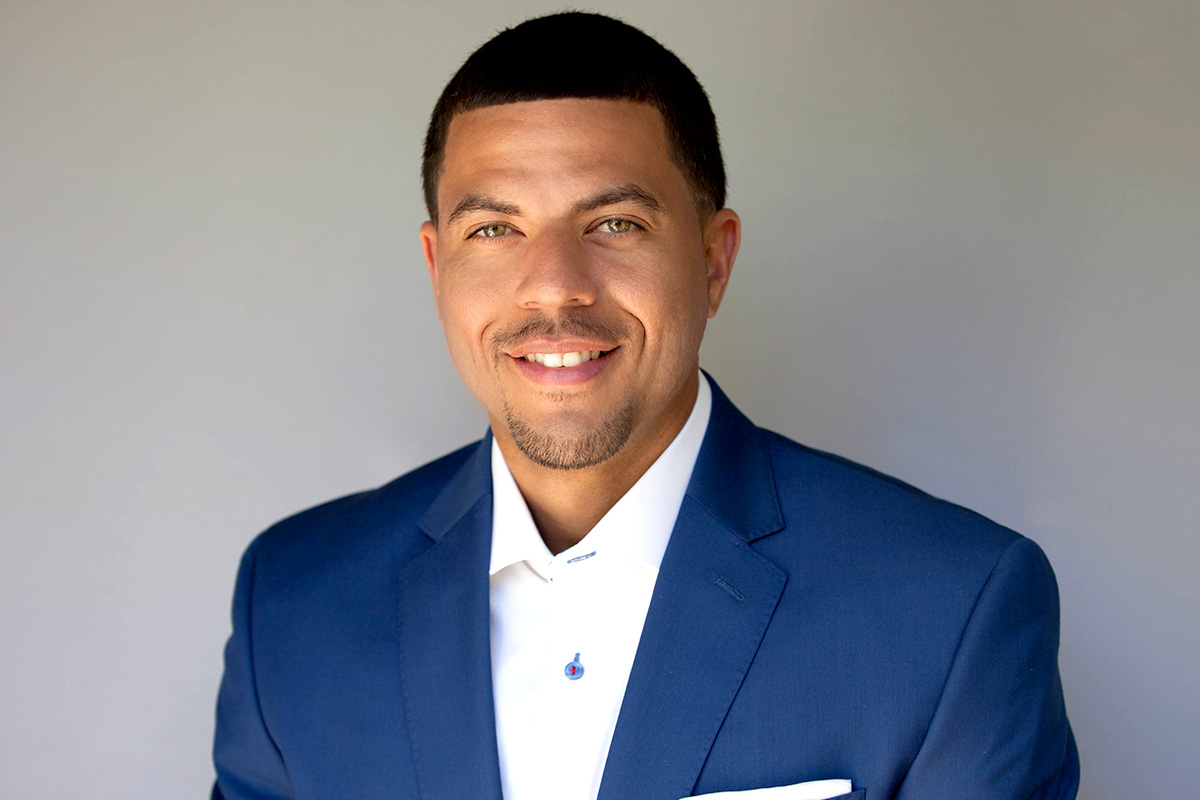
Jason Washington is a successful entrepreneur both in and out of the cannabis industry. He is also the second person in U.S. history to face a jury trial proceeding on a state-licensed medical marijuana case. His story is a powerful reminder that the most dangerous thing about the cannabis plant is the grey area that surrounds its legal status.
In 2011, Washington’s Big Sky Health dispensary was the largest legal operation in Montana. And despite medical marijuana being legal in the state since 2004, the Feds raided him. At trial, he was found guilty of conspiracy to manufacture and distribute cannabis and possession with intent to distribute. His judge deviated from the mandatory minimum sentence guidelines of 10 years, instead sentencing the former University of Montana Grizzly quarterback to two years in federal prison. In October 2014, his original sentence was reduced from 24 to 21 months, with the judge ordering Washington’s immediate release.
Washington returned to his home state of California where his natural aptitude for business saw him start several successful companies, including Ignite with Matthew Morgan and Dan Bilzerian.
Fueled by his desire to help those who had been wrongly incarcerated like himself, Washington went on to found Kulture, a full-service cannabis agency with a twist — you have to have a proven legacy with the plant to make the cut. The company has cultivation, extraction and manufacturing operations in five different states: Arizona, California, Oklahoma, Michigan and Missouri.
Cannabis Aficionado spoke to Washington about his loyalty to legacy operators, his advice to newcomers to the industry, and his plans for a global cannabis network.
CA: What sets Kulture apart from other cannabis agencies?
Jason Washington: One of the mandatory stipulations for being accepted or invited into the Kulture family is that you have to be a legacy operator. And a legacy operator suggests basically that you have a proven track record of 10 plus years in the cannabis space. You’re someone that was in this when it wasn’t just the latest “cool” business venture for Ivy League grads.
My directors of indoor cultivation are Bill and Jeff Levers aka the Beard Brothers, who are legacy operators. We’ve been running together for over two years — longer than Kulture has been established. Our philosophies and ideologies align. In fact, their commitment to helping veterans inspired the backpacks in our new clothing line; these are based on tactical gear as a salute to our veterans.
Jason with the Beard Bros Bill Levers (far left) and Jeff Levers (right) and Eric Brandstad at the Arizona facility.
Why is this so important to you?
The pioneers of this industry have not been able to participate in the new legal market. A lot of people have made a lot of money off the backs of those who are now deemed criminals. Guys like me — those with weed felonies or federal felonies — aren’t looking for handouts. To be honest, I don’t know how to solve the problem. I just know that the problem exists.
Tell me more about your new clothing line and how it’s helping to change the stigma around cannabis?
Some very successful brands started with clothing in emerging markets just for brand awareness. For me, it’s about establishing normalcy like any other brand. In California, Prop 64 means we have been able to normalize the use of cannabis as a recreational drug. And as a very beneficial medical alternative to pharmaceuticals and other forms of pain management. Cannabis is becoming more and more acceptable, and it’s one more facet of people’s lives.
I’ve been in the cannabis game for a long time, so for me, the clothing line is new and exciting. Normalizing cannabis is the main reason I’ve launched it. The style is influenced by what my cultivators wear when they’re in the facilities. It ties into the Kulture lifestyle and appeals to a lot of different demographics.
One of the backpacks from Kulture’s new apparel line.
What are your expansion plans for Kulture?
Here’s the thing, cannabis doesn’t only help people in America. There’s a whole world of people that need this plant and our help and expertise. We have to focus on more than just America and more than our little micro-environments. I see Kulture as a 300-person global agency with offices in America, South America and somewhere in Europe or Africa. I see it as a combination that brings together the best cannabis talent in the world. Where the brightest minds come together under one roof to provide the best cannabis for everybody to enjoy.
What’s the most important thing that needs to be addressed when people are talking about cannabis legalization?
The conversation around inclusion needs to be further expanded upon. There’s still a lot of people that are in jail for this plant.
Another problem is people riding social equity but did not serve a day in jail or have never been prosecuted or raided. People get pushed to the front because they say, “I grew up in this neighborhood or I grew up in that neighborhood.” But those who were affected or who served time are not able to obtain a license. For example, I live in California, but my charge is federal, is in the state of Montana. So I can’t get an equity license in California because my charges did not originate in California. I’d have to go back to the state of Montana to participate or to be a license holder.
Look, I understand why states have said that in order for you to be an equity applicant the crime or the charge has to have been committed in that state or jurisdiction. I totally get that. But it’s keeping guys that went to federal prison for cannabis-related crimes shut out. They’re kept from participating from a licensing standpoint because their charge originated in a different jurisdiction than where they reside. Most federal indictments are brought in different jurisdictions than your home state.
Jason with son Jaxon taken at Taft Federal Correctional Institution.
How do you think the cannabis industry can be better?
The biggest thing is if all these new executives and people coming into the space entered with more knowledge. They can’t get the experience, I get it. But at least the knowledge and understanding of what so many people have sacrificed for so long and went through. Understand the culture. Don’t completely strip cannabis of everything it’s been for so long and turn it into spreadsheets and mass production. Because that’s not what it is.
I get bringing a more professional business environment to the space; more legitimacy, more scientific data and more research-based products to market. But at the same time, don’t forget those who have given you this opportunity. Don’t forget how you got here and the sacrifice that was made to allow you to participate in this industry.
What do you wish you knew when you first started out in cannabis?
What are the three qualities you need to be a successful cannabis entrepreneur?
I think perseverance is one of the biggest. I’ve been in it for 12 years and I’ve seen people come and go who don’t have the character and the stamina to fight through all that you have to fight through — whether it’s local municipalities, competition, or failed crops. You’ve got to be an innovator. You’ve got to be someone who is a survivor and a fighter.
At Honeydew farms
Do you have a career highlight?
There’s one thing that really sticks out to me to this day and it was when we opened the first Montana dispensary. I’ll be honest, I wasn’t 100% sold on the medical benefits of cannabis at first until one particular firsthand account from a mother. I was her son’s caregiver; her son was 13 or 14 years old and was epileptic. She came in one day and broke down crying because she didn’t have to go to the streets for cannabis anymore. She said, “You have no idea how much I admire and respect your courage and how much you helped my son. You guys being here and taking care of us has been like God answering my prayers.” It was very heavy and very emotional.
Hearing those kinds of stories and testimonials gave me the strength to stand up for what I was doing and believed in at the time. It still does to this day.
Believe it or not, I don’t look at federal prison as the worst thing that ever happened to me. It gave me the opportunity to sit back, reflect and learn from the choices and decisions that I’ve made. Maybe mistakes, maybe not mistakes.
Any advice for anyone that’s thinking of getting into cannabis?
If you’re thinking about getting into it now, you need to position yourself and prepare yourself for the long haul. You’re only warming up after five years in the space. This is a daily education. Cannabis is unique in a sense, it’s not like any other businesses. You can apply past experiences from other businesses ventures. But the hands-on education that you get on a day to day basis is like no other.
Auxly’s third-quarter cannabis results offer two headlines that need to be read together. Net revenue increased 24 percent from a year earlier to C$49.5 million, while reported net income declined. The difference does not mean the sales growth disappeared; it reflects, in part, a comparison with a prior-year quarter containing a substantial one-time gain.
Auxly’s news release reports adjusted EBITDA of C$15.8 million, up 29 percent, and net income of C$13.6 million, compared with C$20.5 million a year earlier. Management notes that the 2025 comparison included a C$8.1 million after-tax gain related to the Imperial debenture settlement.
That creates a reason to examine the components of earnings rather than selecting whichever headline looks most dramatic. A settlement gain can raise reported profit without representing repeatable sales of cannabis. Conversely, removing selected items produces a different measure whose definition and reconciliation still need to be understood.
Adjusted EBITDA is not the same as net income, and neither is simply the amount of cash available for expansion. Auxly identifies adjusted EBITDA as a non-GAAP measure and directs readers to its reconciliation. The useful comparison is between consistently defined measures over time, with the excluded items visible.
The financial statements add a cash distinction
The interim statements report C$14.3 million of net cash provided by operating activities during the quarter. That differs from the C$14.8 million figure before working-capital changes highlighted in the announcement. Both can be accurate because they describe different stages of the cash-flow calculation.
Working capital includes movements in items such as receivables and inventory. A measure calculated before those movements helps isolate one aspect of performance, but it cannot answer every question about cash actually generated during the period. The statements provide the bridge between the two numbers.
At September 30, the statements show C$51.4 million in cash and cash equivalents. That is a balance at a particular date. It should not be confused with the quarter’s revenue, its net income or a promise that the entire balance will be spent on new production.
The statements also label the interim figures unaudited and explain that share and per-share amounts reflect the July 28 share consolidation. Those details matter when comparing old share counts or earnings per share, even though they do not change the basic story about cannabis sales.
Flower and pre-rolls remain central
The management discussion says dried flower and pre-roll products accounted for approximately 64 percent of quarterly net revenue, with the balance from the company’s other cannabis product categories. It attributes year-over-year sales growth to higher volumes across core products and improved flower pricing, partly offset by pressure on vape prices.
That is more informative for readers following the cannabis shelf than an undifferentiated growth percentage. Different formats can move in different directions at the same company. Higher total revenue does not establish that every product category gained pricing power or that every retailer saw the same demand.
The filing also describes the role of Auxly Leamington in cultivation and processing. An integrated production footprint can support supply, but its existence alone does not demonstrate consumer preference, product quality or a future sales result. Those claims require evidence beyond the size of a facility.
The previous quarter supplies context
Auxly’s August 13 second-quarter announcement reported C$45.8 million in net revenue and C$14.3 million in adjusted EBITDA. The third-quarter figures are higher than those earlier results, as well as higher than the year-earlier revenue and adjusted EBITDA comparisons. That is a useful check on the direction of the reported business.
Quarter-to-quarter changes are still different from a sustained trend. Product launches, customer ordering and seasonal patterns can affect individual periods. A single quarter does not establish the eventual return on a capital project or the success of an export strategy.
Our earlier coverage of Weedmaps’ tougher advertising quarter illustrated another part of the cannabis economy. The companies have different business models and reporting measures, so their results should not be treated as interchangeable signals for the whole industry.
For Auxly, the next useful tests are continued demand, cash generation after working-capital movements and the results of planned investments. The present filing supports a specific conclusion: cannabis revenue and several operating indicators improved, while the reported net-income comparison requires attention to last year’s exceptional items.
Illustrative warehouse stock photograph; not an Auxly facility or identified cannabis inventory. Photo: Russ Murray / Unsplash.
Charlotte’s Web Reports Lower CBD Sales but a Narrower Quarterly Operating Loss
The hemp-derived CBD company’s latest results show why lower revenue and an improving quarterly loss can coexist—and why neither resolves the policy outlook.

Charlotte’s Web reported a difficult sales quarter for its hemp-derived CBD business while narrowing its operating loss. Revenue for the three months ended September 30, 2026 was US$9.4 million, down 18.3 percent from a year earlier. Its operating loss narrowed to US$3.7 million from US$5.3 million, showing why the direction of sales and the direction of a loss do not always match.
The company announced the results November 12 and filed its quarterly report with the U.S. Securities and Exchange Commission. The release attributes weaker revenue primarily to California restrictions that took effect in July, reduced promotional discounting and softer demand in parts of the hemp-wellness market. Those explanations are management’s account of the quarter, rather than an independent measurement of every factor affecting CBD shoppers.
Less revenue does not automatically mean a larger loss
The company’s earnings release reports quarterly gross profit of about US$4.4 million, compared with US$4.5 million a year earlier, even as sales fell. Gross margin improved to 46.9 percent from 38.9 percent. Selling, general and administrative expenses declined to US$8.1 million from US$9.7 million.
A percentage margin and a dollar profit measure answer different questions. A company can retain a larger share of each sales dollar while bringing in fewer dollars overall. Lower expenses can then narrow the operating loss without putting the business into operating profit. That is the distinction these results require.
The announcement also identifies an inventory reserve linked to simplifying the product range. Readers should therefore resist interpreting a single margin percentage as a permanent new baseline. Product mix, pricing, manufacturing costs and inventory adjustments can all affect the calculation.
The quarterly filing keeps the periods straight
The Form 10-Q records quarterly revenue more precisely at US$9.393 million and a net loss of US$3.458 million. These rounded to the US$9.4 million revenue and US$3.5 million net loss in the announcement. An operating loss and a net loss are different lines of the accounts, not conflicting reports of one number.
The nine-month picture is also distinct from the latest quarter. The release reports a US$20.7 million net loss for the first nine months, including noncash items associated with the earlier debenture conversion. It would be misleading to describe an improved third-quarter operating loss as proof that every year-to-date earnings measure improved.
The filing shows US$11.364 million of cash and cash equivalents at September 30. Cash on that date is a financial-position measure, rather than sales or profit earned during the quarter. Looking at the income statement and cash-flow statement together gives a fuller picture than treating a positive cash balance as evidence of profitability.
Hemp policy remains part of the business story
Cannabis policy is directly relevant to this CBD company because the legal definition of hemp determines which products can use that route to market. The Congressional Research Service’s October 28 legal sidebar explains that the federal delay does not move every element of the new definition to the same date. It distinguishes the treatment of certain cannabinoids not naturally produced by the plant from provisions delayed until December 11.
That distinction is useful beyond one company. A hemp-derived label does not settle a product’s future legal status, and a federal deadline does not automatically override a state’s separate rules. Consumers and businesses need to identify the applicable product definition, ingredients and jurisdiction.
Charlotte’s Web’s October 28 announcement said it planned to hold a corporate update after December 11 rather than a November earnings call, seeking greater policy clarity before discussing its outlook. That is a communications plan, not evidence that Congress will produce the outcome the company prefers.
Product access and medical evidence are separate
A financial report from a CBD business does not establish that a product treats a disease or is appropriate for a particular person. Sales trends describe commercial activity. They do not measure a clinical benefit, and a discussion of future healthcare distribution should not be mistaken for a new drug approval or a general reimbursement entitlement.
Our coverage of Willie Nelson’s hemp-policy appeal addresses the public debate over access. Charlotte’s Web’s results supply a different perspective: how a company says restrictions, pricing decisions and expenses are affecting its accounts. The two stories illuminate different parts of the same policy uncertainty.
The next meaningful business signals will include the durability of any sales recovery, spending levels and the details of the legal framework actually in force. For now, the results show a smaller quarterly operating loss alongside lower CBD revenue. They do not yet resolve whether the company can turn that improvement into sustained growth and profitability.
Illustrative empty-bottle stock photograph; not Charlotte’s Web packaging or identified CBD products. Photo: Kelly Sikkema / Unsplash.
Portland is considering removing a city-code restriction on cannabis drive-through and walk-up sales, but the proposal has not become a new retail permission. The city’s record for Ordinance 2026-407 shows the November 10 City Life Committee item was continued, with December 8 listed as its next meeting date.
The proposal introduced by Mayor Keith Wilson combines two subjects: updating the language governing exterior sales windows and revising the way licensing-payment provisions appear in city code. For cannabis shoppers, the first is about how a purchase might be collected. For operators, the second concerns the timing and administration of license costs.
A retailer considering a physical alteration would still need to assess the property and any other applicable approvals. Removing one cannabis-specific sales restriction is not the same thing as approving a building project.
The window restriction is specific
Portland’s current marijuana licensing chapter bars sales from vendor carts, temporary structures, satellite locations and exterior openings such as drive-through facilities or walk-up windows. The proposed amendment would remove the exterior-opening language while retaining restrictions on those other kinds of sales locations.
That is narrower than allowing cannabis sales anywhere a customer can drive or walk. A licensed premises would still be a particular business location, subject to the rest of its applicable requirements. The change concerns a method of serving customers, not the disappearance of the licensing system.
City materials say the amendment would align Portland’s wording with Oregon rules that made on-site delivery a permanent option in September 2020, following temporary pandemic arrangements. That history helps explain why the debate is framed as an update to conflicting language rather than a brand-new statewide retail model.
Convenience does not mean on-site consumption
One important boundary remains in the proposed code exhibit: the provision against consumption on licensed premises is retained, with its existing narrow employee exception under Oregon law. A pickup window and a consumption lounge are different activities.
The same exhibit retains operating-hour and security requirements. Its redline shows a targeted deletion concerning sales openings, rather than an across-the-board removal of the rules governing retail premises. Reading the actual proposed changes is more informative than assuming that the phrase drive-through implies a completely different type of store.
For a customer, the practical questions would still include whether a specific retailer offers a service, how the order is handled and which rules apply. A citywide code amendment, if adopted, would not guarantee that every shop installs a window or changes its property layout.
The payment provisions affect operators differently
The ordinance also addresses the Deferred Payment Program for license fees. The city’s explanation says a 50% initial payment better supports collection and that the code should refer to the council-approved fee schedule rather than preserve outdated dollar amounts.
That is a distinction between the text of the code and the administration of a program. City materials say programmatic changes were communicated in June and July and implementation began in August. The proposal would codify practices already in place, according to the city, rather than introduce every payment change for the first time.
Operators evaluating the proposal therefore need both the amended text and the applicable fee schedule. A headline about pickup windows does not explain a business’s entire licensing bill, and an old fixed amount quoted from code may not describe current program administration.
Businesses are raising questions about cash flow
In KPTV’s November 10 reporting, Mikhala Armstrong described support for greater accessibility alongside concerns from cannabis operators about payment obligations and late fees. Those interviews add an important perspective to the city’s stated goal of improving administration.
The two views are not interchangeable. The city describes its intended program effects; individual operators describe how they believe the arrangements affect their businesses. A final assessment should distinguish those accounts from evidence about what happens after implementation.
Our coverage of Missouri’s interstate cannabis guidance concerned a separate jurisdiction, but illustrates a related point: legal cannabis markets remain governed by specific rules at different levels. A state allowance does not make every local detail irrelevant.
The next step is still a public decision
The city’s document history is the place to follow whether the committee advances or amends the proposal. As of this review, its status is continued, not adopted. Readers should check the updated agenda before relying on the December meeting listing or making plans to offer a new service.
The potential change is concrete: remove a particular restriction on how licensed cannabis stores serve customers and bring fee language into line with current administration. Whether that becomes the final city policy remains the question before Portland, rather than a decision already made.
Illustrative Portland waterfront photograph; not a dispensary or proposed pickup site. Photo: Meggyn Pomerleau / Unsplash.