#cannabisaficionado

Culture

Hey Ladies, Treat Yourself with These Luxury Cannabis Accessories

When you feel like dropping some big bucks on the dopest weed swag, you can’t go wrong with these luxury cannabis accessories.

Published

on

luxury cannabis accessories
PHOTO | Adobe Stock
Advertisement Back2Grow Advertisement

When you feel like dropping some big bucks on some weed swag — whether you’re treating yourself or someone special — you can’t go wrong with luxury cannabis accessories.

Select handmade products are often created for a limited time only, so if something catches your eye, make sure to snag it before it’s gone!

The Prettiest Pipe Around

You wouldn’t think that smoking out of concrete would be a good idea, but artists at Concrete Cat have fashioned gorgeous pipes that you’ll want to be seen using. Colors vary quite a bit and prices start at a reasonable $65.

Smoking a Joint in Style

If you love to consume weed the old fashioned way with a good ol’ blunt, why not make your smokes the most beautiful they can be? Shine 24K gold rolling papers come 12 to a box for $55.

Staying Organized

Many women like to keep their cannabis materials together in one place, but finding a good enough looking tray can be difficult. The Chroma Tray by Other Kingdom serves as an easy-to-use storage solution and something pretty for your apartment. They run from $56 to $86 depending on size.

Wood and Water


View this post on Instagram


Embrace fall with a new twist on the traditional cheese plate. Munchies, anyone? Thanks to @weedlightmagic for the capture. #marleynatural .⠀⠀⠀⠀⠀⠀⠀⠀⠀⠀ .⠀⠀⠀⠀⠀⠀⠀⠀⠀⠀ .⠀⠀⠀⠀⠀⠀⠀⠀⠀⠀ .⠀⠀⠀⠀⠀⠀⠀⠀⠀⠀ .⠀⠀⠀⠀⠀⠀⠀⠀ Warning: This product has intoxicating effects and may be habit forming. Marijuana can impair concentration, coordination, and judgement. Do not operate a vehicle or machinery under the influence of this drug. There may be health risks associated with consumption of this product. Should not be used by women that are pregnant or breastfeeding. For use only by adults twenty-one and older. Keep out of reach of children.

A post shared by M a r l e y N a t u r a l (@marleynatural) on

Sometimes taking a rip off of a bong doesn’t feel very ladylike, but this water pipe from Marley Natural imparts a new vibe to this familiar action. It’s so gorgeous that you may not want to share it.

Candy Anytime

No longer reserved as a cheat food, this candy is appropriate any time of the day. Sativa pastilles from Beboe come in gorgeous packaging and turn getting high into a more sophisticated event. They run at $25 per tin.

Starting on the Right Foot

Any woman who wants to get into smoking cannabis yet doesn’t really connect with typical accessories needs this starter set from Lux Eros. A delicate color envelops this ceramic grouping including a rolling tray, ashtray, and stash jar. The gold pot leaf tops off the look and at $275, it’s a handmade steal.

Control with a Clip


View this post on Instagram


The Ankh clip ✨💨 made for @sweetflag_shop, check them out! ( #📷 @sweetflag_shop via @latermedia )

A post shared by HIGH SOCIETY COLLECTION (@highsocietycollection) on

If you want to take a high-class approach to your joints, you will love this Ankh clip designed by High Society Collection. Stash this in a box with other accessories for some extra wow factor or purchase it as a stand-alone gift that’s dainty yet functional. Inspired by heirloom fashion, this 24K gold item runs $60.

Drink It Up


View this post on Instagram


☕️🍁 #medicinalcoffee #MarysJava #MarysBrew

A post shared by Mary’s Java (@marysbrew) on

Ladies who love their morning brew will find a guilt-free sense of joy as they sip infused coffee or tea from Mary’s Javs. A box of 24 tea bags will only set you back $30.

Playing with Fire


View this post on Instagram


Need a light? 🔥

A post shared by Easy Tiger Goods (@easytigergoods) on

Although it’s not exclusively a cannabis product, if you enjoy making a fashion statement will love this colorful way to light a roach. Easy Tiger Goods offers a range of shades in a chunky block style, and at $45 each, you won’t want to lose it.

A Gift for Two?

THC works to arouse and increase sensitivity to achieve better and deeper orgasms with this cannabis-based lube by Foria Pleasure. A 30ml spray bottle is just over $60 at select dispensaries.

Cannabis

Minnesota Opens $10.9 Million CanRenew Grant Round for Community Restoration

Minnesota’s next CanRenew round offers community restoration funding, with applications due December 15. The program does not finance cannabis business operations.

Published

on

Minneapolis skyline and a bridge over the Mississippi River

Minnesota has opened another round of CanRenew grants, putting community restoration alongside the business side of cannabis legalization. The Office of Cannabis Management announced the application window on October 22, with submissions due December 15, 2026, at 4:30 p.m. Central Standard Time. For local organizations, the opportunity is to propose a specific investment in communities affected by cannabis prohibition.

The state’s announcement describes a $10.9 million program and anticipated awards ranging from $50,000 to $2 million. OCM expects to select between 15 and 50 organizations. These are planning estimates for a competitive process, rather than commitments to particular applicants or neighborhoods.

A community grant with a defined purpose

CanRenew’s foundation is Minnesota Statutes section 342.70. The law directs funding toward organizations investing in communities where long-term residents qualify as social equity applicants. It describes community investment broadly, including economic development, health-related social conditions, violence prevention, youth development and civil legal aid.

That breadth matters. A cannabis-related public program can serve people who have no intention of opening a dispensary or cultivating a commercial crop. Its connection to legalization lies in the harms it is designed to address and the communities it serves, rather than a requirement to sell cannabis.

The statute also requires applicants to explain community need, expected benefits, costs and their ability to deliver results. Previous experience and community support are central considerations. Youth civic engagement, leadership and youth-led health education receive explicit priority, giving prospective applicants a clearer picture of the program’s public purpose.

Eligibility does not mean business funding

The current request for proposals includes nonprofits, educational institutions, federally recognized Tribes, local governments, private businesses and community groups among potential applicants. Unincorporated groups need an eligible fiscal sponsor. Registration, organizational capacity and the ability to administer the proposed work remain part of eligibility.

However, the applicant’s organizational form does not determine what the money can buy. The RFP excludes using grants to start, operate or expand a business, as well as revenue-generating entrepreneurial activity. A private company’s eligibility to propose community work should therefore not be read as permission to finance its own commercial expansion.

For anyone scanning the headline for startup capital, that distinction is the first useful check. Begin with the project’s purpose, who benefits and how it meets the restoration criteria, before investing time in a budget or assuming a cannabis license is the route into this funding.

Where the community connection comes in

OCM’s program guidance explains that an eligible community need not consist entirely of people individually verified as social equity applicants. The focus is the community served. Its mapping tool can help document several geographic indicators, while projects based on cannabis convictions or policing may need other supporting evidence.

The same guidance distinguishes expanding an eligible existing program from merely paying its current operating expenses. Applicants should identify what additional reach or benefit the proposed grant would create. A familiar program name alone does not explain how a new investment would repair prohibition-related harm in a specific community.

That is a useful lens for residents, too: look for a defined community benefit and an accountable organization, rather than treating the size of an announced grant pool as evidence that a particular local service has already received money.

Different programs serve different needs

The agency’s grants overview separates CanRenew from other Minnesota initiatives. CanGrow supports farmer assistance and loan-related work. Programs administered through the Department of Employment and Economic Development include CanStartUp, CanNavigate and CanTrain, addressing microbusiness lending, navigation assistance and workforce development respectively.

Those names are easy to confuse. Applicants should follow each program’s own current terms and opening dates; an open CanRenew round does not establish that every other initiative is accepting applications. Nor does appearing on the same overview make their eligibility requirements interchangeable.

What to check before applying

Applicants should also plan for administration after an award. The RFP requires a preaward risk assessment and a fully executed agreement before eligible spending begins. Receiving a selection notice does not, by itself, make earlier expenses reimbursable. That timing deserves attention when designing a project’s start date.

The published CanRenew timeline anticipates application review beginning in January 2027, with grant negotiations and project starts later in that year. The application window is therefore the beginning of a selection process, not an announcement that funds have already reached recipients.

Prospective applicants can use OCM’s current application materials to check the work plan, budget and required attachments, and consult the listed information sessions before the deadline. For Minnesota’s cannabis community, this round offers a concrete way to follow legalization beyond store openings: which organizations propose restoration work, which investments are selected and what results they ultimately deliver.

Illustrative stock view of Minneapolis; not a CanRenew-funded project. Photo: Kate L / Pexels.

Continue Reading

Cannabis

Khalifa Kush Plans a Halloween Debut in New York

Khalifa Kush plans to bring KK and Violet Sky flower and pre-rolls to New York on October 31 through a partnership with cultivator and distributor Skyworld.

Published

on

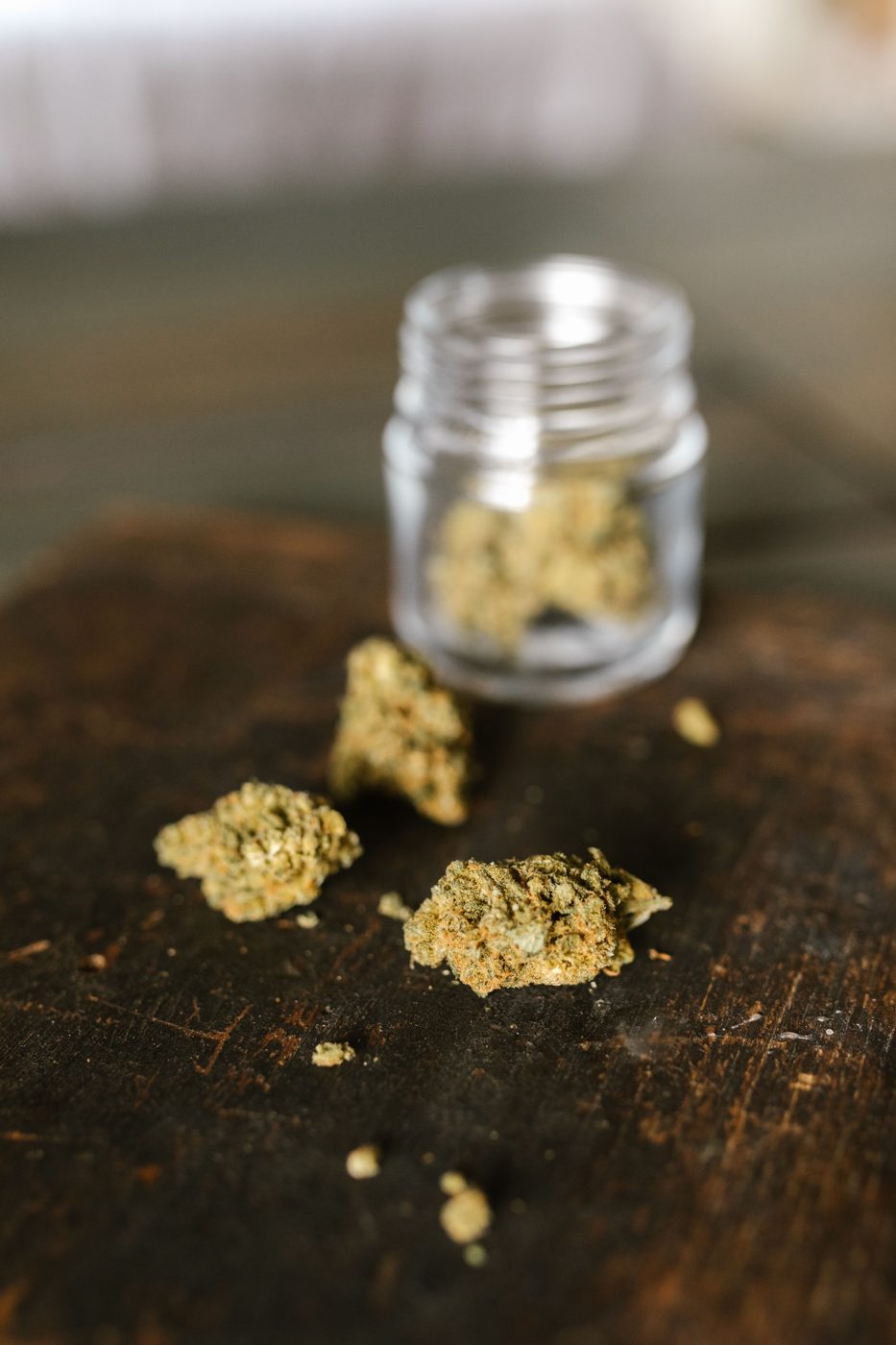
Dried cannabis flowers beside a glass jar

Khalifa Kush is planning a Halloween entrance into New York’s licensed cannabis market. Wiz Khalifa’s brand says sales are set to begin October 31 through a partnership with New York cultivator and distributor Skyworld. As of October 23, that date is still ahead: this is a preview of an announced launch, rather than a report that the products have already reached stores.

The company’s corrected October 14 announcement identifies two starting cultivars, KK and Violet Sky, in flower and pre-roll formats. It describes an initial rollout to 36 dispensaries: seven in New York City and another 29 across Upstate New York and Long Island. These are the brand’s announced distribution plans, not independently confirmed inventory at every location.

A local partner behind a familiar name

Skyworld will handle New York cultivation and distribution, according to the announcement. That makes the local operation central to what consumers eventually buy. A recognizable national brand name tells only part of the story; the cultivation partner, specific batch and store availability are the details shoppers can check when launch day arrives.

Skyworld’s own website describes the business as Indigenous-owned and New York-based, and lists cultivation, processing and distribution license numbers. It identifies SJR Horticulture, LLC as its operator. The company also provides a lab-results section, giving readers a place to look for product documentation rather than relying solely on launch publicity.

Those details establish how Skyworld presents its operation; they do not substitute for checking the state’s licensing resources or a particular product’s certificate. The announcement also corrected its partner’s name from “Skyworld Cannabis” to “Skyworld.” We use the corrected name here.

KK brings a longer backstory

On its KK product page, Khalifa Kush says the original cultivar was developed for Wiz Khalifa’s personal preferences in the early 2010s. The brand describes a period of private use before its first flower sales at Tryke’s Reef dispensaries in the southwestern United States in 2016. That is the company’s account of the cultivar’s commercial history.

It explains why this New York release carries a recognizable identity before any local customer opens a package. The name connects the artist’s cannabis persona with a product line that has moved through multiple state markets. It is also a reminder that a New York debut is a new distribution milestone for an established brand, rather than the creation of an entirely new cultivar.

The broader KK catalog includes formats beyond flower and pre-rolls. That does not mean all of them are included in the New York opening. The dated announcement is the appropriate guide to the initial local offering; later additions should be reported when the company or retailers confirm them.

Violet Sky adds a different genetic branch

The brand’s Violet Sky page describes a selection effort beginning in early 2021 and a cultivar emerging in late 2022. It identifies the cross as Khalifa Mints and GastroPop, and presents Violet Sky as the third addition to its lineup. Those are breeder and brand descriptions, not independent genetic testing by Cannabis Aficionado.

That distinction is especially useful with cultivar coverage. A lineage can help enthusiasts understand how a company positions a release, but it does not tell an individual reader exactly how a product will feel. We have not sampled these New York batches, and the announcement does not establish their final laboratory results, retail pricing or freshness at any particular shop.

Readers following New York’s plant pipeline can also see our coverage of the state’s upcoming nursery application window. Nursery licensing and a branded retail rollout are separate developments, but both make the people and businesses behind the genetics worth paying attention to.

What to check before making the trip

New York’s Office of Cannabis Management consumer guidance recommends checking the dispensary verification tool displayed at licensed storefronts. It also directs consumers to look for the state’s universal symbol on regulated products and a QR code or link to the batch’s certificate of analysis. The agency’s resources are intended for adults 21 and older.

For a planned launch, store-level confirmation is another practical step. Check a participating dispensary’s current menu or contact the store before traveling. An announced statewide rollout does not establish that both cultivars, every package size or every format will be available at the same time in every shop.

For now, the appeal is a clear date and a focused starting lineup: two cultivars, two formats and a named New York partner. The next reporting milestone is October 31 itself, when actual menus and batch information can show how the promised launch translates into a local shopping experience.

Illustrative stock cannabis photograph; not identified as KK, Violet Sky or Skyworld products. Photo: RDNE Stock project / Pexels.

Continue Reading

Cannabis

Section 781 Turns a Hemp Law Into a Cannabis Cultivar and Growers Challenge

Herbies and Blimburn have put a federal provision’s name on a new cannabis line, pairing three versions with a grow-diary competition.

Published

on

Rows of green cannabis plants inside a greenhouse

Cannabis names often borrow from food, music or geography. A new collaboration between Herbies Seeds and Blimburn Seeds takes a more bureaucratic route: Section 781. The line shares its name with a federal provision rewriting the definition of hemp, and its launch comes with a competition built around public grow diaries.

The announcement, published by Cannabis Business Times on October 23, was issued by the company on October 22. It describes three versions of the line and a challenge intended to follow participating plants from seed to harvest. This is a commercial launch with a political reference, rather than a new finding about how the genetics perform.

One name, three different records

The official project’s cultivar page lists Autoflower, Photoperiod and Fast Flowering entries. The records are not identical. They describe different growing timelines and different stated cannabinoid profiles, so a claim attached to one version should not automatically be applied to all three.

For example, the project lists 77–87 days from seed to harvest for the autoflowering version. Its photoperiod record instead lists a flowering period of 56–70 days. Those are different clocks: one begins at the seed stage, while the other describes a particular part of plant development. Putting the numbers beside each other without that distinction can make a comparison more confusing than useful.

The company’s announcement identifies OG Kush and Strawberry Diesel in the original version’s background. That is the breeder’s description of lineage. Cannabis Aficionado has not grown or independently tested these plants, and the announcement should not be read as our confirmation of a particular aroma, effect, yield or laboratory result.

For readers who follow genetics, the interesting part is the invitation to document variation. A diary can show what one grower observed in one setting. Several diaries may reveal a wider range of outcomes. Neither format automatically turns a branded launch into a controlled trial.

The competition is built around documentation

According to the challenge’s entry information, registration is open until December 30, 2026. Participants use the HarvestED platform to keep a diary, and only the Section 781 line is eligible. The published schedule gives different diary-completion dates for the three categories in spring 2027.

The project describes three principal categories, with three winners in each, plus a separate Best Looking Plant award. Its prize page identifies that additional award as limited to the United States and the photoperiod category. Prize availability and eligibility conditions deserve a direct reading; a promotional summary is not a substitute for the organizer’s current rules.

That matters because this is not simply a photo contest with an interchangeable plant in the frame. The challenge ties eligibility to a named commercial line and to records produced over time. Anyone considering it should distinguish the creative appeal of the project from its entry requirements and the laws applying where they live. This article does not establish anyone’s eligibility to purchase, cultivate or enter.

The posted completion schedule sets March 15, 2027 for Auto diaries, March 30 for Fast diaries and May 31 for Photoperiod diaries. Registration and diary completion are therefore separate deadlines. A reader following the project can watch whether entries document the full period promised, rather than judge the entire line from an attractive early photograph.

The distinction between observation and comparison is useful here. To evaluate two diaries, look for clearly identified versions, dates and conditions. A striking image alone does not tell a reader whether two plants were observed at comparable stages or whether their records answer the same question.

What the legal name actually refers to

Section 781 of Public Law 119-37 changes the statutory definition of hemp. Among its provisions is an exclusion concerning viable seeds from plants above a specified total-THC concentration, including THCA. The source plant is part of that wording, which makes the provision more specific than a general question about whether a seed itself contains much THC.

The statute’s name on a seed package does not certify that package’s legal status. Nor does a company’s reading of a provision resolve the separate questions of implementation, documentation, shipping or state law. The launch is best understood as a response to regulatory uncertainty, not a route around it.

That upstream focus also connects with New York’s new nursery licensing window, which addresses a different issue: how licensed businesses supply starting material inside a state-regulated market. Federal hemp definitions and state nursery permissions should not be treated as interchangeable authorizations.

A launch worth following through the diaries

Section 781 is an unusually literal example of cannabis branding absorbing the policy debate around the plant. The next useful evidence will be what the organizers publish, how the competition is administered and what the diaries actually document.

Until then, keep the categories separate: breeder claims, competition rules and legal requirements each answer a different question. The name may be memorable, but the records behind it will be more informative than the label alone.

Illustrative stock cultivation photograph; these plants are not identified as Section 781. Photo: CRYSTALWEED cannabis / Unsplash.

Continue Reading

Trending

Join The Cannabis Aficionado Community!
Join the Cannabis Aficionado community and receive all of the most relevant news geared towards our sophisticated enthusiast community.
Loading

Copyright ©️ 2026 Cannabis Aficionado. Cannabis Aficionado is a registered trademark of CNM Inc. All rights reserved. Registration on or use of this site constitutes acceptance of our Terms of Service, Privacy Policy and Cookies Policy. People may receive compensation for some links to products and services. Offers may be subject to change without notice.