#cannabisaficionado

Cannabis

DEA Judge Keeps Cannabis Hearing Closed but Adds a New Briefing Round

An October 22 order admits a GAO report and sets briefing deadlines while rejecting new testimony. It does not resolve the broader rescheduling proposal.

Published

on

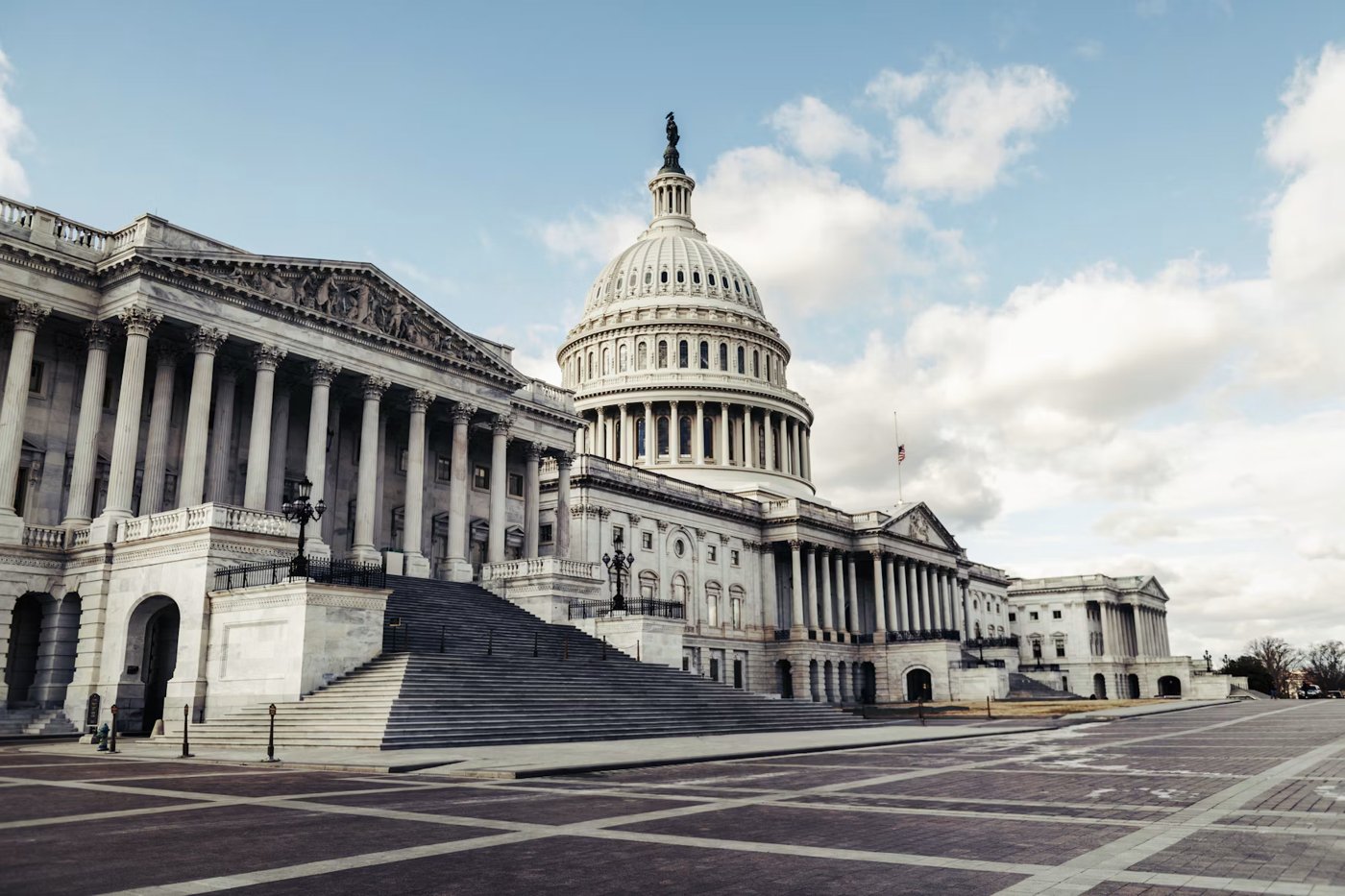
United States Capitol building with its dome and columns beneath a blue sky
Advertisement Back2Grow Advertisement

The judge overseeing the broader federal cannabis rescheduling proceeding has rejected a request to reopen the hearing for new testimony, while allowing another round of written arguments. The October 22 order keeps the dispute over a recent government oversight report inside the existing administrative case.

That is a procedural development, rather than a final answer about cannabis scheduling. For readers following the long-running debate, the useful change is a defined set of briefing deadlines and a narrower account of what the parties can argue next.

A closed hearing and an open written record

Chief Administrative Law Judge Derek C. Julius issued the five-page order after opposing parties sought to add a Government Accountability Office report and pursue further discovery and testimony. The hearing on the merits had run from June 29 through July 15.

The judge admitted the report and permitted limited written briefs. Initial submissions are due October 29, with replies due November 5. The order says the matter remains stayed until the briefing period closes, with the stay expiring under that schedule.

Those dates are filing deadlines. They are not promised dates for a final federal rule, a change at a dispensary or a particular outcome. Treating a procedural calendar as an implementation calendar can make an already complicated process harder to follow.

Reporting by Tony Lange at Cannabis Business Times highlighted the split result: additional legal argument is allowed, but the requested reopening of the hearing is not.

What the government oversight report examined

The GAO report, released September 23, examined federal drug-scheduling procedures across substances. Its concerns included incomplete written policies identifying responsibilities and evaluation procedures, plus an outdated agreement governing consultation between agencies.

GAO recommended improvements by DEA, FDA and NIH, and reported that the agencies agreed with its recommendations. It also found that, among the reviewed substances for which final rules had been published and HHS recommendations were required, DEA’s decisions aligned with those recommendations.

That combination matters. A call for better procedural documentation is not the same thing as a finding that every underlying scientific assessment is wrong. Nor does historical agreement prove that a particular future recommendation must prevail. The report and the cannabis case ask related but distinct questions.

For a reader, the safest comparison is to keep the subject of each document visible: the oversight report evaluates agency processes; the administrative proceeding considers a specific proposed scheduling action.

Admission does not decide persuasive weight

Putting a document in the record makes it available for consideration. It does not dictate how persuasive the judge must find it. The remaining argument concerns whether the oversight findings meaningfully affect this particular proceeding.

That distinction explains why the two parts of the ruling can coexist. A tribunal can accept a document without agreeing that it justifies repeating a hearing. It can also invite argument about significance without accepting the outcome any participant prefers.

The question for the next filings is therefore more specific than whether someone supports or opposes cannabis reform. Watch whether an argument connects an identified procedural concern to the actual record and decision before the judge, rather than simply repeating a broader position about the plant.

The broader case is separate from April’s narrower action

Federal cannabis developments this year have not all covered the same products. In its April announcement, the Justice Department described placing FDA-approved marijuana products and products regulated by qualifying state medical marijuana licenses in Schedule III, while initiating a hearing process on broader rescheduling.

Conflating those actions can produce misleading headlines in either direction. The October procedural order does not announce that every cannabis product has moved into a new schedule. It also should not be read as erasing the separately announced medical action.

State licensing remains another distinct layer. Our coverage of Kentucky’s expanding medical cannabis retail network concerns access under a state program, rather than a ruling in this federal case. A development in one system does not automatically explain every requirement in the other.

What to watch after the filings

The immediate milestones are the October 29 briefs and November 5 replies. The next meaningful update will be what the tribunal does with the completed record, rather than speculation that a deadline guarantees a particular result.

For consumers, patients and businesses, the order offers a clearer procedural map. It closes one requested route back into testimony while leaving a defined opportunity for written argument. The ultimate scheduling decision remains a separate step, and its timing should be reported when there is an authoritative action to report.

The U.S. Capitol in Washington, D.C. Illustrative federal-policy stock photograph; the DEA administrative hearing is a separate proceeding. Photo: Tim Mossholder / Unsplash.

Cannabis

Illinois’s Hemp Rules Take Effect With a Limited Enforcement Pause for Challengers

The November 12 change and a limited agreement in the federal lawsuit are different developments. Here is what the state’s guidance and the filing actually say.

Published

on

A calculator, receipt, glasses and stationery on a desk

Illinois’s new hemp framework reached its November 12, 2026 effective date, changing the legal treatment of many consumable and topical THC products. For cannabis shoppers and retailers, the central distinction is now the product’s statutory classification, rather than whether its packaging calls it hemp. A separate agreement in a federal lawsuit gives certain challengers a limited enforcement pause; it does not establish a statewide postponement.

The Illinois Department of Revenue’s October bulletin says products containing more than 0.4 milligrams of total THC per container no longer qualify as hemp under the new framework. Such products fall into the cannabis system, where both the seller and the product must satisfy the Cannabis Regulation and Tax Act. The department expressly distinguishes Illinois’s November date from the later federal timetable.

Why the federal delay is not a statewide extension

Section 65 of the Illinois act gives the federal provision priority only where the act conflicts with 7 U.S.C. 1639p as of November 13. That is a conflict rule, rather than an express extension of every Illinois deadline. Section 1639p governs hemp-production plans and preserves more stringent state production laws. Separately, Congressional Research Service explains that most federal definition changes were delayed until December 11, with certain non-naturally occurring cannabinoids excluded earlier. Reading these provisions together does not establish a blanket Illinois postponement. That distinction is consistent with Revenue’s stated enforcement position; an actual conflict or later judicial ruling requires separate analysis.

The lawsuit agreement is narrower than a general delay

Our earlier report covered the businesses asking a federal court to stop the law. A November 6 joint status report in case 26-cv-13799 adds a consequential detail: state defendants agreed not to take Hemp Act enforcement action against the named hemp-company plaintiffs, including the association’s members, through November 19. The document makes that agreement subject to terms reached by the parties and delivery of a membership list as of November 6.

The joint filing describes an arrangement between the litigants while briefing and a decision are pending. It should not be presented as a final ruling that the law is invalid, nor as permission for every Illinois retailer to continue its previous sales practices. Businesses cannot infer that they are covered simply because they sell a similar product.

The parties’ proposed schedule listed a state response on November 13, a plaintiffs’ reply on November 17 and argument on November 19. Those dates describe the filing’s requested process. They are not a prediction of how the judge will decide the emergency request. Further orders or agreements could change the position.

A container limit changes the shopping question

The state guidance uses a limit per container. That differs from a limit per serving, so a low-dose serving statement alone does not answer whether a bottle, bag or other package qualifies. Total THC also reaches beyond a label’s delta-9 number: the agriculture department identifies THCa and several other cannabinoids with similar effects in its explanation.

For a reader comparing products, the useful questions are therefore specific. What cannabinoid quantities apply to the entire container? Is the product being sold through the appropriate channel? Does its certificate of analysis identify the relevant batch? A familiar brand or a hemp-derived claim does not resolve those questions by itself.

The Department of Revenue says qualifying final consumer hemp cannabinoid products can still be sold under the Illinois Hemp Act. The distinction is not that every hemp product has become cannabis. It is that products must fit the new definition and meet the requirements for their category.

Qualifying hemp products still have obligations

The Department of Agriculture’s October update identifies conditions beyond the THC threshold. Final consumer hemp cannabinoid products cannot contain the prohibited synthetic cannabinoids, alcohol, tobacco or nicotine, and cannot be intended for smoking or vaping. They must be prepackaged rather than assembled with other consumables at the point of sale.

Testing, labeling and packaging requirements also matter. State guidance calls for batch testing, a certificate of analysis accessible through the label, required cannabinoid and serving information, and sealed child-resistant packaging. It bars health claims and misleading or child-oriented presentations. A product falling below the numerical threshold is not automatically compliant in every other respect.

For businesses, the transition also distinguishes activities. Agriculture guidance says existing industrial hemp processor registrations expire under the old framework, with different new licenses for non-cannabinoid processing and cannabinoid manufacturing. Existing hemp cultivation licensees retain their licenses and renewal dates; the department says cultivation rules are unchanged at this stage.

What deserves attention next

The immediate story has two tracks: implementation of the statutory framework and the challengers’ request for court relief. Readers should watch for an actual court order or a documented extension of the agreement, rather than treating the filing of a motion as a victory on the merits.

Meanwhile, the state’s published guidance remains a useful starting point for understanding why shelves and distribution arrangements may change. It is guidance, not a replacement for the governing statutes or a later court decision. The practical lesson is precision: the law’s effective date, a limited enforcement agreement and authorization to sell a particular product are three different things. Readers following the case should check the scope and dates of any later court document before drawing conclusions about its effect on a particular business.

Illustrative business-recordkeeping stock photograph; not an Illinois inspection or cannabis business. Photo: Cht Gsml / Unsplash.

Continue Reading

Cannabis

Charlotte’s Web Reports Lower CBD Sales but a Narrower Quarterly Operating Loss

The hemp-derived CBD company’s latest results show why lower revenue and an improving quarterly loss can coexist—and why neither resolves the policy outlook.

Published

on

Empty amber glass bottles arranged on a light surface

Charlotte’s Web reported a difficult sales quarter for its hemp-derived CBD business while narrowing its operating loss. Revenue for the three months ended September 30, 2026 was US$9.4 million, down 18.3 percent from a year earlier. Its operating loss narrowed to US$3.7 million from US$5.3 million, showing why the direction of sales and the direction of a loss do not always match.

The company announced the results November 12 and filed its quarterly report with the U.S. Securities and Exchange Commission. The release attributes weaker revenue primarily to California restrictions that took effect in July, reduced promotional discounting and softer demand in parts of the hemp-wellness market. Those explanations are management’s account of the quarter, rather than an independent measurement of every factor affecting CBD shoppers.

Less revenue does not automatically mean a larger loss

The company’s earnings release reports quarterly gross profit of about US$4.4 million, compared with US$4.5 million a year earlier, even as sales fell. Gross margin improved to 46.9 percent from 38.9 percent. Selling, general and administrative expenses declined to US$8.1 million from US$9.7 million.

A percentage margin and a dollar profit measure answer different questions. A company can retain a larger share of each sales dollar while bringing in fewer dollars overall. Lower expenses can then narrow the operating loss without putting the business into operating profit. That is the distinction these results require.

The announcement also identifies an inventory reserve linked to simplifying the product range. Readers should therefore resist interpreting a single margin percentage as a permanent new baseline. Product mix, pricing, manufacturing costs and inventory adjustments can all affect the calculation.

The quarterly filing keeps the periods straight

The Form 10-Q records quarterly revenue more precisely at US$9.393 million and a net loss of US$3.458 million. These rounded to the US$9.4 million revenue and US$3.5 million net loss in the announcement. An operating loss and a net loss are different lines of the accounts, not conflicting reports of one number.

The nine-month picture is also distinct from the latest quarter. The release reports a US$20.7 million net loss for the first nine months, including noncash items associated with the earlier debenture conversion. It would be misleading to describe an improved third-quarter operating loss as proof that every year-to-date earnings measure improved.

The filing shows US$11.364 million of cash and cash equivalents at September 30. Cash on that date is a financial-position measure, rather than sales or profit earned during the quarter. Looking at the income statement and cash-flow statement together gives a fuller picture than treating a positive cash balance as evidence of profitability.

Hemp policy remains part of the business story

Cannabis policy is directly relevant to this CBD company because the legal definition of hemp determines which products can use that route to market. The Congressional Research Service’s October 28 legal sidebar explains that the federal delay does not move every element of the new definition to the same date. It distinguishes the treatment of certain cannabinoids not naturally produced by the plant from provisions delayed until December 11.

That distinction is useful beyond one company. A hemp-derived label does not settle a product’s future legal status, and a federal deadline does not automatically override a state’s separate rules. Consumers and businesses need to identify the applicable product definition, ingredients and jurisdiction.

Charlotte’s Web’s October 28 announcement said it planned to hold a corporate update after December 11 rather than a November earnings call, seeking greater policy clarity before discussing its outlook. That is a communications plan, not evidence that Congress will produce the outcome the company prefers.

Product access and medical evidence are separate

A financial report from a CBD business does not establish that a product treats a disease or is appropriate for a particular person. Sales trends describe commercial activity. They do not measure a clinical benefit, and a discussion of future healthcare distribution should not be mistaken for a new drug approval or a general reimbursement entitlement.

Our coverage of Willie Nelson’s hemp-policy appeal addresses the public debate over access. Charlotte’s Web’s results supply a different perspective: how a company says restrictions, pricing decisions and expenses are affecting its accounts. The two stories illuminate different parts of the same policy uncertainty.

The next meaningful business signals will include the durability of any sales recovery, spending levels and the details of the legal framework actually in force. For now, the results show a smaller quarterly operating loss alongside lower CBD revenue. They do not yet resolve whether the company can turn that improvement into sustained growth and profitability.

Illustrative empty-bottle stock photograph; not Charlotte’s Web packaging or identified CBD products. Photo: Kelly Sikkema / Unsplash.

Continue Reading

Science

Missouri’s Cannabis Research Rule Sets a November 30 Milestone, With Studies Still Subject to Approval

Missouri’s new research framework covers more than clinical studies, but a facility license alone will not authorize a project to begin.

Published

on

A researcher looking through a microscope in a laboratory

Missouri is approaching a new milestone for cannabis science: its marijuana research facility rule is due to take effect November 30, 2026. The framework creates a regulated route for investigating cannabis products, cultivation and genetics, as well as studies involving people and animals. It does not mean researchers can begin experiments simply because the calendar reaches that date.

Anthony Martinelli reported the approaching effective date for The Marijuana Herald on November 9. The final order appears in the October 1 Missouri Register, where the Division of Cannabis Regulation explains both the adopted requirements and changes made after public comments.

A research license is the beginning

The distinction between licensing a facility and approving its work is one of the rule’s most consequential details. Under 19 CSR 100-1.200, receiving a research facility license does not itself authorize research activities. Final operating approval requires a successful commencement inspection and departmental approval of a research study.

That separates three questions that can otherwise become blurred in announcements: whether an organization is licensed, whether its premises are ready, and whether a particular project has been approved. Readers should look for all three before interpreting a future announcement as evidence that a study is underway.

The adopted provisions specify a nonrefundable $500 facility application fee and a separate $250 study application fee. Those are application charges, rather than a complete estimate of the cost of establishing a laboratory, hiring qualified staff or running a study. The rule also requires location information, facility plans and documentation of who can access the premises and cannabis products.

Beyond studies of medical effects

The authorized activities extend beyond giving cannabis to research participants. The framework includes cultivation, processing, manufacturing, product research and transfers involving other licensed facilities. It also addresses seeds and clones produced through an approved research study, which may be sold or transferred to a cultivation facility when that activity is included in the approved project.

That makes agricultural research a distinct part of the story. A project examining a growing method or a genetic line asks different questions from a clinical investigation of a patient outcome. Neither should be presented as proof of the other. A promising cultivation result, for example, would not establish that a finished product treats a medical condition.

In its responses to public comments, the department said partnerships with universities, community colleges and other research or agricultural organizations are not prohibited. It also declined to convert research licensing into a route for direct consumer sales, pointing to the constitutional restriction that reserves those sales to licensed dispensaries.

Participant protections remain specific

For studies involving human subjects, the adopted language requires a licensed physician in good standing to monitor participants and a principal investigator with at least five years of human-subject research experience. The rule allows administration to adults aged 21 or older, and to younger participants who hold a medical marijuana patient identification card, subject to the chapter’s requirements.

Animal studies have their own oversight structure. The framework calls for a U.S. Department of Agriculture animal welfare research registration and approval from an appropriately registered Institutional Animal Care and Use Committee. A licensed veterinarian must monitor animal subjects, and the principal investigator must have the required animal-research experience.

These provisions describe conditions for conducting research. They do not establish that a proposed intervention is beneficial, that a study will recruit successfully, or that results will apply to everyone who uses cannabis. Those judgments depend on the research question, design, evidence and eventual findings.

The framework also separates research from mandatory product compliance testing. A research facility is not a substitute for a licensed testing laboratory, and products administered in subject studies remain subject to testing requirements.

What to watch after the effective date

The next useful signals will be operational: application instructions, actual approvals, named investigators and clearly described projects. The Marijuana Herald reports that the division is preparing for research licensing implementation in early 2027. That reported timetable should be distinguished from the November 30 legal effective date.

Missouri’s broader regulatory system also remains relevant. As our coverage of Missouri’s response to federal cannabis changes explains, changes in one part of cannabis regulation do not automatically erase other requirements. A state research license likewise should not be read as blanket permission to disregard applicable federal or local obligations.

For patients and cannabis consumers, the immediate development is an infrastructure story rather than a new treatment announcement. Missouri is setting conditions under which more questions can be investigated. The value of that work will become clearer when approved projects produce transparent methods and results that other researchers can assess.

Illustrative laboratory stock photograph; not a Missouri cannabis research facility. Photo: Faustina Okeke / Unsplash.

Continue Reading

Trending

Join The Cannabis Aficionado Community!
Join the Cannabis Aficionado community and receive all of the most relevant news geared towards our sophisticated enthusiast community.
Loading

Copyright ©️ 2026 Cannabis Aficionado. Cannabis Aficionado is a registered trademark of CNM Inc. All rights reserved. Registration on or use of this site constitutes acceptance of our Terms of Service, Privacy Policy and Cookies Policy. People may receive compensation for some links to products and services. Offers may be subject to change without notice.