#cannabisaficionado

Culture

This Cali Company Wants to Light Your Bowl with Space Lasers

The B-LAZE laser bong by SiliconCali is a highdea so incredibly inventive that only true stoner ingenuity could bring it to life.

Published

on

B-LAZE
PHOTO | SiliconCali
Advertisement Back2Grow Advertisement

You know those ideas you get when you are really high? The ideas you think could actually be something. You stay up all night smoking more weed, planning every little detail only to wake up the next morning and realize you can’t remember half of what you planned. The great highdeas.

This isn’t one of those highdeas. This vision burns much brighter. So bright in fact that you need safety glasses to properly utilize the technology SilconCali is producing. The Bay Area startup is building a more exciting future and they’re doing it by combining the mechanics of a conventional glass bong with app-enabled, laser technology and other exciting approaches to firing up a bowl.

B-LAZE Laser Bong: Never Smoke a Boring Bowl Again

The flagship technology from SiliconCali is the B-LAZE Laser Bong; a hand-blown, glass bong lit by LEDs that uses a laser to ignite the bowl while leveraging other automation to optimize the experience. The battery-powered laser bong uses wireless induction charging to recharge the device using an electromagnetic field from a charging dock. The B-LAZE is a highdea so incredibly inventive that only true stoner ingenuity could bring it to life.

So why would you ever need a laser bong? To find out why you would ever need a laser bong and what inspired its creation I sat down for a chat with SiliconCali founder and B-LAZE creator, Justin Zelaya.

“It’s simple!” Zelaya explains. “I was tired of boring products.” He wanted to create a fun, unique way to enjoy cannabis but more than anything this project is about creating an exciting future. It’s less about getting high or jumping into the booming cannabis industry.


Not long ago, Zelaya was operating a headshop-technology shop hybrid in San Francisco’s renowned Haight Ashbury. In a city known for disruptive technology, in a neighborhood rooted as the epicenter of the counterculture. What better place could cannabis and technology collide so fantastically?

Zelaya’s passion for the project and company comes from his enthusiasm for all things tech. He’s a self-taught electrical engineer who wanted to learn how to build drones. So he studied ways to engineer everything from microcontrollers to batteries and more. He explains that “learning how to make drones taught me how to build pretty much every electrical component I could imagine.”

To secure funding and build a proper foundation for the company Zelaya got his idea backed by bitcoin billionaires. Which is necessary because combining modern laser technology with traditional functional art glass is no small feat. Innovation like this takes heavy investment in time, energy, and resources. The different glass designs alone cost thousands of dollars and countless hours devoted to building functional versions of different concepts.

Zelaya has spent the last year and a half iterating on different design prototypes. He shared his vision with fifty or sixty different glassblowers before finding one willing to give it a shot. All of them saying similar things. ‘It’s too complicated.’ ‘It can’t be done.’ It wasn’t until he met N3rd Glass that he found someone to work with. “N3rd was the first to say, ‘It won’t work, but what if we redesign?”

Since finalizing the initial the design with N3rd, SilconCali has turned to Santa Cruz Glass to efficiently scale production and help them bring the B-LAZE to market. Zelaya does some of the glasswork, too. Adding abrasion, sandblasting, and other final coldworking details during the final stages of production.

How Does the Laser Bong Work?

Just like any other bong… sort of. You load the bowl with your flower of choice like you normally would but then instead of sparking a lighter, you use the mobile app to fire the specially-tuned laser. But not before you put on the safety glasses that the B-LAZE comes with. Once the laser is engaged the bowl slowly spins thanks to a small set of gears; spinning and combusting the material as it turns. Using a wider optical setting you can diffuse the pinpoint heat of the laser to effectively vaporize flower.

How hot the laser actually gets is somewhat impossible to answer because it only gets as hot as the material it interacts with. The heat from the 2w laser is designed for flower and programmed to target cannabinoids specifically. The color and consistency of your flower can affect the way the laser works. Zelaya gave the example that red lasers don’t burn red material well. Luckily for us, good weed is mostly green and purple.

It’s not a lightsaber either, so it won’t slice your limbs off but you still should be careful with it. The laser can sting if it hits your skin and the bright spectrum of light is not good for your eyesight. Hence the need to use safety glasses.

Using the mobile app, you can fire the laser and control its color, choosing from over six million color combinations. You can adjust the speed the bowl spins and with constant updates to the firmware more features are on the way.

When asked how to clean it, Zelaya claims it’s the first thing people want to know and that keeping the piece clean is simple. It is essentially the same as any other bong except you don’t ever want to put it under running water to flush it out. Instead, drain the water chamber from the small cap on the bottom of the bong and give it a  simple rinse with isopropyl alcohol or whatever cleaner you prefer for your glassware.

To Infiniti and Beyond

With a bong so technically advanced, the only thing left to do is tackle the final frontier, space. Zelaya was excited to share that in a way they are already working towards that future.

Currently, you can only fire the laser on the B-LAZE using Bluetooth technology. But soon you’ll be able to engage the laser using WiFi. To take it one step further, SiliconCali is building a satellite internet hub for their new facility that will allow them to centralize all signals being sent to and from laser bongs from around the globe.

So, anytime a B-LAZE is fired the activation signal will be sent to satellites in space and beamed back down to the precise location of the laser bong. That means even if you’re a world apart you’ll be able to fire a friend’s laser bong with the tap of your phone screen by beaming the signal off satellites as they orbit the planet. Which basically gives you the most futuristic way to enjoy cannabis. What a time to be alive!

Innovative Additions

Beside bong tokes from space, SiliconCali is making ongoing updates to the B-LAZE as well as designing other new, exciting laser-powered products. Some of the new features they are working on include full gimbaling of the bowl which will you more control over where you want to fire the laser as well as play with shapes and messages as you burn your herb

Other application and firmware updates like voice command are on the horizon, too. Zelaya’s excitement peaks as he imagines coming home to a pre-packed bowl and saying the command, “SIRI, light my bowl.” His laughter trailing off as he describes some additional games and data capabilities he’s building so that you can compete with friends for the longest rip and other data measuring competitions.

Right now, the required safety glasses block out the intense laser beam altogether, but soon the mobile app will give you the ability to view the laser in full color directly on your phone’s screen.

Currently, the laser bong is not designed for concentrates. That would require a different and more powerful laser but SiliconCali is already working on a version that will make laser dabs a reality.

Development is also underway to essentially turn any bong into a fantasy future bong with the use of their plasma bowl — a plasma-powered bowl piece that functions like the B-LAZE and fits most standard size glass fittings.

Want Your Own Laser Bong?

You can preorder your own B-LAZE on the SiliconCali’s website and for $2,400 you can get one of the 45 originals from the first production run. After they’re gone new models will be released but this is your chance to get the laser bong as it was originally designed. You can also find them in a few headshops sprinkled throughout the states.

If you want to check out some of the features for the B-LAZE you can download the app for free in the Google Play and Apple App stores. Download it now to control the laser bong and new devices as they get released.

Culture

Massachusetts Maps a Tentative 2027 Start for Cannabis Lounge Applications

The latest implementation plan separates lounge applications from event-organizer licensing, with local opt-in and operating approvals still central to the process.

Published

on

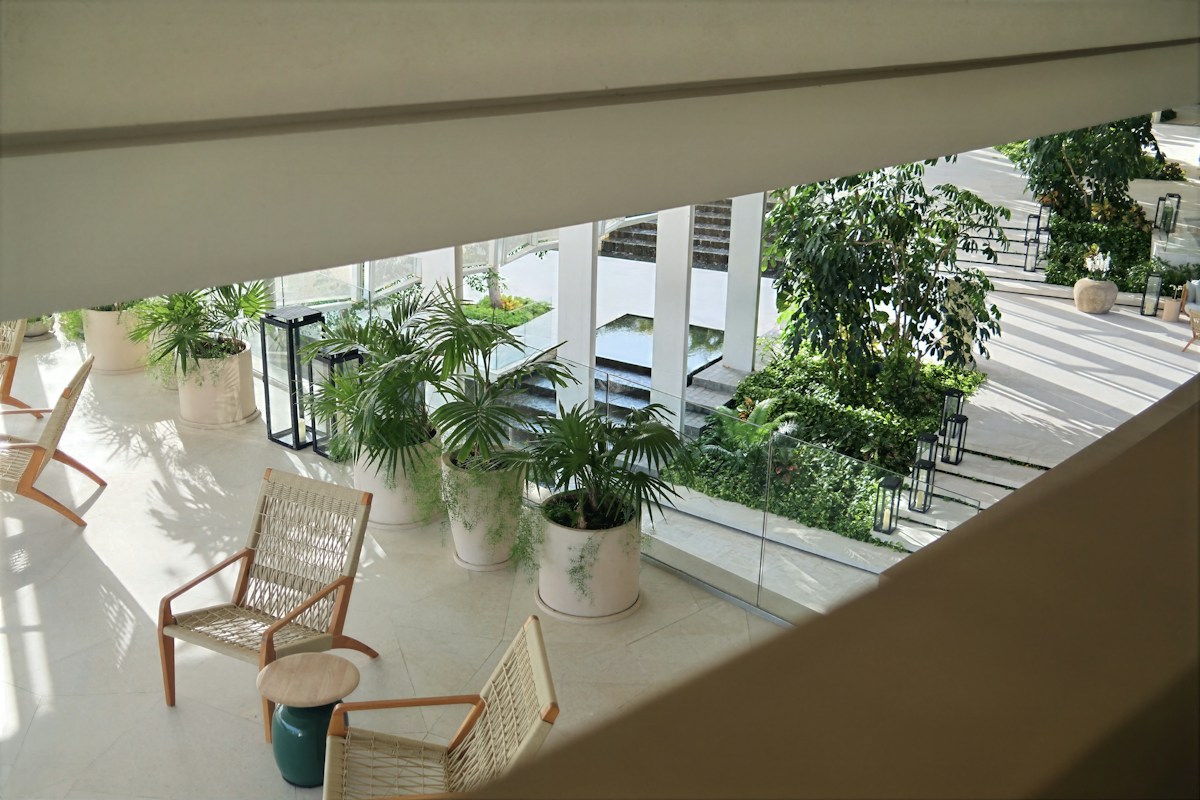
Lounge chairs and small tables beside indoor plants and glass railings

Massachusetts’s latest cannabis social-consumption implementation materials point to March 2027 for supplemental and hospitality license applications, followed by event-organizer applications in June. The timetable offers a clearer planning horizon for cannabis lounges and related businesses, but it is explicitly tentative. It is not an announcement that particular lounges will open in March or that current venues can begin allowing consumption.

The schedule appears in the Cannabis Control Commission’s November 12, 2026 public-meeting book. Anthony Martinelli reported the projected dates for The Marijuana Herald the same day. The primary presentation also lists unfinished guidance, application, technology and compliance work, explaining why a regulation already on the books has not yet become an operating market.

Three license classes, different settings

The commission’s January announcement established the basic structure. Supplemental licenses are intended to let qualifying existing marijuana establishments add on-site consumption at their business locations. Hospitality licenses create a route for qualifying applicants, including businesses that are not currently cannabis establishments. Event-organizer licenses address temporary consumption events.

Those categories matter because a café, an existing dispensary and a temporary gathering face different practical questions. A business looking for a permanent designated area is not necessarily pursuing the same license or operating plan as an organizer arranging an event. A general reference to cannabis lounges can obscure those distinctions.

The November presentation places supplemental and hospitality applications on the same target launch month, while giving event-organizer work a later milestone. Readers should keep those dates attached to the appropriate category rather than treating June as the timetable for every venue or March as a promise about every event.

Regulations and available applications are separate milestones

The commission says its social-consumption regulations took effect January 2, 2026. Its implementation project then had to develop the machinery that supports licensing: application materials, IT changes, responsible vendor training, inspection requirements, public information and coordination with municipalities.

That sequence explains an apparent contradiction in the public discussion. The existence of regulations does not mean a business can already obtain every necessary license. Equally, the future launch of an application process would not mean all applicants are immediately authorized to open their doors.

The November meeting materials list work on architectural and structural-change forms, consumer information cards, hospitality application and inspection requirements, and event-organizer compliance planning. They also identify review of four responsible-vendor-training applications. Those are implementation steps, not four approved cannabis lounges.

Local permission remains a gate

The commission’s municipal guidance says communities must opt in to social consumption through lawful local action. Municipalities can decide which license classes and consumption-area types to permit. Local authorization is therefore a substantive part of the process, rather than a detail that follows automatically from the state’s timetable.

The meeting materials include a municipal zoning-tracker form intended to help applicants and the public understand local authorization. The form expressly says that submitting information does not constitute commission approval of a specific establishment. A town appearing in a tracker should not be mistaken for an announcement that a named venue is ready to operate.

Host community agreements and other local requirements may also apply. For a prospective operator, that makes the useful planning questions local as well as statewide: what has the municipality authorized, what site requirements apply, and which approvals would still be necessary for the proposed business?

An equity-focused opening period

The commission’s published framework reserves the initial licensing opportunity for qualifying equity participants and specified smaller cannabis business categories. Its January announcement identifies Social Equity Program participants, Certified Economic Empowerment Priority Applicants, microbusinesses and craft marijuana cooperatives.

The announced exclusivity period runs for 36 months beginning when at least one licensee in each social-consumption class has received authorization to commence operations. It should not be described as a period that simply began when the regulations took effect in January. The trigger affects how the initial opportunity is understood.

What the next update needs to show

The November presentation identifies staffing capacity, technology requirements, competing initiatives and project-management demands as risks. Its target dates are therefore best read as planning milestones that depend on completing the remaining work, not guaranteed opening dates.

For readers following our Harvest Cup coverage, the broader point is also useful: a cannabis-oriented event and an authorized consumption setting are different things. A festival’s theme does not establish its permissions. Massachusetts’s developing system is intended to create a defined route for particular licensed settings.

The next meaningful evidence will be finalized applications and guidance, clear local authorization, and later notices allowing individual operators to commence operations. Until then, March and June provide a tentative map of the licensing project—not an invitation to assume that consumption is permitted at an existing café, hotel or event.

Illustrative hospitality-interior stock photograph; not a Massachusetts cannabis lounge or an approved consumption site. Photo: Tamara B / Unsplash.

Continue Reading

Culture

London’s Cannabis Industry Awards Put the People Behind the Sector in Focus

The Cannabis Industry Council’s November 11 London awards recognize work in patient care, science, advocacy and professional standards.

Published

on

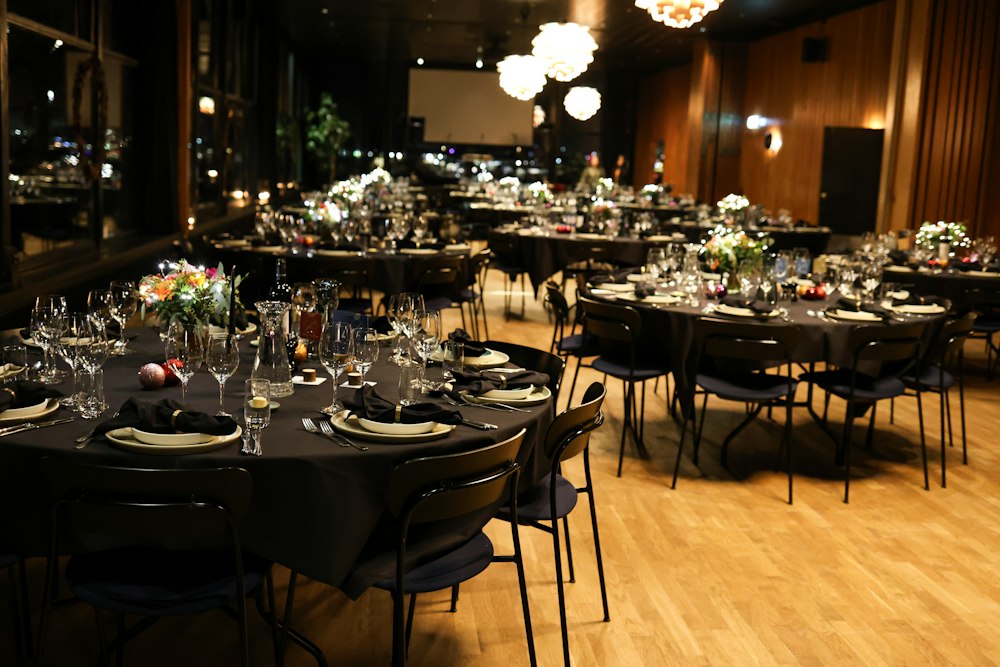
Tables set with glassware and flowers in a banquet room

The Cannabis Industry Council’s awards dinner is scheduled for tonight, November 11, at the Honourable Artillery Company in London. Its cannabis connection is direct: the evening recognizes people working across the UK’s medical cannabis sector, from patient support and pharmacy to research, environmental practice and leadership.

The organizer’s current event page confirms the Wednesday date and venue. This is a preview of the published program, not a report from inside the ceremony. No award recipient should be inferred from a shortlist before the council announces the results.

Nominations for this edition closed in September. An event page that still describes nomination opportunities should not be read as a new chance to enter tonight’s awards; the current timetable and ceremony information take precedence.

Recognition extends beyond a company’s name

The council’s original nominations announcement says the awards recognize individuals rather than companies. That gives the evening a different emphasis from a product competition or a ranking of cannabis brands. The subject is the work people contribute to the sector.

That distinction matters in an industry where consumers often encounter a clinic, product or retailer before learning who supports the service. An individual award can draw attention to work that sits behind a familiar business name without establishing that the entire company is superior to every alternative.

The format also creates room for contributions that are difficult to summarize through sales figures. Helping someone navigate a service, improving a professional process or explaining evidence can matter even when those activities do not produce a headline about a large commercial deal.

Eight categories describe a broad professional community

The published categories include Unsung Hero, the Hannah Deacon Doctor of the Year, Contribution to Social Impact, Pharmacist of the Year, Contribution to Science, the Green Award, Customer Service and Industry Leader of the Year. Together, they place clinical, scientific and operational work alongside advocacy and environmental concerns.

The award named for Hannah Deacon recognizes patient care, according to the council’s description. The science category concerns contributions to understanding cannabis, while the environmental category addresses sustainability. Those are distinct kinds of achievement, and an award in one category should not be read as proof of an unrelated claim.

For example, recognition for customer service would not constitute a clinical trial, just as a scientific contribution would not tell a prospective patient everything about a clinic’s appointment process. The category is part of the meaning of the recognition, not a detail to drop from the eventual winners list.

The judges describe evidence as part of the standard

In the council’s introduction to its judging panel, judges emphasize demonstrated contribution, professional standards and delivery rather than visibility alone. The listed panel includes Professor Mike Barnes, Jamie Bartley, Frances Crewdson, Tom Gray, Nick Pateras, Callie Seaman, Luisa Searle and Heidi Whitman.

These are the organizers’ stated criteria and their panel’s perspectives. They explain what the competition aims to recognize; they are not an independent audit of every nominee’s work. Readers can value professional recognition while still asking what specific contribution led to it.

The useful follow-up after an awards night is therefore more than the name of the winner. What did the person do? Who benefited? What evidence supports the achievement? Those questions turn an honor into a story readers can understand rather than simply repeat.

A formal evening with a practical focus

The event is presented as an awards dinner with entertainment and networking. The current page invites guests to dress for the occasion but says a formal black-tie dress code is not required. Attendees should use the organizer’s current listing for access and practical details rather than assume an older ticket offer remains available.

That presentation places cannabis professionals in a familiar cultural setting: a shared evening recognizing peers. The interest lies in how a developing sector chooses to describe good work and which kinds of contribution it brings into public view.

Our preview of MEDICA’s cannabis-counseling workshop follows another professional gathering, with a different purpose and audience. Training, research and recognition are separate activities, but each can reveal what a cannabis-related professional community considers important.

Wait for the results, then look at the work

The council’s published timetable places the ceremony after the nomination and judging periods. The current story is that the event is scheduled to take place, not that a particular person has won. A results report will require an actual announcement from the organizer.

For now, the evening’s structure offers a clear view of the subjects being celebrated: patient-facing work, scientific understanding, responsible operations and leadership. The most meaningful coverage after the ceremony will connect those category names to concrete achievements, keeping the contribution in focus alongside the celebration.

Illustrative banquet photograph; not the HAC or the Cannabis Industry Awards. Photo: Filip Rankovic Grobgaard / Unsplash.

Continue Reading

Culture

Vermont Opens Its Cannabis Event Lottery Window November 16

A regional lottery will select retailers for the next stage of Vermont’s event-sales pilot, with local approval and detailed operating plans still required.

Published

on

Autumn trees and hills near Mount Mansfield in Stowe, Vermont

Vermont cannabis retailers will soon be able to enter a lottery for a pilot program that could move regulated sales beyond the conventional dispensary. The Cannabis Control Board says the submission window opens November 16 and closes November 30, 2026, with a regional drawing planned for its December 16 meeting.

The cannabis connection is the substance of the program: selected retailers can seek permission to administer off-site events where registered cannabis products are displayed and sold. That is a more limited proposition than an open-consumption festival. The adopted procedure expressly preserves Vermont’s prohibition on public cannabis consumption.

The board’s official events pilot page sets out the dates and application route. Its procedure adopted October 28 explains what applicants must demonstrate before a permit can become an actual event.

A lottery entry is not an event permit

The first step is a preliminary application from a qualified retail cannabis establishment. There is no fee to enter the lottery. The board nevertheless asks businesses to enter only after reviewing the requirements and deciding they have both the capacity and intention to host a compliant event.

The procedure divides the state into five regions and requires a retailer to apply within the region where it is located, for an event in that region. For each region, a final applicant is selected from qualified preliminary applicants by lottery. The procedure also allows first and second runners-up to be selected.

Selection leads to the full application stage, rather than automatically authorizing sales. That later application includes required documentation, standard-form municipal approval and a $500 application fee. Final approval is determined by a board vote. The procedure allows no more than ten event permits per year, a ceiling that should not be confused with a promise that ten events have already been approved.

Local approval and retail experience matter

An event can take place only in a municipality that has voted to authorize cannabis retail sales. The applicant must also obtain written approval for the planned event from the relevant municipal authority. That approval can include conditions addressing public protection, traffic and nuisance concerns.

Applicants must demonstrate good standing and tax compliance. The procedure’s definition includes at least six months of continuous, compliant operation, an appropriate compliance history and reliable recordkeeping. A newly imagined event concept, without the required retail credentials and operating capacity, is therefore not enough.

The operational burden also reaches the retailer’s existing shop. Except for the specified case of an event contiguous with the licensed retail location, a permit holder cannot conduct sales at its shop and the event simultaneously. Businesses weighing participation will need to consider staffing and the effect on normal operations.

Culture can be part of the setting

The procedure allows the board to authorize responsible integration with commercial and cultural offerings. It gives examples including musical artists and vendors serving food or nonalcoholic beverages. Vendors and their employees working at the event must be at least 21, and vendors must hold any other required permits or licenses.

Those possibilities do not remove the program’s boundaries. Settings that sell or furnish alcohol for on-premises consumption are unsuitable, as are settings that appeal to people under 21 or encourage the expectation that public cannabis consumption is authorized. The procedure also identifies activities requiring heightened coordination or judgment, such as the start of a sporting competition, as problematic contexts.

For readers following events such as The Harvest Cup in Massachusetts, the distinction is useful: a cannabis-oriented gathering and a government permit to sell cannabis are separate questions. Vermont’s pilot creates a specific approval route, not a general rule for every cultural event.

The practical plans behind a public event

Security and product-sale plans must explain how inventory, money, staff and access will be managed. The rules address preventing entry by intoxicated people and anyone under 21, protecting products from diversion, and keeping cannabis products out of general public view. They also require inventory tracking arrangements, including accurate records if connectivity is lost.

The product plan has a further market-access requirement: at least 40 percent must meet the procedure’s unaffiliated-product standard, applied by stock-keeping units within specified product categories. Medical cannabis products cannot be promoted or sold at an event. Liability insurance must cover the event location and activities.

For now, November’s deadline is a preparation milestone. No event date, location or participant list follows automatically from it. The next meaningful development will be the regional selection, followed by complete applications and board decisions that show what this tightly bounded experiment will look like in practice.

Stock landscape photograph of Stowe, Vermont; not a proposed or approved cannabis event site. Photo: Rafael Rodrigues / Unsplash.

Continue Reading

Trending

Join The Cannabis Aficionado Community!
Join the Cannabis Aficionado community and receive all of the most relevant news geared towards our sophisticated enthusiast community.
Loading

Copyright ©️ 2026 Cannabis Aficionado. Cannabis Aficionado is a registered trademark of CNM Inc. All rights reserved. Registration on or use of this site constitutes acceptance of our Terms of Service, Privacy Policy and Cookies Policy. People may receive compensation for some links to products and services. Offers may be subject to change without notice.