#cannabisaficionado

Cannabis

Cannabis Survey Finds a Conversation Gap in Contact Sports

A newly published survey points to an education and communication problem around cannabinoids, while its methods place clear limits on broad claims about athletes.

Published

on

Pilates reformer machines in a sunlit studio with brick walls
Advertisement Back2Grow Advertisement

A newly published study in Sports Health puts cannabis conversations inside the training room under scrutiny. The research, first published online October 21, surveyed elite and professional contact-sport athletes and medical or training personnel about cannabinoids. Its central subject is a gap between interest in these products and confidence discussing them.

For cannabis-minded sports readers, this is a useful shift from celebrity anecdotes to the relationship between athletes and the people responsible for their care. The findings concern reported experiences and perceptions. They do not establish that cannabis improves performance or that any particular team has changed its rules.

Read the denominator beside the headline

The study includes 166 athlete respondents and 64 medical or training staff. Participants could skip questions, so the number answering changes across the paper. In the results section, the widely repeated finding that 56 percent currently used cannabis or cannabinoid products is presented in a subsection referring to 105 respondents.

That detail changes how a reader should describe the result. A percentage attached to one survey item should travel with its relevant sample, rather than become a claim about every person who entered the study or about professional sport as a whole. The full paper is more useful than a detached percentage circulating online.

A survey measures reported experience

The authors used anonymous online questionnaires and recruitment through sporting networks, personal contacts and peer sharing. They could not calculate a response rate. Their limitations section identifies self-selection and self-report as concerns, and cautions against generalizing the results or drawing causal conclusions.

In practical terms, people especially interested in cannabis may be more inclined to answer a survey about it. Memories and willingness to disclose can also shape responses. Those possibilities do not erase what participants said; they define the kind of evidence available and the questions a stronger follow-up study would need to address.

Interest and understanding are different measures

The researchers describe educational needs on both sides of the athlete-provider relationship. That is a different finding from demonstrating that a product is effective. Someone can believe a substance helps, want to learn about it and still lack reliable information about its ingredients or possible interactions.

For readers, the useful distinction is between a report of use, a report of perceived benefit and a controlled test of an outcome. A questionnaire can explore the first two. Establishing an effect on recovery, sleep or competition performance requires research designed to evaluate that particular question.

It is also worth separating a request for better communication from an endorsement of a treatment. A clinician can invite an accurate account of what someone takes while continuing to assess evidence, risks and the rules governing that person’s sport. Openness does not require a predetermined answer about a product.

The rulebook still matters

USADA’s cannabinoid guidance explains that CBD is permitted under World Anti-Doping Agency rules, while other cannabinoids are prohibited in competition. It also warns that CBD products can contain prohibited cannabinoids, and that athletes subject to those rules are responsible for substances found in their samples.

That distinction prevents a common shortcut: treating a CBD label as assurance that a finished product is acceptable for competition. The permitted status of one compound does not certify every ingredient in a bottle, gummy or powder. USADA further says third-party certification reduces, but does not eliminate, contamination risk.

Readers should also avoid exporting one framework to every league. The applicable governing body, competition rules and any medical-exemption process need to be identified for the actual athlete. This survey is not a new anti-doping policy, a clearance certificate or permission to ignore a team’s requirements.

What better evidence would look like

A useful next study could make recruitment and item-level samples especially clear, include a broader range of participants and distinguish products and reasons for use. Repeated measurements could examine whether an education program changes knowledge or willingness to talk. A clinical trial would answer a different question about a specified intervention.

Those research tasks should stay separate when the findings enter public discussion. Better disclosure, better information and demonstrated therapeutic outcomes are related interests, but one cannot stand in for all three. The current paper gives sports organizations questions to investigate rather than a universal cannabis prescription.

For fans and participants following the plant’s place in sport, the most useful takeaway is the need for a more precise conversation: which product, which evidence, which rulebook and which person’s circumstances? Keeping those questions visible is more informative than turning a survey percentage into a verdict on cannabis and athletics.

Illustrative stock Pilates studio; not a contact-sport team facility or study location. Photo: Karl Solano / Pexels.

Cannabis

AMA’s Botanical Drug Warning Arrives as FDA’s Comment Deadline Nears

The physicians’ organization wants botanical products evaluated through rigorous evidence as FDA gathers feedback on research, manufacturing and regulatory challenges.

Published

on

Green plant stems in glass laboratory flasks outdoors

The American Medical Association is urging the Food and Drug Administration to maintain rigorous standards for botanical drug products as a federal comment deadline approaches. Its October 30 statement specifically includes cannabis among the plant-derived substances it says require proper evaluation. FDA’s public docket closes November 3.

For cannabis readers, the distinction is consequential: creating a clearer route for research does not establish that a particular product treats a condition. This discussion concerns how evidence is developed and assessed. It is separate from whether a dispensary has a business license or whether consumers can obtain a product under state rules.

What the physicians’ organization is asking for

The AMA says consumer popularity, anecdotal accounts and influencer marketing should not replace clinical trials and safety monitoring. It supports research into potential medical uses and risks while arguing against political considerations, conflicts of interest or commercial pressure overriding scientific evaluation.

Marijuana Moment’s November 2 reporting brought attention to the group’s response to FDA. The AMA’s published statement establishes the organization’s position; it is not a new FDA approval, a regulation taking effect or an announcement that a clinical trial has demonstrated a benefit.

The docket asks about development challenges

FDA announced the request for information September 3. The agency says botanical products can present distinctive research and regulatory difficulties because of their complexity and variability. Its aim is to gather practical information about advancing development, including barriers encountered by researchers and manufacturers.

The published notice asks about clinical studies, economic and scientific challenges, and the differences between developing minimally purified or whole-plant preparations and highly purified products. It also seeks examples of approaches that could streamline development while preserving safety, efficacy and quality.

Those questions help explain why a plant’s name is only a starting point. Researchers need to know what preparation is being studied, how it is produced and whether the material remains sufficiently consistent for the evidence to be interpretable. A finding involving one preparation cannot simply be assigned to every product carrying the same plant name.

Quality is part of the clinical question

The notice discusses batch-to-batch variability and reproducibility as development issues. It seeks feedback on quality standards and on scientifically credible study designs for complex botanical mixtures. These are practical questions about connecting the product in a study with the product that could eventually reach a patient.

For someone evaluating a treatment claim, that connection is worth examining. What exactly was tested? Was the dose and composition described? Does the claim concern the same preparation and the same population? A product’s botanical origin does not answer those questions, and an appealing personal account does not supply the missing comparison.

FDA also asks how well-established use, generally accepted scientific knowledge and real-world evidence could contribute to development. Asking how information might be used is different from accepting every historical claim as proof. The notice invites discussion of methods, rather than announcing a blanket shortcut around evaluation.

Botanical drugs are a defined development category

FDA’s background page describes botanical drug products as complex preparations derived from plant materials, algae, macroscopic fungi or combinations of those materials and intended for disease-related uses. The agency points to its 2016 guidance on characterization, quality control, clinical investigation and regulatory considerations.

The page also identifies four botanical products approved through prescription-drug pathways. That demonstrates an existing development route; it does not mean that all cannabis products belong to those approvals or that the agency has approved a category of retail merchandise. Approval attaches to a particular product and its authorized use.

Useful feedback can identify a concrete development obstacle and explain a proposed solution, with supporting information. FDA’s questions give contributors a way to organize that evidence around the actual research and quality issues under review.

How the public-comment window works

The notice identifies docket FDA-2026-N-9550 and sets November 3 as the deadline. Electronic submissions are accepted until 11:59 p.m. Eastern that day. Paper submissions must be received by the deadline. Readers considering a submission should follow the official notice’s instructions and use the correct docket number.

The notice warns that ordinary electronic comments and attachments are posted publicly. It provides a separate written process for information claimed as confidential. That matters to researchers or businesses considering whether to include unpublished manufacturing details, personal medical information or other sensitive material in a public submission.

For now, the immediate event is a closing opportunity to inform FDA’s work. The longer-term question is whether the feedback yields clearer research and development tools. Cannabis consumers should look for subsequent agency actions and product-specific evidence, while keeping an advocacy statement, an open docket and an approved treatment distinct.

Illustrative stock botanical arrangement; not cannabis, an FDA laboratory or a clinical trial. Photo: Ron Lach / Pexels.

Continue Reading

Cannabis

DEA’s Medical Cannabis Registrations Come With a November Supply-Chain Check

Federal registration is moving forward for qualifying medical dispensaries, but the new guidance reaches beyond the storefront to suppliers, records and laboratory testing.

Published

on

Columns on the United States Supreme Court building in Washington

The Justice Department’s first wave of federal medical marijuana registrations brings a practical question for operators this November: who is allowed to supply the products on the shelf? In an October 30 announcement, the department said initial registrations cover more than 900 qualifying dispensaries across seven states, while related DEA guidance sets November 29 as the date for timely applicants to establish compliant supply chains.

This is a development in the defined federal medical cannabis framework. It is not nationwide adult-use legalization, and it does not mean that a state business license automatically carries federal registration. The distinction matters to patients following access and to businesses whose existing suppliers may have different application statuses.

What the first registrations establish

The department names Alabama, Florida, Mississippi, South Dakota, Texas, Virginia and West Virginia in the initial group. It says qualifying dispensaries had to satisfy federal requirements, including a pre-registration investigation. Manufacturers and distributors remain part of the review process, with additional questions involving facilities, production controls and quotas.

That creates an important difference between the announcement’s headline and a particular store’s position. The federal release does not name every registered business. An operator or customer cannot establish a company’s status merely by recognizing its state on the list. The relevant business documentation still matters.

A pending application can have a specific status

The DEA’s four-page guidance addresses complete applications submitted between April 28 and June 26, 2026, including payment of the required fee. It calls these businesses timely applicants and explains the activities they may continue under their state medical licenses while the applications are pending.

The document excludes applicants that withdrew, received a final denial or lack the required state medical license. In other words, having once started an application is not enough to establish continuing eligibility. The category depends on both the submission and the business’s current circumstances.

Timely applicants can transact with other timely applicants and with appropriately registered DEA entities. A registered dispensary, for example, can receive medical cannabis from a qualifying distributor whose application is still pending. Pending and registered are different statuses, but the guidance describes a permitted relationship between them.

The November date is a supplier-verification task

DEA expects timely applicants to complete partner verification and necessary supply-chain adjustments by November 29. Its minimum due-diligence examples include obtaining application confirmations or registration certificates, checking relevant document control numbers, verifying active state licenses and retaining records of the checks.

For a business, this turns a broad compliance announcement into a set of relationships to review. A useful starting point is its actual supplier roster: which entity appears on an invoice, what activity that entity performs, what documentation supports its status and when the information was checked. That is more informative than relying on a familiar brand name.

The agency warns that transactions outside the permitted groups can become grounds for denying an application or revoking a registration. A late application that remains pending should therefore not be assumed to provide the same position as a timely application. The guidance is specific about those categories.

Existing inventory and laboratory samples are separate issues

DEA also addresses stock already acquired. Timely dispenser and distributor applicants may continue otherwise authorized activities with inventory held before the information was issued, including stock previously obtained from entities outside the qualifying groups. That provision should be read separately from the expectations for future supply relationships.

The laboratory section is narrower than a general testing exemption. It describes enforcement discretion for small quantities sent to an unregistered, same-state analytical laboratory with detailed records when using a DEA-registered lab would conflict with state law under the conditions specified in the document. It does not permit receiving cannabis back from an unregistered analytical laboratory.

Keeping those questions separate helps avoid two mistaken conclusions: that every item already on hand must immediately be discarded, or that a limited testing provision opens an unrestricted supplier channel. Neither follows from the guidance. The document’s conditions need to be considered against the actual transaction.

What readers should watch next

Marijuana Moment’s October 30 reporting highlighted the supply-chain warning alongside the registration announcement. The next useful evidence will be additional registrations, clearer partner documentation and updates explaining how the transition works in practice.

DEA says the document clarifies existing requirements and does not itself have the force of law. Businesses should use the original text and appropriate professional advice for their own circumstances. For the wider cannabis audience, the takeaway is concrete: federal recognition of a dispensary is only one part of a system that also depends on who manufactures, distributes and tests its products.

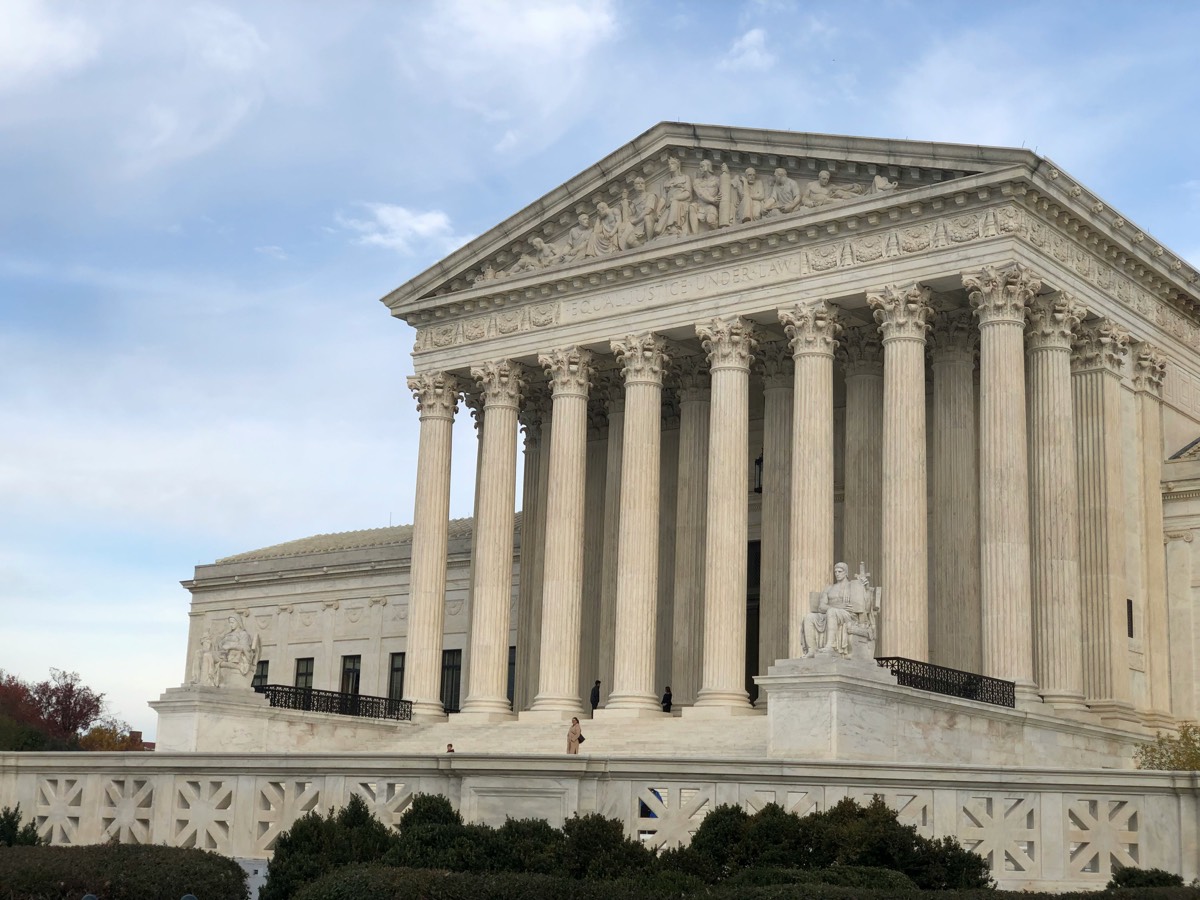
Illustrative stock photograph of the U.S. Supreme Court; this story concerns DEA guidance, not a court ruling. Photo: Joshua Woods / Unsplash.

Continue Reading

Cannabis

Tilray Plans to Move Foss Cannabis Production as It Raises Its Outlook

The company’s Canadian cannabis plan pairs production transfers with a higher earnings-guidance floor, while keeping the larger savings and certification targets in the future.

Published

on

Tilray Brands plans to shift cannabis cultivation and pre-roll production away from its Foss facility in Fenwick, Ontario, consolidating the work at Masson in Quebec and Cayuga in Ontario. The company’s November 2 announcement also raises the lower end of its fiscal 2027 adjusted earnings outlook, putting operational efficiency at the center of its Canadian cannabis strategy.

The news is a production plan with several different clocks. Foss operations are expected to conclude by January 31, 2027, while the full annualized savings target belongs to fiscal 2028. Investors, retailers and cannabis consumers should distinguish those milestones from a completed move or a demonstrated improvement in product availability.

Where the work is expected to go

Tilray says cultivation would move to Masson, with pre-roll production going to Cayuga. It links the decision to higher-than-expected yields and the ability to use existing infrastructure more efficiently. The company also says it has offered affected Foss employees opportunities at its other facilities.

An offer of another position is not the same as evidence that every employee will relocate or remain employed. The announcement does not provide a complete account of individual choices, relocation terms or eventual staffing outcomes. Those details will matter when evaluating the transition’s effect on workers, alongside its effect on the production network.

Tilray describes a phased process intended to finish current cultivation and harvest cycles. That is relevant to the practical task: moving a cannabis operation involves the timing of living crops and finished-product manufacturing, rather than simply transferring a list of office functions on one date.

Capacity is different from sales

The company expects Masson’s annual cultivation capacity to rise from about 32.5 to 50 metric tonnes. That is an increase of 17.5 tonnes in the stated capacity figure. It is not a report that the facility has already sold that additional amount or that the market has committed to buying it.

Capacity, harvested output, saleable quality and customer demand describe different stages of a cannabis business. A higher production ceiling can create flexibility, but its commercial value depends on what the company can consistently produce and place with customers. Future results will show whether the larger potential output is matched by useful utilization.

The announcement also identifies pre-rolls as roughly a third of Tilray’s Canadian adult-use sales and says that category grew 28 percent in fiscal 2026. Those figures explain why the company is emphasizing manufacturing efficiency there. They do not establish that the same growth rate will continue after production is consolidated.

The earnings range moves at its lower end

Tilray now projects fiscal 2027 Adjusted EBITDA of $70 million to $75 million, compared with its previous range of $68 million to $75 million. The upper end is unchanged. Describing the update as a higher minimum expectation is more precise than implying the whole range rose by the same amount.

The company expects approximately US$10 million in annualized cost savings from the Canadian consolidation, with the full run rate beginning in fiscal 2028. Annualized savings describe a recurring-rate target; they should not be read as an immediate cash receipt or automatically added in full to a nearer-term period’s earnings.

Adjusted EBITDA is also a different measure from net income or cash available after every expenditure. The new range is management guidance, not a reported result for a completed fiscal year. Readers comparing performance should return to the company’s subsequent financial statements and explanations of its adjustments.

Certification remains a future milestone

Tilray expects Masson to reestablish its earlier EU-GMP certification in calendar 2027. Its wording places certification in the future. The announcement should therefore not be described as proof that the facility has already regained that status or completed every step needed to serve a particular international market.

The company also discusses potential future U.S. medical cannabis demand when permissible. That is conditional positioning, not an announced U.S. supply contract or permission to ship Canadian cannabis into the United States today. A production strategy can prepare for an opportunity without establishing that the opportunity is legally or commercially available.

What would demonstrate progress?

Tilray says it expects uninterrupted supply, including continued Redecan availability, during the transition. For customers and retailers, the meaningful evidence will be the products actually available through their usual regulated channels. A corporate plan is useful context, but it does not replace current inventory information.

The next checks are specific: whether the Foss transition finishes as projected, how production performs at the receiving facilities, whether the certification milestone is reached and how realized costs compare with the savings target. Together, those measures will tell a more complete story than any single capacity number.

For now, the announcement marks a shift toward concentrating cannabis work in fewer parts of an established network. Its success will depend on execution across crops, manufacturing, people and customers—not merely on announcing a lower-cost footprint.

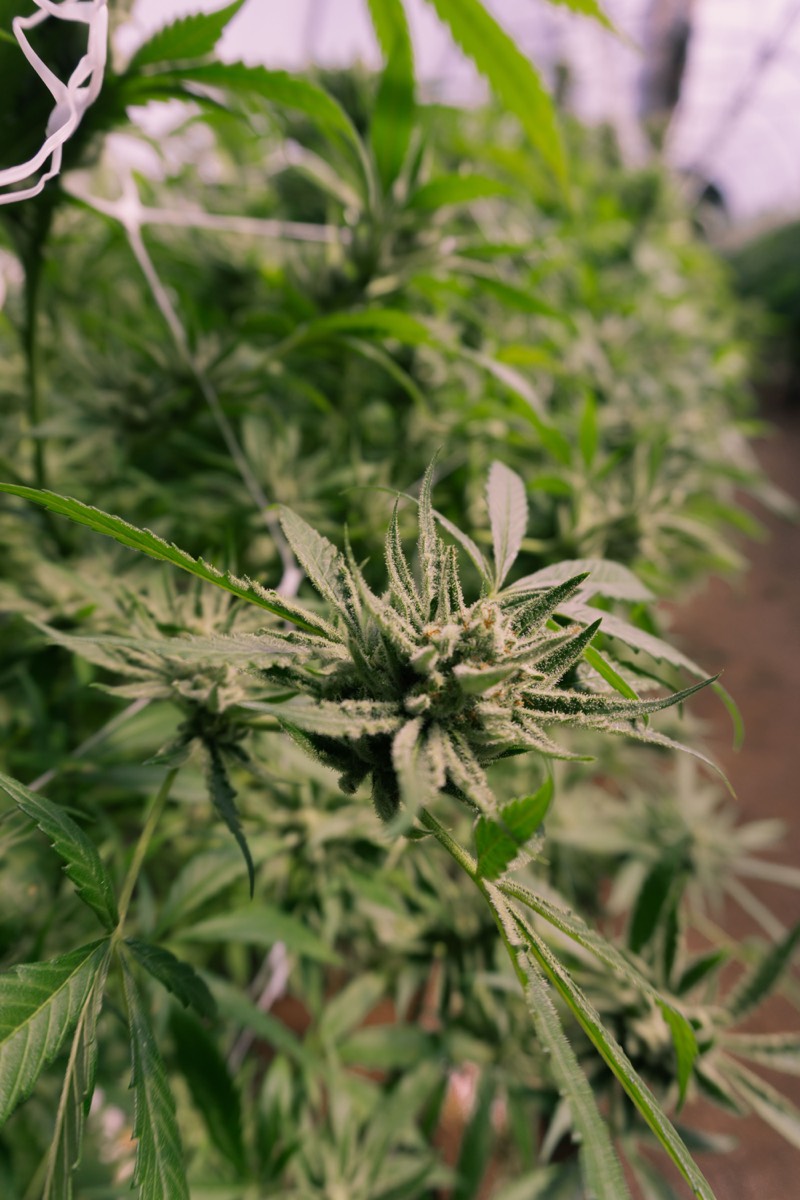
Illustrative stock cannabis cultivation photograph; not a Tilray facility. Photo: Haley Bee / Pexels.


Continue Reading

Trending

Join The Cannabis Aficionado Community!
Join the Cannabis Aficionado community and receive all of the most relevant news geared towards our sophisticated enthusiast community.
Loading

Copyright ©️ 2026 Cannabis Aficionado. Cannabis Aficionado is a registered trademark of CNM Inc. All rights reserved. Registration on or use of this site constitutes acceptance of our Terms of Service, Privacy Policy and Cookies Policy. People may receive compensation for some links to products and services. Offers may be subject to change without notice.