#cannabisaficionado

Cannabis

Tilray Plans to Move Foss Cannabis Production as It Raises Its Outlook

The company’s Canadian cannabis plan pairs production transfers with a higher earnings-guidance floor, while keeping the larger savings and certification targets in the future.

Published

on

Advertisement Back2Grow Advertisement

Tilray Brands plans to shift cannabis cultivation and pre-roll production away from its Foss facility in Fenwick, Ontario, consolidating the work at Masson in Quebec and Cayuga in Ontario. The company’s November 2 announcement also raises the lower end of its fiscal 2027 adjusted earnings outlook, putting operational efficiency at the center of its Canadian cannabis strategy.

The news is a production plan with several different clocks. Foss operations are expected to conclude by January 31, 2027, while the full annualized savings target belongs to fiscal 2028. Investors, retailers and cannabis consumers should distinguish those milestones from a completed move or a demonstrated improvement in product availability.

Where the work is expected to go

Tilray says cultivation would move to Masson, with pre-roll production going to Cayuga. It links the decision to higher-than-expected yields and the ability to use existing infrastructure more efficiently. The company also says it has offered affected Foss employees opportunities at its other facilities.

An offer of another position is not the same as evidence that every employee will relocate or remain employed. The announcement does not provide a complete account of individual choices, relocation terms or eventual staffing outcomes. Those details will matter when evaluating the transition’s effect on workers, alongside its effect on the production network.

Tilray describes a phased process intended to finish current cultivation and harvest cycles. That is relevant to the practical task: moving a cannabis operation involves the timing of living crops and finished-product manufacturing, rather than simply transferring a list of office functions on one date.

Capacity is different from sales

The company expects Masson’s annual cultivation capacity to rise from about 32.5 to 50 metric tonnes. That is an increase of 17.5 tonnes in the stated capacity figure. It is not a report that the facility has already sold that additional amount or that the market has committed to buying it.

Capacity, harvested output, saleable quality and customer demand describe different stages of a cannabis business. A higher production ceiling can create flexibility, but its commercial value depends on what the company can consistently produce and place with customers. Future results will show whether the larger potential output is matched by useful utilization.

The announcement also identifies pre-rolls as roughly a third of Tilray’s Canadian adult-use sales and says that category grew 28 percent in fiscal 2026. Those figures explain why the company is emphasizing manufacturing efficiency there. They do not establish that the same growth rate will continue after production is consolidated.

The earnings range moves at its lower end

Tilray now projects fiscal 2027 Adjusted EBITDA of $70 million to $75 million, compared with its previous range of $68 million to $75 million. The upper end is unchanged. Describing the update as a higher minimum expectation is more precise than implying the whole range rose by the same amount.

The company expects approximately US$10 million in annualized cost savings from the Canadian consolidation, with the full run rate beginning in fiscal 2028. Annualized savings describe a recurring-rate target; they should not be read as an immediate cash receipt or automatically added in full to a nearer-term period’s earnings.

Adjusted EBITDA is also a different measure from net income or cash available after every expenditure. The new range is management guidance, not a reported result for a completed fiscal year. Readers comparing performance should return to the company’s subsequent financial statements and explanations of its adjustments.

Certification remains a future milestone

Tilray expects Masson to reestablish its earlier EU-GMP certification in calendar 2027. Its wording places certification in the future. The announcement should therefore not be described as proof that the facility has already regained that status or completed every step needed to serve a particular international market.

The company also discusses potential future U.S. medical cannabis demand when permissible. That is conditional positioning, not an announced U.S. supply contract or permission to ship Canadian cannabis into the United States today. A production strategy can prepare for an opportunity without establishing that the opportunity is legally or commercially available.

What would demonstrate progress?

Tilray says it expects uninterrupted supply, including continued Redecan availability, during the transition. For customers and retailers, the meaningful evidence will be the products actually available through their usual regulated channels. A corporate plan is useful context, but it does not replace current inventory information.

The next checks are specific: whether the Foss transition finishes as projected, how production performs at the receiving facilities, whether the certification milestone is reached and how realized costs compare with the savings target. Together, those measures will tell a more complete story than any single capacity number.

For now, the announcement marks a shift toward concentrating cannabis work in fewer parts of an established network. Its success will depend on execution across crops, manufacturing, people and customers—not merely on announcing a lower-cost footprint.

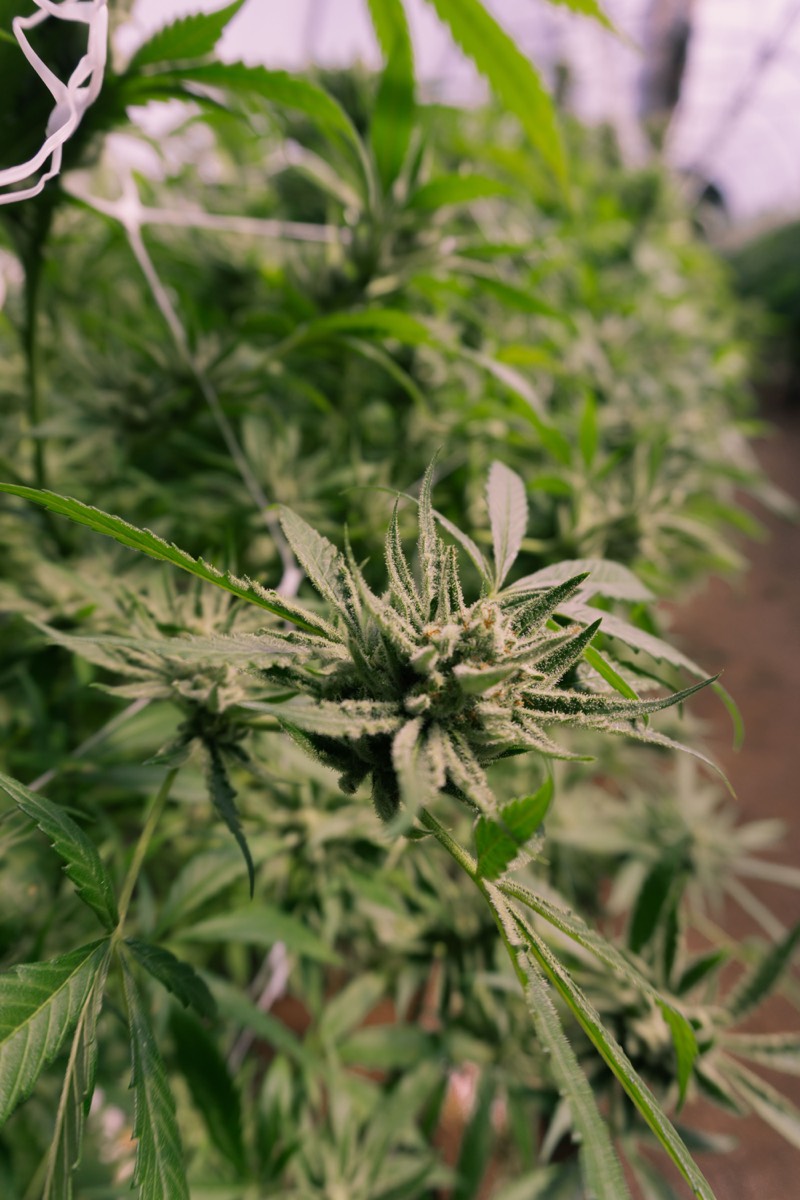
Illustrative stock cannabis cultivation photograph; not a Tilray facility. Photo: Haley Bee / Pexels.

Health

Massachusetts Advances a Different Route to Medical Cannabis for Veterans

A Senate amendment would let qualifying veterans use VA diagnosis records for medical cannabis registration. It remains a proposal ahead of November 5 consideration.

Published

on

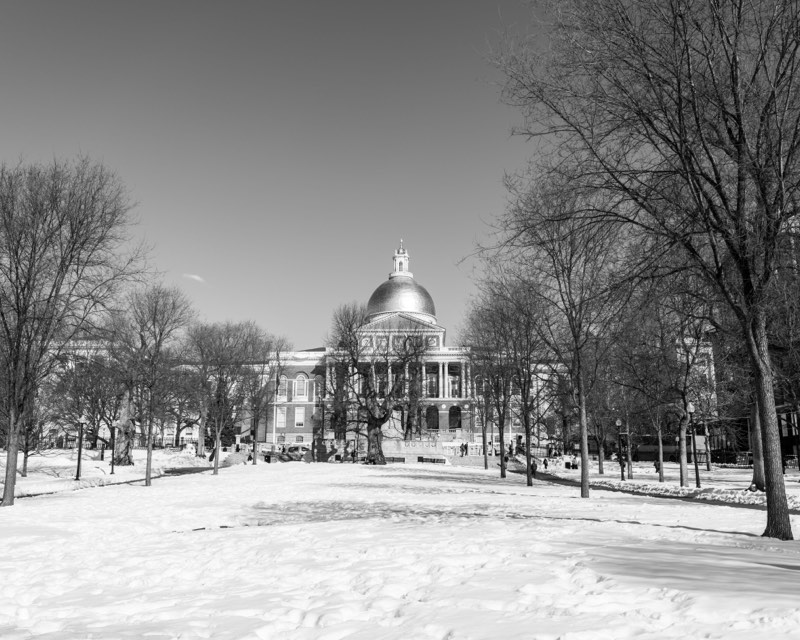
Black-and-white winter view of the Massachusetts State House behind bare trees.

A Massachusetts supplemental-budget proposal could change how some military veterans enter the state’s medical cannabis program. A Senate committee amendment would allow the Cannabis Control Commission to use Veterans Administration diagnosis records when issuing a registration card, without requiring a separate healthcare professional’s cannabis certification.

The proposal is not law. As of November 3, the official legislative record places the House bill and Senate amendment in the Orders of the Day for Thursday, November 5. For veterans following cannabis access, the important development is a proposed change to documentation—not a new card application route already available today.

What the amendment would do

Tom Angell’s November 3 reporting for Marijuana Moment highlights the medical-cannabis provisions within a much broader appropriations measure. The operative Senate language appears in amendment S.3290, rather than a standalone bill devoted only to cannabis.

Section 67 addresses a veteran receiving healthcare at a Veterans Administration facility who provides official VA documentation indicating a debilitating medical condition. It says the commission may issue a registration card and shall not require a written or electronic certification from a healthcare professional for that route.

The wording is narrower than a promise of automatic eligibility for every person who served. It identifies a healthcare setting, official documentation and a qualifying diagnosis. The commission’s proposed authority to issue a card should not be paraphrased as a guarantee that every veteran would immediately receive one.

The qualifying-condition change is separate

Section 66 would add post-traumatic stress disorder, a medical condition producing chronic pain, and opioid use disorder to the statutory definition of a debilitating medical condition. Those additions concern the state program’s legal eligibility framework. They are not new clinical-trial results demonstrating that cannabis treats each condition.

That distinction is useful for patients comparing political and medical news. A legislature can change an access requirement without resolving questions about the most appropriate treatment for an individual. A diagnosis, permission to register and a clinician’s treatment judgment remain different parts of a person’s care.

Where the legislation stands

The official history for H.5700 records House engrossment on October 21, followed by referral to Senate Ways and Means on October 26. On October 29, the committee recommended passage with replacement text, S.3290. The record then lists November 5 consideration.

Committee approval is a step in the legislative process, not the governor’s signature. The text can still change as the measure advances. Readers should therefore track the final language and any implementing instructions before assuming the documentary requirements have been altered.

The registration provision also sits inside a large budget bill covering many subjects. An update about that broader measure should be checked for the specific cannabis sections, rather than treated as confirmation that every earlier proposal survived intact.

There are three details to check in the next update: whether the Senate retains the veterans paragraph, whether the qualifying-condition additions remain, and whether the final measure becomes law. Following those separately prevents a general budget headline from being mistaken for confirmation that the patient-registration change has taken effect.

Why VA paperwork is central

The VA’s published guidance says its clinicians may discuss cannabis use with veterans but may not recommend medical marijuana or complete forms required for participation in state marijuana programs. That creates a practical distinction between discussing a diagnosis and signing a cannabis-specific recommendation.

The Massachusetts proposal would work with records of a qualifying diagnosis. It would not require VA clinicians to become state cannabis certifiers. Nor would a state-law change, on its own, rewrite the VA’s federal policies about pharmacies, payment or conduct on federal property.

The same VA guidance says cannabis use does not by itself cause a veteran to be denied VA benefits, and encourages discussion with providers. It also says the VA will not pay for medical marijuana and prohibits its use or possession on VA grounds. Those policies should not be confused with the state registration question.

A proposal to follow, not an application instruction

For now, applicants should rely on the Cannabis Control Commission’s current program instructions. News of a committee amendment is not a substitute for the procedure in force. The next useful reporting checkpoint is the Senate’s action and the exact text that continues through the legislative process.

Our coverage of botanical-drug evidence standards addresses another boundary worth preserving: access policy and proof of medical benefit are different questions. This Massachusetts proposal concerns access paperwork. Its significance lies in whether veterans could use existing diagnosis documentation instead of obtaining another cannabis certification—not in a claim that cannabis is suitable for everyone.

Massachusetts State House in a stock winter photograph; not November 2026 conditions. Photo: Phil Evenden / Pexels.

Continue Reading

Health

New Cannabis Heart Study Raises Questions, Not a Verdict

A preliminary AHA survey analysis links recent cannabis use with cardiovascular history. What the findings can—and cannot—tell consumers.

Published

on

Stethoscope and papers on an unoccupied medical office desk.

A new preliminary analysis is putting cannabis and heart health back in the conversation ahead of the American Heart Association’s Scientific Sessions. The association released the findings November 2, before the November 6–9 meeting in Chicago. The research concerns an association in survey responses, not proof that cannabis caused a heart attack or stroke.

That distinction is essential for cannabis consumers. A concerning statistical signal deserves attention, but it does not become a personal forecast simply because a percentage appears in a headline. The useful question is how the study was built and what kind of conclusion its design can support.

What the preliminary analysis found

According to the AHA’s research announcement, investigators examined 442,906 adults in 2020–2024 telephone-survey data. Recent cannabis use was associated with a reported history of cardiovascular disease. Compared with no recent use, use on one to five days was associated with 23% higher odds; use on 16 to 30 days with 21% higher odds.

The reported stroke associations were stronger, while the heart-attack association was not statistically significant. The pattern was not a simple progression in which every increase in frequency produced a larger association. That makes a slogan such as “more use always meant more risk” an inaccurate account of this particular analysis.

The AHA identifies this as a conference abstract, not a peer-reviewed full paper. Its findings remain preliminary. Readers should keep that label attached when sharing the story, rather than stripping away the qualification and circulating the numerical result on its own.

Why a survey is useful—and limited

The underlying Behavioral Risk Factor Surveillance System is a long-running CDC-supported source of information about adults’ health behaviors, chronic conditions and access to care. Telephone responses can reveal population patterns worth investigating. They are not the same as following an individual from a documented exposure to a later medical event.

There is an important difference between the breadth of BRFSS itself and the sample available for a particular question. A national surveillance system does not automatically mean every analysis includes every state. This research used jurisdictions with cannabis information, rather than treating all state questionnaires as identical.

A survey question about use in the past month also describes a different time window from a question about whether someone has ever received a diagnosis. Putting those answers in the same analysis does not establish which happened first. That timing problem is central to interpreting an association with medical history.

Odds are not an individual probability

Higher odds do not mean the same percentage of users experienced an event. Nor does a relative comparison, by itself, tell a reader their absolute probability of a future stroke. To translate a group association into an individual estimate would require information this headline does not provide, including an appropriate baseline and clinical context.

Adjustment for other variables can improve a comparison, but it cannot turn an observational survey into a randomized experiment. It also cannot measure an exposure more precisely than the underlying questions allow. Frequency is one dimension of cannabis use; it is not a complete description of a product or a person’s consumption.

How this fits existing guidance

The CDC’s cannabis and heart-health guidance already notes that cannabis can increase heart rate and blood pressure immediately after use. It also says more research is needed to understand cardiovascular effects. Much existing evidence concerns smoking, which makes separating cannabinoid effects from smoke exposure difficult.

Those distinctions are useful when interpreting any new cannabis study. “Cannabis” is a broad exposure label, and a headline should not erase differences among products, methods and users. At the same time, uncertainty is not evidence that an alternative route is harmless. A survey association cannot establish a safe dose or certify a safer product.

For someone discussing cannabis with a health professional, the productive approach is to describe actual products and patterns rather than assume the clinician already knows what “use” means. This report offers no dosing recommendation and no reason to change prescribed treatment without the prescribing clinician’s guidance.

What to watch next

A full peer-reviewed paper would allow closer examination of the methods, uncertainty and subgroup results than a release permits. Until then, the responsible reading is neither dismissal nor alarm: this is a preliminary signal that adds to an unresolved research question. Cannabis coverage serves readers best when it preserves those limits alongside the finding.

When assessing the eventual paper, readers can look for confidence intervals and a clear account of who was included. Those details help show the precision and reach of an estimate. A large sample is valuable, but size alone does not remove bias or resolve the order of events.

Our contact-sports cannabis survey coverage examines another distinction between reported experiences and demonstrated effects. The populations and questions differ, so the findings should not be combined into one claim.

Illustrative medical office; not a study site. Photo: Ercan Şenkaya / Pexels.

Continue Reading

Cannabis

Idaho’s HJR 4 Vote Could Close a Cannabis Initiative Route

Idaho votes November 3 on who can legalize cannabis. Here is what HJR 4 would change—and why neither outcome immediately legalizes marijuana.

Published

on

A person placing a paper into a ballot box beside a US flag.

Idaho voters face a cannabis question on November 3 that is less about opening dispensaries than deciding who gets to write the rules. House Joint Resolution 4 would put exclusive authority over legalization in the Legislature’s hands, closing a route that cannabis reform supporters could otherwise pursue through citizen initiatives.

The distinction matters on Election Day: voting against HJR 4 would not itself legalize marijuana. Voting for it would change the state’s constitutional allocation of power. For cannabis readers following the next possible reform campaign, the consequential issue is whether voters can still bypass lawmakers to propose a legalization statute.

What yes and no would mean

The Idaho secretary of state’s official explanation says approval would reserve legalization authority for the Legislature and remove citizens’ ability to initiate statutes legalizing the covered substances. Rejection would preserve the existing initiative pathway. The proposal also addresses narcotics and other psychoactive substances, so its scope extends beyond cannabis.

Think of the vote as a decision about the doorway, rather than the policy that might eventually pass through it. A future proposal would still need its own specific rules, supporters and votes. Keeping a route available does not mean that a particular proposal has qualified or that a legal retail market is about to begin.

That is also why a headline describing this simply as an Idaho marijuana legalization vote would miss the central choice. Voters are being asked whether exclusive authority should rest with elected lawmakers, not whether a particular possession limit, licensing system or medical program should take effect.

The cannabis initiatives are not on this ballot

The same official state page lists both the Idaho Medical Cannabis Act and Decriminalize Cannabis Now as initiatives that did not qualify. Neither should be confused with HJR 4. Their absence and the constitutional amendment’s presence are separate facts, even though all three belong to the broader debate over cannabis policy.

For readers seeing campaign messages about patient access or criminal penalties, the useful follow-up is to identify which document the message concerns. An argument for medical cannabis is not an explanation of the amendment’s legal mechanism. Likewise, a position on the initiative process does not necessarily disclose someone’s position on every possible future cannabis bill.

Why the initiative route takes work

Idaho’s official filing requirements outline a multistep process involving review, ballot titles, circulation and county signature verification. That machinery matters because access to the ballot is a substantial undertaking even when the constitutional route remains available. Campaign enthusiasm alone is not qualification.

The state says circulation is limited to an 18-month period or April 30 of the election year, whichever comes first. County clerks verify signatures against qualified-elector records. Those procedural hurdles help explain the distance between announcing a cannabis initiative and giving voters an actual measure to decide.

The practical difference between the two HJR 4 outcomes therefore lies upstream of any future legalization vote. Under one outcome, a campaign could try to navigate the initiative process; under the other, it would need to focus on legislative action for legalization. Neither route guarantees political success.

A question about political authority

The independent Idaho Voters guide reproduces the proposed constitutional language and distinguishes the amendment from existing statutes. Its account traces the measure to legislative action in 2025. This is a proposal lawmakers referred to voters, rather than a citizen legalization petition that reached the ballot through signatures.

For the cannabis industry, the lesson is to separate legal access, political process and commercial opportunity. A constitutional result is not a license announcement. Businesses cannot responsibly treat an outcome as permission to sell, and consumers should not interpret a rejected amendment as a new right to possess or purchase cannabis.

Where to follow the result

The official general-election page provides the state’s results link and election information. Statewide results begin after Idaho’s last polls close, listed as 8 p.m. Pacific and 9 p.m. Mountain. That reporting timetable is distinct from a declaration that every ballot has been counted or a result certified.

This article is an Election Day explanation, not a report of the outcome. When returns arrive, the meaningful next update will pair the vote with the actual legal consequence. Until then, the clearest reading remains the simplest: HJR 4 concerns who may authorize legalization, while neither choice immediately creates a legal cannabis market.

One useful comparison is the distinction between qualifying a proposal and winning a vote. An initiative can fail before Election Day because it never reaches the ballot; HJR 4 instead asks voters to change the availability of that route for future legalization efforts.

For a different ballot-policy question, see our Massachusetts Question 8 poll coverage. That measure concerns an existing retail system; Idaho’s amendment instead concerns authority over future legalization.

Illustrative voting photograph; not an Idaho polling place. Photo: Mikhail Nilov / Pexels.

Continue Reading

Trending

Join The Cannabis Aficionado Community!
Join the Cannabis Aficionado community and receive all of the most relevant news geared towards our sophisticated enthusiast community.
Loading

Copyright ©️ 2026 Cannabis Aficionado. Cannabis Aficionado is a registered trademark of CNM Inc. All rights reserved. Registration on or use of this site constitutes acceptance of our Terms of Service, Privacy Policy and Cookies Policy. People may receive compensation for some links to products and services. Offers may be subject to change without notice.