#cannabisaficionado

Cannabis

AMA’s Botanical Drug Warning Arrives as FDA’s Comment Deadline Nears

The physicians’ organization wants botanical products evaluated through rigorous evidence as FDA gathers feedback on research, manufacturing and regulatory challenges.

Published

on

Green plant stems in glass laboratory flasks outdoors
Advertisement Back2Grow Advertisement

The American Medical Association is urging the Food and Drug Administration to maintain rigorous standards for botanical drug products as a federal comment deadline approaches. Its October 30 statement specifically includes cannabis among the plant-derived substances it says require proper evaluation. FDA’s public docket closes November 3.

For cannabis readers, the distinction is consequential: creating a clearer route for research does not establish that a particular product treats a condition. This discussion concerns how evidence is developed and assessed. It is separate from whether a dispensary has a business license or whether consumers can obtain a product under state rules.

What the physicians’ organization is asking for

The AMA says consumer popularity, anecdotal accounts and influencer marketing should not replace clinical trials and safety monitoring. It supports research into potential medical uses and risks while arguing against political considerations, conflicts of interest or commercial pressure overriding scientific evaluation.

Marijuana Moment’s November 2 reporting brought attention to the group’s response to FDA. The AMA’s published statement establishes the organization’s position; it is not a new FDA approval, a regulation taking effect or an announcement that a clinical trial has demonstrated a benefit.

The docket asks about development challenges

FDA announced the request for information September 3. The agency says botanical products can present distinctive research and regulatory difficulties because of their complexity and variability. Its aim is to gather practical information about advancing development, including barriers encountered by researchers and manufacturers.

The published notice asks about clinical studies, economic and scientific challenges, and the differences between developing minimally purified or whole-plant preparations and highly purified products. It also seeks examples of approaches that could streamline development while preserving safety, efficacy and quality.

Those questions help explain why a plant’s name is only a starting point. Researchers need to know what preparation is being studied, how it is produced and whether the material remains sufficiently consistent for the evidence to be interpretable. A finding involving one preparation cannot simply be assigned to every product carrying the same plant name.

Quality is part of the clinical question

The notice discusses batch-to-batch variability and reproducibility as development issues. It seeks feedback on quality standards and on scientifically credible study designs for complex botanical mixtures. These are practical questions about connecting the product in a study with the product that could eventually reach a patient.

For someone evaluating a treatment claim, that connection is worth examining. What exactly was tested? Was the dose and composition described? Does the claim concern the same preparation and the same population? A product’s botanical origin does not answer those questions, and an appealing personal account does not supply the missing comparison.

FDA also asks how well-established use, generally accepted scientific knowledge and real-world evidence could contribute to development. Asking how information might be used is different from accepting every historical claim as proof. The notice invites discussion of methods, rather than announcing a blanket shortcut around evaluation.

Botanical drugs are a defined development category

FDA’s background page describes botanical drug products as complex preparations derived from plant materials, algae, macroscopic fungi or combinations of those materials and intended for disease-related uses. The agency points to its 2016 guidance on characterization, quality control, clinical investigation and regulatory considerations.

The page also identifies four botanical products approved through prescription-drug pathways. That demonstrates an existing development route; it does not mean that all cannabis products belong to those approvals or that the agency has approved a category of retail merchandise. Approval attaches to a particular product and its authorized use.

Useful feedback can identify a concrete development obstacle and explain a proposed solution, with supporting information. FDA’s questions give contributors a way to organize that evidence around the actual research and quality issues under review.

How the public-comment window works

The notice identifies docket FDA-2026-N-9550 and sets November 3 as the deadline. Electronic submissions are accepted until 11:59 p.m. Eastern that day. Paper submissions must be received by the deadline. Readers considering a submission should follow the official notice’s instructions and use the correct docket number.

The notice warns that ordinary electronic comments and attachments are posted publicly. It provides a separate written process for information claimed as confidential. That matters to researchers or businesses considering whether to include unpublished manufacturing details, personal medical information or other sensitive material in a public submission.

For now, the immediate event is a closing opportunity to inform FDA’s work. The longer-term question is whether the feedback yields clearer research and development tools. Cannabis consumers should look for subsequent agency actions and product-specific evidence, while keeping an advocacy statement, an open docket and an approved treatment distinct.

Illustrative stock botanical arrangement; not cannabis, an FDA laboratory or a clinical trial. Photo: Ron Lach / Pexels.


Health

Utah Opens Comments on Medical Cannabis Rule Repeals as Oversight Moves

Utah is proposing to repeal six DHHS cannabis rules as oversight moves to Agriculture and Food. Comments are open through December 15.

Published

on

Close-up of a person using a blue pen to write on a clipboard.

Utah has opened a comment period on proposed repeals of six Department of Health and Human Services medical cannabis rules as oversight moves to the Department of Agriculture and Food. Comments are due December 15, 2026. The word “repeal” can sound alarming when your access to medicine depends on a state program, so we went to the transition documents before treating it as a change in patient eligibility.

The official notice describes an agency transfer implementing House Bill 389, not a proposal to close Utah’s medical cannabis program. It says the rules will be readopted by the Utah Department of Agriculture and Food, or UDAF, in early 2027. Proposed successor rules appear in the same November 15 issue of the Utah State Bulletin.

Which rules are being moved?

The six DHHS rules cover definitions; electronic verification and inventory-system registration, limits and confidentiality; dosing and partial filling; pharmacy medical provider education; expedited compassionate-use review; and Compassionate Use Board hearing procedures. These are parts of the machinery that makes a medical program function, even when patients rarely need to read the rule numbers.

The notice directs people to pages 248–267 of the bulletin for the repeal documents. Written comments on these DHHS proposals can be sent to dlbcrules@utah.gov through December 15. Identify the relevant rule and the concern clearly so the agency can connect a comment to the actual proposal.

We would focus comments on the practical handoff: how to find the right contact, how a pending matter will be handled and where updated instructions will appear. A specific question about a registration or review process is easier to address than a broad objection to a rule number disappearing.

Why is Utah changing agencies?

The state’s 2026 medical cannabis law summary says DHHS duties transition to UDAF by January 1, 2027. It states that the change will not affect patient access and that patients, providers and industry will be informed when the transition is complete. Once transferred, UDAF is to oversee all aspects of the program.

That is the state’s stated plan, rather than independent evidence that every administrative step has already happened. The distinction matters now: a statutory transfer date, a proposed rule’s possible effective date and a promised notification describe different milestones. We would look for the relevant final notice before assuming a particular process has changed.

Other provisions in the law summary address patient identification, caregivers and purchasing. Those separate changes should not be attributed automatically to these six repeal filings. Our previous coverage of Utah’s proposed patient voucher rules concerns another part of the year’s implementation work, with its own requirements and questions.

What does the original filing say?

The November 15 Utah State Bulletin explains that DHHS intends the repeals to take effect at the same time as, or shortly after, UDAF adopts replacement provisions under Title R67. Its analyses anticipate continuity and no new compliance costs from the repeals themselves, while directing broader legislative fiscal effects to HB 389’s fiscal note.

The filings list December 22 as a possible effective date and explicitly warn that this is not an established effective date. We would not put “new rules start December 22” in a calendar on that basis. The accompanying explanation anticipates the UDAF medical cannabis rules taking effect in early 2027, making final coordination worth watching.

That paperwork also shows why an isolated repeal headline can mislead. Removing an old agency’s rule and establishing the receiving agency’s authority can be paired actions. To understand the practical result, compare the outgoing provision with its successor rather than assume the subject is no longer regulated.

The state’s provider guidance gives this transfer a practical context. Its electronic verification system holds cards, recommendations and purchase information. A recommending medical provider handles certification, while a pharmacy medical provider consults on products and amounts. Those separate roles help explain why registration, confidentiality and dosing procedures need clear continuity when the responsible agency changes.

What should patients watch next?

Keep the December 15 comment deadline separate from your own card or appointment dates. The proposal is not an instruction to stop using the program, skip a renewal or change treatment. Questions about a personal registration or a pending petition belong with the program’s official contacts and your treating provider where appropriate.

Our priority is continuity you can actually navigate: clear instructions, a working route for questions and final notices that match the promised handoff. Utah has described the direction of travel. The next meaningful test is whether the completed transition leaves patients able to find and use the processes they need without confusion about which agency is responsible.

Illustrative stock photograph of paperwork review; not a Utah patient, official or agency proceeding. Photo: Kindel Media / Pexels.

Continue Reading

Cannabis

Vermont Plans an In-State Hemp Market as Federal Restrictions Approach

The Cannabis Control Board’s November 17 notice points toward future licenses and an intrastate framework, with federal restrictions still a separate question.

Published

on

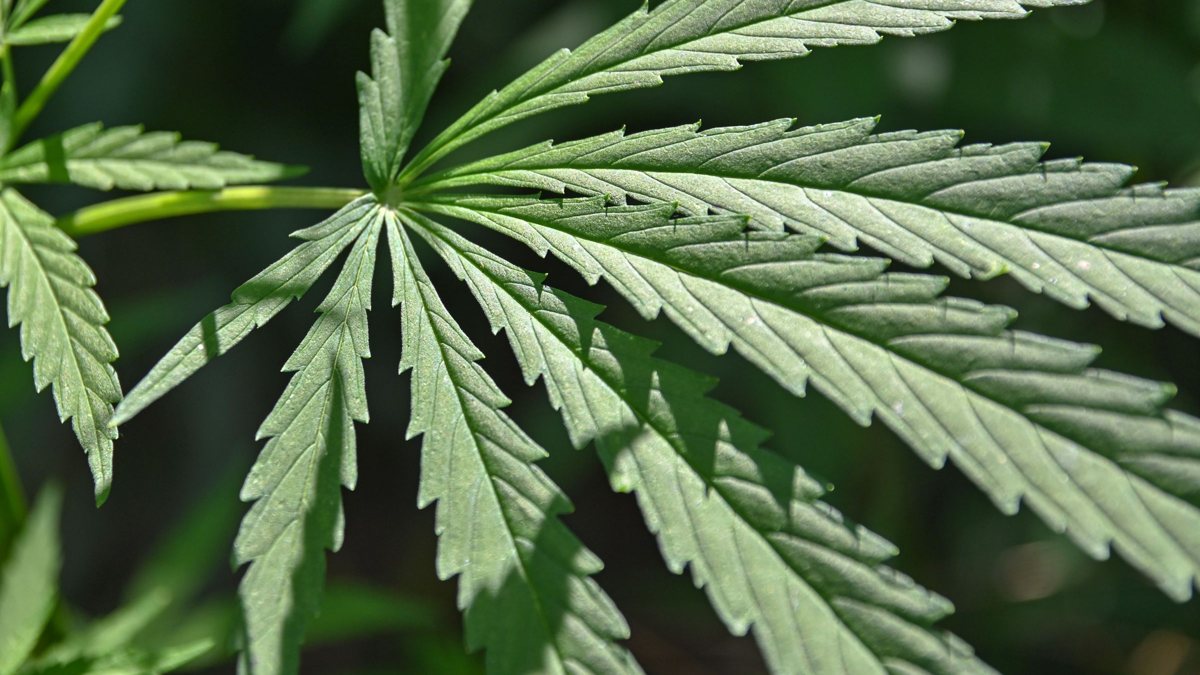
Close-up of green serrated cannabis leaflets in sunlight.

Vermont’s Cannabis Control Board says it plans to develop a licensed in-state hemp market once federal THC thresholds are certain. Its November 17 notice points toward future rulemaking for products that meet Vermont’s standards but would fall outside the revised federal hemp definition. It does not announce an operating market, an application window or permission to ignore federal law.

For hemp businesses and consumers, that is the central distinction. Vermont is describing a possible state framework for cannabis-derived products, while a federal change is approaching on a separate timetable. A product’s status under state rules and its eligibility for interstate commerce are related questions, but they are not interchangeable.

What Vermont announced this week

The board’s notice says Act 178 of 2026 authorized it to revive a State Hemp Program covering producers, processors and products. The board intends to begin rulemaking when the federal tolerances are settled, with an intrastate market as its stated objective. No opening date appears in the announcement.

The notice also identifies potential consequences beyond a product being removed from a shelf. It warns that carriers, banks, payment processors and insurers may refuse service to affected businesses. Those are possible consequences identified by the regulator, not a finding that every provider has already withdrawn or that every hemp business faces the same result.

For an operator, the practical implication is that a state license would answer only part of the business question. Even a product permitted by Vermont could still depend on suppliers, financial services and transportation arrangements governed by other rules or private policies. A proposed local market needs those practical connections as well as a regulatory structure.

Why December 11 matters

An October 28 Congressional Research Service analysis explains the federal timetable. Congress delayed most of the hemp-definition changes until December 11, 2026. The exclusion for products containing cannabinoids the plant cannot naturally produce was left to take effect November 12. Describing everything as a single future deadline would miss that distinction.

The analysis describes a revised total-THC test and exclusions covering certain manufactured cannabinoids and finished products exceeding a combined 0.4 milligrams per container of total THC and similarly acting cannabinoids. That is a federal classification framework, rather than a new Vermont serving recommendation. It can change which products qualify as hemp even when a label continues to use that word.

Congress can still change legislation, but a proposal is not an enacted delay. Businesses planning around December should distinguish the law currently scheduled to apply from measures seeking to replace it. Our Hemp Guardrails Act coverage explains one proposed alternative; it should not be treated as evidence that the deadline has disappeared.

Vermont already draws its own product boundaries

The board’s hemp guidance explains that Vermont treats products exceeding its quantitative limits, or marketed for intoxicating effects, as cannabis products rather than ordinary hemp products. Its assessment includes total theoretical THC, incorporating THCA. A low delta-9 number alone therefore does not settle the state-law question.

That guidance also explains the limited purpose of an earlier voluntary processor registry. Listing a business was not a license to buy and sell THC concentrate or a substitute for cannabis-establishment authorization. The distinction is especially relevant now: the promise of a future licensed program should not be confused with the legal effect of an older contact list.

Cultivation has its own history. Vermont’s agriculture agency ended administration of the earlier state hemp program in 2022, returning cultivation oversight to USDA. The board’s current guidance directs would-be cultivators to the federal application system. It does not present the November notice as an immediate replacement for that process.

What a future rule would need to clarify

The next useful development would be published proposed rules identifying who needs a license, what activities are permitted and which products qualify. Businesses would also need application instructions and an effective date. Those details would turn a policy direction into something operators could evaluate against their actual activities.

Consumers should look for equally concrete information: which products are registered, where they may be sold and how the state intends to oversee the market. A broad claim that a product is “Vermont legal” cannot answer every question about its composition, seller or movement across a border. Nor does a state rule eliminate federal restrictions by itself.

Vermont has set out a direction for hemp policy, not a completed workaround. The next stage is rulemaking, with the federal definition still shaping the board’s plans. Until a detailed framework is published, the announcement is best understood as an intention to build a state program rather than an invitation to begin operating one.

Illustrative cannabis-leaf stock photograph; not a Vermont crop or evidence of a particular THC concentration. Photo: Adonyi Gábor / Pexels.

Continue Reading

Cannabis

USPS Says Medical Cannabis Remains Nonmailable While It Reviews Policy

A November 18 statement reported by Marijuana Moment leaves patients with a clear distinction between state delivery plans and the Postal Service’s current position.

Published

on

Hands sealing a cardboard parcel with clear packing tape.

The U.S. Postal Service says medical marijuana remains nonmailable while it reviews the effects of federal rescheduling. That position, reported November 18 by Marijuana Moment, follows the announcement of a Georgia medical-cannabis shipping program. For patients, the immediate issue is the gap between a new delivery service’s plans and the postal agency’s stated rules.

A state’s permission to arrange medical cannabis delivery does not itself establish that USPS will accept the package. The current dispute concerns the carrier and federal mailability requirements, alongside state patient eligibility. It should not be read as a nationwide invitation for patients to send cannabis to one another.

What the Postal Service told reporters

Tom Angell’s reporting for Marijuana Moment attributes the statement to USPS senior public relations representative Felicia Lott. She said the agency and the Postal Inspection Service are reviewing medical marijuana’s mailability after its reclassification. She also said a future change would place it within the rules for prescription drugs containing controlled substances.

The outlet reported that USPS did not immediately provide a timetable for reaching a decision or explain where a decision would be announced. Georgia regulator Andrew Turnage disputed the agency’s interpretation in comments to the same outlet. Those are attributed positions in an unresolved policy disagreement, rather than evidence that the review has already produced a new rule.

That absence of a published decision matters. “Under review” describes work in progress. It does not tell a patient that a carrier has approved an individual shipment, and it does not establish that a state operator’s proposed method has been accepted by the Postal Service.

Why the Georgia announcement drew attention

In a November 17 company release, Botanical Sciences and Edibles.com announced a Georgia shipping platform for registered medical patients. The companies described a separate registry-verified ordering system with identity checks and delivery safeguards. They said the initial service would reach selected Botanical Sciences patients before expanding.

The release connects the launch to Georgia’s September 30 adoption of a medical-cannabis delivery rule. Its language describes what the companies intend to offer under the state framework. It is not a Postal Service authorization, and its claimed national first has not been independently established here.

The distinction is useful even outside Georgia. A delivery announcement can explain who may order, which products are offered and how the business plans to verify recipients. Whether a chosen carrier may transport those products is a further question. A tracking number or signature requirement records delivery activity; it does not independently establish that the contents are mailable.

What the published postal framework requires

USPS Publication 52, section 453, places responsibility on mailers to comply with postal regulations and applicable federal, state and local laws. It says mailing a controlled substance is unlawful when its distribution is unlawful. Controlled substances do not become ordinary parcels simply because the mailing stays within one state.

The section lists limited conditions for domestic mailing, including qualifying DEA-registered or exempt parties, approved mail-back programs and authorized dispensers sending mailable prescription medicines. These are defined channels with conditions, not a general exception for anyone holding a medical cannabis card.

The framework also treats hemp-based products separately, subject to legal compliance. That distinction makes product classification important: a seller’s use of “hemp,” “medical” or “CBD” in marketing cannot replace the applicable legal test. Patients should not infer that one kind of cannabinoid shipment proves every other kind is permitted.

What patients should ask before relying on shipping

A useful starting point is to ask the licensed provider which delivery method it currently offers and what authority supports that method. Ask whether the service is operating now, whether the patient’s address is eligible and how identity will be checked. Those details are especially important when public statements from the provider and the carrier do not align.

Patients should also distinguish commercial delivery by an authorized provider from personally mailing products to a friend, relative or another patient. The Georgia announcement does not establish permission for personal redistribution. Nor does the Postal Service’s review promise that a future change will cover every medical product, sender or recipient.

For now, the meaningful next development would be an official postal decision or updated published guidance, followed by a clear explanation from the state regulator and the service provider. A company announcement and an agency review are separate milestones. Until those positions are reconciled, patients should confirm the current delivery arrangements with their licensed provider rather than treat an announced shipping model as settled postal policy.

A review can change future policy, but it cannot supply an effective date that has not been announced.

Illustrative parcel stock photograph; not USPS mail, a cannabis shipment or the Georgia service. Photo: Liza Summer / Pexels.

Continue Reading

Trending

Join The Cannabis Aficionado Community!
Join the Cannabis Aficionado community and receive all of the most relevant news geared towards our sophisticated enthusiast community.
Loading

Copyright ©️ 2026 Cannabis Aficionado. Cannabis Aficionado is a registered trademark of CNM Inc. All rights reserved. Registration on or use of this site constitutes acceptance of our Terms of Service, Privacy Policy and Cookies Policy. People may receive compensation for some links to products and services. Offers may be subject to change without notice.