#cannabisaficionado

Cannabis

Curaleaf Adds a Boone Town Stake to Its New Jersey Cannabis Footprint

The announced investment adds a Boonton location to Curaleaf’s New Jersey reach, while leaving the ownership percentage, price and customer-facing changes undisclosed.

Published

on

Advertisement Back2Grow Advertisement

Curaleaf says it has acquired an equity interest and certain operating rights in Boone Town Provisions, the cannabis dispensary at 677 Myrtle Avenue in Boonton, New Jersey. Its November 2 announcement describes the deal as expanding its state footprint to four dispensaries and its national footprint to 191.

The wording matters: an equity stake and operating rights do not, by themselves, establish a purchase of every ownership interest. The release does not disclose the percentage acquired or the transaction price. Readers can recognize an expansion in Curaleaf’s cannabis retail reach without assuming a complete takeover or a particular valuation.

An existing store, rather than a new opening

Curaleaf identifies Boone Town as a 6,400-square-foot store that opened in July 2024. It places the location alongside its existing New Jersey operations in Bellmawr, Bordentown and Edgewater Park. The announcement concerns an interest in a business already serving customers, not a claim that Boonton has just received its first day of sales.

Management describes the location as high performing and expects the transaction to contribute immediately to the New Jersey business. Those are company characterizations and expectations. The announcement does not supply store-level financial statements that would allow a reader to verify profitability or calculate the return on the investment.

That leaves the most useful distinction between reach and results. Adding a location to an operating footprint can widen a company’s presence, but the count alone does not reveal sales per store, costs, customer retention or the economics of the stake. Future reporting would be needed to assess those outcomes.

The public record provides a different kind of evidence

A New Jersey Cannabis Regulatory Commission renewal decision posted in its June meeting materials identifies Boone Town Provisions LLC and the same Myrtle Avenue address. It concerns acceptance of a renewal application for personal-use cannabis operations. It is a licensing document, not a valuation of the business or proof of approval of this newly announced transaction.

The letter also explains that reporting and approval duties continue after a license is issued. It identifies ownership, management-services arrangements, financial sources, location, premises and business-name changes among the matters that can require attention. That is relevant context when a release describes both an ownership interest and operating rights.

The commission’s current business-resources guidance says ownership-change applications require board approval before a change is carried out. This article does not infer a specific approval from the existence of an older renewal letter. A renewal and a transaction approval answer different questions.

What customers can check now

Boone Town’s own FAQ describes an adult-use store in Morris County, with walk-in shopping and online ordering for pickup. It lists flower, pre-rolls, vapes, concentrates, edibles and other categories, while directing customers to its live menu for current inventory.

Those customer-facing details are more useful for a visit than assuming that an investment announcement immediately changes the shelves. The release does not announce a new name, revised opening hours, a delivery launch or a specific replacement assortment. Customers interested in a particular product should check the current store information rather than infer availability from Curaleaf’s brand portfolio.

The FAQ still describes the store in local-ownership terms. Given the new announcement, that older description should not be treated as a complete explanation of the current ownership structure. Equally, an equity investment alone does not tell us which existing owners remain involved or how responsibilities are divided.

Operating rights deserve their own explanation

An equity interest describes an ownership position; operating rights concern what a participant is entitled to do. The announcement uses both terms without publishing the underlying agreements. They should not be collapsed into a single assumption about every management decision at the dispensary.

For readers following cannabis consolidation, the documents worth watching are those that explain the actual structure: the interest acquired, responsibilities assigned, applicable approvals and the way financial results will be reported. A familiar storefront can remain in place while the business relationships behind it change.

Curaleaf’s release also includes forward-looking language around completion conditions and anticipated benefits. Its body says an interest has been acquired, but that wording does not justify filling in undisclosed terms or treating every expected benefit as an accomplished result. The company’s precise claims should remain attributed.

A clearer way to read the expansion

The confirmed news is the company’s announcement of a stake and operating rights at an existing Boonton cannabis retailer. The broader significance is the relationship between a neighborhood dispensary and a larger operator’s regional network. Whether that produces changes in selection, service or business performance will become clearer through subsequent disclosures and the store’s actual operations.

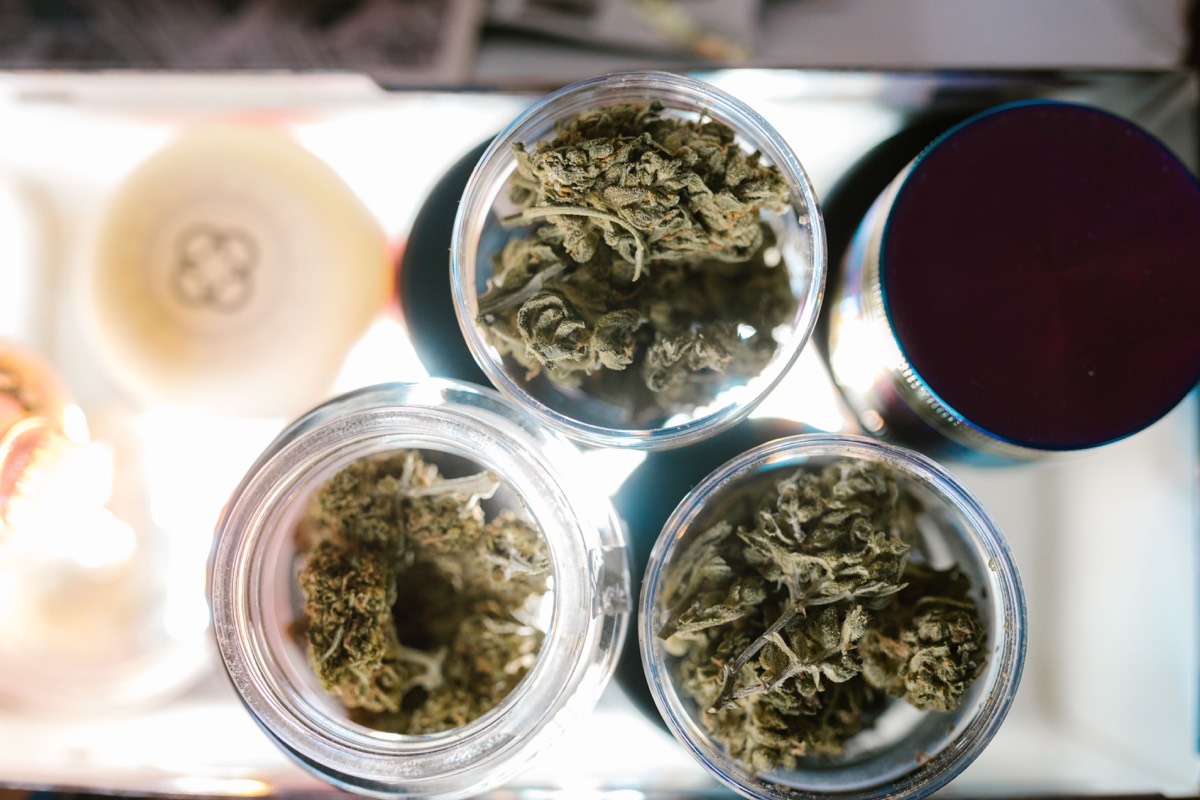
Illustrative stock cannabis photograph; not Boone Town Provisions products or premises. Photo: RDNE Stock project / Pexels.

Cannabis

DEA’s Medical Cannabis Registrations Come With a November Supply-Chain Check

Federal registration is moving forward for qualifying medical dispensaries, but the new guidance reaches beyond the storefront to suppliers, records and laboratory testing.

Published

on

Columns on the United States Supreme Court building in Washington

The Justice Department’s first wave of federal medical marijuana registrations brings a practical question for operators this November: who is allowed to supply the products on the shelf? In an October 30 announcement, the department said initial registrations cover more than 900 qualifying dispensaries across seven states, while related DEA guidance sets November 29 as the date for timely applicants to establish compliant supply chains.

This is a development in the defined federal medical cannabis framework. It is not nationwide adult-use legalization, and it does not mean that a state business license automatically carries federal registration. The distinction matters to patients following access and to businesses whose existing suppliers may have different application statuses.

What the first registrations establish

The department names Alabama, Florida, Mississippi, South Dakota, Texas, Virginia and West Virginia in the initial group. It says qualifying dispensaries had to satisfy federal requirements, including a pre-registration investigation. Manufacturers and distributors remain part of the review process, with additional questions involving facilities, production controls and quotas.

That creates an important difference between the announcement’s headline and a particular store’s position. The federal release does not name every registered business. An operator or customer cannot establish a company’s status merely by recognizing its state on the list. The relevant business documentation still matters.

A pending application can have a specific status

The DEA’s four-page guidance addresses complete applications submitted between April 28 and June 26, 2026, including payment of the required fee. It calls these businesses timely applicants and explains the activities they may continue under their state medical licenses while the applications are pending.

The document excludes applicants that withdrew, received a final denial or lack the required state medical license. In other words, having once started an application is not enough to establish continuing eligibility. The category depends on both the submission and the business’s current circumstances.

Timely applicants can transact with other timely applicants and with appropriately registered DEA entities. A registered dispensary, for example, can receive medical cannabis from a qualifying distributor whose application is still pending. Pending and registered are different statuses, but the guidance describes a permitted relationship between them.

The November date is a supplier-verification task

DEA expects timely applicants to complete partner verification and necessary supply-chain adjustments by November 29. Its minimum due-diligence examples include obtaining application confirmations or registration certificates, checking relevant document control numbers, verifying active state licenses and retaining records of the checks.

For a business, this turns a broad compliance announcement into a set of relationships to review. A useful starting point is its actual supplier roster: which entity appears on an invoice, what activity that entity performs, what documentation supports its status and when the information was checked. That is more informative than relying on a familiar brand name.

The agency warns that transactions outside the permitted groups can become grounds for denying an application or revoking a registration. A late application that remains pending should therefore not be assumed to provide the same position as a timely application. The guidance is specific about those categories.

Existing inventory and laboratory samples are separate issues

DEA also addresses stock already acquired. Timely dispenser and distributor applicants may continue otherwise authorized activities with inventory held before the information was issued, including stock previously obtained from entities outside the qualifying groups. That provision should be read separately from the expectations for future supply relationships.

The laboratory section is narrower than a general testing exemption. It describes enforcement discretion for small quantities sent to an unregistered, same-state analytical laboratory with detailed records when using a DEA-registered lab would conflict with state law under the conditions specified in the document. It does not permit receiving cannabis back from an unregistered analytical laboratory.

Keeping those questions separate helps avoid two mistaken conclusions: that every item already on hand must immediately be discarded, or that a limited testing provision opens an unrestricted supplier channel. Neither follows from the guidance. The document’s conditions need to be considered against the actual transaction.

What readers should watch next

Marijuana Moment’s October 30 reporting highlighted the supply-chain warning alongside the registration announcement. The next useful evidence will be additional registrations, clearer partner documentation and updates explaining how the transition works in practice.

DEA says the document clarifies existing requirements and does not itself have the force of law. Businesses should use the original text and appropriate professional advice for their own circumstances. For the wider cannabis audience, the takeaway is concrete: federal recognition of a dispensary is only one part of a system that also depends on who manufactures, distributes and tests its products.

Illustrative stock photograph of the U.S. Supreme Court; this story concerns DEA guidance, not a court ruling. Photo: Joshua Woods / Unsplash.

Continue Reading

Cannabis

Tilray Plans to Move Foss Cannabis Production as It Raises Its Outlook

The company’s Canadian cannabis plan pairs production transfers with a higher earnings-guidance floor, while keeping the larger savings and certification targets in the future.

Published

on

Tilray Brands plans to shift cannabis cultivation and pre-roll production away from its Foss facility in Fenwick, Ontario, consolidating the work at Masson in Quebec and Cayuga in Ontario. The company’s November 2 announcement also raises the lower end of its fiscal 2027 adjusted earnings outlook, putting operational efficiency at the center of its Canadian cannabis strategy.

The news is a production plan with several different clocks. Foss operations are expected to conclude by January 31, 2027, while the full annualized savings target belongs to fiscal 2028. Investors, retailers and cannabis consumers should distinguish those milestones from a completed move or a demonstrated improvement in product availability.

Where the work is expected to go

Tilray says cultivation would move to Masson, with pre-roll production going to Cayuga. It links the decision to higher-than-expected yields and the ability to use existing infrastructure more efficiently. The company also says it has offered affected Foss employees opportunities at its other facilities.

An offer of another position is not the same as evidence that every employee will relocate or remain employed. The announcement does not provide a complete account of individual choices, relocation terms or eventual staffing outcomes. Those details will matter when evaluating the transition’s effect on workers, alongside its effect on the production network.

Tilray describes a phased process intended to finish current cultivation and harvest cycles. That is relevant to the practical task: moving a cannabis operation involves the timing of living crops and finished-product manufacturing, rather than simply transferring a list of office functions on one date.

Capacity is different from sales

The company expects Masson’s annual cultivation capacity to rise from about 32.5 to 50 metric tonnes. That is an increase of 17.5 tonnes in the stated capacity figure. It is not a report that the facility has already sold that additional amount or that the market has committed to buying it.

Capacity, harvested output, saleable quality and customer demand describe different stages of a cannabis business. A higher production ceiling can create flexibility, but its commercial value depends on what the company can consistently produce and place with customers. Future results will show whether the larger potential output is matched by useful utilization.

The announcement also identifies pre-rolls as roughly a third of Tilray’s Canadian adult-use sales and says that category grew 28 percent in fiscal 2026. Those figures explain why the company is emphasizing manufacturing efficiency there. They do not establish that the same growth rate will continue after production is consolidated.

The earnings range moves at its lower end

Tilray now projects fiscal 2027 Adjusted EBITDA of $70 million to $75 million, compared with its previous range of $68 million to $75 million. The upper end is unchanged. Describing the update as a higher minimum expectation is more precise than implying the whole range rose by the same amount.

The company expects approximately US$10 million in annualized cost savings from the Canadian consolidation, with the full run rate beginning in fiscal 2028. Annualized savings describe a recurring-rate target; they should not be read as an immediate cash receipt or automatically added in full to a nearer-term period’s earnings.

Adjusted EBITDA is also a different measure from net income or cash available after every expenditure. The new range is management guidance, not a reported result for a completed fiscal year. Readers comparing performance should return to the company’s subsequent financial statements and explanations of its adjustments.

Certification remains a future milestone

Tilray expects Masson to reestablish its earlier EU-GMP certification in calendar 2027. Its wording places certification in the future. The announcement should therefore not be described as proof that the facility has already regained that status or completed every step needed to serve a particular international market.

The company also discusses potential future U.S. medical cannabis demand when permissible. That is conditional positioning, not an announced U.S. supply contract or permission to ship Canadian cannabis into the United States today. A production strategy can prepare for an opportunity without establishing that the opportunity is legally or commercially available.

What would demonstrate progress?

Tilray says it expects uninterrupted supply, including continued Redecan availability, during the transition. For customers and retailers, the meaningful evidence will be the products actually available through their usual regulated channels. A corporate plan is useful context, but it does not replace current inventory information.

The next checks are specific: whether the Foss transition finishes as projected, how production performs at the receiving facilities, whether the certification milestone is reached and how realized costs compare with the savings target. Together, those measures will tell a more complete story than any single capacity number.

For now, the announcement marks a shift toward concentrating cannabis work in fewer parts of an established network. Its success will depend on execution across crops, manufacturing, people and customers—not merely on announcing a lower-cost footprint.

Illustrative stock cannabis cultivation photograph; not a Tilray facility. Photo: Haley Bee / Pexels.

Continue Reading

Cannabis

California Proposes Keeping Its Medical and Adult-Use License Split

The new proposal would preserve a pathway already used by 95 businesses, with separate inventory and records and continuing federal uncertainty.

Published

on

A stack of dark ring binders filled with paperwork

California’s Department of Cannabis Control opened a regular rulemaking October 30 to preserve a process that lets eligible cannabis retailers separate a combined medicinal and adult-use license. The proposal, DCC-2026-04-R, is a step toward permanent regulations, not an announcement that every operator has changed its license or received federal approval.

The department says 95 licensed businesses have already obtained separate medicinal and adult-use licenses under emergency rules adopted June 4. That figure describes California licensing changes. It does not establish that those businesses have registered successfully with the Drug Enforcement Administration, a separate process that remains central to the department’s rationale.

What California is trying to preserve

In its initial statement of reasons, DCC describes operators trying to maintain adult-use business while exploring a distinct medicinal operation. The agency says federal registration guidance has been limited, leaving some licensees waiting for more clarity before changing their structure.

The proposed pathway would allow a business with a combined designation to retain an adult-use license and receive a new medicinal license through an expedited state process. A related legal entity could hold the separate license if the applicable conditions are met. Participation is voluntary, and the agency says it cannot quantify how many additional eligible operators will choose it.

That distinction matters for readers following cannabis reform. A new configuration can give a business another option without changing every rule governing the products it sells. The state is addressing the shape of its licensing system; it is not issuing a blanket statement that all commercial cannabis activity has become federally lawful.

Separate licenses still carry shared responsibilities

The proposed text requires related entities at the same premises to share the same individual owners and designated responsible party. Cannabis goods would have to be physically separated by license, with inventory and tracking records identifying which license holds them. Business records would also be maintained separately.

The entities would be jointly and severally liable for obligations, debts and violations under either license. The proposal treats the related licenses as one licensee for compliance and enforcement purposes. In practical terms, organizational separation would come with documentation duties rather than an opportunity to place problems outside the regulator’s reach.

Retailers would also have to comply with local requirements. The text preserves the restriction that goods designated for medical use only may be sold only to medicinal customers. A second license would not turn that label into an ordinary adult-use product or eliminate the need to identify the appropriate customer.

How a modification request would work

The draft rule lists the information required for a modification: the existing combined license, the name for the medicinal license, the submitting designated responsible party, business-formation records, a federal employer identification number and a valid seller’s permit number. The department would review a request within five business days and identify deficiencies in writing if the requirements were not satisfied.

Existing inventory would stay in the adult-use license’s track-and-trace account at the point of separation. That provision gives the change a defined starting position: a retailer cannot simply relabel its entire stock as belonging to the new medicinal operation without following the applicable inventory requirements.

The displayed proposal includes both a provision about paying an applicable annual medicinal-license fee before inventory transfers and a provision saying no fee is due until renewal for a newly issued medicinal license. Operators should ask DCC to explain how those provisions apply together, rather than build a budget around an assumed fee exemption. This is a useful subject for public comment.

Potential benefits are not guaranteed outcomes

The rulemaking notice estimates about 1,600 licensees could be affected and classifies approximately 97 percent as small businesses. Those are agency estimates of the potentially eligible population, not a prediction that every business will apply or that another 1,600 stores will open.

DCC frames greater flexibility for pursuing federal medicinal registration as a potential benefit. Its discussion also acknowledges uncertainty around future participation and the federal process. Operators should distinguish an agency’s policy objective from a completed registration, a confirmed tax treatment or a demonstrated improvement in profitability.

Comments come before final adoption

Written comments must be received by December 14, 2026. The department plans a virtual public hearing December 15 beginning at 10 a.m.; its notice explains how to request access and where the meeting link will be posted. Read the official notice before preparing a submission so the comment addresses this rulemaking.

For now, California is proposing continuity for a licensing option already used under emergency regulations. The substantive questions are whether the process is clear, how separate records work in practice and what guidance operators still need. The number of state license splits is one measure of uptake; federal registration and business outcomes remain different questions.

Illustrative stock office records; not DCC files or records from a cannabis licensee. Photo: Pixabay / Pexels.

Continue Reading

Trending

Join The Cannabis Aficionado Community!
Join the Cannabis Aficionado community and receive all of the most relevant news geared towards our sophisticated enthusiast community.
Loading

Copyright ©️ 2026 Cannabis Aficionado. Cannabis Aficionado is a registered trademark of CNM Inc. All rights reserved. Registration on or use of this site constitutes acceptance of our Terms of Service, Privacy Policy and Cookies Policy. People may receive compensation for some links to products and services. Offers may be subject to change without notice.