#cannabisaficionado

Industry Innovators

Cameron Forni: How to Build a Billion-Dollar Cannabis Empire

Published

on

Cameron Forni
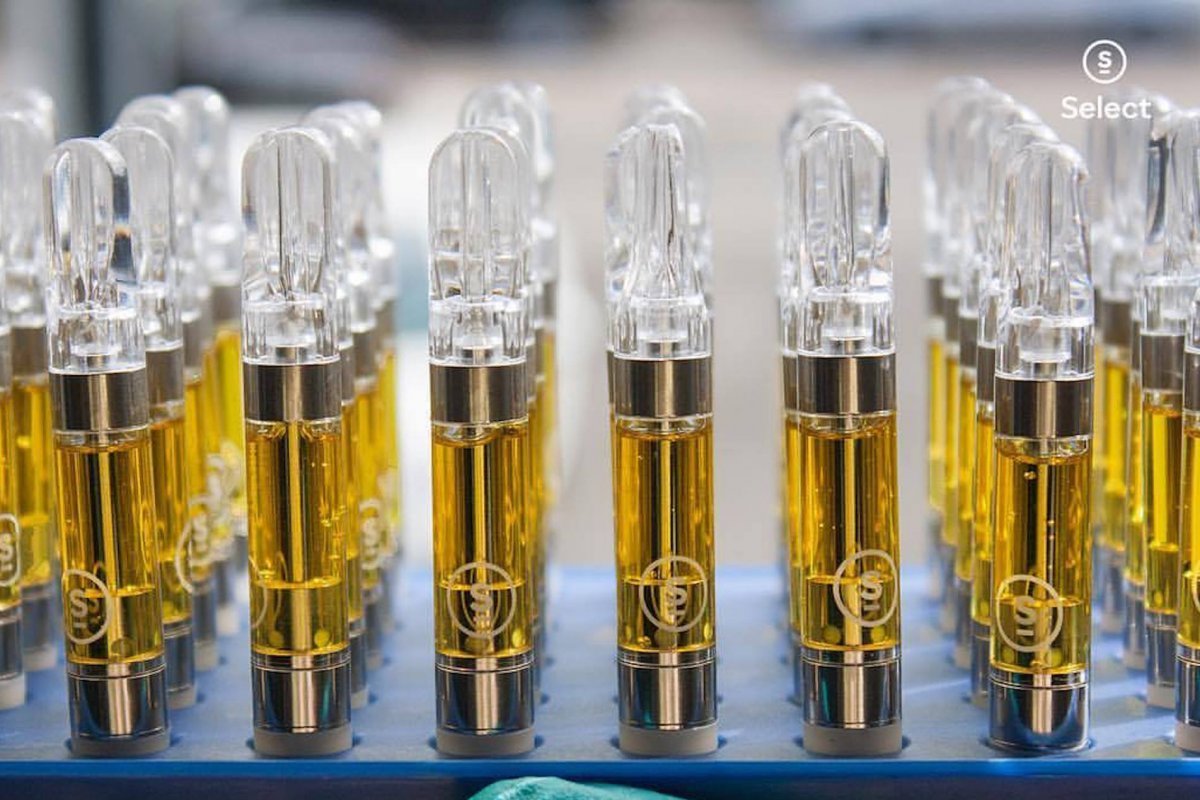
PHOTO | Select Oil
Advertisement Back2Grow Advertisement

Cameron Forni knows a thing or two about building a billion dollar cannabis company. The CEO of Cura and founder of Select Oil has always been an innovative thinker. In 2015, he identified and developed the need for an organic cotton wick vape pen, providing a healthier consumption method. From there, he set his mission to be the leading provider of cannabis oil to both consumers and premium brands in legal markets, both in the U.S. and internationally.

We spoke to Forni about his entrepreneurial journey, Cura’s record-breaking success in the cannabis industry, and his predictions for the future of cannabis.

Cannabis Aficionado: Tell us a little bit about your journey through entrepreneurship and how you ended up in the cannabis world.

Cameron Forni: I’ve been an entrepreneur my entire life and have had many incredible mentors. Entrepreneurship was in my blood; I did everything from selling flowers on the side of the street in Milwaukie, Oregon as young as four-years-old, to managing a car detailing business in high school, to building an event company in college. I have always been interested in business and entrepreneurship.

Right out of college, my goal was to create jobs, not to take a job. I started my journey in entrepreneurship when I co-founded TextNoMore, an app designed to reward drivers avoiding texting while driving. From there, I co-founded TryEco LLC, which holds a patent on a starch-based, biodegradable super-absorbent polymer used primarily in agricultural applications. I always had a focus on building businesses that helped people live better lives and achieve more and that’s what led me to cannabis.

With both a medical card and a caregiver card on hand, I started looking at what the future of cannabis would be. I knew that combustion wouldn’t be a long-term option for most cannabis consumers, so I started focusing on safety and vaporization. I started taking apart every vaporizer pen in the market and learned that silica fiberglass was commonly found in most cartridges, so I built a new cartridge, innovated with organic cotton and unique absorption systems.

That’s when Select was born. It’s been quite the journey!

Over the last 18 months, Cura has seen record-breaking success in the industry. You became the first cannabis company to appear in INC. magazine’s annual top 50 companies in 2018. Now, your billion-dollar deal with Curaleaf Holdings is said to be the largest ever among American companies. How does it feel to be behind one of the industry’s golden unicorns?

Wow, what an incredibly cool question to hear. It’s often difficult for me to pause and reflect, so thank you! I’m thankful for the team who has helped build this incredible company with me every day. When you are relentlessly working and traveling (on pace for 300 flights this year alone) because you are so obsessed about something, it’s hard to turn it off. It’s been more than four years of hard work, but in cannabis years, they say that for every one year you multiply by seven because it’s moving so fast!

Sometimes it’s really hard to step back and look at what the work has become. People think that achieving milestones like the Inc. 500 placement or our billion-dollar acquisition must be all we think about, but it’s not always straight forward. We face federal regulatory approval, state licensing approval, audits and regulatory change in each state so often that it’s difficult to master balancing it all. That’s why you need an incredible team.

Cameron Forni (left) started his entrepreneurial path at a young age.

Cura is widely respected in the industry for innovative extraction techniques and its focus on setting high standards for quality products. How has it evolved from its beginnings into the industry leader it is today?

First of all, it’s always been about building the best team possible and taking care of people along the way.

Our evolution over a short period of time is due to our constant focus on innovation, setting best practices and our never-ending pursuit of better.

Senate Bill 582 will allow Oregon to import and export cannabis products across state lines — but only if the federal government changes its policies. What are your thoughts on this?

The main hurdle is the federal Controlled Substances Act which bans interstate shipments of cannabis. That would have to change. Otherwise, the states that attempt to implement this are subject to crackdown by the Federal Government. There is much work to be done here before this becomes a reality.

Which international markets do you think are really leading the charge right now?

The industry is in the first of a nine-inning ball game. With now 11 states with adult use policies, 33 states with medical cannabis laws and 62 percent of Americans in favor of legalizing cannabis (according to PEW), I expect the industry to have massive growth and significant consolidation.

Canada is the leader from the standpoint of the financial market because it came in early, established policies and amassed significant capital to deploy into international markets. However, the leaders in medical cannabis and cannabis research is still Israel who has been making significant investments into research and development in cannabis science.

Will vape pens replace flower? Why or why not?

There’s a nostalgia and ritual to consuming joints and using flower. With baby boomers and longtime cannabis users that will undoubtedly continue. However, U.S. consumer preferences always gear more towards convenience. The closer we can create the experience of vaporizing unique cannabis terpene and oil formulations, the closer we can get to replicating the experience to that of flower. Long term you will see vaporization pass combustion of flower and in the end, it’s safer.

What new challenges will the industry face going forward?

Banking, taxation, legislation and real estate have always been the major challenges facing cannabis operators. We are the most heavily taxed industries in the world. We are also one of the most heavily tracked — meaning track and traced — industries in the world. In every legal state we use RFID chips on each product case that goes to stores in order to track the product from seed to sale.

Last but not least, cannabis companies achieving profitability is becoming critical to survival in this space. With large gluts of products in states like Oregon, it makes it very hard to run a profitable business under incredibly high taxation.
What trends are shaping cannabis in 2019?

I expect unique terpene profiles and oil formulations to become more popular. Additionally, innovative, discreet and more elevated devices will be the main drivers for 2019.

What demographic do you see having the most growth?

We’re seeing more and more young professionals 25-35 come on board to cannabis at a quick rate. Millennials are seeking cannabis options that suit their own personal needs and they’re becoming more willing to share their interest in cannabis publicly.

What are your one year, five year, and 10-year predictions for the cannabis industry?

1 year: More states will continue to come on board and legalize adult-use cannabis. With that, we’ll also see an uptick in normalization around the country.

5 year: Ideally, the STATES Act will pass, providing more people with access to cannabis, jobs and business opportunities around the country.

10 year: Cannabis is treated by society and regulated by the government like alcohol and will become mainstream.

What do you know now that you wish you knew when you started?

The biggest piece of advice I’d offer to new cannabis entrepreneurs would be to surround yourself with people who fill in your weaknesses early on.

It’s important to be agile and never get stuck to a plan. The plan is always changing because the regulatory environment is always changing. You can’t work in this industry without being agile and nimble with decision-making.

Finally, what are the three things people don’t know about being a cannabis entrepreneur?

  1. Time commitment: If you want to be successful in this business be prepared to give up your social life. I find myself traveling 48 weeks a year. Having a very understanding partner is critical as well!
  2. The regulatory environment WILL shift beneath your feet. Expect to order one million boxes of packaging and 2 weeks later that package is obsolete in one of the states you operate in because they need a new sticker
  3. Cost and funding: Traditional capital is not readily available to the cannabis entrepreneur, you need to make sure your business can survive and thrive. It’s very expensive to handle all the taxes and fees that accompany a cannabis business. For example, in California we face 44% supply chain tax, 12% excise tax, 11% sales tax, 5% gross revenue tax, 35% 280E tax, along with licensing fees and higher-than-normal rates for real estate… just because we’re a cannabis company.

Industry Innovators

Rhode Island Clarifies Hemp Quarantine Ahead of December THC Limits

Rhode Island’s new FAQ explains how hemp inventory must be handled before December 11. We separate the deadlines, product limits and remaining questions.

Published

on

Stacks of plain cardboard boxes on pallets inside a warehouse.

Rhode Island’s Cannabis Control Commission has published new answers on quarantining hemp products as it prepares to enforce tighter total-THC limits on December 11. The November 20 guidance puts inventory, paperwork and the difference between bulk ingredients and finished products at the centre of the transition. For us, the immediate priority is making those distinctions clear before businesses make irreversible decisions about stock.

This is guidance for Rhode Island’s regulated hemp market. It should not be read as a complete account of every state’s rules or as permission to move a product elsewhere. Hemp is cannabis, but a product’s route through the hemp system and its route through a licensed marijuana business are not interchangeable.

Which deadlines should businesses check?

The commission’s Bulletin 2026-7, amended November 20, sets December 11 as the enforcement date, subject to federal changes or further guidance. It identifies a maximum of 0.4 milligrams of total THC per container for final hemp-derived products and a 0.3 percent total-THC limit for intermediate products.

The bulletin also requires businesses planning to retain eligible stock in a designated quarantine area to submit the Hemp Quarantine 2026 document by December 4 and keep a physical copy onsite. Quarantined goods cannot simply return to ordinary processing, distribution or sale. Destruction requests go through the Cannabis Office, with supervision required.

We would put the paperwork date and the enforcement date in separate calendar entries. The first concerns identifying inventory and documenting the plan; the second changes what can happen to affected goods. Waiting until the later date to start classifying stock leaves less room to resolve a mistaken product designation or a missing record.

What does the new FAQ add?

The November 20 quarantine and destruction FAQ says quarantine is optional, but noncompliant products cannot remain onsite after the deadline unless designated for quarantine beforehand. It describes a supplemental document, due December 11, for activity between December 4 and December 11. That adds an important reconciliation step for businesses that continue operating during the intervening week.

The FAQ distinguishes intermediate material from final retail packaging and says quarantined products cannot be sold or transferred after the deadline. Without a change in law, release after December 11 is limited to a destruction request. It directs businesses with clerical errors to seek reconciliation through the office rather than silently change submitted records.

There is a numerical inconsistency worth flagging: the FAQ’s introductory paragraph prints 0.04 milligrams, while its later answers and the amended bulletin state 0.4 milligrams per final container. We use the consistently stated 0.4 figure here and would ask the commission to resolve the discrepancy before relying on the introduction for a compliance decision.

Why the product category matters

A useful inventory review starts with the actual product and its stage of manufacture. A bulk ingredient and a sealed retail package answer different questions. We would record the lot, quantity, packaging status and supporting test information together, then compare that record with the commission’s current documents. That is an editorial recommendation for organising questions, not a substitute for the required form.

The commission’s earlier consumable-product designation guide, effective December 8, 2025, shows how detailed the existing system already is. It covers flower, inhalable concentrates, packaged oral products and products served unpackaged. It requires licensed sellers, adult purchasers and testing and labelling appropriate to the category.

That older guide also contains potency allowances that differ from the new bulletin. We would not use a historical product table as a standalone answer about what may be sold after December 11. Read the date and the later instruction together, and ask the regulator about a specific product rather than assuming that an older compliant label settles its future status.

For an internal review, assign one person to keep the inventory list and the supporting documents aligned. A clear record of who checked an item makes later questions easier to answer.

What should shoppers take from this?

A changing shelf does not tell you, by itself, why an item disappeared. A retailer may be reviewing its inventory or responding to a new product threshold. Ask for current product information and the basis on which the seller is offering it. Do not infer that a familiar brand or a previous purchase guarantees the same availability next month.

The commission maintains its bulletins, guidance and quarantine form together, and its hemp programme page identifies the licensing framework for growers and handlers. Those official pages are the practical starting points for updates. We will watch for corrected wording, revised dates or further instructions; until then, the published documents call for a documented inventory decision before the transition arrives.

Illustrative inventory-storage stock photograph; not Rhode Island hemp inventory or a licensed facility. Photo: Freek Wolsink / Pexels.

Continue Reading

Industry Innovators

IM Cannabis Changes Leadership as a Nasdaq Share Consolidation Takes Effect

IM Cannabis names Ronen Zalayet CEO as its one-for-three share consolidation reaches its November 23 effective date. We separate the corporate changes.

Published

on

Empty office meeting room with a wooden table and black mesh chairs.

IM Cannabis has named Ronen Zalayet chief executive as the medical-cannabis company reaches the effective date of another share consolidation. Nasdaq’s notice places the one-for-three reverse split on Monday, November 23. The management changes took effect November 19 and were announced the following day, so these are related corporate developments with different dates and different purposes.

For us, the useful distinction is between the business serving medical-cannabis patients in Israel, the people running it and the mechanics of its listed shares. A leadership appointment does not prove a strategy will succeed, and a higher price per consolidated share would not, by itself, demonstrate stronger trading or better operating performance.

Who is taking over?

The company’s November 20 management announcement says Zalayet succeeds Oren Shuster as CEO. It also names Shakked Shuster chief executive of Focus Medical Herbs, the Israeli subsidiary through which the medical-cannabis business operates. Oren Shuster resigned from the parent company’s board but continues as a director of its Israeli subsidiaries.

IM Cannabis says Ohad Melnik joined the parent board, with his appointment subject to Israel Medical Cannabis Agency approval. The announcement frames the changes alongside an intention to evaluate technology-driven businesses beyond core medical cannabis. We would treat that as a stated direction, not evidence that a new technology acquisition has been completed or has begun producing revenue.

The separation of parent and subsidiary roles is worth keeping in view. If you are following product supply or patient services, the operating business matters. If you are following the listed company’s strategy, the parent board and capital structure matter too. One headline about a new CEO cannot answer both sets of questions without those distinctions.

What changes in the shares on November 23?

Nasdaq Trader’s November 19 corporate-action alert says IMCC will carry out a one-for-three reverse split, effective November 23, with a new CUSIP of 44969Q604. This is exchange-published implementation information. It is separate from an assurance about the company’s future share price or continued eligibility for listing.

The company’s November 18 consolidation announcement says its name and IMCC trading symbol will remain unchanged. It expects outstanding common shares to fall from 1,844,162 to approximately 614,721, subject to fractional-share rounding. Fractions of at least one-half are rounded up; smaller fractions are cancelled. Related convertible or exercisable securities receive proportionate adjustments under their terms.

That release identifies support for Nasdaq’s minimum-bid-price compliance as the main purpose. It also notes a 30-for-one consolidation in August and warns that the new action does not guarantee continued listing. Registered shareholders are to receive exchange instructions from Computershare, while beneficial holders are told no action is required to receive post-consolidation shares.

In simple arithmetic, combining three old shares into one reduces the share count. It does not, through that arithmetic alone, create additional company earnings or cash. We would compare share figures on a consistent basis and read the corporate-action terms before interpreting an apparent change in a price chart as a new operating result.

The operating context remains important

IM Cannabis’s November 13 results release reported third-quarter revenue of C$1.65 million, compared with C$5.08 million a year earlier, and a total net loss of C$7.08 million, compared with C$3.87 million. Those figures describe the reported quarter; they are not a forecast of what the new leadership will achieve.

The same release says European-focused operations, including Adjupharm in Germany, were sold September 29 while the Israeli medical-cannabis operations were retained. It also describes a non-binding agreement for a 51 percent interest in Space Defense Innovations, with a definitive agreement still under negotiation at that point. We would not collapse an announced negotiation and a completed disposal into the same status.

For anyone comparing announcements, keep a note of the currency, reporting period and whether a figure describes an expectation or a completed event. Those small checks prevent an old result, a new share count and a proposed transaction from being mistaken for one measurement.

What will show whether the transition works?

Our next checkpoints are concrete: subsequent financial reporting, clear disclosure of any completed transaction and evidence of how the retained medical-cannabis operation performs. A change in leadership can alter priorities, but the results must be assessed when they are reported. The share consolidation should likewise be read as a capital-structure event with its own documented terms.

Keep the dates together when following this story: November 19 for the management appointments, November 20 for their public announcement and November 23 for the exchange’s stated reverse-split effective date. That sequence provides a firmer basis for understanding the transition than treating every corporate change as a single signal about the business’s prospects.

Illustrative corporate-meeting stock photograph; not IM Cannabis offices, directors or a board meeting. Photo: Aheed Baithul Nafia / Pexels.

Continue Reading

Industry Innovators

USDA Updates Hemp Crop Insurance for 2027 as Growers Review THC Risk

USDA’s new hemp provisions put statutory THC limits into the 2027 policy. Here is what growers should check before choosing coverage.
Published

on

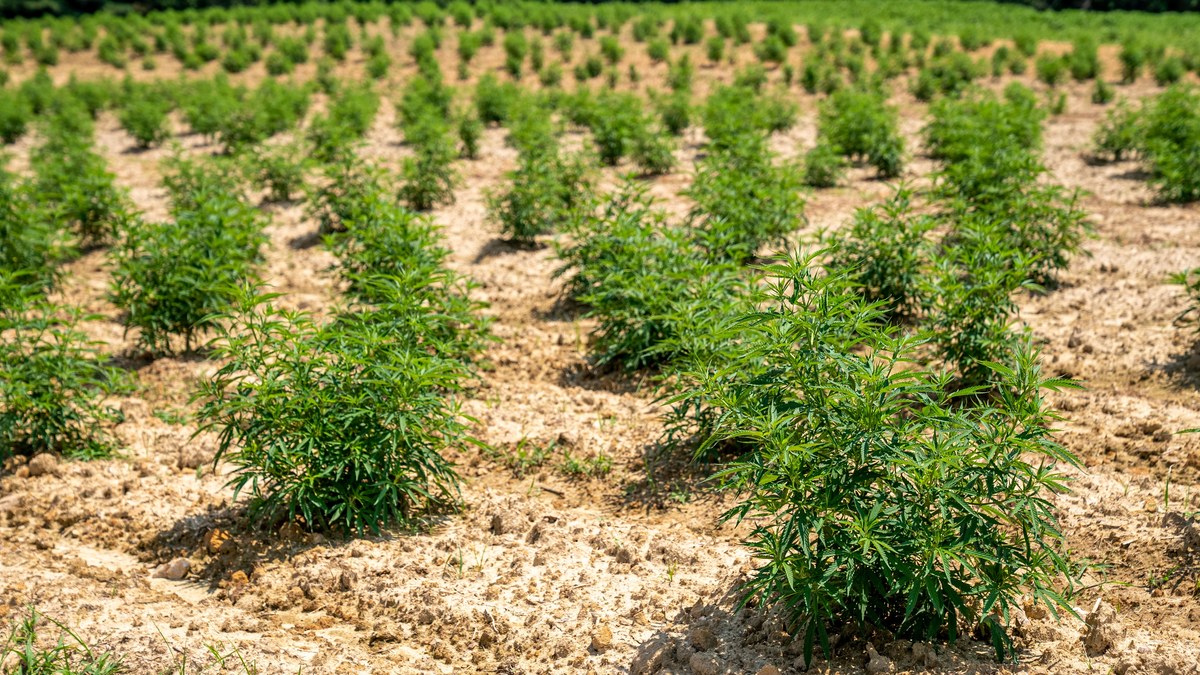
Rows of green cannabis plants growing outdoors in a cultivated field.

USDA has updated hemp crop insurance provisions for the 2027 growing season, bringing federal THC requirements into the policy language. If you grow hemp—or buy from the farms supplying this side of the cannabis industry—the practical question is what protection remains when a crop fails a compliance test. We would start with the exclusions before looking at the coverage headline.

The Risk Management Agency’s November 18 bulletin identifies hemp among several crops receiving policy changes beginning with the November 30, 2026 contract change date. The hemp revisions apply to 2027 and subsequent crop years. RMA says the THC changes implement the 2026 appropriations law; approved insurers must notify affected producers at least 30 days before the applicable cancellation date.

What changed in the hemp policy?

The new Hemp Crop Provisions, form 27-1218, reference the statutory hemp definition at 7 U.S.C. 1639o. They clarify that production losses caused by THC above the applicable acceptable levels are uninsured. Those limits include the federal standard, the relevant governing authority’s requirements and any additional specification in the Special Provisions.

The document also moves cancellation and termination dates into the Special Provisions and clarifies loss-handling procedures. November 30 is the contract change date, so do not mistake it for a universal deadline to buy or cancel insurance. Your own policy documents and county information determine the dates that matter to your operation.

We read this as a reason to reconcile the farm’s compliance plan with its insurance paperwork. A policy cannot be assessed from its name alone. Ask which version applies, which crop type is insured and which rules control the acreage you actually intend to plant.

The new provisions also define what a processor contract must contain: a producer’s commitment to grow and deliver, the processor’s commitment to purchase, and a base price or a way to establish it. That gives the coverage conversation a useful document to work from. Bring the actual agreement, including the terms governing acceptance of the harvest, rather than a verbal description of the buyer relationship.

Weather damage and a lost buyer are different risks

RMA’s hemp pilot-program FAQ explains the underlying distinction: coverage addresses physical production losses from insured causes such as adverse weather. It does not turn an unsuccessful marketing plan into a covered harvest loss. Excess-THC destruction and a processor’s refusal to accept production are examples of problems that should not be treated as ordinary weather claims.

That distinction matters along the supply chain. A healthy field, a compliant crop and a dependable buyer answer different questions. Before committing money to seed or processing capacity, ask how each risk is being handled. An insurance premium is one expense in that calculation; it is not evidence that every commercial problem has been transferred to an insurer.

The FAQ also points growers to RMA’s Actuarial Information Browser for eligible counties, crop types and sales closing dates. Some explanatory material still refers to earlier crop years. We would use it to understand the program, then check current provisions with the agent rather than carry old acreage thresholds into a 2027 planting decision.

Match the insurance program to the business

RMA’s hemp overview describes several insurance routes. The multi-peril pilot covers qualifying yield losses for fiber, grain or CBD production in selected counties. Whole-Farm Revenue Protection is another program, offered nationwide, while nursery coverage can apply to qualifying container-grown hemp under its own conditions.

Those options are not interchangeable promises. A field operation selling grain and a nursery selling plants have different production models. Ask an agent to explain eligibility, exclusions and the relevant documents for the particular business, rather than assume a general reference to “hemp insurance” settles the question.

For our wider cannabis community, this is also a reminder that federal hemp policy reaches beyond finished products. Our recent coverage of Vermont’s proposed in-state hemp framework concerns a different part of that transition. A state market proposal does not by itself answer what a federal crop policy will insure.

What should growers ask next?

Bring three concrete questions to the coverage discussion: which 2027 documents govern this acreage, which testing outcomes would leave a loss uninsured, and what are the actual local deadlines? Request answers tied to the policy, not a general assurance that hemp is covered.

We would also keep the processor agreement, testing plan and insurance decision in the same planning conversation. The new bulletin does not announce that all hemp coverage has disappeared. It makes the boundary between an insured production loss and a compliance problem especially important to understand before planting.

Illustrative stock photograph of outdoor cannabis cultivation; not a specific insured farm. Photo: Mark Stebnicki / Pexels.

Continue Reading

Trending

Join The Cannabis Aficionado Community!
Join the Cannabis Aficionado community and receive all of the most relevant news geared towards our sophisticated enthusiast community.
Loading

Copyright ©️ 2026 Cannabis Aficionado. Cannabis Aficionado is a registered trademark of CNM Inc. All rights reserved. Registration on or use of this site constitutes acceptance of our Terms of Service, Privacy Policy and Cookies Policy. People may receive compensation for some links to products and services. Offers may be subject to change without notice.