#cannabisaficionado

Cannabis

Safe Harbor Proposes a Media Combination While Keeping Its Cannabis Finance Platform

A nonbinding proposal would put cannabis financial services and creator-economy media under one parent, with approvals and financing still ahead.

Published

on

Glass office buildings viewed from below against a pale sky
Advertisement Back2Grow Advertisement

Safe Harbor Financial is exploring a combination that would put its cannabis financial-services business alongside a creator-economy media company. The October 26 announcement concerns a nonbinding term sheet with Opifex Media, giving cannabis operators a proposed corporate change to watch rather than a completed merger.

According to the announcement filed with the SEC, Opifex would become a subsidiary of SHF Holdings, which operates as Safe Harbor. The proposed parent would contain two distinct businesses. Safe Harbor says its cannabis platform and service to financial-institution partners would continue without interruption.

The outline contemplates approximately 85 percent ownership for Opifex stakeholders and 15 percent for existing Safe Harbor stakeholders before a closing financing and incentive reserve. Those are proposed terms, not final ownership outcomes. Definitive documentation, due diligence, financing, stockholder and Nasdaq approvals remain among the conditions. The parties are targeting completion before April 19, 2027; neither is obligated to complete the transaction.

The exchange deadline explains part of the timing

A separate October 20 company disclosure provides the listing context. Safe Harbor said Nasdaq granted it a second 180-day period, ending April 19, 2027, to regain compliance with the exchange’s minimum bid-price requirement.

The original notice arrived April 22, with an initial deadline of October 19. The extension had no immediate effect on trading, and the shares continued under SHFS on the Nasdaq Capital Market. According to the company, a closing bid of at least $1 for a minimum of 10 consecutive business days during the additional period would allow Nasdaq to confirm compliance.

Safe Harbor had also notified Nasdaq that it intended to address the deficiency through a reverse stock split if necessary. That possibility concerns the company’s share structure. It should not be confused with a decision about whether a cannabis business can open an account or obtain a loan.

The overlap in dates makes the listing deadline relevant to the proposed combination. It does not establish that the merger will close, that Nasdaq has approved it, or that an extension alone solves every future listing requirement.

Client deposits are a different measure

Safe Harbor’s October 6 preliminary update reported a trailing 14-day average client deposit balance of approximately $119.3 million at September 30. That compared with $111.1 million a year earlier, an increase of 7.4 percent.

The metric averages aggregate end-of-day balances over 14 calendar days. Management says the approach smooths changes caused by clients’ payroll cycles. It is more specific than a claim that the platform simply has a particular amount of cash.

Crucially, these deposits are held at partner financial institutions and are their liabilities. They are not Safe Harbor’s deposits and do not appear on its consolidated balance sheet. Safe Harbor earns investment income on a portion under its partner arrangements; changes in client deposits do not necessarily produce proportional revenue changes.

Those figures were preliminary and had not been audited or reviewed by the company’s independent accountant. They were not comprehensive quarterly earnings. They therefore cannot establish the combined company’s future profitability or substitute for financial statements about either business.

What cannabis businesses should watch

The distinction between a service platform and the institution holding an account is especially relevant here. FinCEN’s marijuana-business banking guidance, issued in 2014, describes financial institutions’ responsibilities for customer due diligence. These include verifying state licensing, understanding expected activity, monitoring for suspicious transactions and periodically refreshing customer information.

Its due-diligence framework goes beyond obtaining a business name. It describes reviewing the state license application and related documents, seeking available information from licensing authorities, and understanding the products sold and customers served. Periodic updates and ongoing monitoring are part of that process. A broader corporate parent would not, by itself, supply those customer-specific records or answer an institution’s questions about an operator.

The guidance also leaves account decisions to individual institutions based on their business objectives, risks and ability to manage them. It is background for understanding the work involved in cannabis banking, rather than an approval of this proposed corporate transaction.

For an operator, a useful review of any eventual change would identify the institution holding the account, the services actually covered and any revised terms communicated to customers. A parent-company announcement does not answer all three questions. The relevant evidence would be the final documents and direct service notices, if changes occur.

For shareholders, the next concrete milestones are a definitive agreement, required disclosures and approvals. For cannabis clients, the immediate distinction is simpler: Safe Harbor has announced a possible new corporate structure while stating that service will continue. The completed transaction and its practical effects remain to be established.

Illustrative stock office buildings; not Safe Harbor or Opifex premises. Photo: Allen Boguslavsky / Pexels.


Cannabis

Kansas Survey Finds Majority Support for Cannabis Reform, With Medical Access Ahead

The new Kansas Speaks survey finds 65% support for medical legalization and 58.3% for recreational use. Those are public attitudes, not a change in law.

Published

on

White ballot box marked Vote with an American flag design

A new Kansas Speaks survey finds majority support for legalizing both medical and recreational cannabis, with medical access attracting the larger share. The results offer a measure of public sentiment ahead of the next policy debate; they do not announce a legalization measure or establish when one might pass.

Fort Hays State University’s Docking Institute of Public Affairs released the survey on October 26. Its public-affairs panel included 603 Kansas residents aged 18 and older. Cannabis was one of several subjects, alongside taxation, economic conditions, health policy and other state issues.

Medical and recreational support are different findings

The full report records 65 percent support and 15.3 percent opposition to medical marijuana legalization in general. For recreational legalization, 58.3 percent supported and 21.3 percent opposed. Both support figures combine stronger and more moderate responses.

That distinction matters because medical access and an adult-use market are different policy questions. Support for one does not tell lawmakers how respondents would answer every detail of the other, including who could sell products, how purchases would be taxed or which products would qualify.

The report also found 59.3 percent highly or somewhat likely to vote for a Kansas legislative candidate who supports medical legalization. That is a stated inclination attached to one issue. It is not a forecast that any named candidate will win, and it does not show how respondents ultimately balance cannabis against other concerns.

Who was surveyed, and when?

Fieldwork ran from September 23 through October 16. The institute used a Qualtrics online panel with demographic quotas, then weighted responses by age, gender, education and party registration. The report retained people who were not registered voters.

Readers should therefore describe the findings as a survey of adults, rather than substitute “likely voters.” Those populations answer different questions: public attitudes include people who may not vote, while an election forecast tries to anticipate the electorate that actually turns out.

Weighting is a statistical adjustment to the influence of different responses. It does not mean the researchers interviewed additional people after collection ended. The original number of participants and the weighted analytical total should not be treated as competing headcounts.

The Roper Center’s guide to polling transparency explains why disclosures about recruitment, population, collection methods and timing help readers judge whether a poll fits a particular purpose. Publishing those details enables scrutiny; disclosure by itself does not guarantee accuracy.

A percentage is not the whole policy argument

For cannabis readers, the useful starting point is the exact question. “Medical marijuana legalization in general” leaves many implementation choices open. A proposal with a defined patient program, licensing structure and product restrictions would present respondents with more information than that broad phrase.

Likewise, opposition is not automatically the remainder after subtracting support from 100. Where a questionnaire permits a middle or uncertain response, treating everybody outside the supporting group as an opponent exaggerates the division. The published support and opposition figures should be reported separately.

AAPOR’s guidance on polling uncertainty also distinguishes conventional sampling margins from model-dependent credibility intervals used with some online polls. The terms cannot simply be exchanged. This article does not assign an unsupported margin of error to the Kansas results.

Those limits do not make the survey uninformative. They define its contribution: a documented set of responses about broad cannabis questions during a stated period, rather than a guarantee about a future vote or legislative outcome.

A comparison with another poll also needs matching definitions. A survey asking about medical access for specified conditions is not asking precisely the same thing as general legalization. Differences in wording, field dates and the population sampled can matter before any apparent movement is interpreted as a change of mind. The safest comparison begins with the questionnaires, rather than two percentages taken out of their reports.

Public support and lawmaking follow separate paths

The Kansas Legislature’s explanation of its process shows the institutional steps a bill normally faces. Committee consideration and chamber votes precede agreement on identical language in both houses, followed by the governor’s role. A proposal’s effective date is another separate matter.

That means a poll release is not a substitute for checking a bill’s text, amendments and official status. An introduced measure, a committee recommendation and a signed law describe different stages, even if advocates cite the same public-support figures at each one.

The strongest reading of this survey is also the most specific. Medical legalization leads recreational legalization in the reported responses, and both have majority support among surveyed Kansas adults. Whether that support becomes an enacted program depends on decisions this survey did not make: the legislation’s contents, the votes and the implementation timetable.

Illustrative stock voting display; not a Kansas polling place or a cannabis ballot measure. Photo: Sora Shimazaki / Pexels.

Continue Reading

Cannabis

Vanquish Puts Estimated Growth Behind Its Expanding Cannabis Portfolio

Vanquish reports estimated revenue growth, more cultivation space and broader sales channels. The company update leaves key financial details undisclosed.

Published

on

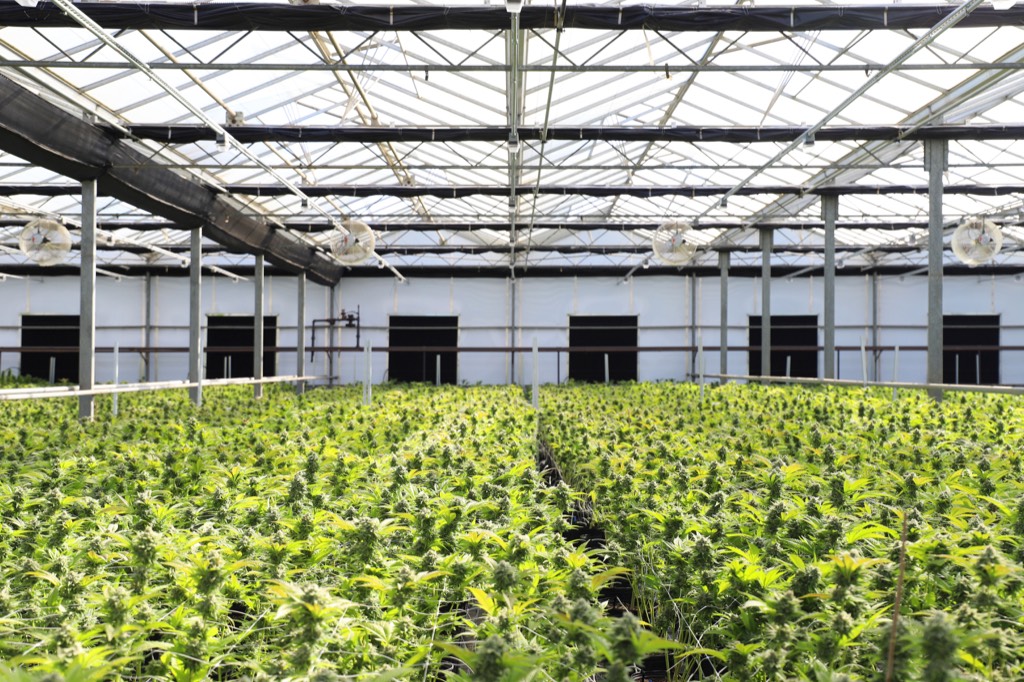
Rows of cannabis plants growing inside a sunlit greenhouse

Vanquish Brands is putting an estimated three-year growth rate behind its expansion story, while broadening the business beyond flagship brand Pistol and Paris. Its October 27 update points to a larger cultivation footprint, a value brand and a medical-sales platform—but offers a more limited financial picture than the headline might suggest.

In its company-issued announcement, the British Columbia operator describes an estimated 152 percent three-year annualized revenue growth rate and approximately 11 percent growth from the second to third quarter. It also says production and growing space at its Agassiz facility more than doubled.

The release identifies Bonkers Cannabis as its larger-format value offering and Vanquish Medical as a direct-to-patient channel. These are company-reported developments. The announcement does not provide a full income statement, a revenue-by-brand table or the underlying annual revenue amounts needed to independently reproduce its headline growth calculation.

A growth rate needs a denominator

A percentage can describe momentum without revealing business size. The same growth rate can apply to companies starting from very different revenue bases. Without the underlying amounts and a clear calculation period, readers cannot turn the headline into a reliable estimate of Vanquish’s sales dollars.

The three-year annualized figure and the quarter-to-quarter figure also measure different intervals. They should not be added together or treated as two versions of the same result. Nor should the estimated 2026 presentation be mistaken for a completed calendar-year result when October has not yet ended.

The SEC’s educational explanation of an income statement separates revenue from net income: profit or loss reflects expenses as well as sales. That basic accounting distinction is useful here without suggesting Vanquish is subject to a particular U.S. reporting regime. A sales-growth claim alone does not establish a profit margin.

Physical expansion and commercial performance deserve separate attention as well. More growing space describes the capacity of an operation, not the quantity harvested, shipped or purchased by consumers. Converting a larger footprint into durable business results requires those later steps. The release does not give enough production-volume or channel-level financial detail to calculate a return on the Agassiz expansion, so this article does not attach one to it.

The medical channel has its own earlier launch date

Vanquish Medical was introduced in a separate October 5 announcement. The October 27 release is a business update incorporating that launch, rather than evidence that the platform first opened this week.

The earlier announcement describes online ordering and home delivery, compassionate pricing for lower-income patients, special pricing for first responders and help for veterans navigating coverage and direct billing. Those are service descriptions from the company, not a guarantee that every purchase will qualify for reimbursement.

For a prospective patient, the useful questions are concrete: which products are currently listed, what registration requires, how delivery works and whether any assistance applies to their circumstances. A brand’s reputation in the adult-use market cannot answer all of those questions.

Medical registration is a separate route

Health Canada’s medical-access guidance says people should discuss cannabis with their health care practitioner. A practitioner may provide a medical document when appropriate. Registering with a medical-sales licence holder requires that seller’s registration form and the applicable medical documentation.

The guidance also explains how a patient can move between licence holders: the current holder can transfer the medical document to a new holder willing to register the patient, at the patient’s request. That process is more specific than simply creating an account with a familiar consumer brand.

These are general access rules, not a clinical endorsement of a company’s products. A medical storefront’s availability does not establish that a particular cultivar treats a particular condition, and this business announcement does not report a trial testing such a claim.

Our coverage of Canadian retail sales concerns a different level of the market. National store receipts and a single producer’s reported growth should not be treated as interchangeable measures of performance.

National distribution does not mean every local menu

Health Canada’s retailer guidance distinguishes provincial and territorial adult-use sales from direct sales to registered medical patients. Provinces and territories control important retail and distribution arrangements; authorized patients can register with a federally licensed medical seller.

That distinction helps explain why a company can discuss national expansion while shoppers encounter different buying routes. Someone looking for a Pistol and Paris product in a local store needs to check an authorized retailer’s current menu. Someone seeking medical access has a different registration question.

For readers tracking Canadian craft cannabis, the next useful evidence would connect the expansion to measurable results: revenue amounts over stated periods, product availability and the contribution of each channel. The current update establishes what Vanquish says it has expanded and how it describes its momentum. It leaves the fuller financial and customer picture for subsequent reporting.

Illustrative stock greenhouse photographed in Salinas, California; not Vanquish’s Agassiz facility. Photo: Cannafornia / Pexels.

Continue Reading

Cannabis

AiroPro Enters the UK Through a Medical Pharmacy Partnership

Airo and SOMAÍ announce four inhalation formulations with IPS Pharma distribution. Patient access still depends on prescribing and pharmacy supply.

Published

on

River Thames and London skyline at sunset

Airo and SOMAÍ have announced a United Kingdom launch for the AiroPro inhalation system, adding a new device-and-extract combination to the country’s medical cannabis market. The October 27 announcement names IPS Pharma as the exclusive UK distributor, with supply through pharmacies and healthcare providers rather than an ordinary recreational retail rollout.

According to SOMAÍ’s announcement, the initial portfolio contains four formulations. NYC Diesel and Pink Rozay sit in a Strain Series using cannabis-derived terpene blends; Lemon Cake and Mango Kush sit in an Artisan Series using botanical terpenes. The extracts are made at SOMAÍ’s Lisbon facility, which the company describes as EU-GMP certified.

The companies describe AiroPro as an integrated system in which the device and compatible extracts work together. They say the products are available through UK pharmacies. That is an account of commercial availability, not evidence that every clinic will prescribe the products or that every pharmacy already has stock.

A medical launch still begins with a clinical decision

The General Medical Council’s guidance makes the prescribing distinction clear. Unlicensed cannabis-based products for medicinal use must be supplied for use according to a prescription or direction from a doctor on its Specialist Register. Specialists must work within their competence and assess the individual patient.

The GMC says many cannabis medicines lack a UK marketing authorisation and may not have undergone MHRA assessment for safety, efficacy and quality. Prescribing can be appropriate when a specialist concludes that a patient’s specific clinical needs require it. That is different from a brand’s decision to introduce another format.

For shared care, the guidance calls for clarity about the medicine, dose, means of administration and treatment protocol. It also requires patients and other treating doctors to receive sufficient information for safe care. Those responsibilities remain relevant regardless of a product’s familiar cultivar name or the design of its hardware.

Manufacturing standards answer a different question

EU-GMP appears prominently in the launch announcement. The MHRA’s manufacturing guidance describes good manufacturing practice as the minimum production standard medicines manufacturers must meet. It addresses consistent quality and conformity with the applicable marketing authorisation or product specification.

Good distribution practice concerns obtaining medicines through the licensed supply chain and storing, transporting and handling them under suitable conditions. Regulators inspect manufacturing and distribution sites to assess compliance.

That framework helps explain the significance of a pharmaceutical manufacturing claim. It should not be treated as a clinical trial showing that one formulation works better than another. Production controls, distribution controls and an individual treatment decision are connected parts of the process, but each answers a different question.

Our recent LOT420 coverage similarly examined why the scope of a cannabis quality certification matters. A certification headline needs to be read alongside the activity and product it actually covers.

Importing a product is not the same as approving it

The MHRA’s guidance on unlicensed medicines explains the separate supply route. These medicines, often called specials, have no UK marketing authorisation. They may be supplied to meet individual clinical needs when available licensed medicines cannot meet those needs.

Importers need the relevant permissions and must notify the MHRA before importing an unlicensed medicine. The notification includes evidence concerning manufacturing and distribution standards and a special clinical need. The launch announcement therefore sits within an existing medicines framework; it does not announce a new exemption from it.

The NHS patient information also distinguishes prescribed medicines from products marketed online as medical cannabis. It advises patients to keep prescribed medicine in its original packaging, along with a prescription copy and any relevant doctor’s letter. The dispensing label identifies both the medicine and the person for whom it was prescribed.

NHS availability is a separate question from a company’s UK launch. The NHS explains that very few people in England are likely to receive an NHS medical cannabis prescription, and that other treatments are considered first. A product appearing in pharmaceutical distribution does not establish that it will be offered through every care pathway or paid for by the health service.

What this changes for a patient

The concrete development is a named distributor and a defined initial portfolio. Whether it changes an individual patient’s treatment depends on a clinical assessment, the prescription, pharmacy supply and the instructions for the specific device and extract. A U.S. brand’s reputation cannot settle those questions on its own.

The announcement gives clinicians and patients another product combination to discuss. It does not demonstrate comparative effectiveness, establish NHS funding or guarantee that a particular formulation is suitable for a particular condition. Those boundaries make the launch easier to understand: more supply options within medical channels, with the prescribing decision still resting on the patient’s circumstances.

Illustrative stock view of London; not an Airo, SOMAÍ or IPS Pharma facility. Photo: Matheus Bertelli / Pexels.

Continue Reading

Trending

Join The Cannabis Aficionado Community!
Join the Cannabis Aficionado community and receive all of the most relevant news geared towards our sophisticated enthusiast community.
Loading

Copyright ©️ 2026 Cannabis Aficionado. Cannabis Aficionado is a registered trademark of CNM Inc. All rights reserved. Registration on or use of this site constitutes acceptance of our Terms of Service, Privacy Policy and Cookies Policy. People may receive compensation for some links to products and services. Offers may be subject to change without notice.