#cannabisaficionado

Culture

Hollywood’s Elite Receive Cannabis Products in Oscar Goody Bags

Published

on

Oscar Goody Bags
Advertisement Back2Grow Advertisement

The top nominees at the 2019 Oscars won’t all go home with awards, but they won’t go home empty-handed either. The honorees receive lavish six-figure Oscar goody bags, complete with cannabis-friendly products.

The 91st Academy Awards will be held this Sunday, February 24 at the Dolby Theatre in Los Angeles. The annual event honors the best actors, producers, directors, and technicians in the film industry. All 25 nominees in the acting and directing categories — which include awards for best actor and actress in leading and in supporting roles — will receive the gifts in the week leading up to the event.

This year’s Oscar goody bags feature goodies from Coda Signature. The company produces a line of bath balms, salves, oils, and artisan chocolates. The colorful, handmade chocolates are made from ethically sourced cacao and are typically infused with 10 milligrams of THC. Coda’s Crescendo and Forte collections come with six truffles in three different flavors — burnt caramel, earl grey, and juniper lemon.

However, according to a statement from the company, because cannabis products cannot be shipped across state lines,, these chocolates won’t contain THC.

Swag bags will also include skincare products from High Beauty, according to a CNBC report. The company makes a line of certified organic facial oils and moisturizers. Products are made with cannabis sativa seed extract and contain no THC.

This year’s nominees will also receive a week-long stay at Golden Door Spa, an Amazon cruise, and a Mister Poop emoji toilet plunger, among other items, according to CNBC.

The legendary Oscar goody bags are just as famous as the gold-plated bronze sculptures. Each bag is valued at over $100,000, and are full of luxury freebies. Previous gifts have included international vacations, spa retreats, designer jewelry, vampire breast lifts, and even vibrators.

Last year’s gift bag included a 12-day vacation for two to Tanzania, a year’s supply of skin and hair products, and a donation of Halo pet supplies/meals valued at $8,000 to the celebrity’s shelter or rescue of choice.

Bags are provided by Direct Assets, a marketing company with no affiliation to the Oscars. While the actual value of Oscar goody bags is not disclosed, the company ensures it contains six-figures worth of gifts. Previous bags — like those given at the 2016 Oscars — were reported to be valued at upwards of $230,000.

Companies donate the items included in the bags. Brands are known to pay an average of $4,000 in order to have their products featured in the annual giveaway. Direct Asset’s founder, Lash Fary, told Forbes in 2016 that the gifts are not part of a philanthropic effort. Rather, “We are gifting them for the same reason that they are paid upwards of $20 million for a single film…because their personal brand has value as a commodity.”

The Oscars — otherwise known as the Academy Awards — is put on by the Academy of Motion Picture Arts and Sciences (AMPAS). This year’s nominations for best movie include Bohemian Rhapsody, A Star is Born, Roma, and Green Book. This year’s honorees include Melissa McCarthy, Yalitza Aparicio, Mahershala Ali, and Rami Malek, among others.

Cannabis

A 2,800-Year-Old Siberian Tomb Offers New Evidence of Cannabis Use

Cannabis seeds and preserved hair from a Siberian burial offer two clues to how people used the plant 2,800 years ago.

Published

on

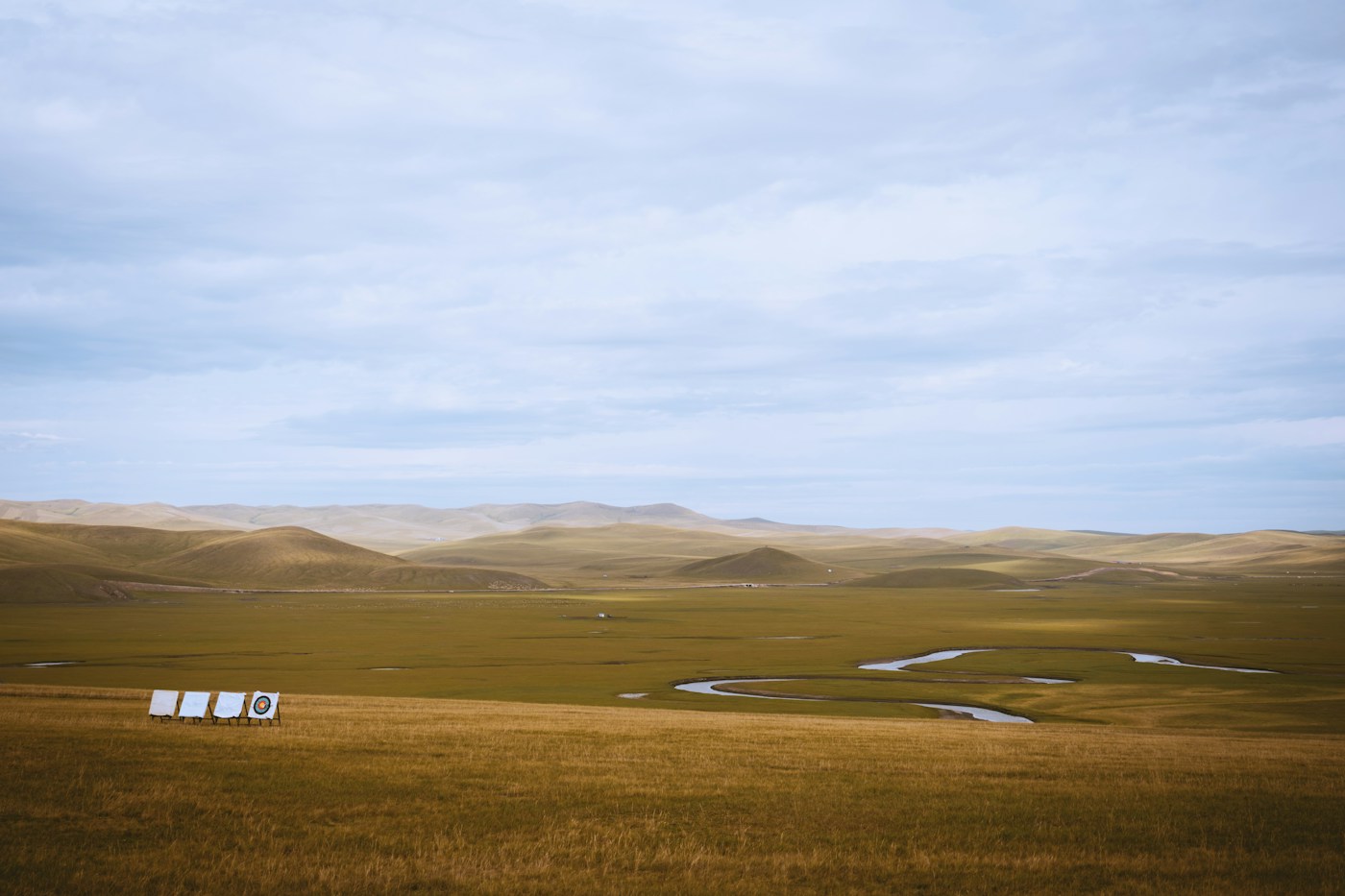
Open grassland with low hills in Hulunbuir, Inner Mongolia

A burial mound in southern Siberia has yielded two clues to the history of cannabis: seeds placed in a grave and chemical traces preserved in human hair. In a study published November 5 in Science, archaeologist Gino Caspari and colleagues argue that the finds, taken together, point to psychoactive cannabis use about 2,800 years ago. The discovery pushes the evidence for that practice further back than a widely cited find in western China.

What turned up at Tunnug 1

The excavation site, Tunnug 1, lies in the Uyuk Valley in the Republic of Tyva. Its monumental burial mound is associated with early Scythian culture, and the excavations have recovered horse gear, weapons and animal imagery. The clues to cannabis use were considerably smaller. The team found more than a thousand cannabis seeds and used radiocarbon dating on some of them to establish their age. According to the University of Bern’s account of the research, preserved human hair from the same grave also contained traces of cannabinol, or CBN.

Seeds can tell archaeologists that a plant was present. They can also help show whether someone brought it into a particular setting. At Tunnug 1, where the researchers interpreted the seeds as deliberately deposited, the find makes cannabis part of the burial’s material record. It still leaves a basic question open. Cannabis can provide food, oil and fiber, so the presence of seeds alone offers several plausible explanations for why people valued the plant.

The hair gives researchers another line of evidence. CBN can form as THC degrades, and its presence is consistent with exposure to psychoactive cannabis. The overlap matters because each find answers a different question. The seeds place cannabis in the burial context. The hair preserves a chemical signal relevant to how people may have used it. Together, they give the team a stronger basis for its interpretation than either clue would provide on its own.

What the evidence can tell us about consumption

As the Associated Press reported, Caspari said the team could not determine whether the cannabis was inhaled or ingested. The distinction matters for anyone imagining what the practice looked like. The evidence supports a case for exposure, while the method, timing and experience remain open questions. It also leaves room for several explanations of why the seeds went into the grave. Their placement gives them a ceremonial context, but their precise role in that ceremony remains unclear.

There is a temptation to read a burial deposit as a snapshot of daily life. A monumental tomb, however, reflects choices about what to place with the dead and what to leave out. Even a plant that held real significance in that setting might have served different purposes elsewhere. To know how widely people used cannabis, archaeologists would need evidence from other settings, including places where ordinary activities took place.

How Siberia changes the timeline

One point of comparison comes from the Jirzankal Cemetery in the Pamir Mountains of western China. In a 2019 study in Science Advances, researchers reported cannabis residues in wooden braziers from burials dating to roughly 2,500 years ago. Those objects gave the team a reason to infer that cannabis had been heated. The Siberian discovery is about three centuries older, and its evidence comes from different materials. One site offers evidence in equipment used in a burial setting. The other combines a botanical find with a chemical trace in human remains.

Written accounts give historians a third kind of evidence. The Greek historian Herodotus described Scythians using cannabis in the fifth century BCE. His account has long been part of the discussion because it describes a practice in words. Tunnug 1 gives researchers something they can examine independently of the text. It also predates that account, extending the timeline without requiring researchers to assume that the people at the Siberian burial practiced the same ritual Herodotus described.

What survived at Tunnug 1 is unusual. The record of ancient cannabis use depends on the chance that someone left behind material that could survive burial, that archaeologists recovered it, and that modern analysis could identify it. Another site might yield seeds without hair, or a vessel without enough residue to test. Those gaps make it difficult to say how long the practice had already existed by the time this tomb was built.

For now, the finding gives cannabis history a firmer point on the map and a date supported by physical evidence. By about 2,800 years ago, people in this part of southern Siberia appear to have encountered cannabis as an intoxicant. The circumstances of that use, from preparation to purpose, are the next questions the find leaves open.

Illustrative photo of grassland in Inner Mongolia, China. Photo: Charles MingZ / Unsplash.

Continue Reading

Cannabis

Cannafest Prague Puts Sunday Cannabis Policy Panels in Focus

Published

on

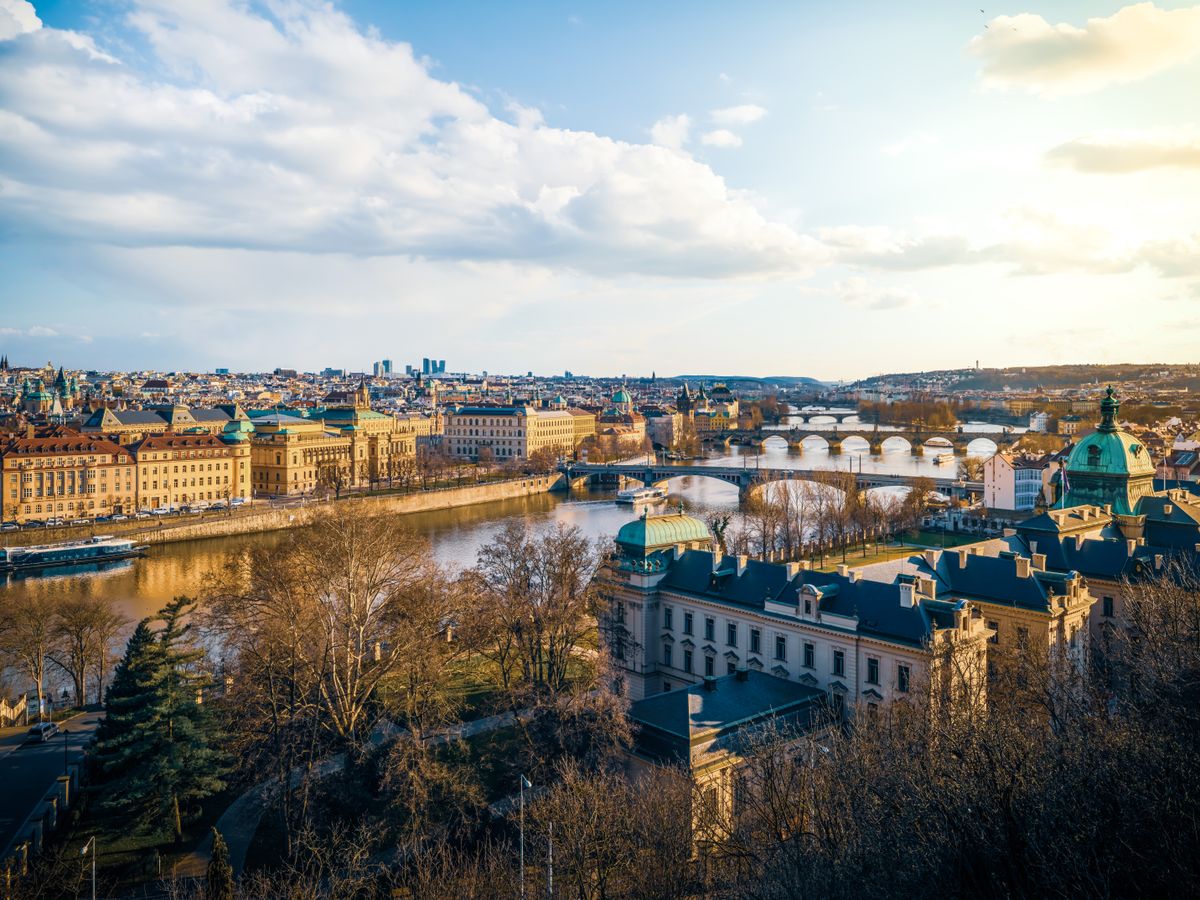
Bridges across the Vltava River in Prague at sunset

Cannafest is scheduled for November 6–8 at PVA Expo Praha Letňany, where three days of cannabis exhibits share a venue with a conference on cultivation, medical research and policy. For a visitor trying to choose a day, Sunday’s schedule offers an unusually clear thread: a talk about lessons from California, a panel about Czech regulation and a discussion comparing U.S. and European markets.

The organizer’s event overview describes a show that spans growing equipment, seeds, vaporizers, hemp textiles, cosmetics and food. Those categories give visitors several ways to approach the floor. A grower comparing equipment, a designer looking at hemp fabric and a reader following a medical research talk may all have different reasons to spend an afternoon in the same building.

What the Sunday program puts together

The official conference agenda lists Luna Stower at noon on Sunday for a talk whose title urges Europe to learn from California’s legalization experience. A discussion of Czech regulation follows at 1 p.m. with Ivan Bartoš and Barbora Pipášová. The schedule then lists a European drug policy session at 2 p.m. and a U.S. and European markets panel at 3 p.m. These are scheduled sessions, and the organizer’s live agenda is the place to check for changes.

The sequence gives a listener a way to compare questions that often get lumped together. A person can hear a speaker’s assessment of a commercial market, then listen for how Czech policymakers describe their own regulatory concerns. The final panel’s comparison gives the audience a chance to see which observations carry over and which depend on the jurisdiction. The agenda establishes the subjects and speakers. Conclusions from the sessions will have to wait until they take place.

Visitors more interested in research can use the same agenda to choose a different day or a shorter window. The schedule includes a session on medical cannabis in integrative dentistry for oncology patients, for example. Treat the session listing as a starting point for questions about research design, the patients studied and the outcomes measured. A conference title alone gives no basis for judging whether a treatment works or for changing a patient’s care.

How to plan the visit

The organizer lists public hours of 11 a.m. to 8 p.m. on Friday and Saturday, and 11 a.m. to 6 p.m. on Sunday. The exhibition venue is at Beranových 667 in Letňany. Cannafest says a valid show ticket covers entry to the professional conference. Anyone planning around a specific session should check the schedule for its local start time and leave room to get from the exhibition floor to the conference hall.

The ticket page gives November 5 as the advance-sale cutoff and lists on-site admission during the show. For a weekend visit, check the current listing for availability, on-site prices and any changes before leaving for the venue. The same page describes proof requirements for some concessions and requires an accompanying adult for visitors under 18.

Read the visitor rules before arrival. An exhibition featuring cannabis products and equipment does not establish permission to use or carry them wherever a visitor goes. Someone traveling internationally should check the rules that apply to the product, the venue and the journey separately. The exhibitor list can help plan what to see, while the visitor rules and the applicable law govern what a person can do.

What to look for on the floor

For a visitor interested in hemp textiles, a useful conversation can start with fiber content and the intended use of the finished product. A fabric sample and a garment label tell different parts of that story. For cultivation equipment, asking what scale a product is designed for can help distinguish something useful at home from a system built for a commercial facility. These are questions a visitor can take to an exhibit without assuming a display reflects a new release.

The conference and the floor can also inform each other. Someone listening to the market comparison on Sunday could ask exhibitors which customers they serve and what requirements shape the products they can offer. That makes the show useful even for visitors who are there to learn how an industry works and have no plans to buy anything.

The organizer reports 247 exhibitors at the previous edition and nearly 24,000 visitors. Those figures describe last year’s event. This weekend’s exhibitor list and floor map are better guides to the booths a visitor can actually find. The organizer also distinguishes exhibitor setup on November 4 and 5 from Friday’s public hours, which begin at 11 a.m. local time.

Illustrative cityscape of Prague. Photo: Calvin Seng / Pexels.

Continue Reading

Culture

Four Museum Programs to Put on Your November 1 Calendar

From an ofrenda in Los Angeles to art-making on the Bowery, these November 1 museum programs offer a creative start to the month.

Published

on

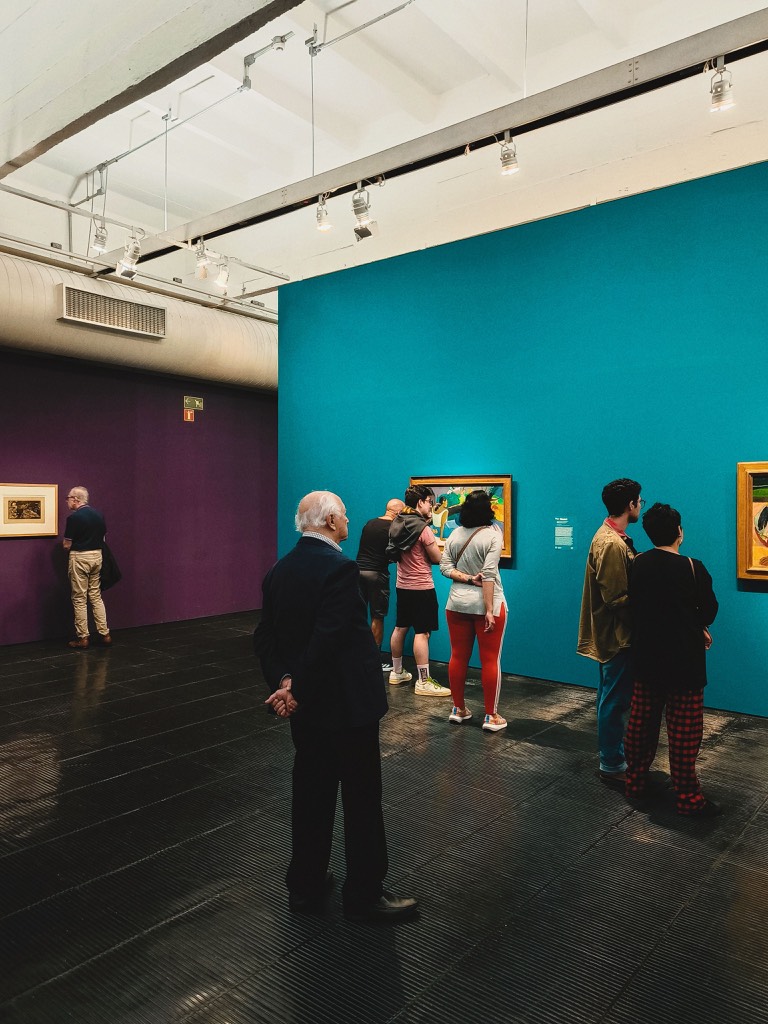
Visitors viewing paintings in a gallery with turquoise and purple walls in São Paulo

The morning after Halloween does not have to mean putting creativity away. On Sunday, November 1, 2026, museum programs in New York, Philadelphia and Los Angeles offer ways to keep looking, listening and making. Some are geared toward families, some welcome all ages, and each offers a different point of entry into art and cultural traditions.

These are upcoming programs drawn from the institutions’ own calendars, not reports from events that have already happened. The dates are close enough to start planning now, but admission conditions differ. A free activity can still sit inside a museum that charges admission, and a festival’s hours do not necessarily match the building’s full opening day.

New York: make something on the Bowery

The New Museum’s fall program announcement lists Family Day for November 1, from 11 a.m. to 3 p.m., in its Sky Rooms North and South. The program offers free admission for families with children, gallery exploration using a Kids’ Guide and opportunities to make art together. Its stated audience is families with children ages 4–12.

The museum also lists another Family Day for December 6, making the November event one option in a continuing series. Storytime takes place on selected Sundays, but the announcement directs visitors to check the current schedule. It would be a mistake to assume that every activity mentioned across the fall calendar happens during this particular visit.

For a family outing, the useful feature is the combination of looking and doing. Rather than asking children to move quietly through an entire building, the program gives them a reason to make choices and create something themselves. Check the museum’s event calendar before leaving for any updated entry instructions.

Philadelphia: light, color and movement

At the Philadelphia Museum of Art’s Light the Way festival, November 1 programming runs from 10 a.m. to 3 p.m. in the Main Building. The museum describes it as a celebration of the Festival of Lights and Southeast Asian artworks, with participation included in Pay What You Wish admission.

The schedule provides several different ways to join in. Lantern-making and a sensory-friendly quiet zone run throughout the event. From 11 a.m. to 2 p.m., visitors can make light catchers and collaborate on rangoli patterns in the South Indian Temple Hall. Bollywood fusion dance performances by Philly Dance Fitness are scheduled for 2 p.m.

That timetable makes it possible to choose a shorter visit around a particular activity. It also gives a group options when people want different levels of stimulation: the quiet zone is a practical part of the program, rather than an afterthought. Confirm admission arrangements directly with the museum.

Los Angeles: remembrance through music and plants

The Natural History Museum of Los Angeles County has a Día de los Muertos celebration scheduled for November 1 from 11 a.m. to 3 p.m. The museum’s calendar specifies that the program is free with paid museum admission and for members. It includes live music, hands-on activities and an interpretive ofrenda honoring departed loved ones.

The ongoing program includes a floral display made with Latinx with Plants, where visitors can add a message for someone they wish to honor. The museum frames the day around remembrance and community, reflecting a tradition observed in Mexico and elsewhere in Latin America.

Approach that invitation with the meaning of the occasion in view. An ofrenda is not interchangeable with Halloween decoration. Reading the interpretation and following guidance from the organizers can make the visit more thoughtful, whether the tradition is part of your own family life or something you are learning about.

Los Angeles: design a different future at LACMA

LACMA’s Andell Family Sundays offers a November 1 drop-in workshop inspired by Home of the Future, 1925–1985: Designing Domestic Utopias. Artists Bianca Argueta and Karl Petion lead the all-ages activity outside the W.M. Keck Education Center, with the calendar listing W.M. Keck Plaza and a 12:30–3:30 p.m. window.

The workshop is listed as free. The same page separately describes family gallery tours that require museum admission, so visitors should distinguish the outdoor activity from a ticketed gallery visit. Related workshops return November 8 and 15, offering alternatives if this Sunday is already full.

LACMA’s page also flags a Metro D Line closure at Wilshire/Fairfax through November 1, with bus service available. Anyone relying on that station should use the linked transit information to check the day’s route before setting out.

Choose the program that fits your city and interests, then confirm its current listing. Together, these calendars offer a useful reminder that a museum visit can involve making, memory, sound and movement as well as looking at objects behind glass.

Illustrative stock gallery in São Paulo; not one of the museums or November 1 events described. Photo: Andre Moura / Pexels.

Continue Reading

Trending

Join The Cannabis Aficionado Community!
Join the Cannabis Aficionado community and receive all of the most relevant news geared towards our sophisticated enthusiast community.
Loading

Copyright ©️ 2026 Cannabis Aficionado. Cannabis Aficionado is a registered trademark of CNM Inc. All rights reserved. Registration on or use of this site constitutes acceptance of our Terms of Service, Privacy Policy and Cookies Policy. People may receive compensation for some links to products and services. Offers may be subject to change without notice.