#cannabisaficionado

Sports

New York Marathon Weekend Brings a Cannabis Rules Check for Runners

Sunday’s marathon is a timely reminder that cannabis legality, CBD labels and sports eligibility are separate questions—with useful viewing options for fans at home.

Published

on

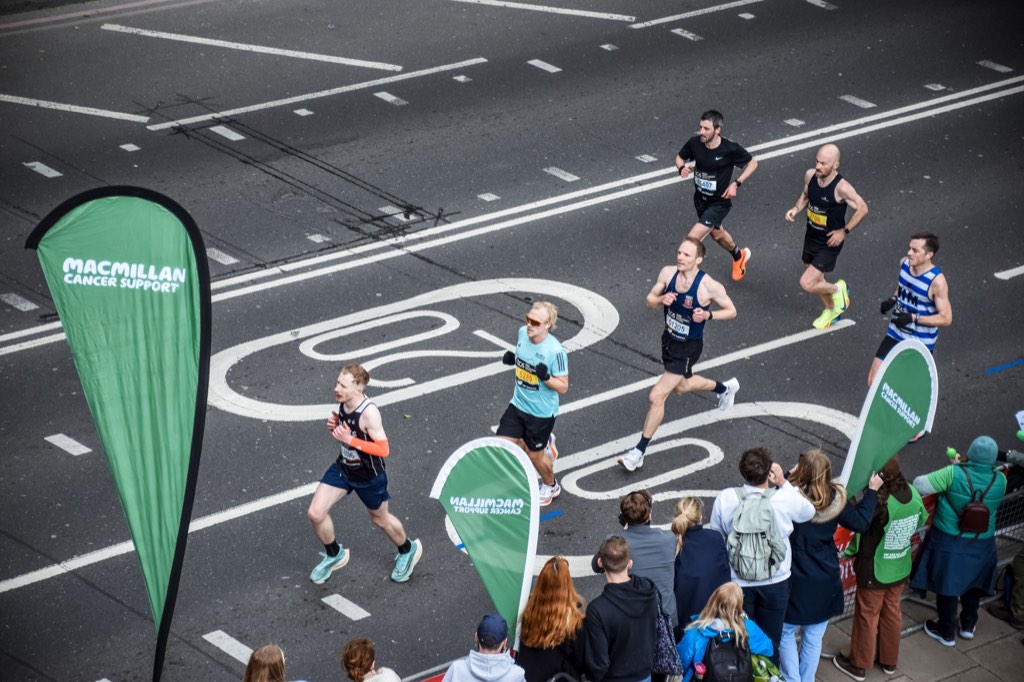
Overhead view of runners and spectators on a London street
Advertisement Back2Grow Advertisement

The TCS New York City Marathon returns Sunday, November 1, according to New York Road Runners’ official race site. For cannabis-minded runners and spectators, the weekend brings a practical distinction into focus: a product’s availability in a store does not determine whether it fits an athlete’s competition rules.

This is not a claim that any entrant uses cannabis. It is a race-week guide to the rules and viewing choices that matter to readers who follow both running and the plant. Cannabis policy, a CBD product label and permission to enter an event are different kinds of information, and treating them as interchangeable can create avoidable confusion.

Start with the organizer’s requirements

NYRR’s Rules of Competition, updated August 12, say the marathon operates under World Athletics rules, with World Para Athletics governing the wheelchair division. Participants must also comply with NYRR’s own rules, conduct standards and Run Clean Policy. A recreational runner should read the event’s actual requirements rather than assume anti-doping is a subject only for invited professionals.

The same organizer guidance makes practical responsibilities clear: runners have assigned transportation arrangements, waves and corrals, and must follow event officials. These details do not establish a cannabis exception. They show why preparation starts with the rules attached to the race entry, rather than what a friend remembers from a different event.

The 2026 cannabis distinction

USADA’s 2026 Clean Sport Handbook identifies cannabinoids as prohibited in competition, with CBD excepted. It also explains that a substance’s legal status in the competition location does not remove the sports prohibition. For athletes subject to those rules, a legal purchase and an acceptable competition sample are separate questions.

The handbook warns that THC and its metabolites can remain in the body for an extended period, with individual factors affecting excretion. That is why this article does not offer a last-use deadline or a countdown promising a negative test. A general article cannot turn an individual history into a guaranteed clearance time.

Use the relevant anti-doping authority for a specific eligibility question. Ask about the ingredient, the product and the applicable competition period rather than reducing the inquiry to whether cannabis is legal in the host city. Keep an actual medication question with the appropriate medical and anti-doping professionals.

Keep the difference between a substance rule and a testing prediction in view. Knowing that a category is prohibited during competition does not reveal what a particular sample will contain. Likewise, a friend’s earlier experience cannot establish how another athlete’s sample would be evaluated. The relevant authority can explain the rules; an anecdote cannot provide an individual guarantee.

CBD is not a blanket product clearance

UK Anti-Doping’s CBD advisory distinguishes the permitted ingredient from the risks of a finished product. It warns that products can contain THC or other prohibited cannabinoids, and that third-party testing does not necessarily screen for everything relevant to an athlete. A reassuring front label is not the same as clearance from the authority governing the athlete.

That warning is useful well beyond one race. A shopper may be comparing an oil, a gummy or another format, but changing the format does not answer the composition question. Nor does a brand’s recovery language establish a performance benefit. This guide makes no recommendation to add a cannabinoid to a race-week routine.

Next year’s list does not govern Sunday

There is also a date trap. UKAD’s summary of the 2027 list says changes take effect January 1, 2027, including clarification of the cannabinoid category and the future permitted status of natural cannabinoids such as CBN and CBG. Those changes should not be applied early to a November 2026 event.

The distinction is especially important when headlines about next year’s rules circulate alongside current product marketing. Read the effective date before drawing a conclusion. A future adjustment is useful planning information, but it is not a present-day exemption or proof that a mixed product is free of THC.

Follow the race without joining the field

For fans, NYRR’s viewing guide lists national ESPN2 coverage from 8 to 11:30 a.m. Eastern and an ABC finish-line show from 3 to 5 p.m. Eastern. On November 1, those windows correspond to 6–9:30 a.m. and 1–3 p.m. in Phoenix. Check local listings and service access separately.

On-site spectators can generally watch from mile 3 through mile 26, while the organizer says there is no viewing at the start or on the Verrazzano-Narrows Bridge. A home broadcast offers another way for cannabis-culture readers to follow the occasion without assuming that an event ticket permits consumption. Choose the viewing plan, understand the rules and let the race itself supply the drama.

Archive stock photograph of runners in London in 2024; not the 2026 New York City Marathon. Photo: Amanuel C / Pexels.

Sports

Wu-Tang Clan Joins Detroit’s Thanksgiving Game, Where Cannabis Rules Still Apply

The Lions’ Thanksgiving halftime announcement adds a music draw, while Ford Field’s entry, smoking and re-entry rules remain essential to planning a visit.

Published

on

A brown American football on an orange kicking tee on grass.

Wu-Tang Clan will headline halftime when the Detroit Lions host the Chicago Bears on Thanksgiving, adding a major music draw to the November 26 game at Ford Field. For cannabis consumers making the trip, the practical distinction is straightforward: Michigan’s adult-use market does not make the stadium a consumption venue. The Lions’ published rules prohibit marijuana among the items fans may bring inside.

The NFL announced the performance November 17. Kickoff is set for 1 p.m. Eastern on CBS and Paramount+, or 11 a.m. in Phoenix. The music announcement changes the entertainment lineup; it does not announce a change to Ford Field’s entry or smoking policies. Planning around both makes more sense than discovering the distinction at the gate.

What Detroit’s Thanksgiving announcement includes

According to the NFL’s announcement, this is Detroit’s 87th annual Thanksgiving Day Classic. Antonio Cipriano is scheduled to perform the national anthem. Eminem and Paul Rosenberg return as executive producers of the halftime show under their multiyear partnership, now in its second year.

Detroit is part of a larger holiday entertainment slate. U2 is scheduled for the Packers–Rams Thanksgiving Eve game November 25. Miranda Lambert will perform during Eagles–Cowboys on Thanksgiving afternoon, followed by Goo Goo Dolls during Chiefs–Bills that evening. Those are separate games and performances; buying a ticket for one does not provide access to the others.

For viewers at home, the Detroit matchup offers a clear appointment rather than a standalone concert start time. Halftime follows the first half of play, so its precise clock time depends on the game. The published 1 p.m. Eastern time is kickoff, not a promise that the performance begins then.

Can fans bring cannabis into Ford Field?

The Lions’ stadium FAQ lists marijuana, including medically prescribed marijuana and associated accessories, among prohibited items. It also says smoking is forbidden inside the stadium, including seating areas, restrooms, lounges, bars and suites. Vaping is covered by that indoor restriction.

The FAQ describes designated outdoor smoking locations during Lions games. That provision should not be read as permission to bring or consume cannabis: the same page separately lists marijuana as a prohibited item. An outdoor smoking area and a cannabis consumption area are different things. Anyone with an accessibility or medical question should ask the venue directly before arriving.

Bag rules deserve the same advance check. The FAQ permits specified clear bags and small clutches, with an inspection exception for medically necessary items. It says there is no outside check-in or storage service for prohibited belongings. A permitted bag does not make everything inside it permissible, and a medical-item inspection exception should not be treated as a cannabis exemption.

What happens if someone smokes inside?

Ford Field’s guest code of conduct explicitly includes marijuana in its indoor smoking and vaping ban, including marijuana described as prescription. It warns that violations can lead to immediate ejection. The code also addresses substance impairment that results in irresponsible behavior, alongside disruptive or illegal conduct.

The same document states that re-entry is not permitted during Lions home games and large stadium events. Leaving the stadium is therefore not a dependable way to pause a visit and return for the second half. Fans should resolve questions about belongings and entry conditions before scanning a ticket, rather than building plans around being allowed back in.

These are the venue’s published conditions, not a judgment about any performer’s or player’s personal behavior. The halftime announcement supplies no basis to claim a cannabis endorsement, partnership or consumption policy connected to Wu-Tang Clan, Eminem or the teams.

Michigan legality has limits beyond the gate

Michigan’s adult-use statute does not authorize public consumption or smoking where the property’s owner or manager prohibits it. It also preserves property owners’ ability to regulate cannabis activities. A legal retail purchase and permission to use that purchase at a particular destination are separate questions.

The law likewise does not authorize operating a vehicle under the influence. Nor does it authorize smoking marijuana in a vehicle’s passenger area on a public way. A stadium parking plan should not be mistaken for an exception to those rules. Arrange travel around the full day, including the journey home, and check the venue’s current guidance again close to the game.

For another example of how sports venues set their own boundaries, see our Las Vegas Grand Prix coverage. Detroit’s Thanksgiving appeal is the football and the halftime show. Keeping cannabis plans within the relevant state and venue rules helps keep the focus there.

A little preparation before departure can prevent a ticketed day out from turning into an avoidable problem at security.

Illustrative American-football stock photograph; not Ford Field, the Lions–Bears game or the announced halftime performance. Photo: Gezer Amorim / Pexels.

Continue Reading

Sports

Josh Myers’ Cannabis Ruling Shows How Racing Handles an Unfamiliar Vape

The original November 16 decision explains a two-month licence withdrawal, an unfamiliar vape and the duties attached to racing’s testing rules.

Published

on

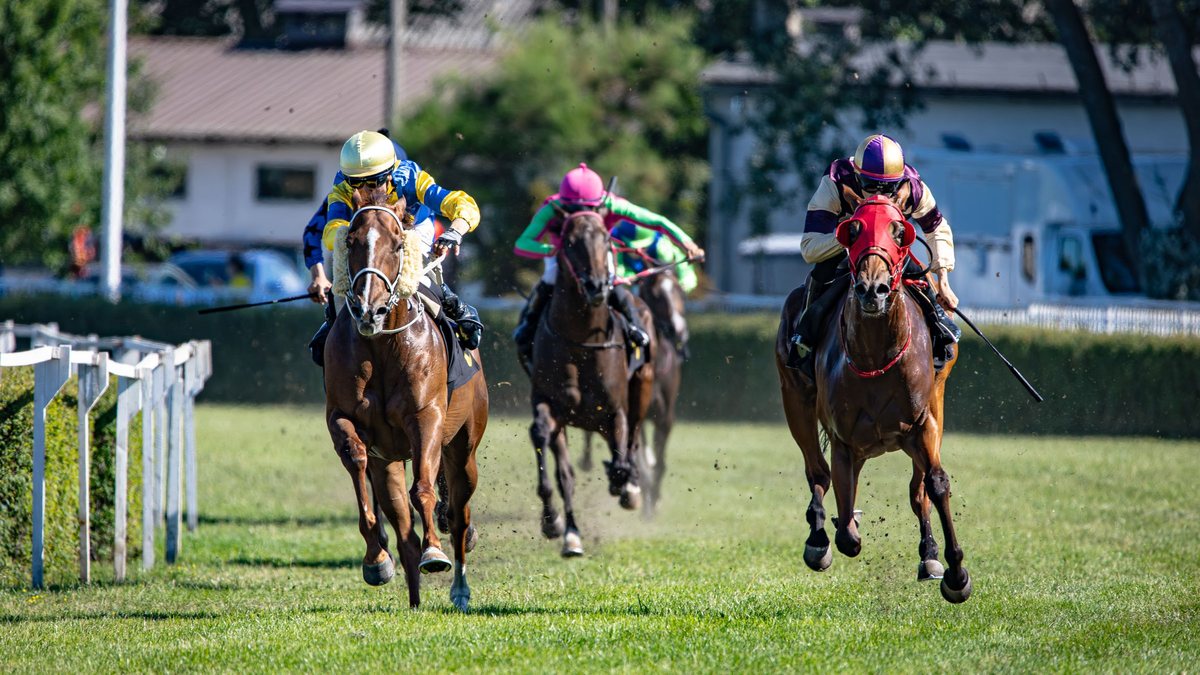
Three jockeys racing brown horses on a grass track.

British racing’s independent disciplinary panel has ordered a two-month withdrawal of amateur jockey Josh Myers’ licence after a cannabis-positive sample. The decision, published November 16, dates the penalty from his interim suspension on September 23. It is a ruling on a rider’s anti-doping obligations, not a finding that a horse tested positive or a general rule applying identically across all sports.

The cannabis connection is explicit: Myers admitted breaching the rule requiring jockeys to ensure no banned substance is present in their bodies. The case also turns attention to an unfamiliar vape, disclosure after learning what it contained, and the difference between explaining exposure and avoiding responsibility under a sporting rule.

The panel’s account of the case

The original decision records a post-race urine test following Myers’ ride on The Pug at Brighton on August 23. The sample contained THC-acid above the applicable confirmation level. The panel set out his explanation that he had used a friend’s vape two days earlier without initially knowing the liquid contained cannabis.

According to that account, he learned its contents after experiencing effects. The decision records that he did not alert the BHA before testing, despite then knowing there could be a risk. The testing laboratory considered his explanation plausible; that assessment did not eliminate the rule breach.

These points should be read together. The decision accepted an account of inadvertent initial use while still imposing a penalty. It does not establish that every cannabis-positive test has the same explanation, nor that borrowing any particular kind of vape necessarily produces this result.

Why knowing use was not required

The decision sets out Rules K49 and K50: the presence obligation does not depend on proving intent, fault, negligence or knowing use. That is the strict-liability feature relevant to this case. An explanation of how exposure occurred can matter to the circumstances and penalty without disproving the presence of a banned substance.

The panel approved the agreed fast-track resolution and considered cooperation, admissions and Myers’ previous disciplinary record. The two-month period runs from the interim suspension, rather than beginning afresh on the publication date. Readers should avoid adding an extra two months to the announced decision or assuming the report itself establishes a later return to competition.

There is also a distinction between what a laboratory measurement can show and what the sport decides to prohibit. The ruling reports a metabolite result and applies the relevant rules. It should not be converted into an independent diagnosis of the rider’s degree of impairment during the race.

Racing places safety at the center

The BHA’s human anti-doping guidance says its regulations apply to licensed jockeys regardless of competitive level. It describes protection of riders, horses and sporting ethics as the aims of control. Cannabis is among the substances discussed in its explanation of performance-inhibiting risks.

That framing is important in a sport involving other riders and animals. A question about reaction, judgment or safe participation is different from the narrower popular debate over whether cannabis can improve an athletic result. A substance does not have to be described as a performance enhancer for a regulator to restrict it.

The guidance also directs riders to the jockey testing code and medication rules. Someone competing under those rules needs to consult that framework, rather than relying on a retailer’s product description, a friend’s assurance or an account of another athlete’s case. Rules governing human participants should also be kept separate from equine testing requirements.

One sporting system does not stand for all

Our coverage of Owen Trout’s rugby league case examined a different anti-doping framework. The useful connection is the need to identify the governing rules before drawing conclusions. A sanction in racing cannot simply be substituted for a rugby sanction because both involve a cannabis metabolite.

For athletes, the practical reading of the Myers decision begins with product uncertainty and continues with the sport’s disclosure and testing obligations. An ingredient’s legal availability and an athlete’s eligibility are separate questions. Likewise, accepting an exposure explanation is different from accepting that the athlete met every applicable requirement.

The ruling identifies a confirmation level of 15 nanograms per millilitre and reports a sample concentration above 100. These are the decision’s testing figures, not instructions for calculating a safe waiting period. Neither a concentration from one case nor the timing of that rider’s reported exposure supplies a reliable timetable for another person to pass a test.

The new ruling supplies a concrete example of those distinctions. It records an admitted breach, the explanation considered, and the penalty imposed through the fast-track procedure. Keeping those elements separate allows a more accurate discussion of cannabis in sport than treating every positive test as either deliberate cheating or an event with no regulatory consequences.

Illustrative horse-racing stock photograph; not Josh Myers, The Pug or Brighton Racecourse. Photo: Aliaksei Semirski / Pexels.

Continue Reading

Sports

Cannabis-and-Tobacco Recovery Study Finds Similar Patterns, With Important Limits

A November pilot study followed 26 active adults after a muscle-damaging exercise protocol. Its findings leave key questions about cannabis alone unanswered.

Published

on

A black hexagonal dumbbell casting a shadow across a gym floor.

A small study published online November 6 in Biology of Sport found broadly similar short-term recovery patterns after strenuous exercise among regular cannabis-and-tobacco co-users and comparison participants. The finding adds evidence to a specific sports-science question, but does not demonstrate that cannabis improves recovery or establish a safe dose for training.

The distinction matters for cannabis consumers who see recovery claims attached to workout products. Observing how existing users recover is different from giving a standardized cannabis product to randomly assigned participants and measuring its effects. This paper concerns the former question, with tobacco use adding another complication.

What the pilot study measured

Antoine Mendes and colleagues studied 26 physically active adults: 12 regular cannabis users and 14 non-users. The users predominantly consumed THC-dominant cannabis mixed with tobacco. Participants performed a drop-jump protocol, with muscle function, soreness and blood markers followed through 72 hours. The open-access paper is available through HAL; the journal record gives the November publication date and its 2027 issue citation.

The groups showed broadly similar concentric strength, muscle-damage marker and soreness responses. Some isometric strength differences appeared at individual time points. The authors identify a small sample, variable self-reported cannabis exposure and residual tobacco confounding as limitations. Acute and chronic cannabis effects could not be separated.

Those qualifications belong beside the result. A study of combined exposure cannot isolate a cannabis-only effect, and measurements over three days cannot establish what happens across months of training. Nor does an isolated difference on one strength measure justify describing cannabis as a recovery treatment.

The sample also comprised 20 men and six women, recruited as physically active students. That population limits how confidently the result can be extended to older adults, people managing injuries or elite competitors. The experiment did not compare every route of cannabis administration. A result involving habitual users of cannabis mixed with tobacco cannot simply be transferred to an edible, a vaporizer or a CBD-only topical.

Why similar results are not proof of a benefit

A finding of no clear difference answers a narrower question than a finding of equivalence. With a small group, uncertainty remains around effects that the experiment may not detect. Readers should therefore resist translating similar average patterns into a universal statement that cannabis has no consequences for every athlete.

The same restraint applies in the other direction. A statistically notable measurement is not automatically a meaningful improvement in sporting performance. Recovery, pain perception, strength and competition results are related ideas, but they are not interchangeable outcomes. This study cannot be used as a shortcut between them.

For a coach or recreational athlete, a useful reading starts with the population, exposure, comparison and follow-up. Ask who participated, what they actually used, whether exposure was controlled and what the researchers measured. Those questions reveal how far a headline can travel beyond the underlying experiment.

Recovery evidence does not settle training safety

The CDC’s cannabis and brain-health guidance describes effects on attention, coordination, movement and reaction time. It also notes that factors including THC concentration, frequency of use and other substances influence effects. Those considerations are separate from whether a particular muscle marker returns toward baseline after exercise.

That separation is practical. A laboratory recovery result does not tell someone whether they can safely handle equipment while impaired, drive home or make decisions during a demanding session. The paper should be read as research on measured recovery outcomes, rather than permission to disregard those other questions.

It is also distinct from a product efficacy claim. FDA’s cannabis guidance distinguishes approved medicines from unapproved products marketed with therapeutic claims. A published study is not itself FDA approval of a gummy, topical or recovery supplement, especially when the marketed product was never tested in that experiment.

Athletes have another rulebook to check

Drug-testing obligations remain a separate consideration. USADA’s advisory on the 2027 prohibited list says its changes take effect January 1, 2027. It describes in-competition restrictions on psychoactive cannabis components and compounds that mimic THC, while warning that CBD products can contain THC that creates a positive-test risk.

Those future rules should not be confused with the rules applicable before their effective date, and individual sports may operate under different policies. Athletes need to check the rules that govern their own competition rather than infer eligibility from a recovery paper or a product’s legal retail availability.

Our earlier explanation of the 2027 cannabis rulebook examines that distinction. This new study contributes a different piece of the discussion: limited human data on recovery, with uncertainties that remain essential to interpreting the result.

Illustrative gym stock photograph; not equipment or participants from the study. Photo: Hebert Santos / Pexels.

Continue Reading

Trending

Join The Cannabis Aficionado Community!
Join the Cannabis Aficionado community and receive all of the most relevant news geared towards our sophisticated enthusiast community.
Loading

Copyright ©️ 2026 Cannabis Aficionado. Cannabis Aficionado is a registered trademark of CNM Inc. All rights reserved. Registration on or use of this site constitutes acceptance of our Terms of Service, Privacy Policy and Cookies Policy. People may receive compensation for some links to products and services. Offers may be subject to change without notice.