#cannabisaficionado

Sports

Las Vegas Grand Prix Returns This Week With a Cannabis Ban at the Circuit

Race weekend returns to the Strip November 19–21, but state cannabis access and permission inside the circuit are separate questions.

Published

on

Night view of Las Vegas with MGM Grand and the illuminated Luxor pyramid
Advertisement Back2Grow Advertisement

The Las Vegas Grand Prix returns November 19–21, turning the Strip into a race-week destination again. For cannabis consumers traveling to Nevada, the important preparation is straightforward: legal adult-use access in the state does not mean marijuana is permitted inside the event. The promoter’s entry conditions and Nevada’s consumption rules address different parts of the visit.

The official race FAQ confirms the three-day dates and the street circuit’s location around Las Vegas Boulevard, Harmon Avenue, Koval Lane and Sands Avenue. It also identifies F1 Academy as a support series this year. This is a preview of the coming weekend, rather than a report on results or a suggestion that any driver uses cannabis.

The ticket terms address possession at entry

The promoter’s ticket terms explicitly include marijuana among items guests may not bring onto the circuit grounds or possess while seeking entry. That restriction is broader than a rule about lighting up in a seat. Changing the form of a marijuana product does not create an exception in the published entry language.

The terms also allow inspection of guests and belongings. Prohibited items can lead to refused entry or removal, and surrendered items may be disposed of. Visitors should settle the question before approaching a gate, instead of expecting security staff to provide storage or make an exception because a product was bought legally.

A medical recommendation should not be treated as an automatic override. The event’s separate instructions for prescription medication concern labeled containers and medical clearance; they do not expressly waive its marijuana prohibition. Anyone with a specific accommodation question should ask the organizer before travel and obtain a clear answer about the relevant product and circumstances.

A smoking area does not mean a cannabis area

The A–Z visitor guide is more specific than a general reference to smoking areas. It prohibits marijuana smoking or vaping anywhere within the event. Authorized smoking areas are for tobacco. General Admission, grandstands and hospitality spaces are among the viewing areas covered by the broader smoking restrictions.

That wording matters when an event offers several kinds of space. An outdoor setting, a private suite or a location marked for smoking does not establish permission to consume cannabis. The useful source is the current substance-specific policy, rather than a photograph of an open-air grandstand or someone else’s experience at another sporting event.

Our reporting on NYRR’s cannabis smoking rule illustrates the same need to read an organizer’s own conditions. The Las Vegas policy stands on its own; rules from a different competition cannot be carried across to this one.

Nevada access comes with location restrictions

The Nevada Cannabis Compliance Board’s public guidance says retail customers must be at least 21 and buy from a state-licensed store. It separately prohibits cannabis use in public places and moving vehicles, including by passengers. Private-property consumption depends on the owner permitting it; licensed consumption lounges provide another authorized setting.

Those distinctions make accommodation planning important. A hotel reservation is not evidence that cannabis use is allowed in the room, and a legal retail purchase does not authorize consumption during a ride to the circuit. Checking the property’s policy and the status of any proposed venue is part of planning the visit.

Nevada’s adult-use statute also sets particular rules for consumption lounges, including excluding people under 21 and keeping consumption out of public view. A lounge is a separately regulated business, not an extension of a race ticket. Its existence does not change what the promoter allows inside the event perimeter.

Plan the route as carefully as the ticket

Clark County’s race information confirms the November 19–21 return and links an interactive circuit-preparation timeline and map. Road access changes are a practical reason to check an up-to-date route, even for visitors who already know the Strip.

The organizer directs ticketholders to zone-specific entrance information and the official app’s map. The A–Z guide says there are no lockers and no re-entry after 7 p.m. Pacific each evening. A plan that depends on leaving an item at the gate or casually stepping out and back in may therefore fail.

The guide also identifies medical locations and says water is complimentary at beverage concessionaire tents. Earplugs are available on request at medical, guest-services and accessibility locations. These are useful details to save before arriving, alongside the entrance map and ticket. They address the practical experience of attending a loud, busy race weekend without implying that a cannabis purchase is part of that experience.

The clearest approach is to separate the day’s decisions: where the ticket permits entry, what the event permits guests to carry, where Nevada permits consumption and how the visitor will travel safely. Sorting out those boundaries before race weekend leaves more attention for the racing once the gates open.

Stock photograph of Las Vegas; not a photograph of the 2026 Grand Prix or its race circuit. Photo: Luis Pelegrin / Pexels.

Sports

U.S. Basketball Player’s Nigeria Arrest Puts Cannabis Border Rules in Focus

Nigerian authorities report a U.S. basketball player’s arrest over an alleged cannabis shipment. The case highlights the separate rules governing international travel.

Published

on

A basketball resting on a wooden indoor court in a shaft of light

Nigerian authorities say they arrested an American basketball player at Lagos’s international airport after finding 33.95 kilograms of cannabis in two checked bags. The agency announced the case November 15, describing an interception on November 11. For athletes who work across borders, the report underscores a practical distinction: cannabis rules in one country do not provide permission to carry it into another.

The account comes from Nigeria’s National Drug Law Enforcement Agency, or NDLEA. It is an enforcement agency’s allegation, not a conviction. The material reviewed for this article does not establish a court finding, a sentence or an independently verified response from the player. Those limits matter as much as the details of the seizure. Later reporting should be assessed against documented developments, with any response and procedural status attributed just as clearly as the original allegation.

What the agency says happened

In its November 15 statement, the NDLEA identifies the man as 28-year-old Greene Da’monte Khiree. It says he arrived from Thailand via Dubai and was detained after allegedly leaving two checked bags and attempting to exit with his carry-on luggage. The agency says the bags bore his name tags and contained 32 parcels with a combined weight of 33.95 kilograms.

The statement describes him as an American professional basketball player and says he told investigators he had been living in Thailand and had traveled to Nigeria to build basketball contacts. That description is attributed to the agency; it does not establish a current team contract or league status. No connection to another similarly named athlete should be inferred.

The statement also describes other enforcement operations. Those are separate cases, involving other people and substances. Their appearance in the same release does not connect them to the basketball player’s alleged conduct. Keeping the cases separate prevents a broad agency roundup from becoming a misleading account of one arrest.

Nigeria’s rules apply at the border

The U.S. State Department’s Nigeria destination guidance says possession, use or sale of cannabis and related products is illegal there. It warns that U.S. citizens can face arrest and prosecution, and that travelers must follow local law even when a violation happens by mistake. An American passport does not supply an exemption.

The United Kingdom’s Nigeria travel advice likewise warns of severe penalties for illegal drugs, including cannabis. It explicitly includes transit in its warning and notes that baggage belonging to transiting passengers can be scanned. The practical relevance extends beyond someone planning to leave an airport and enter the country.

These are general official warnings, not a prediction of the outcome in this case. The quantity alleged by investigators is also far removed from a discussion of whether an individual may use a product at home. Neither point should be blurred into an assumption that all cannabis-related situations have the same facts or legal consequences.

A sports career can cross several rule systems

A player traveling for work may encounter team conditions, league policies, immigration requirements and the criminal law of the countries on the itinerary. Permission under one system cannot answer a question governed by another. A sporting rule about competition is different from a border rule about importing a substance.

Our coverage of athletes’ cannabis rules for 2027 examines the need to identify the relevant sporting authority. International travel adds another check. The country of departure, any transit stop and the final destination may each require separate attention before packing, regardless of whether the trip is for competition, training or professional networking.

That preparation should happen before departure. The State Department advises travelers with questions about a country’s laws to contact that country’s embassy or consulate in the United States. A familiar product label, a teammate’s experience or the rules at a previous destination cannot establish what the next jurisdiction permits.

What consular assistance can and cannot do

The State Department’s guidance on arrest abroad says a detained U.S. citizen should ask authorities to notify the U.S. embassy or consulate. Consular assistance can include a list of English-speaking local attorneys, visits, communication with family under the applicable conditions and requests for appropriate medical care.

The same guidance draws clear limits. Consular officials cannot get someone released from detention, decide guilt or innocence, represent them in court or pay legal fees. Assistance is therefore distinct from immunity or a guarantee of a particular result.

For this case, the next meaningful information would be a documented court step, an official case update or an attributable response from the player or counsel. Until that exists, the accurate account remains an agency-reported arrest over an alleged cannabis shipment, with the legal outcome unresolved.

Illustrative basketball photograph; not the arrested player, his team or a Nigerian venue. Photo: Onur Bahadır / Pexels.

Continue Reading

Sports

Marathon Disqualification Report Highlights NYRR’s Cannabis Smoking Rule

A reported marathon disqualification puts the organizer’s cannabis conduct rules in focus. New York legalization does not settle race permission.

Published

on

A runner tying white shoes on a red athletics track

A reported disqualification from the New York City Marathon has put a straightforward cannabis rule in the spotlight: New York Road Runners prohibits smoking and vaping on the course. The case is a reminder that legal adult-use cannabis and permission to use it during an organized race are separate questions. Participants need to check the organizer’s conditions alongside local law.

Marathon Handbook reported on November 14, citing Katherine Donlevy’s November 13 reporting for the New York Post, that runner Andrea Sager was disqualified after smoking marijuana offered by a spectator during the November 1 race. The report concerns a Code of Conduct violation. It should not be described as a failed drug test or evidence of an anti-doping finding.

What the organizer actually prohibits

NYRR’s published Code of Conduct explicitly covers marijuana products in its no-smoking section. It prohibits smoking, vaping and electronic smoking devices in start corrals, on the course and in the finish area, as well as within 1,000 feet of those locations. The rule reaches beyond the moment someone crosses the start line.

That geographical wording matters for runners planning the whole day. Moving a short distance away from a corral does not necessarily put someone outside the organizer’s stated restriction. The policy also addresses conduct, rather than asking only whether a substance can legally be possessed in the city.

The code allows penalties including disqualification and loss of award eligibility, with other possible sanctions extending to future participation and membership. A list of available penalties is not evidence that every penalty was imposed in a particular case. The reporting reviewed here does not establish a lifetime ban, and no such sanction should be inferred.

Prohibited items are a separate checkpoint

NYRR’s permitted and prohibited items list supplies another part of race preparation. Its prohibited-items section includes cigarettes, tobacco products, marijuana products and smoking or vaping devices. Participants should review what they may bring, not wait until they are on the course to ask what they may use.

That is relevant even to someone who has no intention of smoking during a race. A bag can create a rules question before any conduct occurs. Reading the entry instructions and bag requirements together helps prevent the assumption that an unused item is automatically acceptable at the start village or within the event.

The practical preparation is simple: compare the organizer’s current list with what is actually packed. If an item raises a medical or accessibility question, use the organizer’s designated contact process before race day. Do not infer an exemption from the fact that a product was purchased legally or recommended in another setting.

City legalization does not answer the race question

The New York City Health Department’s legal-use fact sheet says adults 21 and older may smoke or vape cannabis in most places where tobacco smoking is allowed. It also lists important exclusions, including parks, beaches, pedestrian plazas and sports stadiums. Legalization is therefore not permission to smoke everywhere in public.

A race rule adds another layer. Even where an adult could ordinarily use a product under city rules, participation in an organized event can carry additional conditions. The useful question is not simply whether New York permits adult possession; it is whether the specific conduct and location comply with all relevant requirements.

The city’s fact sheet also distinguishes possession, sharing and licensed sales. None of those categories substitutes for reading an event’s conduct policy. A spectator’s willingness to offer something does not establish that a runner is allowed to accept or use it during competition.

Conduct and anti-doping rules should stay distinct

The NYRR Rules of Competition, updated in August, require compliance with the organizer’s competition rules, prohibited-items list, Code of Conduct and Run Clean policy, along with applicable law. That structure explains why one general question about cannabis can lead to several different rule checks.

A conduct violation can concern what someone visibly does during an event. An anti-doping question concerns a different policy framework and potentially testing or eligibility procedures. Reporting that someone smoked on the course does not establish a laboratory result, a measured concentration or an anti-doping adjudication. Those details cannot be supplied by assumption.

Our coverage of athletes’ cannabis rules for 2027 provides further context on why competitors need to identify the actual rule governing their situation. A recreational participant should not assume that being outside an invited elite field removes the organizer’s conduct requirements.

The lesson from this reported case is practical rather than medical: read the event rules before packing or accepting anything along the route. The story does not demonstrate that cannabis helps endurance, relieves race pain safely or improves recovery. It demonstrates how a moment during a race can become a rules issue after the finish.

Illustrative running photograph; not Andrea Sager or the New York City Marathon. Photo: Andrea Piacquadio / Pexels.

Continue Reading

Sports

UFC 334 Brings Two Title Fights to New York—and a Separate Cannabis Fitness Question

Two championship fights lead UFC 334 at Madison Square Garden tonight. For cannabis readers, ringside fitness guidance is a separate issue from the fight card.

Published

on

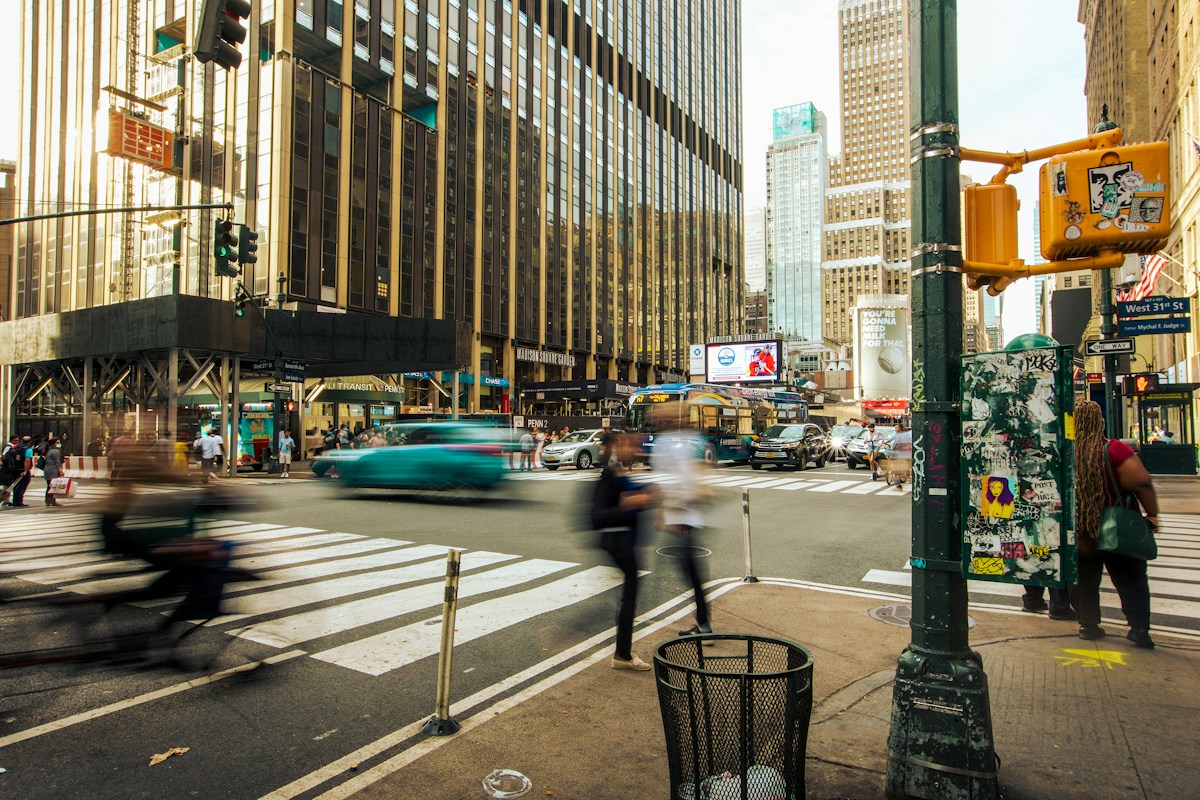
Traffic and pedestrians at a Manhattan intersection near Madison Square Garden

UFC 334 arrives at Madison Square Garden tonight, November 14, with Ciryl Gane defending the heavyweight title against Josh Hokit and Kayla Harrison meeting Amanda Nunes for the women’s bantamweight championship. The two title fights give New York’s card an immediate sporting hook.

For cannabis readers, there is another relevant distinction: being cleared by a competition’s drug rules and being clinically fit to fight are different questions. The Association of Ringside Physicians has addressed cannabis specifically, warning that suspected acute intoxication belongs in a ringside medical assessment. That guidance is context for combat sports, not an allegation about anyone on tonight’s card.

When the card begins

Paramount+’s November 13 viewing guide lists the main card for 9 p.m. Eastern, with preliminaries at 7 p.m. and early preliminaries at 5 p.m. For Arizona readers on Phoenix time, those starts are 7 p.m., 5 p.m. and 3 p.m., respectively.

The broadcaster says the U.S. stream is included with a Paramount+ subscription, without a separate pay-per-view charge, and that this event has no CBS simulcast. Those are U.S. viewing arrangements; readers elsewhere should check their own local rights holder rather than assume the same access applies.

The schedule describes three stages of the broadcast. It does not promise the precise minute either championship fight will begin. Earlier bouts can change the pace of an evening, so the listed main-card start is the useful time to have the broadcast ready.

Two championships, different matchups

Gane enters the heavyweight title fight with a listed 14–2 record. Hokit is unbeaten at 10–0. That puts an established champion opposite a challenger whose professional record has not yet included a defeat.

The women’s bantamweight championship brings Harrison and Nunes together after their planned UFC 324 meeting was postponed. Their listed records are 19–1 and 23–5. The rescheduled matchup supplies the second championship contest on a card that is built around two divisions rather than one title alone.

The official UFC event listing identifies Madison Square Garden as the setting. The venue is part of the occasion, but the results will turn on the competitors in the cage. A championship doubleheader does not guarantee a particular style of fight or an outcome.

UFC’s official Friday weigh-in report listed Gane at 242.6 pounds and Hokit at 231.4, with Harrison and Nunes each at 135. Those measurements establish what the athletes weighed at the official check. They should not be turned into predictions about who will win.

The rest of the evening matters

The main card also includes Caio Borralho against Yousri Belgaroui, Uros Medic against Kevin Holland and Bilal Hasan against Luis Gurule. That gives viewers three additional matchups before the championship portion of the evening.

Stephen Thompson and Charles Radtke feature among the preliminary pairings, alongside Drew Dober against Chris Duncan, Jim Miller against Terrance McKinney and Donte Johnson against Cesar Almeida. Four early preliminary fights complete the broadcaster’s 13-bout scheduled card.

As with any fight-night lineup, scheduled is the operative word. Viewers should use the latest official event information if a bout changes before the broadcast. Tonight’s preview is a guide to the announced card, rather than a guarantee that every listed contest will proceed unchanged.

What the ringside cannabis guidance actually says

The relevant Association of Ringside Physicians position statement was published in July 2024. Its presence in a 2026 website folder does not make it a newly issued rule for UFC 334. It is a medical position statement, separate from an event’s binding regulatory requirements.

The physicians discourage marijuana and synthetic cannabinoid use in combat sports and report no proven athletic performance benefit. They also emphasize that laboratory concentrations are poor indicators of the timing of use or the degree of clinical effect. A test result and an examination are therefore not interchangeable evidence.

That is particularly consequential in a sport where attention, judgment and an official’s assessment of fitness can affect participation. The statement places suspected acute intoxication within clinical judgment about whether an athlete should compete. It does not establish that any athlete appearing tonight uses cannabis.

Readers following our coverage of sport-specific cannabis rules will recognize the need to identify which authority is speaking. A medical association, an anti-doping program and an athletic regulator answer different questions. Tonight’s title fights are the spectacle; understanding those distinctions keeps cannabis discussion grounded in what the evidence actually supports.

The position statement also treats purified topical CBD separately, neither encouraging nor discouraging its use. That limited position is not a claim that a CBD product improves recovery, nor a finding that every product sold under the CBD name is equivalent. The formulation and the claim both matter.

Archival stock street view in the Madison Square Garden area, New York; not UFC 334. Photo: Wabi Sabi / Unsplash.


Continue Reading

Trending

Join The Cannabis Aficionado Community!
Join the Cannabis Aficionado community and receive all of the most relevant news geared towards our sophisticated enthusiast community.
Loading

Copyright ©️ 2026 Cannabis Aficionado. Cannabis Aficionado is a registered trademark of CNM Inc. All rights reserved. Registration on or use of this site constitutes acceptance of our Terms of Service, Privacy Policy and Cookies Policy. People may receive compensation for some links to products and services. Offers may be subject to change without notice.