#cannabisaficionado

Cannabis

Chocolope: This Potent Strain Provides a Contented Happiness

Chocolope itself has a reputation for its potency, the flower among many contemporary strains that boast over the 20 percent mark.

Published

on

Chocolope
PHOTO | Anna Wilcox
Advertisement Back2Grow Advertisement

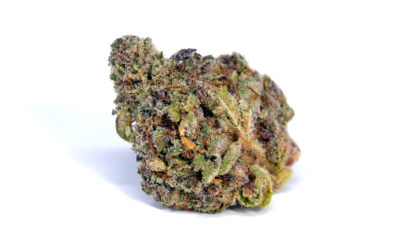
Breaking open a Chocolope flower brings up memories of a summer afternoon, the smell of sunkissed blackberries and their entangled vines growing slightly overripe in the late August heat. While the strain itself doesn’t have a distinct berry aroma, a subtle sweetness is blanketed by a familiar herbal warmth.

Lightened by a pepper-like sharpness, the fragrance of this strain is inviting. Upon looking at the flower, it’s amazing that this simple herb can project such an attention-grabbing aroma. The bud features unassuming pine-tree shape and an airy texture, a surprising vehicle for thousands of glittering resin glands. Yet, it is this welcoming scent that provides the first glimpse into the seductive nature of Chocolope.

The Chocolope High

Chocolope provides a contented kind of happiness. Far from the zippy shot of espresso it is made out to be, this cannabis plant presents a subtle boost of mental energy in a calm and peaceful manner.

This gentle awakening makes the plant a great selection for those hoping to mindfully work through a daytime project. However, the herb also has a silly side. Chocolope offers a smooth cocktail-bar attitude that can mellow just about anyone’s day.

As with all cannabis strains, however, the overall experience this plant inspires is influenced by your current environment and state of mind. Those who are prone to anxiety may find the high-THC experience of this strain overwhelming, especially when placed in uncomfortable situations.

While high THC strains like this one can get out of hand if you consume too much, even cultivars that produce upwards of 20 percent of the psychoactive can still provide very soothing experiences.

Chocolope itself has a reputation for its potency, the flower among many contemporary strains that boast over the 20 percent mark. Yet, there’s no reason to fret. This simply means that consumers can still achieve a notable psychoactive experience with less flower.

Chocolope Strain Background

Chocolope may have debuted back in the 1980s, but this plant is certainly never out of style. The brainchild of the talented Dutch gardeners at DNA Genetics, the cultivar is a nearly pure sativa mashup of Chocolate Thai and Cannalope Haze.

The former is a landrace strain native to Thailand which took the world by storm back in the 1960s, providing flower children of all types with an energetic and thought-provoking cannabis experience. Cannalope Haze is another DNA Genetics creation, with a lineage that spans a very different region of the globe: Mexico.

Featuring genetics from the Michoacán region in central Mexico, Cannalope Haze is also considered a nearly-pure sativa cultivar. The plant has a reputation for producing high levels of THC and inspiring a notable sensation of bodily relaxation. Both traits are also present in Chocolope, though the spirited offspring errs more cerebral than grounded.

Chocolope Strain Benefits

When looking for the cannabis strain that best suits you, following your nose almost always leads to success. While most cannabis strains can produce THC, CBD, or some variation of both, it’s the aroma molecules in the plant that distinguish the nuances between different cultivars.

While molecules may not sound very exciting, peeking into the unique chemistry of Chocolope provides some important details about the sativa strain. In laboratory tests, Chocolope showed moderate levels of the terpene fragrance molecules humulene, myrcene, and beta-caryophyllene, all molecules that offer a sweet and spicy fragrance to the Chocolope strain.

The science is still out regarding just how compounds in the plant interact with one another in the human body. However, researchers already have some ideas about some of the benefits these compounds might provide.

Bright-scented beta-caryophyllene may be beneficial for easing inflammation and calming anxiety. Musky myrcene, on the other hand, lends a hypnotic quality to many strains. Its this molecule that is partially responsible for relaxing the muscles and lulling consumers into a dreamy state of mind.

Humulene is another inflammation-fighting compound, offering an herbal aroma similar to hops. This delicate bouquet may contribute to the analgesic and stress-relieving properties the Chocolope strain reportedly provides. However, it is difficult to say with any certainty. Regardless, break out this plant for moments of uplifting calm throughout the day.

Cannabis

Illinois’s Hemp Rules Take Effect With a Limited Enforcement Pause for Challengers

The November 12 change and a limited agreement in the federal lawsuit are different developments. Here is what the state’s guidance and the filing actually say.

Published

on

A calculator, receipt, glasses and stationery on a desk

Illinois’s new hemp framework reached its November 12, 2026 effective date, changing the legal treatment of many consumable and topical THC products. For cannabis shoppers and retailers, the central distinction is now the product’s statutory classification, rather than whether its packaging calls it hemp. A separate agreement in a federal lawsuit gives certain challengers a limited enforcement pause; it does not establish a statewide postponement.

The Illinois Department of Revenue’s October bulletin says products containing more than 0.4 milligrams of total THC per container no longer qualify as hemp under the new framework. Such products fall into the cannabis system, where both the seller and the product must satisfy the Cannabis Regulation and Tax Act. The department expressly distinguishes Illinois’s November date from the later federal timetable.

Why the federal delay is not a statewide extension

Section 65 of the Illinois act gives the federal provision priority only where the act conflicts with 7 U.S.C. 1639p as of November 13. That is a conflict rule, rather than an express extension of every Illinois deadline. Section 1639p governs hemp-production plans and preserves more stringent state production laws. Separately, Congressional Research Service explains that most federal definition changes were delayed until December 11, with certain non-naturally occurring cannabinoids excluded earlier. Reading these provisions together does not establish a blanket Illinois postponement. That distinction is consistent with Revenue’s stated enforcement position; an actual conflict or later judicial ruling requires separate analysis.

The lawsuit agreement is narrower than a general delay

Our earlier report covered the businesses asking a federal court to stop the law. A November 6 joint status report in case 26-cv-13799 adds a consequential detail: state defendants agreed not to take Hemp Act enforcement action against the named hemp-company plaintiffs, including the association’s members, through November 19. The document makes that agreement subject to terms reached by the parties and delivery of a membership list as of November 6.

The joint filing describes an arrangement between the litigants while briefing and a decision are pending. It should not be presented as a final ruling that the law is invalid, nor as permission for every Illinois retailer to continue its previous sales practices. Businesses cannot infer that they are covered simply because they sell a similar product.

The parties’ proposed schedule listed a state response on November 13, a plaintiffs’ reply on November 17 and argument on November 19. Those dates describe the filing’s requested process. They are not a prediction of how the judge will decide the emergency request. Further orders or agreements could change the position.

A container limit changes the shopping question

The state guidance uses a limit per container. That differs from a limit per serving, so a low-dose serving statement alone does not answer whether a bottle, bag or other package qualifies. Total THC also reaches beyond a label’s delta-9 number: the agriculture department identifies THCa and several other cannabinoids with similar effects in its explanation.

For a reader comparing products, the useful questions are therefore specific. What cannabinoid quantities apply to the entire container? Is the product being sold through the appropriate channel? Does its certificate of analysis identify the relevant batch? A familiar brand or a hemp-derived claim does not resolve those questions by itself.

The Department of Revenue says qualifying final consumer hemp cannabinoid products can still be sold under the Illinois Hemp Act. The distinction is not that every hemp product has become cannabis. It is that products must fit the new definition and meet the requirements for their category.

Qualifying hemp products still have obligations

The Department of Agriculture’s October update identifies conditions beyond the THC threshold. Final consumer hemp cannabinoid products cannot contain the prohibited synthetic cannabinoids, alcohol, tobacco or nicotine, and cannot be intended for smoking or vaping. They must be prepackaged rather than assembled with other consumables at the point of sale.

Testing, labeling and packaging requirements also matter. State guidance calls for batch testing, a certificate of analysis accessible through the label, required cannabinoid and serving information, and sealed child-resistant packaging. It bars health claims and misleading or child-oriented presentations. A product falling below the numerical threshold is not automatically compliant in every other respect.

For businesses, the transition also distinguishes activities. Agriculture guidance says existing industrial hemp processor registrations expire under the old framework, with different new licenses for non-cannabinoid processing and cannabinoid manufacturing. Existing hemp cultivation licensees retain their licenses and renewal dates; the department says cultivation rules are unchanged at this stage.

What deserves attention next

The immediate story has two tracks: implementation of the statutory framework and the challengers’ request for court relief. Readers should watch for an actual court order or a documented extension of the agreement, rather than treating the filing of a motion as a victory on the merits.

Meanwhile, the state’s published guidance remains a useful starting point for understanding why shelves and distribution arrangements may change. It is guidance, not a replacement for the governing statutes or a later court decision. The practical lesson is precision: the law’s effective date, a limited enforcement agreement and authorization to sell a particular product are three different things. Readers following the case should check the scope and dates of any later court document before drawing conclusions about its effect on a particular business.

Illustrative business-recordkeeping stock photograph; not an Illinois inspection or cannabis business. Photo: Cht Gsml / Unsplash.

Continue Reading

Cannabis

Charlotte’s Web Reports Lower CBD Sales but a Narrower Quarterly Operating Loss

The hemp-derived CBD company’s latest results show why lower revenue and an improving quarterly loss can coexist—and why neither resolves the policy outlook.

Published

on

Empty amber glass bottles arranged on a light surface

Charlotte’s Web reported a difficult sales quarter for its hemp-derived CBD business while narrowing its operating loss. Revenue for the three months ended September 30, 2026 was US$9.4 million, down 18.3 percent from a year earlier. Its operating loss narrowed to US$3.7 million from US$5.3 million, showing why the direction of sales and the direction of a loss do not always match.

The company announced the results November 12 and filed its quarterly report with the U.S. Securities and Exchange Commission. The release attributes weaker revenue primarily to California restrictions that took effect in July, reduced promotional discounting and softer demand in parts of the hemp-wellness market. Those explanations are management’s account of the quarter, rather than an independent measurement of every factor affecting CBD shoppers.

Less revenue does not automatically mean a larger loss

The company’s earnings release reports quarterly gross profit of about US$4.4 million, compared with US$4.5 million a year earlier, even as sales fell. Gross margin improved to 46.9 percent from 38.9 percent. Selling, general and administrative expenses declined to US$8.1 million from US$9.7 million.

A percentage margin and a dollar profit measure answer different questions. A company can retain a larger share of each sales dollar while bringing in fewer dollars overall. Lower expenses can then narrow the operating loss without putting the business into operating profit. That is the distinction these results require.

The announcement also identifies an inventory reserve linked to simplifying the product range. Readers should therefore resist interpreting a single margin percentage as a permanent new baseline. Product mix, pricing, manufacturing costs and inventory adjustments can all affect the calculation.

The quarterly filing keeps the periods straight

The Form 10-Q records quarterly revenue more precisely at US$9.393 million and a net loss of US$3.458 million. These rounded to the US$9.4 million revenue and US$3.5 million net loss in the announcement. An operating loss and a net loss are different lines of the accounts, not conflicting reports of one number.

The nine-month picture is also distinct from the latest quarter. The release reports a US$20.7 million net loss for the first nine months, including noncash items associated with the earlier debenture conversion. It would be misleading to describe an improved third-quarter operating loss as proof that every year-to-date earnings measure improved.

The filing shows US$11.364 million of cash and cash equivalents at September 30. Cash on that date is a financial-position measure, rather than sales or profit earned during the quarter. Looking at the income statement and cash-flow statement together gives a fuller picture than treating a positive cash balance as evidence of profitability.

Hemp policy remains part of the business story

Cannabis policy is directly relevant to this CBD company because the legal definition of hemp determines which products can use that route to market. The Congressional Research Service’s October 28 legal sidebar explains that the federal delay does not move every element of the new definition to the same date. It distinguishes the treatment of certain cannabinoids not naturally produced by the plant from provisions delayed until December 11.

That distinction is useful beyond one company. A hemp-derived label does not settle a product’s future legal status, and a federal deadline does not automatically override a state’s separate rules. Consumers and businesses need to identify the applicable product definition, ingredients and jurisdiction.

Charlotte’s Web’s October 28 announcement said it planned to hold a corporate update after December 11 rather than a November earnings call, seeking greater policy clarity before discussing its outlook. That is a communications plan, not evidence that Congress will produce the outcome the company prefers.

Product access and medical evidence are separate

A financial report from a CBD business does not establish that a product treats a disease or is appropriate for a particular person. Sales trends describe commercial activity. They do not measure a clinical benefit, and a discussion of future healthcare distribution should not be mistaken for a new drug approval or a general reimbursement entitlement.

Our coverage of Willie Nelson’s hemp-policy appeal addresses the public debate over access. Charlotte’s Web’s results supply a different perspective: how a company says restrictions, pricing decisions and expenses are affecting its accounts. The two stories illuminate different parts of the same policy uncertainty.

The next meaningful business signals will include the durability of any sales recovery, spending levels and the details of the legal framework actually in force. For now, the results show a smaller quarterly operating loss alongside lower CBD revenue. They do not yet resolve whether the company can turn that improvement into sustained growth and profitability.

Illustrative empty-bottle stock photograph; not Charlotte’s Web packaging or identified CBD products. Photo: Kelly Sikkema / Unsplash.

Continue Reading

Cannabis

Governors Renew Cannabis Banking Push as Everyday Business Barriers Persist

Sixteen governors urge Congress to act on cannabis banking. GAO findings explain why accounts, payments and lending remain separate challenges.

Published

on

Empty retail checkout counters with computer monitors and receipt printers

A new appeal from 16 governors is putting cannabis banking back before Congress, with the focus on ordinary business functions: deposits, payroll, lending and the safety of handling cash. The request concerns the financial infrastructure behind state-sanctioned cannabis businesses, rather than a new authorization to sell marijuana nationwide.

Tom Angell reported for Marijuana Moment on November 10 that the governors sent congressional leaders a letter supporting the SAFE Banking Act. Maryland Governor Wes Moore led the appeal. The report identifies all 16 signatories as Democrats; the legislation they support has bipartisan sponsors.

The request reaches beyond the dispensary counter

The governors’ argument is that reliance on cash creates problems for workers, businesses and state oversight. A customer may notice only the payment method at checkout, but a retailer also needs to pay employees, manage accounts and move money without treating each routine transaction as an exceptional problem.

A legislative appeal does not mean Congress has passed the measure. It also does not establish that every cannabis business lacks a bank account. The more useful question is which services a business can obtain, on what terms, and whether that access remains reliable.

The Government Accountability Office’s banking review, publicly released September 8, provides evidence of that more complicated picture. It found that some financial institutions serve cannabis-related businesses while others are deterred by legal concerns and the expense of meeting compliance requirements.

A bank account is only one part of access

GAO heard from owners and managers who described account closures, expensive accounts and costly business loans. Those are different obstacles. Opening an account does not necessarily solve borrowing needs, and having a lender does not guarantee that every customer payment method will be available.

The report also describes difficulties for people employed in the industry when seeking personal financial services. That broadens the story beyond a company’s balance sheet. Someone working for a licensed cannabis business can encounter consequences connected to their employer’s sector, even when applying for an ordinary personal service.

For customers, the payment question remains especially visible. GAO reported that two major credit-card companies prohibit cannabis purchases. The finding helps explain why a legal retail setting can still have a different checkout experience from other shops. A proposed banking change should not be described as an immediate promise that every card will work.

Existing guidance does not eliminate every barrier

GAO points to federal guidance issued by the Financial Crimes Enforcement Network in 2014. It describes how financial institutions can serve cannabis-related businesses while meeting Bank Secrecy Act responsibilities, including gathering detailed customer information and filing specified suspicious-activity reports.

Those requirements help explain why the decision is not simply whether a bank likes cannabis. Institutions weigh ongoing obligations, costs and perceived legal exposure. The report says some choose to serve the sector to meet community needs or because they see a business opportunity.

The distinction between permission, obligation and willingness matters. Guidance can explain a compliance route without requiring a financial institution to offer a particular account, loan or payment service. That is why the existence of guidance and continued access problems are not necessarily contradictory.

Count the data carefully

GAO reviewed FinCEN data showing that roughly 1,000 banks and credit unions filed cannabis-related suspicious-activity reports in 2024. The agency cautioned that this is not an exact count of institutions maintaining ongoing cannabis-business customers. A report could involve an occasional transaction or an ancillary business rather than a plant-touching operator.

That caveat is important when banking statistics appear in reform debates. A large number of reports does not reveal how easily an individual dispensary can obtain a loan, what its fees are, or whether a service will remain available next month.

The review combined agency documents and reporting data with focus groups and interviews. Its financial-institution work involved 74 institutions; separate focus groups included owners and managers from 51 cannabis-related businesses. Those methods provide useful accounts of barriers, but they should not be mistaken for a survey of every bank and dispensary.

What the new appeal changes

The governors’ letter adds current political pressure to an existing operational problem. Its immediate result is a renewed request for congressional action, not a completed banking overhaul. The next development to watch is legislative movement and the exact protections any final text contains.

Our report on Weedmaps parent WM Technology’s quarterly results examined a different business pressure: paying clients and advertising budgets. Together, the stories show why the cannabis economy involves more than consumer demand. Businesses also need workable payment systems, dependable accounts and the ability to manage everyday obligations.

Illustrative retail checkout photograph; not a cannabis business or a U.S. bank. Photo: Allen Y / Unsplash.

Continue Reading

Trending

Join The Cannabis Aficionado Community!
Join the Cannabis Aficionado community and receive all of the most relevant news geared towards our sophisticated enthusiast community.
Loading

Copyright ©️ 2026 Cannabis Aficionado. Cannabis Aficionado is a registered trademark of CNM Inc. All rights reserved. Registration on or use of this site constitutes acceptance of our Terms of Service, Privacy Policy and Cookies Policy. People may receive compensation for some links to products and services. Offers may be subject to change without notice.