#cannabisaficionado

Industry Innovators

North Dakota Tells Hemp Retailers to Prepare for December 11 THC Limits

A state warning puts hemp inventory under a tighter federal deadline. We separate the notice, existing labeling rules and the questions a package-level THC figure must answer.

Published

on

Hands using a calculator on a notebook beside paperwork and a laptop on a wooden desk.
Advertisement Back2Grow Advertisement

North Dakota’s agriculture department has told hemp retailers to prepare for a December 11 change in federal THC limits and remove products that do not comply before that date. The November 24 notice connects a national cannabis-definition change with an immediate inventory question for local shops. We would read it as a dated warning with a stated condition, rather than assume a product remains eligible because it meets a familiar state serving limit.

The department’s announcement describes the coming threshold as less than 0.4 milligrams of THC per container, compared with North Dakota’s current 5-milligram limit per serving. It says the state cannot be less restrictive than federal law and directs retailers to remove noncompliant products unless federal law changes before the effective date. The notice does not identify individual products or report that every shop has completed an inventory review.

Why a serving and a container are different

The units are central to understanding this warning. A serving is an amount a label allocates to one use; a container can hold several servings. A small number printed beside one serving therefore cannot, on its own, answer a question about the contents of the entire package. We would want the amount, unit and scope kept together whenever a THC figure is repeated.

As arithmetic, five milligrams is 12.5 times 0.4 milligrams. That comparison illustrates the scale of the figures in the notice; it is not a product-specific laboratory result or a complete legal assessment. A package’s cannabinoid composition, testing documentation and applicable definitions still matter. Nor should a percentage on a label be silently substituted for a milligram amount: concentration and total quantity are different measures.

Where the federal change comes from

A Congressional Research Service analysis, updated September 28, explains that the 2025 agriculture appropriations law changed the federal definition of hemp. A September continuing resolution delayed portions of that definition until December 11. The report distinguishes the earlier delta-9 THC concentration test from the new total-THC framework and describes separate exclusions for certain cannabinoid products.

For final hemp-derived cannabinoid products, CRS describes an exclusion above 0.4 milligrams combined total per container of THC and other cannabinoids with similar effects. It identifies the container as the innermost packaging in direct contact with the final retail product. That is more specific than treating a shipping carton, one advertised serving and a retail package as interchangeable things.

The wording deserves care at the boundary. North Dakota’s short notice says less than 0.4 milligrams, while the CRS account describes an exclusion for amounts greater than 0.4. We would not use that difference to certify a product labeled exactly 0.4 milligrams. Retailers need the operative requirements and agency clarification for that situation; neither this comparison nor a rounded label supplies a clearance decision.

Existing state safeguards still explain the paperwork

North Dakota’s administrative hemp rules provide useful background to the records already associated with these products. They define cannabinoid hemp through conditions including a total-THC serving limit and cannabinoid ratios. They also require a certificate of analysis to be physically available at the retail location or accessible through a QR code on the label, alongside independent batch testing of hemp extract.

The rules distinguish labeling information for different product forms. For covered edible products they call for cannabinoid amounts per serving and the number of servings per container; other forms have their own dosage or concentration information. Packaging requirements include child resistance and tamper evidence. Retailers may not direct marketing at minors or make health claims in advertising. These are existing controls, not new permissions created by the November notice.

For shoppers, the practical lesson is to ask for the actual product information rather than accept a broad claim that something is compliant because it is called hemp. A certificate, label and retailer explanation should refer to the same item and batch. A sales claim should not be mistaken for an agency’s determination about that item, and regulatory eligibility does not establish a medical benefit.

We would also distinguish a shop removing stock from evidence of a recall. The department’s notice sets out a prospective compliance instruction. It does not announce a contamination finding, identify an injured customer or establish that any named retailer has broken the rules.

Watch for an enacted change, not a promised reprieve

The department explicitly leaves room for federal law to change before the deadline. That condition matters, but it does not announce a postponement. A proposal, an industry’s preferred outcome and an effective legal change are different stages. We would check a new official enactment or agency update before describing the December date as replaced. For now, the verified local development is the department’s warning and the inventory review it calls for.

Illustrative planning photograph; not North Dakota retailers, state officials or records from a hemp business. Photo: Pavel Danilyuk / Pexels.

Industry Innovators

Canada’s Cannabis Farm Receipts Rise 31.9%, With a Different Story at Retail

New Canadian data show stronger cannabis receipts at the farm level. Comparing them with retail sales requires attention to timing, units and what each series measures.

Published

on

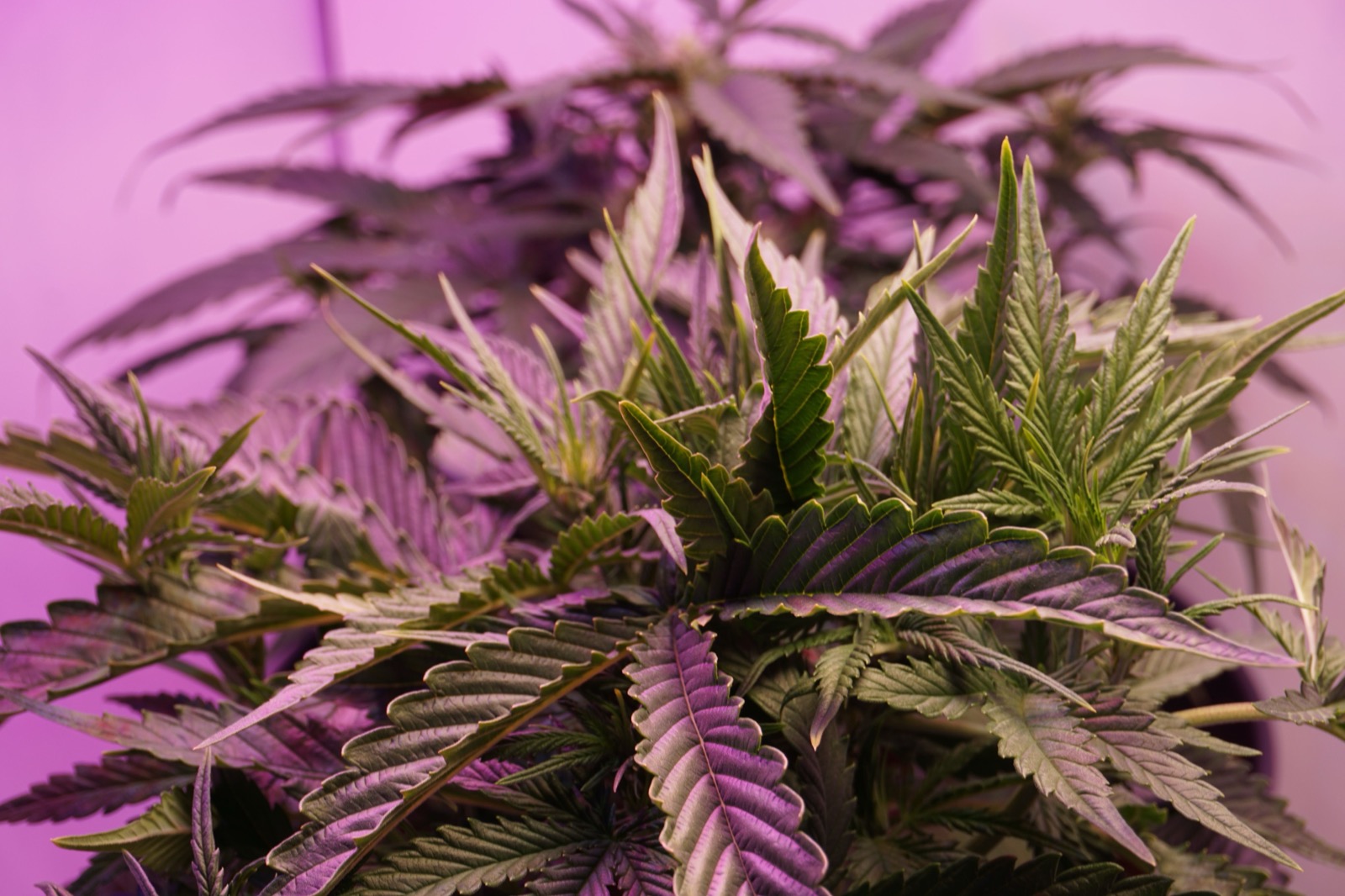
Cannabis leaves and developing flowers under purple indoor lighting.

Canadian cannabis farms recorded C$855 million in cash receipts during the third quarter of 2026, up 31.9 percent from a year earlier, according to Statistics Canada’s November 24 release. That is a substantial increase in money received at the farm level. We would resist turning it into a claim that every grower is profitable or that shoppers are buying one-third more cannabis: those are different questions.

The agency’s selected-commodities table puts cannabis receipts for January through September at C$2.255 billion, up 16.7 percent from C$1.933 billion in the comparable 2025 period. The third-quarter comparison is C$855 million against C$648 million. The figures are in Canadian dollars, and the 2026 estimates are preliminary. Published amounts are rounded, so totals can differ slightly.

A stronger quarter within a longer period

The rounded third-quarter figures imply roughly C$207 million more in receipts than a year earlier. Across the first nine months, the difference is about C$322 million. These calculations help show the scale of the change without pretending that rounded published totals reproduce the agency’s underlying calculations exactly.

It also matters that the quarterly growth rate is larger than the nine-month rate. We should not apply 31.9 percent to the whole year, or describe it as the pace for every quarter. A comparison tells us about its stated period. To understand whether a change persists, we need subsequent observations and any revisions to the earlier figures.

Cannabis is one line in an agricultural release covering many commodities. Its performance deserves attention on its own terms; the headline growth rate for all farming cannot stand in for the cannabis result, and the cannabis result cannot describe the financial condition of every agricultural producer.

Receipts measure revenue, before the bills

Statistics Canada’s release notes define farm cash receipts as gross revenue received by farm businesses. Payments are recorded when farmers receive the money. The series is in current dollars and does not subtract expenses, loans or depreciation. It therefore does not tell us the earnings left after operating and financing costs.

That distinction is central to how we read cannabis business news. More incoming revenue can coexist with expensive production, debt or other pressures. Conversely, a company can improve its economics without matching the national revenue growth rate. We would want its actual financial statements and reporting period before making a business-specific judgment.

The release says these estimates use administrative records, surveys and other sources, and remain subject to revision. It schedules full-year farm receipts for February 26, 2027, and preliminary 2026 net farm income for May 26. Those are different statistical products with different release dates; a later income release is not already contained in this receipts announcement.

Retail is another point in the chain

A separate November 20 retail table reports seasonally adjusted cannabis-retailer sales of approximately C$493 million in September, up 0.6 percent from August and 4.7 percent from September 2025. It describes sales by retailers during one month, rather than cash received by farms over a quarter.

We would not add those retail dollars to farm receipts to invent a combined cannabis market total. That would mix stages of the supply chain and risk counting related economic activity more than once. Nor would dividing one series by the other produce a reliable retail markup: the periods, coverage and accounting concepts do not match.

The modest monthly retail change and much larger quarterly farm-receipts increase can therefore coexist without contradiction. The useful comparison is conceptual. They tell us that different measures of the cannabis economy are moving at different rates, while leaving the reasons for the gap to be established through further evidence.

What the numbers mean for your next purchase

For a shopper, this release does not establish that flower has become cheaper, stronger or more consistent. None of those qualities is measured by a dollar total paid to farms. Product-level comparisons still require the actual item, amount, price and relevant quality information, rather than an industry growth headline.

Our earlier coverage of Canadian cannabis sales examined the retail side. This farm-level release adds another view of the industry, rather than replacing that measure. We will get a better picture by keeping each series’ period and definition attached to its figures as new data arrive.

The meaningful news is stronger cannabis farm receipts in the third quarter and over the first nine months. The next questions concern durability and the costs behind that revenue. We can recognize the increase now while leaving profitability, production volumes and individual businesses’ performance to the evidence that actually measures them.

Illustrative cultivation photograph; not an identified Canadian farm or a business included in the statistical release. Photo: Brokkelen.nl Netherlands Amsterdam / Pexels.

Continue Reading

Industry Innovators

Los Angeles Prepares December 4 Cannabis Retail Lottery After Registration Closes

Los Angeles’s next cannabis retail lottery is an application milestone for verified social equity participants. Being selected does not mean a dispensary can open.

Published

on

Two people in business suits reviewing papers at a red outdoor table.

Los Angeles has closed registration for its December 4 cannabis retail application lottery and is preparing the next stage for social equity participants. The distinction we would keep in view is simple: selection creates an opportunity to pursue an application. It does not turn a business plan into an authorized dispensary, and it does not establish an opening date for customers.

The Department of Cannabis Regulation’s published reference materials describe the process as Phase 3 Retail Round 3, or P3RR3, for Type 10 retail storefront applications. Registration ran November 10–17, with an eligibility-review period listed through November 25. The agency’s next stated milestone is the December 4 drawing and public reconciliation of selections.

Who was eligible to enter?

The materials require both verified Social Equity Individual Applicant status and registration for this specific lottery. Prior verification alone did not automatically enter someone. DCR identifies verification periods in 2019, 2022 and 2025, and says more than 2,000 individuals have received that designation and may be eligible to register, subject to its requirements.

That number should not be mistaken for a final participant count, a count of winners or the number of new shops Los Angeles will receive. We would want the agency’s confirmed registration and selection records before using any of those measures. The difference matters to participants assessing competition and to anyone forecasting the city’s retail footprint.

The city’s registration guidance also distinguishes free lottery participation from the application fees selected participants must later pay. An opportunity to enter without a charge therefore does not mean the subsequent licensing process has no costs. Those are separate stages with separate financial implications.

Selection is the beginning of another process

Under DCR’s outline, selected individuals have a maximum of two years from the lottery date to submit a pre-application record using a compliant property. The location must be in a Community Plan Area with available capacity under the city’s undue-concentration framework. The materials describe that property-related opportunity as first come, first served until the relevant area reaches its limit.

For an aspiring operator, that means a favorable lottery outcome still leaves decisions about location, compliance and the application itself. We would not infer that a selected person already controls a suitable premises or has secured the funds to carry a project through. Those questions require evidence about that particular proposed business.

For you as a customer, the practical implication is patience with opening announcements. A lottery result can be real progress while remaining several steps removed from a place you can visit. We would look for the relevant approvals and a verified opening announcement before describing any selected applicant as a new operating dispensary.

How the city says the draw will work

DCR says it contracted FTI Consulting to administer a randomized selection process designed to separate identities from selection. Its detailed protocol describes successive anonymized identifiers handled by separate city and FTI teams. After selection, the lists are reconciled to connect chosen identifiers with the relevant applicants. That is the published plan, not our independent audit of its execution.

The protocol describes reproducible random-number procedures and checks by another team member. The meaningful follow-up will be whether the stated process is carried out and what documentation accompanies the result. We would assess transparency through those records and the public reconciliation, rather than treat the phrase describing the process as a substitute for evidence.

DCR says participants will receive notification by email and that a selection list will be posted. Anyone watching the process should use the agency’s own final records to establish an outcome. An example chart explaining how identifiers move through the system is not the result of the drawing, and the reference page explicitly distinguishes the two.

Confirm the livestream details directly

There is a timing discrepancy in the agency’s online material reviewed for this report. The licensing reference page lists 10 a.m. Pacific for December 4, while the separate events calendar table lists noon, even though a notice on that same page also says 10 a.m. The date agrees. We would check DCR’s current announcement before making a viewing plan instead of presenting either time as reconciled.

The events archive also lists November 4 registration guidance and a November 19 procedures presentation. Those resources address different stages and should be read with the current lottery instructions. An earlier webinar is background, rather than a reason to assume that a registration window remains open after the stated deadline.

The next useful story will be the verified selection result and what participants can do afterward. For now, Los Angeles has an announced December milestone, a closed entry period and an application pathway with substantial work still ahead. We can recognize that opportunity while being precise about what has, and has not, been granted.

Illustrative business-planning photograph; not Los Angeles applicants, city staff or the lottery administrators. Photo: Ketut Subiyanto / Pexels.

Continue Reading

Industry Innovators

Court Pauses DEA’s November 29 Medical Cannabis Supply-Chain Cutoff

A November 25 court order pauses a disputed medical cannabis supply-chain restriction. Its limited scope matters as the November 29 deadline approaches.

Published

on

A wooden gavel resting across U.S. dollar bills beside an American flag.

The D.C. Circuit has temporarily paused part of DEA’s medical cannabis supply-chain guidance ahead of its November 29 compliance deadline. The November 25 order concerns timely federal applicants trading with businesses that are neither registered nor timely applicants. We see an important reprieve for affected supply arrangements, with a clear limit: the court has bought itself time to review emergency requests, rather than decided who should win.

The one-page order applies to Schedule III medical marijuana activities conducted in conformity with a state-issued license. Judges Rao, Walker and Garcia issued it in Standard Wellness Utah’s case, consolidated with two other challenges. The stay lasts until another court order; it supplies no replacement expiration date.

What the court actually paused

The target is a specified part of DEA’s October 30 applicant information document. The court expressly says the administrative pause allows consideration of the emergency stay motions and carries no conclusion about their merits. That distinction should shape how we discuss the news: temporary relief has arrived, while the underlying legal dispute remains open.

For you as a patient or customer, that makes sweeping claims especially unhelpful. This order is about a defined set of medical supply transactions and applicants. It does not announce that every cannabis business now has federal authorization, and it is not a judgment about a particular product’s safety, effectiveness or availability at your dispensary.

Why November 29 mattered

DEA’s October 30 guidance described a trading network limited to federal registrants and qualifying timely applicants. It told applicants to verify counterparties and establish compliant supply chains by November 29. Transactions outside that network could, the agency said, jeopardize pending applications or existing registrations.

The document defined timely applicants through complete submissions, including payment, made between April 28 and June 26. It also excluded applicants whose applications had been withdrawn or finally denied, and businesses lacking the necessary state medical license. Those qualifications explain why a state market could contain businesses in different federal positions even when they already worked together.

That creates a practical issue beyond a filing date. A dispensary’s ability to keep serving patients depends on its suppliers, and an integrated business can hold different permissions for different operations. We would assess a claimed disruption by tracing those actual relationships, rather than assume that a registration announcement automatically resolves an entire company’s supply network.

The competing legal arguments remain

In their November 24 reply, Pennsylvania petitioners argued that the April medical-cannabis framework permitted timely applicants to continue operating in accordance with state licenses while applications were pending. They said the later counterparty restriction improperly narrowed that arrangement and threatened transactions between their manufacturing and dispensary operations.

Those are litigants’ arguments, not findings we can attribute to the panel. Their importance is that they identify the contested mechanism: whether DEA’s later information document merely explains existing requirements or adds restrictions inconsistent with the earlier framework. The administrative stay leaves that question for the court’s further consideration.

The government’s November 23 opposition defended federal registration requirements and argued that the companies were seeking authority the Controlled Substances Act did not give them. It also raised threshold objections concerning final agency action and standing. The government opposed emergency relief; Wednesday’s pause does not establish that those objections have failed.

The government’s filing identifies a separate proceeding challenging the April rescheduling decision itself. That separation is worth preserving: a dispute over the validity of a scheduling decision and a dispute over how businesses operate during registration are not interchangeable. A procedural development in one cannot be assumed to settle the other, even when both concern medical marijuana.

Follow the next order, not a victory slogan

Our earlier report on DEA’s court response described the dispute before this order. The new development changes the immediate procedural position. It should be read alongside that reporting, rather than confused with a final reversal of the agency or a permanent settlement of federal cannabis policy.

The most useful next evidence will be another court order explaining whether relief continues, changes or ends. We would also look for clear agency communication addressing implementation. Until then, the operative document is the order itself, with its specific reference to timely applicants, state-conforming medical activities and counterparties outside the federal registration and timely-application groups.

For affected businesses, preserving access to an existing supply relationship can matter enormously even when the relief is procedural. For everyone following cannabis reform, the discipline is to recognize that immediate significance without enlarging the ruling. This is a consequential pause ahead of a deadline, and the next stage of the case still has to be decided.

Illustrative legal and business still life; not the D.C. Circuit, its judges or evidence from this case. Photo: Towfiqu barbhuiya / Pexels.


Continue Reading

Trending

Join The Cannabis Aficionado Community!
Join the Cannabis Aficionado community and receive all of the most relevant news geared towards our sophisticated enthusiast community.
Loading

Copyright ©️ 2026 Cannabis Aficionado. Cannabis Aficionado is a registered trademark of CNM Inc. All rights reserved. Registration on or use of this site constitutes acceptance of our Terms of Service, Privacy Policy and Cookies Policy. People may receive compensation for some links to products and services. Offers may be subject to change without notice.