#cannabisaficionado

Industry Innovators

Village Farms’ Record Cannabis Sales Come With a Margin Check

Village Farms reports record cannabis sales and higher exports in Q3 2026, alongside lower cannabis margins and profit measures.

Published

on

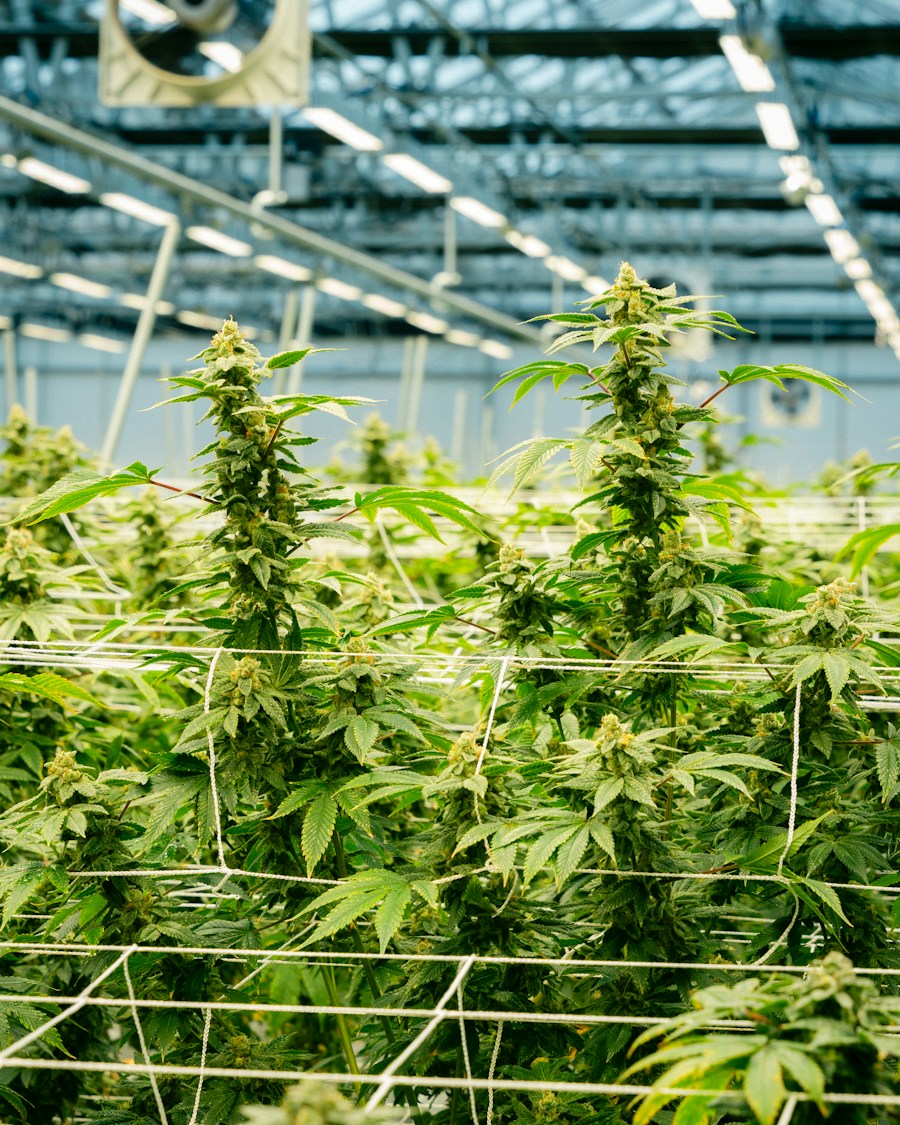
Flowering cannabis plants under a greenhouse roof
Advertisement Back2Grow Advertisement

Village Farms International reported record cannabis sales on November 9, with international shipments helping its latest quarter while cannabis profit measures moved lower than a year earlier. The combination makes this a more revealing earnings report than a record-sales headline alone suggests: growth in one part of a cannabis business can coexist with tighter margins.

The company’s third-quarter release covers the three months ended September 30, 2026. Figures below are in U.S. dollars unless otherwise identified. These are reported operating results and management expectations, not a prediction of the company’s share price.

Cannabis sales rise, margins retreat

Village Farms reported cannabis sales of $55 million, up 3% from approximately $53.5 million a year earlier. International cannabis exports reached $20.8 million, increasing 75% year over year and remaining roughly level with the preceding quarter’s record. The export business was a prominent contributor to the growth story.

But cannabis gross margin declined to 48% from 55%. Cannabis net income fell to $7.8 million from $12 million, while adjusted EBITDA from continuing cannabis operations declined to $14.7 million from $20.2 million. The company cited softer Canadian wholesale spot pricing among the factors affecting profitability.

Those figures describe different layers of the same operation. Sales show the value of business booked. Gross margin indicates how much remains after the costs included at that stage of the accounts. Net income and an adjusted operating measure then answer further questions. A record at the top of the statement does not require a record farther down.

The group is larger than its cannabis segment

Consolidated quarterly sales were $66.9 million, compared with $66.7 million a year earlier. The company’s quarterly SEC filing reports net income attributable to shareholders of about $10 million, versus $10.2 million in the comparable quarter. Those group totals should not be substituted for the cannabis figures.

Village Farms’ operations include Canadian cannabis businesses, a U.S. CBD business, Netherlands cannabis activities and produce operations. Readers evaluating a headline about its overall performance therefore need to ask which segment produced the change. The group total and a cannabis-only comparison are useful together precisely because they have different boundaries.

That is also why adjusted EBITDA should retain its full label. It is a company-reported adjusted measure, not interchangeable with net income or money left in a bank account. When comparing cannabis businesses, start with matching periods and definitions before deciding that a larger number represents stronger underlying performance.

Quarterly cash and the longer view

The release reports $9.5 million in consolidated operating cash flow for the quarter. The filing’s nine-month statement tells a separate, longer-period story: operating cash from continuing operations was approximately $1.6 million, compared with $46.7 million in the prior-year nine-month period. Working-capital movements were a major difference in that comparison.

These figures do not contradict each other. A strong quarter can arrive after earlier cash demands, and a nine-month total incorporates all three quarters. Mixing the two periods would obscure rather than explain the business. The filing also reports about $17.3 million of capital expenditures over nine months, up from $7.1 million.

For anyone following the sector’s expansion, that creates a practical reading order: examine the quarter, then step back to the year-to-date statement, and then consider investment spending separately. The question is how the operation funds its plans over time, rather than whether one isolated cash figure looks attractive.

Expansion remains a forward-looking story

Management described the Netherlands’ second phase as fully planted and outlined further Canadian capacity work. Its Delta 2 expansion is expected to finish in the first quarter of 2027 and reach full capacity around midyear. These are expectations about future operations, which should remain clearly separated from production already achieved.

That separation is particularly important in cannabis, where a facility plan, a planted crop, a shipment and recognized revenue mark different stages. An announced expansion can establish the direction of a strategy without establishing when all of its financial contribution will appear.

Our earlier report on Cresco’s latest quarter offers another example of why sales, losses and cash flow deserve separate attention. Village Farms adds an international dimension to that conversation, alongside a clear reminder that export growth and margin pressure can appear in the same report.

The next useful checkpoint is execution: whether the outlined capacity milestones arrive, how international demand translates into shipments, and whether improved sales ultimately support profitability and cash generation. Monday’s results establish the starting figures for that assessment; they do not settle the outcome in advance.

For industry readers, the most useful comparison in the next report will use the same definitions again. Track cannabis revenue against cannabis margins, consolidated cash against consolidated cash, and completed investment against the timetable management has described. That consistent approach leaves room for both the encouraging export figures and the pressures elsewhere in the accounts, without selecting only the numbers that support a preferred narrative.

Illustrative cannabis cultivation stock photo; not a Village Farms facility. Photo: Evan Strock / Unsplash.

Cannabis

Illinois Hemp Businesses Ask a Federal Court to Pause November 12 Rules

Hemp businesses seek emergency court relief before Illinois’ November 12 rules, challenging THC limits and the move into cannabis licensing.

Published

on

Illinois hemp businesses are asking a federal court to interrupt a November 12 change that could move many THC products off ordinary retail shelves and into the state’s licensed cannabis system. Their emergency request puts a fast-approaching state deadline at the center of a dispute over who can make, distribute and sell hemp-derived products.

For cannabis consumers, the immediate issue is where a familiar drink or other product can be sold. For retailers, it is whether an existing inventory will still fit the rules. The lawsuit is a request for relief, not evidence that a judge has already suspended the law.

Hemp Law Watch reported the November 5 filing and linked the court papers. The underlying documents identify the case as Illinois Healthy Alternatives Association and others v. Raoul and others, number 1:26-cv-13799, in the Northern District of Illinois.

What the businesses want the court to stop

The emergency motion seeks a temporary restraining order followed by a preliminary injunction. It challenges the reclassification of federally lawful hemp products as cannabis, the 0.4-milligram total-THC limit per container, and restrictions affecting purchases and sales involving out-of-state businesses.

The plaintiffs also ask the court to prevent enforcement that would require hemp companies to obtain licenses under Illinois’ Cannabis Regulation and Tax Act for those transactions. Those are the requested remedies. The motion itself does not establish that any of them has been granted.

In their complaint, the association and business plaintiffs argue that the changes unlawfully interfere with interstate commerce. They describe economic harm to businesses operating in the existing hemp market. Those assertions are the plaintiffs’ case for intervention, rather than judicial findings that the statute is unconstitutional.

The state’s published plan

The Illinois Department of Revenue’s October bulletin says the state plans enforcement beginning November 12. It specifies that consumable or topical products containing more than 0.4 milligrams of total THC per container will no longer qualify as hemp under the new framework.

The unit matters: that is a container limit, not a percentage and not a per-serving allowance. The bulletin says products classified as cannabis must meet cannabis-system requirements and may be sold to consumers only through appropriately licensed dispensaries. Simply changing a product’s shelf label would not establish compliance.

The department separately says Illinois intends to proceed on its state timeline despite the federal delay described in the bulletin. Treating every hemp deadline as one national date would therefore miss the distinction at the heart of this week’s retail disruption.

How Illinois arrived here

Governor JB Pritzker’s June 12 signing announcement presented Senate Bill 3222 as a consumer-protection and cannabis-market reform package. The announcement described an immediate prohibition on intoxicating-hemp sales to people under 21, with additional classification changes taking effect in November.

The administration emphasized testing, detailed labels and packaging rules designed to prevent misleading marketing to children. The package also included medical-access and social-equity provisions. That wider scope helps explain why the debate is about an entire regulatory framework, even when shoppers encounter it as a disappearing beverage.

The business plaintiffs see that framework differently. Their filings focus on market access and the consequences of requiring existing hemp trade to operate through a separate licensing structure. Readers can recognize those competing positions without assuming that a public-safety objective settles the legal challenge or that a lawsuit disproves the state’s rationale.

What to watch before Thursday

The next consequential document would be a court order specifying whether enforcement is paused, which provisions it covers and for how long. A hearing announcement, a complaint and a granted injunction are different events. Any update should identify which one has actually occurred before describing the deadline as changed.

For businesses, the practical distinction is between preparing for the published rule and relying on an anticipated court victory. Inventory decisions need the current official requirements and any actual order, rather than a prediction about what a judge might do. Consumers should likewise confirm a seller’s current licensed status instead of assuming yesterday’s availability will continue.

This report describes the filings and the state’s stated plan as reviewed November 9. It does not report an injunction or a final decision. The legal status should be checked again before publication and before treating November 12 as either cancelled or certain to proceed unchanged.

Readers following an update should also look for the order’s scope. Relief for named parties can differ from a broader pause, and an interim decision can differ from a final ruling on the merits. Reporting the text and duration of an order would be more useful than treating every courtroom development as a permanent win or loss.

Illustrative stock beverage shelves; not THC products or an Illinois store. Photo: Michael Shu / Unsplash.

Continue Reading

Cannabis

Canada Proposes a Shared Cannabis Stamp, With Destination Rules Still Attached

Canada’s Budget 2026 proposes a shared cannabis stamp from 2028, with destination reporting and a transition period still shaping the supply chain.

Published

on

Canada’s Budget 2026 proposes a common cannabis excise stamp for jurisdictions that share the same duty rate, with producers able to start using it on January 1, 2028. The change targets one of the less visible parts of bringing legal cannabis to a store: deciding which jurisdiction a package is destined for before it enters the duty-paid market. The proposal could make that work simpler, while leaving destination reporting and provincial sales systems important.

What the budget proposes

The budget’s government-efficiency chapter identifies eight jurisdictions for the shared stamp: British Columbia, Quebec, New Brunswick, Prince Edward Island, Nova Scotia, Newfoundland and Labrador, Yukon and the Northwest Territories. Other participating jurisdictions could choose to join. The tax annex gives January 31, 2027 as the deadline for confirming participation. These are proposed future arrangements, so they provide a planning timeline rather than a change to today’s package.

For producers, a jurisdiction-specific stamp makes the intended destination part of the physical packaging process. A common stamp could reduce the number of different stamped versions a business needs for participating destinations. That matters when a company has the same underlying product intended for several markets. The product may be identical, but the packaging workflow still has to account for where each unit will enter the regulated sales system.

A common stamp still needs a destination

The budget would continue requiring producers to report and remit duty for the jurisdiction where a product is destined. It also proposes a penalty for missing or incorrect destination reporting. A shared physical stamp therefore makes the records behind a shipment especially important. Anyone assessing the change should consider both the number of package versions and the work needed to record where those packages go.

A simple hypothetical shows the distinction. A producer might prepare one version of a package suitable for several participating jurisdictions. Before sending an order, it would still need to identify the actual destination and account for the relevant duty. The common stamp could make the package more flexible, while the order records establish the details of that particular transaction. The budget does not turn every provincial system into one nationwide retail channel.

The proposal also includes a process for producers accepting returned common-stamped products and entering them into another participating jurisdiction. The draft legislative text sets out conditions for that process, including reporting and duty adjustments. That is a specific route for handling returns. A business would need to understand the conditions before treating existing inventory as freely transferable.

The transition has more than one deadline

The tax annex proposes a transition during which either stamp could be used for products entering participating markets. That period would end June 30, 2029. Previously entered products with the older jurisdiction-specific stamps could continue to be sold by wholesalers and retailers until December 31, 2029. Those dates address different points in the supply chain. A producer planning packaging and a retailer planning shelf inventory would therefore be watching different deadlines.

That distinction is useful for readers who see a policy headline and expect an immediate visual change at the store. The proposal has a future start date and a period of overlap. If implemented as described, shoppers could encounter packages carrying different stamps during that transition. The right explanation would depend on when the product entered the duty-paid market and which jurisdiction adopted the common stamp.

Our coverage of cannabis distribution examined the operational work behind store availability. Canada’s stamp proposal concerns a different regulatory system, but it draws attention to the same practical point: a product’s journey includes recordkeeping and packaging decisions as well as cultivation. Changes to one part of that journey can affect how businesses organize inventory without settling every other requirement.

What would establish the practical benefit

For a producer, the useful questions are how many packaging variants would disappear, which destinations would participate and what changes its order software would require. For a retailer, the question is how to recognize compliant stock during the transition. Actual savings would depend on the business and the eventual rules. A proposal to simplify stamps alone cannot establish a particular reduction in shelf prices or guarantee wider availability.

The next milestones are participation decisions and the legislative process. Readers following the measure should compare the final rules with the budget’s proposed dates and conditions. The immediate story is a concrete attempt to simplify cannabis packaging administration, with a shared stamp on the outside and destination-specific accounting still doing essential work behind it.

For now, current stamping requirements continue to guide today’s shipments.

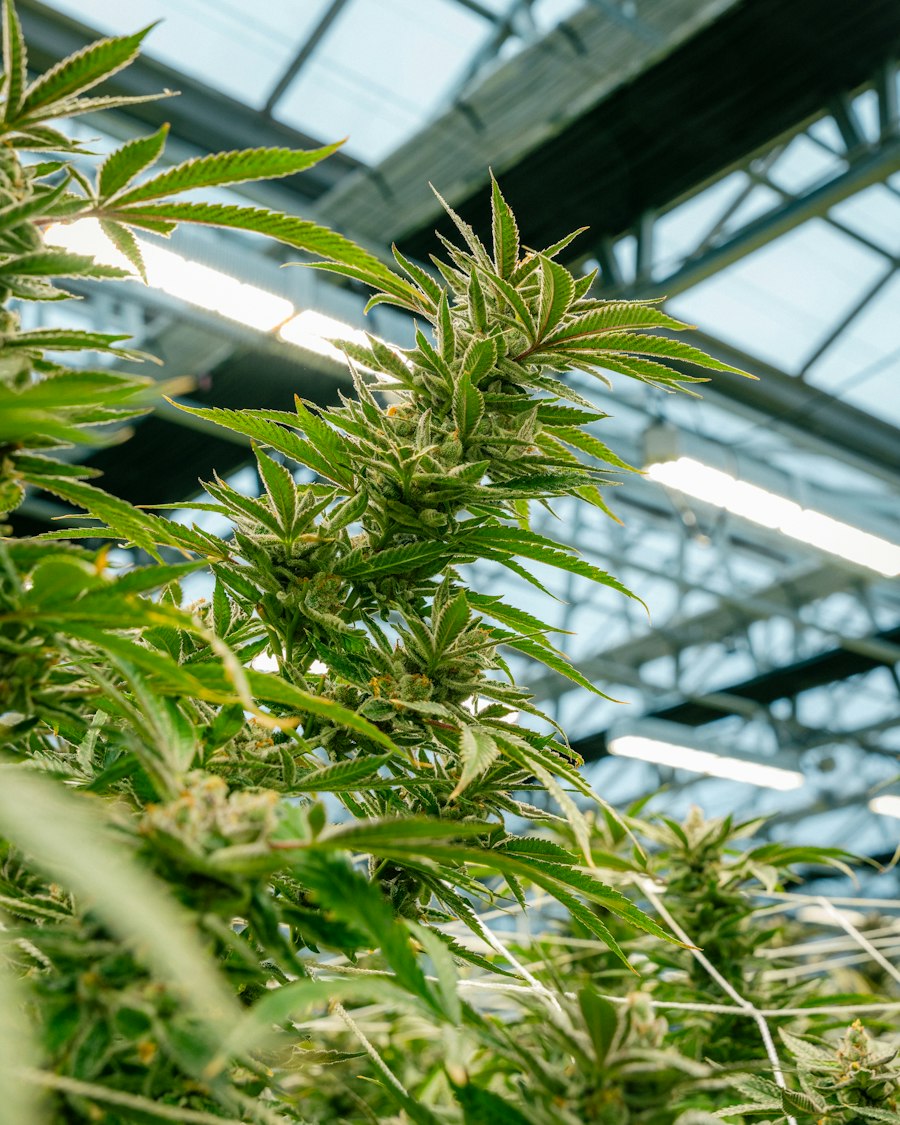
Illustrative cannabis photograph. Photo: Elsa Olofsson / Unsplash.

Continue Reading

Cannabis

Cresco’s New Quarter Puts Cannabis Sales, Cash Flow and Losses Side by Side

Cresco’s latest quarter pairs higher year-over-year cannabis revenue with positive operating cash flow and a reported loss.

Published

on

Cresco Labs reported third-quarter cannabis revenue of $172.8 million on November 6, up from $164.9 million a year earlier and slightly below the previous quarter. The operator of Sunnyside dispensaries also reported positive operating cash flow alongside a net loss. Those results make the quarter useful for readers following how cannabis companies turn store and wholesale sales into money available to run the business.

Two comparisons tell different stories

The company’s release covers the three months ended September 30. Its revenue table puts the latest result beside both June 2026 and September 2025. Sales increased about five percent year over year, while the comparison with the immediately preceding quarter was nearly flat. A reader choosing only one comparison could therefore miss a useful part of the picture.

The year-over-year comparison asks how the business performed against the same period a year earlier. The sequential comparison asks what changed more recently. Neither alone explains why sales moved. To understand the trend, a reader would need to examine changes in the operating footprint, the mix of products sold and the markets served. The headline percentage is a starting point for those questions.

For someone shopping at a dispensary, company revenue is several steps removed from the availability of a favorite product. The total combines transactions across the reporting business. It does not show which store has a particular item today or how a local menu changed. Use the financial report to follow the operator, then use current store information for the practical details of a visit.

Cash generation and the reported loss

Cresco reported approximately $26 million in operating cash flow and $21 million in free cash flow for the quarter. Its net loss was about $14.5 million. The financial statements provide the income statement and cash-flow information behind the results. The coexistence of cash generation and a loss is a reason to read both statements rather than treat either figure as the complete story.

Revenue can be recognized before the customer’s payment arrives, and an expense can appear in a different period from the related cash movement. Changes in inventory, receivables and amounts owed to suppliers can also influence operating cash flow. That makes a single quarter useful but incomplete. Several periods provide a better basis for deciding whether the business is consistently generating cash through ordinary operations.

Free cash flow adds another layer because it accounts for capital spending under the company’s definition. Check the reconciliation when comparing operators. A business investing heavily in a facility may have a different cash profile from one using existing capacity, even if their store sales are similar. The number becomes more informative when the reader can identify both the operating result and the investment activity behind it.

Read adjusted measures with their definitions

Cresco’s release reports adjusted EBITDA of about $35 million and explains that the measure excludes specified items from its accounting result. The adjustment can help management discuss performance, but the reconciliation is essential for seeing what changed. Readers comparing the figure with another company should check whether both calculations remove the same types of costs.

That discipline also matters for margins. A margin expresses a result as a share of revenue, while the dollar amount shows its scale. If revenue changes, the two can move differently. Looking at both helps distinguish a business keeping more from each sales dollar from one generating more dollars because it sold more overall. Neither automatically establishes the final amount left after every expense.

Our report on cannabis distribution explored how operational decisions affect the route to retail. Earnings reports offer another perspective on that work. They aggregate the sales and costs recognized during a period, while announcements about a new platform or a delivery network describe how a business intends to operate. Over time, the financial record can help test whether an operating change translated into measurable results.

What to look for next quarter

The next comparison should put sales, cash generation and the loss side by side again. Check whether a change reflects the same operating footprint and whether the company identifies an acquisition, a new market or another event affecting comparability. Keep the currency in view as well: Cresco reports these figures in U.S. dollars.

The latest quarter establishes higher sales than a year earlier and positive operating cash flow, alongside a reported loss. What happens next will be clearer when another period shows whether that combination persists. The practical task for readers is to follow the same measures consistently, with their definitions and the businesses included in each period close at hand.

Illustrative cultivation photograph. Photo: Evan Strock / Unsplash.

Continue Reading

Trending

Join The Cannabis Aficionado Community!
Join the Cannabis Aficionado community and receive all of the most relevant news geared towards our sophisticated enthusiast community.
Loading

Copyright ©️ 2026 Cannabis Aficionado. Cannabis Aficionado is a registered trademark of CNM Inc. All rights reserved. Registration on or use of this site constitutes acceptance of our Terms of Service, Privacy Policy and Cookies Policy. People may receive compensation for some links to products and services. Offers may be subject to change without notice.