#cannabisaficionado

Cannabis

Illinois Hemp Businesses Ask a Federal Court to Pause November 12 Rules

Hemp businesses seek emergency court relief before Illinois’ November 12 rules, challenging THC limits and the move into cannabis licensing.

Published

on

Advertisement Back2Grow Advertisement

Illinois hemp businesses are asking a federal court to interrupt a November 12 change that could move many THC products off ordinary retail shelves and into the state’s licensed cannabis system. Their emergency request puts a fast-approaching state deadline at the center of a dispute over who can make, distribute and sell hemp-derived products.

For cannabis consumers, the immediate issue is where a familiar drink or other product can be sold. For retailers, it is whether an existing inventory will still fit the rules. The lawsuit is a request for relief, not evidence that a judge has already suspended the law.

Hemp Law Watch reported the November 5 filing and linked the court papers. The underlying documents identify the case as Illinois Healthy Alternatives Association and others v. Raoul and others, number 1:26-cv-13799, in the Northern District of Illinois.

What the businesses want the court to stop

The emergency motion seeks a temporary restraining order followed by a preliminary injunction. It challenges the reclassification of federally lawful hemp products as cannabis, the 0.4-milligram total-THC limit per container, and restrictions affecting purchases and sales involving out-of-state businesses.

The plaintiffs also ask the court to prevent enforcement that would require hemp companies to obtain licenses under Illinois’ Cannabis Regulation and Tax Act for those transactions. Those are the requested remedies. The motion itself does not establish that any of them has been granted.

In their complaint, the association and business plaintiffs argue that the changes unlawfully interfere with interstate commerce. They describe economic harm to businesses operating in the existing hemp market. Those assertions are the plaintiffs’ case for intervention, rather than judicial findings that the statute is unconstitutional.

The state’s published plan

The Illinois Department of Revenue’s October bulletin says the state plans enforcement beginning November 12. It specifies that consumable or topical products containing more than 0.4 milligrams of total THC per container will no longer qualify as hemp under the new framework.

The unit matters: that is a container limit, not a percentage and not a per-serving allowance. The bulletin says products classified as cannabis must meet cannabis-system requirements and may be sold to consumers only through appropriately licensed dispensaries. Simply changing a product’s shelf label would not establish compliance.

The department separately says Illinois intends to proceed on its state timeline despite the federal delay described in the bulletin. Treating every hemp deadline as one national date would therefore miss the distinction at the heart of this week’s retail disruption.

How Illinois arrived here

Governor JB Pritzker’s June 12 signing announcement presented Senate Bill 3222 as a consumer-protection and cannabis-market reform package. The announcement described an immediate prohibition on intoxicating-hemp sales to people under 21, with additional classification changes taking effect in November.

The administration emphasized testing, detailed labels and packaging rules designed to prevent misleading marketing to children. The package also included medical-access and social-equity provisions. That wider scope helps explain why the debate is about an entire regulatory framework, even when shoppers encounter it as a disappearing beverage.

The business plaintiffs see that framework differently. Their filings focus on market access and the consequences of requiring existing hemp trade to operate through a separate licensing structure. Readers can recognize those competing positions without assuming that a public-safety objective settles the legal challenge or that a lawsuit disproves the state’s rationale.

What to watch before Thursday

The next consequential document would be a court order specifying whether enforcement is paused, which provisions it covers and for how long. A hearing announcement, a complaint and a granted injunction are different events. Any update should identify which one has actually occurred before describing the deadline as changed.

For businesses, the practical distinction is between preparing for the published rule and relying on an anticipated court victory. Inventory decisions need the current official requirements and any actual order, rather than a prediction about what a judge might do. Consumers should likewise confirm a seller’s current licensed status instead of assuming yesterday’s availability will continue.

This report describes the filings and the state’s stated plan as reviewed November 9. It does not report an injunction or a final decision. The legal status should be checked again before publication and before treating November 12 as either cancelled or certain to proceed unchanged.

Readers following an update should also look for the order’s scope. Relief for named parties can differ from a broader pause, and an interim decision can differ from a final ruling on the merits. Reporting the text and duration of an order would be more useful than treating every courtroom development as a permanent win or loss.

Illustrative stock beverage shelves; not THC products or an Illinois store. Photo: Michael Shu / Unsplash.

Cannabis

Maryland’s Cannabis Protections Leave Commuting First Responders With a Registration Step

Maryland outlines medical cannabis protections for fire and rescue workers, while a registration pathway for eligible nonresident employees remains forthcoming.

Published

on

Close-up of the lights and grille of a red American fire engine

Maryland’s medical cannabis employment protections for fire and rescue workers now come with a practical question for people who commute across state lines: how do they enter Maryland’s patient system? The Maryland Cannabis Administration says a registration process for eligible out-of-state employees is forthcoming, with an interest form available for notification when the application opens.

That is a narrower development than an immediate invitation to use an existing medical card from another state. The connection between cannabis access and job protection depends on Maryland registration and certification, alongside the continuing requirement to report for work unimpaired.

Marijuana Moment reported the guidance November 5. The underlying law took effect October 1; the application pathway described by the agency should not be confused with that earlier effective date.

What the law protects

Chapter 183, enacted through Senate Bill 439, addresses employment discrimination against covered fire and rescue public safety employees. Its central protection concerns holding a valid written medical cannabis certification or testing positive for cannabis components or metabolites while holding that certification.

The statute restricts adverse treatment involving compensation, working conditions and employment opportunities on those grounds. It also preserves employer authority to prohibit cannabis use on duty and to keep an impaired employee from performing duties. An employee reporting for work impaired must be reported to the State Emergency Medical Services Board.

The law also preserves a federal-law limitation: an employer is not required to violate federal law or lose a federal monetary or licensing benefit. A worker’s circumstances therefore matter. A headline about patient protections cannot resolve every employment dispute or replace a review of the actual policy governing a particular job.

Where out-of-state workers fit

The administration’s October 14 FAQ identifies covered roles as firefighters, emergency medical technicians, cardiac rescue technicians and paramedics employed by specified Maryland public bodies. Those include municipalities, counties, the state, the airport authority and fire control districts.

The FAQ says eligible employees living outside Maryland can receive certification if registered with the administration. It also says the nonresident registration process is still being established. An expression of interest is consequently a request for an update, rather than a patient registration, clinical assessment or certification.

Another important detail is the provider: the agency says certification must come from a Maryland-registered certifying provider. An out-of-state provider’s recommendation is not a substitute for that requirement. Registration and certification are separate steps, and neither should be assumed complete merely because an employee already has access to cannabis elsewhere.

Questions worth resolving before changing a routine

For a commuter, the useful next step is to identify which part of the process remains outstanding. Is the person within a covered role and employer category? Has the nonresident application actually opened? Which Maryland provider will evaluate eligibility? Those questions are more actionable than assuming that the October start date settled everything.

A worker can also request the department’s current written policy and ask how documentation is handled. That conversation should distinguish patient status, testing procedures and on-duty impairment. They are related issues, but treating them as interchangeable risks misunderstanding what the new protection addresses.

The same care applies to timing. This guidance does not establish a universal number of hours after consumption when someone is fit for emergency work. Readers should not derive a personal return-to-duty interval from a registration announcement. A clinical conversation and the applicable employment requirements remain necessary.

Patient status does not answer the medical question

The certification framework requires a provider-patient relationship and an assessment of the patient’s history and condition. It is not a promise that cannabis suits every firefighter, treats every work-related symptom or has fewer risks than another option. The employment change and the treatment decision should be evaluated on their own terms.

Our coverage of Oregon’s updated cannabis health statements examines why product type and evidence matter when discussing cannabis with a clinician. That discussion is useful context, while Maryland’s rules determine this particular registration and employment pathway.

For now, the distinction to keep in view is simple: the law is operative, while the administration describes the nonresident application as forthcoming. Eligible workers can monitor that official process without assuming an interest form has already conferred medical patient status or workplace protection.

Keeping a dated record of the agency’s instructions can help frame those conversations. Employees should check whether a later update replaces the October FAQ, rather than relying on a screenshot or a colleague’s experience. Questions about an individual job or a contested disciplinary action belong with an appropriate employment adviser, who can consider facts a general news report cannot.

Illustrative U.S. fire-engine photograph taken in Ohio; not a Maryland department. Photo: Jason Clishe / Unsplash.

Continue Reading

Cannabis

Tribal Cannabis Leaders Bring Sovereignty and Commerce to Washington This Week

The November 9–11 ICIA policy summit connects Tribal cannabis economies, research, sovereign regulation and federal advocacy in Washington.

Published

on

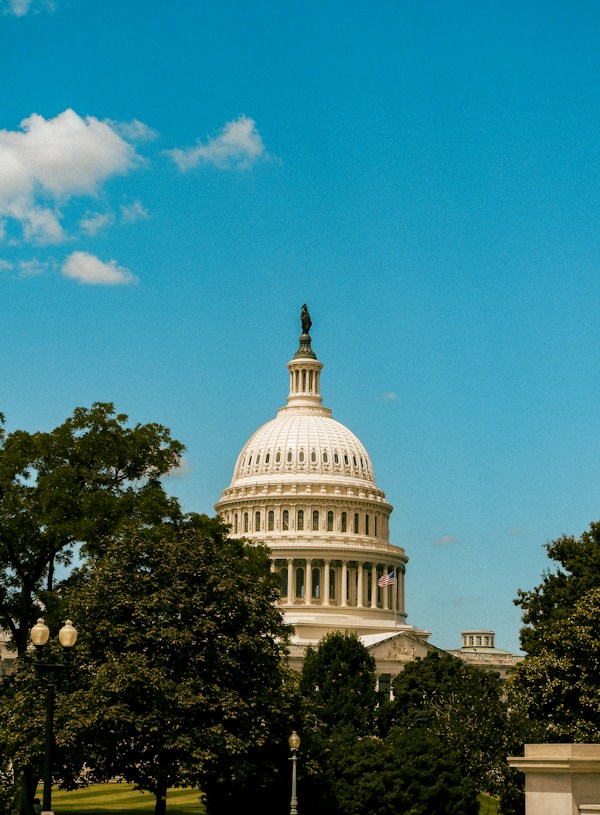
United States Capitol dome framed by trees beneath a blue sky

Tribal cannabis leaders have a Washington policy gathering on the calendar this week, with the Indigenous Cannabis Industry Association’s fifth annual summit scheduled November 9–11 at the Washington Plaza Hotel. The program puts cannabis and hemp commerce, community priorities and sovereign regulation in the same conversation.

This is cannabis news through the lens of who gets to shape an industry. The central question is not simply whether another market opens, but how Tribal Nations can determine the rules and economic purposes of cannabis enterprises within their communities.

The association’s published agenda starts with Tribal leadership and industry development, moves into federal policy and partnerships, and ends with planned Capitol Hill advocacy on Veterans Day. It is a schedule of intended discussions, not a record of agreements or policy victories already achieved.

From business development to federal advocacy

Cannabis Equipment News carried the association’s advance announcement September 30. Organizers described the gathering as a place for Tribal leaders, entrepreneurs, researchers and policymakers to connect economic development with federal cannabis and hemp policy.

That announcement outlined a progression from sharing operating experience to preparing for advocacy. It also identified research, access to plant medicine and protecting sovereign authority as priorities. Those are the organizers’ stated aims; attendance at a conference does not by itself resolve banking restrictions, change a federal classification or authorize a particular shipment.

For a business reader, the distinction matters. A productive discussion may identify a partner or a policy obstacle without removing that obstacle. Following this summit means watching for concrete next steps, responsible institutions and written commitments after the panels finish.

A map of distinct programs

The association’s Tribal Cannabis and Hemp Programs Map, developed with Vicente LLP, supplies useful background. ICIA says the project draws on research and interviews with Tribal leaders and distinguishes cannabis programs from hemp programs.

The map describes communities developing their own regulatory systems rather than one uniform Indigenous cannabis market. ICIA also notes clusters of enterprises working on supply chains and distribution. Those observations should be read as background from the map project, not as a fresh count of businesses attending this week’s event.

For readers accustomed to following cannabis state by state, this changes the starting point. A state market overview cannot automatically stand in for the rules of every sovereign Tribal program. The right questions begin with the particular government, its regulatory authority and the enterprise involved.

What meaningful economic development would look like

The summit’s emphasis on sustainable enterprises invites more specific measures than a large revenue headline. An operator or policymaker could ask how employment is created, what training remains in the community, how revenue is used and which institution oversees compliance. These are questions for assessing future outcomes, not claims about results this gathering has already produced.

Ownership also deserves attention. A commercial partnership can be described as an opportunity while leaving unanswered who controls decisions, owns equipment or carries financial risk. A useful follow-up would explain those arrangements in plain terms rather than using the existence of a partnership as proof of community benefit.

Our reporting on Cresco’s latest cannabis quarter shows why sales, cash flow and losses require separate attention. Tribal enterprises have their own structures and objectives, but the broader editorial lesson carries over: one favorable number rarely explains an entire business.

Research needs its own questions

Plant-medicine discussions also call for a different kind of accountability. Readers should ask what evidence is being discussed, whose knowledge is involved and whether a proposal describes research, patient access or a commercial product. Those categories can overlap, but they should not be collapsed into a blanket medical claim.

The association describes its mission as creating opportunities and equity through policy, programming and outreach. Keeping community priorities visible means listening for who defines success, rather than assuming that greater sales or a larger national footprint must be the only goal.

The planned advocacy day gives the gathering a clear point for follow-up. A report after the event could identify the priorities participants presented, the offices they met and any publicly documented response. Until those details are available, the accurate story is the agenda and the policy conversation it sets up.

For Cannabis Aficionado readers, the significance is a fuller view of cannabis governance. This week’s summit places Tribal Nations and Indigenous businesses at the center of that view, with the next test being what participants can document after Washington’s conversations become commitments, proposals or operating decisions.

The event’s stated theme, Indigenous Plant Medicine: Leading the Conversation, makes that emphasis explicit. The people setting priorities are part of the story.

U.S. Capitol stock photograph; not a photograph of the ICIA summit. Photo: Tomoki Iwata / Unsplash.


Continue Reading

Cannabis

Canada Proposes a Shared Cannabis Stamp, With Destination Rules Still Attached

Canada’s Budget 2026 proposes a shared cannabis stamp from 2028, with destination reporting and a transition period still shaping the supply chain.

Published

on

Canada’s Budget 2026 proposes a common cannabis excise stamp for jurisdictions that share the same duty rate, with producers able to start using it on January 1, 2028. The change targets one of the less visible parts of bringing legal cannabis to a store: deciding which jurisdiction a package is destined for before it enters the duty-paid market. The proposal could make that work simpler, while leaving destination reporting and provincial sales systems important.

What the budget proposes

The budget’s government-efficiency chapter identifies eight jurisdictions for the shared stamp: British Columbia, Quebec, New Brunswick, Prince Edward Island, Nova Scotia, Newfoundland and Labrador, Yukon and the Northwest Territories. Other participating jurisdictions could choose to join. The tax annex gives January 31, 2027 as the deadline for confirming participation. These are proposed future arrangements, so they provide a planning timeline rather than a change to today’s package.

For producers, a jurisdiction-specific stamp makes the intended destination part of the physical packaging process. A common stamp could reduce the number of different stamped versions a business needs for participating destinations. That matters when a company has the same underlying product intended for several markets. The product may be identical, but the packaging workflow still has to account for where each unit will enter the regulated sales system.

A common stamp still needs a destination

The budget would continue requiring producers to report and remit duty for the jurisdiction where a product is destined. It also proposes a penalty for missing or incorrect destination reporting. A shared physical stamp therefore makes the records behind a shipment especially important. Anyone assessing the change should consider both the number of package versions and the work needed to record where those packages go.

A simple hypothetical shows the distinction. A producer might prepare one version of a package suitable for several participating jurisdictions. Before sending an order, it would still need to identify the actual destination and account for the relevant duty. The common stamp could make the package more flexible, while the order records establish the details of that particular transaction. The budget does not turn every provincial system into one nationwide retail channel.

The proposal also includes a process for producers accepting returned common-stamped products and entering them into another participating jurisdiction. The draft legislative text sets out conditions for that process, including reporting and duty adjustments. That is a specific route for handling returns. A business would need to understand the conditions before treating existing inventory as freely transferable.

The transition has more than one deadline

The tax annex proposes a transition during which either stamp could be used for products entering participating markets. That period would end June 30, 2029. Previously entered products with the older jurisdiction-specific stamps could continue to be sold by wholesalers and retailers until December 31, 2029. Those dates address different points in the supply chain. A producer planning packaging and a retailer planning shelf inventory would therefore be watching different deadlines.

That distinction is useful for readers who see a policy headline and expect an immediate visual change at the store. The proposal has a future start date and a period of overlap. If implemented as described, shoppers could encounter packages carrying different stamps during that transition. The right explanation would depend on when the product entered the duty-paid market and which jurisdiction adopted the common stamp.

Our coverage of cannabis distribution examined the operational work behind store availability. Canada’s stamp proposal concerns a different regulatory system, but it draws attention to the same practical point: a product’s journey includes recordkeeping and packaging decisions as well as cultivation. Changes to one part of that journey can affect how businesses organize inventory without settling every other requirement.

What would establish the practical benefit

For a producer, the useful questions are how many packaging variants would disappear, which destinations would participate and what changes its order software would require. For a retailer, the question is how to recognize compliant stock during the transition. Actual savings would depend on the business and the eventual rules. A proposal to simplify stamps alone cannot establish a particular reduction in shelf prices or guarantee wider availability.

The next milestones are participation decisions and the legislative process. Readers following the measure should compare the final rules with the budget’s proposed dates and conditions. The immediate story is a concrete attempt to simplify cannabis packaging administration, with a shared stamp on the outside and destination-specific accounting still doing essential work behind it.

For now, current stamping requirements continue to guide today’s shipments.

Illustrative cannabis photograph. Photo: Elsa Olofsson / Unsplash.

Continue Reading

Trending

Join The Cannabis Aficionado Community!
Join the Cannabis Aficionado community and receive all of the most relevant news geared towards our sophisticated enthusiast community.
Loading

Copyright ©️ 2026 Cannabis Aficionado. Cannabis Aficionado is a registered trademark of CNM Inc. All rights reserved. Registration on or use of this site constitutes acceptance of our Terms of Service, Privacy Policy and Cookies Policy. People may receive compensation for some links to products and services. Offers may be subject to change without notice.