#cannabisaficionado

Cannabis

Kentucky’s Medical Cannabis Network Reaches 26 Open Dispensaries

Kentucky now lists 26 operating medical cannabis dispensaries, as Governor Andy Beshear reports 46 of 80 approved businesses are up and running.

Published

on

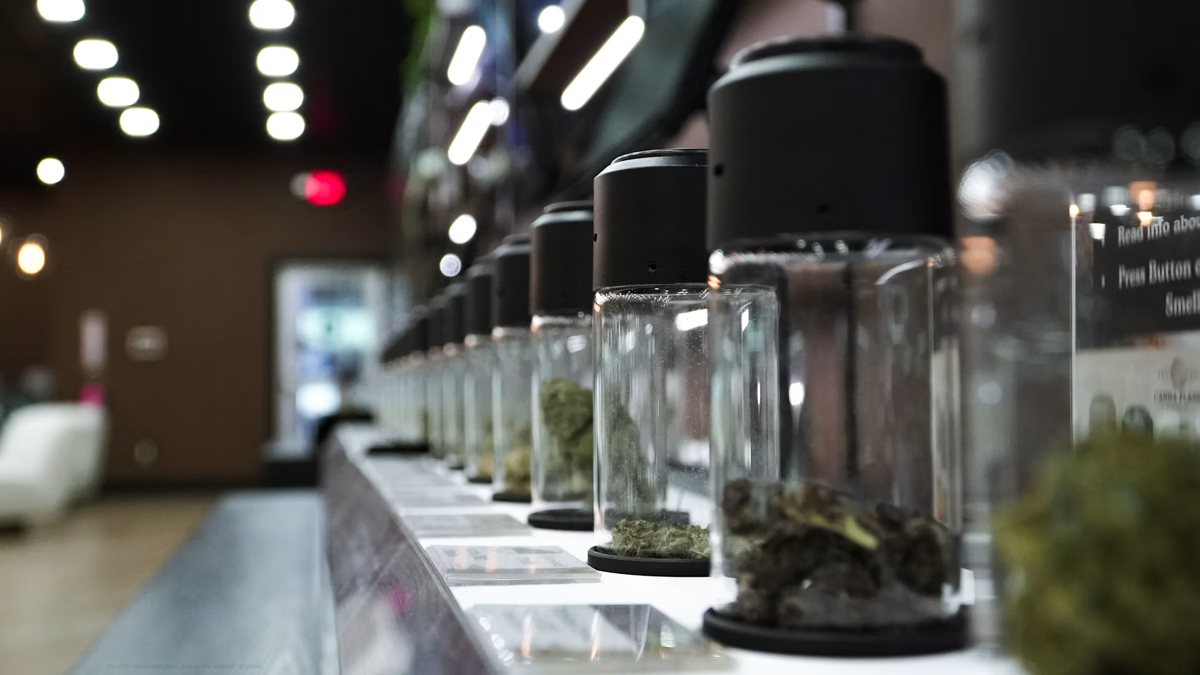
Glass jars of dried cannabis flower arranged on a retail counter
Advertisement Back2Grow Advertisement

Kentucky’s medical cannabis market is becoming easier to find on a map. The state’s October 16 directory lists 26 operating dispensaries, while Governor Andy Beshear’s latest update puts the wider business rollout past its halfway point.

Beshear said on October 21 that 46 of 80 approved cannabis businesses were operating, according to Tom Angell’s reporting for Marijuana Moment. That total includes 13 cultivators, two safety compliance facilities, five processors and 26 dispensaries.

Open doors matter more than licenses alone

The figures describe a supply chain taking shape, rather than 46 places where patients can shop. Cultivators, processors and testing facilities perform different roles from dispensaries; combining them into one number can make access sound broader than the retail footprint alone.

Kentucky’s official dispensary directory separates operating locations from the larger set of licensed businesses. Its October 16 update includes Sunnyside Prestonsburg, open since October 13, and a Lexington location operated by DHK KY LLC, open since October 16.

The directory warns that some licensed dispensaries are not yet operating and that locations can change. For someone planning a visit, the operational list is a more useful starting point than a license announcement. Checking the retailer’s current hours before traveling is a sensible next step.

A growing network, with work still ahead

Beshear also cited more than 29,000 people approved for medical cannabis cards and more than 500 registered practitioners, Marijuana Moment reported. Those are the governor’s figures, not an independent measure of patient satisfaction or product availability.

Kentucky’s medical cannabis program took legal effect January 1, 2025. Its website provides practitioner searches, card application information and patient education sessions. As the network expands, those practical resources help turn a statewide milestone into a clearer path for individual patients.

Cannabis flower displayed in glass jars. Illustrative stock photograph; not a Kentucky dispensary. Photo: Cova Software / Unsplash.

Cannabis

Governors Renew Cannabis Banking Push as Everyday Business Barriers Persist

Sixteen governors urge Congress to act on cannabis banking. GAO findings explain why accounts, payments and lending remain separate challenges.

Published

on

Empty retail checkout counters with computer monitors and receipt printers

A new appeal from 16 governors is putting cannabis banking back before Congress, with the focus on ordinary business functions: deposits, payroll, lending and the safety of handling cash. The request concerns the financial infrastructure behind state-sanctioned cannabis businesses, rather than a new authorization to sell marijuana nationwide.

Tom Angell reported for Marijuana Moment on November 10 that the governors sent congressional leaders a letter supporting the SAFE Banking Act. Maryland Governor Wes Moore led the appeal. The report identifies all 16 signatories as Democrats; the legislation they support has bipartisan sponsors.

The request reaches beyond the dispensary counter

The governors’ argument is that reliance on cash creates problems for workers, businesses and state oversight. A customer may notice only the payment method at checkout, but a retailer also needs to pay employees, manage accounts and move money without treating each routine transaction as an exceptional problem.

A legislative appeal does not mean Congress has passed the measure. It also does not establish that every cannabis business lacks a bank account. The more useful question is which services a business can obtain, on what terms, and whether that access remains reliable.

The Government Accountability Office’s banking review, publicly released September 8, provides evidence of that more complicated picture. It found that some financial institutions serve cannabis-related businesses while others are deterred by legal concerns and the expense of meeting compliance requirements.

A bank account is only one part of access

GAO heard from owners and managers who described account closures, expensive accounts and costly business loans. Those are different obstacles. Opening an account does not necessarily solve borrowing needs, and having a lender does not guarantee that every customer payment method will be available.

The report also describes difficulties for people employed in the industry when seeking personal financial services. That broadens the story beyond a company’s balance sheet. Someone working for a licensed cannabis business can encounter consequences connected to their employer’s sector, even when applying for an ordinary personal service.

For customers, the payment question remains especially visible. GAO reported that two major credit-card companies prohibit cannabis purchases. The finding helps explain why a legal retail setting can still have a different checkout experience from other shops. A proposed banking change should not be described as an immediate promise that every card will work.

Existing guidance does not eliminate every barrier

GAO points to federal guidance issued by the Financial Crimes Enforcement Network in 2014. It describes how financial institutions can serve cannabis-related businesses while meeting Bank Secrecy Act responsibilities, including gathering detailed customer information and filing specified suspicious-activity reports.

Those requirements help explain why the decision is not simply whether a bank likes cannabis. Institutions weigh ongoing obligations, costs and perceived legal exposure. The report says some choose to serve the sector to meet community needs or because they see a business opportunity.

The distinction between permission, obligation and willingness matters. Guidance can explain a compliance route without requiring a financial institution to offer a particular account, loan or payment service. That is why the existence of guidance and continued access problems are not necessarily contradictory.

Count the data carefully

GAO reviewed FinCEN data showing that roughly 1,000 banks and credit unions filed cannabis-related suspicious-activity reports in 2024. The agency cautioned that this is not an exact count of institutions maintaining ongoing cannabis-business customers. A report could involve an occasional transaction or an ancillary business rather than a plant-touching operator.

That caveat is important when banking statistics appear in reform debates. A large number of reports does not reveal how easily an individual dispensary can obtain a loan, what its fees are, or whether a service will remain available next month.

The review combined agency documents and reporting data with focus groups and interviews. Its financial-institution work involved 74 institutions; separate focus groups included owners and managers from 51 cannabis-related businesses. Those methods provide useful accounts of barriers, but they should not be mistaken for a survey of every bank and dispensary.

What the new appeal changes

The governors’ letter adds current political pressure to an existing operational problem. Its immediate result is a renewed request for congressional action, not a completed banking overhaul. The next development to watch is legislative movement and the exact protections any final text contains.

Our report on Weedmaps parent WM Technology’s quarterly results examined a different business pressure: paying clients and advertising budgets. Together, the stories show why the cannabis economy involves more than consumer demand. Businesses also need workable payment systems, dependable accounts and the ability to manage everyday obligations.

Illustrative retail checkout photograph; not a cannabis business or a U.S. bank. Photo: Allen Y / Unsplash.

Continue Reading

Health

Senate Funding Proposal Renews the Call to Study Cannabis and Opioid Use Among Veterans

New Senate appropriations language asks for more evidence on medical cannabis and opioid use among veterans, while important research questions remain unresolved.

Published

on

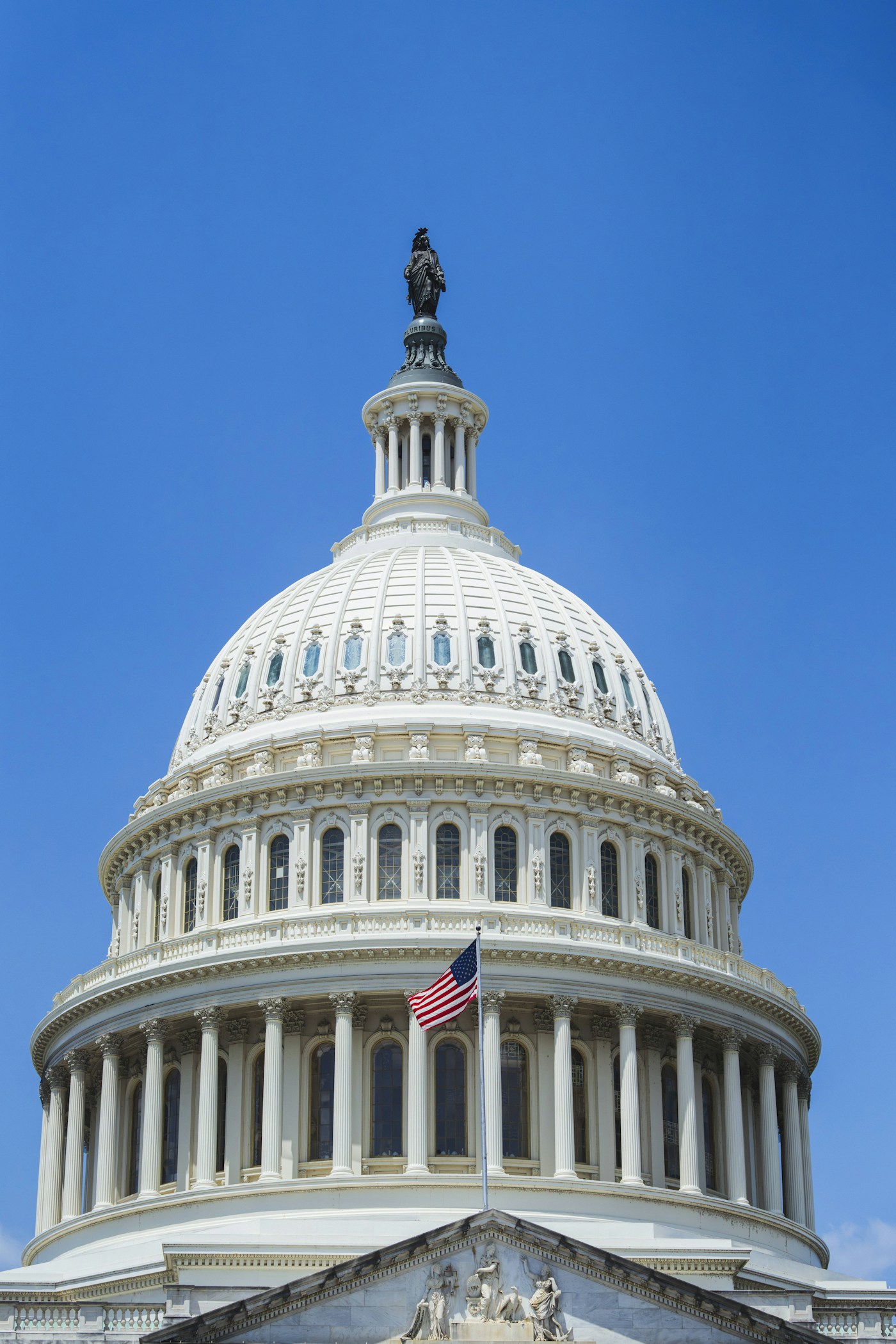
The United States Capitol dome and an American flag against a blue sky

A newly released Senate funding proposal puts veterans’ medical cannabis research back on the federal agenda. The recommendation asks the Department of Veterans Affairs to consider clinical research on medical marijuana and to examine the relationship between state-approved programs, veterans’ access to them and reductions in opioid use and abuse.

The cannabis connection is direct, but the distinction between a research request and a medical conclusion matters. The language does not establish that cannabis reduces opioid use, announce results from a new trial or itself change an individual veteran’s treatment. It identifies questions the committee wants studied.

The Senate Appropriations Committee released two fiscal year 2027 funding bills and accompanying materials on November 10. Tom Angell highlighted the cannabis provisions for Marijuana Moment on November 11. The relevant VA language appears under medical and prosthetic research in the Military Construction and Veterans Affairs explanatory statement.

What the recommendation actually asks

The statement encourages clinical cannabis research and recommends a study connecting three subjects: state medical marijuana treatment programs, veterans’ access to those programs and opioid outcomes. Those are related questions, but they are not interchangeable. Being legally able to enter a program does not show whether a patient enters it, what product is used or what happens afterward.

The document is part of the appropriations process. Its publication should not be described as Congress enacting a new cannabis benefit or VA launching a particular study. Further decisions would be needed to turn a research recommendation into a defined project with investigators, a protocol and a timetable.

The distinction also applies to the money discussed nearby. The explanatory statement recommends $922 million for the overall Medical and Prosthetic Research account, alongside an estimated $57 million from the Toxic Exposures Fund. Those broad research figures are not a cannabis-specific allocation, and the cannabis paragraph should not be read as assigning that entire budget to marijuana research.

Why the opioid question needs careful study

One useful piece of background is a 2021 systematic review led by Atefeh Noori in BMJ Open. It evaluated studies of adding medical cannabis or cannabinoids to prescription opioids for chronic pain. The review included five randomized trials and twelve observational studies and concluded that opioid-sparing effects remained uncertain because the evidence was of very low certainty.

An important design limitation was that the randomized trials instructed participants to maintain their opioid dose. That makes them difficult evidence for answering whether patients could reduce that dose. Observational findings can raise useful questions, but they do not automatically establish that cannabis caused a change.

A separate 2024 systematic review and meta-analysis examined nonmedical opioid use among people receiving medications for opioid use disorder. Across ten longitudinal studies involving 8,367 participants, it found no significant association between cannabis use and nonmedical opioid use. The authors did not interpret that finding as proof that cannabis reduces such use.

These reviews concern different populations and outcomes. Chronic pain treatment, prescribed opioid dose and nonmedical opioid use during addiction treatment should not be collapsed into a single claim. Neither review is a new November 2026 finding or a substitute for research designed around veterans’ particular circumstances.

Access and evidence are different policy tracks

The new Senate language also sits alongside state efforts to change access. Our reporting on Massachusetts’ proposed route to medical cannabis for veterans addresses that separate policy question. Expanding or simplifying access and measuring clinical outcomes can proceed as distinct debates, with different evidence needed for each.

For patients, the practical question is what their own care team and applicable program rules allow. A committee’s research recommendation does not provide a dosing plan or a reason to stop prescribed medication. The document is most useful as a signal about federal research priorities, rather than as personalized medical guidance.

Researchers would also need to report who was included and who was missing. Results from one age group, diagnosis or pattern of product use may not describe another, especially when products and treatment settings differ.

What would make the next update meaningful

The next developments to watch are concrete: whether the language survives the funding process, whether VA identifies a study and whether its methods distinguish program access from actual cannabis exposure. Clear outcome measures and follow-up periods would help readers understand what any eventual result can support.

On Veterans Day, the proposal gives cannabis research renewed visibility. Its strongest promise is the possibility of better answers. Until those answers exist, a request to investigate the relationship between cannabis and opioids should remain exactly that—a research question, rather than a finding announced in advance.

Stock photograph of the U.S. Capitol; not a photograph of the funding proposal’s release. Photo: Ben Kelsey / Unsplash.

Continue Reading

Cannabis

Texas Bill Would Limit Cannabis Testing for Many Public-Sector Workers

Texas HB 507 would restrict cannabinoid screening for many public workers, with explicit exceptions. The November 9 filing is a proposal, not enacted law.

Published

on

Hands reviewing paperwork on a table

A newly filed Texas bill would restrict cannabinoid testing for many people working for state and local government, while protecting certain medical cannabis and consumable hemp use in employment policies. House Bill 507 is a proposal for the next legislative session, not a change workers can treat as already in force.

The official legislative history records Representative John Bucy’s bill as filed November 9. Its introduced text would add a chapter to the Government Code addressing drug testing, prescription policies, medical privacy and remedies. The proposed effective date is September 1, 2027.

The employer matters as much as the substance

The proposal concerns state agencies and political subdivisions, rather than establishing a rule for every employer in Texas. Its testing restrictions expressly cover employees and independent contractors working for those public bodies. A headline describing a statewide end to marijuana testing would therefore be too broad.

That distinction is practical. A person working for a private company cannot assume the same proposed protection applies simply because a public employee performing similar work would be covered. The identity of the employer or contracting body is part of the bill’s scope, not a detail to leave out.

The language also concerns conditions of employment or a contract. It would prevent covered public bodies from establishing or administering cannabinoid-screening requirements, or requiring a negative cannabinoid result, as those conditions. It does not describe the abolition of testing for every drug.

Two exceptions remain explicit

The proposed chapter would not apply to peace officers elected, employed or appointed by a state agency or political subdivision. It also excludes public employees required to comply with United States Department of Transportation drug-testing regulations under 49 C.F.R. Part 40.

These exceptions are important because a job’s public-sector status alone would not establish coverage. The text separates particular regulated roles from the broader group of workers the proposal addresses. Anyone summarizing the bill needs to retain both exceptions rather than describing them as an unspecified safety carveout.

The federal reference is specific, too. The bill identifies the transportation testing regulations instead of announcing that a state employment policy would override them. The proposed protection and its stated limits have to be read together.

Prescription and hemp policies get separate treatment

Another provision would bar covered agencies from making employment or contracting conditional on avoiding specified conduct: prescribing, obtaining a prescription for, or using low-THC cannabis in accordance with Chapter 169 of the Occupations Code, or using a consumable hemp product.

The medical cannabis language is tied to an existing statutory framework. It should not be rewritten as a proposal authorizing any cannabis product for any purpose. Likewise, a clause about employment conditions is different from a general retail-sales law or a new adult-use cannabis market.

Those boundaries help explain why workplace protections can be debated independently of wider legalization proposals. This bill asks what a particular group of employers may require of workers. It does not attempt to answer every question about where cannabis products may be bought, possessed or used.

Privacy and enforcement are part of the proposal

The introduced privacy section would prohibit a covered public body from questioning an employee about low-THC cannabis or hemp use. It would also require compliance with relevant state and federal privacy laws, naming Texas medical-record protections and the federal Health Insurance Portability and Accountability Act.

Here the wording refers to an employee, while several preceding restrictions expressly mention employees and independent contractors. That difference should remain visible in an account of the text. Broadly substituting everyone who works for government would erase a distinction the proposal actually makes.

The remedies section would allow an actual or threatened violation of the testing-policy or privacy provisions to be raised as a claim or defense in a judicial or administrative proceeding. It lists compensatory damages, injunctions, declaratory relief and other appropriate relief, including reasonable attorney’s fees.

A separate provision would waive governmental or sovereign immunity to the extent of that relief. Another says an action could proceed without first exhausting administrative remedies. These are proposed enforcement mechanisms, not a report that anyone has already won a case under the bill.

Follow the version, not just the filing

The legislation would apply to administration of policies and tests on or after its effective date. Filing does not establish passage, and September 2027 remains a proposed date. The official history and any subsequent substitute text are the places to check what lawmakers actually advance.

The bill defines a drug test as analysis of a biological specimen for specified drugs or metabolites. That is the screening process its restrictions address. The definition does not turn a result into a description of a person’s work performance, and the proposal should not be summarized as an assessment of individual impairment.

Our New York cannabis labor coverage addresses a different jurisdiction and policy. Together, the stories illustrate why a cannabis employment headline needs the actual employer, legal mechanism and legislative stage attached to it.

Illustrative workplace stock photograph; not Texas employees, lawmakers or cannabis users. Photo: Olena Kholina / Unsplash.

Continue Reading

Trending

Join The Cannabis Aficionado Community!
Join the Cannabis Aficionado community and receive all of the most relevant news geared towards our sophisticated enthusiast community.
Loading

Copyright ©️ 2026 Cannabis Aficionado. Cannabis Aficionado is a registered trademark of CNM Inc. All rights reserved. Registration on or use of this site constitutes acceptance of our Terms of Service, Privacy Policy and Cookies Policy. People may receive compensation for some links to products and services. Offers may be subject to change without notice.