Tribal cannabis leaders have a Washington policy gathering on the calendar this week, with the Indigenous Cannabis Industry Association’s fifth annual summit scheduled November 9–11 at the Washington Plaza Hotel. The program puts cannabis and hemp commerce, community priorities and sovereign regulation in the same conversation.
This is cannabis news through the lens of who gets to shape an industry. The central question is not simply whether another market opens, but how Tribal Nations can determine the rules and economic purposes of cannabis enterprises within their communities.
The association’s published agenda starts with Tribal leadership and industry development, moves into federal policy and partnerships, and ends with planned Capitol Hill advocacy on Veterans Day. It is a schedule of intended discussions, not a record of agreements or policy victories already achieved.
From business development to federal advocacy
Cannabis Equipment News carried the association’s advance announcement September 30. Organizers described the gathering as a place for Tribal leaders, entrepreneurs, researchers and policymakers to connect economic development with federal cannabis and hemp policy.
That announcement outlined a progression from sharing operating experience to preparing for advocacy. It also identified research, access to plant medicine and protecting sovereign authority as priorities. Those are the organizers’ stated aims; attendance at a conference does not by itself resolve banking restrictions, change a federal classification or authorize a particular shipment.
For a business reader, the distinction matters. A productive discussion may identify a partner or a policy obstacle without removing that obstacle. Following this summit means watching for concrete next steps, responsible institutions and written commitments after the panels finish.
A map of distinct programs
The association’s Tribal Cannabis and Hemp Programs Map, developed with Vicente LLP, supplies useful background. ICIA says the project draws on research and interviews with Tribal leaders and distinguishes cannabis programs from hemp programs.
The map describes communities developing their own regulatory systems rather than one uniform Indigenous cannabis market. ICIA also notes clusters of enterprises working on supply chains and distribution. Those observations should be read as background from the map project, not as a fresh count of businesses attending this week’s event.
For readers accustomed to following cannabis state by state, this changes the starting point. A state market overview cannot automatically stand in for the rules of every sovereign Tribal program. The right questions begin with the particular government, its regulatory authority and the enterprise involved.
What meaningful economic development would look like
The summit’s emphasis on sustainable enterprises invites more specific measures than a large revenue headline. An operator or policymaker could ask how employment is created, what training remains in the community, how revenue is used and which institution oversees compliance. These are questions for assessing future outcomes, not claims about results this gathering has already produced.
Ownership also deserves attention. A commercial partnership can be described as an opportunity while leaving unanswered who controls decisions, owns equipment or carries financial risk. A useful follow-up would explain those arrangements in plain terms rather than using the existence of a partnership as proof of community benefit.
Our reporting on Cresco’s latest cannabis quarter shows why sales, cash flow and losses require separate attention. Tribal enterprises have their own structures and objectives, but the broader editorial lesson carries over: one favorable number rarely explains an entire business.
Research needs its own questions
Plant-medicine discussions also call for a different kind of accountability. Readers should ask what evidence is being discussed, whose knowledge is involved and whether a proposal describes research, patient access or a commercial product. Those categories can overlap, but they should not be collapsed into a blanket medical claim.
The association describes its mission as creating opportunities and equity through policy, programming and outreach. Keeping community priorities visible means listening for who defines success, rather than assuming that greater sales or a larger national footprint must be the only goal.
The planned advocacy day gives the gathering a clear point for follow-up. A report after the event could identify the priorities participants presented, the offices they met and any publicly documented response. Until those details are available, the accurate story is the agenda and the policy conversation it sets up.
For Cannabis Aficionado readers, the significance is a fuller view of cannabis governance. This week’s summit places Tribal Nations and Indigenous businesses at the center of that view, with the next test being what participants can document after Washington’s conversations become commitments, proposals or operating decisions.
The event’s stated theme, Indigenous Plant Medicine: Leading the Conversation, makes that emphasis explicit. The people setting priorities are part of the story.
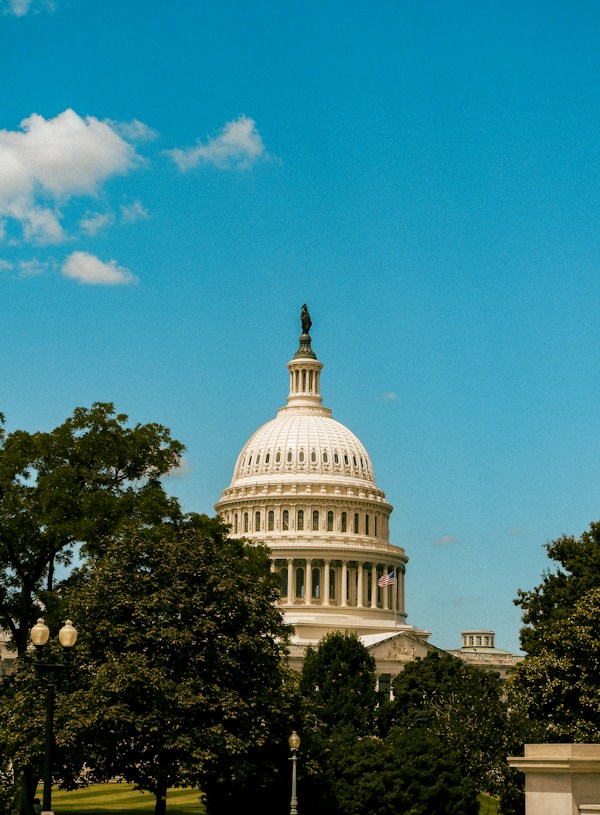
U.S. Capitol stock photograph; not a photograph of the ICIA summit. Photo: Tomoki Iwata / Unsplash.





 Cannabis3 weeks ago

 Cannabis3 weeks ago

 Cannabis3 weeks ago

 Cannabis3 weeks ago


 Cannabis3 weeks ago

 Cannabis3 weeks ago

 Cannabis3 weeks ago