#cannabisaficionado

Industry Innovators

DEA’s New 2026 Quota Proposal Leaves Schedule I Cannabis Levels Unchanged

A new federal quota notice separates unchanged Schedule I cannabis figures from future medical-cannabis production limits. Proposed quantities are not retail supply.

Published

on

A seated man reviewing papers beside a laptop at a desk.
Advertisement Back2Grow Advertisement

DEA’s November 25 proposal to adjust 2026 drug production quotas leaves its Schedule I marijuana and marijuana-extract quantities unchanged, while saying separate medical-cannabis quotas are still being developed. For cannabis businesses and patients following the federal transition, the distinction matters: this is a proposed production framework, not a count of products ready for sale or a new retail permission.

We would read the substance, calendar year and procedural status together. A large number in a federal table can look like an immediate market change when detached from its heading. Here, the operative word is proposed, and the cannabis categories do not all sit in the same part of the process.

What the November 25 notice proposes

The Federal Register notice, docket DEA–1568A, retains 6,675,000 grams for Schedule I marijuana and 1,000,000 grams for marijuana extract. It says a separate notice will propose quantities for three Schedule III medical-marijuana drug codes once DEA determines them. The agency describes work on registrations, data sources and methods for estimating legitimate need.

Comments on this proposal are due December 28, 2026. Electronic submissions close at 11:59 p.m. Eastern that day, according to the notice. The agency will consider comments before issuing a final adjustment order. We would not describe publication of this request for comments as final adoption of the proposed table.

The immediate reporting task is to preserve those distinctions when comparing announcements. A proposed national amount is different from an individual manufacturer’s authorization. An unchanged entry in one category says little by itself about the amount that may eventually be established for a separate category still under review.

How aggregate quotas fit the system

DEA’s quota application guidance describes annual national quantities intended for medical, scientific and industrial needs. It distinguishes manufacturing and procurement applications and says separate applications are required for each requested basic drug class. Newly registered entities or registrants adding drug codes may apply outside the ordinary annual application cycle; current quotas can also be the subject of adjustment requests.

That background explains why we would avoid treating a national quota as inventory assigned to a particular business. The application process asks a different question: which registrant is seeking authority for which substance and activity? A headline about the aggregate total cannot answer those business-specific questions on its own.

For a patient, the same caution applies in another direction. A production allowance does not tell us whether a specific medicine is in stock at a particular location, what it costs or whether a particular patient can obtain it. Those require evidence from the relevant supply and access arrangements, rather than arithmetic performed on a national table.

What the regulations ask DEA to consider

The quota regulations in 21 CFR Part 1303 direct DEA to consider estimated legitimate needs, lawful exports and reserve stocks. They also identify factors including inventory, demand, raw-material availability and production disruptions. The adjustment provisions contemplate changes in those conditions after an annual figure has been fixed.

The same part distinguishes procurement and individual manufacturing processes from the aggregate determination. That structure is useful context for understanding why several approvals can remain relevant even when a national number has been published. It also explains why we should identify the specific provision being discussed before assuming that one announcement settles every operational question.

We would ask any claim of a shortage or surplus to identify its evidence. A quota number alone does not establish either. The useful comparison would explain actual production, usable inventory, demand and the category concerned. Without those details, calling the proposal either a supply breakthrough or a supply crisis would outrun the evidence reviewed here.

What to watch after the comment deadline

The next clear milestones are a final adjustment order and the separate proposed medical-cannabis figures described by DEA. We would also look for the underlying method when those figures appear: which data the agency uses, what period they cover and how it explains the resulting estimate. Those details will tell us more than an isolated percentage change.

Our report on DEA’s supply-chain court response concerns a different proceeding. A quota notice does not itself establish that the court has granted or refused relief. Keeping the administrative proposal and the litigation separate makes both developments easier to follow accurately.

Today’s notice therefore gives us a defined proposal, a comment deadline and a stated plan for another notice. We can report those concrete steps while leaving open what the agency has not yet determined. The most useful follow-up will identify an actual new decision and its scope, rather than turn each procedural publication into a claim that the entire cannabis market has changed.

Illustrative document-review photograph; not a DEA employee, proceeding or the published quota notice. Photo: Vitaly Gariev / Pexels.

Industry Innovators

Jushi’s Illinois Acquisition Plan Puts Financing and Virginia Expansion in Focus

Jushi’s November 24 update outlines an Illinois acquisition and Virginia expansion plans. The financing, approvals and construction dates deserve separate readings.

Published

on

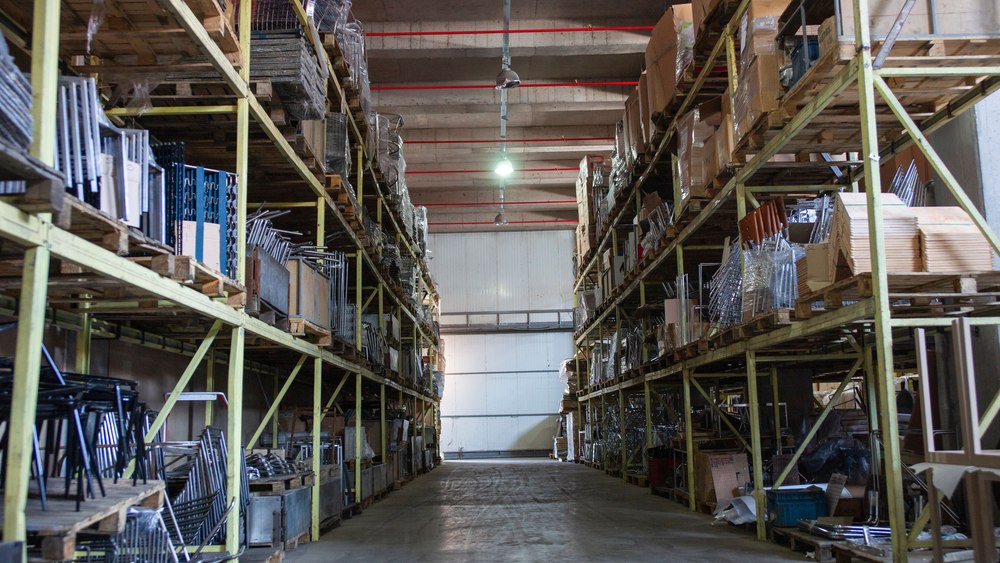
An aisle between tall industrial shelves holding construction materials.

Jushi has agreed to buy an Illinois cannabis cultivation and processing facility for $6.5 million in cash, with a first-quarter 2027 closing expected subject to regulatory approvals and other conditions. Its November 24 business update also describes financing discussions and expansion work in Virginia. For us, the useful distinction is between an agreed transaction, funding that is still being arranged and capacity that has yet to come online.

Cannabis companies can announce all three in one release, but they answer different questions. A purchase agreement identifies an intended asset. Financing determines how a company can pay for it. Regulatory approval and a completed build determine when that asset can actually contribute. We would keep those milestones separate when assessing this update.

Illinois would add a production link

According to Jushi’s announcement, the proposed acquisition would complement four existing BEYOND / HELLO dispensaries and make Illinois its sixth vertically integrated state. The company expects a new wholesale business and the ability to supply its own stores. These are anticipated benefits, rather than results from an acquisition that has already closed.

The release says up to $4.25 million in additional term loans is being sought for the purchase, but those loans are uncommitted. It also describes an approximately $40 million Manassas expansion, with construction expected to start late in 2026 or early in 2027 and take about 12 months. These figures are in U.S. dollars.

Any later financing announcement should identify the amount actually committed, its repayment terms and the relevant conditions.

That leaves execution questions worth following: whether the acquisition closes on the proposed terms, whether the additional funding becomes available and how construction spending is paced. We would not count a lender’s effort to arrange participation as money already received, or treat a forecast closing quarter as a completed change in ownership.

Virginia’s market date is a separate clock

The Virginia Cannabis Control Authority’s licensing timeline identifies July 1, 2027, as the start of retail marijuana sales. It places final regulations in December 2026 and publication and effectiveness in January 2027. Conversion applications for pharmaceutical processors and certain hemp businesses, alongside some microbusiness applications, are scheduled to open by February 1.

Those public implementation steps matter because a company’s construction plan does not set the state’s opening date. Equally, the beginning of retail sales does not establish that every proposed production expansion will be complete. On the dates Jushi gives, its roughly yearlong project would extend beyond the planned July market opening. That is a comparison of the announced timetables, not a claim that the project is behind schedule.

Virginia’s official explanation of the 2026 law changes identifies House Bill 30 as the authority for the future retail market and assigns the CCA responsibility for regulations and licensing. It separately describes expanded enforcement powers over unlicensed businesses. Market preparation therefore involves a legal transition as well as physical space, equipment and working capital.

We would watch the regulator’s actual milestones alongside company disclosures. A business can prepare for a market without having secured every permission for every future activity. The most useful follow-up reporting will identify which approval or construction step has changed, rather than repeat the opening date as if it resolves all remaining questions.

The existing business supplies context

Jushi’s October 28 quarterly results, covering the period ended September 30, reported $70.5 million in revenue and a $12.5 million net loss. Wholesale revenue was $9.7 million, while cash, cash equivalents and restricted cash together totalled $30.9 million at quarter-end. These are historical figures, not a current cash balance or a budget reserved for the Illinois purchase.

Our earlier earnings coverage explains those distinctions. The same release reported $13.6 million in adjusted EBITDA, a non-GAAP measure. We would read its reconciliation alongside the net loss, rather than substitute one measure for another. Sales growth, adjusted operating performance and money available to fund an acquisition describe different parts of the business. None alone establishes whether the proposed investment will earn an adequate return.

What would move this story forward?

The next concrete developments would be committed funding, required approvals and a completed acquisition, followed by measurable production or wholesale activity. For Virginia, construction progress and regulatory milestones will be more informative than repeating planned capacity. We would also look for any revised cost or timing assumptions in subsequent disclosures.

Jushi’s update gives us a plan with several dependencies. It is useful because those dependencies can be checked. Keeping the Illinois transaction, financing and Virginia timetable in separate view is the clearest way to judge what the company has accomplished and what it still expects to do.

Illustrative industrial-storage photograph; not a Jushi facility or cannabis inventory. Photo: Engin Akyurt / Pexels.


Continue Reading

Industry Innovators

DEA Asks Court to Reject Cannabis Supply-Chain Stay as November 29 Nears

The government’s new court response defends its medical cannabis registration approach. Its arguments are a request to the court, not a judicial ruling.

Published

on

Hands holding a pen over paperwork on a white desk.

The federal government has asked the D.C. Circuit to deny emergency requests challenging DEA’s approach to medical cannabis supply chains. Its November 23 filing argues that federal registration requirements continue to govern transactions between businesses, even after medical marijuana rescheduling. With the agency’s November 29 compliance date approaching, we would read this as a new statement of the government’s legal position, rather than a court ruling accepting it.

The distinction matters for businesses and patients following the case. A brief explains what one side wants the judges to do. It does not grant a stay, decide the dispute or establish that an individual company’s operations have been approved. The practical questions remain tied to the actual legal status of each operation and trading partner.

What the new filing argues

The combined government opposition covers consolidated cases 26-1324 and 26-1325. It says approximately 7,100 applications arrived during the initial 60-day window for manufacturers, distributors and dispensers. That is an application figure, not a count of approvals or proof that every state has a complete federally compliant supply chain.

The government also argues that the October information letter is not a final agency decision reviewable in this proceeding and that the challengers lack standing. Those are arguments about the court’s ability to hear this particular challenge, alongside the government’s substantive defence. We would keep both strands visible rather than reduce the filing to a blanket declaration that the businesses have lost.

Tom Angell’s November 23 reporting for Marijuana Moment brought attention to the response and linked the underlying filing. His report describes the companies’ contention that staggered registration forms and unclear guidance left integrated operations without a workable transition. It also describes concerns that a dispensary could lose access to products grown by another division of the same business.

Our earlier report on the challenges covers the companies’ requests. That dispute is about more than whether a company supports rescheduling. It concerns how a new federal route intersects with existing state-licensed production and distribution. We would assess the specific requested relief and the evidence offered for disruption, rather than assume that a change in scheduling automatically resolves every authorization question.

What DEA’s information document says

The agency’s timely-applicant guidance identifies April 28 through June 26, 2026, as the relevant complete-application window. It says eligible applicants with pending applications and requisite state licences may continue the applicable medical marijuana activities during review and trade with other timely applicants or DEA registrants.

The document distinguishes that group from businesses that applied outside the window or have not applied. It calls for checking counterparties’ submission confirmations or registration certificates, confirming active state licences and maintaining due-diligence records. It sets November 29 for establishing compliant supply chains. These are the agency’s published instructions; the litigation challenges how its requirements operate in practice.

A useful operational question therefore identifies the particular entity, activity and supporting record. One company name on a storefront cannot answer every question about a cultivator, processor, distributor or dispensary elsewhere in the chain. We would ask for a documented explanation of the relevant status instead of relying on a general announcement that a business has applied.

The underlying rule remains essential context

The April 28 final rule moved qualifying state-licensed medical marijuana and FDA-approved marijuana drug products into Schedule III and established an expedited registration process. Its scope is specific. It should not be described as nationwide adult-use legalization or as automatic federal registration for every business holding a state cannabis licence.

The rule directs the expedited process toward qualifying medical activity, rather than treating a state’s adult-use and medical systems as one federal category.

That separation helps explain why the transition can produce disagreement. Scheduling determines where covered products sit within the federal framework. Registration addresses who may conduct specified activities. A state licence supplies another layer of authorization. We would keep those concepts distinct when reading both the companies’ objections and the government’s response.

What to watch next

Our next checkpoint is an actual court order and its precise scope, followed by any updated agency instructions. A request for emergency relief and the opposition to that request are parts of the process. Neither should be reported as the judges’ final answer merely because it uses confident language.

For patients, the responsible question is whether a particular provider anticipates a verified change in access and what information supports it. We would avoid predicting a nationwide shutdown from the filing alone. For operators, this remains a matter for current documents and qualified legal advice specific to their activities. The new brief clarifies the government’s position; the court’s decisions must be read separately.

Illustrative paperwork stock photograph; not DEA officials, court staff or documents from this litigation. Photo: Kampus Production / Pexels.

Continue Reading

Industry Innovators

Rhode Island Clarifies Hemp Quarantine Ahead of December THC Limits

Rhode Island’s new FAQ explains how hemp inventory must be handled before December 11. We separate the deadlines, product limits and remaining questions.

Published

on

Stacks of plain cardboard boxes on pallets inside a warehouse.

Rhode Island’s Cannabis Control Commission has published new answers on quarantining hemp products as it prepares to enforce tighter total-THC limits on December 11. The November 20 guidance puts inventory, paperwork and the difference between bulk ingredients and finished products at the centre of the transition. For us, the immediate priority is making those distinctions clear before businesses make irreversible decisions about stock.

This is guidance for Rhode Island’s regulated hemp market. It should not be read as a complete account of every state’s rules or as permission to move a product elsewhere. Hemp is cannabis, but a product’s route through the hemp system and its route through a licensed marijuana business are not interchangeable.

Which deadlines should businesses check?

The commission’s Bulletin 2026-7, amended November 20, sets December 11 as the enforcement date, subject to federal changes or further guidance. It identifies a maximum of 0.4 milligrams of total THC per container for final hemp-derived products and a 0.3 percent total-THC limit for intermediate products.

The bulletin also requires businesses planning to retain eligible stock in a designated quarantine area to submit the Hemp Quarantine 2026 document by December 4 and keep a physical copy onsite. Quarantined goods cannot simply return to ordinary processing, distribution or sale. Destruction requests go through the Cannabis Office, with supervision required.

We would put the paperwork date and the enforcement date in separate calendar entries. The first concerns identifying inventory and documenting the plan; the second changes what can happen to affected goods. Waiting until the later date to start classifying stock leaves less room to resolve a mistaken product designation or a missing record.

What does the new FAQ add?

The November 20 quarantine and destruction FAQ says quarantine is optional, but noncompliant products cannot remain onsite after the deadline unless designated for quarantine beforehand. It describes a supplemental document, due December 11, for activity between December 4 and December 11. That adds an important reconciliation step for businesses that continue operating during the intervening week.

The FAQ distinguishes intermediate material from final retail packaging and says quarantined products cannot be sold or transferred after the deadline. Without a change in law, release after December 11 is limited to a destruction request. It directs businesses with clerical errors to seek reconciliation through the office rather than silently change submitted records.

There is a numerical inconsistency worth flagging: the FAQ’s introductory paragraph prints 0.04 milligrams, while its later answers and the amended bulletin state 0.4 milligrams per final container. We use the consistently stated 0.4 figure here and would ask the commission to resolve the discrepancy before relying on the introduction for a compliance decision.

Why the product category matters

A useful inventory review starts with the actual product and its stage of manufacture. A bulk ingredient and a sealed retail package answer different questions. We would record the lot, quantity, packaging status and supporting test information together, then compare that record with the commission’s current documents. That is an editorial recommendation for organising questions, not a substitute for the required form.

The commission’s earlier consumable-product designation guide, effective December 8, 2025, shows how detailed the existing system already is. It covers flower, inhalable concentrates, packaged oral products and products served unpackaged. It requires licensed sellers, adult purchasers and testing and labelling appropriate to the category.

That older guide also contains potency allowances that differ from the new bulletin. We would not use a historical product table as a standalone answer about what may be sold after December 11. Read the date and the later instruction together, and ask the regulator about a specific product rather than assuming that an older compliant label settles its future status.

For an internal review, assign one person to keep the inventory list and the supporting documents aligned. A clear record of who checked an item makes later questions easier to answer.

What should shoppers take from this?

A changing shelf does not tell you, by itself, why an item disappeared. A retailer may be reviewing its inventory or responding to a new product threshold. Ask for current product information and the basis on which the seller is offering it. Do not infer that a familiar brand or a previous purchase guarantees the same availability next month.

The commission maintains its bulletins, guidance and quarantine form together, and its hemp programme page identifies the licensing framework for growers and handlers. Those official pages are the practical starting points for updates. We will watch for corrected wording, revised dates or further instructions; until then, the published documents call for a documented inventory decision before the transition arrives.

Illustrative inventory-storage stock photograph; not Rhode Island hemp inventory or a licensed facility. Photo: Freek Wolsink / Pexels.

Continue Reading

Trending

Join The Cannabis Aficionado Community!
Join the Cannabis Aficionado community and receive all of the most relevant news geared towards our sophisticated enthusiast community.
Loading

Copyright ©️ 2026 Cannabis Aficionado. Cannabis Aficionado is a registered trademark of CNM Inc. All rights reserved. Registration on or use of this site constitutes acceptance of our Terms of Service, Privacy Policy and Cookies Policy. People may receive compensation for some links to products and services. Offers may be subject to change without notice.