Bountiful Farms is marking the first anniversaries of two Massachusetts dispensaries with a strong quarterly growth claim. The independent cultivator and retailer says combined net revenue at its Rowley and Framingham stores rose 43% in the third quarter of 2026 compared with the previous quarter.
In its October 22 announcement, the company also reported a 36% increase in customers and patients across the two locations and said September produced record sales. Those are company-reported results, not independently audited figures presented by Cannabis Aficionado.
The timing is important. The stores opened in fall 2025, but the 43% figure compares consecutive quarters in 2026. It does not mean revenue increased 43% from the same quarter a year earlier, and it does not describe the growth rate of the entire Massachusetts cannabis industry.
Two measures of growth, with different meanings
Revenue and customer activity can move together without answering exactly the same question. Higher revenue can reflect more visits, different spending per visit, a changing product mix or several factors at once. The announcement’s customer-and-patient figure provides another signal, but the release does not supply the underlying transaction data needed to isolate each contribution.
It also does not disclose absolute revenue totals, store-level results or profit. A percentage increase from one base cannot be compared responsibly with another company’s increase unless the periods and definitions match. Net revenue at two stores is also a different measure from statewide gross sales.
For shoppers, the practical interest is less about declaring a winner in a growth contest and more about the kind of business taking shape: a Massachusetts cultivator developing its own retail presence while continuing to build product lines. The reported numbers describe momentum at these locations; they do not establish that every part of the operation is expanding at the same rate.
A large statewide market is the backdrop
The Massachusetts Cannabis Control Commission reported in September that adult-use retailers had crossed $10 billion in cumulative gross sales on September 5. Its release put adult-use sales through the end of August at approximately $1.09 billion for 2026 and described June’s $156 million as a monthly record.
Those dated figures help establish the scale of the market in which Bountiful operates. They are not a current October total, and they do not validate an individual retailer’s quarterly results. A large statewide market can contain businesses with very different costs, customer bases and financial experiences.
The commission’s sales and product-distribution dashboard also explains that its figures are self-reported and adjusted for voided transactions. The datasets are not the state’s tax earnings. Reading a cannabis sales story carefully means keeping retail receipts, company revenue, profitability and government tax revenue in separate columns.
Product identity offers another part of the story
Bountiful’s recent product activity provides context beyond the store anniversaries. In an August 21 announcement, the company introduced Blends, a six-product live hash rosin line with names tied to Massachusetts places and culture. That earlier launch is background to this week’s retail update, rather than a new October release.
A locally rooted product identity gives an independent business something more specific to discuss than the fact that it sells cannabis. Whether that identity drives repeat purchases is a separate question requiring customer and sales evidence. The existence of a product launch should not be mistaken for proof of why quarterly revenue changed.
Product descriptions and claimed awards remain the company’s statements; this report includes no firsthand tasting, extraction assessment or consumer comparison. Related reading: the UMass poll on Massachusetts’ cannabis repeal proposal.
The medical and adult-use distinction matters
Bountiful describes Framingham as serving medical patients and adult-use customers, while Rowley is an adult-use location. Massachusetts treats those purchases differently for tax purposes. The commission’s dashboard lists the state sales and excise taxes on adult-use cannabis, with an additional local option, while qualifying medical purchases are not taxed when the required identification is presented.
That is another reason a combined customer-and-patient growth number deserves context. It does not reveal how purchases were divided between those groups or what each group spent. For readers comparing their own purchases with a business headline, an advertised basket and a final out-of-pocket total may also answer different questions.
What the next update could clarify
A useful follow-up would put the growth figures alongside comparable periods, absolute revenue and clearer definitions of customer activity. That would help distinguish a young store building awareness from a sustained change in its operating performance.
For now, the claim is specific and worth keeping specific: two Bountiful Farms stores reported higher combined net revenue and customer-and-patient activity in the third quarter than in the second. It is a business update within a large, established state market, not evidence that every retailer shares the same trajectory. The next set of comparable results will tell readers more than an anniversary headline can.
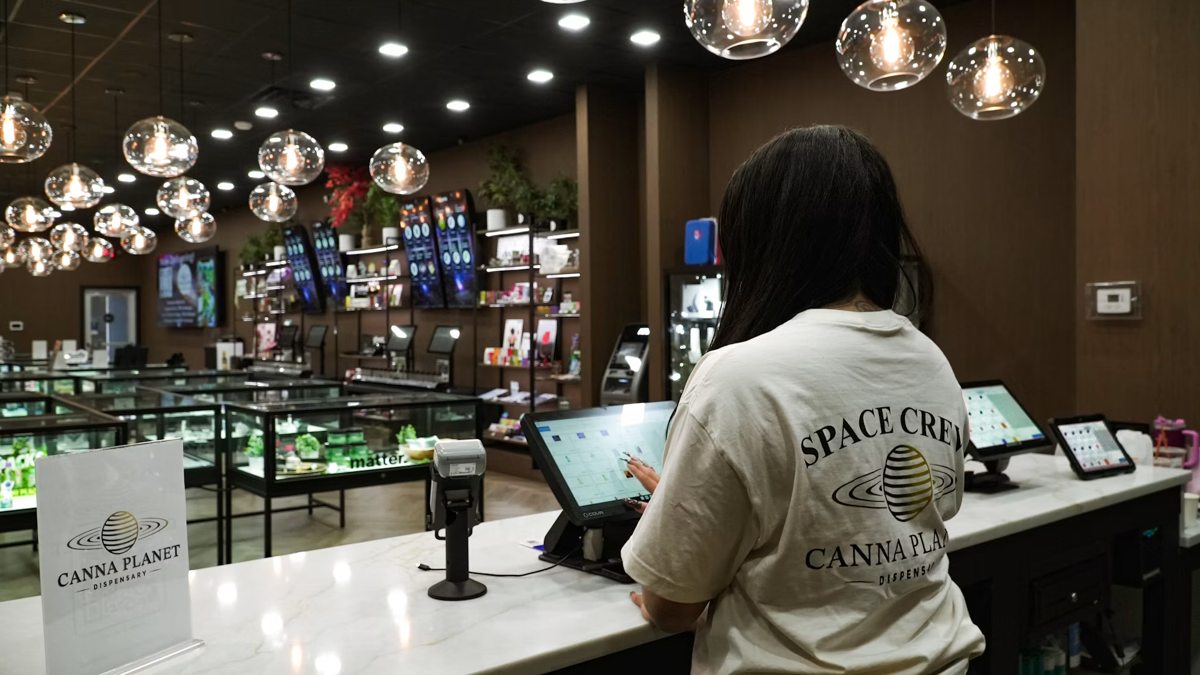
Illustrative stock retail photograph; not a Bountiful Farms location or customer. Photo: Cova Software / Unsplash.










 Cannabis3 weeks ago

 Cannabis3 weeks ago

 Cannabis3 weeks ago

 Cannabis3 weeks ago


 Cannabis3 weeks ago

 Cannabis3 weeks ago

 Cannabis3 weeks ago