Jushi has agreed to buy an Illinois cannabis cultivation and processing facility for $6.5 million in cash, with a first-quarter 2027 closing expected subject to regulatory approvals and other conditions. Its November 24 business update also describes financing discussions and expansion work in Virginia. For us, the useful distinction is between an agreed transaction, funding that is still being arranged and capacity that has yet to come online.
Cannabis companies can announce all three in one release, but they answer different questions. A purchase agreement identifies an intended asset. Financing determines how a company can pay for it. Regulatory approval and a completed build determine when that asset can actually contribute. We would keep those milestones separate when assessing this update.
Illinois would add a production link
According to Jushi’s announcement, the proposed acquisition would complement four existing BEYOND / HELLO dispensaries and make Illinois its sixth vertically integrated state. The company expects a new wholesale business and the ability to supply its own stores. These are anticipated benefits, rather than results from an acquisition that has already closed.
The release says up to $4.25 million in additional term loans is being sought for the purchase, but those loans are uncommitted. It also describes an approximately $40 million Manassas expansion, with construction expected to start late in 2026 or early in 2027 and take about 12 months. These figures are in U.S. dollars.
Any later financing announcement should identify the amount actually committed, its repayment terms and the relevant conditions.
That leaves execution questions worth following: whether the acquisition closes on the proposed terms, whether the additional funding becomes available and how construction spending is paced. We would not count a lender’s effort to arrange participation as money already received, or treat a forecast closing quarter as a completed change in ownership.
Virginia’s market date is a separate clock
The Virginia Cannabis Control Authority’s licensing timeline identifies July 1, 2027, as the start of retail marijuana sales. It places final regulations in December 2026 and publication and effectiveness in January 2027. Conversion applications for pharmaceutical processors and certain hemp businesses, alongside some microbusiness applications, are scheduled to open by February 1.
Those public implementation steps matter because a company’s construction plan does not set the state’s opening date. Equally, the beginning of retail sales does not establish that every proposed production expansion will be complete. On the dates Jushi gives, its roughly yearlong project would extend beyond the planned July market opening. That is a comparison of the announced timetables, not a claim that the project is behind schedule.
Virginia’s official explanation of the 2026 law changes identifies House Bill 30 as the authority for the future retail market and assigns the CCA responsibility for regulations and licensing. It separately describes expanded enforcement powers over unlicensed businesses. Market preparation therefore involves a legal transition as well as physical space, equipment and working capital.
We would watch the regulator’s actual milestones alongside company disclosures. A business can prepare for a market without having secured every permission for every future activity. The most useful follow-up reporting will identify which approval or construction step has changed, rather than repeat the opening date as if it resolves all remaining questions.
The existing business supplies context
Jushi’s October 28 quarterly results, covering the period ended September 30, reported $70.5 million in revenue and a $12.5 million net loss. Wholesale revenue was $9.7 million, while cash, cash equivalents and restricted cash together totalled $30.9 million at quarter-end. These are historical figures, not a current cash balance or a budget reserved for the Illinois purchase.
Our earlier earnings coverage explains those distinctions. The same release reported $13.6 million in adjusted EBITDA, a non-GAAP measure. We would read its reconciliation alongside the net loss, rather than substitute one measure for another. Sales growth, adjusted operating performance and money available to fund an acquisition describe different parts of the business. None alone establishes whether the proposed investment will earn an adequate return.
What would move this story forward?
The next concrete developments would be committed funding, required approvals and a completed acquisition, followed by measurable production or wholesale activity. For Virginia, construction progress and regulatory milestones will be more informative than repeating planned capacity. We would also look for any revised cost or timing assumptions in subsequent disclosures.
Jushi’s update gives us a plan with several dependencies. It is useful because those dependencies can be checked. Keeping the Illinois transaction, financing and Virginia timetable in separate view is the clearest way to judge what the company has accomplished and what it still expects to do.
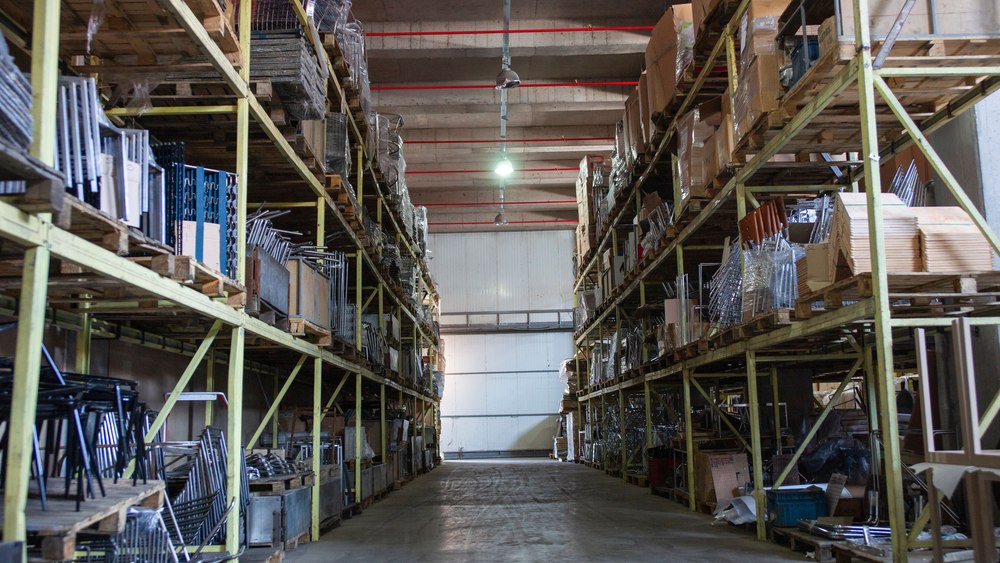
Illustrative industrial-storage photograph; not a Jushi facility or cannabis inventory. Photo: Engin Akyurt / Pexels.





 Cannabis1 month ago

 Cannabis1 month ago
 Cannabis1 month ago
 Cannabis1 month ago


 Cannabis1 month ago

 Cannabis1 month ago

 Cannabis4 weeks ago