#cannabisaficionado

Cannabis

Massachusetts Opens a Regulated Route to Drive-Through Cannabis Sales

The November 17 vote creates a pathway for individual dispensaries, with security reviews, passenger checks and local permitting still required.

Published

on

Close view of a black steering wheel and dashboard inside a vehicle.
Advertisement Back2Grow Advertisement

Massachusetts has opened a route for licensed cannabis retailers and medical establishments to offer drive-through service, provided their plans satisfy state security requirements and local approvals. The Cannabis Control Commission voted 3–0 on November 17 to interpret existing regulations as covering the model. The decision creates a pathway for individual businesses, rather than announcing that every dispensary now has an operating window.

For consumers, the attraction is straightforward: buying cannabis without making the usual trip through a shop. The details are less like an ordinary takeaway lane. Identification, the other people in the vehicle, transaction privacy and the handling of products remain part of the regulated purchase.

A retail format, with conditions

The commission’s announcement says businesses must submit proposed layouts and operating procedures for review. Plans need camera coverage, controls that keep transactions out of public view, and measures preventing cannabis products from being visible through the window. Municipal permitting still applies.

The agency also calls for age verification for every vehicle occupant at entry and at the sale, alongside signs explaining the requirements. A vehicle can therefore introduce questions that do not arise when one adult walks into a store alone. A customer should check a retailer’s instructions before arriving with passengers.

These are operational conditions, not merely a different place to hand over a bag. Businesses have to plan how the lane works and how staff maintain the safeguards associated with an indoor transaction. A statewide vote does not remove the need to establish that a particular site can meet them.

What an existing window shows

Boston 25’s Ryan Breslin reported on the practical experience of Elysian Dispensary in Quincy. General manager Julia Crawford described a pre-order pickup operation and said the window was closed at the time of the report following a period of operation and commission review. Her comments concerned that business’s process, not the readiness of stores elsewhere.

That distinction matters for anyone planning a visit. A retailer can have a physical window without offering the same menu, opening times or ordering process as its indoor counter. A pre-order pickup service and a lane where customers select products on arrival also require different expectations about how long the transaction will take.

The useful questions are specific: is the window open today, must the order be placed in advance, what identification is required, and who may be in the vehicle? The November decision provides a regulatory route; the retailer provides the current service details. Neither should be inferred from a photograph of a building or an old menu listing.

Pickup does not change transport rules

The commission’s consumer and licensee FAQ separately explains restrictions on open cannabis containers in vehicles. A broken seal or partially removed contents can make a package an open container. Its explanation distinguishes the passenger area from the trunk or a locked glove compartment.

Those transport rules remain relevant even when the purchase takes place through a car window. The sensible point to decide where a package will travel is before completing the pickup, rather than after opening it to inspect the contents. Buying in a vehicle should not be confused with authorization to consume there.

The FAQ also distinguishes public consumption from lawful possession. Retail access and permission to use a product are different parts of the regulatory system. A more convenient transaction does not settle where someone may consume cannabis or whether they can drive safely afterward.

Accessibility is a question of implementation

The commission identifies potential convenience for patients with mobility difficulties as one reason for the approach. That is a stated policy rationale, not a measured finding that every proposed lane improves access. Actual usefulness will depend on the site, service hours, communication and the needs of the individual customer.

A customer comparing options can ask whether the service handles medical purchases, whether assistance is available and how staff resolve questions that would normally be discussed at a counter. These are practical considerations for evaluating the format, rather than promises about a specific dispensary.

For a group travelling together, the passenger requirement can be particularly consequential. Checking the shop’s policy before setting off can avoid a failed pickup even when the person making the purchase has valid identification. Customers should also ask how staff handle an order that needs correction, rather than assume an online confirmation means the transaction is complete.

Massachusetts has other cannabis retail questions under review, including how remediated flower should be identified on labels. The two developments address different parts of the same shopping experience: how a purchase reaches the customer, and what the package tells them. For drive-through access, the next meaningful evidence will be approved local plans and reliable information from businesses actually offering the service.

Illustrative vehicle stock photograph; not a Massachusetts dispensary or drive-through transaction. Photo: Rubenstein Rebello / Pexels.

Health

Vermont’s Patient Survey Puts Medical Cannabis Access and Service in Focus

Preliminary November 18 results describe patient experiences with medical-endorsed retailers, product access, program service and employee knowledge.

Published

on

Blank white paper on a clipboard with a pen and pencil against a black background.

Vermont’s Cannabis Control Board has released preliminary results from a medical-patient survey, adding patient experiences to the discussion of access through medical-endorsed adult-use retailers. The November 18 presentation reports 1,043 responses after invitations went to 2,984 active patients registered with an email address. It describes generally positive experiences, alongside gaps in awareness and differences among respondents.

For cannabis patients, the relevant development is the evidence about how a changing retail system feels to people using it. These are reported experiences with access, service and products. The survey is not a clinical trial, an independent laboratory audit or proof that a particular cannabis product effectively treats a condition.

What the preliminary report contains

The board’s survey presentation, posted with its November meeting materials, says responses were collected from October 23 through November 13. It describes respondents as tending to be older and more experienced with the medical program. That context belongs beside any headline about satisfaction.

The board summarizes most respondents as satisfied with product potency, purity and consistency, and access to products they considered beneficial. It also reports generally positive assessments of program staff and online registration. Those categories concern different experiences and should not be collapsed into one overall measure of medical effectiveness.

Some of the most useful questions concern medical-use endorsements, which allow qualified adult-use retailers to serve registered patients. The presentation describes most respondents as already aware of that option and as having visited or purchased from an endorsed retailer. It reports improved or similar shopping experiences for most respondents, with easier access also a prominent theme.

What an endorsement actually changes

The board’s endorsement guidance explains that a qualifying retailer can make medical sales to registered patients or caregivers. It describes tax-free purchases, specified medical products and quantities, delivery, and purchases without leaving a vehicle. These privileges come with requirements; they are not automatically available at every adult-use shop.

Privacy protections, employee training, separation of medical and adult-use products, recordkeeping and access for younger registered patients are among the areas identified by the regulator. The useful distinction for a patient is whether a retailer actually holds the endorsement and offers the service needed, rather than simply whether it sells cannabis.

The board maintains medical dispensary and endorsed-retailer information. That list is a better starting point for checking a location than a broad advertisement that uses medical language. A survey’s favorable overall picture cannot establish the current stock, service hours or delivery arrangements of an individual business.

Satisfaction has several meanings

A patient can be satisfied with a shop’s service while still wanting a different product. Another may find access easier but be uncertain about staff training. The survey addresses those experiences separately, which is useful precisely because one positive answer does not settle every other question.

On employee knowledge, the presentation reports that many respondents did not know about enhanced training, while most described some improvement or a similar level of knowledge. The board’s training page separately identifies the required education for employees serving patients and caregivers. Awareness of training and the existence of a training requirement are different facts.

This distinction also prevents overreading a preference question. A respondent’s preferred product form or cannabinoid ratio describes what they choose or want. It does not establish which formulation is clinically appropriate for another patient or demonstrate comparative safety across products.

Reading the sample with care

The presentation is labeled preliminary and describes an anonymous survey of a defined group. People without a registered email were outside the stated invitation pool, and not every invited patient responded. The resulting responses should therefore not be presented as a census of every medical patient or the views of everyone who uses cannabis in Vermont.

The report’s observation about older, experienced respondents reinforces that point. Their perspective is valuable, but someone newly entering the system may have different questions about registration, choosing a retailer or finding the right support. Reporting both the findings and the sample’s boundaries makes the evidence more useful.

The response count is approximately 35 percent of the stated invitation pool. That calculation describes participation, rather than a response rate for each individual question. Before comparing two chart categories, readers should check which question was asked and whether its answers concern awareness, a purchase, a preference or an evaluation of service. Those measures describe different things.

The next questions are practical: where does access remain difficult, which services do patients struggle to find, and how can retailers explain medical options clearly? Vermont’s preliminary results provide a starting point for those discussions. They support attention to patient experience while leaving product-specific medical decisions and claims about treatment outcomes to a different kind of evidence.

Illustrative clipboard stock photograph; not Vermont’s patient survey, patient records or a medical consultation. Photo: KATRIN BOLOVTSOVA / Pexels.


Continue Reading

Cannabis

Hemp Guardrails Act Proposes a Federal Alternative to December’s Product Restrictions

Sens. Tim Sheehy and Amy Klobuchar propose age limits, testing and federal oversight for hemp products as December’s restrictions approach.

Published

on

Brown reference books arranged on a library shelf.

A new bipartisan Senate proposal would replace approaching federal hemp restrictions with a framework for regulated consumer products. Sens. Tim Sheehy and Amy Klobuchar introduced the Hemp Guardrails Act on November 17, putting another option before Congress as businesses and consumers approach a December 11 deadline. Introducing the bill does not change that deadline or authorize products currently prohibited by law.

For cannabis consumers, the consequential question is which hemp products could remain available under federal rules and what protections would accompany them. A proposal aimed at preserving a market can still prohibit particular cannabinoids, formats and sales practices. This one would do both, according to the sponsors’ announcement and reporting on the legislation.

What the senators are proposing

The sponsors’ announcement describes an age floor of 21 for sales, possession and consumption of consumable hemp products. It would direct FDA oversight of packaging, labeling, manufacturing and testing, prohibit marketing aimed at children and require health warnings. Consumable products would have to be cultivated, processed, finished and packaged in the United States.

The announcement also describes prohibitions on delta-8, delta-10 and THC-O products, restrictions on synthetics, and a cultivation threshold of 1% total THC by dry weight. That farming threshold should not be read as a recommended dose or an assurance that every finished product below a percentage would be lawful.

Marijuana Moment’s Tom Angell reports that the measure would bar raw floral hemp material, smokable flower and pre-rolls from interstate commerce. His reporting also describes a 180-day deadline for FDA rules covering matters including registration and recalls, and provisions allowing states to impose stricter requirements. These details describe the proposed framework, rather than rules already governing a newly authorized market.

Why December 11 matters

The Congressional Research Service’s September 28 explanation distinguishes two effective dates. A September funding law delayed much of the revised federal hemp definition until December 11, 2026. The exclusion for cannabinoids that cannot naturally be produced by a cannabis plant remained set for November 12.

Among the December provisions is an exclusion for final hemp-derived cannabinoid products containing more than 0.4 milligrams per container of combined total THC and other cannabinoids with similar effects. That is a container-based amount, separate from the dry-weight percentage used in defining plant material. Confusing the two measurements obscures why a modest-looking percentage can coexist with a consequential retail restriction.

The practical implication is that readers should watch changes to enacted law, rather than treating the filing of a replacement bill as an extension. The new Senate proposal is evidence of a regulatory alternative being advanced. It is not evidence that Congress has agreed to it.

Federal hemp status is only one layer

FDA’s cannabis regulatory guidance explains that satisfying the hemp definition does not remove other obligations under the Federal Food, Drug, and Cosmetic Act. Product type, intended use and marketing claims matter. A hemp classification and permission to market a substance as food, a supplement or a drug are different questions.

That distinction is part of the history behind the proposed FDA framework. In its January 2023 statement, the agency said existing food and supplement pathways were not appropriate for CBD and called for work with Congress on another approach. It identified concerns including liver effects, medication interactions and exposure among vulnerable populations. The statement was a request for a regulatory solution, not a finding that retail CBD products were universally safe.

For a consumer comparing packages, this also means that a cannabinoid’s name, its amount per serving and the total contents of the container answer different questions. A legislative cultivation limit should not replace reading the actual product label, and a claim that an item is hemp does not establish approval of its medical claims.

What consumers and businesses should watch next

The next useful developments would be legislative action, amendments and final effective-date language. Consumers evaluating an announcement should ask whether it describes an introduced proposal, a chamber’s passage or an enacted law. Those stages have different consequences for access and compliance.

Businesses have a second set of questions: which product categories qualify, what testing is required, who oversees recalls and how state restrictions interact with federal transportation rules. The answers could affect different shelves differently. A beverage maker, CBD manufacturer and smokable-flower seller should not assume that a single headline about preserving hemp applies identically to their products.

For now, the Senate bill offers a concrete framework to debate while the existing deadline remains consequential. Our coverage of FDA’s separate NAC proposal explains another reason to keep regulatory pathways distinct: action involving one ingredient does not automatically change the rules for CBD or THC.

Illustrative stock photograph of reference books; not Congress or the proposed legislation. Photo: Muhammad Jawadur Rahman / Pexels.

Continue Reading

Cannabis

California Reports Nearly One Million Cannabis Plants Removed in 2026 EPIC Operations

California’s attorney general reports 655 operations across 22 counties, linking illicit cultivation enforcement with environmental and labor concerns.

Published

on

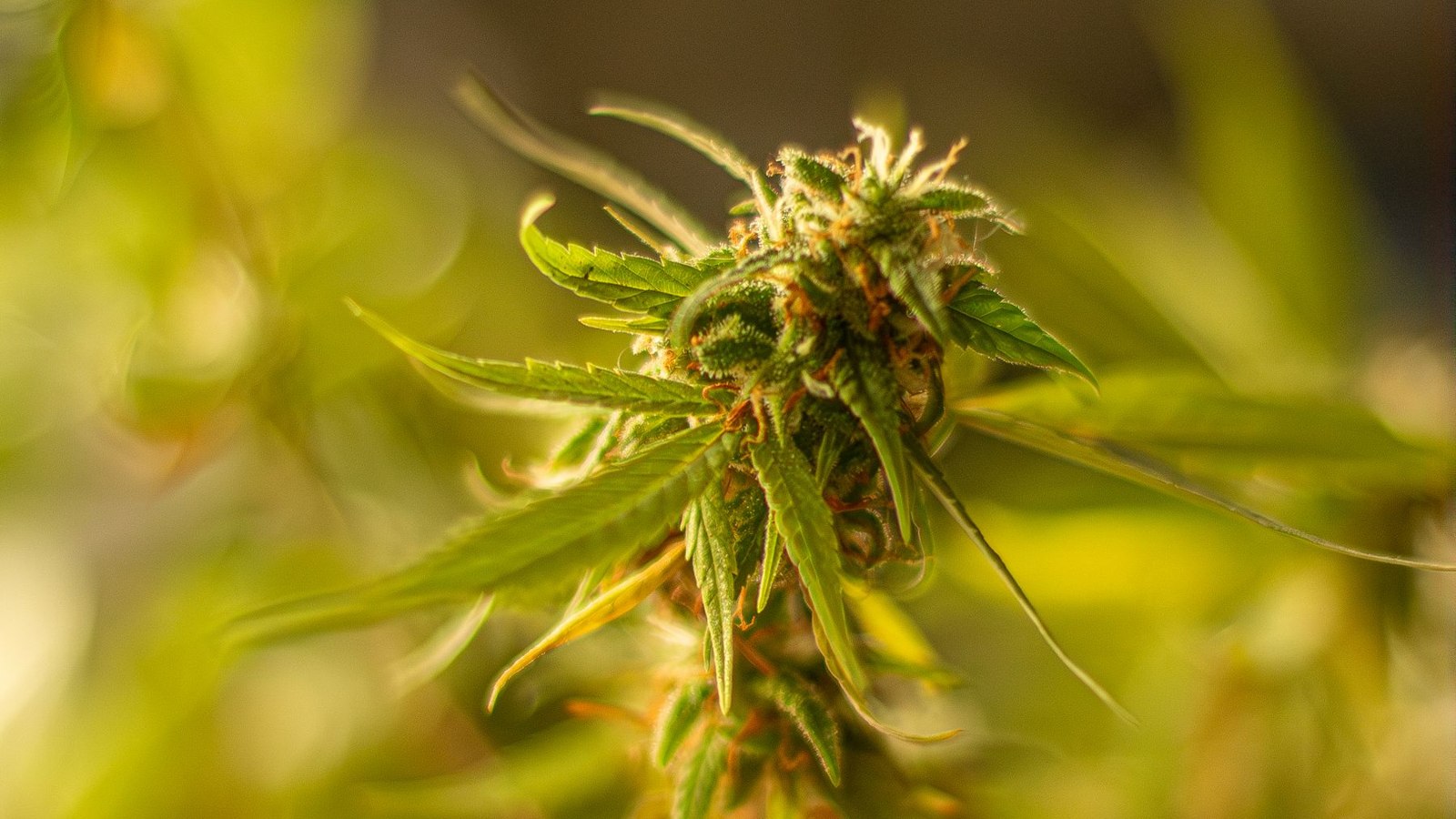
A flowering cannabis plant with serrated green leaves in warm light.

California Attorney General Rob Bonta announced November 16 that the state’s Eradication and Prevention of Illicit Cannabis program removed nearly one million illegally cultivated cannabis plants and recorded 221 arrests across 22 counties during 2026. The annual enforcement announcement connects cannabis cultivation with environmental damage, worker exploitation and the challenges facing the licensed market.

The figures describe activity reported by law enforcement. They are not a count of convictions, a complete estimate of California’s illicit cannabis market or a finding that every arrested person committed the conduct described in the announcement. Those distinctions are essential when reading a large statewide total.

What California reported

According to the Department of Justice’s release, EPIC teams conducted 655 operations in Northern, Central and Southern California and recovered 158 weapons. Teams also removed infrastructure including dams, water lines and containers of toxic chemicals. The department described concerns involving water theft, pesticides, habitat damage and labor exploitation.

The announcement attributes those results to joint work by local, state and federal partners. Its statewide description should not be treated as a case-by-case account of charges or outcomes. Individual allegations, prosecutions and judgments would need to be checked against the relevant records before attaching them to a person or business.

The program’s official overview says EPIC focuses on investigating and prosecuting civil and criminal cases involving illicit cultivation, with attention to environmental and economic harms and labor exploitation. That remit helps explain why the annual statement extends beyond the number of plants removed.

Arrests also refer to people, while operations refer to enforcement activity. They are different units, and the release does not support treating either as a count of adjudicated criminal cases.

What plant totals can and cannot establish

Eradication figures provide one measure of enforcement activity. On their own, they do not establish the amount of finished product that would have reached consumers, the revenue associated with it or the share of the unlicensed market eliminated. Converting plants into a retail-market estimate would require assumptions that this announcement does not supply.

The same caution applies to evaluating success. A high operation count can document substantial enforcement work without answering every question about deterrence, environmental restoration or workers’ long-term circumstances. Those outcomes require evidence beyond an annual tally.

For licensed producers, the release frames illicit cultivation as an economic concern as well as a public-safety one. The consumer-facing distinction is more concrete: a plant photographed at a grow site is not evidence that a particular retail package passed testing or entered a regulated supply chain. Those questions need their own records.

How the licensed market handles testing

The Department of Cannabis Control’s testing guidance says all batches must be tested before sale. Required checks cover cannabinoids and terpenes, residual solvents and processing chemicals, pesticides, heavy metals, microbial impurities, mycotoxins, moisture and foreign material. Results are recorded in a Certificate of Analysis that identifies whether a batch passes or fails.

The regulator also describes procedures for failed batches, including destruction or approved remediation followed by retesting. This is a separate regulatory process from EPIC’s investigations. An enforcement seizure and a failed laboratory batch are not interchangeable events, even when both raise questions about product safety.

Testing requirements should not be presented as a guarantee that no problem can occur in the licensed market. Their value is a defined set of obligations and records against which a product can be checked. That is different from relying on appearance, a seller’s assurances or the reputation of a strain.

What consumers can verify

DCC’s consumer guidance directs buyers to its license search and notes that retailers must display their state license. The certificate’s QR code provides another way to check status. The agency warns that some stores that appear legitimate are unlicensed and may sell untested products.

License verification is a useful first check because a professional-looking storefront does not establish regulatory status. It also avoids a common mistake in interpreting enforcement news: assuming that a statewide announcement identifies which specific shops or packages are affected. The EPIC totals do not provide that retail answer.

For a product-specific concern, the DCC recall guidance explains how to search its recall portal and compare the batch number and unique identifier on a notice with the package label. A matching brand name alone is insufficient to determine whether an individual package is included.

California’s announcement documents a substantial enforcement effort. For readers making a purchase, the most useful response is to keep the evidence at the right level: statewide totals describe operations; case records establish individual outcomes; licenses, testing records and recall notices address the regulated products on a shelf.

Illustrative cannabis stock photograph; not a California grow, seized plant or EPIC operation. Photo: Lucas Pezeta / Pexels.

Continue Reading

Trending

Join The Cannabis Aficionado Community!
Join the Cannabis Aficionado community and receive all of the most relevant news geared towards our sophisticated enthusiast community.
Loading

Copyright ©️ 2026 Cannabis Aficionado. Cannabis Aficionado is a registered trademark of CNM Inc. All rights reserved. Registration on or use of this site constitutes acceptance of our Terms of Service, Privacy Policy and Cookies Policy. People may receive compensation for some links to products and services. Offers may be subject to change without notice.