#cannabisaficionado

Science

Missouri’s Cannabis Research Rule Sets a November 30 Milestone, With Studies Still Subject to Approval

Missouri’s new research framework covers more than clinical studies, but a facility license alone will not authorize a project to begin.

Published

on

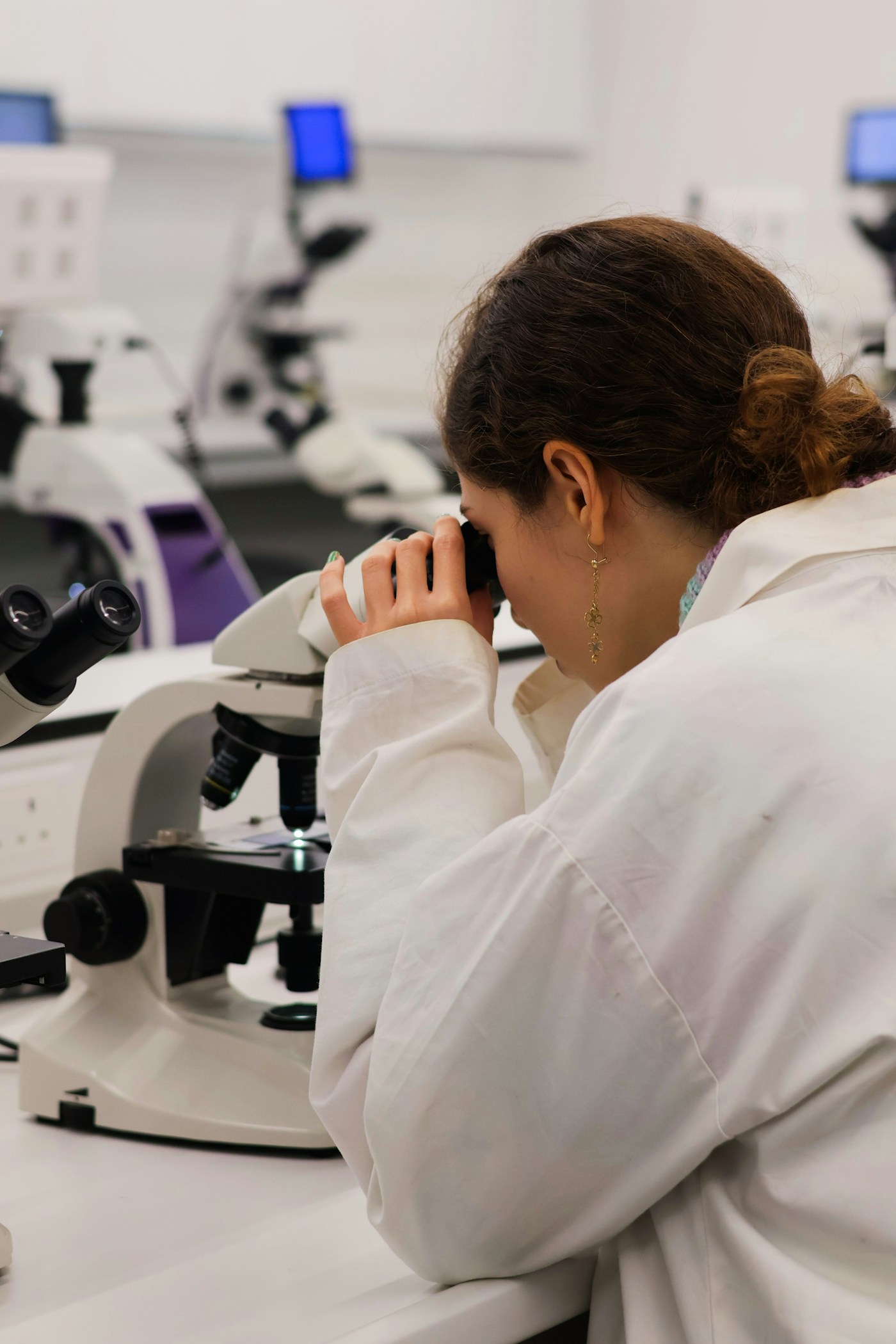
A researcher looking through a microscope in a laboratory
Advertisement Back2Grow Advertisement

Missouri is approaching a new milestone for cannabis science: its marijuana research facility rule is due to take effect November 30, 2026. The framework creates a regulated route for investigating cannabis products, cultivation and genetics, as well as studies involving people and animals. It does not mean researchers can begin experiments simply because the calendar reaches that date.

Anthony Martinelli reported the approaching effective date for The Marijuana Herald on November 9. The final order appears in the October 1 Missouri Register, where the Division of Cannabis Regulation explains both the adopted requirements and changes made after public comments.

A research license is the beginning

The distinction between licensing a facility and approving its work is one of the rule’s most consequential details. Under 19 CSR 100-1.200, receiving a research facility license does not itself authorize research activities. Final operating approval requires a successful commencement inspection and departmental approval of a research study.

That separates three questions that can otherwise become blurred in announcements: whether an organization is licensed, whether its premises are ready, and whether a particular project has been approved. Readers should look for all three before interpreting a future announcement as evidence that a study is underway.

The adopted provisions specify a nonrefundable $500 facility application fee and a separate $250 study application fee. Those are application charges, rather than a complete estimate of the cost of establishing a laboratory, hiring qualified staff or running a study. The rule also requires location information, facility plans and documentation of who can access the premises and cannabis products.

Beyond studies of medical effects

The authorized activities extend beyond giving cannabis to research participants. The framework includes cultivation, processing, manufacturing, product research and transfers involving other licensed facilities. It also addresses seeds and clones produced through an approved research study, which may be sold or transferred to a cultivation facility when that activity is included in the approved project.

That makes agricultural research a distinct part of the story. A project examining a growing method or a genetic line asks different questions from a clinical investigation of a patient outcome. Neither should be presented as proof of the other. A promising cultivation result, for example, would not establish that a finished product treats a medical condition.

In its responses to public comments, the department said partnerships with universities, community colleges and other research or agricultural organizations are not prohibited. It also declined to convert research licensing into a route for direct consumer sales, pointing to the constitutional restriction that reserves those sales to licensed dispensaries.

Participant protections remain specific

For studies involving human subjects, the adopted language requires a licensed physician in good standing to monitor participants and a principal investigator with at least five years of human-subject research experience. The rule allows administration to adults aged 21 or older, and to younger participants who hold a medical marijuana patient identification card, subject to the chapter’s requirements.

Animal studies have their own oversight structure. The framework calls for a U.S. Department of Agriculture animal welfare research registration and approval from an appropriately registered Institutional Animal Care and Use Committee. A licensed veterinarian must monitor animal subjects, and the principal investigator must have the required animal-research experience.

These provisions describe conditions for conducting research. They do not establish that a proposed intervention is beneficial, that a study will recruit successfully, or that results will apply to everyone who uses cannabis. Those judgments depend on the research question, design, evidence and eventual findings.

The framework also separates research from mandatory product compliance testing. A research facility is not a substitute for a licensed testing laboratory, and products administered in subject studies remain subject to testing requirements.

What to watch after the effective date

The next useful signals will be operational: application instructions, actual approvals, named investigators and clearly described projects. The Marijuana Herald reports that the division is preparing for research licensing implementation in early 2027. That reported timetable should be distinguished from the November 30 legal effective date.

Missouri’s broader regulatory system also remains relevant. As our coverage of Missouri’s response to federal cannabis changes explains, changes in one part of cannabis regulation do not automatically erase other requirements. A state research license likewise should not be read as blanket permission to disregard applicable federal or local obligations.

For patients and cannabis consumers, the immediate development is an infrastructure story rather than a new treatment announcement. Missouri is setting conditions under which more questions can be investigated. The value of that work will become clearer when approved projects produce transparent methods and results that other researchers can assess.

Illustrative laboratory stock photograph; not a Missouri cannabis research facility. Photo: Faustina Okeke / Unsplash.

Science

MoreBetter Plans a Mississippi Registry to Follow Medical Cannabis Outcomes

MoreBetter plans Mississippi patient-reported cannabis research for early 2027. Here’s what the observational program aims to measure.

Published

on

Blank clipboard and pencil on a textured surface

MoreBetter plans to launch a statewide medical cannabis outcomes program in Mississippi, with patient recruitment expected in the first quarter of 2027. The November 10 announcement is about building evidence on how registered patients use cannabis and what they report over time, not announcing a new treatment result.

The company’s announcement describes a prospective observational program covering symptoms, prescription-medication use and quality of life. MoreBetter says it will manage protocols, participant interactions and data collection, with academic partners supporting analysis and publication. Participation details are expected closer to launch.

A public portal of aggregate findings would also be different from public access to individual medical records. The planned reporting format and the underlying privacy arrangements deserve separate attention as participation details emerge.

A research registry is different from a patient license

Mississippi already operates a medical cannabis program, with official resources for patients, caregivers, practitioners and businesses. Its MedCann website provides access to licensing information, establishment searches and a transparency portal. Those state functions should not be confused with enrollment in a separate research project.

A patient who is authorized to participate in the medical market has not thereby agreed to every research use of their information. Conversely, an announcement about a study is not a replacement for the state’s eligibility or registration process. These are separate relationships with different purposes.

That distinction also matters for the word statewide. It describes the proposed reach of the program; it does not mean every Mississippi patient has enrolled, every clinic has joined, or the state has independently verified every claim in the company’s release.

Following change over time

MoreBetter says it wants to examine reported changes in pain, sleep, anxiety and well-being, along with prescription use and cannabis-product patterns. It intends to release selected aggregate, de-identified findings. The announcement also describes possible linkage with health-record and claims data where available.

The useful question is what happens between a baseline observation and later reports. If a patient’s sleep score changes, researchers need to know how consistently it was measured, what else changed and how many people continued responding. An initial improvement and a durable pattern are different findings.

The company’s research-platform description emphasizes repeated data collection from the same participants rather than a single snapshot. That is MoreBetter’s account of its infrastructure, not an independent evaluation of the Mississippi protocol. The final methods and eventual publication will be needed to assess the actual study.

Data and evidence are not identical

The Food and Drug Administration’s real-world evidence overview distinguishes routinely collected health data from the clinical evidence derived by analyzing those data. It lists health records, claims and registries among potential sources. Collecting more responses is therefore a starting point, not the end of the scientific work.

For readers, that distinction helps avoid treating the size of a database as a complete quality measure. A large dataset can still leave questions about who participated, what was measured and whether important information is missing. The research question and the suitability of the data have to fit one another.

Patient reports can address experiences that sales totals and license counts cannot show. But an observational design does not randomly assign otherwise comparable people to cannabis or another treatment. Any reported association will need to be interpreted in light of the methods and possible alternative explanations.

Prescription changes require careful interpretation

One proposed subject is how cannabis use relates to prescription medication over time. A reduction in a recorded medicine is not automatically evidence of better health, and an increase is not automatically evidence that cannabis failed. The reason for the change and the patient’s overall care matter.

For that reason, the announcement should not be read as advice to stop, substitute or alter prescribed treatment. Its value will be in the questions the research can examine and the quality of the answers, rather than an assumption that one direction of change is always desirable.

The same caution applies to unwanted effects. A meaningful account of outcomes needs room for experiences that do not match a favorable expectation. Readers should look for how later reporting handles missing responses, discontinuation and adverse experiences alongside any improvements.

What comes next

MoreBetter calls the project the first in a planned series of statewide programs. That expansion remains a company plan. For Mississippi, the immediate milestones are recruitment information, a defined protocol and clarity about consent, data handling and who is included in the analysis.

Our report on Britain’s cannabis-use frequency study examined why the question being measured changes how a result should be understood. The Mississippi proposal raises a different question: what ongoing patient reports can add to an evidence base. The announcement creates a research agenda; the outcomes still have to be collected and analyzed.

Illustrative clipboard photograph; not a patient record or the study’s questionnaire. Photo: aceofnet / Unsplash.

Continue Reading

Science

British Cannabis Study Puts Daily Use—and Middle Age—in Focus

A new British cannabis analysis estimates daily or near-daily use and explains why frequency, age and survey definitions matter.

Published

on

Black-and-white view of stone buildings along a London street

A new British cannabis analysis puts consumption frequency at the center of a familiar debate about who uses the plant. Researchers estimate that 1.2 million adults in Great Britain consume cannabis daily or nearly every day, while finding that middle-aged consumers were more likely to report that pattern than younger consumers.

The findings, highlighted in a November 9 University of Bath announcement, challenge the idea that one statistic about any cannabis use can describe everyone involved. They also require a careful qualifier: a different estimate is not, by itself, evidence of a sudden increase in consumption.

Start with the question being asked

The study pooled responses from 25,537 adults participating in the Action on Smoking and Health Smokefree Great Britain surveys in 2023 and 2024. Researchers found that 7.2% reported cannabis use in the preceding year. Among that group, 24.2% reported daily or near-daily use.

Those percentages have different denominators. The second figure concerns people who had used cannabis in the past year, not a quarter of all adults in Britain. Preserving that distinction is essential when a finding moves from an academic paper into a headline or a social-media discussion.

The research record at King’s College London describes pooled, repeated cross-sectional online surveys. These provide a picture of reported behavior across groups. They do not follow every individual over time or demonstrate that a particular person’s habits changed between the two survey years.

The age comparison needs its context

Among respondents who used cannabis, those aged 35–44 and 45–54 were around twice as likely to report daily or near-daily consumption as those aged 18–24 after the researchers’ adjustments. Younger adults can be more likely to report any use while older consumers are more likely to report frequent use. Both patterns can be true.

Consider the difference between a group with many occasional consumers and a smaller group containing a higher share of frequent consumers. One can lead on participation while the other leads on frequency. A claim about which age group uses cannabis most needs to specify which of those questions it actually answers.

This is a useful corrective to stereotypes about cannabis culture. An age label does not establish an individual’s behavior, and a group average cannot reveal why someone consumes. The study describes associations; it does not supply a personal explanation for every respondent.

Why the national estimates differ

Bath compares its estimate with roughly 470,000 daily consumers identified in the Crime Survey for England and Wales. The researchers point to an important measurement difference: their category includes near-daily consumption, while the comparison counts daily use. The geographical populations also differ: Great Britain includes Scotland, whereas England and Wales is a narrower area.

It would therefore be misleading to subtract the two figures and call the remainder newly identified daily users, or to describe the difference as a measured surge. Different definitions, populations and survey designs can produce different estimates without establishing a trend between them.

The better question is what each survey captures and misses. For readers, that means checking the definition of frequent use, the survey period, the population sampled and whether results are weighted estimates rather than a literal headcount. These details affect interpretation before any debate about policy begins.

Frequency is informative, not a diagnosis

The researchers also found associations involving tobacco smoking, employment status and smoking cannabis rather than using other routes. These are population-level relationships. The design does not show that one characteristic caused another, and a frequency category is not equivalent to a clinical diagnosis.

Someone reporting daily use and someone reporting occasional use may have different questions for a clinician, researcher or support service. A useful conversation can address the actual pattern and its effects on daily life without assuming either that all frequent use is identical or that frequency is irrelevant.

Our coverage of UCLA’s controlled cannabis trial similarly distinguished consumption history from a simple demographic label. That experiment and this survey answer different questions, but both demonstrate why a single description of a cannabis consumer can conceal important variation.

For this new British estimate, the most valuable takeaway is methodological as well as cultural. Ask how often, among whom and according to which definition. Those questions produce a more accurate discussion of cannabis than treating every reported use as the same behavior.

One comparison makes the frequency question particularly concrete. Among past-year cannabis consumers, 35% of tobacco smokers reported daily or near-daily cannabis use, compared with 15% of those who did not smoke tobacco. The researchers see potential value in reaching people through existing support settings. That finding identifies a possible point of contact; it does not show that tobacco caused the cannabis pattern.

Illustrative London street photograph; not survey participants. Photo: Ian Mackey / Unsplash.

Continue Reading

Science

UCLA’s Cannabis Trial Challenges a Simple Assumption About Sex and Sensitivity

A small UCLA trial finds cannabis responses depend on sex and consumption frequency, challenging a simple assumption about sensitivity.

Published

on

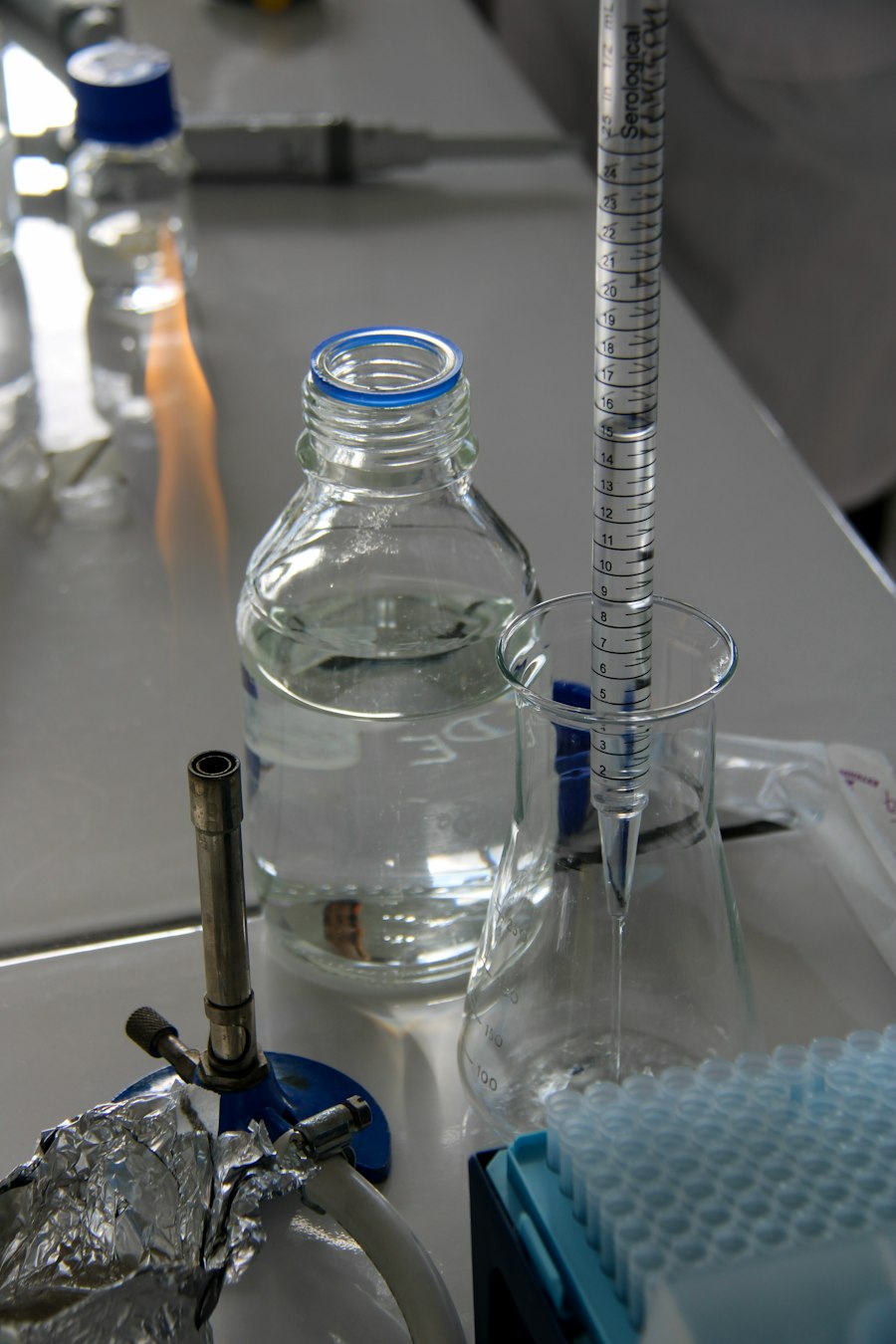
Laboratory pipette and glass vessels on a workbench

A new UCLA study challenges a familiar assumption about cannabis: that women necessarily experience stronger acute effects than men. In this small controlled trial, occasional male consumers reported several of the strongest reactions. How often someone used cannabis helped explain the pattern, making the findings more complicated than a simple comparison between sexes.

The research, published October 29 in Neuropsychopharmacology and highlighted by UCLA Health on November 5, examines short-term responses to smoked THC. It does not establish a safer consumption schedule or a dose that everyone in a demographic group can comfortably tolerate.

A study built around two questions

Researchers enrolled 44 healthy adults, evenly divided between males and females. Each sex included 12 frequent consumers and 10 occasional consumers. In this experiment, frequent meant more than four days of cannabis use per week; occasional meant four days or fewer. That second category should not be mistaken for people trying cannabis for the first time.

Participants attended three six-hour sessions, separated by at least 48 hours, receiving placebo cannabis or cannabis containing 4% or 10% THC. The randomized, double-blind crossover design allowed researchers to compare different sessions involving the same person. Blood measurements and assessments of drug effects helped distinguish exposure from the experience participants described.

That distinction matters when interpreting the results. A laboratory measurement and a person’s report of feeling impaired answer related questions, but neither automatically substitutes for the other. Comparing both creates a more informative picture than treating THC concentration in a sample as a complete account of what someone feels.

The strongest response was not universal

Occasional male consumers reported greater intoxication and several unpleasant effects than occasional female consumers, with differences particularly apparent at the lower active strength. Responses among frequent male and female consumers were more similar. Comparable peak THC exposure between the occasional groups did not explain away the contrast.

UCLA’s account also describes differences involving sedation, impairment and anxiety. Those are distinct experiences: reporting a stronger high is not interchangeable with enjoying it, and a less intense subjective response is not a declaration that a product is harmless. Headlines that collapse all of those outcomes into one score would miss much of the point.

The finding therefore asks a better research question rather than settling a competition over which sex is more sensitive. Which effect is being measured? Under what conditions? Among people with what consumption history? Those details are central to the result, not small print to discard after reading the headline.

What the experiment cannot tell a shopper

The sample was modest, and several analyses were exploratory. Female participants were regularly cycling and were not taking hormonal birth control; sessions were timed within a specified menstrual-cycle phase. The design makes comparisons more controlled, while also narrowing the population to which they can confidently be extended.

Smoking was the route tested. The results should not be translated into an edible timetable, a concentrate recommendation or an individualized treatment plan. A controlled session involving a defined product is a different setting from choosing among products with different ingredients, strengths and methods of consumption.

Nor does the contrast between frequent and occasional consumers show that increasing consumption improves health. The experiment measured acute responses, not the long-term benefits and costs of changing a person’s habits. Using a short-term comparison to recommend more frequent use would turn a limited finding into a claim the research did not test.

Better context for cannabis conversations

For a reader discussing an unexpected cannabis experience, the useful takeaway is specificity. The product, route, timing and person’s prior experience belong in the conversation alongside the effect itself. A label such as male, female, experienced or occasional cannot carry all of that information alone.

Our recent coverage of Oregon’s cannabis health update similarly emphasizes asking what product and evidence a claim concerns. Here, the question is especially concrete: these researchers studied short-term responses to smoked cannabis in selected adult volunteers, not every product or every consumer.

The study also supports including both sexes and different consumption histories in future research rather than assuming one average response represents everyone. For cannabis culture, that is a useful shift away from confident generalizations and toward descriptions that leave room for individual variation.

Read the result as a challenge to an oversimplified assumption. It is an invitation to ask more precise questions about cannabis effects, while keeping the limits of a small experiment visible.

There is a broader lesson for reading cannabis science, too. Notice whether a reported outcome comes from a person’s description, a biological measurement or the researchers’ interpretation. Ask whether the comparison concerns individuals, averages within groups or a change over time. Keeping those distinctions intact makes an interesting result more useful, without pretending it can predict a particular reader’s next experience.

Illustrative laboratory stock photo; not the UCLA study site or equipment. Photo: Nathan Rimoux / Unsplash.

Continue Reading

Trending

Join The Cannabis Aficionado Community!
Join the Cannabis Aficionado community and receive all of the most relevant news geared towards our sophisticated enthusiast community.
Loading

Copyright ©️ 2026 Cannabis Aficionado. Cannabis Aficionado is a registered trademark of CNM Inc. All rights reserved. Registration on or use of this site constitutes acceptance of our Terms of Service, Privacy Policy and Cookies Policy. People may receive compensation for some links to products and services. Offers may be subject to change without notice.