#cannabisaficionado

Cannabis

Tokyo’s Hemp Expo Brings Materials, CBD and Design Together This Week

Tokyo’s November 13–14 hemp expo brings CBD, materials and design together. Its business and community days offer different ways into the plant’s wider uses.

Published

on

Mirrored entrance overlooking pedestrians and traffic in Omotesando, Tokyo
Advertisement Back2Grow Advertisement

Tokyo’s Japan International Hemp Expo is scheduled for November 13–14 at House of OMOTESANDO, bringing hemp and CBD businesses together for a two-day program. The cannabis connection extends beyond cannabinoid products. The organizer describes an exhibition spanning agriculture, construction materials, food, fashion and biotechnology, giving visitors a chance to follow several uses of the same plant through one venue.

Choose the day around the conversation

The official online guidebook identifies Friday as Business Day and Saturday as Community Day. Doors open at 10:30 a.m. on both days. The listed closing times are 10 p.m. Friday and 6 p.m. Saturday, in Tokyo local time. Admission is free with advance registration. Those details establish the exhibition’s public window, so visitors should check the live program for the timing of any particular session.

The venue address is 5-34-8 Jingumae in Shibuya. For a first visit, save both the building name and the street address. A district name is useful when choosing accommodation or planning a route, but the exact address matters when finding the entrance. Leave enough time to locate registration before a session you particularly want to attend. A program with several kinds of exhibitors can make it easy to spend longer than expected on the floor.

The international visitor guide separates travel preparation from the event itself. It includes access information, visa-invitation procedures and a compliance and customs section. Check those requirements directly before making travel decisions. A registration confirmation establishes admission to an exhibition. Travelers still need to establish which documents and products they may take across a border.

Follow a material from the field to the finished object

For a reader interested in hemp clothing, the exhibition offers a practical way to ask about the stages between a plant and a garment. A fiber sample, a yarn and a finished textile each show a different production decision. Ask what is available now, what is still being developed and where a material is processed. That conversation can help distinguish a concept from something a designer can order for a production run.

The same approach works for construction materials. A demonstration object can show texture or form, while a buyer needs separate information about intended use, specifications and the requirements that apply where it will be installed. A display is a starting point for a technical conversation. Ask the exhibitor which documents support a claim and whether those documents describe the exact product on the stand.

Our coverage of Object Apparel’s hemp collection looked at the garment end of this process. JIHE’s broader remit gives visitors an opportunity to ask about the intermediate stages as well. Someone interested in clothing may learn as much by talking to a materials supplier as by looking at finished apparel. Keep the questions tied to a specific sample, because fiber content and construction can vary within a single company’s range.

Use the program as a set of questions

The organizer’s speaker announcement describes participation by more than 100 companies, organizations and brands. That is an organizer-reported figure for the announced program. It provides a sense of the intended scale, while the current exhibitor directory is the better place to identify whom you can actually meet. Make a short list before arrival and check whether the relevant representative will be available on your chosen day.

For CBD products, useful questions concern ingredients, documentation and the market the product is intended to serve. A business developing an ingredient may have a different customer from a company selling a finished item. Ask which part of the supply chain the exhibitor handles and what information travels with an order. Those answers can make a complicated floor easier to navigate without assuming that everything displayed belongs in the same product category.

Anyone attending to learn rather than buy can use the same method. Choose a question to carry between stands, such as how a supplier verifies a material or how a brand decides what information appears on a label. Comparing answers can reveal where the participants agree and where their priorities differ. Take notes on the source of each answer so a later follow-up reaches the right person.

JIHE’s dates put the show at the end of this week. Before leaving, revisit the registration page and live schedule, then confirm the sessions and exhibitors that justify the trip. The value of a broad hemp exhibition lies in making those connections concrete, from a raw material to the product and the people responsible for bringing it to market.

All times listed here are local to Tokyo.

Illustrative Omotesando city scene. Photo: Susann Schuster / Unsplash.

Cannabis

DEA’s 2027 Quota Proposal Leaves a Separate Cannabis Decision Ahead

DEA’s new production quota proposal includes Schedule I cannabis figures while a separate Schedule III cannabis notice remains to come.

Published

on

Stacks of paper documents and folders in an office

The Drug Enforcement Administration’s proposed 2027 production quotas leave an important cannabis question for a separate notice. The new document includes Schedule I marijuana figures, while saying the agency is still developing production estimates for cannabis covered by the newer Schedule III framework.

That distinction is the cannabis significance of a filing that also proposes larger quantities of several psychedelics for authorized purposes. It is not a nationwide cannabis sales allowance, and it should not be read as a completed forecast for every part of the medical cannabis supply chain.

What the new filing proposes

The November 10 Federal Register notice proposes aggregate production quotas for Schedule I and II substances. Its cannabis entries include 6,675,000 grams of marijuana and 1,000,000 grams of marijuana extract. The agency explicitly distinguishes these entries from the Schedule III substances addressed in its discussion.

Marijuana Moment’s Tom Angell reported on the filing November 9, when it was available ahead of formal publication. The document’s published date and comment instructions provide the current reference point. Readers should use those instructions rather than an earlier prediction about when the notice would appear.

The proposed quantities concern the regulated production system described in the notice. A figure in grams is not the same thing as dispensary revenue, the number of registered patients or the quantity consumers may possess under a particular state’s law. Comparing those measures without identifying their scope would create a false impression of what the filing changes.

A separate cannabis estimate is still coming

DEA says it is assessing data sources and methods for estimating legitimate need and production requirements for the rescheduled cannabis categories. It plans another Federal Register notice when those proposed quotas are determined. That additional step is the principal unresolved cannabis element in this document.

It means the current table cannot answer every question about future medical cannabis production. Treating a number from the Schedule I table as a final limit for the newer framework would merge categories the agency has deliberately separated.

For industry readers, the useful distinction is between an administrative process under development and a completed operating rule. A statement that an agency is gathering or evaluating data can establish the next task without establishing the eventual number. The absence of that number should remain visible in a headline and in any business interpretation.

Psychedelic figures reflect a different part of the proposal

The proposal lists 33,296 grams for MDMA and 12,002 grams for ibogaine. DEA connects its discussion of higher proposed quantities to research and clinical-trial activity. Angell’s report also identifies proposed increases for psilocybin and psilocyn compared with the agency’s 2026 figures.

These are distinct substances and regulatory categories. A larger proposed quota does not by itself establish that a treatment works, that a product has received drug approval or that general consumer access has been authorized. Research capacity, clinical evidence and retail permission are different stages with different questions.

That separation matters to cannabis readers because developments involving psychedelics are often discussed alongside cannabis reform. The overlap in public interest is real, but one substance’s production proposal should not be used as evidence of another substance’s legal status or medical value.

The comment period is part of the story

The published notice sets a December 10, 2026 deadline for comments and identifies docket DEA-1730P. It explains that a final order follows consideration of comments and any hearing the administrator elects to hold. The present document is therefore a proposal, not the final production order.

For anyone reading a subsequent summary, checking that status is straightforward: identify the document date, docket and whether the source says proposed or final. The same table can be discussed at several points in a process, and an update should establish what actually changed between those points.

Our coverage of federal medical cannabis registrations examines a related administrative transition. Registration and production quotas concern different parts of the system; progress in one does not supply an answer that the other process has not yet produced.

The next cannabis checkpoint is the promised separate notice, including its methodology and proposed quantities. Until then, this filing offers a defined set of proposals and a clear limit on what readers can infer from them. Following that limit makes the federal cannabis story more useful than treating every regulatory number as a finished market forecast.

The unit of measurement offers another useful safeguard. The proposed marijuana figure converts to 6,675 kilograms; the extract figure converts to 1,000 kilograms. These are aggregate quantities for identified categories, not allocations to an individual shop or patient. Keeping the unit, category and stage of the proposal attached to a number prevents a large figure from acquiring a meaning the notice never gave it.

Illustrative paperwork stock photo; not DEA records. Photo: Wesley Tingey / Unsplash.

Continue Reading

Science

British Cannabis Study Puts Daily Use—and Middle Age—in Focus

A new British cannabis analysis estimates daily or near-daily use and explains why frequency, age and survey definitions matter.

Published

on

Black-and-white view of stone buildings along a London street

A new British cannabis analysis puts consumption frequency at the center of a familiar debate about who uses the plant. Researchers estimate that 1.2 million adults in Great Britain consume cannabis daily or nearly every day, while finding that middle-aged consumers were more likely to report that pattern than younger consumers.

The findings, highlighted in a November 9 University of Bath announcement, challenge the idea that one statistic about any cannabis use can describe everyone involved. They also require a careful qualifier: a different estimate is not, by itself, evidence of a sudden increase in consumption.

Start with the question being asked

The study pooled responses from 25,537 adults participating in the Action on Smoking and Health Smokefree Great Britain surveys in 2023 and 2024. Researchers found that 7.2% reported cannabis use in the preceding year. Among that group, 24.2% reported daily or near-daily use.

Those percentages have different denominators. The second figure concerns people who had used cannabis in the past year, not a quarter of all adults in Britain. Preserving that distinction is essential when a finding moves from an academic paper into a headline or a social-media discussion.

The research record at King’s College London describes pooled, repeated cross-sectional online surveys. These provide a picture of reported behavior across groups. They do not follow every individual over time or demonstrate that a particular person’s habits changed between the two survey years.

The age comparison needs its context

Among respondents who used cannabis, those aged 35–44 and 45–54 were around twice as likely to report daily or near-daily consumption as those aged 18–24 after the researchers’ adjustments. Younger adults can be more likely to report any use while older consumers are more likely to report frequent use. Both patterns can be true.

Consider the difference between a group with many occasional consumers and a smaller group containing a higher share of frequent consumers. One can lead on participation while the other leads on frequency. A claim about which age group uses cannabis most needs to specify which of those questions it actually answers.

This is a useful corrective to stereotypes about cannabis culture. An age label does not establish an individual’s behavior, and a group average cannot reveal why someone consumes. The study describes associations; it does not supply a personal explanation for every respondent.

Why the national estimates differ

Bath compares its estimate with roughly 470,000 daily consumers identified in the Crime Survey for England and Wales. The researchers point to an important measurement difference: their category includes near-daily consumption, while the comparison counts daily use. The geographical populations also differ: Great Britain includes Scotland, whereas England and Wales is a narrower area.

It would therefore be misleading to subtract the two figures and call the remainder newly identified daily users, or to describe the difference as a measured surge. Different definitions, populations and survey designs can produce different estimates without establishing a trend between them.

The better question is what each survey captures and misses. For readers, that means checking the definition of frequent use, the survey period, the population sampled and whether results are weighted estimates rather than a literal headcount. These details affect interpretation before any debate about policy begins.

Frequency is informative, not a diagnosis

The researchers also found associations involving tobacco smoking, employment status and smoking cannabis rather than using other routes. These are population-level relationships. The design does not show that one characteristic caused another, and a frequency category is not equivalent to a clinical diagnosis.

Someone reporting daily use and someone reporting occasional use may have different questions for a clinician, researcher or support service. A useful conversation can address the actual pattern and its effects on daily life without assuming either that all frequent use is identical or that frequency is irrelevant.

Our coverage of UCLA’s controlled cannabis trial similarly distinguished consumption history from a simple demographic label. That experiment and this survey answer different questions, but both demonstrate why a single description of a cannabis consumer can conceal important variation.

For this new British estimate, the most valuable takeaway is methodological as well as cultural. Ask how often, among whom and according to which definition. Those questions produce a more accurate discussion of cannabis than treating every reported use as the same behavior.

One comparison makes the frequency question particularly concrete. Among past-year cannabis consumers, 35% of tobacco smokers reported daily or near-daily cannabis use, compared with 15% of those who did not smoke tobacco. The researchers see potential value in reaching people through existing support settings. That finding identifies a possible point of contact; it does not show that tobacco caused the cannabis pattern.

Illustrative London street photograph; not survey participants. Photo: Ian Mackey / Unsplash.

Continue Reading

Health

Washington’s Medical Cannabis Hearing Puts Product Labels in Focus

Washington’s medical cannabis proposal addresses labeling, testing and product classifications. A November 10 hearing precedes any final rule.

Published

on

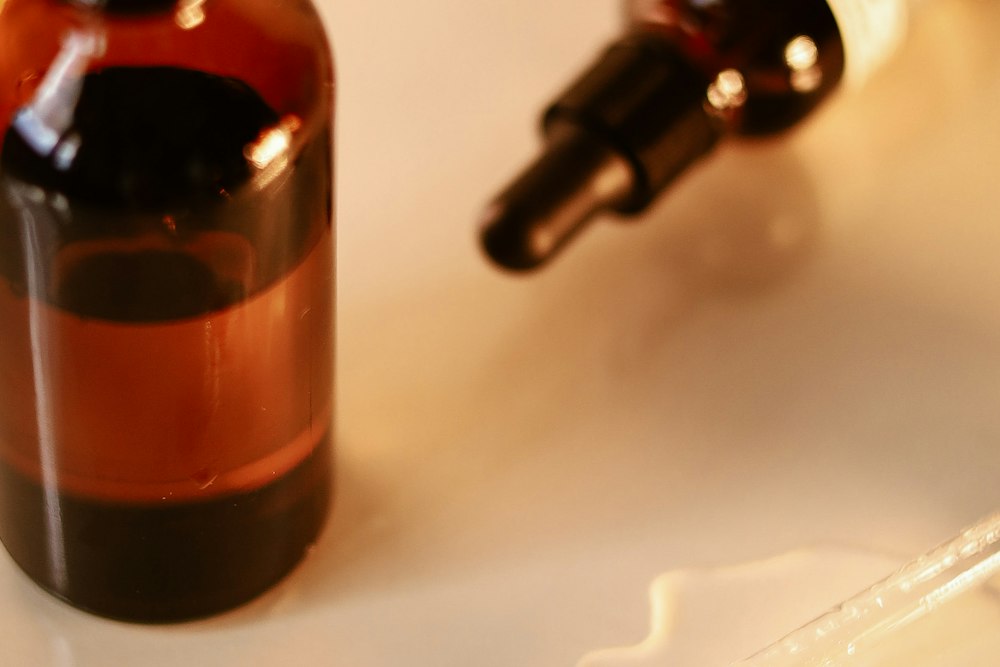
Amber glass bottles and a pipette on a light surface

Washington’s proposed medical cannabis product rules reach a public hearing today, bringing labeling, testing and product classifications into the same discussion. For patients and retailers, the practical question is how clearly a product’s contents and supporting test information can be identified.

The Department of Health’s formal proposal, WSR 26-20-094, lists a November 10 virtual hearing at 11 a.m. Washington time, or noon in Phoenix. It identifies November 17 as the intended adoption date. A hearing and an intended date do not make the proposed language an effective rule.

More than a vocabulary change

The proposal would revise chapter 246-70 of the Washington Administrative Code. Its stated scope includes medical cannabis classifications, certain THC and CBD thresholds, labeling and quality-assurance testing. It also replaces older marijuana terminology with cannabis and proposes a section collecting statutory tax-exemption references.

Those subjects affect different parts of a patient’s encounter with a product. Classification describes the relevant category; testing concerns the evidence behind the product; labeling concerns what information reaches the person choosing it. Treating the entire package as a simple terminology update would overlook its operational implications.

Conversely, the word medical in a regulatory classification should not be confused with a guarantee that a particular product treats a particular condition. The proposal’s product-information approach is about standards and disclosure, not a substitute for evaluating an individual health claim.

A clearer route from label to test information

The draft would require a label link, web address or QR code leading to the certificate of analysis and product-specific pesticide information. It also addresses harvest or production dates and certain terpene information. A medically endorsed retailer would have to provide a hard copy of the analysis when requested by a patient or designated provider.

For a shopper, these provisions concern access as much as data. Information that exists somewhere in a supply chain is less useful if it cannot be matched to the product in hand. A readable link and an available paper copy offer different ways to reach the underlying record.

A certificate of analysis still needs context. Readers should distinguish a laboratory result for a product from a broad promise about how that product will affect an individual. Testing information can help establish what was measured without answering every question about suitability or personal response.

What retailers and producers would need to examine

If adopted, revised labeling requirements would prompt businesses to compare their current labels and information systems with the final text. The useful work starts with identifying the actual fields involved, who supplies them and how they remain connected to the correct product.

A QR code alone does not make a disclosure useful. Its destination needs to work, be understandable and correspond to what the label promises. That is an implementation question readers can recognize without assuming that a proposed technical requirement has already taken effect.

The proposal also preserves a distinction between official medical-grade identifiers and promotional imagery. Its labeling section restricts specific therapeutic claims and certain pharmaceutical-style presentation. Clear compliance information and medical marketing are not interchangeable, even when both appear on packaging.

Tax references need the same care

The proposed new tax section is described as clarifying existing statutory exemptions in one place. It should not be summarized as an announcement that every cannabis purchase will become tax-free. A patient’s eligibility, the product and the retail setting remain separate matters to check against the applicable provisions.

For readers comparing a shelf price with a checkout total, the useful question is which specific exemption applies to which transaction. A general reference to medical cannabis cannot supply that answer by itself. The proposal’s organizational purpose does not remove the need to read the relevant conditions.

Our report on Oregon’s cannabis health update similarly focused on asking precise product questions. Washington’s rulemaking approaches that issue through a different tool: proposed requirements for product standards and the information available to patients.

Follow the final rule after the hearing

The notice accepts written comments through November 10 at 11:59 p.m. and provides submission instructions in the official filing. Anyone checking the process should confirm the latest agency notice, especially if an event or deadline has already passed when reading this story.

The next meaningful checkpoint is the adopted text and its effective date, if the department proceeds. Until then, the accurate description is a medical cannabis standards proposal with a scheduled hearing. That preserves room for public input and possible changes, while giving patients and businesses a concrete set of issues to follow.

A useful label question for that next stage is simple: can a patient reach the relevant product record without guessing which batch or item it concerns? The answer depends on implementation as well as the wording adopted.

Illustrative packaging stock photo; not identified as cannabis or a Washington medical product. Photo: Nataliya Melnychuk / Unsplash.


Continue Reading

Trending

Join The Cannabis Aficionado Community!
Join the Cannabis Aficionado community and receive all of the most relevant news geared towards our sophisticated enthusiast community.
Loading

Copyright ©️ 2026 Cannabis Aficionado. Cannabis Aficionado is a registered trademark of CNM Inc. All rights reserved. Registration on or use of this site constitutes acceptance of our Terms of Service, Privacy Policy and Cookies Policy. People may receive compensation for some links to products and services. Offers may be subject to change without notice.