#cannabisaficionado

Cannabis

Slot RTP Explained For UK Gamblers

Published

on

Advertisement Back2Grow Advertisement

Slot RTP Explained For UK Gamblers

Return to Player, or RTP, is the single most quoted statistic in online slots , and one of the most misunderstood. Put simply, RTP is the percentage of all wagered money a slot machine is designed to pay back to players over millions of spins. A game with 96% RTP returns £96 for every £100 staked, on average, across its entire lifetime. The remaining 4% is the house edge, and it is how operators keep the lights on. For more details, visit www.bonus-world.uk/deposit-match-bonuses/.

For UK players, RTP guidance is generally tighter than in many offshore markets. The UK Gambling Commission requires licensed operators to publish game rules and payout information, which means you can usually find the RTP figure inside the paytable or information screen of a slot before you spin. That transparency is genuinely useful , but only if you know how to read the number correctly.

What RTP is not is a promise. It does not mean you will get 96p back from every £1 you spend in a session, and it says nothing about how volatile a game feels. A high-RTP slot can still drain a balance quickly if its variance is high. Understanding the distinction between RTP and volatility is the foundation of sensible slot play.

How RTP Percentages Actually Work In Practice

RTP is calculated over an enormous number of simulated spins, typically hundreds of millions. Results are averaged, which is why short sessions can swing wildly away from the theoretical figure. You might play a 96% slot for an hour and finish well ahead, or well behind, without the RTP figure being “wrong” in either case.

Regulated UK slots commonly sit between 94% and 97%. Land-based machines in UK venues often run lower, sometimes around 90-92%, so online play frequently offers better theoretical value. Anything at 96% or above is generally considered a strong RTP among UK-facing titles.

Watch for variable RTP. Some developers ship the same game with multiple RTP settings , for example 96%, 94% and 92% , and the operator chooses which version to run. The difference between 96% and 92% is roughly £4 per £100 wagered over time, which is significant. Always check the in-game paytable for the configured figure rather than trusting a third-party review.

RTP Band House Edge General Reading
97%+ Under 3% Excellent for players
96% 4% Industry benchmark
94-95% 5-6% Acceptable
Below 92% 8%+ Poor value

It is also worth remembering that RTP includes wins from all features, bonus rounds and jackpots. A game’s headline figure assumes the full paytable is active , so if a progressive jackpot contribution is taken from each stake, the base-game RTP you experience will be lower than the advertised number.

RTP, Volatility And Session Budgets

RTP tells you the long-run cost of play; volatility tells you the ride. Low-volatility slots pay smaller amounts more frequently, while high-volatility games can go long stretches without a meaningful win. Matching volatility to your budget matters more than chasing the highest RTP.

A practical approach used by many UK players is to work out the expected hourly cost. If you spin 600 times an hour at £0.50 per spin, that is £300 wagered. At 96% RTP, the expected loss is £12 per hour; at 92%, it is £24. The maths is not a guarantee, but it frames the session realistically.

Finally, treat RTP as one data point among several. Check the configured figure in the paytable, understand the volatility, set a stake that suits your balance, and use deposit limits where offered. If gambling stops being fun, support is available through GamCare and BeGambleAware. Players must be 18 or over, and RTP figures should always be verified inside the game itself before you commit real money.

  • Always confirm the RTP inside the game’s information screen
  • Compare RTP and volatility together, never in isolation
  • Calculate expected hourly cost from spin count and stake
  • Use deposit limits and time-out tools where available

Cannabis

Owen Trout’s Rugby League Case Shows How THC Rules Apply on Match Day

Published

on

UK Anti-Doping disclosed on November 5 that rugby league player Owen Trout had served a one-month suspension following a March test for a THC metabolite. The announcement closes a case that began at a Super League match between Wakefield Trinity and Leigh Leopards, Trout’s club at the time. It also shows how a cannabis finding can trigger a violation even when an expert concludes the player most likely consumed THC outside the competition window.

What happened and when

The statement published by the Rugby Football League says UK Anti-Doping collected a urine sample on March 20 during competition. Analysis identified carboxy-THC, a metabolite of tetrahydrocannabinol. UKAD provisionally suspended Trout on May 22 and charged him on July 20 under the rule governing the presence of a prohibited substance, its metabolites or markers. He admitted the charge.

UKAD credited Trout for time spent under provisional suspension. It therefore treated the one-month sanction as running from May 22 through June 21. By the time the decision was announced in November, he was free to participate in sport. The announcement date, the date of the test and the dates of the ban describe three different steps. A reader who sees the statement this week should understand that the sanction had already expired.

Why the date of use mattered

Under the rule described by UKAD, THC is prohibited in competition. That distinction applies to the testing context. It does not mean that an athlete who uses cannabis before the competition window can assume the substance or a metabolite will be absent when a sample is collected. In Trout’s case, an independent scientific expert concluded that his ingestion most likely occurred outside the window, before 11:59 p.m. on March 19.

That finding helped determine the length of the sanction. UKAD explains that when an athlete establishes that use of a designated substance of abuse occurred outside competition and was unrelated to sports performance, the rules provide for a three-month period of ineligibility. Completing an approved treatment program can reduce that period to one month. UKAD said Trout supplied satisfactory evidence that he had completed an approved program. The one-month outcome followed the evidence and the process in this case.

The distinction between the finding and the sanction is important. The charge concerned what was present in a sample collected during competition. The inquiry into timing addressed how the rules applied to the circumstances of use. Those are separate questions, and the expert’s conclusion about timing did not undo the laboratory result. It gave UKAD evidence it could consider in determining how long the sanction should last.

What competitors can take from the case

Start by checking which anti-doping rules govern the sport and competition. The term in competition has a defined meaning, and a match’s kickoff time alone does not establish when the testing window begins. A player planning around a fixture also needs to consider that the timing of consumption and the timing of a detectable result are distinct. The dates in this case explain UKAD’s decision. They cannot be used to predict what a future sample from a different athlete will show.

Product names can also obscure what matters. A gummy, oil or other preparation may be sold under a broad cannabis or hemp label. An athlete needs the applicable rules and reliable information about the product’s contents before making a decision about it. Even within one sport, it is worth checking current guidance from the governing body for the relevant season instead of relying on a headline about another league or another country.

For coaches and teams, the case offers a practical reason to make the rules easy to find before the season begins. Players should know where to check the current list, whom to ask about a specific ingredient and where to get confidential help interpreting the policy. A short briefing on the difference between a prohibited substance, a positive finding and the factors that influence a sanction would also make decisions like this one easier to understand when they become public.

For fans following Trout’s case, the clearest reading is chronological. A March sample produced a finding. UKAD later brought a charge and considered evidence about when use occurred and whether an approved program had been completed. Credit for the provisional suspension meant the sanction ended in June. November brought public disclosure of the decision, several months after the period of ineligibility had already run.

The case also illustrates why public announcement dates are a poor proxy for whether an athlete is currently eligible to play.

Illustrative stock photo. Sergey Omelchenko / Unsplash.

Continue Reading

Cannabis

A 2,800-Year-Old Siberian Tomb Offers New Evidence of Cannabis Use

Cannabis seeds and preserved hair from a Siberian burial offer two clues to how people used the plant 2,800 years ago.

Published

on

Open grassland with low hills in Hulunbuir, Inner Mongolia

A burial mound in southern Siberia has yielded two clues to the history of cannabis: seeds placed in a grave and chemical traces preserved in human hair. In a study published November 5 in Science, archaeologist Gino Caspari and colleagues argue that the finds, taken together, point to psychoactive cannabis use about 2,800 years ago. The discovery pushes the evidence for that practice further back than a widely cited find in western China.

What turned up at Tunnug 1

The excavation site, Tunnug 1, lies in the Uyuk Valley in the Republic of Tyva. Its monumental burial mound is associated with early Scythian culture, and the excavations have recovered horse gear, weapons and animal imagery. The clues to cannabis use were considerably smaller. The team found more than a thousand cannabis seeds and used radiocarbon dating on some of them to establish their age. According to the University of Bern’s account of the research, preserved human hair from the same grave also contained traces of cannabinol, or CBN.

Seeds can tell archaeologists that a plant was present. They can also help show whether someone brought it into a particular setting. At Tunnug 1, where the researchers interpreted the seeds as deliberately deposited, the find makes cannabis part of the burial’s material record. It still leaves a basic question open. Cannabis can provide food, oil and fiber, so the presence of seeds alone offers several plausible explanations for why people valued the plant.

The hair gives researchers another line of evidence. CBN can form as THC degrades, and its presence is consistent with exposure to psychoactive cannabis. The overlap matters because each find answers a different question. The seeds place cannabis in the burial context. The hair preserves a chemical signal relevant to how people may have used it. Together, they give the team a stronger basis for its interpretation than either clue would provide on its own.

What the evidence can tell us about consumption

As the Associated Press reported, Caspari said the team could not determine whether the cannabis was inhaled or ingested. The distinction matters for anyone imagining what the practice looked like. The evidence supports a case for exposure, while the method, timing and experience remain open questions. It also leaves room for several explanations of why the seeds went into the grave. Their placement gives them a ceremonial context, but their precise role in that ceremony remains unclear.

There is a temptation to read a burial deposit as a snapshot of daily life. A monumental tomb, however, reflects choices about what to place with the dead and what to leave out. Even a plant that held real significance in that setting might have served different purposes elsewhere. To know how widely people used cannabis, archaeologists would need evidence from other settings, including places where ordinary activities took place.

How Siberia changes the timeline

One point of comparison comes from the Jirzankal Cemetery in the Pamir Mountains of western China. In a 2019 study in Science Advances, researchers reported cannabis residues in wooden braziers from burials dating to roughly 2,500 years ago. Those objects gave the team a reason to infer that cannabis had been heated. The Siberian discovery is about three centuries older, and its evidence comes from different materials. One site offers evidence in equipment used in a burial setting. The other combines a botanical find with a chemical trace in human remains.

Written accounts give historians a third kind of evidence. The Greek historian Herodotus described Scythians using cannabis in the fifth century BCE. His account has long been part of the discussion because it describes a practice in words. Tunnug 1 gives researchers something they can examine independently of the text. It also predates that account, extending the timeline without requiring researchers to assume that the people at the Siberian burial practiced the same ritual Herodotus described.

What survived at Tunnug 1 is unusual. The record of ancient cannabis use depends on the chance that someone left behind material that could survive burial, that archaeologists recovered it, and that modern analysis could identify it. Another site might yield seeds without hair, or a vessel without enough residue to test. Those gaps make it difficult to say how long the practice had already existed by the time this tomb was built.

For now, the finding gives cannabis history a firmer point on the map and a date supported by physical evidence. By about 2,800 years ago, people in this part of southern Siberia appear to have encountered cannabis as an intoxicant. The circumstances of that use, from preparation to purpose, are the next questions the find leaves open.

Illustrative photo of grassland in Inner Mongolia, China. Photo: Charles MingZ / Unsplash.

Continue Reading

Cannabis

Waveform Brings Two California Cannabis Distributors Under One Name

The combined distributor has a new name and ordering platform. The November launch follows the August merger close.

Published

on

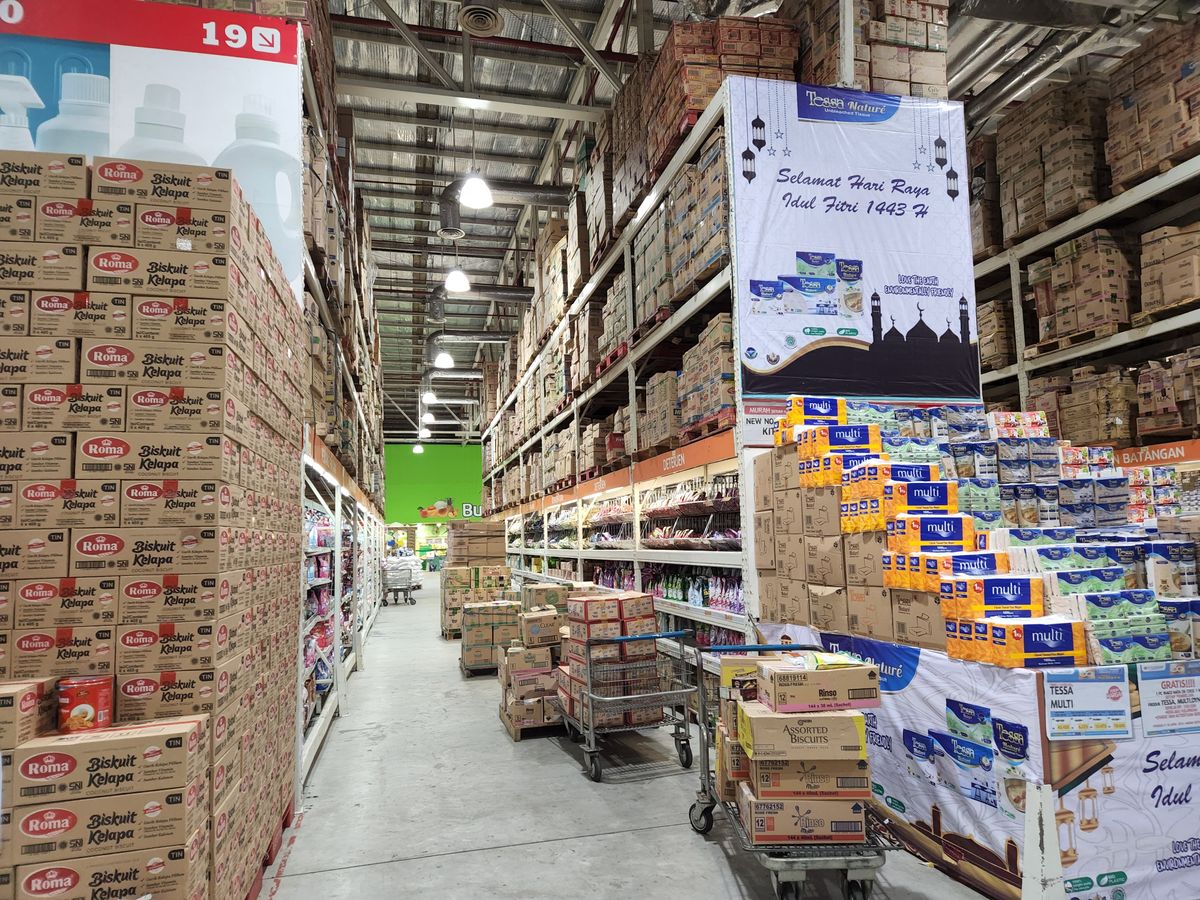
Warehouse aisle with tall shelves and stacked cartons

Two California cannabis distributors have started doing business under one name. Kiva Sales & Service and Petalfast introduced Waveform Sales & Logistics on November 3, following the August closing of their merger. The change is most visible to the retailers and brands that place and fulfill wholesale orders. It also offers a look at the work that goes into making a cannabis product available in the first place.

The November 3 company announcement, distributed by PR Newswire, says the combined business serves 975 active stores, represents 48 California brands and handles about 30,000 retail deliveries annually. Those are company figures describing the scale of the network. They do not tell a buyer how many stores carry a particular product or how frequently one shop reorders it.

The deal closed in August. The new name arrived in November.

The businesses announced the completed merger on August 25 and identified August 17 as the closing date. November marks the introduction of the combined identity and operating platform. The dates matter for anyone tracking the deal: the latest announcement describes what the companies are putting under the Waveform name after the transaction.

The companies’ August announcement described a service for brands that run their own sales teams, alongside fuller partnerships with more retail sales support. The November release presents three service tiers and describes a platform that combines an ordering marketplace, customer relationship tools and inside sales. For a brand with its own retail contacts, the practical question is which responsibilities it wants to keep. A company that needs help winning accounts may evaluate a different package from a business that has buyers lined up and needs a way to fulfill orders.

For retailers, the distinction is between discovering a product, placing an order and receiving it. A shared ordering platform may change how a buyer handles the first two steps. To assess the third, a store needs to know what was delivered and when, whether the shipment matches the order and how shortages are handled. A count of deliveries provides a sense of scale. It cannot answer those questions for a particular order.

What distribution does before a delivery

California’s Department of Cannabis Control distribution guidance explains that cannabis transport requires a distribution license and that the applicable license depends on the activity. Full distributors have responsibilities that extend to regulatory testing and quality assurance before eligible goods head to retail. A sales portal and a delivery schedule sit alongside that process.

The department’s sampling checklist gives a concrete example. The distributor must possess the entire batch before arranging for compliance testing. Cannabis products and pre-rolls generally have to be in their final retail packaging and labeling when sampled, while flower can be sampled in bulk. After passing testing, the batch can move to authorized licensees and the certificate of analysis travels through the supply chain. Each of those steps concerns a particular batch, even if the retailer’s ordering screen presents several items under one brand.

Our coverage of federal medical cannabis registrations looked at a separate set of supply chain obligations. Waveform’s launch concerns a California distribution business. Readers following both stories should keep the state rules for getting goods to California retailers separate from the federal requirements discussed in that earlier report.

What to watch at the store level

For a shopper, the useful measure is whether a familiar item is on the shelf when they want it. A distributor can expand the number of retailers a brand can approach, but the retailer still makes its own buying decisions. Local availability also depends on inventory after the delivery arrives. The company’s list of brands and stores describes the overall network, so use a current store menu or ask the retailer directly for a specific package.

The launch leaves practical questions for both sides of the wholesale relationship. A brand can ask which parts of sales, invoicing and fulfillment are included in its tier. A retailer can ask whether its point of contact, ordering process or delivery window has changed. Over time, the clearest evidence of how the integration is working will come from ordinary orders: whether stores can find what they need, receive what they ordered and get a clear answer when something changes.

That evidence would also help separate the reach of the combined operation from the performance of individual service tiers. A brand handling its own sales may judge the partnership by delivery coverage and turnaround. One relying on the distributor to develop accounts may look first at repeat orders from stores it could not previously reach.

Illustrative warehouse photo showing general merchandise. Photo: Antonius Natan / Pexels.

Continue Reading

Trending

Join The Cannabis Aficionado Community!
Join the Cannabis Aficionado community and receive all of the most relevant news geared towards our sophisticated enthusiast community.
Loading

Copyright ©️ 2026 Cannabis Aficionado. Cannabis Aficionado is a registered trademark of CNM Inc. All rights reserved. Registration on or use of this site constitutes acceptance of our Terms of Service, Privacy Policy and Cookies Policy. People may receive compensation for some links to products and services. Offers may be subject to change without notice.