#cannabisaficionado

Sports

Sovereignty’s Classic Farewell Comes With a Separate CBD Rulebook

Sovereignty ended his racing career with a Keeneland Classic win. For cannabis-aware sports fans, racing’s CBD classification deserves a separate look.

Published

on

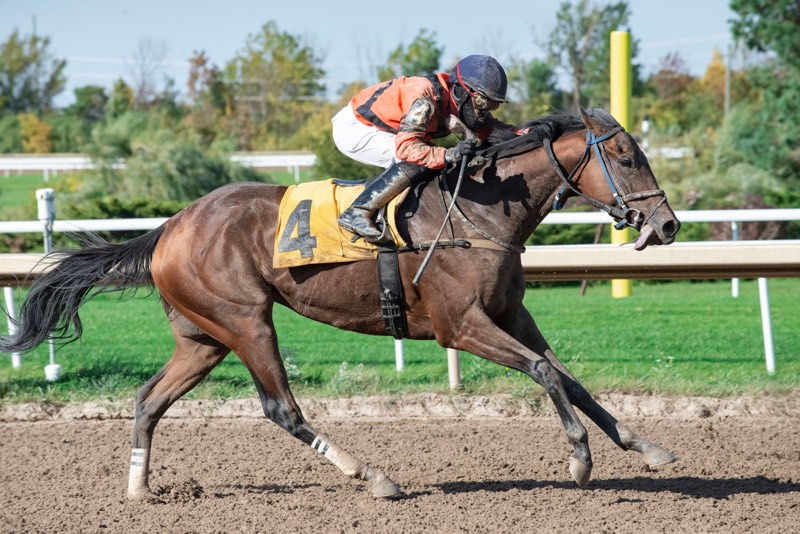
A jockey riding a dark horse on a racecourse.
Advertisement Back2Grow Advertisement

Sovereignty ended his racing career with a victory in the October 31 Longines Breeders’ Cup Classic at Keeneland, beating The Puma and Knightsbridge in the championship’s closing race. The win gives sports fans a clear result to celebrate and a new chapter to follow as the colt moves toward the breeding shed.

For cannabis-minded readers, there is also a useful distinction behind the racing spectacle: CBD has its own classification under the sport’s medication rules. Familiarity with human wellness products does not establish what is permitted for a racehorse. Nothing in this report alleges cannabinoid use or a medication violation by any horse or participant named here.

A decisive finish at Keeneland

The Breeders’ Cup’s official recap records Sovereignty’s winning margin as one and three-quarter lengths in the $7 million Classic. Junior Alvarado rode the Godolphin-owned and bred four-year-old for trainer Bill Mott. The Puma finished second, with Knightsbridge third.

The winner completed the mile and a quarter in 2:00.36. The seven-horse field included defending champion Forever Young, who finished fifth. These are the October 31 race results, rather than a preview of a championship still to come. The distinction matters when older entries and pre-race assessments continue circulating after the event.

The race organizer’s account describes Sovereignty’s career as concluding with eight wins from 13 starts. It also marks Mott’s third Classic victory. The result supplies a sporting endpoint; it does not, by itself, establish anything about the medical management of the individual runners.

The next chapter is already identified

Darley’s October 31 announcement says Sovereignty is set to join its stallion roster at Jonabell Farm. It places the Classic alongside a record that includes the Kentucky Derby, Belmont Stakes, Travers and Whitney. The announcement also identifies Knightsbridge as joining Darley America’s stallion ranks in 2027.

That shift changes what followers should watch next. A racing retirement ends one kind of competition, while a stallion announcement concerns a different commercial and breeding role. Neither should be confused with an upcoming race entry or an assurance about the future performance of offspring.

Darley identifies Sovereignty as a son of Into Mischief. The pedigree is part of how a stallion prospect is described, but ancestry should not be mistaken for a prediction. The competitive record belongs to this horse; future offspring will have their own results.

Where CBD fits in racing

The Horseracing Integrity and Welfare Unit’s current substance lookup lists cannabidiol, or CBD, as a controlled substance with HISA status S7 B. That is a specific classification. It should not be casually rewritten as either an unrestricted supplement approval or a claim that CBD belongs to the separate banned-substance category.

The useful lesson is to consult the rulebook governing the animal and competition involved. A product’s availability in a store is a different fact from its status under an anti-doping and medication-control program. Marketing language such as natural or hemp-derived does not answer the regulatory question.

This classification also does not establish that a product is an effective treatment for a particular horse. Competition compliance, veterinary judgment and evidence of clinical benefit are separate questions. A consumer headline cannot provide an individualized medication plan or a safe withdrawal interval.

Labels are only the start of a supplement check

In a May 19 advisory, HIWU explains that it and HISA do not approve, certify or endorse dietary supplements as permitted products. Its lookup searches individual ingredients, rather than supplement brand names. The advisory concerns supplement due diligence generally, not a finding about the Classic field.

HIWU warns that an ingredient missing from the lookup is not automatically permitted, and that a label may not reveal every substance actually present. It directs questions about ingredients to its science team. Those limits make a self-issued clean label an insufficient basis for assuming compliance.

For owners and trainers, the practical step is to work with the appropriate veterinary and regulatory professionals using the current rules and the exact product involved. For fans, it is to avoid treating an unfamiliar substance category as a shortcut to a doping allegation.

Keep the result and the rules in perspective

Our marathon results and CBD coverage makes a related point about sport-specific guidance. The existence of one rule in a human competition does not decide the rules for horses, nor does an athlete’s result disclose what products they use.

Sovereignty’s farewell remains a racing story: a champion won his final start on October 31. The cannabis connection is a separate, factual look at CBD’s place in the sport’s regulatory framework. Following both subjects responsibly means celebrating the verified performance while keeping treatment claims, supplement marketing and compliance questions distinct.

Illustrative racing photograph; not Sovereignty, Alvarado or the 2026 Breeders’ Cup. Photo: @coldbeer / Pexels.

Cannabis

New York Marathon Crowns Almgren and Chepkirui as Runners Face a Separate CBD Question

Sunday’s results delivered a debut victory, a returning champion and a close American podium finish. CBD’s place in sport remains a separate question.

Published

on

White lane markings on an empty red running track

Andreas Almgren won his marathon debut and Sheila Chepkirui reclaimed the women’s title at the November 1 TCS New York City Marathon. The World Athletics results list their winning times as 2:06:01 and 2:24:36, respectively, after a race weekend that brought the running world back to New York.

For cannabis-aware runners following the race, there is also a practical distinction worth keeping clear: enjoying running culture and shopping for a CBD product are different from complying with competition rules. Anti-doping guidance applies to substances, not a product’s wellness branding. Nothing in the race results establishes cannabis use by any of the athletes named here.

The men’s race rewarded a first attempt

Sweden’s Almgren finished 13 seconds ahead of Italy’s Yemaneberhan Crippa, who ran 2:06:14. Kamohelo Mofolo of Lesotho completed the podium in 2:06:26, just one second ahead of fourth-place Benson Kipruto. Those official times show how close the contest remained behind the winner.

The leading American was Zouhair Talbi, sixth in 2:06:43. Ahmed Muhumed placed eighth in 2:07:09, Ryan Ford tenth in 2:07:17 and Conner Mantz eleventh in 2:07:27. For readers scanning beyond the winner, that group gives a fuller picture of the American men’s presence near the front.

New York Road Runners’ post-race account describes Almgren staying with the lead group before making his decisive move with roughly a mile remaining. The organizer says he became the first Swede to win any division at the event. His debut therefore carried significance beyond simply adding another name to the results sheet.

Chepkirui returns to the top

Chepkirui’s 2:24:36 gave the Kenyan another New York victory after her 2024 title. American Jessica McClain finished second in 2:24:42, with Hellen Obiri third in 2:24:43. At the resolution of the published results, six seconds separated first from second and one second separated second from third.

NYRR describes McClain overtaking Obiri in the final meters. It also identifies her finish as the first open-division podium by an American woman at the race since Shalane Flanagan’s third place in 2018. That combination of a returning champion and a late change in podium order gave the women’s race its own distinct story.

In the wheelchair divisions, the organizer reports Swiss victories for Marcel Hug and Catherine Debrunner. Hug’s 1:28:14 extended his event record to eight wins; Debrunner finished in 1:40:02. These are separate competitive divisions, and their results belong alongside the open races in an account of the day.

Why CBD labels do not settle the rules

As runners move from race coverage back to training and product choices, the U.S. Anti-Doping Agency’s CBD guidance offers a relevant cannabis connection. CBD itself is permitted under World Anti-Doping Agency rules, while other cannabinoids remain prohibited in competition. USADA warns that a product sold as CBD can contain other cannabinoids, including THC.

The agency also emphasizes athlete responsibility for substances found in a sample. Third-party certification can reduce contamination risk, but does not eliminate it. A reassuring label is consequently not the same thing as a guarantee that a product is compatible with an athlete’s obligations.

This does not mean every recreational runner faces an identical testing program. It means runners subject to anti-doping requirements need to identify the rules that actually govern them. State retail availability, a friend’s recommendation and a manufacturer’s recovery language answer different questions from the competition’s substance policy.

There is a health question alongside the eligibility question. FDA’s consumer guidance warns that CBD can affect other medicines and cause adverse effects, including changes in alertness. The agency says most retail CBD products have not undergone its evaluation for effectiveness, dosage or interactions. A product clearing one sports-policy question would not resolve those separate issues. Runners should bring the exact product and their medication list to a qualified healthcare professional, rather than infer suitability from a race-weekend advertisement or an elite athlete’s finishing time.

A result is not a recovery study

The performances in New York are evidence of what happened in the race. They are not evidence that CBD improves recovery, that cannabis helps marathon performance or that a particular product is safe for an individual runner. Drawing those conclusions would require different evidence from a finishing table.

Our earlier New York marathon cannabis and CBD guide addressed the race-weekend context. Sunday’s newly available results now add the competitive outcome. The useful next step for fans is to read the newly published official standings; for athletes considering cannabinoid products, it is to check the applicable rules and seek qualified advice about personal health questions.

Illustrative stock running track; not the New York City Marathon road course or race. Photo: KoolShooters / Pexels.

Continue Reading

Cannabis

Cannabis Survey Finds a Conversation Gap in Contact Sports

A newly published survey points to an education and communication problem around cannabinoids, while its methods place clear limits on broad claims about athletes.

Published

on

Pilates reformer machines in a sunlit studio with brick walls

A newly published study in Sports Health puts cannabis conversations inside the training room under scrutiny. The research, first published online October 21, surveyed elite and professional contact-sport athletes and medical or training personnel about cannabinoids. Its central subject is a gap between interest in these products and confidence discussing them.

For cannabis-minded sports readers, this is a useful shift from celebrity anecdotes to the relationship between athletes and the people responsible for their care. The findings concern reported experiences and perceptions. They do not establish that cannabis improves performance or that any particular team has changed its rules.

Read the denominator beside the headline

The study includes 166 athlete respondents and 64 medical or training staff. Participants could skip questions, so the number answering changes across the paper. In the results section, the widely repeated finding that 56 percent currently used cannabis or cannabinoid products is presented in a subsection referring to 105 respondents.

That detail changes how a reader should describe the result. A percentage attached to one survey item should travel with its relevant sample, rather than become a claim about every person who entered the study or about professional sport as a whole. The full paper is more useful than a detached percentage circulating online.

A survey measures reported experience

The authors used anonymous online questionnaires and recruitment through sporting networks, personal contacts and peer sharing. They could not calculate a response rate. Their limitations section identifies self-selection and self-report as concerns, and cautions against generalizing the results or drawing causal conclusions.

In practical terms, people especially interested in cannabis may be more inclined to answer a survey about it. Memories and willingness to disclose can also shape responses. Those possibilities do not erase what participants said; they define the kind of evidence available and the questions a stronger follow-up study would need to address.

Interest and understanding are different measures

The researchers describe educational needs on both sides of the athlete-provider relationship. That is a different finding from demonstrating that a product is effective. Someone can believe a substance helps, want to learn about it and still lack reliable information about its ingredients or possible interactions.

For readers, the useful distinction is between a report of use, a report of perceived benefit and a controlled test of an outcome. A questionnaire can explore the first two. Establishing an effect on recovery, sleep or competition performance requires research designed to evaluate that particular question.

It is also worth separating a request for better communication from an endorsement of a treatment. A clinician can invite an accurate account of what someone takes while continuing to assess evidence, risks and the rules governing that person’s sport. Openness does not require a predetermined answer about a product.

The rulebook still matters

USADA’s cannabinoid guidance explains that CBD is permitted under World Anti-Doping Agency rules, while other cannabinoids are prohibited in competition. It also warns that CBD products can contain prohibited cannabinoids, and that athletes subject to those rules are responsible for substances found in their samples.

That distinction prevents a common shortcut: treating a CBD label as assurance that a finished product is acceptable for competition. The permitted status of one compound does not certify every ingredient in a bottle, gummy or powder. USADA further says third-party certification reduces, but does not eliminate, contamination risk.

Readers should also avoid exporting one framework to every league. The applicable governing body, competition rules and any medical-exemption process need to be identified for the actual athlete. This survey is not a new anti-doping policy, a clearance certificate or permission to ignore a team’s requirements.

What better evidence would look like

A useful next study could make recruitment and item-level samples especially clear, include a broader range of participants and distinguish products and reasons for use. Repeated measurements could examine whether an education program changes knowledge or willingness to talk. A clinical trial would answer a different question about a specified intervention.

Those research tasks should stay separate when the findings enter public discussion. Better disclosure, better information and demonstrated therapeutic outcomes are related interests, but one cannot stand in for all three. The current paper gives sports organizations questions to investigate rather than a universal cannabis prescription.

For fans and participants following the plant’s place in sport, the most useful takeaway is the need for a more precise conversation: which product, which evidence, which rulebook and which person’s circumstances? Keeping those questions visible is more informative than turning a survey percentage into a verdict on cannabis and athletics.

Illustrative stock Pilates studio; not a contact-sport team facility or study location. Photo: Karl Solano / Pexels.

Continue Reading

Cannabis

Moicano–Nolan Sets Up a Halloween Fight Night in Las Vegas

The lightweight main event leads a full Halloween card, with an important distinction for cannabis-minded visitors: legal retail does not mean consumption at a sporting event.

Published

on

Empty boxing ring in a bright gym with tall windows

Renato Moicano and Tom Nolan headline UFC Fight Night at Meta APEX in Las Vegas on Saturday, October 31. UFC’s current event page lists prelims at 2 p.m. and the main card at 5 p.m. for Phoenix viewers, giving Halloween an afternoon-to-evening sports option before the night’s other plans.

For cannabis-minded fans considering a Las Vegas visit, the useful connection is the setting and its rules. Nevada permits regulated adult-use cannabis, but that does not make a fight ticket permission to consume at the event. The distinction matters when a weekend combines a sporting venue, a hotel and an interest in the city’s cannabis scene.

A lightweight main event with two different positions

The current card places Moicano at No. 12 and Nolan at No. 14 in the lightweight matchup. Those are the rankings displayed on the event listing when checked, rather than numbers carried forward from an earlier announcement. The promotion’s September ticket release had a different ranking for Moicano, illustrating why the live card is the better starting point.

UFC’s September announcement explains how the matchup took shape: an injury to Brian Ortega removed his planned bout with Moicano from UFC 331, after which Moicano was assigned Nolan for October 31. That is the scheduling history, not a suggestion that Ortega is part of Saturday’s card.

For a viewer, the main event supplies a straightforward point of entry: two ranked lightweights meeting at the top of a Fight Night program. It is possible to follow that contest without treating the rest of the evening as background. Earlier bouts introduce different divisions and can change the pace of a viewing session well before the headliners enter.

What the current main card includes

UFC lists Randy Brown against Jacobe Smith at welterweight, Ode’ Osbourne against Cody Durden at flyweight, and Yana Santos against Luana Santos at women’s bantamweight. The Santos matchup is displayed as No. 6 against No. 7. Jean-Paul Lebosnoyani against Farman Hasanov is also listed at welterweight.

Those pairings make this more than a single-fight appointment. Fans interested in the smaller weight classes can note the flyweight bout, while the two welterweight matchups offer another thread to follow. This is a guide to the advertised card, not a prediction of winners or a report that the fights have already happened.

Cards can change. Use the official event page again on Saturday if a particular matchup is the reason for watching or traveling. Promotional announcements are useful records of what was planned; they should not override a later organizer update.

There is a full preliminary program

The current prelims include Francis Marshall against Dakota Hope at featherweight, Rodrigo Sezinando against Theodor Berggren at welterweight, and Julian Erosa against Jeongyeong Lee at featherweight. At middleweight, Zachary Reese is listed against Mickey Gall and Nick Klein against Joe Kropschot.

The women’s preliminary bouts listed are Talita Alencar against Piera Rodriguez at strawweight and Lucia Szabová against Tainara Lisboa at flyweight. Someone watching from the opening broadcast will therefore see several divisions before the main-card start. Someone joining later should use the scheduled main-card window rather than assume it is the headliners’ exact walkout time.

How to watch from Phoenix

UFC’s official broadcast announcement lists Paramount+ for the entire U.S. card: prelims at 5 p.m. Eastern and the main card at 8 p.m. Eastern. On October 31, that corresponds to 2 and 5 p.m. in Phoenix and Las Vegas.

Check the service’s current access requirements and local availability before settling on a viewing location. The preliminary and main-card times describe broadcast blocks, not guaranteed start times for individual bouts. Leave room for the program to unfold rather than organizing a watch party around an assumed minute for the main event.

For attendance rather than streaming, UFC’s event page links to its authorized ticket seller; check current availability there.

Keep the cannabis plan separate from venue access

The Nevada Cannabis Compliance Board says adult-use buyers must be at least 21 and purchase from a state-licensed retailer. It prohibits public consumption and consumption in a moving vehicle, including by passengers. Licensed consumption lounges are a distinct permitted setting; a sports venue is not automatically one.

The board also says private-property consumption depends on the owner allowing it and warns against impaired driving. Plan transportation before any consumption and confirm property rules rather than assume a hotel booking settles them. None of this implies cannabis use by Moicano, Nolan or any other athlete. It gives fans a practical way to enjoy the fight weekend while keeping the event, the accommodation and cannabis permissions clear.

Illustrative stock boxing gym; not the UFC Octagon, Meta APEX or the October 31 event. Photo: Ron Lach / Pexels.

Continue Reading

Trending

Join The Cannabis Aficionado Community!
Join the Cannabis Aficionado community and receive all of the most relevant news geared towards our sophisticated enthusiast community.
Loading

Copyright ©️ 2026 Cannabis Aficionado. Cannabis Aficionado is a registered trademark of CNM Inc. All rights reserved. Registration on or use of this site constitutes acceptance of our Terms of Service, Privacy Policy and Cookies Policy. People may receive compensation for some links to products and services. Offers may be subject to change without notice.