#cannabisaficionado

Fashion

Visionary Designer Virgil Abloh Dies Aged 41

Published

on

Advertisement Back2Grow Advertisement

Virgil Abloh, the visionary founder and CEO of Off-White and menswear designer for Louis Vuitton, died Sunday of cancer, according to a post from his verified Instagram account.

“We are devastated to announce the passing of our beloved Virgil Abloh, a fiercely devoted father, husband, son, brother, and friend. He is survived by his loving wife Shannon Abloh, his children Lowe Abloh and Grey Abloh, his sister Edwina Abloh, his parents Nee and Eunice Abloh, and numerous dear friends and colleagues. For over two years, Virgil valiantly battled a rare, aggressive form of cancer, cardiac angiosarcoma. He chose to endure his battle privately since his diagnosis in 2019, undergoing numerous challenging treatments, all while helming several significant institutions that span fashion, art, and culture. Through it all, his work ethic, infinite curiosity, and optimism never wavered,” the Instagram caption read. “Virgil was driven by his dedication to his craft and to his mission to open doors for others and create pathways for greater equality in art and design. He often said, “Everything I do is for the 17-year-old version of myself,” believing deeply in the power of art to inspire future generations.”

In a statement, Louis Vuitton Moet Hennessy CEO Bernard Arnault said, “We are all shocked by this terrible news. Virgil was not only a genius designer and a visionary, he was also a man with a beautiful soul and great wisdom. The LVMH family joins me in this moment of great sorrow and we are all thinking of his loved ones on the passing of their husband, father, brother, son and friend.”

Fashion

Braintree Hemp Enters a November Clearance Window at Stewart’s

An Australian stockist says Braintree Hemp’s range will end after November. What its current listings establish about the clothes, timing and remaining stock.

Published

on

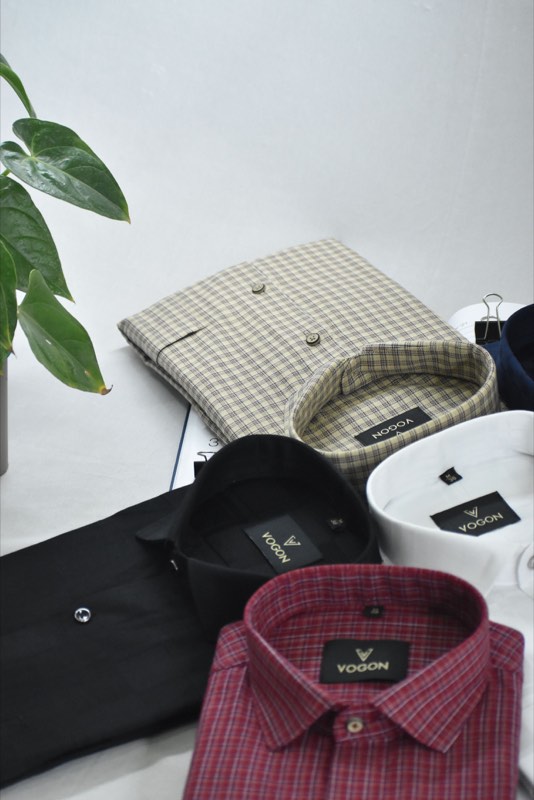
Folded shirts in different colors arranged beside a green plant.

Australian retailer Stewart’s Menswear is clearing Braintree Hemp clothing as November begins, telling customers that the range will no longer be available after this month. The Mullumbimby store attributes the change to the business owner’s retirement. Its notice puts a familiar name in Australian hemp clothing into a final-stock window rather than announcing another seasonal launch.

The cannabis connection is in the fabric: hemp brings the plant into ordinary shirts, tees and beachwear. For readers interested in wearing hemp, the immediate questions are concrete. Which garments actually contain it, which sizes remain, and what does the seller’s November notice establish?

A stockist’s notice, with an important boundary

On its Braintree collection page, Stewart’s says it has stocked customer favorites and reduced seasonal shirts. The retailer describes the business as retiring after three decades and says there will be no further stock once the range sells out. The page does not provide a separate dated retirement announcement from Braintree’s owner.

That distinction keeps the story in proportion. This is a current stockist’s account of its range and clearance, not independent confirmation of every retailer’s inventory or a precise worldwide shutdown date. Readers buying from another seller should check that seller’s actual stock and terms rather than assume the same timetable applies everywhere.

The label has a longer material history

Braintree’s own background page dates its start to Sydney in 1995. It describes a business spanning design, importing, manufacturing, wholesaling and retailing, with fabrics including hemp, bamboo, soy, organic cotton and rayon. Its assortment extends beyond a single pure-hemp fabric.

That history makes the composition label more useful than the brand name alone. A garment from a hemp-focused label can be a blend, and the blend can differ from one product to another. The relevant evidence is the specification for the particular piece, especially when comparing a knitted tee with a woven shirt or relaxed shorts.

Two listings show the difference

Stewart’s short-sleeve button tee listing specifies 55 percent hemp and 45 percent cotton, with a wide two-button placket. Its displayed sale price is A$30, reduced from A$59.99. The page lists green, natural and red options, but the presence of a color or size selector does not guarantee that every combination can be purchased.

The beach shorts listing describes a different blend: 55 percent hemp and 45 percent bamboo, with an elastic waist. It displays A$64.99 and shows unavailable variant labels. These are examples of the range’s construction, not a promise that a reader will find their size still in stock.

For someone comparing pieces, those differences affect the questions to ask. Check measurements for the intended silhouette, the waistband construction and the care instructions on the actual garment. A lower price does not resolve a fit problem, particularly if replacement stock is becoming limited.

Keep care and environmental claims specific

The tee page recommends machine washing in warm or cold water and drying in shade. Buyers should still retain the garment’s own care label. Product instructions are more useful than assuming all hemp blends can be treated identically, especially when other fibers, dyes and trims are involved.

Both the brand and retailer promote environmental advantages for hemp. Those claims are part of their sales presentation; this publication has not measured the footprint or tested the durability of these garments. Fiber identity alone does not establish the impacts of processing, dyeing, transport or the number of times a piece will actually be worn.

Buy through the correct seller

Braintree’s shipping and returns page distinguishes purchases made directly from the brand from those made through retailers. It says third-party purchases must be returned to the place of purchase. Its own direct-sale terms should therefore not be assumed to govern an order placed with Stewart’s.

Before paying, confirm the chosen seller’s delivery coverage, final shipping charge, return conditions and current availability. Prices here are Australian dollars, not US dollars. A sale listing is a snapshot, and a product page can remain online after particular variants have disappeared.

Another stage of hemp fashion

Our hemp textile manufacturing coverage looks at investment in the processing step before clothing. This clearance illustrates a different part of the same ecosystem: established labels and the independent shops that carry their finished products.

The useful takeaway is not to rush into an unsuitable purchase. It is to read the November notice carefully, check the specific garment and distinguish a retailer’s verified offer from broader assumptions about the brand. Hemp’s place in a wardrobe is ultimately expressed in something wearable, with a known composition and a fit that works.

Illustrative clothing; not Braintree garments or verified hemp fabric. Photo: farhad chaudhary / Pexels.

Continue Reading

Fashion

Hemp Fashion’s Factory Gap Comes Into Focus in North Carolina

Renaissance Fiber’s October financing announcement spotlights the processing step between US-grown hemp and fashion-ready yarn. Its new facility is not yet open.

Published

on

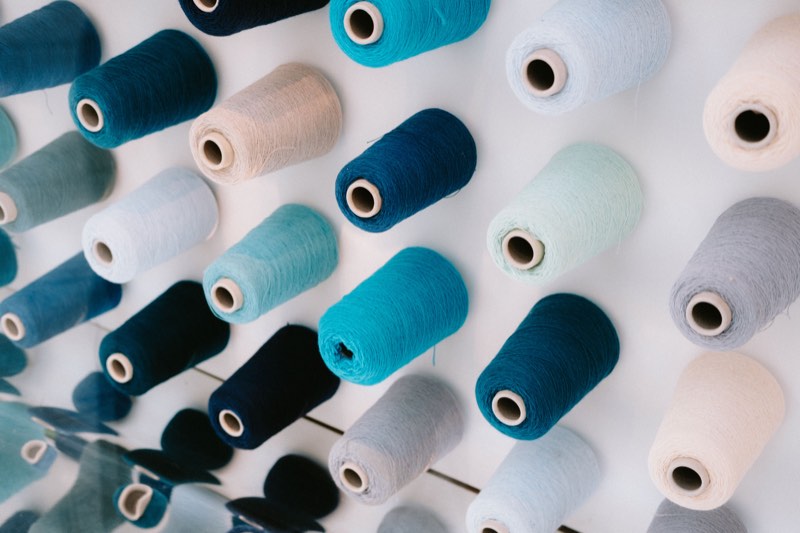
Colorful thread spools arranged in close-up.

The cannabis connection in a hemp shirt starts well before a designer chooses the cut. Between a harvested stalk and a workable yarn sits a processing business—and that is the part Renaissance Fiber is trying to expand in North Carolina. An October 20 financing announcement offers a closer look at that less visible side of hemp fashion.

The company said it secured approximately $2.24 million in combined financing to complete and operate its first commercial-scale processing facility in Mocksville. This is a manufacturing-development story, not an announcement of a finished clothing collection or a factory already shipping at full capacity.

Financing the step before the garment

In the company announcement carried by Textile World, Renaissance described a $2 million SBA-backed financing package alongside $100,000 from Fibers Fund and $139,000 from Invest Appalachia. The SBA-backed portion includes a $1.5 million term loan and a $500,000 revolving credit line.

Those categories matter. A revolving facility is not the same thing as a grant, and a combined financing total should not be read as unrestricted cash handed to a fashion brand. The stated purpose is infrastructure, raw materials, inventory and the transition toward commercial operations.

Renaissance said construction was underway and expected completion before the end of 2026, followed by commissioning and optimization. That expectation is the company’s timetable. Completion, equipment startup and consistent commercial output are different milestones, and this report does not establish that any unfinished stage has already been achieved.

Why hemp needs more than a harvest

On its technology page, Renaissance describes the sequence that makes the project relevant to clothing: separating fiber from the stalk, removing binding gums and refining the material for spinning. Its approach is intended to produce fiber that can be spun alone or blended with other fibers.

The company explains that hemp’s naturally long bast fibers and binding material differ from cotton’s starting structure. That creates a compatibility problem in a textile system built around other inputs. Processing is the bridge between growing a plant and supplying something a yarn manufacturer can actually run.

For a shopper, that bridge is largely invisible. A label may identify a fiber without explaining the machinery, preparation or supplier relationships behind it. For a brand considering hemp, however, access to a suitable input is a practical question that comes before styling, campaign imagery or a retail price.

The scale problem behind the label

Fibers Fund’s account of its joint backing with Invest Appalachia describes a familiar manufacturing challenge: buyers want evidence of capacity, while producers need capital to build capacity. That helps explain why financing the processing layer can matter even when the eventual consumer product is a shirt or a pair of trousers.

It is a sequence problem, rather than proof of guaranteed demand. Funding can support equipment and operations, but it does not by itself verify signed customer volumes, finished-garment quality or the commercial success of every company farther down the chain. Those would require their own evidence.

The earlier funder account and the October announcement also describe support at different stages. The safest reading is that the October total brings together financing sources, not that every component was newly created on the same day. It should not be presented as a single new grant award.

What SBA backing does—and does not—mean

The Small Business Administration’s general 7(a) guidance explains that participating lenders make these loans with an SBA guarantee. Eligible uses can include equipment and working capital. Government backing is therefore a financing mechanism, not an official certification that a textile is environmentally superior or that a business will succeed.

That distinction also helps keep the sustainability conversation honest. A domestic hemp project can be interesting without treating every company claim about energy, waste or carbon as independently proven. Evaluating those claims would require transparent measurements and comparable boundaries across the production process.

What fashion readers should watch

The useful next checkpoints are operational: completion, commissioning and evidence that the processed fiber can move reliably into commercial yarn and fabric production. A named fashion collaboration or a finished garment launch would be another story, requiring confirmation from the participating brands rather than an assumption based on a financing release.

For now, Renaissance’s project highlights a concrete cannabis-to-fashion connection: hemp has to become a usable textile input before it becomes clothing. The October funding announcement is significant as a step toward that capability. Whether it delivers the promised manufacturing capacity remains the question to follow.

For consumers comparing hemp garments, fiber origin and finished-product composition remain separate questions. This financing announcement does not establish the contents or sourcing of any particular item on a store rack.

Illustrative textile spools; fiber composition unknown, not Renaissance Fiber products. Photo: Mathias Reding / Pexels.

Continue Reading

Fashion

Babble & Hemp Brings Winter Shirting to London’s Spirit of Christmas Fair

The hemp label’s London fair appearance puts fabric weight, fit and everyday wear ahead of cannabis-themed graphics.

Published

on

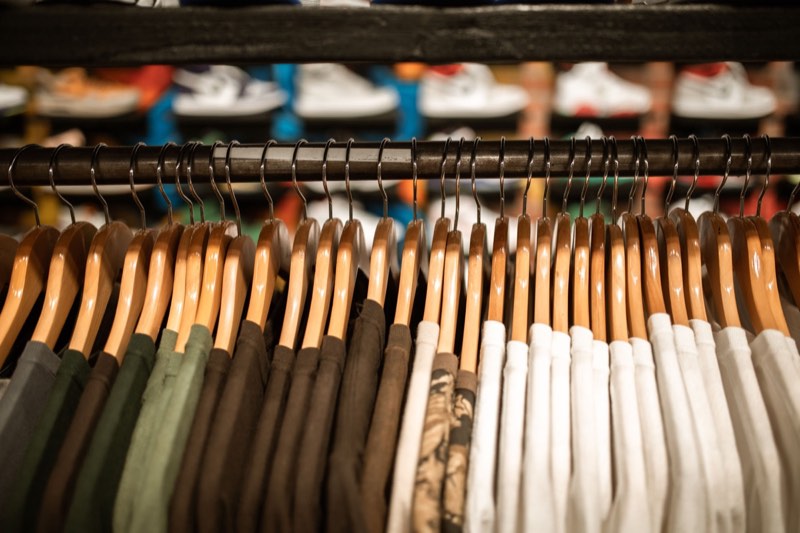
Shirts in neutral colors hanging on wooden hangers in a clothing shop

Babble & Hemp is among the exhibitors listed for the Spirit of Christmas Fair, which opened November 2 at Olympia London and runs through November 8. The label’s exhibitor profile highlights men’s shirts made from hemp, including a heavier range intended for cooler weather.

The cannabis connection is in the cloth itself. Hemp is a fiber-producing form of cannabis, and this is a story about wearing that fiber in a conventional wardrobe. The fair listing describes the shirts as 100 percent hemp; it does not describe intoxicating merchandise or establish permission to consume cannabis at the event.

A heavier shirt, rather than a leaf graphic

On its Heavy Collection page, Babble & Hemp gives a useful specification: 260 grams per square meter, compared with the 180-gram weight it describes as usual for its shirting. That makes the advertised fabric about 44 percent heavier per unit of area. It does not establish how much a finished shirt weighs, which also depends on size and construction.

The current collection lists Midnight Blue, Byzantium Purple, Kashgar Green, Terracotta and Gobi Yellow shirts at £95 each. Those are the online listings checked for this report, rather than a promise of fair-only prices or confirmation that every size and color will be available at the stand.

Fabric weight gives shoppers something more specific to compare than a general winter label. A heavier weave can be part of a layering decision, but the number alone is not a temperature rating. Someone choosing a shirt for a heated office may want a different feel from someone buying an outer layer for a cool afternoon.

The fair appearance is the current event. The exhibitor’s linked product-gallery entry carries an October 2025 date, so the listing should not be read as proof that the Heavy Collection is launching for the first time this week.

What to look for in person

A fair appearance offers an opportunity to examine details that a product grid cannot fully communicate. Shoppers can compare the hand of the fabric, the drape across the shoulders and how the collar sits. These are practical reasons to inspect a fiber-focused garment beyond its marketing description.

Fit deserves the same attention as material. Check whether the shirt allows the arm movement you need, whether the sleeve length works and whether the hem suits the way you intend to wear it. A fabric choice cannot compensate for a cut that does not fit your daily routine.

Anyone considering a purchase should ask to see the garment’s composition and care label. Confirming the details on the actual piece is especially useful when a brand offers several collections. A general statement about hemp shirts should not be treated as a substitute for checking the item being bought.

Keep the environmental claims specific

The brand’s story page presents hemp as a material with a long clothing history and promotes its softness, breathability and agricultural characteristics. Those are the company’s claims. They are not independent measurements of the complete environmental footprint of these particular shirts.

For a buyer, the more useful follow-up is specific: where was the fabric processed, what finishing was used and what documentation supports a particular claim? Fiber identity is one part of a garment’s story. It does not, by itself, establish every step in the supply chain or prove that one finished garment has a smaller footprint than another.

That distinction also matters within cannabis fashion. A shirt can connect directly to the plant through textile construction without becoming a medical, wellness or consumption product. The clothing can be evaluated on the ordinary terms that matter to its wearer: fit, fabric, construction, price and how often it will be used.

The practical details before buying

The fair’s visitor information lists opening hours of 10 a.m. to 6 p.m. Monday through Saturday, with Thursday extended to 9 p.m.; Sunday closes at 5 p.m. Advance standard single-entry tickets start at £23, with the final ticket type and availability controlled by the organizer.

For online shoppers, Babble & Hemp’s delivery and returns page lists separate UK, European and rest-of-world services. It allows returns within 14 days of receipt, subject to its stated conditions, and asks customers to retain the hang tags. Return postage normally falls to the buyer, except in circumstances such as faulty goods.

Those online terms should be checked again before ordering; ask the exhibitor which terms apply to a purchase made at the fair. For readers following our Object Apparel hemp collection coverage, this is another concrete example of cannabis fiber moving through ordinary fashion settings, with the garment itself doing the talking.

Illustrative stock clothing; not Babble & Hemp shirts or verified hemp textiles. Photo: RDNE Stock project / Pexels.

Continue Reading

Trending

Join The Cannabis Aficionado Community!
Join the Cannabis Aficionado community and receive all of the most relevant news geared towards our sophisticated enthusiast community.
Loading

Copyright ©️ 2026 Cannabis Aficionado. Cannabis Aficionado is a registered trademark of CNM Inc. All rights reserved. Registration on or use of this site constitutes acceptance of our Terms of Service, Privacy Policy and Cookies Policy. People may receive compensation for some links to products and services. Offers may be subject to change without notice.