#cannabisaficionado

Cannabis

Cohen’s Cannabis Bill Would Rewrite the Federal Drug-Policy Framework

The proposal goes beyond moving cannabis between schedules, pairing descheduling with changes to research oversight, penalties and federal agency authority.

Published

on

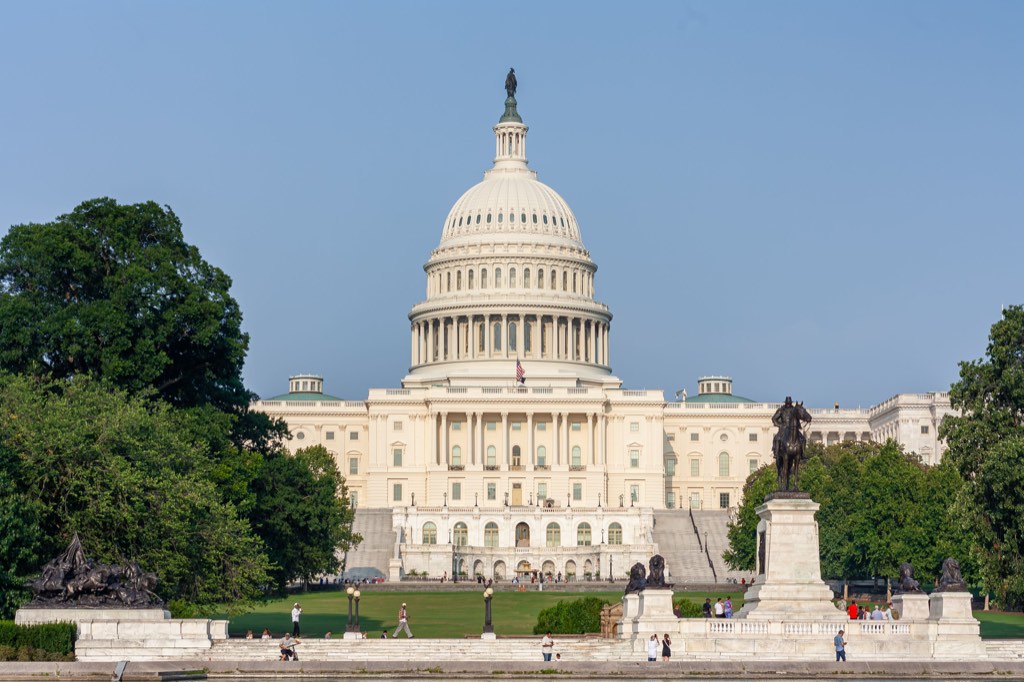
United States Capitol building beneath a blue sky
Advertisement Back2Grow Advertisement

Rep. Steve Cohen has proposed removing cannabis from the Controlled Substances Act as part of a much broader rewrite of federal drug policy. Announced October 29, the Public Health and Research Reforms in Controlled Substances Act would change how substances are classified, who oversees scientific research and how federal drug penalties are structured.

For cannabis readers, the central distinction is between a legislative proposal and an operative legal change. Cohen’s announcement does not itself deschedule cannabis, authorize a new business activity or change anyone’s existing obligations. It lays out a framework Congress would have to consider and enact.

More than a move between schedules

Cohen’s official announcement identifies marijuana’s removal from the CSA among the measure’s principal provisions. That is different from moving a substance from one controlled schedule to another. A change within the scheduling system retains a federal classification; the proposal seeks to remove cannabis from that system.

The scope also extends well beyond cannabis. The sponsor describes six titles addressing classification, scientific investigation, agency responsibilities and criminal sentencing. Treating it simply as a cannabis legalization headline would miss much of what makes the document significant: it proposes changing the machinery used to regulate many substances.

A different way to classify drugs

The office’s section-by-section analysis describes a two-axis model. Numerical schedules would address risks associated with misuse, substance use disorder and public-health threats, while alphabetical categories would address therapeutic value. The intention is to assess those dimensions separately rather than compress them into a single ladder.

The analysis also describes an expert committee and an expanded set of evaluation factors. Readers should distinguish that proposed method from evidence that a particular substance has already met a new standard. A more detailed decision process would still require assessments, records and implementation; the framework alone would not establish a medical benefit.

Another proposed shift would place core scheduling authority with the Department of Health and Human Services rather than the attorney general. Cohen’s office presents the division as allowing HHS to focus on science and medicine while enforcement authorities address diversion and illicit activity. That is the sponsor’s policy design, not an agency reorganization that has taken effect.

Research and sentencing are separate parts

The published bill text includes provisions addressing investigator registration and production quotas. The accompanying analysis describes moving research registration responsibilities to HHS and creating procedures intended to preserve continuity of research. These provisions concern how investigations can be authorized; they do not guarantee that a study will produce a favorable result.

The sentencing section would eliminate weight-based mandatory minimum drug penalties while retaining other enforcement tools and enhanced penalties in specified circumstances. It also directs revisions to federal sentencing guidelines. Removing a mandatory minimum is different from removing all judicial authority to impose a sentence, a distinction that is important when assessing the proposal’s reach.

The analysis further describes a court-based resentencing process for people whose offenses would carry lower penalties. It includes identifying potentially eligible individuals and allowing sentence-reduction motions. That should not be reported as automatic release for every person convicted of a drug offense: eligibility and the proposed judicial process remain material parts of the design.

Descheduling would not settle every cannabis rule

Title IV expressly preserves authorities under federal food, drug and public-health laws. The proposal also calls for public meetings about cannabis-product regulation, including manufacturing, safety, marketing and labeling. Its own structure recognizes that removing cannabis from the CSA would leave further product-policy questions to address.

The section-by-section document also says HHS could continue including marijuana in federal employee testing programs notwithstanding descheduling. That is a useful reminder that a substance’s controlled status and every workplace or product rule involving it are separate issues. A headline about descheduling should not be read as a universal promise that testing requirements disappear.

Federal reform would also need to be read alongside state law. The proposal’s federal scope should not be confused with an announcement that every state would adopt the same cannabis market or retail system.

How to follow the proposal

The sponsor-posted PDF reviewed for this story carries an unfilled House bill-number field. We are linking the actual document rather than supplying an unverified number or claiming committee progress that the announcement does not establish. The next useful evidence will be the formal congressional record, referrals, hearings and any revised text.

For now, the proposal offers a concrete document for debating federal cannabis reform alongside wider drug policy. Its significance lies in the combination of descheduling, research access and sentencing changes. Its practical limit is just as clear: a proposed framework is not permission to act as though federal law has already changed.

Stock photograph of the US Capitol; not an event announcing this proposal. Photo: Cristian Loayza / Pexels.

Health

Utah Opens Comments on Medical Cannabis Rule Repeals as Oversight Moves

Utah is proposing to repeal six DHHS cannabis rules as oversight moves to Agriculture and Food. Comments are open through December 15.

Published

on

Close-up of a person using a blue pen to write on a clipboard.

Utah has opened a comment period on proposed repeals of six Department of Health and Human Services medical cannabis rules as oversight moves to the Department of Agriculture and Food. Comments are due December 15, 2026. The word “repeal” can sound alarming when your access to medicine depends on a state program, so we went to the transition documents before treating it as a change in patient eligibility.

The official notice describes an agency transfer implementing House Bill 389, not a proposal to close Utah’s medical cannabis program. It says the rules will be readopted by the Utah Department of Agriculture and Food, or UDAF, in early 2027. Proposed successor rules appear in the same November 15 issue of the Utah State Bulletin.

Which rules are being moved?

The six DHHS rules cover definitions; electronic verification and inventory-system registration, limits and confidentiality; dosing and partial filling; pharmacy medical provider education; expedited compassionate-use review; and Compassionate Use Board hearing procedures. These are parts of the machinery that makes a medical program function, even when patients rarely need to read the rule numbers.

The notice directs people to pages 248–267 of the bulletin for the repeal documents. Written comments on these DHHS proposals can be sent to dlbcrules@utah.gov through December 15. Identify the relevant rule and the concern clearly so the agency can connect a comment to the actual proposal.

We would focus comments on the practical handoff: how to find the right contact, how a pending matter will be handled and where updated instructions will appear. A specific question about a registration or review process is easier to address than a broad objection to a rule number disappearing.

Why is Utah changing agencies?

The state’s 2026 medical cannabis law summary says DHHS duties transition to UDAF by January 1, 2027. It states that the change will not affect patient access and that patients, providers and industry will be informed when the transition is complete. Once transferred, UDAF is to oversee all aspects of the program.

That is the state’s stated plan, rather than independent evidence that every administrative step has already happened. The distinction matters now: a statutory transfer date, a proposed rule’s possible effective date and a promised notification describe different milestones. We would look for the relevant final notice before assuming a particular process has changed.

Other provisions in the law summary address patient identification, caregivers and purchasing. Those separate changes should not be attributed automatically to these six repeal filings. Our previous coverage of Utah’s proposed patient voucher rules concerns another part of the year’s implementation work, with its own requirements and questions.

What does the original filing say?

The November 15 Utah State Bulletin explains that DHHS intends the repeals to take effect at the same time as, or shortly after, UDAF adopts replacement provisions under Title R67. Its analyses anticipate continuity and no new compliance costs from the repeals themselves, while directing broader legislative fiscal effects to HB 389’s fiscal note.

The filings list December 22 as a possible effective date and explicitly warn that this is not an established effective date. We would not put “new rules start December 22” in a calendar on that basis. The accompanying explanation anticipates the UDAF medical cannabis rules taking effect in early 2027, making final coordination worth watching.

That paperwork also shows why an isolated repeal headline can mislead. Removing an old agency’s rule and establishing the receiving agency’s authority can be paired actions. To understand the practical result, compare the outgoing provision with its successor rather than assume the subject is no longer regulated.

The state’s provider guidance gives this transfer a practical context. Its electronic verification system holds cards, recommendations and purchase information. A recommending medical provider handles certification, while a pharmacy medical provider consults on products and amounts. Those separate roles help explain why registration, confidentiality and dosing procedures need clear continuity when the responsible agency changes.

What should patients watch next?

Keep the December 15 comment deadline separate from your own card or appointment dates. The proposal is not an instruction to stop using the program, skip a renewal or change treatment. Questions about a personal registration or a pending petition belong with the program’s official contacts and your treating provider where appropriate.

Our priority is continuity you can actually navigate: clear instructions, a working route for questions and final notices that match the promised handoff. Utah has described the direction of travel. The next meaningful test is whether the completed transition leaves patients able to find and use the processes they need without confusion about which agency is responsible.

Illustrative stock photograph of paperwork review; not a Utah patient, official or agency proceeding. Photo: Kindel Media / Pexels.

Continue Reading

Cannabis

Philadelphia Urges Pennsylvania to Put Adult-Use Cannabis on Its Legislative Agenda

Council’s call for state legislation adds pressure after the election, while patient access and any future adult-use market remain separate questions.

Published

on

A person placing a white envelope marked Vote into a ballot box.

Philadelphia City Council is pressing Pennsylvania lawmakers to put adult-use cannabis legalization on their agenda after the November election. The resolution calls for a regulated market with public-health protections and community reinvestment. It does not create recreational sales in Philadelphia or change who can enter Pennsylvania’s existing medical program.

Tom Angell reported for Marijuana Moment that council adopted the measure by voice vote November 19. The city’s official file for Resolution 260998 contains its text and sponsors, but the online action history and meeting minutes were not finalized when checked. The adoption date is therefore attributed to that reporting rather than presented as an independently verified roll-call result.

A city request aimed at state lawmakers

Councilmember Jim Harrity sponsored the resolution with Council President Kenyatta Johnson and eight other councilmembers. Its argument centers on the newly elected Democratic majorities in Pennsylvania’s House and Senate and the opportunity to revisit a policy that has repeatedly stalled.

The text asks the General Assembly to enact adult-use legislation and develop rules addressing safety and the distribution of economic benefits. It identifies testing, labeling, packaging, age checks and restrictions on advertising and retail locations as parts of a responsible framework. These are priorities the council wants lawmakers to address, not a finished statewide licensing system.

That distinction leaves important policy choices unresolved. A statement supporting regulation does not tell an applicant how licenses would be awarded, tell a municipality where stores could open or tell a shopper when sales would begin. Those details would depend on legislation and implementation rather than the council resolution alone.

Political opportunity does not settle the timetable

Angell’s reporting also highlights a limit to expectations after the election. Presumptive Senate President Pro Tempore Jay Costa has said legalization is not among the immediate highest priorities and would be discussed over the coming months. That makes the council’s intervention a push for attention, rather than evidence that a statewide bill is about to pass.

The report describes previous disagreements over how Pennsylvania should organize legal sales, including a House-backed state-store approach and competing Senate proposals. The existence of earlier bills does not identify which model a new majority will ultimately choose. Nor should an earlier proposal’s possession limits or tax rates be presented as rules already adopted for consumers.

For readers following the debate, the consequential milestones are a specific bill, its committee and floor actions, and an enacted implementation schedule. A favorable election result may change the political setting, but it cannot substitute for those decisions.

The medical program remains a separate route

Pennsylvania’s Department of Health patient guidance describes access through residency, an eligible serious medical condition, certification by an approved practitioner and the program’s identification process. Patients obtain medical cannabis through Pennsylvania dispensaries using the required identification. A council endorsement of adult-use legislation does not waive those conditions.

The department also describes caregivers as designated people who can obtain products for a patient. Caregivers register for identification and undergo a background check. That structure matters for households where the person receiving care cannot independently make a dispensary visit; it is more specific than treating every adult resident as an eligible shopper.

The patient guidance separates registration from practitioner certification and the identification-card payment process. Someone reading legalization headlines should not assume those steps have ended. Questions about an individual’s eligibility or certification remain matters for the program and an approved practitioner, not an inference from political statements.

Existing medical taxes are not proposed adult-use taxes

The Department of Revenue’s medical-marijuana guidance provides another useful distinction. Growers and processors pay a 5 percent tax on gross receipts from medical-marijuana sales to dispensaries. The department says medical marijuana itself is not subject to sales tax, although accessories can be.

Those are features of the existing medical system. A forecast about adult-use revenue, or a tax rate appearing in a legalization proposal, belongs to a different policy discussion. It should not be added to a medical patient’s purchase as though council had changed the tax code.

Revenue also distinguishes the roles of the departments: Health handles permits connected with production and sale, while Revenue administers the relevant taxes and participates in tax-clearance review. Legalization would require lawmakers to decide how any expanded market fits those existing responsibilities.

For now, the immediate change is renewed political pressure from Philadelphia. The practical rules for patients remain in place, while the proposed adult-use market still depends on state action. That is the useful way to read this week’s resolution: a call to legislate, with consumer access and business permissions still awaiting the legislation itself.

Illustrative voting stock photograph; not Philadelphia’s council vote, a Pennsylvania polling place or the November 2026 election. Photo: Edmond Dantès / Pexels.

Continue Reading

Cannabis

Senate Funding Drafts Retain D.C. Cannabis Sales Barrier and Transportation Testing Stance

Separate funding texts address D.C. retail policy, safety-sensitive work and research barriers, illustrating why federal cannabis rules do not move as one.

Published

on

Microphones and angled monitors on an empty meeting-room table.

New Senate funding drafts would preserve a barrier to regulated adult-use cannabis sales in Washington, D.C., while accompanying transportation language urges continued cannabis drug testing in safety-sensitive work. The documents show how several federal cannabis policies can move on separate tracks even as medical-marijuana rescheduling changes another part of the system.

The Senate Appropriations Committee released the materials November 16. They are proposals for fiscal year 2027, not newly enacted permissions or restrictions that readers should assume already replaced current law. The committee’s publication makes its proposed approach visible; it does not establish that Congress has agreed to every provision.

Tom Angell’s November 19 report for Marijuana Moment drew attention to the cannabis language across the separate bills and explanatory statements. Reading the underlying texts matters because a bill provision, a committee instruction and a request for research serve different purposes.

The D.C. provision would retain a spending restriction

Section 809 of the proposed Financial Services and General Government bill addresses the use of funds for drug-policy changes. Its District-specific subsection would prevent spending available to the D.C. government from being used to enact laws or rules legalizing or reducing penalties for specified substances for recreational purposes.

The wording reaches both Schedule I substances and tetrahydrocannabinol derivatives. That matters when assessing claims that moving a category of marijuana to another federal schedule would, by itself, remove every obstacle to adult-use sales in the capital. The proposed spending language is not written solely around a single schedule reference.

This is also different from announcing the closure of the District’s medical program or creating a federal retail license. The question here is whether local government can use its funds to build a recreational regulatory framework. A person’s ability to participate in an existing medical system and the government’s ability to establish an adult-use market are separate issues.

Transportation language focuses on safety-sensitive work

The Transportation and Housing explanatory statement directs the Department of Transportation to maintain current cannabis testing requirements. It identifies aviation, trucking, rail, transit and pipelines, alongside relevant federal and DOT positions, as settings where potential impairment is a public-safety concern.

The statement says the absence of a scientifically validated relationship between cannabis-metabolite levels and impairment is a reason to avoid relaxing the requirements. It also urges coordination with Health and Human Services and the National Highway Traffic Safety Administration on improved detection methods and alternative testing matrices.

That is a committee position about workforce safeguards and research needs. It is not a finding that every positive test establishes present impairment, or a newly validated impairment threshold. Those distinctions are particularly important when discussing cannabis, because detecting prior exposure and establishing someone’s condition at a particular moment are different questions.

Nor does this paragraph announce that every worker in the country is covered by DOT testing. Its scope concerns transportation and the federal positions described in the statement. Readers should avoid turning a targeted proposal into a claim about all employment or treating rescheduling news as a personal exemption from an applicable workplace rule.

Research concerns appear in another statement

The separate Labor and Health explanatory statement expresses concern that Schedule I restrictions limit research involving several drugs, including marijuana and its component chemicals. It notes difficulties researchers face obtaining sources, including dispensary products, and acknowledges work by the National Institute on Drug Abuse on those barriers.

Elsewhere, that statement calls for expanded work on the potential therapeutic effects of psychedelics and encourages attention to the workforce needed for emerging treatments. Such language supports investigation; it does not demonstrate that a particular substance is safe or effective for a particular patient, or authorize general clinical access to an unapproved treatment.

Taken together, these provisions show that support for additional research does not necessarily mean support for every retail-policy change. A committee can seek better evidence while retaining restrictions in another area. That combination is more precise than describing the entire funding package as either full cannabis reform or a single blanket prohibition.

What changes next depends on legislation

The committee’s release covers several agencies and policy areas, so an item appearing in one statement should not be assumed to govern all the others. The final legislative text, its enactment and the agencies’ implementation will matter more than a headline summarizing the package.

For D.C. readers, the immediate takeaway is that this Senate proposal retains the adult-use spending obstacle. For transportation workers, the statement signals continuity in the committee’s testing position. For researchers, it recognizes access barriers without declaring them solved. None of those points amounts to a new, universal rule for cannabis consumers.

Illustrative meeting-room stock photograph; not the U.S. Senate, a committee hearing or a D.C. government chamber. Photo: Werner Pfennig / Pexels.

Continue Reading

Trending

Join The Cannabis Aficionado Community!
Join the Cannabis Aficionado community and receive all of the most relevant news geared towards our sophisticated enthusiast community.
Loading

Copyright ©️ 2026 Cannabis Aficionado. Cannabis Aficionado is a registered trademark of CNM Inc. All rights reserved. Registration on or use of this site constitutes acceptance of our Terms of Service, Privacy Policy and Cookies Policy. People may receive compensation for some links to products and services. Offers may be subject to change without notice.