#cannabisaficionado

Cannabis

New York’s Cannabis Wage-Board Plan Heads for a Rewrite

The signed bill and the promised chapter amendments tell different parts of the story. Existing wage protections remain a separate issue.

Published

on

New York City buildings of different heights beside a construction crane
Advertisement Back2Grow Advertisement

New York’s debate over cannabis wages has reached a complicated legislative turn. Governor Kathy Hochul signed the industry’s labor bill on October 28, but an agreement to change it in the next legislative session would remove the proposed cannabis wage board.

The distinction matters for anyone reading the bill online. The Senate’s official record for S10643 lists it as signed, with Chapter 369 and an approval memorandum dated October 28. That status does not, by itself, explain the governor’s agreement over what comes next.

A signed bill with another step ahead

The Times Union’s Brendan J. Lyons reported October 29 that Hochul negotiated chapter amendments with legislative leaders to eliminate the wage board and additional ownership-reporting provisions while preserving the repeal of mandatory labor peace agreements.

Marijuana Moment’s account, citing the governor’s memorandum, says Hochul objected to reporting burdens and potential labor-cost increases. She argued those costs could make licensed businesses less competitive with the illicit market. Those are the governor’s stated concerns, not proof of a particular future price increase.

A chapter amendment is an additional legislative action. The practical takeaway is to follow both the signed measure and the promised changes, rather than treat a headline about the wage board as a complete description of the law. The next session’s text and action will be important to understanding the final structure.

What lawmakers originally proposed

The bill passed by lawmakers would create a three-person board with representatives of the licensed industry, the state AFL-CIO and the public. Its assignment would be to recommend wages across cultivation, processing and packaging, distribution, retail and delivery.

It called for at least three public hearings, a first hearing by March 1, 2027, and recommendations by December 31, 2027. The board could also conclude that industry wages were adequate. In other words, the proposal was a process for examining pay, not an immediate, specified cannabis wage increase.

The Senate sponsor’s memorandum described the bill as replacing labor peace requirements with a mechanism for considering workers’ compensation. Senator Jessica Ramos sponsored the Senate measure; the Assembly counterpart was A11562. The official history records Senate passage June 4 and Assembly passage June 5.

That original tradeoff is why the rewrite deserves attention. Removing one mechanism while retaining the removal of another changes how the package should be understood. The question for workers and employers is what protections and obligations the final arrangement will contain, not simply whether the original proposal received a signature.

The passed text sets January 31, 2027, as the effective date for its new reporting and wage-board sections. That timing helps explain why the upcoming session matters. A future effective date and a promised amendment should be read together, without describing the proposed board as already operating or the replacement language as already enacted.

When checking an update, keep the bill number, action date and version together. A quotation from the June text can accurately describe the original proposal while still leaving out the October agreement and whatever lawmakers ultimately adopt.

Existing pay requirements are a separate matter

The wage-board dispute does not mean New York lacks minimum-wage rules. The Department of Labor’s 2026 notice lists a basic hourly minimum of $17 in New York City, Long Island and Westchester County, and $16 in the rest of the state.

The notice also explains that industry-specific wage orders can affect the applicable rules. Readers should therefore check their actual job and work location rather than assume one headline establishes the correct rate for every position in a cannabis business.

For an employee reviewing a paycheck, the immediate questions remain concrete: what rate applies to the job, how many hours were worked and what was paid? A proposed sector board would add a policy process; it is not the source of every existing wage obligation.

Organizing rights need their own reading

A state licensing condition is also different from the federal right to organize. The National Labor Relations Board’s employee guidance describes rights for covered workers to form or support a union and to act together over workplace conditions. Coverage and the details of a particular dispute still matter.

That distinction helps avoid an overly broad conclusion that changing labor peace requirements would erase all workplace rights. It also avoids promising that every cannabis worker falls under precisely the same legal framework. The relevant agency guidance, final statute and facts of a particular job have different roles.

For now, watch the promised chapter amendment rather than assume the bill’s original wage-board calendar will proceed unchanged. The signed record establishes what happened October 28; the next legislative action will show how the agreement is carried into law.

Illustrative New York City photograph; not a cannabis workplace. Photo: Yesim G. Ozdemir / Pexels.


Health

Utah Opens Comments on Medical Cannabis Rule Repeals as Oversight Moves

Utah is proposing to repeal six DHHS cannabis rules as oversight moves to Agriculture and Food. Comments are open through December 15.

Published

on

Close-up of a person using a blue pen to write on a clipboard.

Utah has opened a comment period on proposed repeals of six Department of Health and Human Services medical cannabis rules as oversight moves to the Department of Agriculture and Food. Comments are due December 15, 2026. The word “repeal” can sound alarming when your access to medicine depends on a state program, so we went to the transition documents before treating it as a change in patient eligibility.

The official notice describes an agency transfer implementing House Bill 389, not a proposal to close Utah’s medical cannabis program. It says the rules will be readopted by the Utah Department of Agriculture and Food, or UDAF, in early 2027. Proposed successor rules appear in the same November 15 issue of the Utah State Bulletin.

Which rules are being moved?

The six DHHS rules cover definitions; electronic verification and inventory-system registration, limits and confidentiality; dosing and partial filling; pharmacy medical provider education; expedited compassionate-use review; and Compassionate Use Board hearing procedures. These are parts of the machinery that makes a medical program function, even when patients rarely need to read the rule numbers.

The notice directs people to pages 248–267 of the bulletin for the repeal documents. Written comments on these DHHS proposals can be sent to dlbcrules@utah.gov through December 15. Identify the relevant rule and the concern clearly so the agency can connect a comment to the actual proposal.

We would focus comments on the practical handoff: how to find the right contact, how a pending matter will be handled and where updated instructions will appear. A specific question about a registration or review process is easier to address than a broad objection to a rule number disappearing.

Why is Utah changing agencies?

The state’s 2026 medical cannabis law summary says DHHS duties transition to UDAF by January 1, 2027. It states that the change will not affect patient access and that patients, providers and industry will be informed when the transition is complete. Once transferred, UDAF is to oversee all aspects of the program.

That is the state’s stated plan, rather than independent evidence that every administrative step has already happened. The distinction matters now: a statutory transfer date, a proposed rule’s possible effective date and a promised notification describe different milestones. We would look for the relevant final notice before assuming a particular process has changed.

Other provisions in the law summary address patient identification, caregivers and purchasing. Those separate changes should not be attributed automatically to these six repeal filings. Our previous coverage of Utah’s proposed patient voucher rules concerns another part of the year’s implementation work, with its own requirements and questions.

What does the original filing say?

The November 15 Utah State Bulletin explains that DHHS intends the repeals to take effect at the same time as, or shortly after, UDAF adopts replacement provisions under Title R67. Its analyses anticipate continuity and no new compliance costs from the repeals themselves, while directing broader legislative fiscal effects to HB 389’s fiscal note.

The filings list December 22 as a possible effective date and explicitly warn that this is not an established effective date. We would not put “new rules start December 22” in a calendar on that basis. The accompanying explanation anticipates the UDAF medical cannabis rules taking effect in early 2027, making final coordination worth watching.

That paperwork also shows why an isolated repeal headline can mislead. Removing an old agency’s rule and establishing the receiving agency’s authority can be paired actions. To understand the practical result, compare the outgoing provision with its successor rather than assume the subject is no longer regulated.

The state’s provider guidance gives this transfer a practical context. Its electronic verification system holds cards, recommendations and purchase information. A recommending medical provider handles certification, while a pharmacy medical provider consults on products and amounts. Those separate roles help explain why registration, confidentiality and dosing procedures need clear continuity when the responsible agency changes.

What should patients watch next?

Keep the December 15 comment deadline separate from your own card or appointment dates. The proposal is not an instruction to stop using the program, skip a renewal or change treatment. Questions about a personal registration or a pending petition belong with the program’s official contacts and your treating provider where appropriate.

Our priority is continuity you can actually navigate: clear instructions, a working route for questions and final notices that match the promised handoff. Utah has described the direction of travel. The next meaningful test is whether the completed transition leaves patients able to find and use the processes they need without confusion about which agency is responsible.

Illustrative stock photograph of paperwork review; not a Utah patient, official or agency proceeding. Photo: Kindel Media / Pexels.

Continue Reading

Cannabis

Vermont Plans an In-State Hemp Market as Federal Restrictions Approach

The Cannabis Control Board’s November 17 notice points toward future licenses and an intrastate framework, with federal restrictions still a separate question.

Published

on

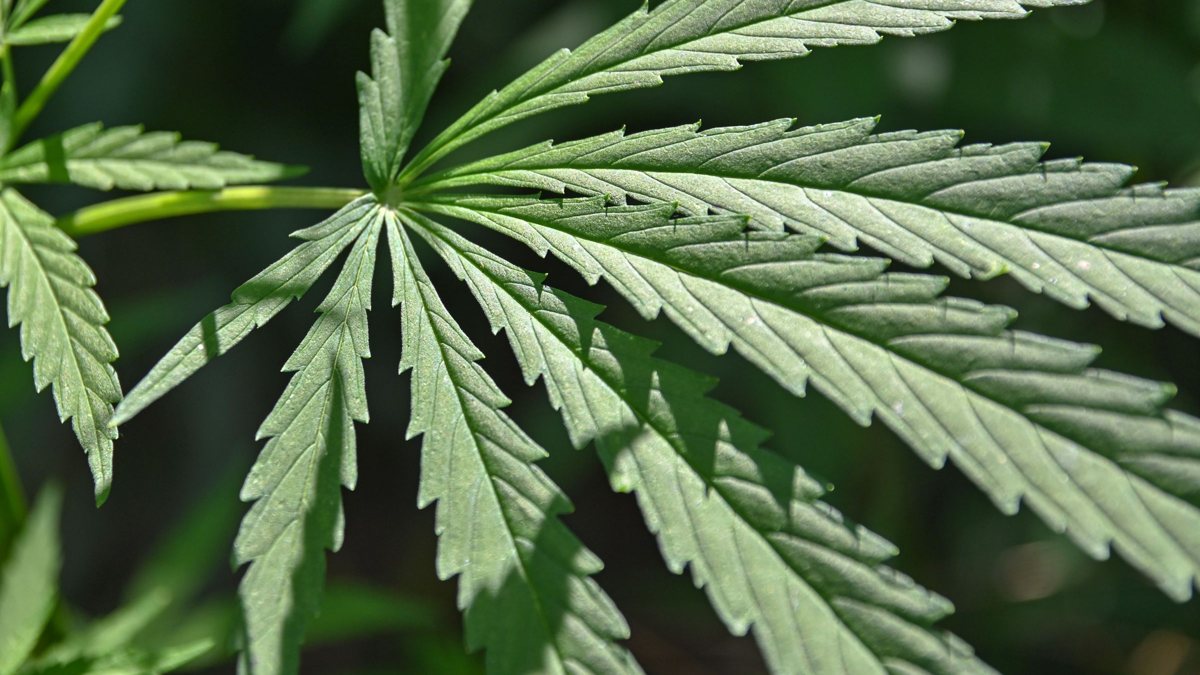
Close-up of green serrated cannabis leaflets in sunlight.

Vermont’s Cannabis Control Board says it plans to develop a licensed in-state hemp market once federal THC thresholds are certain. Its November 17 notice points toward future rulemaking for products that meet Vermont’s standards but would fall outside the revised federal hemp definition. It does not announce an operating market, an application window or permission to ignore federal law.

For hemp businesses and consumers, that is the central distinction. Vermont is describing a possible state framework for cannabis-derived products, while a federal change is approaching on a separate timetable. A product’s status under state rules and its eligibility for interstate commerce are related questions, but they are not interchangeable.

What Vermont announced this week

The board’s notice says Act 178 of 2026 authorized it to revive a State Hemp Program covering producers, processors and products. The board intends to begin rulemaking when the federal tolerances are settled, with an intrastate market as its stated objective. No opening date appears in the announcement.

The notice also identifies potential consequences beyond a product being removed from a shelf. It warns that carriers, banks, payment processors and insurers may refuse service to affected businesses. Those are possible consequences identified by the regulator, not a finding that every provider has already withdrawn or that every hemp business faces the same result.

For an operator, the practical implication is that a state license would answer only part of the business question. Even a product permitted by Vermont could still depend on suppliers, financial services and transportation arrangements governed by other rules or private policies. A proposed local market needs those practical connections as well as a regulatory structure.

Why December 11 matters

An October 28 Congressional Research Service analysis explains the federal timetable. Congress delayed most of the hemp-definition changes until December 11, 2026. The exclusion for products containing cannabinoids the plant cannot naturally produce was left to take effect November 12. Describing everything as a single future deadline would miss that distinction.

The analysis describes a revised total-THC test and exclusions covering certain manufactured cannabinoids and finished products exceeding a combined 0.4 milligrams per container of total THC and similarly acting cannabinoids. That is a federal classification framework, rather than a new Vermont serving recommendation. It can change which products qualify as hemp even when a label continues to use that word.

Congress can still change legislation, but a proposal is not an enacted delay. Businesses planning around December should distinguish the law currently scheduled to apply from measures seeking to replace it. Our Hemp Guardrails Act coverage explains one proposed alternative; it should not be treated as evidence that the deadline has disappeared.

Vermont already draws its own product boundaries

The board’s hemp guidance explains that Vermont treats products exceeding its quantitative limits, or marketed for intoxicating effects, as cannabis products rather than ordinary hemp products. Its assessment includes total theoretical THC, incorporating THCA. A low delta-9 number alone therefore does not settle the state-law question.

That guidance also explains the limited purpose of an earlier voluntary processor registry. Listing a business was not a license to buy and sell THC concentrate or a substitute for cannabis-establishment authorization. The distinction is especially relevant now: the promise of a future licensed program should not be confused with the legal effect of an older contact list.

Cultivation has its own history. Vermont’s agriculture agency ended administration of the earlier state hemp program in 2022, returning cultivation oversight to USDA. The board’s current guidance directs would-be cultivators to the federal application system. It does not present the November notice as an immediate replacement for that process.

What a future rule would need to clarify

The next useful development would be published proposed rules identifying who needs a license, what activities are permitted and which products qualify. Businesses would also need application instructions and an effective date. Those details would turn a policy direction into something operators could evaluate against their actual activities.

Consumers should look for equally concrete information: which products are registered, where they may be sold and how the state intends to oversee the market. A broad claim that a product is “Vermont legal” cannot answer every question about its composition, seller or movement across a border. Nor does a state rule eliminate federal restrictions by itself.

Vermont has set out a direction for hemp policy, not a completed workaround. The next stage is rulemaking, with the federal definition still shaping the board’s plans. Until a detailed framework is published, the announcement is best understood as an intention to build a state program rather than an invitation to begin operating one.

Illustrative cannabis-leaf stock photograph; not a Vermont crop or evidence of a particular THC concentration. Photo: Adonyi Gábor / Pexels.

Continue Reading

Cannabis

USPS Says Medical Cannabis Remains Nonmailable While It Reviews Policy

A November 18 statement reported by Marijuana Moment leaves patients with a clear distinction between state delivery plans and the Postal Service’s current position.

Published

on

Hands sealing a cardboard parcel with clear packing tape.

The U.S. Postal Service says medical marijuana remains nonmailable while it reviews the effects of federal rescheduling. That position, reported November 18 by Marijuana Moment, follows the announcement of a Georgia medical-cannabis shipping program. For patients, the immediate issue is the gap between a new delivery service’s plans and the postal agency’s stated rules.

A state’s permission to arrange medical cannabis delivery does not itself establish that USPS will accept the package. The current dispute concerns the carrier and federal mailability requirements, alongside state patient eligibility. It should not be read as a nationwide invitation for patients to send cannabis to one another.

What the Postal Service told reporters

Tom Angell’s reporting for Marijuana Moment attributes the statement to USPS senior public relations representative Felicia Lott. She said the agency and the Postal Inspection Service are reviewing medical marijuana’s mailability after its reclassification. She also said a future change would place it within the rules for prescription drugs containing controlled substances.

The outlet reported that USPS did not immediately provide a timetable for reaching a decision or explain where a decision would be announced. Georgia regulator Andrew Turnage disputed the agency’s interpretation in comments to the same outlet. Those are attributed positions in an unresolved policy disagreement, rather than evidence that the review has already produced a new rule.

That absence of a published decision matters. “Under review” describes work in progress. It does not tell a patient that a carrier has approved an individual shipment, and it does not establish that a state operator’s proposed method has been accepted by the Postal Service.

Why the Georgia announcement drew attention

In a November 17 company release, Botanical Sciences and Edibles.com announced a Georgia shipping platform for registered medical patients. The companies described a separate registry-verified ordering system with identity checks and delivery safeguards. They said the initial service would reach selected Botanical Sciences patients before expanding.

The release connects the launch to Georgia’s September 30 adoption of a medical-cannabis delivery rule. Its language describes what the companies intend to offer under the state framework. It is not a Postal Service authorization, and its claimed national first has not been independently established here.

The distinction is useful even outside Georgia. A delivery announcement can explain who may order, which products are offered and how the business plans to verify recipients. Whether a chosen carrier may transport those products is a further question. A tracking number or signature requirement records delivery activity; it does not independently establish that the contents are mailable.

What the published postal framework requires

USPS Publication 52, section 453, places responsibility on mailers to comply with postal regulations and applicable federal, state and local laws. It says mailing a controlled substance is unlawful when its distribution is unlawful. Controlled substances do not become ordinary parcels simply because the mailing stays within one state.

The section lists limited conditions for domestic mailing, including qualifying DEA-registered or exempt parties, approved mail-back programs and authorized dispensers sending mailable prescription medicines. These are defined channels with conditions, not a general exception for anyone holding a medical cannabis card.

The framework also treats hemp-based products separately, subject to legal compliance. That distinction makes product classification important: a seller’s use of “hemp,” “medical” or “CBD” in marketing cannot replace the applicable legal test. Patients should not infer that one kind of cannabinoid shipment proves every other kind is permitted.

What patients should ask before relying on shipping

A useful starting point is to ask the licensed provider which delivery method it currently offers and what authority supports that method. Ask whether the service is operating now, whether the patient’s address is eligible and how identity will be checked. Those details are especially important when public statements from the provider and the carrier do not align.

Patients should also distinguish commercial delivery by an authorized provider from personally mailing products to a friend, relative or another patient. The Georgia announcement does not establish permission for personal redistribution. Nor does the Postal Service’s review promise that a future change will cover every medical product, sender or recipient.

For now, the meaningful next development would be an official postal decision or updated published guidance, followed by a clear explanation from the state regulator and the service provider. A company announcement and an agency review are separate milestones. Until those positions are reconciled, patients should confirm the current delivery arrangements with their licensed provider rather than treat an announced shipping model as settled postal policy.

A review can change future policy, but it cannot supply an effective date that has not been announced.

Illustrative parcel stock photograph; not USPS mail, a cannabis shipment or the Georgia service. Photo: Liza Summer / Pexels.

Continue Reading

Trending

Join The Cannabis Aficionado Community!
Join the Cannabis Aficionado community and receive all of the most relevant news geared towards our sophisticated enthusiast community.
Loading

Copyright ©️ 2026 Cannabis Aficionado. Cannabis Aficionado is a registered trademark of CNM Inc. All rights reserved. Registration on or use of this site constitutes acceptance of our Terms of Service, Privacy Policy and Cookies Policy. People may receive compensation for some links to products and services. Offers may be subject to change without notice.