#cannabisaficionado

Cannabis

Kansas Survey Finds Majority Support for Cannabis Reform, With Medical Access Ahead

The new Kansas Speaks survey finds 65% support for medical legalization and 58.3% for recreational use. Those are public attitudes, not a change in law.

Published

on

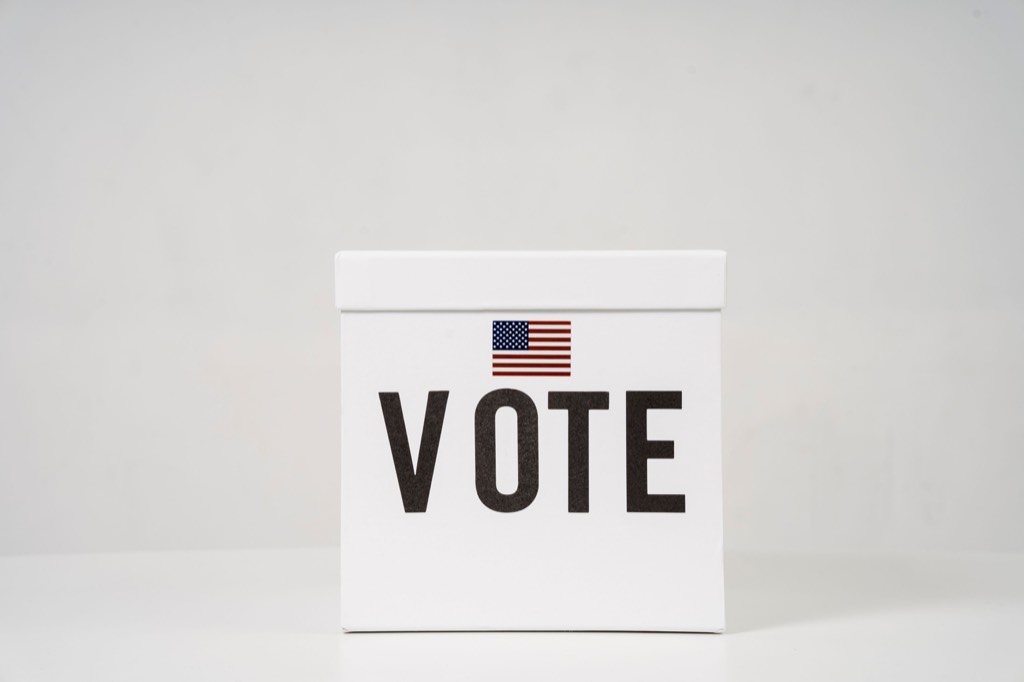
White ballot box marked Vote with an American flag design
Advertisement Back2Grow Advertisement

A new Kansas Speaks survey finds majority support for legalizing both medical and recreational cannabis, with medical access attracting the larger share. The results offer a measure of public sentiment ahead of the next policy debate; they do not announce a legalization measure or establish when one might pass.

Fort Hays State University’s Docking Institute of Public Affairs released the survey on October 26. Its public-affairs panel included 603 Kansas residents aged 18 and older. Cannabis was one of several subjects, alongside taxation, economic conditions, health policy and other state issues.

Medical and recreational support are different findings

The full report records 65 percent support and 15.3 percent opposition to medical marijuana legalization in general. For recreational legalization, 58.3 percent supported and 21.3 percent opposed. Both support figures combine stronger and more moderate responses.

That distinction matters because medical access and an adult-use market are different policy questions. Support for one does not tell lawmakers how respondents would answer every detail of the other, including who could sell products, how purchases would be taxed or which products would qualify.

The report also found 59.3 percent highly or somewhat likely to vote for a Kansas legislative candidate who supports medical legalization. That is a stated inclination attached to one issue. It is not a forecast that any named candidate will win, and it does not show how respondents ultimately balance cannabis against other concerns.

Who was surveyed, and when?

Fieldwork ran from September 23 through October 16. The institute used a Qualtrics online panel with demographic quotas, then weighted responses by age, gender, education and party registration. The report retained people who were not registered voters.

Readers should therefore describe the findings as a survey of adults, rather than substitute “likely voters.” Those populations answer different questions: public attitudes include people who may not vote, while an election forecast tries to anticipate the electorate that actually turns out.

Weighting is a statistical adjustment to the influence of different responses. It does not mean the researchers interviewed additional people after collection ended. The original number of participants and the weighted analytical total should not be treated as competing headcounts.

The Roper Center’s guide to polling transparency explains why disclosures about recruitment, population, collection methods and timing help readers judge whether a poll fits a particular purpose. Publishing those details enables scrutiny; disclosure by itself does not guarantee accuracy.

A percentage is not the whole policy argument

For cannabis readers, the useful starting point is the exact question. “Medical marijuana legalization in general” leaves many implementation choices open. A proposal with a defined patient program, licensing structure and product restrictions would present respondents with more information than that broad phrase.

Likewise, opposition is not automatically the remainder after subtracting support from 100. Where a questionnaire permits a middle or uncertain response, treating everybody outside the supporting group as an opponent exaggerates the division. The published support and opposition figures should be reported separately.

AAPOR’s guidance on polling uncertainty also distinguishes conventional sampling margins from model-dependent credibility intervals used with some online polls. The terms cannot simply be exchanged. This article does not assign an unsupported margin of error to the Kansas results.

Those limits do not make the survey uninformative. They define its contribution: a documented set of responses about broad cannabis questions during a stated period, rather than a guarantee about a future vote or legislative outcome.

A comparison with another poll also needs matching definitions. A survey asking about medical access for specified conditions is not asking precisely the same thing as general legalization. Differences in wording, field dates and the population sampled can matter before any apparent movement is interpreted as a change of mind. The safest comparison begins with the questionnaires, rather than two percentages taken out of their reports.

Public support and lawmaking follow separate paths

The Kansas Legislature’s explanation of its process shows the institutional steps a bill normally faces. Committee consideration and chamber votes precede agreement on identical language in both houses, followed by the governor’s role. A proposal’s effective date is another separate matter.

That means a poll release is not a substitute for checking a bill’s text, amendments and official status. An introduced measure, a committee recommendation and a signed law describe different stages, even if advocates cite the same public-support figures at each one.

The strongest reading of this survey is also the most specific. Medical legalization leads recreational legalization in the reported responses, and both have majority support among surveyed Kansas adults. Whether that support becomes an enacted program depends on decisions this survey did not make: the legislation’s contents, the votes and the implementation timetable.

Illustrative stock voting display; not a Kansas polling place or a cannabis ballot measure. Photo: Sora Shimazaki / Pexels.

Health

Utah’s Proposed Cannabis Voucher Rules Put Patient Costs and Pharmacy Access in Focus

Utah is building the operating rules for medical cannabis assistance, with eligibility, available funding and the nonprofit administrator still central to access.

Published

on

A person holding U.S. dollar bills above an open black wallet

Utah has proposed operating rules for its medical cannabis patient-voucher program, adding detail about how financial assistance would reach patients and pharmacies. The November 15 filing addresses $150 patient accounts, delivery costs and access across licensed pharmacies. It is a step toward implementation, rather than an announcement that every eligible patient can collect a voucher today.

The proposal appears as R67-7 in the Utah State Bulletin. Comments are accepted through December 15. The filing identifies December 22 as a possible effective date and expressly distinguishes that anticipated date from an actual effective date. Patients should therefore look for the completed rulemaking and program instructions before relying on a start date.

Eligibility comes from the law, not a shop promotion

Senate Bill 121’s enrolled text created the program in Section 26B-4-248. It authorizes a contracted nonprofit to provide monthly $150 vouchers, subject to available funds. Eligibility requires an active medical cannabis patient card and enrollment in Medicaid or Medicare. The bill took effect May 6, 2026.

That is a defined group, rather than all adults with a low income or everyone who buys cannabis for health reasons. A patient needs to distinguish qualification for the medical cannabis program from qualification for this particular financial assistance. Meeting one set of requirements does not automatically establish the other.

The law also requires quarterly accounting and directs the contracted nonprofit to use the money it receives under the provision for vouchers. The assistance is tied to purchases through medical cannabis pharmacies, rather than an unrestricted cash payment that can be used for unrelated household spending.

The grant process is for the administrator

The state’s patient-voucher grant page says applications to administer the program close December 15. A review team will choose one nonprofit. This application is for an organization to operate the assistance system; it should not be confused with an application by a patient seeking an individual voucher.

The page identifies funding of up to $300,000 per fiscal year from the Qualified Patient Enterprise Fund, with the exact amount dependent on available funds. It asks applicants to explain patient verification, voucher issuance, reimbursement and timelines. The nonprofit would reimburse pharmacies after patients use the assistance.

That funding qualification matters. A stated monthly amount describes the intended benefit, while an annual pool describes the resources supporting the program. Neither number, by itself, tells a patient when an application will be processed or guarantees that every potentially eligible person will receive assistance for every month.

The grant requirements include accessible applications, annual checks of Medicaid or Medicare eligibility, protection of patient information and oversight intended to prevent pharmacies from overcharging voucher users. Those administrative details affect whether assistance is usable in practice, especially for someone who needs help navigating an application or cannot easily travel.

What the proposed rule would add

The draft caps each patient account at $150 and would permit redemption for medical cannabis products, state transaction fees and delivery fees at any licensed Utah medical cannabis pharmacy, including during sales or promotions. It also calls for written reasons and appeal information when a voucher is denied.

For patients, those provisions connect the headline benefit to the actual checkout cost. Delivery and transaction charges can consume part of a budget before the product itself is considered. Pharmacy-wide redemption would make the benefit different from a discount usable only at one participating business, although implementation still depends on the final rules and operating system.

The Marijuana Herald’s November 16 report drew attention to the filing and its delivery-fee provisions. The original documents clarify two separate dates on December 15: the proposed rule’s comment deadline and the grant application deadline for an administrator.

Assistance and clinical access remain separate

The state’s 2026 medical cannabis law summary places vouchers alongside other program changes, including the transfer of remaining health-department duties to the Department of Agriculture and Food by January 1, 2027. It says providers, patients and industry will be informed when the transition is complete.

The summary also distinguishes low-THC medical products sold through pharmacies from separately regulated hemp products. Financial assistance should be read within that medical-program framework, rather than as a general subsidy for any product advertised with a cannabis or CBD label.

Our coverage of Iowa’s patient sales-tax recommendation examines a different approach to patient cost. Utah’s immediate questions are operational: who will administer the grant, what the final rule requires and when patients will receive clear application instructions. Those answers will determine how the promised assistance reaches the people it is intended to help.

Illustrative stock budgeting photograph; not a Utah patient, voucher or program payment. Photo: Towfiqu barbhuiya / Pexels.

Continue Reading

Cannabis

Alaska Weighs Two Cannabis Purchase-Limit Models Ahead of November 18–19 Meeting

Two draft approaches would raise Alaska’s concentrate allowance, but their THC calculations and the next rulemaking steps need to be read separately.

Published

on

Close-up of an empty black digital kitchen scale on a brown surface

Alaska’s Marijuana Control Board is due to consider two draft approaches to cannabis purchase limits at its November 18–19 meeting. Both would raise the concentrate allowance, but the drafts do not describe the same THC limit. For consumers and retailers, the distinction is more useful than a blanket claim that Alaska is doubling everything.

These are documents for board consideration, not new limits already available at a shop. Anthony Martinelli’s reporting for The Marijuana Herald highlighted the proposals this week. The state’s packet allows readers to compare the actual alternatives and the decisions still ahead.

Start with the rule that applies today

The state’s published marijuana regulations set daily retail ceilings of one ounce of usable marijuana, seven grams of concentrate for inhalation and 5,600 milligrams of THC in combined marijuana and marijuana-product sales. The sales-limit section includes purchases for on-site consumption within its coverage.

Separate on-site rules are narrower: an endorsed retailer may sell up to one gram of flower, edible products containing up to 25 milligrams of THC, or a vaping device containing no more than 0.3 grams of concentrate to one person per day. Those existing figures are the baseline for assessing the proposed changes.

Weight, cannabinoid content and the setting of a sale are different measurements. A gram of concentrate is not a milligram of THC, and an allowance at a retail counter does not necessarily describe the amount that may be sold for immediate consumption in a licensed area.

The two alternatives need separate calculations

The November 9 staff memorandum and attached drafts include one model using 28 grams of usable marijuana, 14 grams of inhalable concentrate and 11,200 milligrams of combined THC, with maximum quantities assigned 100 point-of-sale units. The other uses a one-ounce flower equivalent: 14 grams of concentrate or 140 ten-milligram servings in products.

That second product equivalent totals 1,400 milligrams. It is not the first model’s 11,200-milligram figure. Both drafts would align endorsed on-site sales with the retail limits and remove the present concentrate-vaping-only restriction. The packet presents alternatives, not a combined package in which every favorable figure can be selected at once.

For a retailer, the eventual calculation would need to be translated into a checkout system and clear staff instructions. For a customer buying several product types, the important question would be how the final rule treats the combination. Neither can be answered by reading only the proposed concentrate weight.

A wider regulatory review is driving the work

The project is part of Governor Mike Dunleavy’s Administrative Order 360, issued August 4, 2025. It directs executive agencies to review requirements that are outdated, redundant or unclear, with reduction targets of 15 percent by the end of 2026 and 25 percent cumulatively by the end of 2027.

The order also calls for early stakeholder engagement, legally sound rules and continued critical consumer protection. It is a broad instruction to review the regulatory system. It does not itself replace the numerical cannabis sales limits or decide which of the two drafts should advance.

The order asks agencies to document public feedback and their responses. That creates a useful test for following this project: the public record should explain the problem being addressed and why a particular calculation was chosen. A reduced requirement count alone cannot tell shoppers how to compare products, or tell retailers whether their checkout software will apply the intended ceiling correctly.

That context makes the quality of the eventual language significant. Simplification can mean making a calculation easier to understand, as well as changing its ceiling. A useful final rule would let a customer, cashier and inspector reach the same answer about a mixed purchase without relying on conflicting summaries.

What the board can do next

The memorandum lists several possible actions: advance a draft for Department of Law review and subsequent public comment, amend it first, return it to staff, table it or close the project. A decision to move forward would therefore be another step in rulemaking, rather than proof that new limits take effect immediately.

The official meeting notice places the session in Anchorage beginning at 9 a.m. Alaska time. It specifies the Robert B. Atwood Building, with different arrangements for the two days, and provides remote-access information. Readers planning to attend should check those official details rather than assume both days use the same room.

Our coverage of proposed Portland retail changes follows a similar distinction between a proposal and permission to operate under it. In Alaska, the next meaningful update is the board’s recorded action, the precise draft it advances and any later public-comment notice. Until then, the current rules remain the practical reference.

Illustrative stock photograph of a kitchen scale; not cannabis testing equipment or an Alaska retail transaction. Photo: Bimbim Sindu / Pexels.

Continue Reading

Cannabis

North Carolina’s Cannabis Council Returns to Draft Market Rules on November 17

The November 17 agenda puts draft recommendations before North Carolina’s cannabis council, with competing retail models and a December report still ahead.

Published

on

A black microphone on a stand in front of empty conference chairs

North Carolina’s Advisory Council on Cannabis is scheduled to discuss draft recommendations November 17, with the design of a possible regulated cannabis market still unsettled. The meeting gives residents and businesses another chance to follow how the council weighs retail access, oversight and public safety. It does not open a legal statewide recreational market or award anyone a license.

The official agenda lists a 1:30–5 p.m. meeting at the Department of Health and Human Services headquarters in Raleigh. Most of the scheduled session is reserved for member discussion of draft recommendations, following updates on public comments and approval of earlier minutes.

A discussion stage, with a report still ahead

The timing deserves care. October subcommittee minutes describe November 17 as a meeting to finalize recommendations, while identifying December 1 for an internal report draft and December 15 for a council vote on the final report. That sequence does not establish that Tuesday’s meeting will produce an adopted final document. The published agenda itself promises discussion, rather than a completed legislative package.

Anthony Martinelli’s reporting for The Marijuana Herald drew attention to the meeting and the competing market structures in the minutes. The underlying documents are particularly useful because they show which proposals remain options, instead of presenting one model as North Carolina’s settled plan.

Three retail approaches remain in view

The October 23 Market and Regulatory Subcommittee minutes describe state-controlled retail, a private market and a hybrid involving state warehousing with roughly 400 privately owned dispensaries. Members agreed to present leading models with their advantages and disadvantages rather than force a single consensus.

The approximate store count belongs to that floated hybrid, not an approved statewide license allocation. Treating it as a commitment would skip the decisions about market structure, legislation and implementation. The minutes also identify legal concerns about state employees handling a substance that remains subject to federal restrictions.

That disagreement affects more than the name above a shop door. Retail ownership, wholesale distribution and cultivation licensing determine different parts of the supply chain. A system can permit private farming while placing distribution or retail under another structure. Readers assessing the eventual recommendations should track those functions separately.

Licensing and oversight are separate choices

The subcommittee recorded broad agreement on separate cultivation, processing and retail licenses rather than mandatory vertical integration. It also considered an independent regulatory commission or oversight within an existing agency. Those are distinct design decisions: who may run a business and who supervises the market.

Either approach would require workable staffing and enforcement. For a prospective operator, a license category alone cannot answer what an application will cost, how inspections will work or whether related companies can hold multiple licenses. The eventual report and any legislation would need to make those details clearer.

There is a parallel question about existing hemp sellers. A transition into a new framework would require decisions about which products and businesses fall within it, and what happens during the change. The minutes identify that transition as an open issue. They do not establish a guaranteed route into a future cannabis market for every current retailer.

The October discussion also considered a separate channel for low-dose THC beverages, potentially through licensed outlets beyond dispensaries. The minutes describe safeguards such as age checks and testing. These remain ideas under consideration, not new permission for a grocery store or bar to sell a particular product. Whether beverages follow the same distribution route as other cannabis products is one of the questions members still need to resolve.

The council’s job is to recommend

Governor Josh Stein’s executive order establishing the council directs it to study and recommend a comprehensive approach grounded in public health and safety. Its remit brings together perspectives from government, agriculture, law enforcement and other groups. Creating an advisory body is different from enacting the laws necessary for a statewide sales system.

The council’s public page includes the meeting agenda, a viewing link and a public-comment route. Those are the appropriate starting points for following the process. Participation should be based on the current official instructions, especially if meeting arrangements change.

For consumers, the practical question is what protections a proposal would attach to access. For businesses, it is how licensing, distribution and oversight fit together. Our coverage of Missouri’s market boundaries illustrates why a change in one part of cannabis policy should not be mistaken for permission to operate everywhere.

Tuesday’s useful outcome will be a clearer account of the recommendations members support and the disagreements they retain. The record after the meeting, followed by the draft report and later vote, will show how much of the proposed framework has actually advanced.

Illustrative stock conference photograph; not the North Carolina council meeting or its venue. Photo: Borta / Pexels.

Continue Reading

Trending

Join The Cannabis Aficionado Community!
Join the Cannabis Aficionado community and receive all of the most relevant news geared towards our sophisticated enthusiast community.
Loading

Copyright ©️ 2026 Cannabis Aficionado. Cannabis Aficionado is a registered trademark of CNM Inc. All rights reserved. Registration on or use of this site constitutes acceptance of our Terms of Service, Privacy Policy and Cookies Policy. People may receive compensation for some links to products and services. Offers may be subject to change without notice.