#cannabisaficionado

Industry Innovators

California Reports $255.3 Million in Third-Quarter Cannabis Taxes

California reported $255.3 million in third-quarter cannabis taxes. The preliminary figure needs context before it becomes a verdict on the market.

Published

on

Hands reviewing a receipt above a desk with a notebook, cash and a laptop.
Advertisement Back2Grow Advertisement

California’s legal cannabis market generated $255.3 million in reported state tax revenue for the third quarter of 2026. It is a substantial public contribution, but we would resist turning one preliminary total into a verdict on the health of every dispensary—or the price you should expect at the counter.

The California Department of Tax and Fee Administration’s November 19 release breaks the figure into $148.1 million in cannabis excise tax and $107.2 million in sales tax. The snapshot reflects collections as of November 17 and excludes outstanding returns and returns still being processed. Those qualifications belong beside the number whenever we discuss it.

How does the quarter compare?

CDTFA revised second-quarter revenue to $262 million from $261.7 million after amended and late filings and other adjustments. The initial third-quarter figure is $6.7 million lower than that revised comparison. Because the two totals are at different stages of reporting, that difference is a starting point for questions rather than a final measurement of market direction.

Since January 2018, the department says legal cannabis sales have produced more than $8.6 billion in taxes. The cumulative figure includes historical cultivation-tax collections, although that tax ended in July 2022. It should not be read as a list of taxes all being charged on today’s purchase.

A tax collection is also different from a retailer’s revenue or profit. These totals do not show the number of customers, the quantity of cannabis sold or the cost of keeping a particular store open. We want those distinctions kept visible whenever a large statewide number becomes shorthand for business conditions.

What tax rate are shoppers paying?

CDTFA’s official rate table lists the cannabis excise tax at 15 percent from October 1, 2025. A temporary 19 percent rate applied from July through September 2025. Assembly Bill 564 reduced it and delayed another adjustment until fiscal year 2028–29.

That history makes the comparison period important. Third-quarter 2026 and third-quarter 2025 sit under different excise rates. A tax-revenue comparison across those quarters would need to account for that difference before making claims about demand. The new release alone does not supply such an analysis, and we are not treating it as one.

For your next purchase, the useful number is the amount due after all applicable charges. A menu price can answer what a product costs before tax; it cannot always answer what leaves your wallet. Asking for the complete total makes it easier to compare two offers fairly.

Why the receipt deserves a closer look

The department’s retailer guidance explains that excise tax is based on gross receipts, which can include charges connected to the sale. Retailers must state that excise tax separately. Sales tax then applies to an amount that includes the excise tax, while local and district rules can affect the final bill.

This structure helps explain why multiplying the shelf price by one percentage may not reproduce a receipt. It also means a lower advertised product price is only part of a meaningful comparison. We would check whether quoted prices include taxes, whether delivery charges apply and whether the comparison uses the same product and quantity.

Certain qualifying medicinal purchases have separate sales-tax rules, described in that guidance. Do not assume that a product described as medicinal automatically receives every possible exemption. If your receipt seems wrong, ask the retailer to identify the rule being applied rather than rely on a general statement about medical cannabis.

There is another useful separation here: CDTFA explains state tax administration, while cities and counties can impose their own cannabis business taxes. A statewide quarterly release is therefore not a complete accounting of every public charge affecting a local cannabis business. Compare like with like before using it to judge an individual community’s market.

Where does the money go?

CDTFA’s broader cannabis tax guide describes funding for administration and enforcement, youth prevention programs, environmental restoration, impaired-driving enforcement and university research. That public purpose is part of the legalization bargain, and it deserves attention alongside the burden at checkout.

The same guide says recent medicinal licensing and federal registration developments can affect reporting requirements without changing the state’s point of taxation or taxable amount. We covered the separate federal registration dispute earlier today; it should not be confused with a new California tax exemption.

Our next useful benchmark is a more complete set of returns and a comparison using consistent rates and periods. Until then, $255.3 million tells us what the state has reported collecting for the quarter so far. It does not settle whether cannabis has become more affordable, whether stores are healthier or how much of any tax change reaches the customer.

Illustrative stock photograph of receipt and budget review; not a California cannabis retailer’s records. Photo: Kaboompics / Pexels.

Industry Innovators

USDA Updates Hemp Crop Insurance for 2027 as Growers Review THC Risk

USDA’s new hemp provisions put statutory THC limits into the 2027 policy. Here is what growers should check before choosing coverage.

Published

on

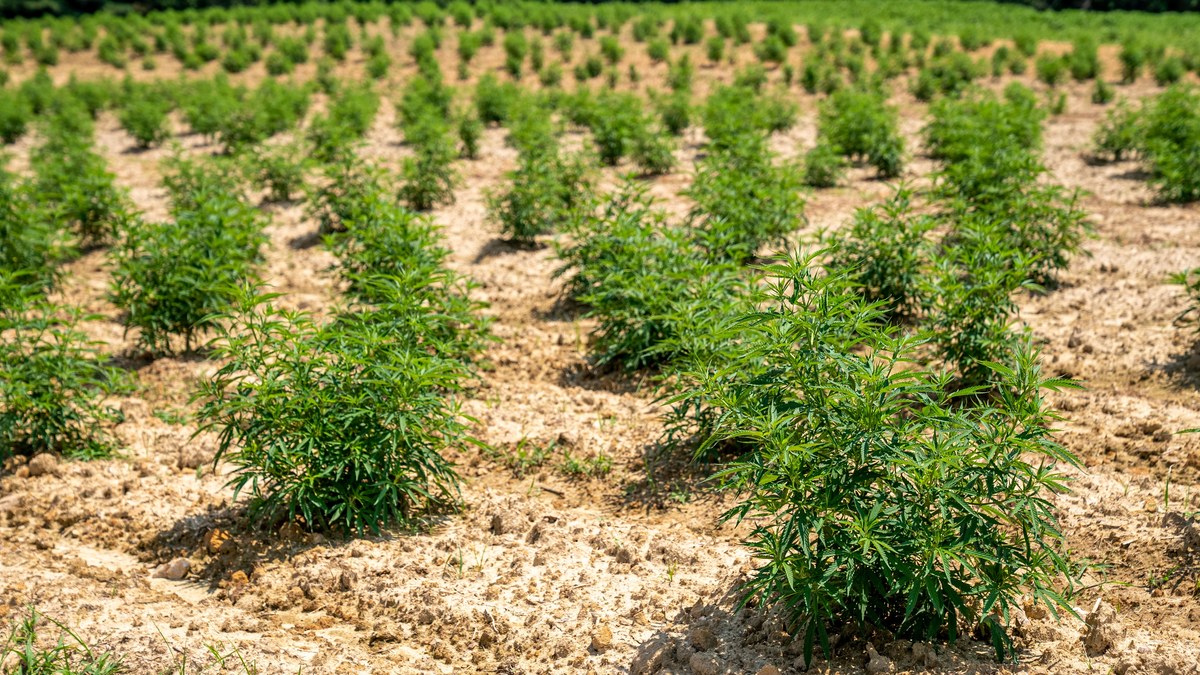
Rows of green cannabis plants growing outdoors in a cultivated field.

USDA has updated hemp crop insurance provisions for the 2027 growing season, bringing federal THC requirements into the policy language. If you grow hemp—or buy from the farms supplying this side of the cannabis industry—the practical question is what protection remains when a crop fails a compliance test. We would start with the exclusions before looking at the coverage headline.

The Risk Management Agency’s November 18 bulletin identifies hemp among several crops receiving policy changes beginning with the November 30, 2026 contract change date. The hemp revisions apply to 2027 and subsequent crop years. RMA says the THC changes implement the 2026 appropriations law; approved insurers must notify affected producers at least 30 days before the applicable cancellation date.

What changed in the hemp policy?

The new Hemp Crop Provisions, form 27-1218, reference the statutory hemp definition at 7 U.S.C. 1639o. They clarify that production losses caused by THC above the applicable acceptable levels are uninsured. Those limits include the federal standard, the relevant governing authority’s requirements and any additional specification in the Special Provisions.

The document also moves cancellation and termination dates into the Special Provisions and clarifies loss-handling procedures. November 30 is the contract change date, so do not mistake it for a universal deadline to buy or cancel insurance. Your own policy documents and county information determine the dates that matter to your operation.

We read this as a reason to reconcile the farm’s compliance plan with its insurance paperwork. A policy cannot be assessed from its name alone. Ask which version applies, which crop type is insured and which rules control the acreage you actually intend to plant.

The new provisions also define what a processor contract must contain: a producer’s commitment to grow and deliver, the processor’s commitment to purchase, and a base price or a way to establish it. That gives the coverage conversation a useful document to work from. Bring the actual agreement, including the terms governing acceptance of the harvest, rather than a verbal description of the buyer relationship.

Weather damage and a lost buyer are different risks

RMA’s hemp pilot-program FAQ explains the underlying distinction: coverage addresses physical production losses from insured causes such as adverse weather. It does not turn an unsuccessful marketing plan into a covered harvest loss. Excess-THC destruction and a processor’s refusal to accept production are examples of problems that should not be treated as ordinary weather claims.

That distinction matters along the supply chain. A healthy field, a compliant crop and a dependable buyer answer different questions. Before committing money to seed or processing capacity, ask how each risk is being handled. An insurance premium is one expense in that calculation; it is not evidence that every commercial problem has been transferred to an insurer.

The FAQ also points growers to RMA’s Actuarial Information Browser for eligible counties, crop types and sales closing dates. Some explanatory material still refers to earlier crop years. We would use it to understand the program, then check current provisions with the agent rather than carry old acreage thresholds into a 2027 planting decision.

Match the insurance program to the business

RMA’s hemp overview describes several insurance routes. The multi-peril pilot covers qualifying yield losses for fiber, grain or CBD production in selected counties. Whole-Farm Revenue Protection is another program, offered nationwide, while nursery coverage can apply to qualifying container-grown hemp under its own conditions.

Those options are not interchangeable promises. A field operation selling grain and a nursery selling plants have different production models. Ask an agent to explain eligibility, exclusions and the relevant documents for the particular business, rather than assume a general reference to “hemp insurance” settles the question.

For our wider cannabis community, this is also a reminder that federal hemp policy reaches beyond finished products. Our recent coverage of Vermont’s proposed in-state hemp framework concerns a different part of that transition. A state market proposal does not by itself answer what a federal crop policy will insure.

What should growers ask next?

Bring three concrete questions to the coverage discussion: which 2027 documents govern this acreage, which testing outcomes would leave a loss uninsured, and what are the actual local deadlines? Request answers tied to the policy, not a general assurance that hemp is covered.

We would also keep the processor agreement, testing plan and insurance decision in the same planning conversation. The new bulletin does not announce that all hemp coverage has disappeared. It makes the boundary between an insured production loss and a compliance problem especially important to understand before planting.

Illustrative stock photograph of outdoor cannabis cultivation; not a specific insured farm. Photo: Mark Stebnicki / Pexels.

Continue Reading

Industry Innovators

Mile High Labs Files CBD Manufacturing Data for Drug Developers

Mile High Labs reports a Type II Drug Master File for CBD isolate. We explain what drug developers can reference and what the filing means.

Published

on

Laboratory flasks and test tubes containing coloured liquids on a workbench.

Mile High Labs says it has submitted a Type II Drug Master File to the U.S. Food and Drug Administration for its CBD isolate, giving drug developers a route to reference the manufacturer’s confidential technical information. The Colorado company announced the filing on November 19. It says the submission itself took place on October 2, 2026.

For our readers following CBD’s place in medicine, this is a manufacturing and development milestone. A Drug Master File, or DMF, is not FDA approval of the ingredient, a finished medicine or the CBD products on a retail shelf. Understanding that boundary is essential to reading the announcement accurately.

What did Mile High Labs announce?

In its November 19 company release, Loveland-based Mile High Labs identifies the submission as Type II DMF number 044151 for 98 percent CBD isolate. Those details are company-reported. We have not reviewed the confidential manufacturing file, and the announcement does not supply an independently completed FDA assessment of its contents.

The company says drug developers can obtain a Letter of Authorization to reference the file. It also says it is preparing for an FDA inspection. Preparing for an inspection does not establish that an inspection has happened or that the agency has found a facility compliant. The release describes a step toward serving regulated medicinal development, with further work still ahead.

That distinction helps set a useful editorial test. We want to know what a development announcement enables today, what another company would still need to do and which decisions remain with a regulator. A file number is a concrete detail, but it cannot carry claims about outcomes the filing has not established.

What is a Drug Master File?

The FDA’s current DMF overview explains that these files can contain confidential information about facilities, processes or materials used in manufacturing, processing, packaging and storing human drugs. The mechanism lets another applicant reference that information without the manufacturer having to disclose the full technical package to its commercial partner.

The FDA says submitting a DMF is voluntary. The files are neither approved nor disapproved; their technical contents are reviewed in connection with an application that references them. That is why we would not describe this announcement as the agency approving Mile High Labs’ CBD. Filing information and reaching a decision on a drug application are separate events.

For a potential development partner, the practical attraction is access to an established body of manufacturing information through the regulatory process. Whether that information supports a particular application is another question. The relevant product, proposed use and supporting evidence still have to be assessed through the applicable drug-development pathway.

How does another developer use the file?

The FDA’s DMF guideline describes the authorization process: the file holder permits the agency to refer to specified information, and the applicant includes a copy of that authorization in its submission. The arrangement connects a supplier’s confidential material to the developer’s application; it does not transfer a general marketing permission to everyone buying that supplier’s ingredient.

The guideline also describes continuing responsibilities, including keeping the file current and notifying affected parties about relevant changes. We see that as an important part of the story. A manufacturing dossier is not simply a launch-day announcement to file away. Its value to a development partner depends on the information remaining useful as processes and applications move forward.

Readers evaluating future coverage should therefore look beyond the existence of a DMF. A named development programme, a clearly described regulatory step or an agency decision would each add information. None should be inferred merely because a supplier says its file is available for reference.

Does this change CBD’s retail status?

The FDA’s cannabis and CBD guidance keeps drug approval separate from the broader CBD marketplace. Epidiolex is the FDA-approved CBD medicine. The agency also explains its position that CBD is excluded from the dietary-supplement definition, and that therapeutic claims can bring a product within drug requirements.

A supplier’s DMF does not rewrite those rules or demonstrate that an unrelated CBD product is safe or effective for a medical condition. For consumers, the filing is not a reason to change treatment or substitute a retail product for prescribed medicine. For industry readers, it is a specific piece of infrastructure that may support future development work.

Our next checkpoint is evidence of what follows: authorized references, development progress and any relevant FDA findings. Mile High Labs has reported a defined submission. The significance of that submission will become clearer through the work and regulatory decisions that come after it.

Illustrative stock laboratory photograph; not Mile High Labs’ facility, CBD isolate or an FDA inspection. Photo: Ron Lach / Pexels.

Continue Reading

Industry Innovators

MÜV Plans a November 20 Tarpon Springs Opening for Florida Medical Patients

The announced Friday opening adds another MÜV address before Thanksgiving, while Florida’s medical-program eligibility and documentation remain unchanged.

Published

on

A black sign reading Come In, We Are Open hanging on glass.

Verano says its new MÜV dispensary in Tarpon Springs will open Friday, November 20, adding a medical-cannabis location ahead of Thanksgiving week. The November 19 announcement places the store at 40084 US Highway 19 North. For patients, the new address expands the company’s retail network; it does not change Florida’s requirements for purchasing medical marijuana.

The opening and the ceremonial celebration fall on different days. Verano lists Friday as the first day of business and Monday, November 23, at 9 a.m. for the ribbon cutting. Anyone planning a visit should distinguish the operating start from the later event and check current store information before traveling.

What the company has announced

According to Verano’s release, Tarpon Springs will bring its Florida network to 89 MÜV locations and its national dispensary count to 166. The company lists Monday–Saturday hours of 9 a.m.–8 p.m. and Sunday hours of 10 a.m.–5 p.m., all local time. Those are announced hours, rather than an independent report from inside the new store.

The company also describes virtual and in-store patient consultations, online menus and express pickup ordering. Those services can help patients understand the shop’s offerings, but a retail consultation is different from the qualified physician’s role in determining eligibility and treatment. The opening announcement does not establish that every listed product will be available at every moment.

For an existing patient, the practical question is whether the location offers a more convenient way to fill an authorized order. Store count alone does not show shorter travel times for every household, lower prices across the market or an improvement in medical outcomes. Those would require separate evidence.

Who may purchase medical cannabis in Florida?

Florida’s Office of Medical Marijuana Use patient guidance sets out the path to treatment. A patient must be a permanent or seasonal Florida resident, receive a qualifying diagnosis from a qualified physician, be entered into the Medical Marijuana Use Registry and obtain a registry identification card. Opening another shop does not bypass that process.

The state says patients and caregivers may purchase only from an approved medical marijuana treatment center. Once the card application is approved, they can contact an MMTC to fill the physician’s order. A nearby store may make that transaction easier, but it is not the place to assume that an ordinary retail purchase can replace an active medical authorization.

The guidance also recognizes delivery by licensed treatment centers. Patients without an MMTC in their own city can contact a licensed provider about delivery. Whether pickup or delivery is more practical depends on the provider’s current service area and the patient’s circumstances, rather than the existence of a new storefront alone.

Check the card and the order separately

The state’s identification-card information says an active card is required to purchase and possess medical marijuana. Cards expire one year after approval, and renewals are handled through the state process. The page directs patients to submit renewal applications within the designated period before expiration, rather than treating a dispensary visit as renewal.

That administrative requirement is separate from a physician’s certification and orders. Patients preparing for holiday travel or a new store visit should check both parts of their records. A valid-looking card and a current order answer different questions, so a problem with either is best resolved before arriving at the counter.

Florida’s program FAQ says that, beginning July 27, 2026, an initial or renewal card application cannot be completed without current or scheduled certifications with open orders in the registry. It directs questions about certifications and orders to the patient’s qualified physician. A promotional opening date does not change that clinical responsibility.

Planning a visit during Thanksgiving week

A sensible first check is the store’s current menu, followed by its hours and pickup arrangements. Ask how an order is confirmed, what identification is required and whom to contact if a registry issue appears. These are ordinary planning questions, not a recommendation to buy a particular product or increase an existing order.

Holiday promotions also deserve to be considered separately from medical decisions. A discount can affect a transaction’s price, but it cannot establish that a formulation, strength or route is appropriate for an individual patient. The physician remains the relevant person for treatment questions, while store staff can explain availability and the retail process.

Tarpon Springs’ announced opening gives qualified patients another MÜV location to consider. The useful distinction is between access and authorization: one more storefront may offer a more convenient option, while eligibility, active documentation and the physician’s order remain part of Florida’s medical program. The Friday opening and Monday ceremony are the next concrete milestones to verify.

Illustrative retail-opening stock photograph; not MÜV Tarpon Springs, its signage or its premises. Photo: Nicu Cobasnean / Pexels.


Continue Reading

Trending

Join The Cannabis Aficionado Community!
Join the Cannabis Aficionado community and receive all of the most relevant news geared towards our sophisticated enthusiast community.
Loading

Copyright ©️ 2026 Cannabis Aficionado. Cannabis Aficionado is a registered trademark of CNM Inc. All rights reserved. Registration on or use of this site constitutes acceptance of our Terms of Service, Privacy Policy and Cookies Policy. People may receive compensation for some links to products and services. Offers may be subject to change without notice.