#cannabisaficionado

Cannabis

Philadelphia Urges Pennsylvania to Put Adult-Use Cannabis on Its Legislative Agenda

Council’s call for state legislation adds pressure after the election, while patient access and any future adult-use market remain separate questions.

Published

on

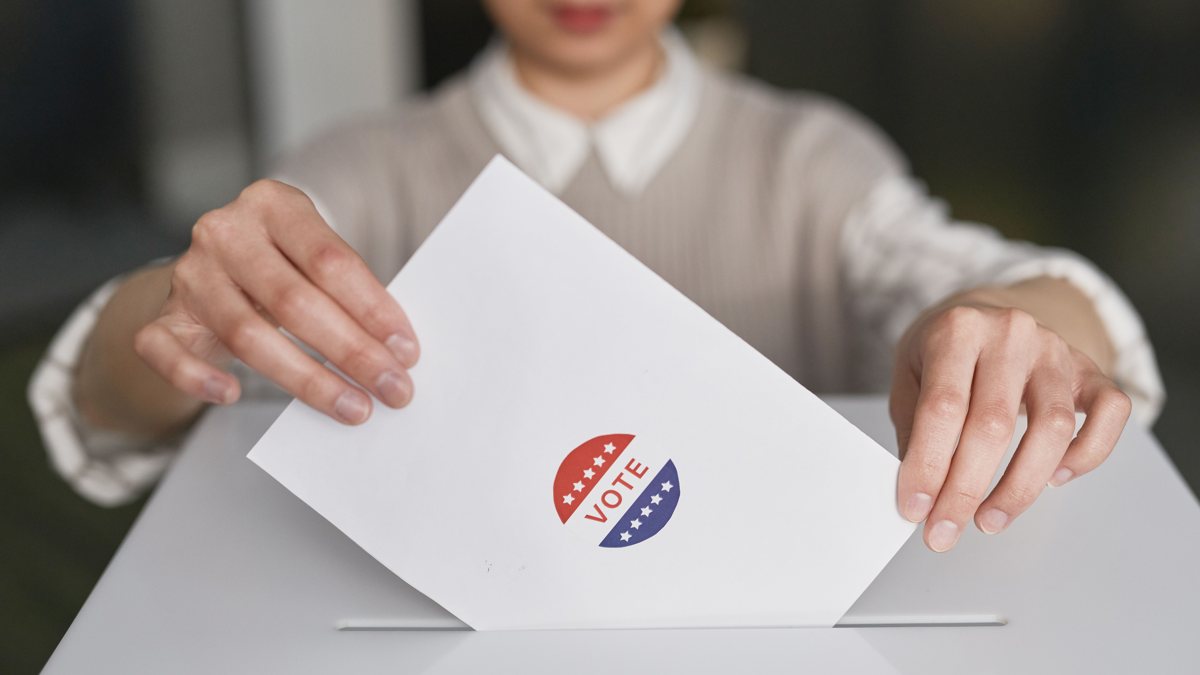
A person placing a white envelope marked Vote into a ballot box.
Advertisement Back2Grow Advertisement

Philadelphia City Council is pressing Pennsylvania lawmakers to put adult-use cannabis legalization on their agenda after the November election. The resolution calls for a regulated market with public-health protections and community reinvestment. It does not create recreational sales in Philadelphia or change who can enter Pennsylvania’s existing medical program.

Tom Angell reported for Marijuana Moment that council adopted the measure by voice vote November 19. The city’s official file for Resolution 260998 contains its text and sponsors, but the online action history and meeting minutes were not finalized when checked. The adoption date is therefore attributed to that reporting rather than presented as an independently verified roll-call result.

A city request aimed at state lawmakers

Councilmember Jim Harrity sponsored the resolution with Council President Kenyatta Johnson and eight other councilmembers. Its argument centers on the newly elected Democratic majorities in Pennsylvania’s House and Senate and the opportunity to revisit a policy that has repeatedly stalled.

The text asks the General Assembly to enact adult-use legislation and develop rules addressing safety and the distribution of economic benefits. It identifies testing, labeling, packaging, age checks and restrictions on advertising and retail locations as parts of a responsible framework. These are priorities the council wants lawmakers to address, not a finished statewide licensing system.

That distinction leaves important policy choices unresolved. A statement supporting regulation does not tell an applicant how licenses would be awarded, tell a municipality where stores could open or tell a shopper when sales would begin. Those details would depend on legislation and implementation rather than the council resolution alone.

Political opportunity does not settle the timetable

Angell’s reporting also highlights a limit to expectations after the election. Presumptive Senate President Pro Tempore Jay Costa has said legalization is not among the immediate highest priorities and would be discussed over the coming months. That makes the council’s intervention a push for attention, rather than evidence that a statewide bill is about to pass.

The report describes previous disagreements over how Pennsylvania should organize legal sales, including a House-backed state-store approach and competing Senate proposals. The existence of earlier bills does not identify which model a new majority will ultimately choose. Nor should an earlier proposal’s possession limits or tax rates be presented as rules already adopted for consumers.

For readers following the debate, the consequential milestones are a specific bill, its committee and floor actions, and an enacted implementation schedule. A favorable election result may change the political setting, but it cannot substitute for those decisions.

The medical program remains a separate route

Pennsylvania’s Department of Health patient guidance describes access through residency, an eligible serious medical condition, certification by an approved practitioner and the program’s identification process. Patients obtain medical cannabis through Pennsylvania dispensaries using the required identification. A council endorsement of adult-use legislation does not waive those conditions.

The department also describes caregivers as designated people who can obtain products for a patient. Caregivers register for identification and undergo a background check. That structure matters for households where the person receiving care cannot independently make a dispensary visit; it is more specific than treating every adult resident as an eligible shopper.

The patient guidance separates registration from practitioner certification and the identification-card payment process. Someone reading legalization headlines should not assume those steps have ended. Questions about an individual’s eligibility or certification remain matters for the program and an approved practitioner, not an inference from political statements.

Existing medical taxes are not proposed adult-use taxes

The Department of Revenue’s medical-marijuana guidance provides another useful distinction. Growers and processors pay a 5 percent tax on gross receipts from medical-marijuana sales to dispensaries. The department says medical marijuana itself is not subject to sales tax, although accessories can be.

Those are features of the existing medical system. A forecast about adult-use revenue, or a tax rate appearing in a legalization proposal, belongs to a different policy discussion. It should not be added to a medical patient’s purchase as though council had changed the tax code.

Revenue also distinguishes the roles of the departments: Health handles permits connected with production and sale, while Revenue administers the relevant taxes and participates in tax-clearance review. Legalization would require lawmakers to decide how any expanded market fits those existing responsibilities.

For now, the immediate change is renewed political pressure from Philadelphia. The practical rules for patients remain in place, while the proposed adult-use market still depends on state action. That is the useful way to read this week’s resolution: a call to legislate, with consumer access and business permissions still awaiting the legislation itself.

Illustrative voting stock photograph; not Philadelphia’s council vote, a Pennsylvania polling place or the November 2026 election. Photo: Edmond Dantès / Pexels.

Cannabis

Vermont Plans an In-State Hemp Market as Federal Restrictions Approach

The Cannabis Control Board’s November 17 notice points toward future licenses and an intrastate framework, with federal restrictions still a separate question.

Published

on

Close-up of green serrated cannabis leaflets in sunlight.

Vermont’s Cannabis Control Board says it plans to develop a licensed in-state hemp market once federal THC thresholds are certain. Its November 17 notice points toward future rulemaking for products that meet Vermont’s standards but would fall outside the revised federal hemp definition. It does not announce an operating market, an application window or permission to ignore federal law.

For hemp businesses and consumers, that is the central distinction. Vermont is describing a possible state framework for cannabis-derived products, while a federal change is approaching on a separate timetable. A product’s status under state rules and its eligibility for interstate commerce are related questions, but they are not interchangeable.

What Vermont announced this week

The board’s notice says Act 178 of 2026 authorized it to revive a State Hemp Program covering producers, processors and products. The board intends to begin rulemaking when the federal tolerances are settled, with an intrastate market as its stated objective. No opening date appears in the announcement.

The notice also identifies potential consequences beyond a product being removed from a shelf. It warns that carriers, banks, payment processors and insurers may refuse service to affected businesses. Those are possible consequences identified by the regulator, not a finding that every provider has already withdrawn or that every hemp business faces the same result.

For an operator, the practical implication is that a state license would answer only part of the business question. Even a product permitted by Vermont could still depend on suppliers, financial services and transportation arrangements governed by other rules or private policies. A proposed local market needs those practical connections as well as a regulatory structure.

Why December 11 matters

An October 28 Congressional Research Service analysis explains the federal timetable. Congress delayed most of the hemp-definition changes until December 11, 2026. The exclusion for products containing cannabinoids the plant cannot naturally produce was left to take effect November 12. Describing everything as a single future deadline would miss that distinction.

The analysis describes a revised total-THC test and exclusions covering certain manufactured cannabinoids and finished products exceeding a combined 0.4 milligrams per container of total THC and similarly acting cannabinoids. That is a federal classification framework, rather than a new Vermont serving recommendation. It can change which products qualify as hemp even when a label continues to use that word.

Congress can still change legislation, but a proposal is not an enacted delay. Businesses planning around December should distinguish the law currently scheduled to apply from measures seeking to replace it. Our Hemp Guardrails Act coverage explains one proposed alternative; it should not be treated as evidence that the deadline has disappeared.

Vermont already draws its own product boundaries

The board’s hemp guidance explains that Vermont treats products exceeding its quantitative limits, or marketed for intoxicating effects, as cannabis products rather than ordinary hemp products. Its assessment includes total theoretical THC, incorporating THCA. A low delta-9 number alone therefore does not settle the state-law question.

That guidance also explains the limited purpose of an earlier voluntary processor registry. Listing a business was not a license to buy and sell THC concentrate or a substitute for cannabis-establishment authorization. The distinction is especially relevant now: the promise of a future licensed program should not be confused with the legal effect of an older contact list.

Cultivation has its own history. Vermont’s agriculture agency ended administration of the earlier state hemp program in 2022, returning cultivation oversight to USDA. The board’s current guidance directs would-be cultivators to the federal application system. It does not present the November notice as an immediate replacement for that process.

What a future rule would need to clarify

The next useful development would be published proposed rules identifying who needs a license, what activities are permitted and which products qualify. Businesses would also need application instructions and an effective date. Those details would turn a policy direction into something operators could evaluate against their actual activities.

Consumers should look for equally concrete information: which products are registered, where they may be sold and how the state intends to oversee the market. A broad claim that a product is “Vermont legal” cannot answer every question about its composition, seller or movement across a border. Nor does a state rule eliminate federal restrictions by itself.

Vermont has set out a direction for hemp policy, not a completed workaround. The next stage is rulemaking, with the federal definition still shaping the board’s plans. Until a detailed framework is published, the announcement is best understood as an intention to build a state program rather than an invitation to begin operating one.

Illustrative cannabis-leaf stock photograph; not a Vermont crop or evidence of a particular THC concentration. Photo: Adonyi Gábor / Pexels.

Continue Reading

Cannabis

USPS Says Medical Cannabis Remains Nonmailable While It Reviews Policy

A November 18 statement reported by Marijuana Moment leaves patients with a clear distinction between state delivery plans and the Postal Service’s current position.

Published

on

Hands sealing a cardboard parcel with clear packing tape.

The U.S. Postal Service says medical marijuana remains nonmailable while it reviews the effects of federal rescheduling. That position, reported November 18 by Marijuana Moment, follows the announcement of a Georgia medical-cannabis shipping program. For patients, the immediate issue is the gap between a new delivery service’s plans and the postal agency’s stated rules.

A state’s permission to arrange medical cannabis delivery does not itself establish that USPS will accept the package. The current dispute concerns the carrier and federal mailability requirements, alongside state patient eligibility. It should not be read as a nationwide invitation for patients to send cannabis to one another.

What the Postal Service told reporters

Tom Angell’s reporting for Marijuana Moment attributes the statement to USPS senior public relations representative Felicia Lott. She said the agency and the Postal Inspection Service are reviewing medical marijuana’s mailability after its reclassification. She also said a future change would place it within the rules for prescription drugs containing controlled substances.

The outlet reported that USPS did not immediately provide a timetable for reaching a decision or explain where a decision would be announced. Georgia regulator Andrew Turnage disputed the agency’s interpretation in comments to the same outlet. Those are attributed positions in an unresolved policy disagreement, rather than evidence that the review has already produced a new rule.

That absence of a published decision matters. “Under review” describes work in progress. It does not tell a patient that a carrier has approved an individual shipment, and it does not establish that a state operator’s proposed method has been accepted by the Postal Service.

Why the Georgia announcement drew attention

In a November 17 company release, Botanical Sciences and Edibles.com announced a Georgia shipping platform for registered medical patients. The companies described a separate registry-verified ordering system with identity checks and delivery safeguards. They said the initial service would reach selected Botanical Sciences patients before expanding.

The release connects the launch to Georgia’s September 30 adoption of a medical-cannabis delivery rule. Its language describes what the companies intend to offer under the state framework. It is not a Postal Service authorization, and its claimed national first has not been independently established here.

The distinction is useful even outside Georgia. A delivery announcement can explain who may order, which products are offered and how the business plans to verify recipients. Whether a chosen carrier may transport those products is a further question. A tracking number or signature requirement records delivery activity; it does not independently establish that the contents are mailable.

What the published postal framework requires

USPS Publication 52, section 453, places responsibility on mailers to comply with postal regulations and applicable federal, state and local laws. It says mailing a controlled substance is unlawful when its distribution is unlawful. Controlled substances do not become ordinary parcels simply because the mailing stays within one state.

The section lists limited conditions for domestic mailing, including qualifying DEA-registered or exempt parties, approved mail-back programs and authorized dispensers sending mailable prescription medicines. These are defined channels with conditions, not a general exception for anyone holding a medical cannabis card.

The framework also treats hemp-based products separately, subject to legal compliance. That distinction makes product classification important: a seller’s use of “hemp,” “medical” or “CBD” in marketing cannot replace the applicable legal test. Patients should not infer that one kind of cannabinoid shipment proves every other kind is permitted.

What patients should ask before relying on shipping

A useful starting point is to ask the licensed provider which delivery method it currently offers and what authority supports that method. Ask whether the service is operating now, whether the patient’s address is eligible and how identity will be checked. Those details are especially important when public statements from the provider and the carrier do not align.

Patients should also distinguish commercial delivery by an authorized provider from personally mailing products to a friend, relative or another patient. The Georgia announcement does not establish permission for personal redistribution. Nor does the Postal Service’s review promise that a future change will cover every medical product, sender or recipient.

For now, the meaningful next development would be an official postal decision or updated published guidance, followed by a clear explanation from the state regulator and the service provider. A company announcement and an agency review are separate milestones. Until those positions are reconciled, patients should confirm the current delivery arrangements with their licensed provider rather than treat an announced shipping model as settled postal policy.

A review can change future policy, but it cannot supply an effective date that has not been announced.

Illustrative parcel stock photograph; not USPS mail, a cannabis shipment or the Georgia service. Photo: Liza Summer / Pexels.

Continue Reading

Cannabis

Senate Funding Drafts Retain D.C. Cannabis Sales Barrier and Transportation Testing Stance

Separate funding texts address D.C. retail policy, safety-sensitive work and research barriers, illustrating why federal cannabis rules do not move as one.

Published

on

Microphones and angled monitors on an empty meeting-room table.

New Senate funding drafts would preserve a barrier to regulated adult-use cannabis sales in Washington, D.C., while accompanying transportation language urges continued cannabis drug testing in safety-sensitive work. The documents show how several federal cannabis policies can move on separate tracks even as medical-marijuana rescheduling changes another part of the system.

The Senate Appropriations Committee released the materials November 16. They are proposals for fiscal year 2027, not newly enacted permissions or restrictions that readers should assume already replaced current law. The committee’s publication makes its proposed approach visible; it does not establish that Congress has agreed to every provision.

Tom Angell’s November 19 report for Marijuana Moment drew attention to the cannabis language across the separate bills and explanatory statements. Reading the underlying texts matters because a bill provision, a committee instruction and a request for research serve different purposes.

The D.C. provision would retain a spending restriction

Section 809 of the proposed Financial Services and General Government bill addresses the use of funds for drug-policy changes. Its District-specific subsection would prevent spending available to the D.C. government from being used to enact laws or rules legalizing or reducing penalties for specified substances for recreational purposes.

The wording reaches both Schedule I substances and tetrahydrocannabinol derivatives. That matters when assessing claims that moving a category of marijuana to another federal schedule would, by itself, remove every obstacle to adult-use sales in the capital. The proposed spending language is not written solely around a single schedule reference.

This is also different from announcing the closure of the District’s medical program or creating a federal retail license. The question here is whether local government can use its funds to build a recreational regulatory framework. A person’s ability to participate in an existing medical system and the government’s ability to establish an adult-use market are separate issues.

Transportation language focuses on safety-sensitive work

The Transportation and Housing explanatory statement directs the Department of Transportation to maintain current cannabis testing requirements. It identifies aviation, trucking, rail, transit and pipelines, alongside relevant federal and DOT positions, as settings where potential impairment is a public-safety concern.

The statement says the absence of a scientifically validated relationship between cannabis-metabolite levels and impairment is a reason to avoid relaxing the requirements. It also urges coordination with Health and Human Services and the National Highway Traffic Safety Administration on improved detection methods and alternative testing matrices.

That is a committee position about workforce safeguards and research needs. It is not a finding that every positive test establishes present impairment, or a newly validated impairment threshold. Those distinctions are particularly important when discussing cannabis, because detecting prior exposure and establishing someone’s condition at a particular moment are different questions.

Nor does this paragraph announce that every worker in the country is covered by DOT testing. Its scope concerns transportation and the federal positions described in the statement. Readers should avoid turning a targeted proposal into a claim about all employment or treating rescheduling news as a personal exemption from an applicable workplace rule.

Research concerns appear in another statement

The separate Labor and Health explanatory statement expresses concern that Schedule I restrictions limit research involving several drugs, including marijuana and its component chemicals. It notes difficulties researchers face obtaining sources, including dispensary products, and acknowledges work by the National Institute on Drug Abuse on those barriers.

Elsewhere, that statement calls for expanded work on the potential therapeutic effects of psychedelics and encourages attention to the workforce needed for emerging treatments. Such language supports investigation; it does not demonstrate that a particular substance is safe or effective for a particular patient, or authorize general clinical access to an unapproved treatment.

Taken together, these provisions show that support for additional research does not necessarily mean support for every retail-policy change. A committee can seek better evidence while retaining restrictions in another area. That combination is more precise than describing the entire funding package as either full cannabis reform or a single blanket prohibition.

What changes next depends on legislation

The committee’s release covers several agencies and policy areas, so an item appearing in one statement should not be assumed to govern all the others. The final legislative text, its enactment and the agencies’ implementation will matter more than a headline summarizing the package.

For D.C. readers, the immediate takeaway is that this Senate proposal retains the adult-use spending obstacle. For transportation workers, the statement signals continuity in the committee’s testing position. For researchers, it recognizes access barriers without declaring them solved. None of those points amounts to a new, universal rule for cannabis consumers.

Illustrative meeting-room stock photograph; not the U.S. Senate, a committee hearing or a D.C. government chamber. Photo: Werner Pfennig / Pexels.

Continue Reading

Trending

Join The Cannabis Aficionado Community!
Join the Cannabis Aficionado community and receive all of the most relevant news geared towards our sophisticated enthusiast community.
Loading

Copyright ©️ 2026 Cannabis Aficionado. Cannabis Aficionado is a registered trademark of CNM Inc. All rights reserved. Registration on or use of this site constitutes acceptance of our Terms of Service, Privacy Policy and Cookies Policy. People may receive compensation for some links to products and services. Offers may be subject to change without notice.